steering AUDI TT ROADSTER 2016 Service Manual
[x] Cancel search | Manufacturer: AUDI, Model Year: 2016, Model line: TT ROADSTER, Model: AUDI TT ROADSTER 2016Pages: 306, PDF Size: 31.82 MB
Page 180 of 306
Downloaded from www.Manualslib.com manuals search engine Navigation
You can use the rotary pushbutton to preselect
the possible alternative routes and have them
displayed on the map. Select and confirm the
Map How to use the map
Applies to: vehicles with navigation system
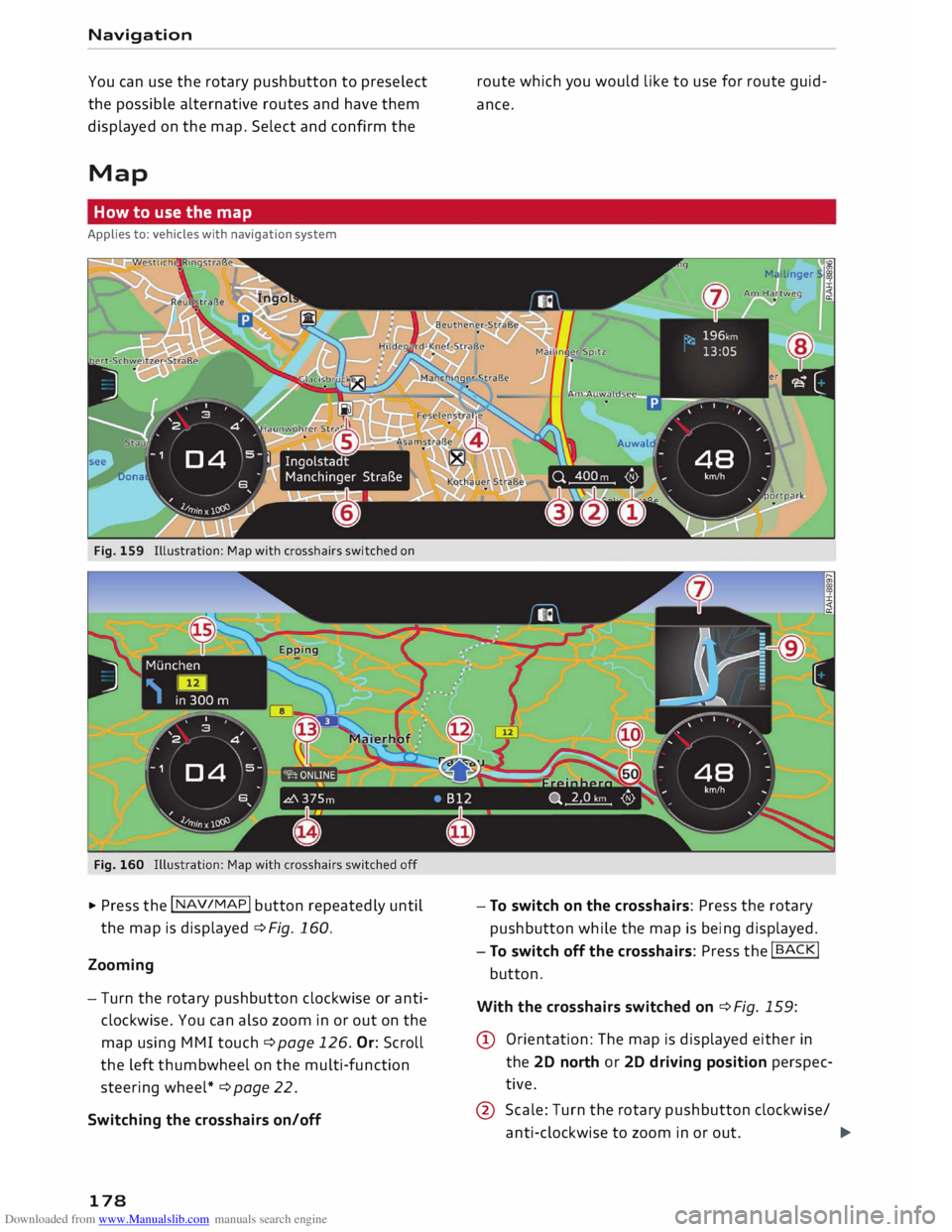
Fig. 159 Illustration: Map with crosshairs switched on
Fig. 160
� Press the I NAV /MAP
I button
repeatedly until
the map is displayed ¢Fig. 160.
Zooming
- Turn the rotary pushbutton clockwise or anti
clockwise. You can also zoom in or out on the
map using MMI touch ¢ page 126. Or: Scroll
the left thumbwheel on the multi-function
steering wheel* ¢page 22.
Switching the crosshairs on/off
178 route
which you would like to use for route guid
ance.
- To switch on the crosshairs: Press the rotary
pushbutton while the map is being displayed.
- To switch off the crosshairs: Press the
I BACK!
button.
With the crosshairs switched on ¢Fig. 159:
@ Orientation: The map is displayed either in
the 2D north or 2D driving position perspec
tive.
@ Scale: Turn the rotary pushbutton clockwise/
anti-clockwise to zoom in or out.
�
Page 222 of 306
Downloaded from www.Manualslib.com manuals search engine Safe
driving
Safe driving
General notes
Safety is the first priority
Your safety is our first priority.
This chapter contains important information,
tips, suggestions and warnings that you should
read and observe for your own safety and the
safety of your passengers.
A WARNING
- The information in this chapter is important
for the driver of the vehicle and the passen
ger. The other chapters in this manual (and,
where applicable, in the other literature
supplied with the vehicle) contain further
important notes which you should read and
observe for your own safety and that of your
passenger.
- Ensure that the complete vehicle wallet is
always in the vehicle. This is especially im
portant when you lend or sell the vehicle to
others.
Safety features
The safety features Listed here are part of the ve
hicle's occupant restraint system. They work to
gether to help reduce the risk of injury in a wide
variety of accident situations.
Your safety and the safety of your passengers
should not be left to chance. In the event of an
accident, the safety features incorporated in your
vehicle are capable of reducing the risk of injury.
These are just a few of the safety features in your
Audi:
- Seat belts for all seats
- Belt force limiters for all seats
- Belt tensioners for all seats
- Front airbags
- Side airbags in the backrests
- "ISOFIX" anchorages* for "ISO FIX" child seats
on the passenger's seat
-Adjustable steering column
220 These
individual safety features are harmonised
to provide you and your passenger with the best
possible protection in accident situations. How
ever, they can only be effective if you and your
passenger sit in the correct position and adjust
and use the safety equipment properly.
For these reasons, this chapter explains why
these safety features are so important, how they
can protect you, what you need to remember
when using them, and how you and your passen
gers can gain the most benefit from them. There
are also a number of important safety warnings
which you and your passengers should always ob
serve in order to minimise the risk of injury.
Safety is everyone's responsibility!
Before every trip
The driver is responsible for the safety of the
passengers and the safe operation of the vehicle
at all times.
For your own safety and the safety of your pas
senger, always note the following points before
every trip:
.,. Make sure that all lights and turn signals are
working properly .
... Check
the tyre pressures.
... Make sure that all windows are clean and give
good visibility to the outside.
... Secure all luggage and other items carefully
¢page 227.
... Make sure that no objects can interfere with
the pedals.
... Adjust the mirrors and the seat according to
your body height.
.,. Make sure that children are protected with suit
able safety seats and properly worn seat belts
¢page 223.
... Sit
in the correct position in your seat. Make
sure that your passenger is sitting in the cor
rect position ¢ page 54.
... Fasten your seat belt correctly. Make sure that
your passenger does the same¢ page 230.
Page 223 of 306
Downloaded from www.Manualslib.com manuals search engine 0
N
,.....
N
......
0
,.....
Vl
CX) What
factors can impair your safety?
Safety on the road is directly related to how you
drive, and can also be affected by the passengers
in the vehicle.
The driver is responsible for the safety of the ve
hicle and all its occupants. If your ability to drive
is impaired in any way, you endanger yourself and
other road users ¢ ,A. Therefore:
""Do not let yourself be distracted by passengers
or by using a mobile phone, etc.
"" Never drive when your driving ability is im
paired (by medication, alcohol, drugs, etc.).
"" Obey all traffic regulations and speed limits
and always maintain a safe distance to the vehi
cle in front.
"" Always adjust your speed to suit the road, traf
fic and weather conditions.
"" Take frequent breaks on long trips. Do not drive
for more than two hours without a stop.
""If possible, avoid driving when you are tired or
stressed.
A WARNING
- Distractions while driving or any kind of im
pairment to your driving ability increase the
risk of accident and injury.
- Do not place loose objects on the dash pan
el. These objects could fly around the interi
or when the vehicle is moving (under accel
eration or whilst cornering) and distract the
driver -risk of accident! Safe
driving
Correct sitting positions
Correct driving position
The correct driving position is important for safe
driving.
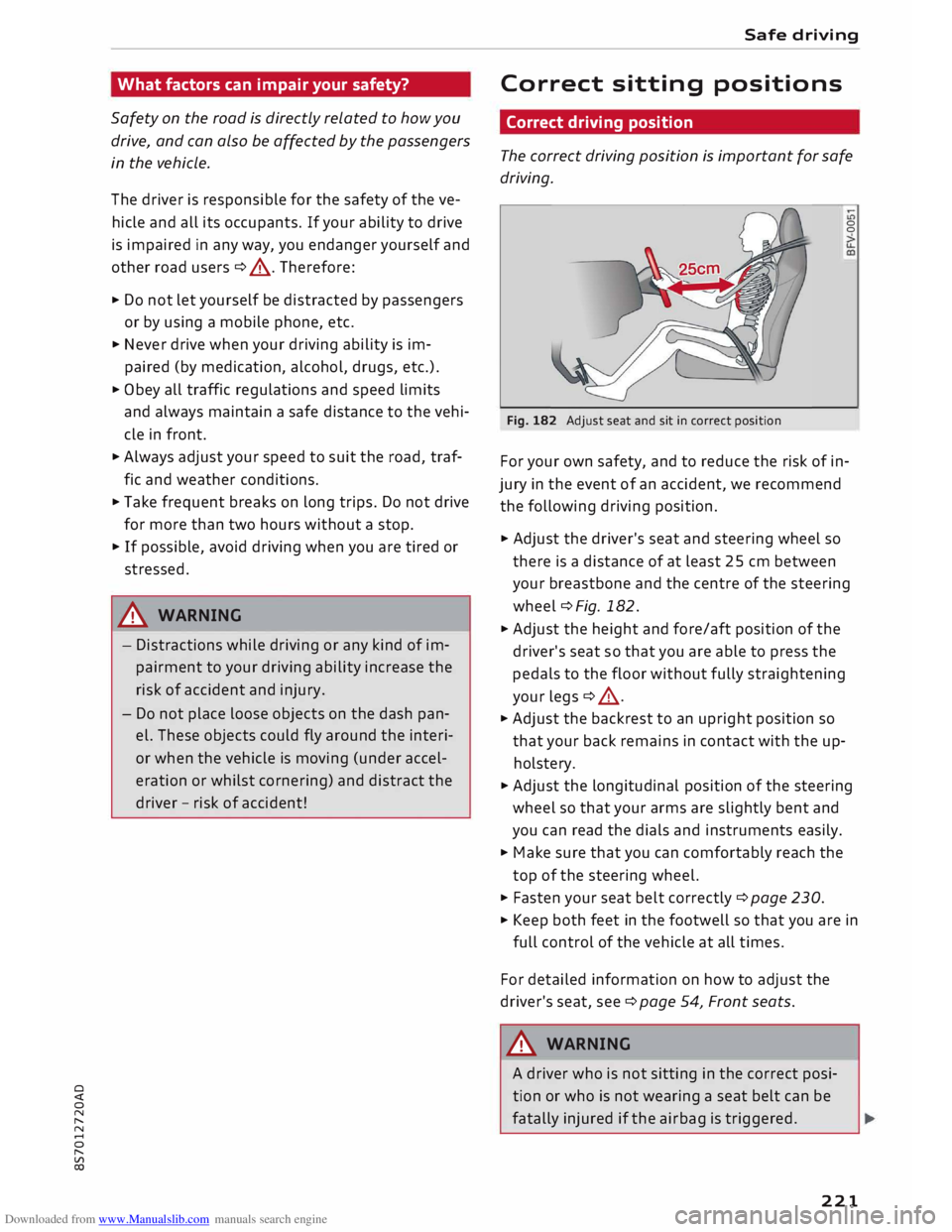
Fig. 182 Adjust seat and sit in correct position 0
0
For your own safety, and to reduce the risk of in
jury in the event of an accident, we recommend
the following driving position.
"" Adjust the driver's seat and steering wheel so
there is a distance of at least 25 cm between
your breastbone and the centre of the steering
wheel¢ Fig. 182.
"" Adjust the height and fore/aft position of the
driver's seat so that you are able to press the
pedals to the floor without fully straightening
your legs¢ A.
"" Adjust the backrest to an upright position so
that your back remains in contact with the up
holstery.
""Adjust the longitudinal position of the steering
wheel so that your arms are slightly bent and
you can read the dials and instruments easily.
"" Make sure that you can comfortably reach the
top of the steering wheel.
"" Fasten your seat belt correctly ¢ page 230.
"" Keep both feet in the footwell so that you are in
full control of the vehicle at all times.
For detailed information on how to adjust the
driver's seat, see¢ page 54, Front seats.
A WARNING
A driver who is not sitting in the correct posi
tion or who is not wearing a seat belt can be
fatally injured if the airbag is triggered.
221
Page 224 of 306
Downloaded from www.Manualslib.com manuals search engine Safe
driving
-Adjust the driver's seat and steering wheel
so there is a distance of at least 25 cm be
tween your breastbone and the centre of the
steering wheel¢ Fig. 182.
- While driving, always hold the steering
wheel with both hands on the outside of the
rim at about the 9 o'clock and 3 o'clock posi
tion. This reduces the risk of injury if the
driver's airbag inflates.
- Never hold the steering wheel at the 12
o'clock position, or with your hands inside
the rim or on the steering wheel hub. This
could result in serious injuries to the arms,
hands and head if the driver's airbag in
flates.
- To reduce any risk of injury to the driver dur
ing a sudden brake application or in an acci
dent, never drive with the backrest tilted
too far back. The airbag system and seat
belts can only provide proper protection
when the backrest is in an upright position
and the driver is wearing the seat belt in the
correct position. The further the backrest is
tilted back, the greater the risk of injury due
to incorrect positioning of the belt webbing
or an incorrect sitting position.
Correct position for the passenger
The front seat passenger must sit at least 25 cm
away from the dash panel so that the airbag has
enough room to inflate and give maximum pro
tection in an accident.
For your own safety and to reduce the risk of in
jury in the event of an accident, we recommend
adjusting the passenger's seat as follows:
"" Adjust the backrest to an upright position so
that your back remains in contact with the up
holstery.
"" Keep both feet in the footwell in front of the
seat.
"" Fasten your seat belt correctly ¢ page 232.
In exceptional cases you can disable the pas
senger's airbag via the key-operated switch*
¢page 237.
222 For
detailed information on how to adjust the
passenger's seat, see ¢ page 54, Front seats.
A WARNING
A passenger who is not sitting in the correct
position or who is not wearing a seat belt can
be fatally injured if the airbag is triggered.
-Adjust the passenger's seat so there is a dis-
tance of at least 25 cm between your
breastbone and the dash panel.
- Always keep your feet on the floor when the
vehicle is moving; never rest them on the in
strument panel, out of the window or on the
seat. If you sit in an incorrect position, you
increase your risk of injury in the event of
sudden braking or an accident. If the airbag
is triggered, you could sustain potentially
fatal injuries by sitting out of position.
- To reduce the risk of injury to the passenger
in the case of sudden braking or an accident,
the passenger should never travel in a mov
ing vehicle with the backrest reclined. The
airbag system and seat belt can only provide
proper protection when the backrest is in an
upright position and the passenger is wear
ing the seat belt in the correct position. The
further the backrest is tilted back, the
greater the risk of injury due to incorrect po
sitioning of the belt webbing or an incorrect
sitting position.
Examples of incorrect seating positions
Occupants can suffer severe or fatal injuries if
they sit in an incorrect position while the vehicle
is moving.
Seat belts can only provide maximum protection
if the belt webbing is positioned correctly. Sitting
out of position greatly reduces the effectiveness
of the seat belts and increases the risk of injury
since the belt webbing is not worn in the position
for which it is designed. The driver is responsible
for the safety of all vehicle occupants, especially
for children.
"" Never allow anyone to sit out of position while
the vehicle is moving ¢,&. . ..,.
Page 234 of 306
Downloaded from www.Manualslib.com manuals search engine Seat
belts
Even at urban speeds of 30 km/h to 50 km/h, the
forces acting on the occupants in a collision can
reach the equivalent of 1 ton (1,000 kg) or more.
At greater speed these forces are even higher.
Again: if the speed doubles, the forces increase
by a factor of four.
Passengers who do not wear seat belts are not
"attached" to the vehicle. In a frontal collision
they will continue to move forward at the speed
their car was travelling just before the impact.
What happens to passengers not wearing
seat belts?
Passengers not wearing seat belts risk fatal inju
ries in the event of an accident.
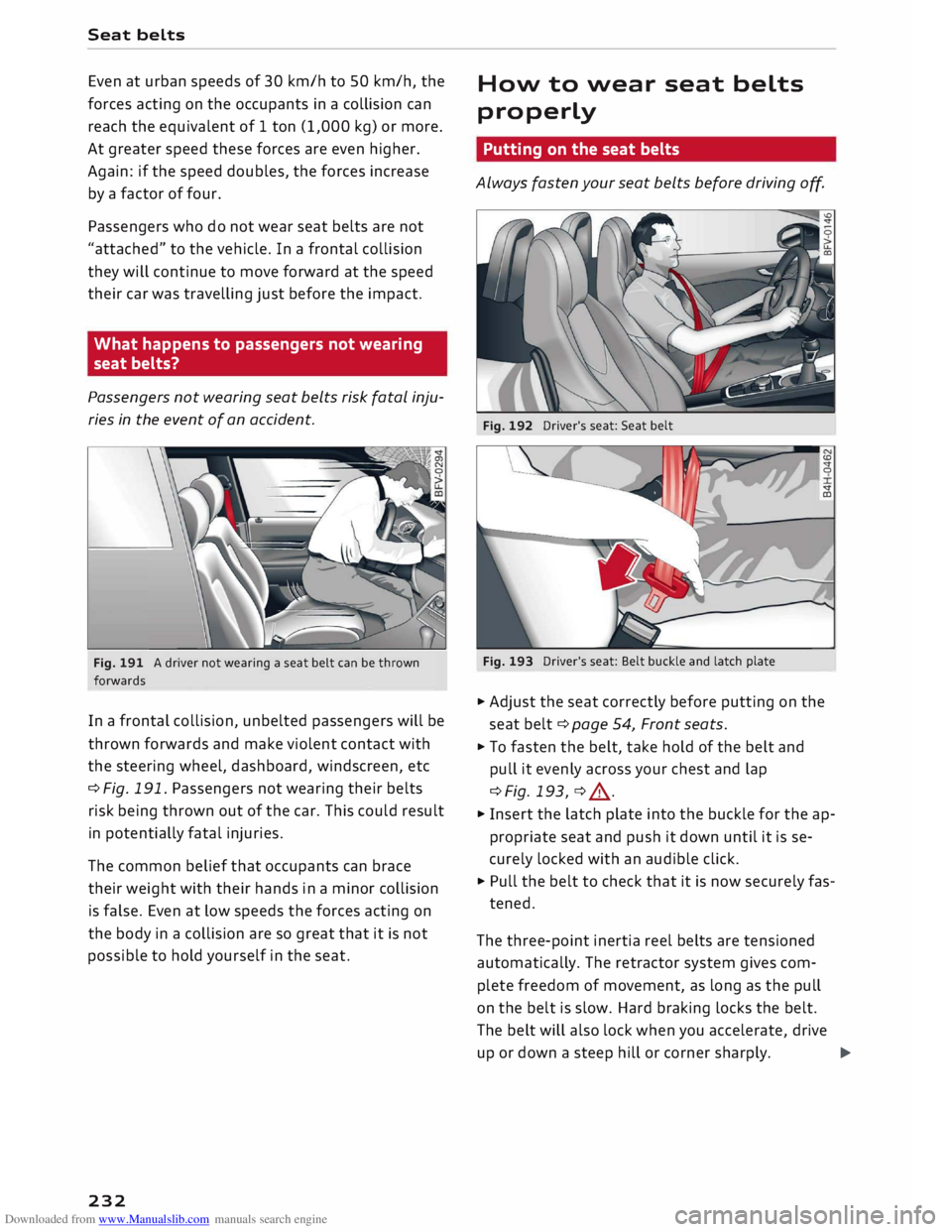
Fig. 191 A driver not wearing a seat belt can be thrown
forwards
In a frontal collision, unbelted passengers will be
thrown forwards and make violent contact with
the steering wheel, dashboard, windscreen, etc
¢ Fig. 191. Passengers not wearing their belts
risk being thrown out of the car. This could result
in potentially fatal injuries.
The common belief that occupants can brace
their weight with their hands in a minor collision
is false. Even at Low speeds the forces acting on
the body in a collision are so great that it is not
possible to hold yourself in the seat.
232 How
to wear seat belts
properly
Putting on the seat belts
Always fasten your seat belts before driving o
ff.
Fig. 192 Driver's seat: Seat belt
Fig. 193 Driver's seat: Belt buckle and latch plate
0
<:t
co
.. Adjust the seat correctly before putting on the
seat belt¢ page 54, Front seats.
.. To fasten the belt, take hold of the belt and
pull it evenly across your chest and lap
¢Fig. 193, ¢ ,A .
.. Insert the latch plate into the buckle for the ap
propriate seat and push it down until it is se
curely locked with an audible click.
.. Pull the belt to check that it is now securely fas-
tened.
The three-point inertia reel belts are tensioned
automatically. The retractor system gives com
plete freedom of movement, as long as the pull
on the belt is slow. Hard braking Locks the belt.
The belt will also lock when you accelerate, drive
up or down a steep hill or corner sharply.
..,.
Page 239 of 306
Downloaded from www.Manualslib.com manuals search engine 0
N
,.....
N
....
0
,.....
Vl
CX) Deactivating
the passenger's airbag
Applies to: vehicles with key-operated switch for passenger's
airbag
If an airbag has been deactivated, it should be
reactivated as soon as possible so that it can
continue to give the required protection.
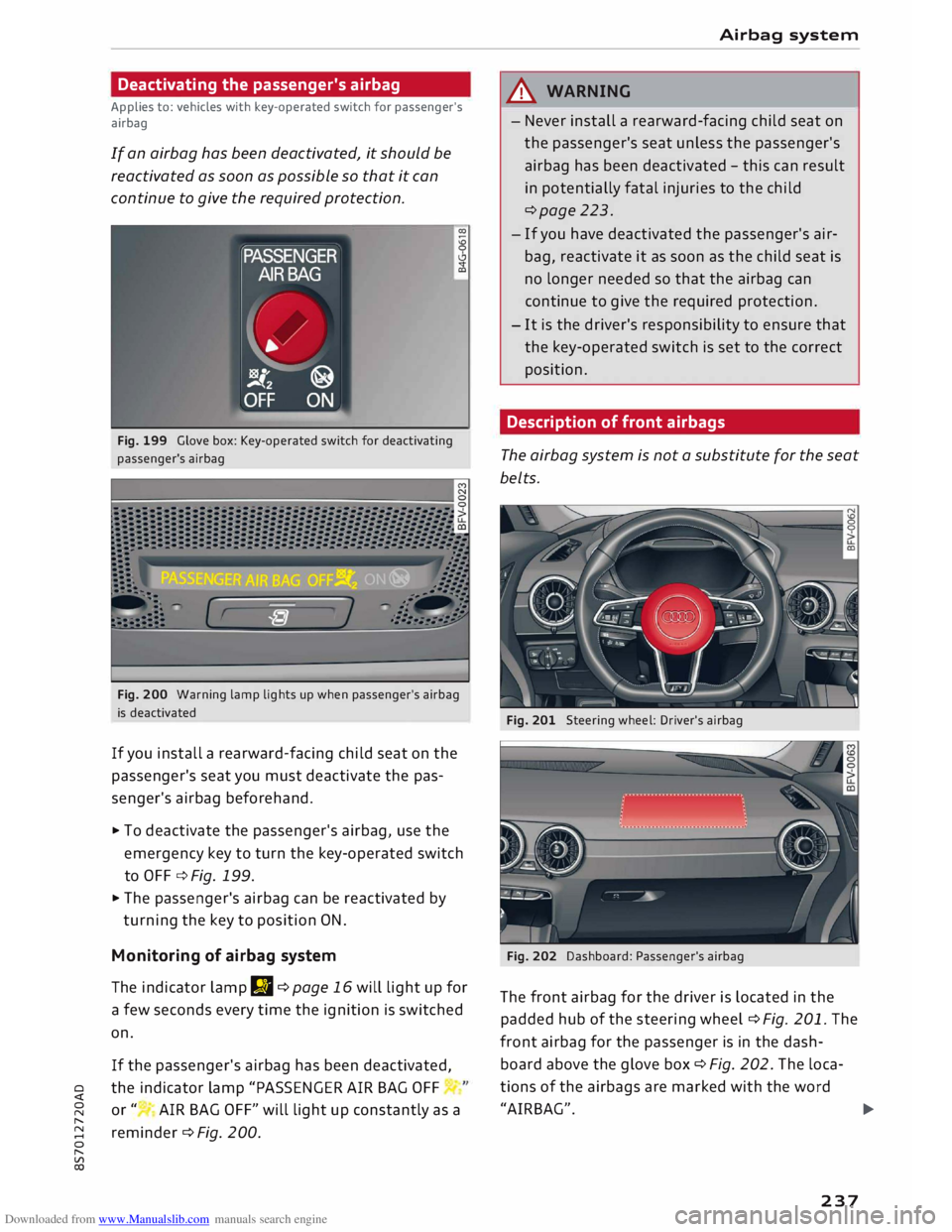
Fig. 199 Glove box: Key-operated switch for deactivating
passenger's airbag
Fig. 200 Warning lamp lights up when passenger's airbag
is deactivated
If you install a rearward-facing child seat on the
passenger's seat you must deactivate the pas
senger's airbag beforehand .
... To deactivate the passenger's airbag, use the
emergency key to turn the key-operated switch
to OFF ¢ Fig. 199 .
... The
passenger's airbag can be reactivated by
turning the key to position ON.
Monitoring of airbag system
The indicator lamp JJI ¢ page 16 will light up for
a few seconds every time the ignition is switched
on.
If the passenger's airbag has been deactivated,
the indicator lamp "PASSENGER AIR BAG OFF
or" AIR BAG OFF" will light up constantly as a
reminder¢ Fig. 200 . Airbag
system
.&_ WARNING
- Never install a rearward-facing child seat on
the passenger's seat unless the passenger's
airbag has been deactivated -this can result
in potentially fatal injuries to the child
¢page 223.
- If you have deactivated the passenger's air
bag, reactivate it as soon as the child seat is
no longer needed so that the airbag can
continue to give the required protection.
- It is the driver's responsibility to ensure that
the key-operated switch is set to the correct
position.
Description of front airbags
The airbag system is not a substitute for the seat
belts.
Fig. 201 Steering wheel: Driver's airbag
Fig. 202 Dashboard: Passenger's airbag
The front airbag for the driver is located in the
padded hub of the steering wheel¢ Fig. 201. The
front airbag for the passenger is in the dash
board above the glove box ¢Fig. 202. The loca
tions of the airbags are marked with the word
"AIRBAG". Ill--
237
Page 240 of 306
Downloaded from www.Manualslib.com manuals search engine Airbag
system
In conjunction with the seat belts, the front air
bags give additional head and chest protection
for the driver and passenger in the event of a se
vere frontal collision <=> A in Important safety
notes on the front airbag system on page 238.
How the front airbags work
When fully inflated, the airbags reduce the risk
of head or chest injury.
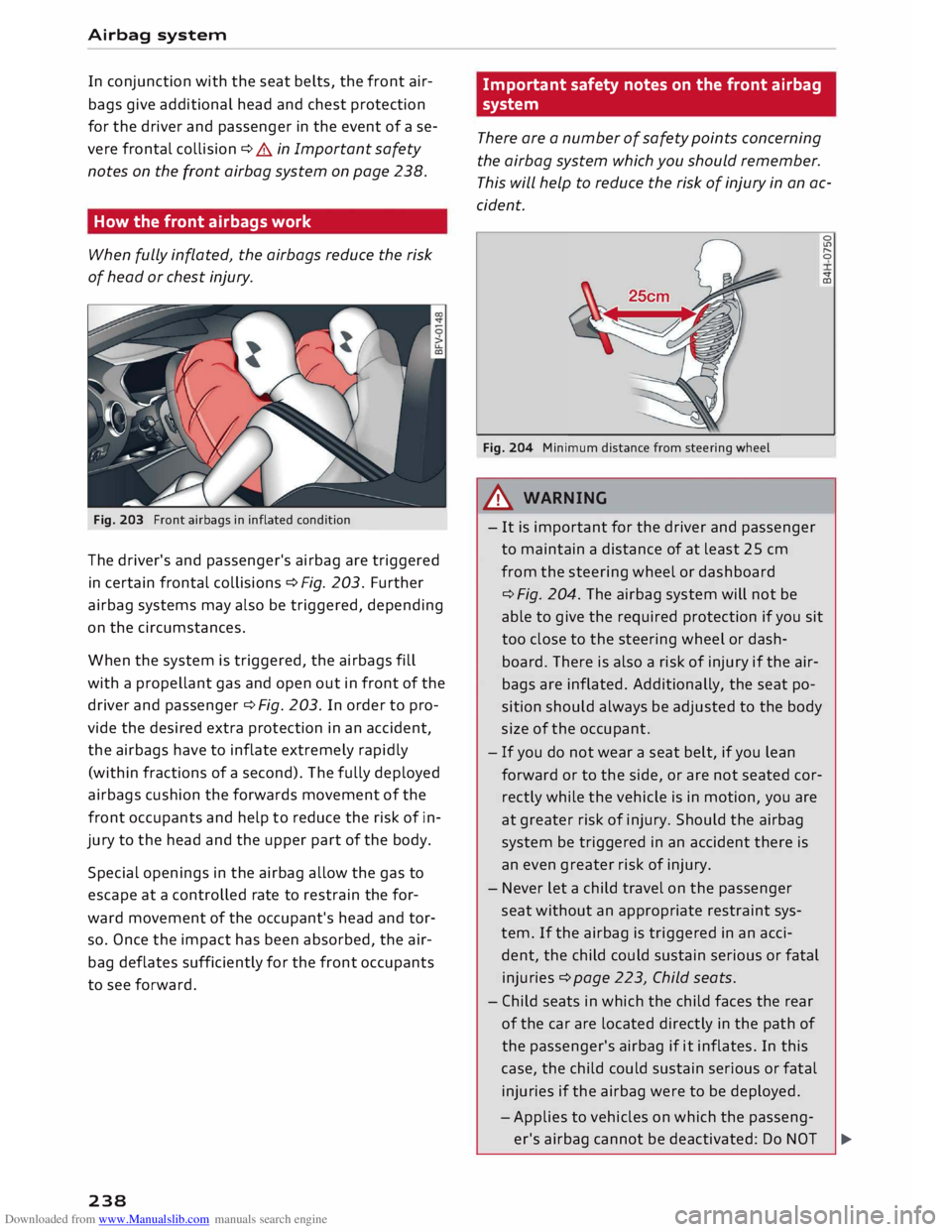
Fig. 203 Front airbags in inflated condition
The driver's and passenger's airbag are triggered
in certain frontal collisions c:> Fig. 203. Further
airbag systems may also be triggered, depending
on the circumstances.
When the system is triggered, the airbags fill
with a propellant gas and open out in front of the
driver and passenger<=> Fig. 203. In order to pro
vide the desired extra protection in an accident,
the airbags have to inflate extremely rapidly
(within fractions of a second). The fully deployed
airbags cushion the forwards movement of the
front occupants and help to reduce the risk of in
jury to the head and the upper part of the body.
Special openings in the airbag allow the gas to
escape at a controlled rate to restrain the for
ward movement of the occupant's head and tor
so. Once the impact has been absorbed, the air
bag deflates sufficiently for the front occupants
to see forward.
238 Important
safety notes on the front airbag
system
There are a number of safety points concerning
the airbag system which you should remember.
This will help to reduce the risk of injury in an ac
cident.
Fig. 204 Minimum distance from steering wheel
A WARNING 0
U'>
r--
0
�
co
- It is important for the driver and passenger
to maintain a distance of at least 25 cm
from the steering wheel or dashboard
<=> Fig. 204. The airbag system will not be
able to give the required protection if you sit
too close to the steering wheel or dash
board. There is also a risk of injury if the air
bags are inflated. Additionally, the seat po
sition should always be adjusted to the body
size of the occupant.
- If you do not wear a seat belt, if you lean
forward or to the side, or are not seated cor
rectly while the vehicle is in motion, you are
at greater risk of injury. Should the airbag
system be triggered in an accident there is
an even greater risk of injury.
- Never let a child travel on the passenger
seat without an appropriate restraint sys
tem. If the airbag is triggered in an acci
dent, the child could sustain serious or fatal
injuries c:> page 223, Child seats.
- Child seats in which the child faces the rear
of the car are located directly in the path of
the passenger's airbag if it inflates. In this
case, the child could sustain serious or fatal
injuries if the airbag were to be deployed.
- Applies to vehicles on which the passeng-
er's airbag cannot be deactivated: Do NOT
�
Page 241 of 306
Downloaded from www.Manualslib.com manuals search engine 0
N
,.....
N
......
0
,.....
Vl
CX) use
a rearward-facing child seat on the
passenger's seat.
- Applies to vehicles with key-operated
switch for deactivating the passenger's
airbag: Do NOT use a rearward-facing child
seat on the passenger's seat while the
passenger's airbag is active. If you have no
alternative but to use a rearward-facing
child seat on the passenger's seat, the
passenger's airbag must be deactivated
beforehand via the key-operated switch*
¢ page 237. Make sure that the passeng
er's airbag is reactivated by means of the
key-operated switch* as soon as the child
seat is no longer needed on the passeng
er's seat.
- Occupants must never carry any objects or
pets in the space between them and the air
bags, or allow children or other passengers
to travel in this position.
- Do not cover or stick anything on the steer
ing wheel hub or the soft plastic surface of
the airbag unit on the passenger's side of
the dashboard, and do not obstruct or modi
fy them in any way. These parts should only
be cleaned with a dry cloth (or with a cloth
moistened with plain water). It is also im
portant not to attach any objects such as
cup holders or telephone mountings to the
surfaces covering the airbag units.
- Any work on the airbag system or removal
and installation of the airbag components
for other repairs (such as repairs to the
steering wheel or removal of seats) must be
performed by a qualified workshop. Airbag
system
Side airbags
Description of side airbags
Applies to: vehicles with side airbags
The airbag system is not a substitute for the seat
belts.
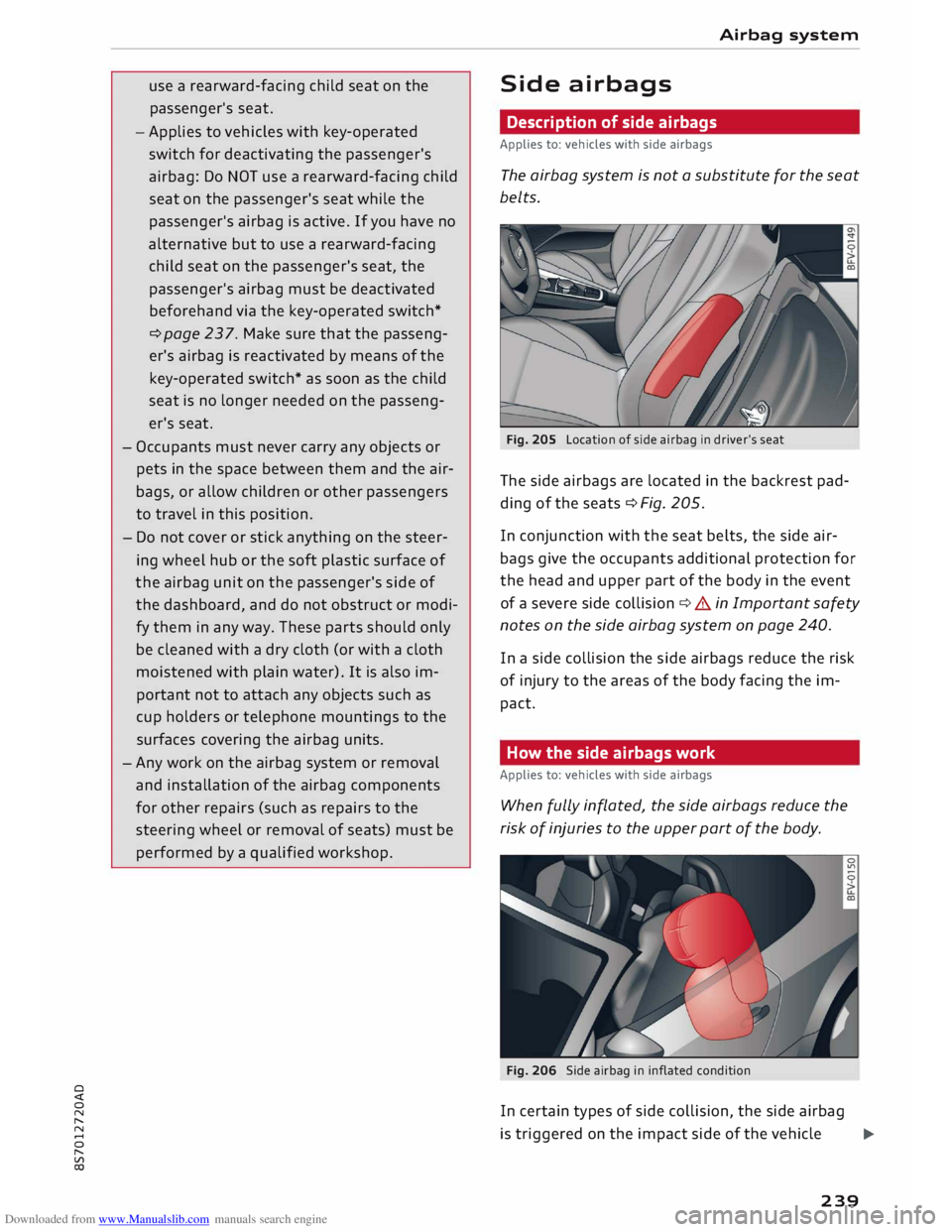
Fig. 205 Location of side airbag in driver's seat
The side airbags are located in the backrest pad
ding of the seats ¢Fig. 205.
In conjunction with the seat belts, the side air
bags give the occupants additional protection for
the head and upper part of the body in the event
of a severe side collision ¢&. in Important safety
notes on the side airbag system on page 240.
In a side collision the side airbags reduce the risk
of injury to the areas of the body facing the im
pact.
How the side airbags work
Applies to: vehicles with side airbags
When fully inflated, the side airbags reduce the
risk of injuries to the upper port of the body.
Fig. 206 Side airbag in inflated condition
In certain types of side collision, the side airbag
is triggered on the impact side of the vehicle ..,.
239
Page 257 of 306
Downloaded from www.Manualslib.com manuals search engine 0
N
,.....
N
......
0
,.....
Vl
CX) DOT
... 2216 ...
means, for example, that the tyre was produced
in the 22nd week of 2016.
Audi Genuine Tyres
Audi Genuine Tyres with the marking "AO" are
specially matched to your Audi. When used prop
erly, these tyres meet the highest standards in
safety and handling. Your specialist retailer will
be glad to provide more information.
_& WARNING
- Use only tyre/rim combinations and match
ing wheel bolts approved by Audi. Otherwise
damage to the vehicle and an accident could
result.
- For technical reasons, it is not possible to
use wheels from other vehicles. In certain
cases, it is not even possible to use wheels
from another vehicle of the same model.
- It is very important to ensure that the tyres
you have chosen have adequate clearance.
When selecting replacement tyres, do not
rely entirely on the nominal tyre size
marked on the tyre; with some makes of
tyre the effective tyre size can differ signifi
cantly from the nominal dimensions, even
though the tyres have the same size desig
nation. Inadequate tyre clearance can result
in damage to the tyres or the vehicle, caus
ing a serious safety risk.
-Avoid running the car on tyres that are more
than 6 years old. If you have no alternative,
you should drive slowly and with extra care
at all times.
- The use of run-flat tyres on your vehicle is
NOT authorised! Unauthorised use can cause
an accident or damage your vehicle.
- If wheel trims are fitted after the car is pur
chased, ensure that there is an adequate
flow of air for cooling the brakes -risk of ac
cident!
1} Please observe the applicable regulations in the country in
which you are travelling. Wheels
Tyre wear / damage
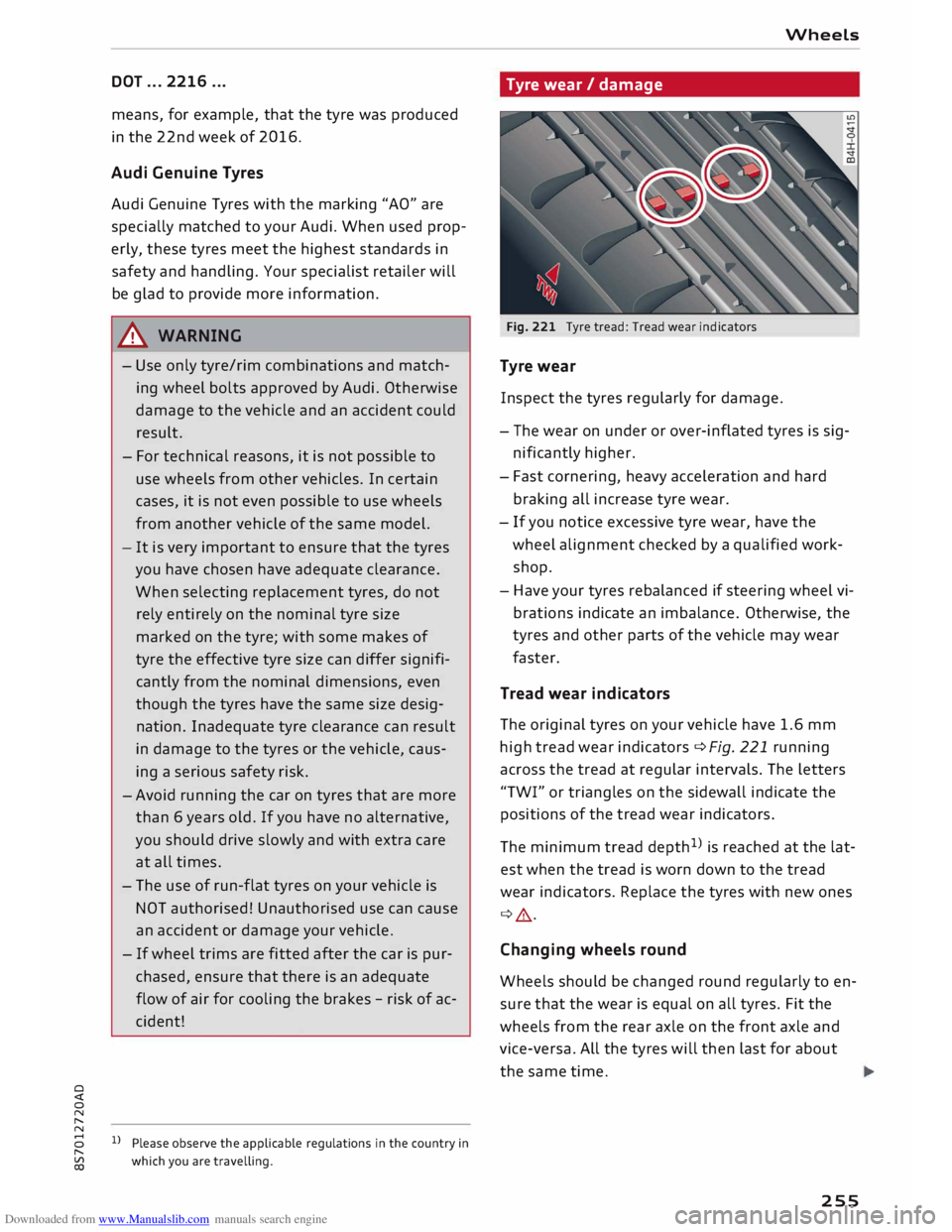
Fig. 221 Tyre tread: Tread wear indicators
Tyre wear
Inspect the tyres regularly for damage.
- The wear on under or over-inflated tyres is sig
nificantly higher.
- Fast cornering, heavy acceleration and hard
braking all increase tyre wear.
- If you notice excessive tyre wear, have the
wheel alignment checked by a qualified work
shop.
- Have your tyres rebalanced if steering wheel vi
brations indicate an imbalance. Otherwise, the
tyres and other parts of the vehicle may wear
faster.
Tread wear indicators
The original tyres on your vehicle have 1.6 mm
high tread wear indicators
¢ Fig.
221 running
across the tread at regular intervals. The letters
"TWI" or triangles on the sidewall indicate the
positions of the tread wear indicators.
The minimum tread depth 1
) is reached at the lat
est when the tread is worn down to the tread
wear indicators. Replace the tyres with new ones
¢ _8..
Changing wheels round
Wheels should be changed round regularly to en
sure that the wear is equal on all tyres. Fit the
wheels from the rear axle on the front axle and
vice-versa. All the tyres will then last for about
the same time.
255
Page 261 of 306
Downloaded from www.Manualslib.com manuals search engine 0
N
,.....
N
......
0
,.....
Vl
CX) based
on the tyre pressures you have stored. The
inflation pressures recommended for your vehicle
are given on the tyre pressure sticker
¢page 256, Fig. 222.
The rolling circumference and vibration can
change and cause a tyre pressure warning if:
- The inflation pressure in one or more tyres is
too low.
- The tyre has suffered structural damage.
- The wheels were changed or the tyre pressures
were changed and the new tyre pressures were
not stored ¢ page 259.
- You are driving with the temporary spare
wheel*.
Indicator lamps
RE- Loss of pressure on one or more tyres¢.&,.
Check and change or repair the tyre(s). Check and
adjust the inflation pressures of all four tyres
again and store the new tyre pressures on the in
fotainment system¢ page 259.
@m (Tyre Pressure Monitoring System) Tyre
pressure: fault. See owner's manual -If @m
ap
pears and the indicator lamp RE in the instru
ment cluster display flashes for approx. one mi
nute and then remains lit after you have switched
on the ignition or while you are driving, there is a
fault in the system. Try to store the correct tyre
pressures ¢ page 259. If the indicator lamp
does not go out or if it comes on again after a
short time, drive to a qualified workshop without
delay and have the fault rectified.
& WARNING
- If the tyre pressure loss indicator appears
on the display, slow down immediately and
avoid any severe braking or steering ma
noeuvres. As soon as you can do so safely,
stop and check the tyres and the tyre pres
sures.
- It is the driver's responsibility to ensure that
the tyre pressures are correct. For this rea
son you must check the tyre pressures regu
larly.
- Under certain conditions (e.g. driving at
high speeds, on ice and snow or on poor Wheels
road surfaces) the tyre pressure loss indica
tor may not appear immediately.
- The use of run-flat tyres on your vehicle is
NOT authorised! Unauthorised use can cause
an accident or damage your vehicle.
((D) Note
- If a malfunction occurs in the ESC system,
the tyre pressure loss indicator may also be
out of action.
- When driving with snow chains, a system
malfunction can occur.
- The tyre pressure loss indicator on your Audi
is specially matched to tyres with the mark
ing "AO"¢ page 254. We recommend that
you use these tyres.
Storing tyre pressure settings
Applies to: vehicles with tyre pressure loss indicator
When you change a tyre or the tyre pressure on
your vehicle, you must confirm the change on the
infotainment system.
.., Before storing the new tyre pressures, check
that the current pressures on all four wheels
correspond to the specified values and adapt
the pressures to the current load ¢ page 255.
.., Switch on the ignition.
.., Select the following on the infotainment sys
tem: I MENU I button >Car> left control button
> Servicing & checks > Tyre pressure loss indi
cator.
(D} Note
Do not store the tyre pressures if you are driv
ing with snow chains.
259