sport BMW X6 2013 E71 Owner's Guide
[x] Cancel search | Manufacturer: BMW, Model Year: 2013, Model line: X6, Model: BMW X6 2013 E71Pages: 345, PDF Size: 9.45 MB
Page 220 of 345
DVD system in rearVehicle equipmentThis chapter describes all series equipment as
well as country-specific and special equipment
offered for this model series.Therefore, it also
describes equipment that may not be found in
your vehicle, for instance due to the selected
special equipment or the country version. This
also applies to safety-related functions and
systems.
General information
With the DVD system in the rear you can play
CDs and DVDs with audio, video and image
data. The DVD system can also play data from
attached external audio and video devices. Au‐
dio output is possible both via headphones
and via the vehicle speakers.
You can control the DVD system using the but‐
tons on the CD-/DVD player or using the re‐
mote control.
Some functions are operated using the remote
control.
Enabling DVD system
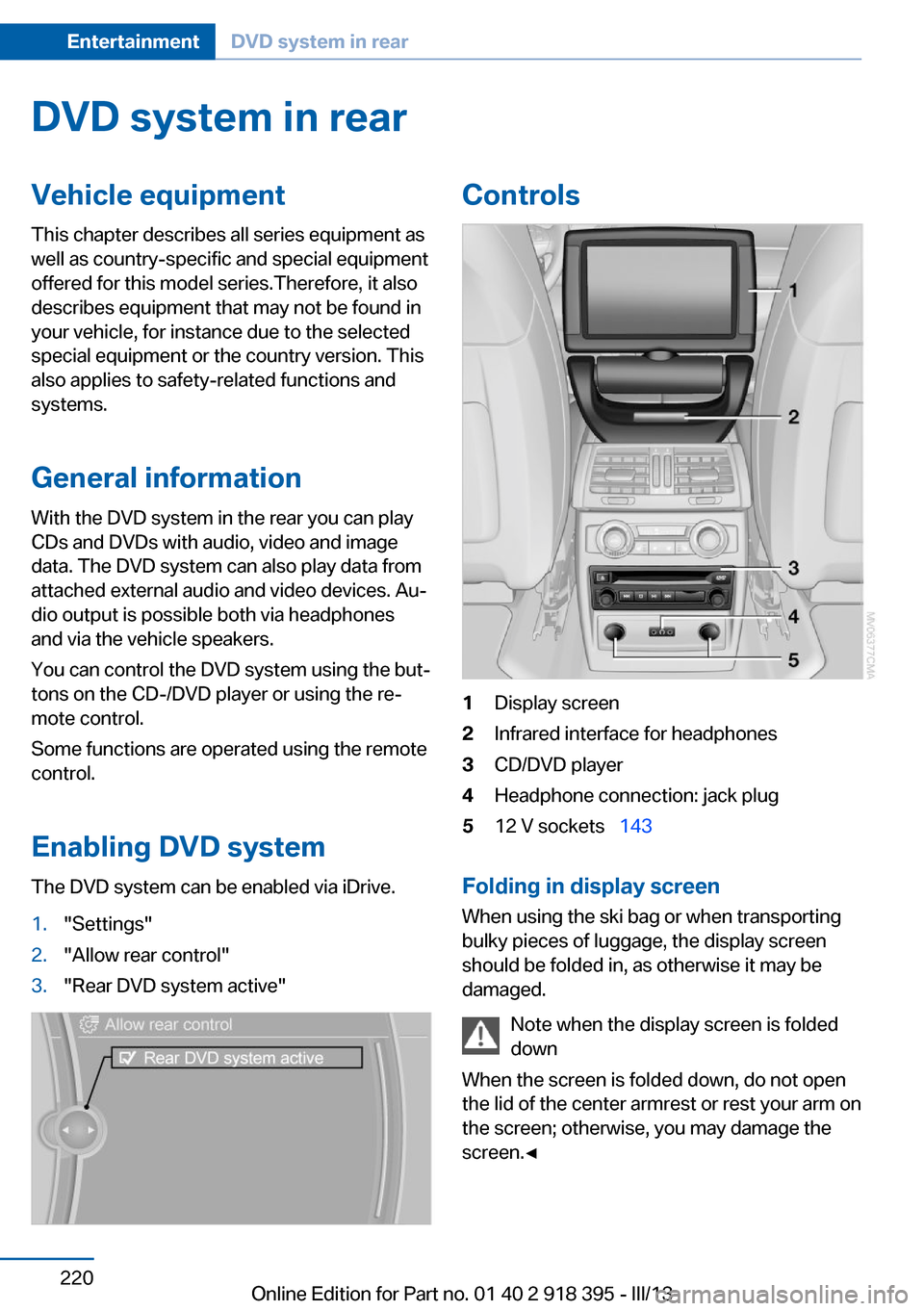
The DVD system can be enabled via iDrive.1."Settings"2."Allow rear control"3."Rear DVD system active"Controls1Display screen2Infrared interface for headphones3CD/DVD player4Headphone connection: jack plug512 V sockets 143
Folding in display screen
When using the ski bag or when transporting
bulky pieces of luggage, the display screen
should be folded in, as otherwise it may be
damaged.
Note when the display screen is folded
down
When the screen is folded down, do not open
the lid of the center armrest or rest your arm on
the screen; otherwise, you may damage the
screen.◀
Seite 220EntertainmentDVD system in rear220
Online Edition for Part no. 01 40 2 918 395 - III/13
Page 272 of 345
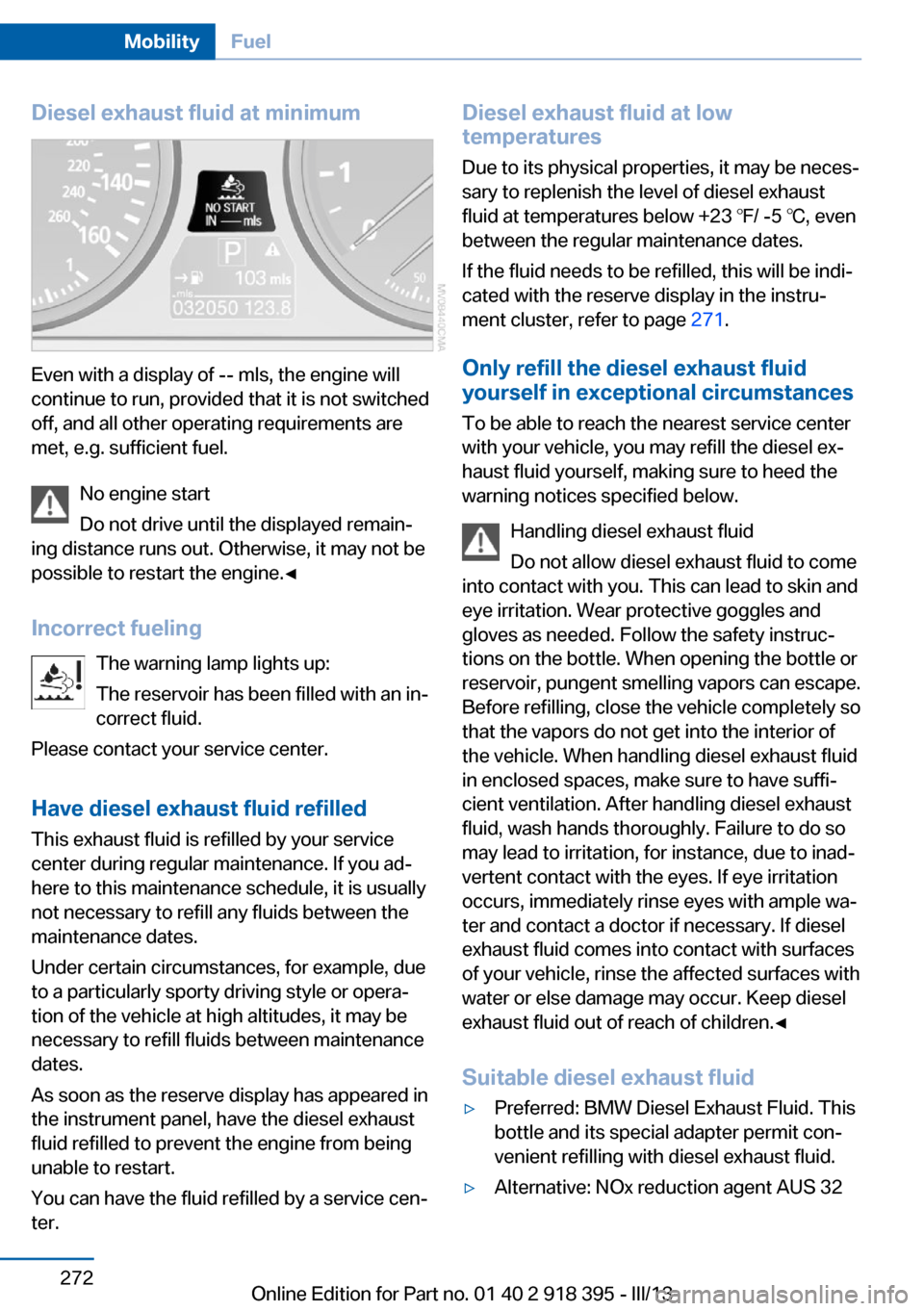
Diesel exhaust fluid at minimum
Even with a display of -- mls, the engine will
continue to run, provided that it is not switched
off, and all other operating requirements are
met, e.g. sufficient fuel.
No engine start
Do not drive until the displayed remain‐
ing distance runs out. Otherwise, it may not be
possible to restart the engine.◀
Incorrect fueling The warning lamp lights up:
The reservoir has been filled with an in‐
correct fluid.
Please contact your service center.
Have diesel exhaust fluid refilled This exhaust fluid is refilled by your service
center during regular maintenance. If you ad‐
here to this maintenance schedule, it is usually
not necessary to refill any fluids between the
maintenance dates.
Under certain circumstances, for example, due
to a particularly sporty driving style or opera‐
tion of the vehicle at high altitudes, it may be
necessary to refill fluids between maintenance
dates.
As soon as the reserve display has appeared in
the instrument panel, have the diesel exhaust
fluid refilled to prevent the engine from being
unable to restart.
You can have the fluid refilled by a service cen‐
ter.
Diesel exhaust fluid at low
temperatures
Due to its physical properties, it may be neces‐
sary to replenish the level of diesel exhaust
fluid at temperatures below +23 ℉/ -5 ℃, even
between the regular maintenance dates.
If the fluid needs to be refilled, this will be indi‐
cated with the reserve display in the instru‐
ment cluster, refer to page 271.
Only refill the diesel exhaust fluid
yourself in exceptional circumstances
To be able to reach the nearest service center
with your vehicle, you may refill the diesel ex‐
haust fluid yourself, making sure to heed the
warning notices specified below.
Handling diesel exhaust fluid
Do not allow diesel exhaust fluid to come
into contact with you. This can lead to skin and
eye irritation. Wear protective goggles and
gloves as needed. Follow the safety instruc‐
tions on the bottle. When opening the bottle or
reservoir, pungent smelling vapors can escape.
Before refilling, close the vehicle completely so
that the vapors do not get into the interior of
the vehicle. When handling diesel exhaust fluid
in enclosed spaces, make sure to have suffi‐
cient ventilation. After handling diesel exhaust
fluid, wash hands thoroughly. Failure to do so
may lead to irritation, for instance, due to inad‐
vertent contact with the eyes. If eye irritation
occurs, immediately rinse eyes with ample wa‐
ter and contact a doctor if necessary. If diesel
exhaust fluid comes into contact with surfaces
of your vehicle, rinse the affected surfaces with
water or else damage may occur. Keep diesel
exhaust fluid out of reach of children.◀
Suitable diesel exhaust fluid▷Preferred: BMW Diesel Exhaust Fluid. This
bottle and its special adapter permit con‐
venient refilling with diesel exhaust fluid.▷Alternative: NOx reduction agent AUS 32Seite 272MobilityFuel272
Online Edition for Part no. 01 40 2 918 395 - III/13
Page 276 of 345
Do not exceed the maximum permissible
speed
The maximum permissible speed for these tire
pressures is 100 mph/160 km/h. Do not ex‐
ceed this speed; otherwise, tire damage and
accidents may occur.◀
Tire inflation pressures for driving
above 100 mph or 160 km/h
Adjust the tire inflation pressures
To drive at maximum speeds in excess of
100 mph/160 km/h, adjust pressures to the re‐
spective tire inflation pressures listed on the
following pages in the column for traveling
speeds including those exceeding 100 mph or
160 km/h. Otherwise, tire damage and acci‐
dents could occur.◀
Observe all national and local maximum speed
limits; otherwise, violations of the laws could
occur.
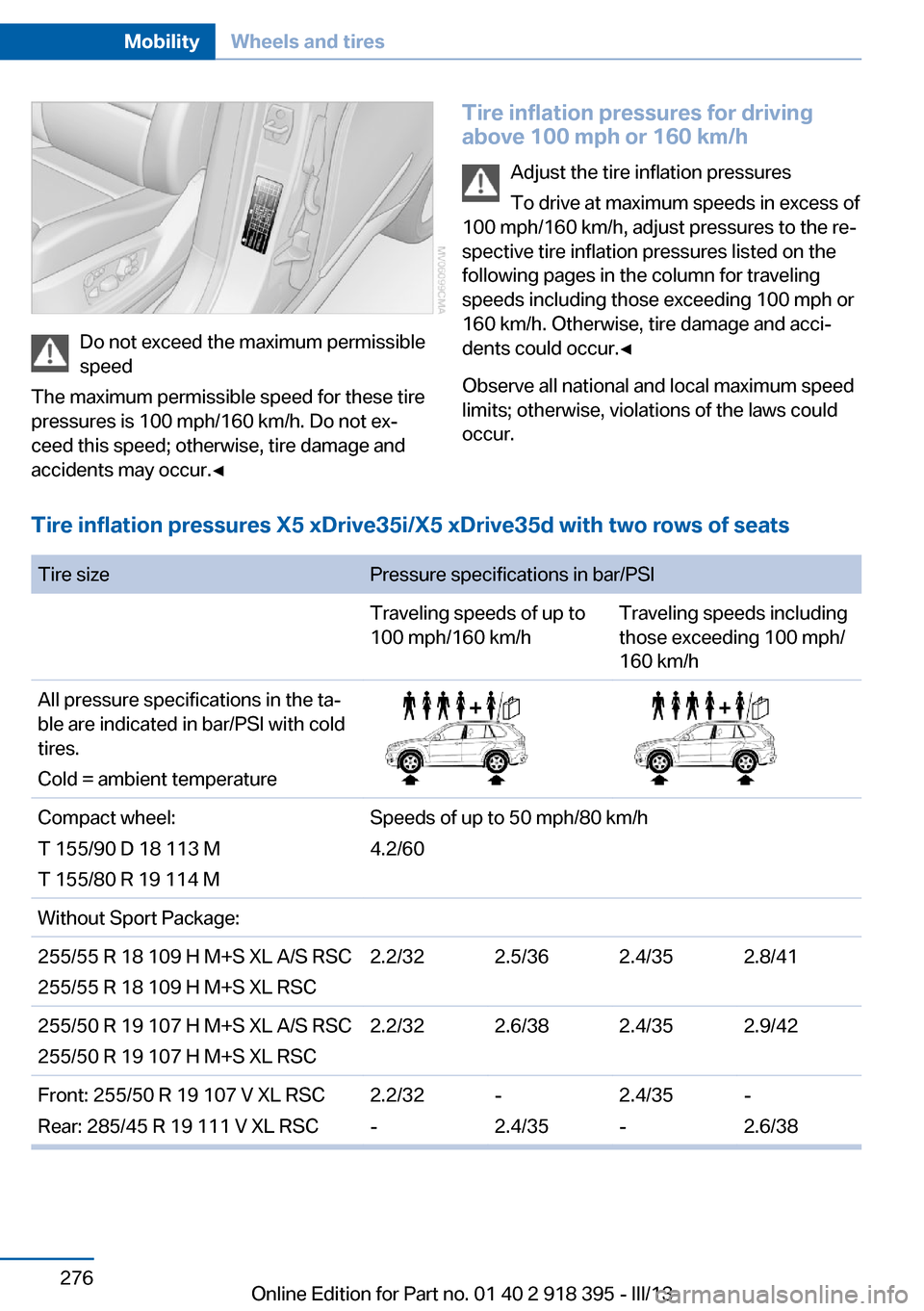
Tire inflation pressures X5 xDrive35i/X5 xDrive35d with two rows of seats
Tire sizePressure specifications in bar/PSITraveling speeds of up to
100 mph/160 km/hTraveling speeds including
those exceeding 100 mph/
160 km/hAll pressure specifications in the ta‐
ble are indicated in bar/PSI with cold
tires.
Cold = ambient temperatureCompact wheel:
T 155/90 D 18 113 M
T 155/80 R 19 114 MSpeeds of up to 50 mph/80 km/h
4.2/60Without Sport Package:255/55 R 18 109 H M+S XL A/S RSC
255/55 R 18 109 H M+S XL RSC2.2/322.5/362.4/352.8/41255/50 R 19 107 H M+S XL A/S RSC
255/50 R 19 107 H M+S XL RSC2.2/322.6/382.4/352.9/42Front: 255/50 R 19 107 V XL RSC
Rear: 285/45 R 19 111 V XL RSC2.2/32
--
2.4/352.4/35
--
2.6/38Seite 276MobilityWheels and tires276
Online Edition for Part no. 01 40 2 918 395 - III/13
Page 277 of 345
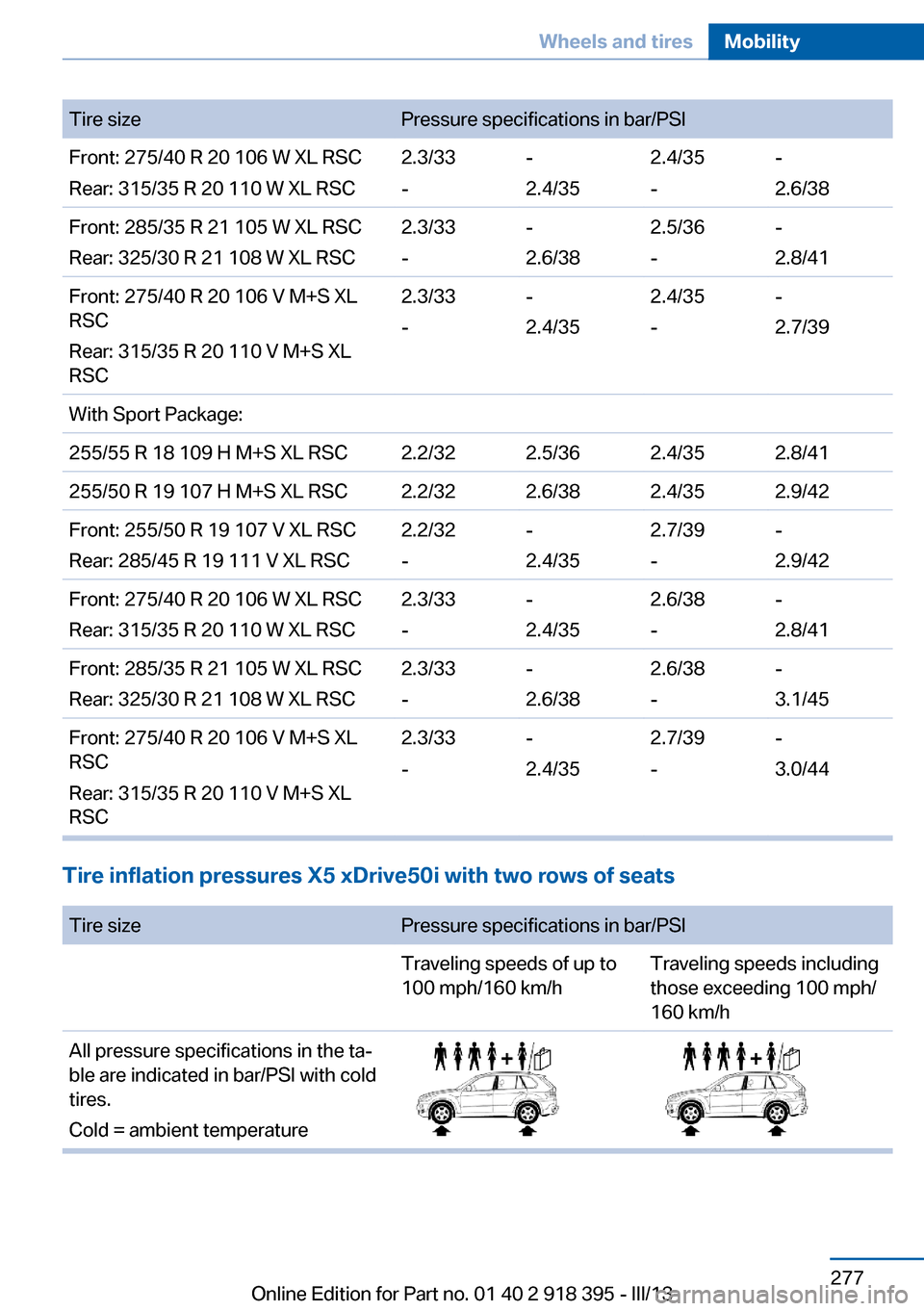
Tire sizePressure specifications in bar/PSIFront: 275/40 R 20 106 W XL RSC
Rear: 315/35 R 20 110 W XL RSC2.3/33
--
2.4/352.4/35
--
2.6/38Front: 285/35 R 21 105 W XL RSC
Rear: 325/30 R 21 108 W XL RSC2.3/33
--
2.6/382.5/36
--
2.8/41Front: 275/40 R 20 106 V M+S XL
RSC
Rear: 315/35 R 20 110 V M+S XL
RSC2.3/33
--
2.4/352.4/35
--
2.7/39With Sport Package:255/55 R 18 109 H M+S XL RSC2.2/322.5/362.4/352.8/41255/50 R 19 107 H M+S XL RSC2.2/322.6/382.4/352.9/42Front: 255/50 R 19 107 V XL RSC
Rear: 285/45 R 19 111 V XL RSC2.2/32
--
2.4/352.7/39
--
2.9/42Front: 275/40 R 20 106 W XL RSC
Rear: 315/35 R 20 110 W XL RSC2.3/33
--
2.4/352.6/38
--
2.8/41Front: 285/35 R 21 105 W XL RSC
Rear: 325/30 R 21 108 W XL RSC2.3/33
--
2.6/382.6/38
--
3.1/45Front: 275/40 R 20 106 V M+S XL
RSC
Rear: 315/35 R 20 110 V M+S XL
RSC2.3/33
--
2.4/352.7/39
--
3.0/44
Tire inflation pressures X5 xDrive50i with two rows of seats
Tire sizePressure specifications in bar/PSITraveling speeds of up to
100 mph/160 km/hTraveling speeds including
those exceeding 100 mph/
160 km/hAll pressure specifications in the ta‐
ble are indicated in bar/PSI with cold
tires.
Cold = ambient temperatureSeite 277Wheels and tiresMobility277
Online Edition for Part no. 01 40 2 918 395 - III/13
Page 278 of 345
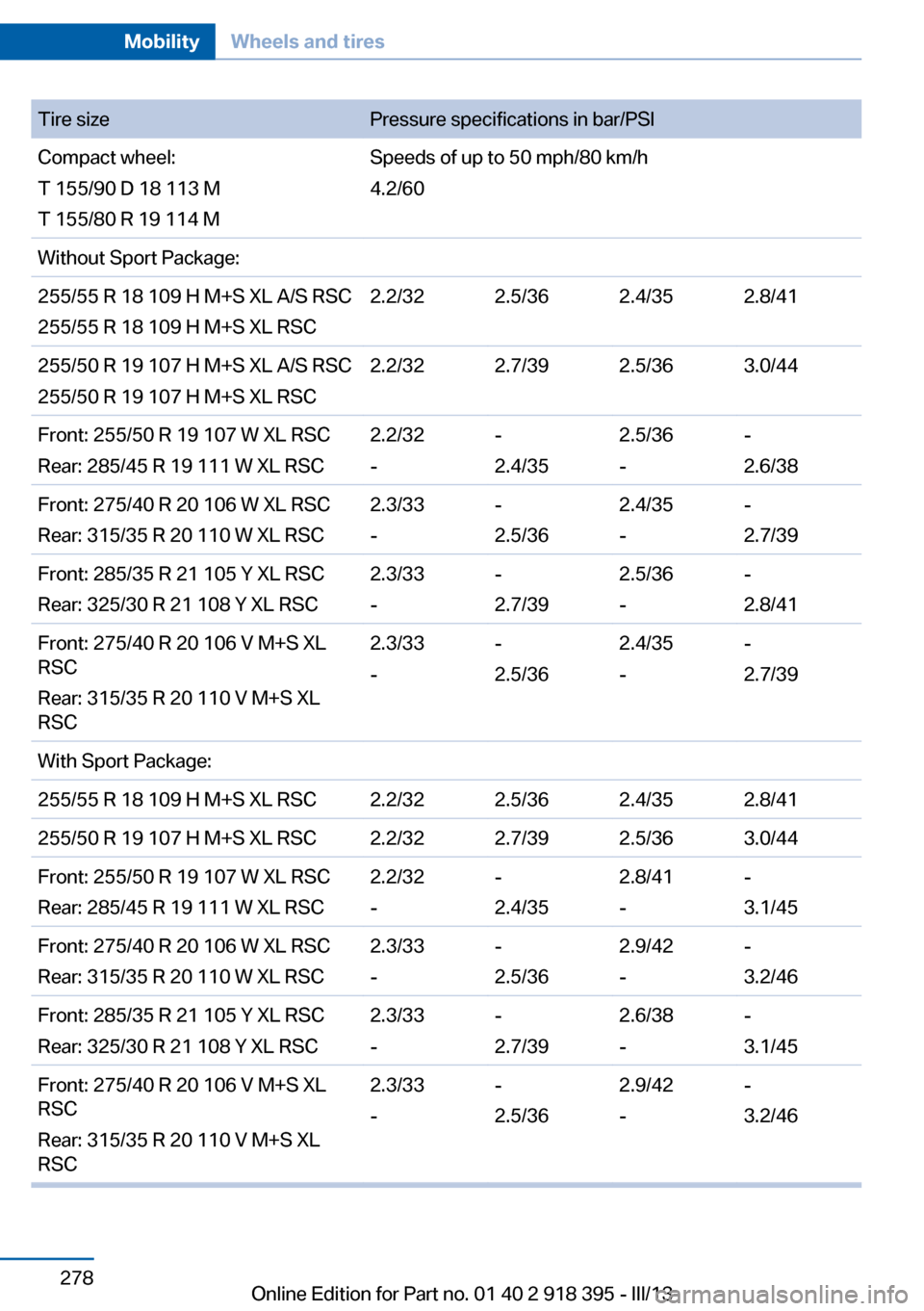
Tire sizePressure specifications in bar/PSICompact wheel:
T 155/90 D 18 113 M
T 155/80 R 19 114 MSpeeds of up to 50 mph/80 km/h
4.2/60Without Sport Package:255/55 R 18 109 H M+S XL A/S RSC
255/55 R 18 109 H M+S XL RSC2.2/322.5/362.4/352.8/41255/50 R 19 107 H M+S XL A/S RSC
255/50 R 19 107 H M+S XL RSC2.2/322.7/392.5/363.0/44Front: 255/50 R 19 107 W XL RSC
Rear: 285/45 R 19 111 W XL RSC2.2/32
--
2.4/352.5/36
--
2.6/38Front: 275/40 R 20 106 W XL RSC
Rear: 315/35 R 20 110 W XL RSC2.3/33
--
2.5/362.4/35
--
2.7/39Front: 285/35 R 21 105 Y XL RSC
Rear: 325/30 R 21 108 Y XL RSC2.3/33
--
2.7/392.5/36
--
2.8/41Front: 275/40 R 20 106 V M+S XL
RSC
Rear: 315/35 R 20 110 V M+S XL
RSC2.3/33
--
2.5/362.4/35
--
2.7/39With Sport Package:255/55 R 18 109 H M+S XL RSC2.2/322.5/362.4/352.8/41255/50 R 19 107 H M+S XL RSC2.2/322.7/392.5/363.0/44Front: 255/50 R 19 107 W XL RSC
Rear: 285/45 R 19 111 W XL RSC2.2/32
--
2.4/352.8/41
--
3.1/45Front: 275/40 R 20 106 W XL RSC
Rear: 315/35 R 20 110 W XL RSC2.3/33
--
2.5/362.9/42
--
3.2/46Front: 285/35 R 21 105 Y XL RSC
Rear: 325/30 R 21 108 Y XL RSC2.3/33
--
2.7/392.6/38
--
3.1/45Front: 275/40 R 20 106 V M+S XL
RSC
Rear: 315/35 R 20 110 V M+S XL
RSC2.3/33
--
2.5/362.9/42
--
3.2/46Seite 278MobilityWheels and tires278
Online Edition for Part no. 01 40 2 918 395 - III/13
Page 279 of 345
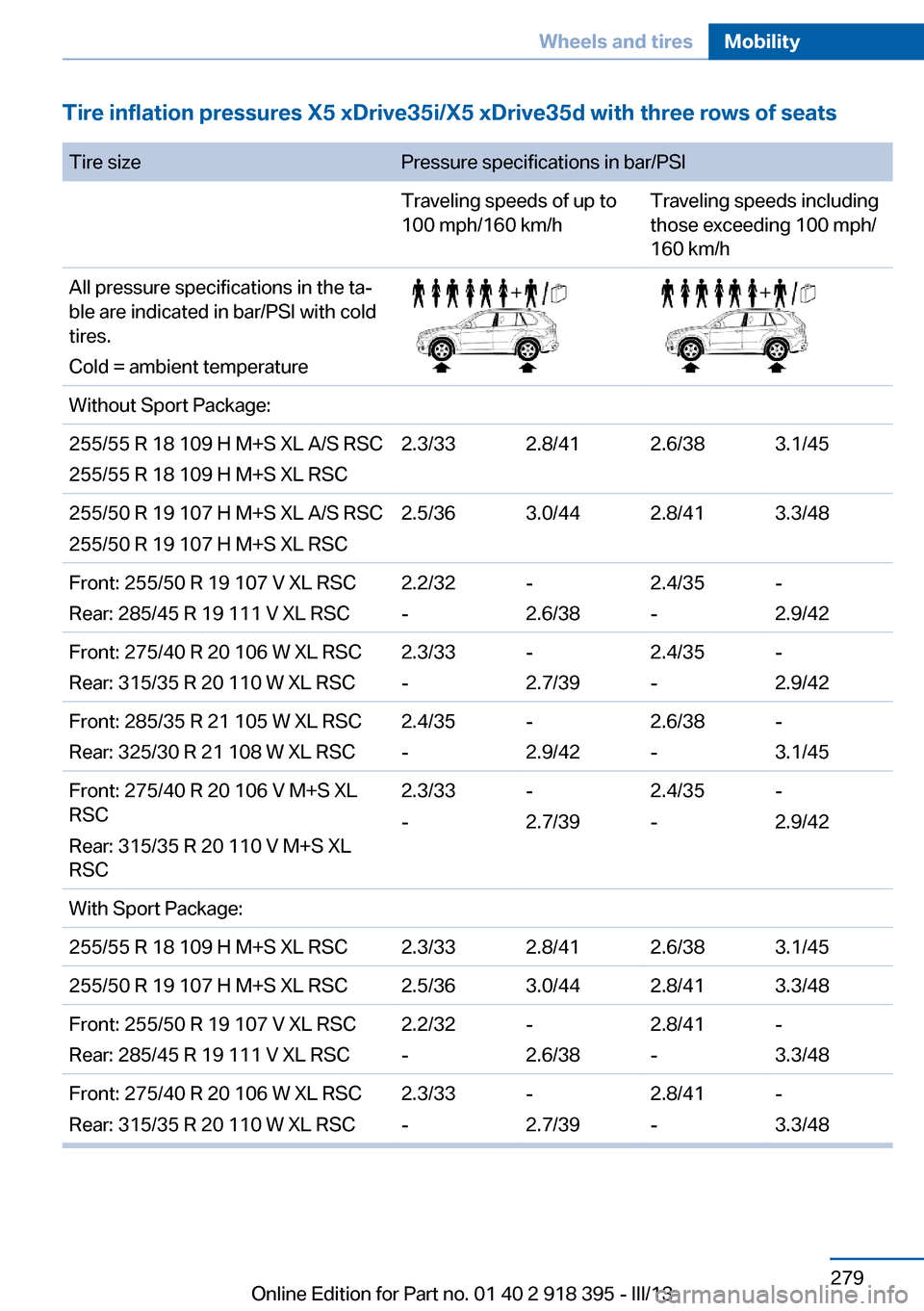
Tire inflation pressures X5 xDrive35i/X5 xDrive35d with three rows of seats
Tire sizePressure specifications in bar/PSITraveling speeds of up to
100 mph/160 km/hTraveling speeds including
those exceeding 100 mph/
160 km/hAll pressure specifications in the ta‐
ble are indicated in bar/PSI with cold
tires.
Cold = ambient temperatureWithout Sport Package:255/55 R 18 109 H M+S XL A/S RSC
255/55 R 18 109 H M+S XL RSC2.3/332.8/412.6/383.1/45255/50 R 19 107 H M+S XL A/S RSC
255/50 R 19 107 H M+S XL RSC2.5/363.0/442.8/413.3/48Front: 255/50 R 19 107 V XL RSC
Rear: 285/45 R 19 111 V XL RSC2.2/32
--
2.6/382.4/35
--
2.9/42Front: 275/40 R 20 106 W XL RSC
Rear: 315/35 R 20 110 W XL RSC2.3/33
--
2.7/392.4/35
--
2.9/42Front: 285/35 R 21 105 W XL RSC
Rear: 325/30 R 21 108 W XL RSC2.4/35
--
2.9/422.6/38
--
3.1/45Front: 275/40 R 20 106 V M+S XL
RSC
Rear: 315/35 R 20 110 V M+S XL
RSC2.3/33
--
2.7/392.4/35
--
2.9/42With Sport Package:255/55 R 18 109 H M+S XL RSC2.3/332.8/412.6/383.1/45255/50 R 19 107 H M+S XL RSC2.5/363.0/442.8/413.3/48Front: 255/50 R 19 107 V XL RSC
Rear: 285/45 R 19 111 V XL RSC2.2/32
--
2.6/382.8/41
--
3.3/48Front: 275/40 R 20 106 W XL RSC
Rear: 315/35 R 20 110 W XL RSC2.3/33
--
2.7/392.8/41
--
3.3/48Seite 279Wheels and tiresMobility279
Online Edition for Part no. 01 40 2 918 395 - III/13
Page 280 of 345
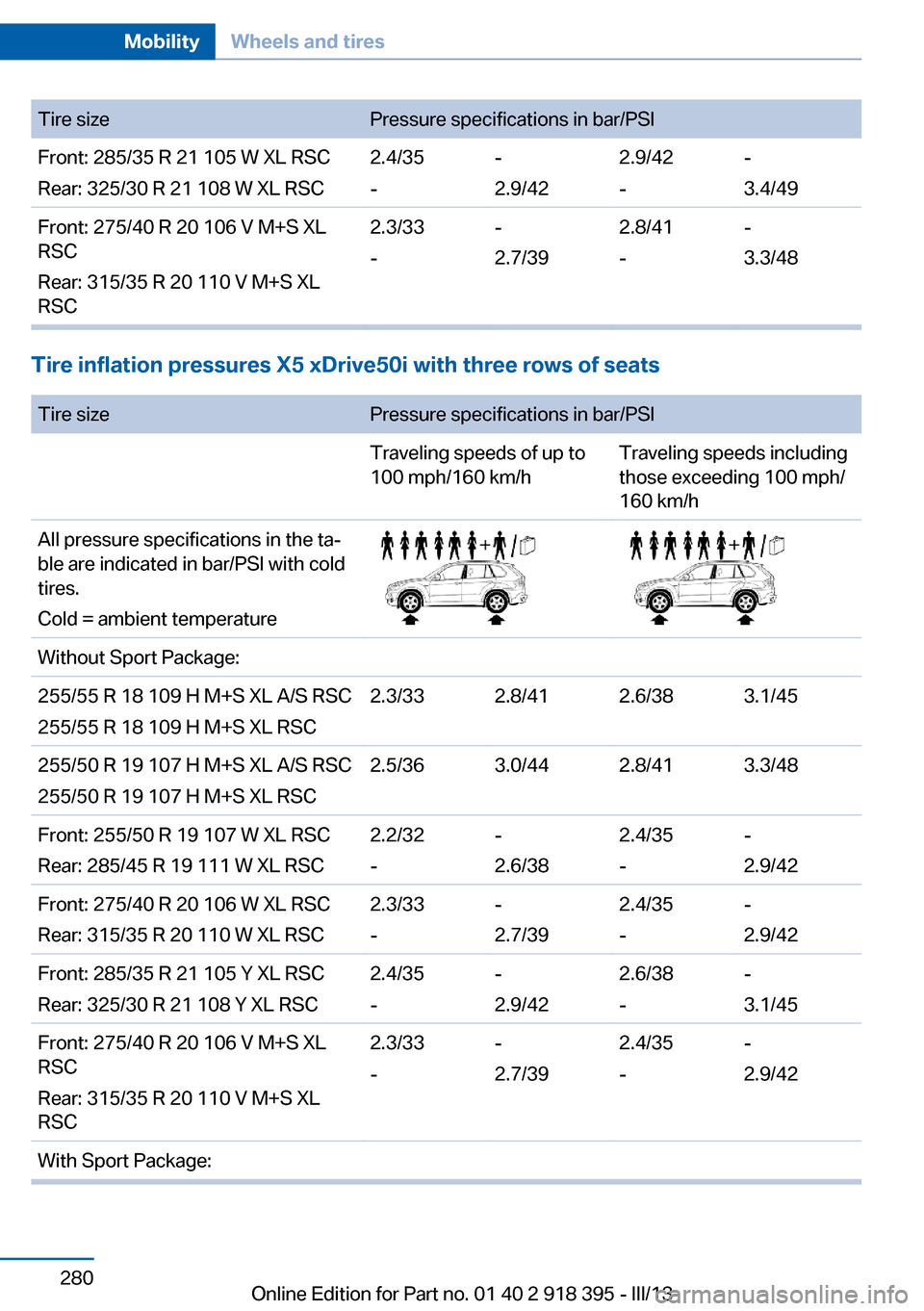
Tire sizePressure specifications in bar/PSIFront: 285/35 R 21 105 W XL RSC
Rear: 325/30 R 21 108 W XL RSC2.4/35
--
2.9/422.9/42
--
3.4/49Front: 275/40 R 20 106 V M+S XL
RSC
Rear: 315/35 R 20 110 V M+S XL
RSC2.3/33
--
2.7/392.8/41
--
3.3/48
Tire inflation pressures X5 xDrive50i with three rows of seats
Tire sizePressure specifications in bar/PSITraveling speeds of up to
100 mph/160 km/hTraveling speeds including
those exceeding 100 mph/
160 km/hAll pressure specifications in the ta‐
ble are indicated in bar/PSI with cold
tires.
Cold = ambient temperatureWithout Sport Package:255/55 R 18 109 H M+S XL A/S RSC
255/55 R 18 109 H M+S XL RSC2.3/332.8/412.6/383.1/45255/50 R 19 107 H M+S XL A/S RSC
255/50 R 19 107 H M+S XL RSC2.5/363.0/442.8/413.3/48Front: 255/50 R 19 107 W XL RSC
Rear: 285/45 R 19 111 W XL RSC2.2/32
--
2.6/382.4/35
--
2.9/42Front: 275/40 R 20 106 W XL RSC
Rear: 315/35 R 20 110 W XL RSC2.3/33
--
2.7/392.4/35
--
2.9/42Front: 285/35 R 21 105 Y XL RSC
Rear: 325/30 R 21 108 Y XL RSC2.4/35
--
2.9/422.6/38
--
3.1/45Front: 275/40 R 20 106 V M+S XL
RSC
Rear: 315/35 R 20 110 V M+S XL
RSC2.3/33
--
2.7/392.4/35
--
2.9/42With Sport Package:Seite 280MobilityWheels and tires280
Online Edition for Part no. 01 40 2 918 395 - III/13
Page 283 of 345
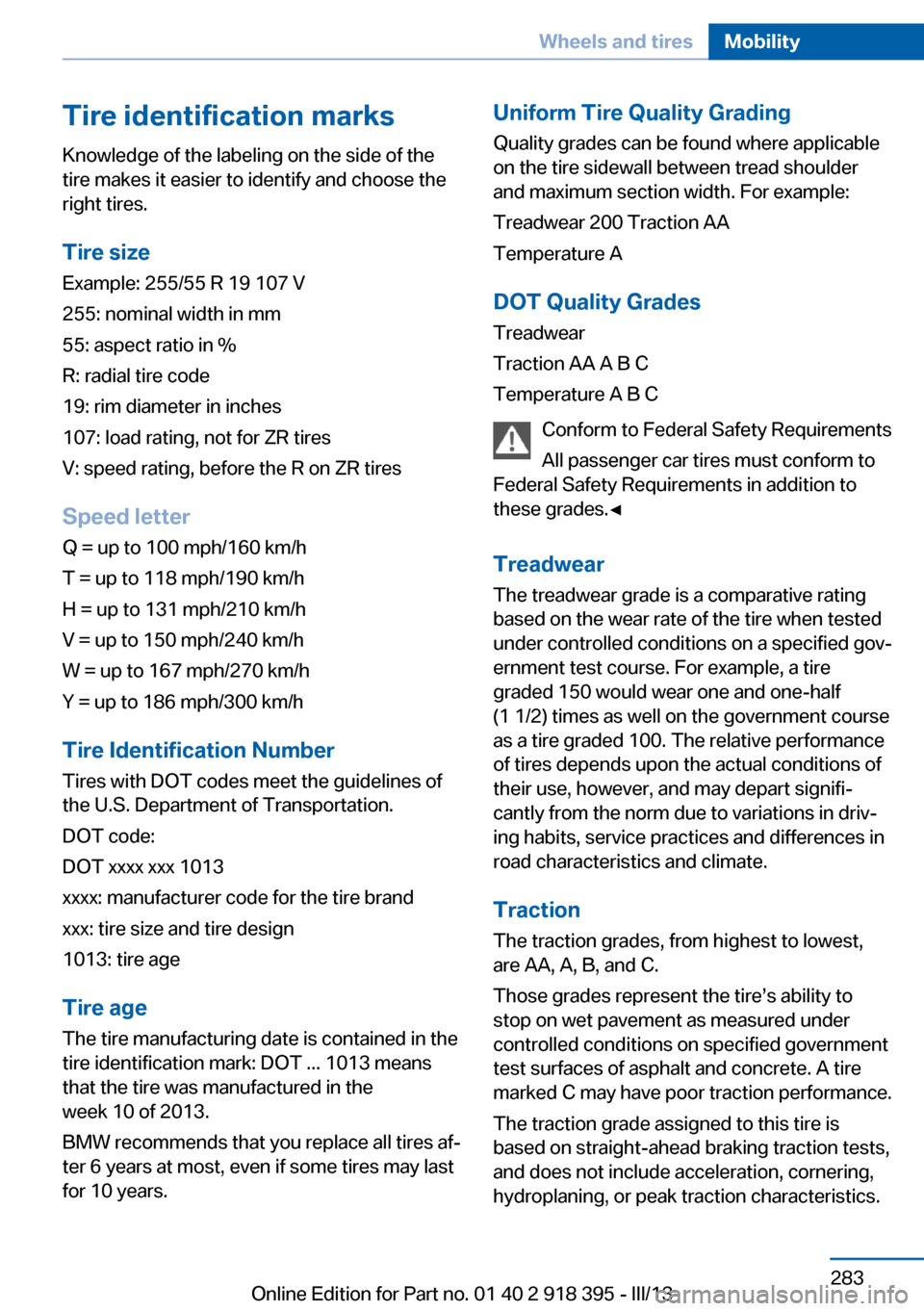
Tire identification marksKnowledge of the labeling on the side of the
tire makes it easier to identify and choose the
right tires.
Tire size
Example: 255/55 R 19 107 V
255: nominal width in mm
55: aspect ratio in %
R: radial tire code
19: rim diameter in inches
107: load rating, not for ZR tires
V: speed rating, before the R on ZR tires
Speed letter
Q = up to 100 mph/160 km/h
T = up to 118 mph/190 km/h
H = up to 131 mph/210 km/h
V = up to 150 mph/240 km/h
W = up to 167 mph/270 km/h
Y = up to 186 mph/300 km/h
Tire Identification Number Tires with DOT codes meet the guidelines of
the U.S. Department of Transportation.
DOT code:
DOT xxxx xxx 1013
xxxx: manufacturer code for the tire brand
xxx: tire size and tire design
1013: tire age
Tire age
The tire manufacturing date is contained in the
tire identification mark: DOT ... 1013 means
that the tire was manufactured in the
week 10 of 2013.
BMW recommends that you replace all tires af‐
ter 6 years at most, even if some tires may last
for 10 years.Uniform Tire Quality Grading
Quality grades can be found where applicable
on the tire sidewall between tread shoulder
and maximum section width. For example:
Treadwear 200 Traction AA
Temperature A
DOT Quality Grades
Treadwear
Traction AA A B C
Temperature A B C
Conform to Federal Safety Requirements
All passenger car tires must conform to
Federal Safety Requirements in addition to
these grades.◀
Treadwear The treadwear grade is a comparative rating
based on the wear rate of the tire when tested
under controlled conditions on a specified gov‐
ernment test course. For example, a tire graded 150 would wear one and one-half
(1 1/2) times as well on the government course
as a tire graded 100. The relative performance
of tires depends upon the actual conditions of
their use, however, and may depart signifi‐
cantly from the norm due to variations in driv‐
ing habits, service practices and differences in
road characteristics and climate.
Traction
The traction grades, from highest to lowest,
are AA, A, B, and C.
Those grades represent the tire’s ability to
stop on wet pavement as measured under
controlled conditions on specified government
test surfaces of asphalt and concrete. A tire
marked C may have poor traction performance.
The traction grade assigned to this tire is
based on straight-ahead braking traction tests,
and does not include acceleration, cornering,
hydroplaning, or peak traction characteristics.Seite 283Wheels and tiresMobility283
Online Edition for Part no. 01 40 2 918 395 - III/13
Page 290 of 345
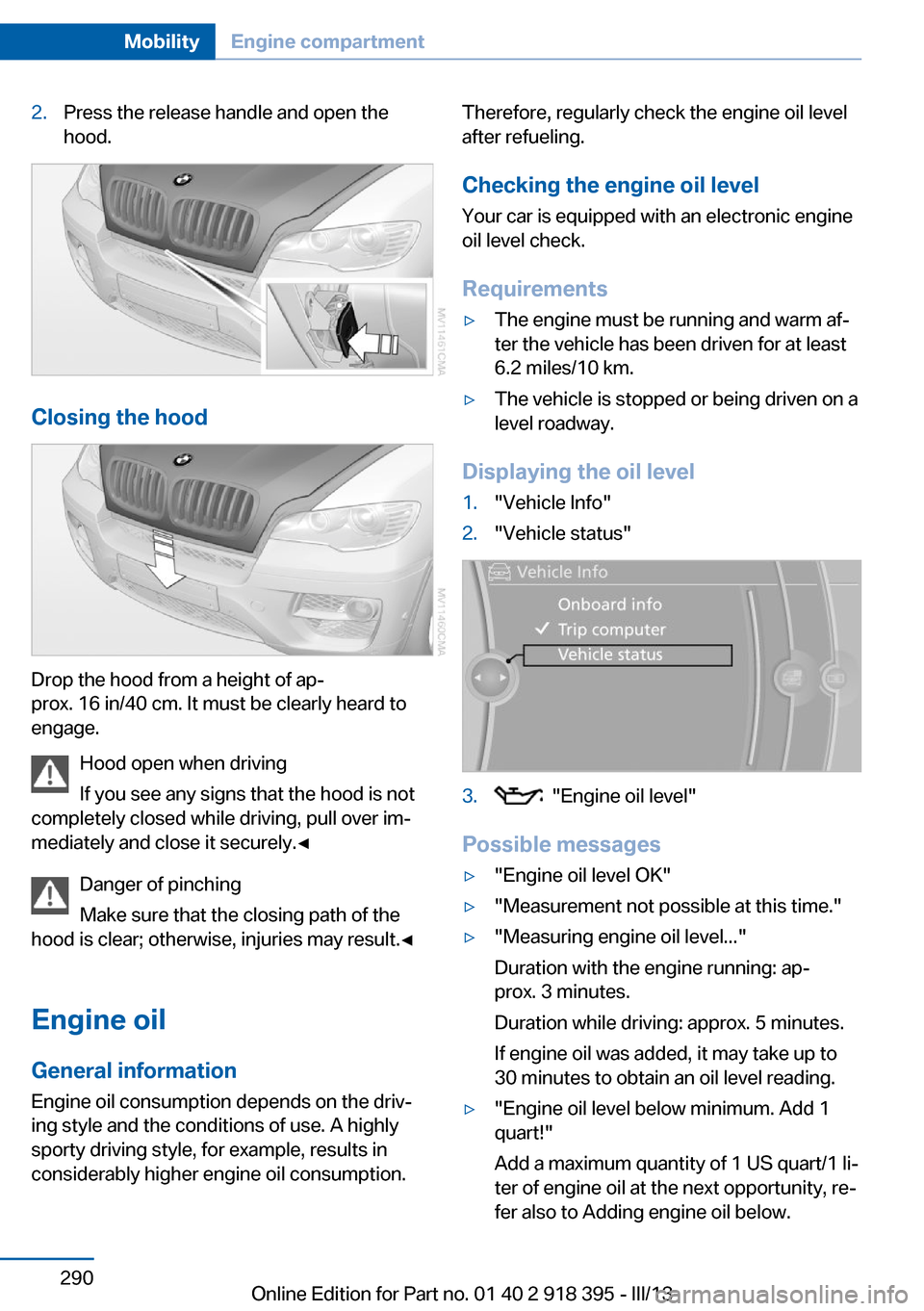
2.Press the release handle and open the
hood.
Closing the hood
Drop the hood from a height of ap‐
prox. 16 in/40 cm. It must be clearly heard to
engage.
Hood open when driving
If you see any signs that the hood is not
completely closed while driving, pull over im‐
mediately and close it securely.◀
Danger of pinching
Make sure that the closing path of the
hood is clear; otherwise, injuries may result.◀
Engine oil
General information Engine oil consumption depends on the driv‐
ing style and the conditions of use. A highly
sporty driving style, for example, results in
considerably higher engine oil consumption.
Therefore, regularly check the engine oil level
after refueling.
Checking the engine oil levelYour car is equipped with an electronic engine
oil level check.
Requirements▷The engine must be running and warm af‐
ter the vehicle has been driven for at least
6.2 miles/10 km.▷The vehicle is stopped or being driven on a
level roadway.
Displaying the oil level
1."Vehicle Info"2."Vehicle status"3. "Engine oil level"
Possible messages
▷"Engine oil level OK"▷"Measurement not possible at this time."▷"Measuring engine oil level..."
Duration with the engine running: ap‐
prox. 3 minutes.
Duration while driving: approx. 5 minutes.
If engine oil was added, it may take up to
30 minutes to obtain an oil level reading.▷"Engine oil level below minimum. Add 1
quart!"
Add a maximum quantity of 1 US quart/1 li‐
ter of engine oil at the next opportunity, re‐
fer also to Adding engine oil below.Seite 290MobilityEngine compartment290
Online Edition for Part no. 01 40 2 918 395 - III/13
Page 305 of 345
▷When the vehicle has not been driven for
more than one month.
Starting aid terminals
Only charge using the starting aid terminals,
refer to page 309, in the engine compartment
while the engine is switched off.
Power failure
After a temporary power loss, some equipment
needs to be reinitialized.
Individual settings need to be reprogrammed:
▷Seat and mirror memory: store the posi‐
tions again, refer to page 57.▷Time: update, refer to page 87.▷Date: update, refer to page 87.▷Radio station: save again, refer to
page 192.▷Navigation system: wait for the navigation
system to be operational.▷Glass sunroof/panoramic glass sunroof: it
may only be possible to raise the roof.
Have the system initialized by the service
center.▷Digital compass: recalibrate, refer to
page 141.▷Active steering: the system automatically
initializes for a short time as you drive. Dur‐
ing this time, the system is deactivated, re‐
fer to page 110.▷xDrive: the system automatically initializes
as you drive. During this time, indicator
lamps light up. If the lamps do not disap‐
pear during the current trip, have the sys‐
tem checked.
Disposing of old batteries
Have old batteries disposed of by your
service center or bring them to a recy‐
cling center.
Maintain the battery in an upright position for
transport and storage. Secure the battery so
that it does not tip over during transport.
Fuses
Replacing fuses
Never attempt to repair a blown fuse and
do not replace a defective fuse with a substi‐
tute of another color or amperage rating; this
could lead to a circuit overload, ultimately re‐
sulting in a fire in the vehicle.◀
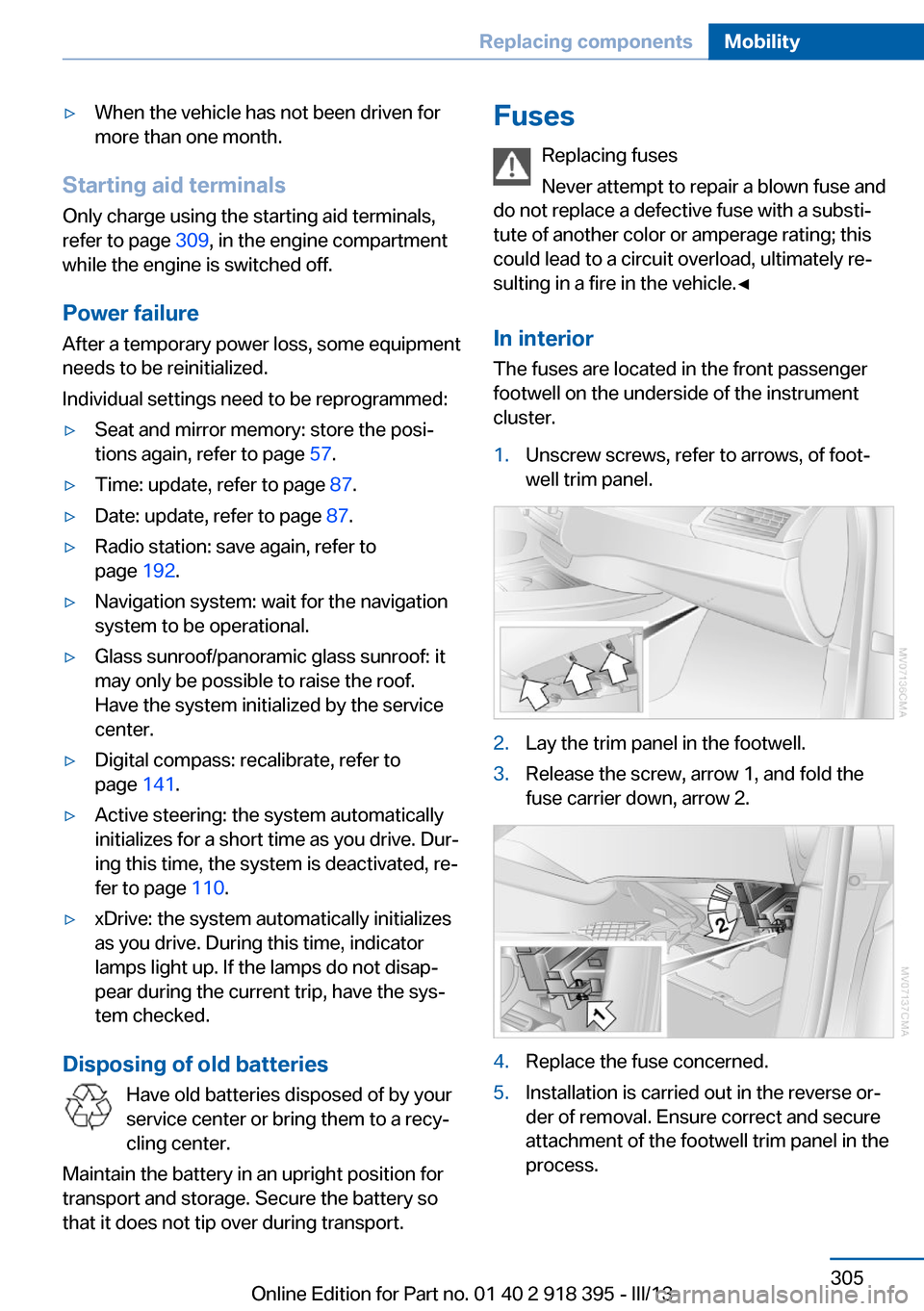
In interior The fuses are located in the front passenger
footwell on the underside of the instrument
cluster.1.Unscrew screws, refer to arrows, of foot‐
well trim panel.2.Lay the trim panel in the footwell.3.Release the screw, arrow 1, and fold the
fuse carrier down, arrow 2.4.Replace the fuse concerned.5.Installation is carried out in the reverse or‐
der of removal. Ensure correct and secure
attachment of the footwell trim panel in the
process.Seite 305Replacing componentsMobility305
Online Edition for Part no. 01 40 2 918 395 - III/13