battery BUICK CENTURY 2004 Owner's Guide
[x] Cancel search | Manufacturer: BUICK, Model Year: 2004, Model line: CENTURY, Model: BUICK CENTURY 2004Pages: 358, PDF Size: 4.01 MB
Page 256 of 358
{CAUTION:
An electric fan can start up even when the
engine is not running and can injure you.
Keep hands, clothing and tools away from any
underhood electric fan.
{CAUTION:
Using a match near a battery can cause battery
gas to explode. People have been hurt doing
this, and some have been blinded. Use a
ashlight if you need more light.
Be sure the battery has enough water. You do
not need to add water to the ACDelco
®battery
installed in your new vehicle. But if a battery
CAUTION: (Continued)
CAUTION: (Continued)
has ller caps, be sure the right amount of
uid is there. If it is low, add water to take care
of that rst. If you do not, explosive gas could
be present.
Battery uid contains acid that can burn you.
Do not get it on you. If you accidentally get it
in your eyes or on your skin, ush the place
with water and get medical help immediately.
{CAUTION:
Fans or other moving engine parts can injure
you badly. Keep your hands away from moving
parts once the engine is running.
5-44
Page 257 of 358
5. Check that the jumper cables do not have loose or
missing insulation. If they do, you could get a
shock. The vehicles could be damaged too.
Before you connect the cables, here are some
basic things you should know. Positive (+) will go to
positive (+) or to a remote positive (+) terminal if
the vehicle has one. Negative (−) will go to a heavy,
unpainted metal engine part or to a remote
negative (−) terminal if the vehicle has one.
Do not connect positive (+) to negative (−)oryou
will get a short that would damage the battery
and maybe other parts too. And do not connect the
negative (−) cable to the negative (−) terminal on
the dead battery because this can cause sparks.
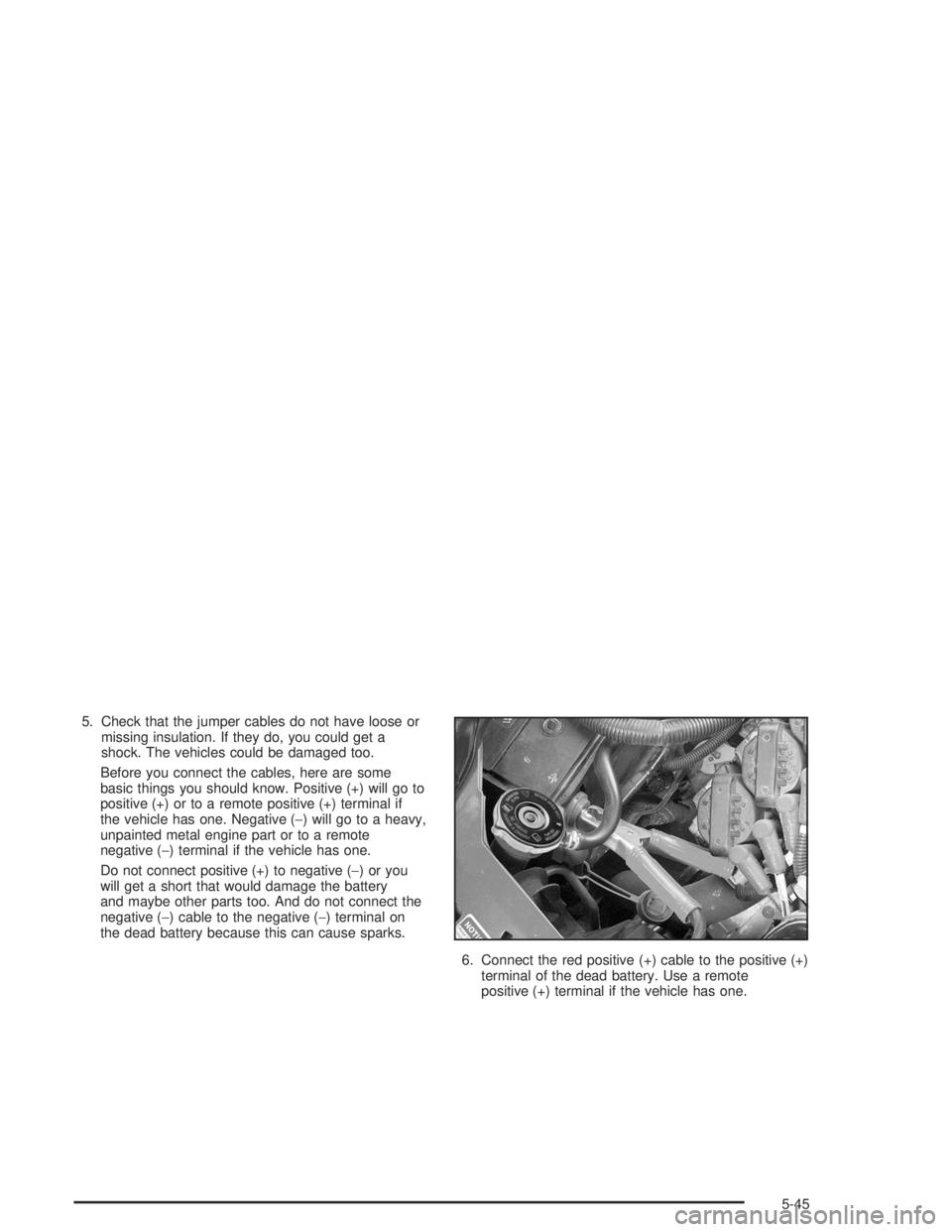
6. Connect the red positive (+) cable to the positive (+)
terminal of the dead battery. Use a remote
positive (+) terminal if the vehicle has one.
5-45
Page 258 of 358
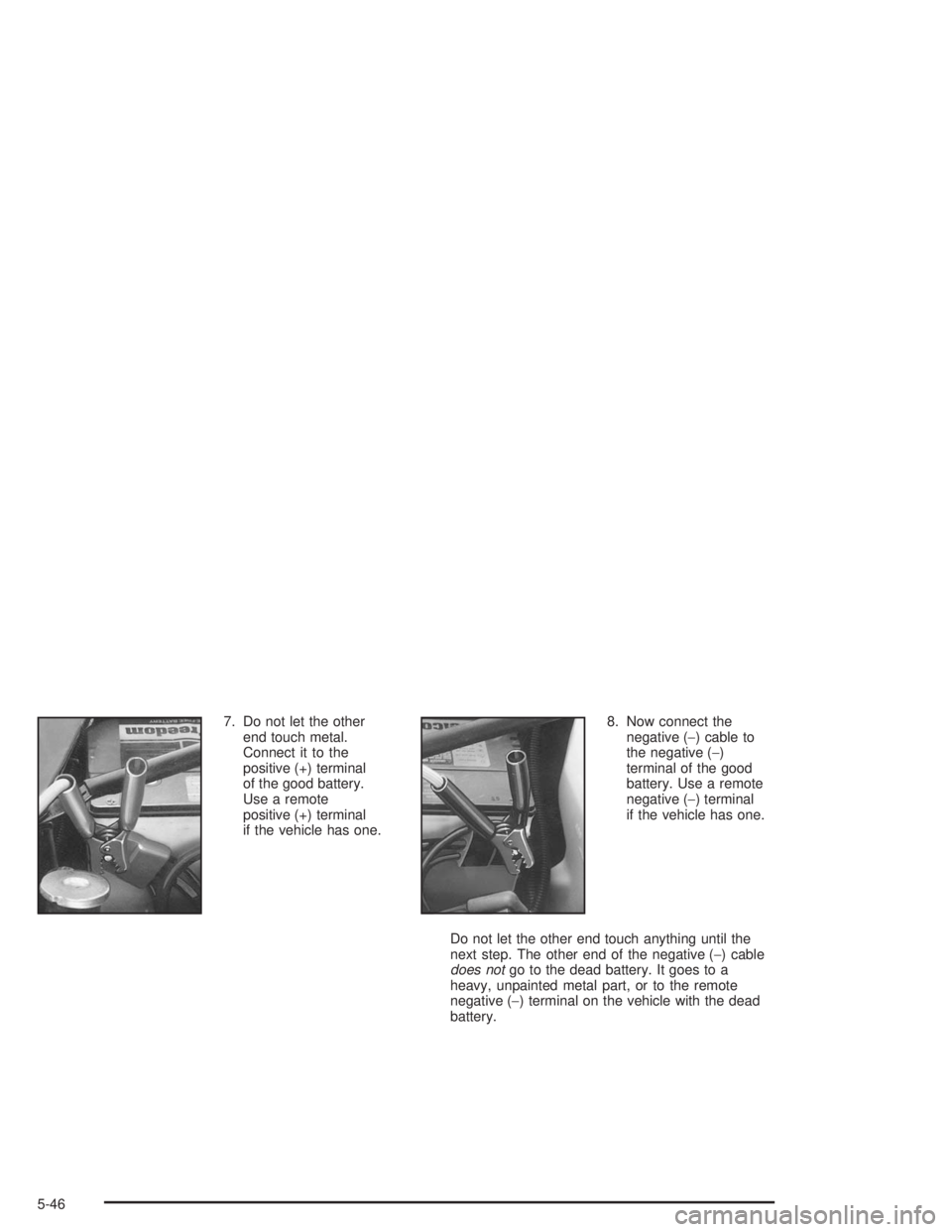
7. Do not let the other
end touch metal.
Connect it to the
positive (+) terminal
of the good battery.
Use a remote
positive (+) terminal
if the vehicle has one.8. Now connect the
negative (−) cable to
the negative (−)
terminal of the good
battery. Use a remote
negative (−) terminal
if the vehicle has one.
Do not let the other end touch anything until the
next step. The other end of the negative (−) cable
does notgo to the dead battery. It goes to a
heavy, unpainted metal part, or to the remote
negative (−) terminal on the vehicle with the dead
battery.
5-46
Page 259 of 358
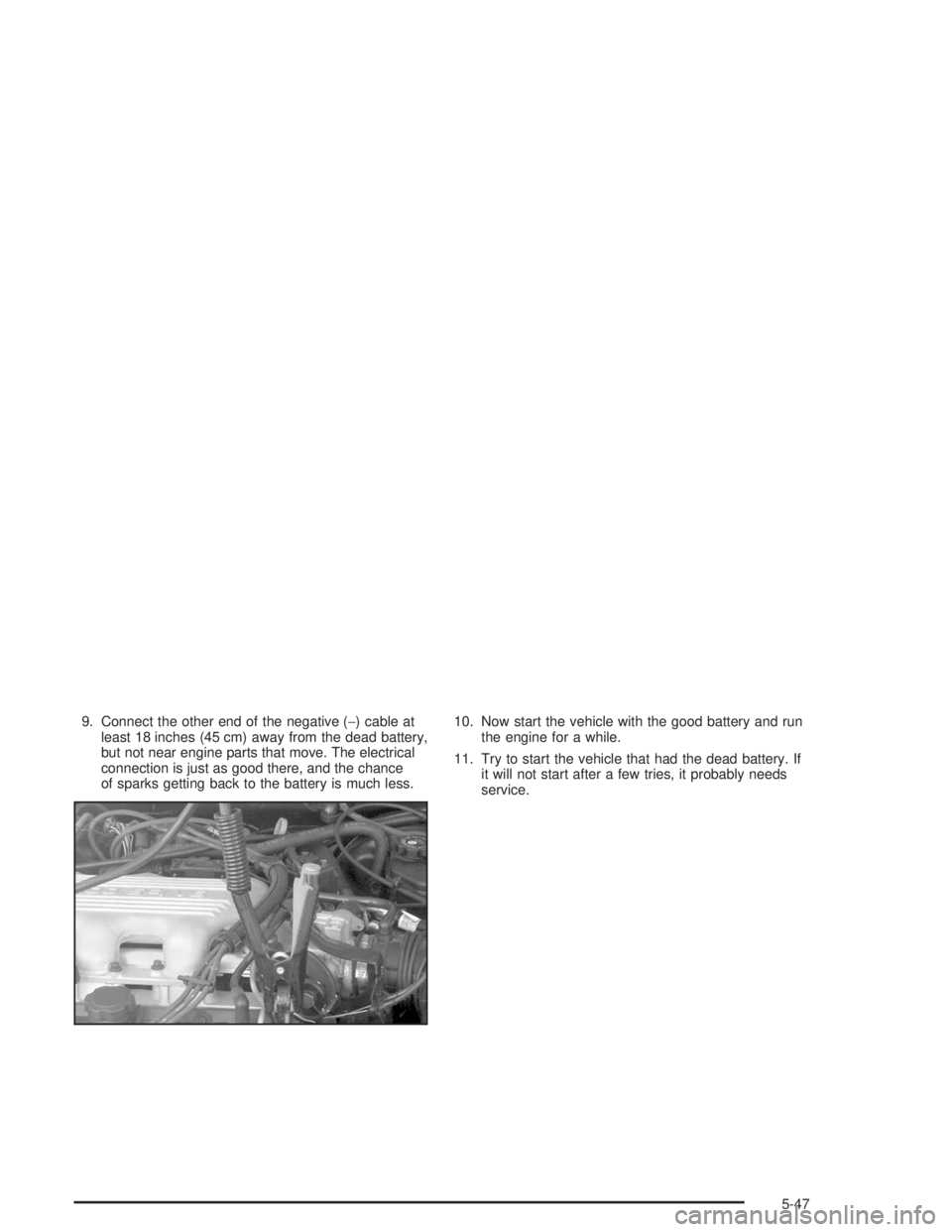
9. Connect the other end of the negative (−) cable at
least 18 inches (45 cm) away from the dead battery,
but not near engine parts that move. The electrical
connection is just as good there, and the chance
of sparks getting back to the battery is much less.10. Now start the vehicle with the good battery and run
the engine for a while.
11. Try to start the vehicle that had the dead battery. If
it will not start after a few tries, it probably needs
service.
5-47
Page 260 of 358
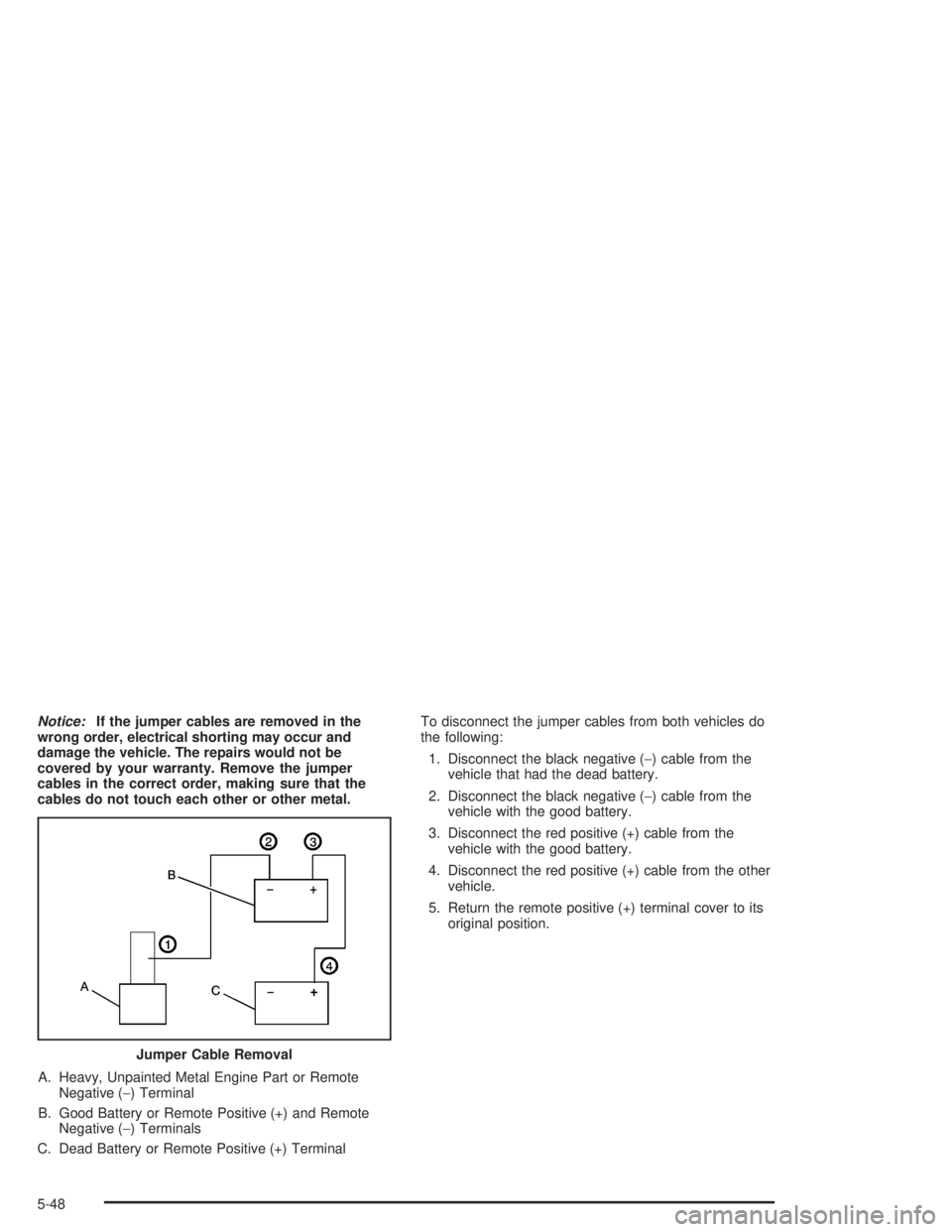
Notice:If the jumper cables are removed in the
wrong order, electrical shorting may occur and
damage the vehicle. The repairs would not be
covered by your warranty. Remove the jumper
cables in the correct order, making sure that the
cables do not touch each other or other metal.
A. Heavy, Unpainted Metal Engine Part or Remote
Negative (−) Terminal
B. Good Battery or Remote Positive (+) and Remote
Negative (−) Terminals
C. Dead Battery or Remote Positive (+) TerminalTo disconnect the jumper cables from both vehicles do
the following:
1. Disconnect the black negative (−) cable from the
vehicle that had the dead battery.
2. Disconnect the black negative (−) cable from the
vehicle with the good battery.
3. Disconnect the red positive (+) cable from the
vehicle with the good battery.
4. Disconnect the red positive (+) cable from the other
vehicle.
5. Return the remote positive (+) terminal cover to its
original position.
Jumper Cable Removal
5-48
Page 278 of 358
The system normally takes 15 to 20 minutes of driving
time in each of three speed ranges to determine
tire pressures. The speed ranges are 15 to 40 mph
(25 to 65 km/h), 40 to 65 mph (65 to 105 km/h)
and above 65 mph (105 km/h). When the storage of the
tire ination information is complete, the LOW TIRE
light will come on the instrument panel after two
to eight minutes if one tire is inated 12 psi (83 kPa)
less than the other three tires. Detection thresholds
may be higher and detection times may be longer on
rough roads, curves and at high speeds. The system is
not capable of ination differences at speeds greater
than 70 mph (110 km/h).
The tire ination monitor system will not alert you if the
pressure in more than one tire is low, if the system
is not properly calibrated, or if the vehicle is moving
faster than 70 mph (110 km/h).
The LOW TIRE light will stay on while the ignition is on,
until the system is resetDo not reset the tire ination monitor system without
rst correcting the cause of the problem and checking
and adjusting the pressure in all four tires. If the
system is reset when the tire pressures are incorrect, it
will not function properly and may not alert you when
a tire is low.
Any time a tire’s pressure is adjusted, the tires are
rotated, or one or more tires is repaired or replaced, the
tire ination monitor system will need to be reset. The
system also needs to be reset when new tires are
purchased and if the vehicle’s battery has been
disconnected.
To reset the system:
1. Turn the ignition to RUN.
2. Remove the passenger’s side instrument panel
cover to get to the fuse block.
3. Press and hold the RESET button in the fuse block
for about ve seconds.
4. The LOW TIRE light will come on and ash
three times. Then it will go off. If the light does
not go off, see your dealer for service.
5-66
Page 346 of 358
B
Backing Up....................................................4-43
Battery..........................................................5-41
Battery Replacement......................................... 2-9
Battery Rundown Protection.............................3-16
Before Leaving on a Long Trip.........................4-22
Brake
Parking......................................................2-25
System Warning Light..................................3-32
Brake Fluid....................................................5-38
Brake Wear...................................................5-40
Brakes..........................................................5-38
Braking........................................................... 4-6
Braking in Emergencies..................................... 4-8
Break-In, New Vehicle.....................................2-18
Bulb Replacement...........................................5-51
Back-Up Lamps...........................................5-55
Center High-Mounted Stoplamp (CHMSL)........5-53
Front Turn Signal and Parking Lamps.............5-52
Halogen Bulbs............................................5-51
Headlamp Aiming........................................5-49
Headlamps.................................................5-51
Replacement Bulbs......................................5-55
Taillamps, Turn Signal, and Stoplamps............5-54
Buying New Tires...........................................5-69
C
California Fuel.................................................. 5-5
Canada – Customer Assistance.......................... 7-4
Canadian Owners................................................ ii
Canadian Roadside Assistance........................... 7-6
Capacities and Specications..........................5-103
Carbon Monoxide...................4-26, 4-39, 2-13, 2-29
Care of
Safety Belts................................................5-91
Your Cassette Tape Player............................3-63
Your CD Player...........................................3-64
Your CDs ...................................................3-64
Cassette Tape Messages.................................3-59
Cassette Tape Player Service............................. 6-9
CD Adapter Kits.............................................3-59
CD Messages........................................3-52, 3-61
Center Console Storage Area...........................2-35
Center High-Mounted Stoplamp (CHMSL)...........5-53
Center Passenger Position, Safety Belts.............1-20
Chains, Tires..................................................5-73
Charging System Light....................................3-31
Check
Engine Light...............................................3-36
Checking Coolant............................................5-23
Checking Engine Oil........................................5-13
2
Page 349 of 358
E
Electrical System
Add-On Equipment......................................5-97
Fuses and Circuit Breakers...........................5-97
Headlamp Wiring.........................................5-97
Power Windows and Other Power Options......5-97
Windshield Wiper Fuses...............................5-97
Emergency Trunk Release Handle.....................2-14
Emissions Inspection and Maintenance
Programs...................................................3-39
Engine
Air Cleaner/Filter.........................................5-18
Battery.......................................................5-41
Change Engine Oil Light...............................3-41
Check and Service Engine Soon Light............3-36
Coolant......................................................5-22
Coolant Heater............................................2-21
Coolant Temperature Gage...........................3-35
Coolant Temperature Warning Light................3-35
Drive Belt Routing.......................................6-14
Engine Compartment Overview......................5-12
Exhaust.....................................................2-29
Oil .............................................................5-13
Overheating................................................5-25
Starting......................................................2-20
Engine Cooling When Trailer Towing..................4-45
Engine Oil Additives........................................5-16Enhanced Traction System (ETS)........................ 4-9
Warning Light.............................................3-34
Entry Lighting.................................................3-15
Event Data Records (EDR)................................ 7-9
Express-Down Window....................................2-16
Extender, Safety Belt.......................................1-27
Exterior Lamps...............................................3-12
F
Filter
Engine Air Cleaner......................................5-18
Finding a Program Type (PTY) Station.......3-49, 3-56
Finding a Station....................................3-46, 3-53
Finish Care....................................................5-92
Finish Damage...............................................5-93
Fixed Mast Antenna........................................3-64
Flash-to-Pass................................................... 3-6
Flat Tire........................................................5-74
Flat Tire, Changing.........................................5-75
Fluid
Automatic Transaxle.....................................5-19
Power Steering...........................................5-35
Windshield Washer......................................5-36
FM ...............................................................3-63
Folding Rear Seat............................................ 1-5
Following Distance..........................................4-43
5