ABS CHEVROLET AVEO 2002 Service User Guide
[x] Cancel search | Manufacturer: CHEVROLET, Model Year: 2002, Model line: AVEO, Model: CHEVROLET AVEO 2002Pages: 5127, PDF Size: 41.82 MB
Page 1986 of 5127
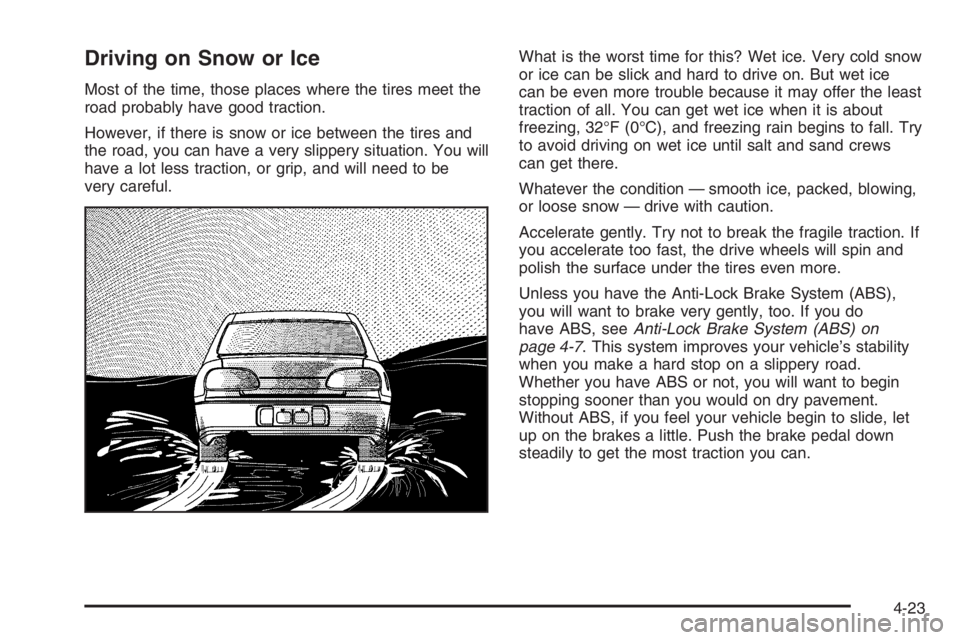
Driving on Snow or Ice
Most of the time, those places where the tires meet the
road probably have good traction.
However, if there is snow or ice between the tires and
the road, you can have a very slippery situation. You will
have a lot less traction, or grip, and will need to be
very careful.What is the worst time for this? Wet ice. Very cold snow
or ice can be slick and hard to drive on. But wet ice
can be even more trouble because it may offer the least
traction of all. You can get wet ice when it is about
freezing, 32°F (0°C), and freezing rain begins to fall. Try
to avoid driving on wet ice until salt and sand crews
can get there.
Whatever the condition — smooth ice, packed, blowing,
or loose snow — drive with caution.
Accelerate gently. Try not to break the fragile traction. If
you accelerate too fast, the drive wheels will spin and
polish the surface under the tires even more.
Unless you have the Anti-Lock Brake System (ABS),
you will want to brake very gently, too. If you do
have ABS, seeAnti-Lock Brake System (ABS) on
page 4-7. This system improves your vehicle’s stability
when you make a hard stop on a slippery road.
Whether you have ABS or not, you will want to begin
stopping sooner than you would on dry pavement.
Without ABS, if you feel your vehicle begin to slide, let
up on the brakes a little. Push the brake pedal down
steadily to get the most traction you can.
4-23
Page 1987 of 5127
Remember, unless you have ABS, if you brake so hard
that your wheels stop rolling, you will just slide. Brake so
your wheels always keep rolling and you can still steer.
•Whatever your braking system, allow greater
following distance on any slippery road.
•Watch for slippery spots. The road might be fine until
you hit a spot that is covered with ice. On an
otherwise clear road, ice patches may appear in
shaded areas where the sun cannot reach, such as
around clumps of trees, behind buildings, or under
bridges. Sometimes the surface of a curve or an
overpass may remain icy when the surrounding
roads are clear. If you see a patch of ice ahead of
you, brake before you are on it. Try not to brake while
you are actually on the ice, and avoid sudden
steering maneuvers.
If You Are Caught in a Blizzard
If you are stopped by heavy snow, you could be in a
serious situation. You should probably stay with
your vehicle unless you know for sure that you are near
help and you can hike through the snow. Here are
some things to do to summon help and keep yourself
and your passengers safe:
•Turn on your hazard flashers.
•Tie a red cloth to your vehicle to alert police that
you have been stopped by the snow.
•Put on extra clothing or wrap a blanket around you.
If you do not have blankets or extra clothing, make
body insulators from newspapers, burlap bags,
rags, floor mats — anything you can wrap around
yourself or tuck under your clothing to keep warm.
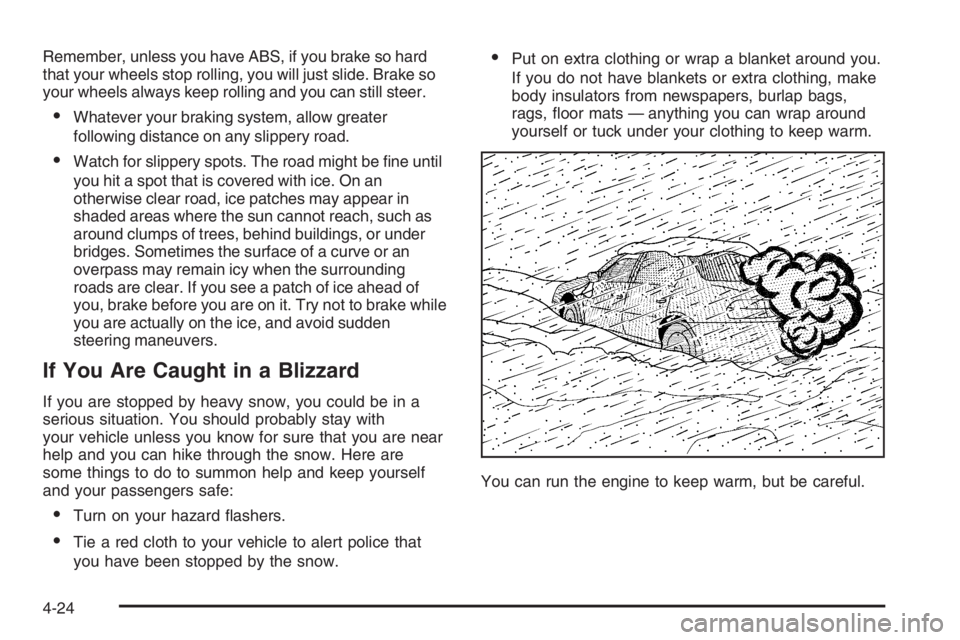
You can run the engine to keep warm, but be careful.
4-24
Page 2066 of 5127
Notice:If you use abrasive cleaners when cleaning
glass surfaces on your vehicle, you could scratch
the glass and/or cause damage to the rear window
defogger. When cleaning the glass on your
vehicle, use only a soft cloth and glass cleaner.
Many cleaners contain solvents that may become
concentrated in your vehicle’s breathing space. Before
using cleaners, read and adhere to all safety
instructions on the label. While cleaning your vehicle’s
interior, maintain adequate ventilation by opening
your vehicle’s doors and windows.
Dust may be removed from small buttons and knobs
using a small brush with soft bristles.
Your GM dealer has a product for cleaning your
vehicle’s glass. Should it become necessary, you can
also obtain a product from your GM dealer to remove
odors from your vehicle’s upholstery.
Do not clean your vehicle using the following cleaners
or techniques:
•Never use a knife or any other sharp object to
remove a soil from any interior surface.
•Never use a stiff brush. It can cause damage to
your vehicle’s interior surfaces.
•Never apply heavy pressure or rub aggressively
with a cleaning cloth. Use of heavy pressure
can damage your interior and does not improve the
effectiveness of soil removal.
•Use only mild, neutral-pH soaps. Avoid laundry
detergents or dishwashing soaps with degreasers.
Using too much soap will leave a residue that
leaves streaks and attracts dirt. For liquid cleaners,
about 20 drops per gallon (3.78 L) of water is a
good guide.
•Do not heavily saturate your upholstery while
cleaning.
•Damage to your vehicle’s interior may result from
the use of many organic solvents such as naptha,
alcohol, etc.
Fabric/Carpet
Use a vacuum cleaner with a soft brush attachment
frequently to remove dust and loose dirt. A canister
vacuum with a beater bar in the nozzle may only
be used on floor carpet and carpeted floor mats. For
soils, always try to remove them first with plain water or
club soda. Before cleaning, gently remove as much
of the soil as possible using one of the following
techniques:
•For liquids: gently blot the remaining soil with a
paper towel. Allow the soil to absorb into the
paper towel until no more can be removed.
•For solid dry soils: remove as much as possible
and then vacuum.
5-67
Page 2076 of 5127
Fuses Usage
LTR Cigar Lighter
HORN,
REAR/FOGHorn, Rear Fog Lamps
RADIO, CLK Audio, Clock
STOP Stop Lamp
TRN/SIG Turn Signal
CLSTR,
HAZRDInstrument Panel Cluster, Hazard
Flasher
CLSTR, CLK Instrument Panel Cluster, Clock
DR/LCK Door Lock, Remote Keyless Entry
BCK/UP Back-Up Lamp
ECM, TCMEngine Control Module,
Transmission Control Module
ECM, TCMEngine Control Module,
Transmission Control Module
WPR, WSWA Wiper, Washer
DIS,
INJECTORDirect Ignition System, Injector
ENG FUSE Engine Fuse
AIRBAG Airbag
HVAC HVAC Blower
ABS Anti-lock Brake System
BLANK Not Used
BLANK Not Used
DIODE (ABS) Anti-lock Brake System DiodeFuses Usage
BLANK Not Used
BLANK Not Used
CLK, RADIO Clock, Audio
Engine Compartment Fuse Block
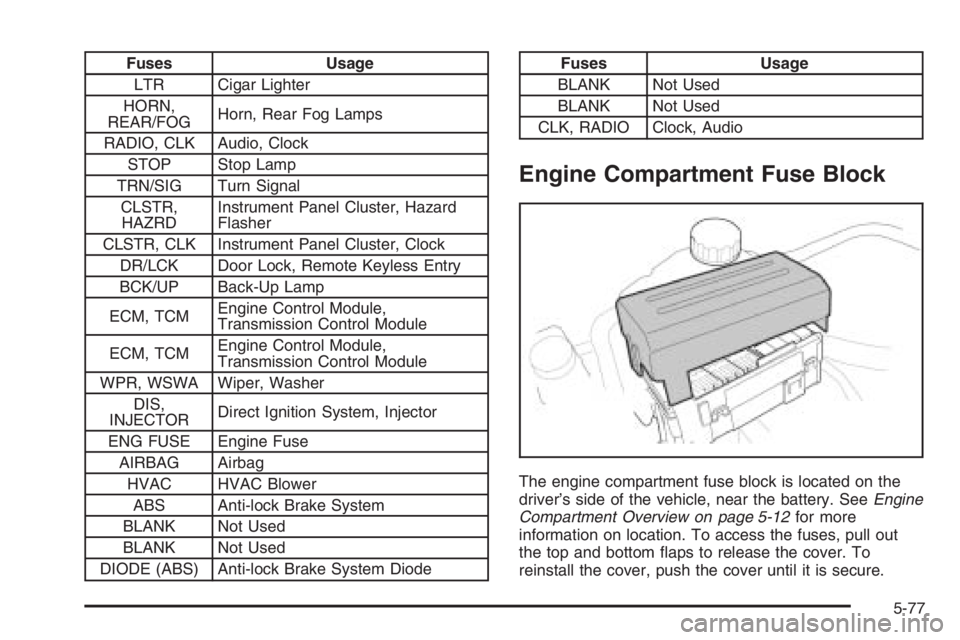
The engine compartment fuse block is located on the
driver’s side of the vehicle, near the battery. SeeEngine
Compartment Overview on page 5-12for more
information on location. To access the fuses, pull out
the top and bottom flaps to release the cover. To
reinstall the cover, push the cover until it is secure.
5-77
Page 2078 of 5127
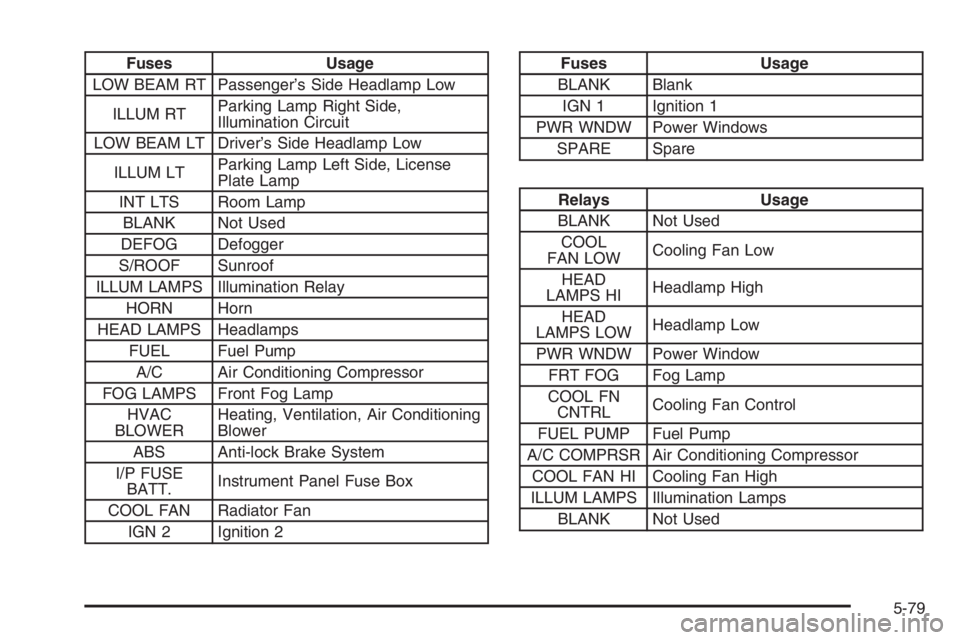
Fuses Usage
LOW BEAM RT Passenger’s Side Headlamp Low
ILLUM RTParking Lamp Right Side,
Illumination Circuit
LOW BEAM LT Driver’s Side Headlamp Low
ILLUM LTParking Lamp Left Side, License
Plate Lamp
INT LTS Room Lamp
BLANK Not Used
DEFOG Defogger
S/ROOF Sunroof
ILLUM LAMPS Illumination Relay
HORN Horn
HEAD LAMPS Headlamps
FUEL Fuel Pump
A/C Air Conditioning Compressor
FOG LAMPS Front Fog Lamp
HVAC
BLOWERHeating, Ventilation, Air Conditioning
Blower
ABS Anti-lock Brake System
I/P FUSE
BATT.Instrument Panel Fuse Box
COOL FAN Radiator Fan
IGN 2 Ignition 2Fuses Usage
BLANK Blank
IGN 1 Ignition 1
PWR WNDW Power Windows
SPARE Spare
Relays Usage
BLANK Not Used
COOL
FAN LOWCooling Fan Low
HEAD
LAMPS HIHeadlamp High
HEAD
LAMPS LOWHeadlamp Low
PWR WNDW Power Window
FRT FOG Fog Lamp
COOL FN
CNTRLCooling Fan Control
FUEL PUMP Fuel Pump
A/C COMPRSR Air Conditioning Compressor
COOL FAN HI Cooling Fan High
ILLUM LAMPS Illumination Lamps
BLANK Not Used
5-79
Page 2128 of 5127
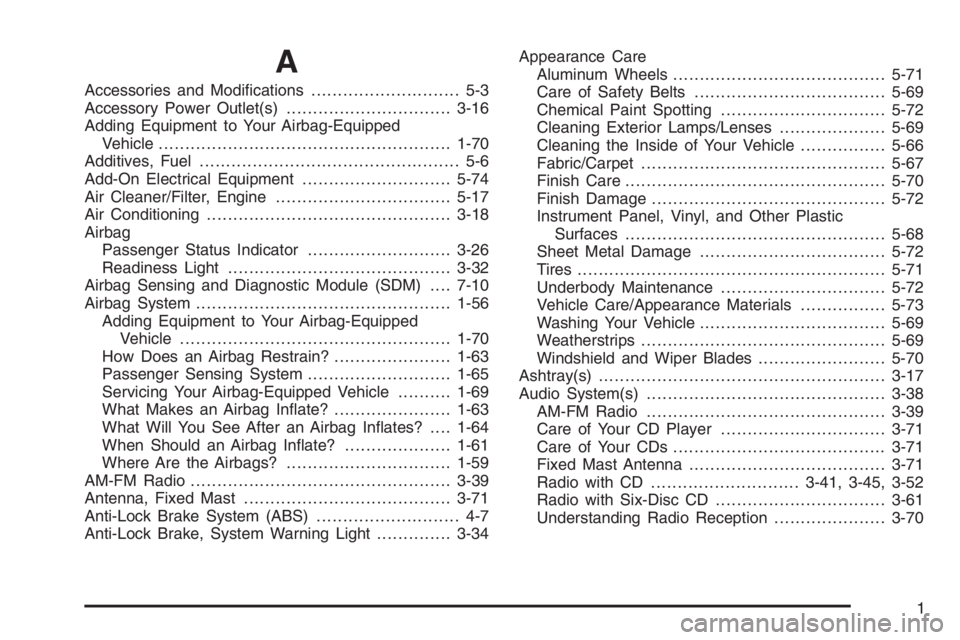
A
Accessories and Modifications............................ 5-3
Accessory Power Outlet(s)...............................3-16
Adding Equipment to Your Airbag-Equipped
Vehicle.......................................................1-70
Additives, Fuel................................................. 5-6
Add-On Electrical Equipment............................5-74
Air Cleaner/Filter, Engine.................................5-17
Air Conditioning..............................................3-18
Airbag
Passenger Status Indicator...........................3-26
Readiness Light..........................................3-32
Airbag Sensing and Diagnostic Module (SDM)....7-10
Airbag System................................................1-56
Adding Equipment to Your Airbag-Equipped
Vehicle...................................................1-70
How Does an Airbag Restrain?......................1-63
Passenger Sensing System...........................1-65
Servicing Your Airbag-Equipped Vehicle..........1-69
What Makes an Airbag Inflate?......................1-63
What Will You See After an Airbag Inflates?....1-64
When Should an Airbag Inflate?....................1-61
Where Are the Airbags?...............................1-59
AM-FM Radio.................................................3-39
Antenna, Fixed Mast.......................................3-71
Anti-Lock Brake System (ABS)........................... 4-7
Anti-Lock Brake, System Warning Light..............3-34Appearance Care
Aluminum Wheels........................................5-71
Care of Safety Belts....................................5-69
Chemical Paint Spotting...............................5-72
Cleaning Exterior Lamps/Lenses....................5-69
Cleaning the Inside of Your Vehicle................5-66
Fabric/Carpet..............................................5-67
Finish Care.................................................5-70
Finish Damage............................................5-72
Instrument Panel, Vinyl, and Other Plastic
Surfaces.................................................5-68
Sheet Metal Damage...................................5-72
Tires..........................................................5-71
Underbody Maintenance...............................5-72
Vehicle Care/Appearance Materials................5-73
Washing Your Vehicle...................................5-69
Weatherstrips..............................................5-69
Windshield and Wiper Blades........................5-70
Ashtray(s)......................................................3-17
Audio System(s).............................................3-38
AM-FM Radio.............................................3-39
Care of Your CD Player...............................3-71
Care of Your CDs ........................................3-71
Fixed Mast Antenna.....................................3-71
Radio with CD............................3-41, 3-45, 3-52
Radio with Six-Disc CD................................3-61
Understanding Radio Reception.....................3-70
1
Page 2129 of 5127
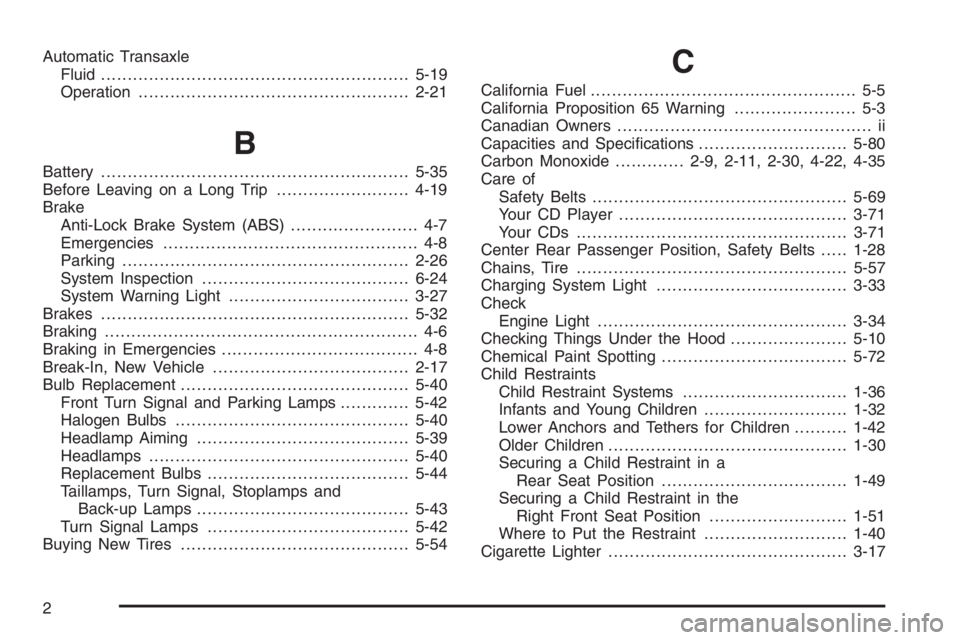
Automatic Transaxle
Fluid..........................................................5-19
Operation...................................................2-21
B
Battery..........................................................5-35
Before Leaving on a Long Trip.........................4-19
Brake
Anti-Lock Brake System (ABS)........................ 4-7
Emergencies................................................ 4-8
Parking......................................................2-26
System Inspection.......................................6-24
System Warning Light..................................3-27
Brakes..........................................................5-32
Braking........................................................... 4-6
Braking in Emergencies..................................... 4-8
Break-In, New Vehicle.....................................2-17
Bulb Replacement...........................................5-40
Front Turn Signal and Parking Lamps.............5-42
Halogen Bulbs............................................5-40
Headlamp Aiming........................................5-39
Headlamps.................................................5-40
Replacement Bulbs......................................5-44
Taillamps, Turn Signal, Stoplamps and
Back-up Lamps........................................5-43
Turn Signal Lamps......................................5-42
Buying New Tires...........................................5-54
C
California Fuel.................................................. 5-5
California Proposition 65 Warning....................... 5-3
Canadian Owners................................................ ii
Capacities and Specifications............................5-80
Carbon Monoxide.............2-9, 2-11, 2-30, 4-22, 4-35
Care of
Safety Belts................................................5-69
Your CD Player...........................................3-71
Your CDs ...................................................3-71
Center Rear Passenger Position, Safety Belts.....1-28
Chains, Tire...................................................5-57
Charging System Light....................................3-33
Check
Engine Light...............................................3-34
Checking Things Under the Hood......................5-10
Chemical Paint Spotting...................................5-72
Child Restraints
Child Restraint Systems...............................1-36
Infants and Young Children...........................1-32
Lower Anchors and Tethers for Children..........1-42
Older Children.............................................1-30
Securing a Child Restraint in a
Rear Seat Position...................................1-49
Securing a Child Restraint in the
Right Front Seat Position..........................1-51
Where to Put the Restraint...........................1-40
Cigarette Lighter.............................................3-17
2
Page 4294 of 5127
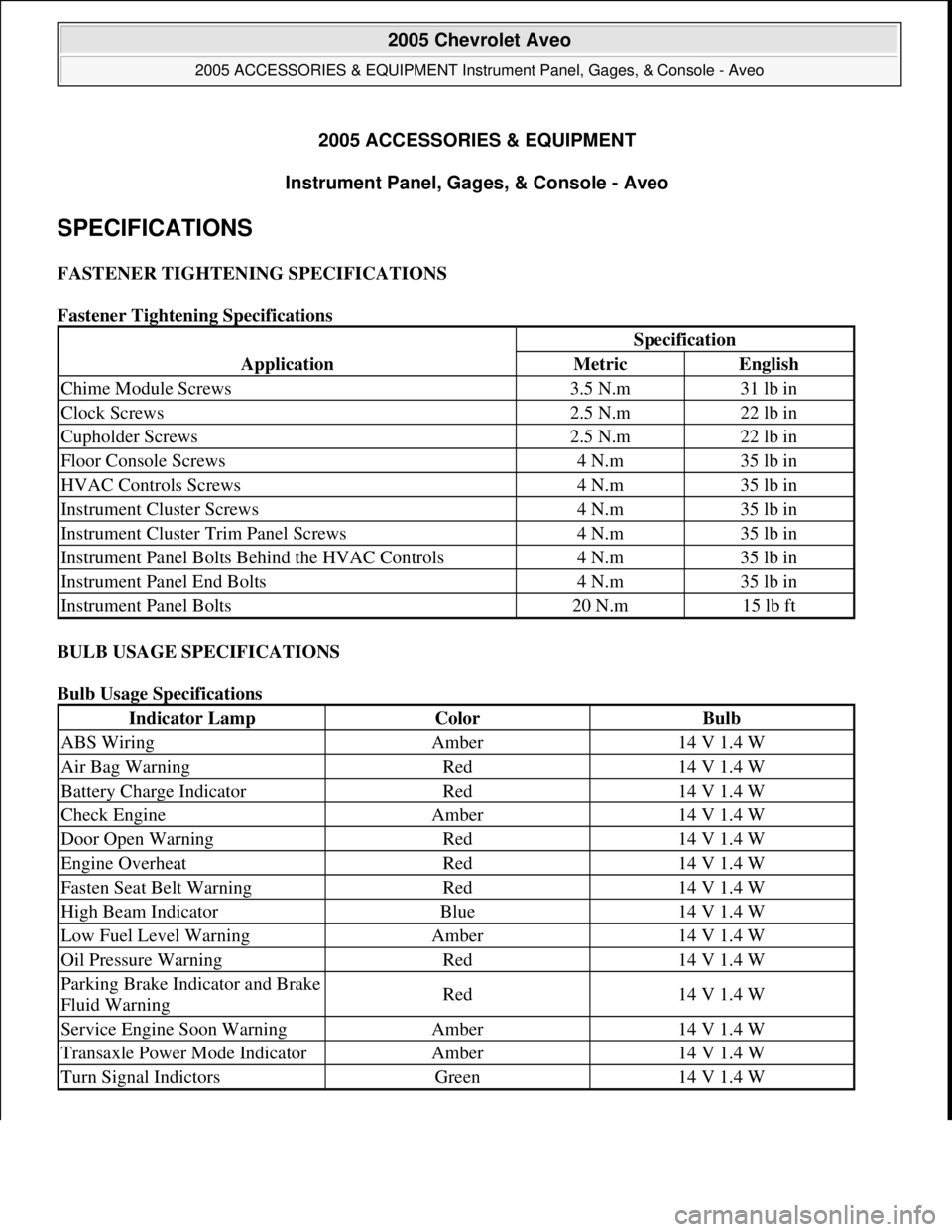
2005 ACCESSORIES & EQUIPMENT
Instrument Panel, Gages, & Console - Aveo
SPECIFICATIONS
FASTENER TIGHTENING SPECIFICATIONS
Fastener Tightening Specifications
BULB USAGE SPECIFICATIONS
Bulb Usage Specifications
Application
Specification
MetricEnglish
Chime Module Screws3.5 N.m31 lb in
Clock Screws2.5 N.m22 lb in
Cupholder Screws2.5 N.m22 lb in
Floor Console Screws4 N.m35 lb in
HVAC Controls Screws4 N.m35 lb in
Instrument Cluster Screws4 N.m35 lb in
Instrument Cluster Trim Panel Screws4 N.m35 lb in
Instrument Panel Bolts Behind the HVAC Controls4 N.m35 lb in
Instrument Panel End Bolts4 N.m35 lb in
Instrument Panel Bolts20 N.m15 lb ft
Indicator LampColorBulb
ABS WiringAmber14 V 1.4 W
Air Bag WarningRed14 V 1.4 W
Battery Charge IndicatorRed14 V 1.4 W
Check EngineAmber14 V 1.4 W
Door Open WarningRed14 V 1.4 W
Engine OverheatRed14 V 1.4 W
Fasten Seat Belt WarningRed14 V 1.4 W
High Beam IndicatorBlue14 V 1.4 W
Low Fuel Level WarningAmber14 V 1.4 W
Oil Pressure WarningRed14 V 1.4 W
Parking Brake Indicator and Brake
Fluid WarningRed14 V 1.4 W
Service Engine Soon WarningAmber14 V 1.4 W
Transaxle Power Mode IndicatorAmber14 V 1.4 W
Turn Signal IndictorsGreen14 V 1.4 W
2005 Chevrolet Aveo
2005 ACCESSORIES & EQUIPMENT Instrument Panel, Gages, & Console - Aveo
2005 Chevrolet Aveo
2005 ACCESSORIES & EQUIPMENT Instrument Panel, Gages, & Console - Aveo
Microsoft
Friday, July 31, 2009 1:07:02 PMPage 1 © 2005 Mitchell Repair Information Company, LLC.
Microsoft
Friday, July 31, 2009 1:07:07 PMPage 1 © 2005 Mitchell Repair Information Company, LLC.
Page 4302 of 5127
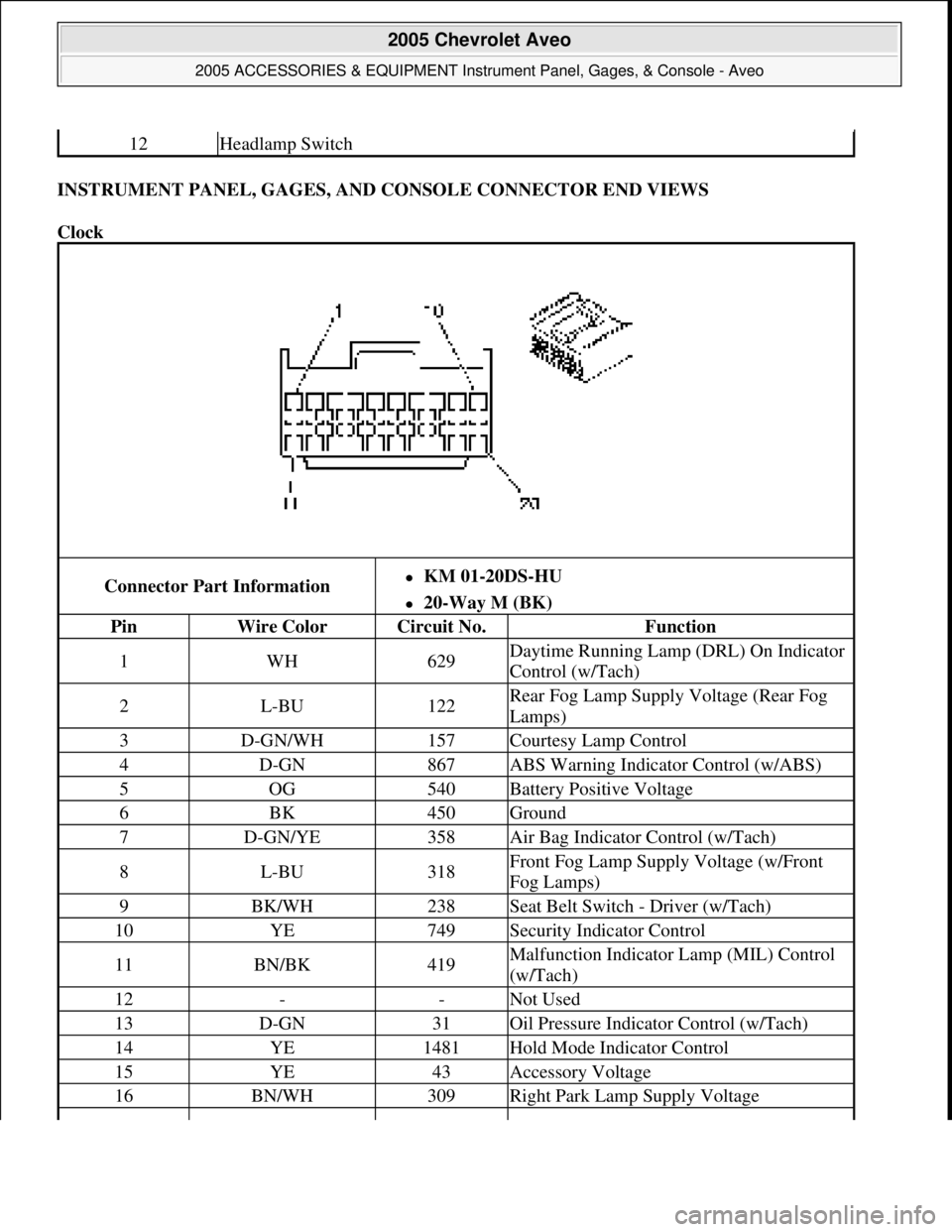
INSTRUMENT PANEL, GAGES, AND CONSOLE CONNECTOR END VIEWS
Clock
12Headlamp Switch
Connector Part InformationKM 01-20DS-HU
20-Way M (BK)
PinWire ColorCircuit No.Function
1WH629Daytime Running Lamp (DRL) On Indicator
Control (w/Tach)
2L-BU122Rear Fog Lamp Supply Voltage (Rear Fog
Lamps)
3D-GN/WH157Courtesy Lamp Control
4D-GN867ABS Warning Indicator Control (w/ABS)
5OG540Battery Positive Voltage
6BK450Ground
7D-GN/YE358Air Bag Indicator Control (w/Tach)
8L-BU318Front Fog Lamp Supply Voltage (w/Front
Fog Lamps)
9BK/WH238Seat Belt Switch - Driver (w/Tach)
10YE749Security Indicator Control
11BN/BK419Malfunction Indicator Lamp (MIL) Control
(w/Tach)
12--Not Used
13D-GN31Oil Pressure Indicator Control (w/Tach)
14YE1481Hold Mode Indicator Control
15YE43Accessory Voltage
16BN/WH309Right Park Lamp Supply Voltage
2005 Chevrolet Aveo
2005 ACCESSORIES & EQUIPMENT Instrument Panel, Gages, & Console - Aveo
Microsoft
Friday, July 31, 2009 1:07:02 PMPage 9 © 2005 Mitchell Repair Information Company, LLC.
Page 4318 of 5127
DTC P0464
Circuit Description
The fuel level sensor changes resistance based on fuel level. The fuel level sensor has a signal circuit and a
ground circuit. The engine control module (ECM) applies 5 volts on the signal circuit to the sensor. The ECM
monitors the changes in this voltage caused by changes in the resistance of the sensor in order to determine fuel
level.
When the fuel tank is full, the sensor resistance is low, and the ECM signal voltage is high. When the fuel tank
is empty, the sensor resistance is high, and the signal voltage is low.
The ECM uses inputs from the fuel level sensor in order to calculate the total fuel percentage remaining in the
fuel tank. The ECM uses the fuel level information for the evaporative emission (EVAP) and misfire
diagnostics. The fuel level information is sent to the instrument panel cluster (IPC).
If the ECM detects that the fuel level sensor signal changes more than a calibrated amount within a certain time,
this DTC sets.
DTC Descriptor
This diagnostic procedure supports the following DTC:
DTC P0464 Fuel Level Circuit Intermittent
Conditions for Running the DTC
DTCs P0107, P0108, P0112, P0113, P0122, P0123, and P0502 are not set.
The engine is running.
This diagnostic will be delayed for 5 seconds if one or more of the following occurs:
The change in manifold absolute pressure (MAP) sensor is more than 10 kPa.
The change in engine speed is more than 50 RPM.
The change in throttle position (TP) sensor is less than 2 percent.
The intake air temperature (IAT) sensor is more than -10°C (50°F).
Conditions for Setting the DTC
The ECM detects that the fuel level changes more than 3.9 percent for 7.5 seconds.
Action Taken When the DTC Sets
13
Observe the Capture Info with a scan tool.
Are there any DTCs that have not been
diagnosed?
-
Diagnostic
Trouble Code
(DTC) List in
Engine
Controls - 1.6L
System OK
2005 Chevrolet Aveo
2005 ACCESSORIES & EQUIPMENT Instrument Panel, Gages, & Console - Aveo
Microsoft
Friday, July 31, 2009 1:07:02 PMPage 25 © 2005 Mitchell Repair Information Company, LLC.