park assist CHEVROLET BLAZER 2003 2.G Owners Manual
[x] Cancel search | Manufacturer: CHEVROLET, Model Year: 2003, Model line: BLAZER, Model: CHEVROLET BLAZER 2003 2.GPages: 420, PDF Size: 2.94 MB
Page 111 of 420

This device complies with RSS-210 of Industry Canada.
Operation is subject to the following two conditions:
(1) this device may not cause interference, and
(2) this device must accept any interference, including
interference that may cause undesired operation of
the device.
Changes and modi®cations to this system by other than
an authorized service facility could void authorization
to use this equipment.
Programming the HomeLinkž
Transmitter
Do not use the HomeLinkžTransmitter with any garage
door opener that does not have the ªstop and reverseº
feature. This includes any garage door opener model
manufactured before April 1, 1982. If you have a newer
garage door opener with rolling codes, please be
sure to follow steps 6 through 8 to complete the
programming of your HomeLink
žTransmitter.
Read the instructions completely before attempting to
program the HomeLink
žTransmitter. Because of
the steps involved, it may be helpful to have another
person available to assist you in programming the
transmitter.Keep the original transmitter for use in other vehicles as
well as for future HomeLink
žprogramming. It is also
recommended that upon the sale of the vehicle,
the programmed HomeLink
žbuttons should be erased
for security purposes. Refer to ªErasing HomeLinkž
Buttonsº or, for assistance, contact HomeLinkžon the
internet at: www.homelink.com or by calling
1-800-355-3515.
Be sure that people and objects are clear of the garage
door or gate operator you are programming. When
programming a garage door, it is advised to park outside
of the garage.
It is recommended that a new battery be installed in
your hand-held transmitter for quicker and more
accurate transmission of the radio frequency.
Your vehicle's engine should be turned off while
programming the transmitter. Follow these steps to
program up to three channels:
1. Press and hold down the two outside buttons,
releasing only when the indicator light begins to
¯ash, after 20 seconds. Do not hold down the
buttons for longer than 30 seconds and do not
repeat this step to program a second and/or third
transmitter to the remaining two HomeLink
žbuttons.
2. Position the end of your hand-held transmitter about
1 to 3 inches (3 to 8 cm) away from the HomeLink
ž
buttons while keeping the indicator light in view.
2-45
Page 254 of 420

Tow/Haul Mode
Your vehicle may be equipped with a tow/haul feature.
The tow/haul mode is a feature that assists when
pulling a heavy trailer. The purpose of the tow/haul
mode is:
·Reduce the frequency of shifts when pulling a
heavy trailer,
·provide the same shift feel when pulling a heavy
trailer as when the vehicle is unloaded, and
·reduce the need to change throttle position when
pulling a heavy trailer.
This feature is turned on or off by pressing a button on
the ¯oor console or the shift knob. When the feature
is on, a light located on the instrument panel cluster will
illuminate to indicate that the tow/haul mode has
been selected.
See
Tow/Haul Mode Light on page 3-35. The tow/haul
mode is automatically turned off each time the vehicle is
started.
The tow/haul mode is most effective when the vehicle
and trailer combined weight is at least 75% of the Gross
Combination Weight Rating (GCWR).The tow/haul mode for hauling a heavy trailer is most
useful under the following conditions:
·When driving through hilly terrain at speeds below
55 mph (88 km/h),
·when driving in low speed or stop and go traffic
below 55 mph (88 km/h), and
·when driving in parking lots.
Operating in the tow/haul mode when not pulling a
heavy trailer will not cause damage to the vehicle, but
you may experience reduced fuel economy and
undesirable performance from the engine and
transmission. The tow/haul mode should be used only
when pulling a heavy trailer.
Weight of the Trailer
How heavy can a trailer safely be?
It depends on how you plan to use your rig. For
example, speed, altitude, road grades, outside
temperature and how much your vehicle is used to pull
a trailer are all important. And, it can also depend
on any special equipment that you have on your vehicle.
4-56
Page 327 of 420
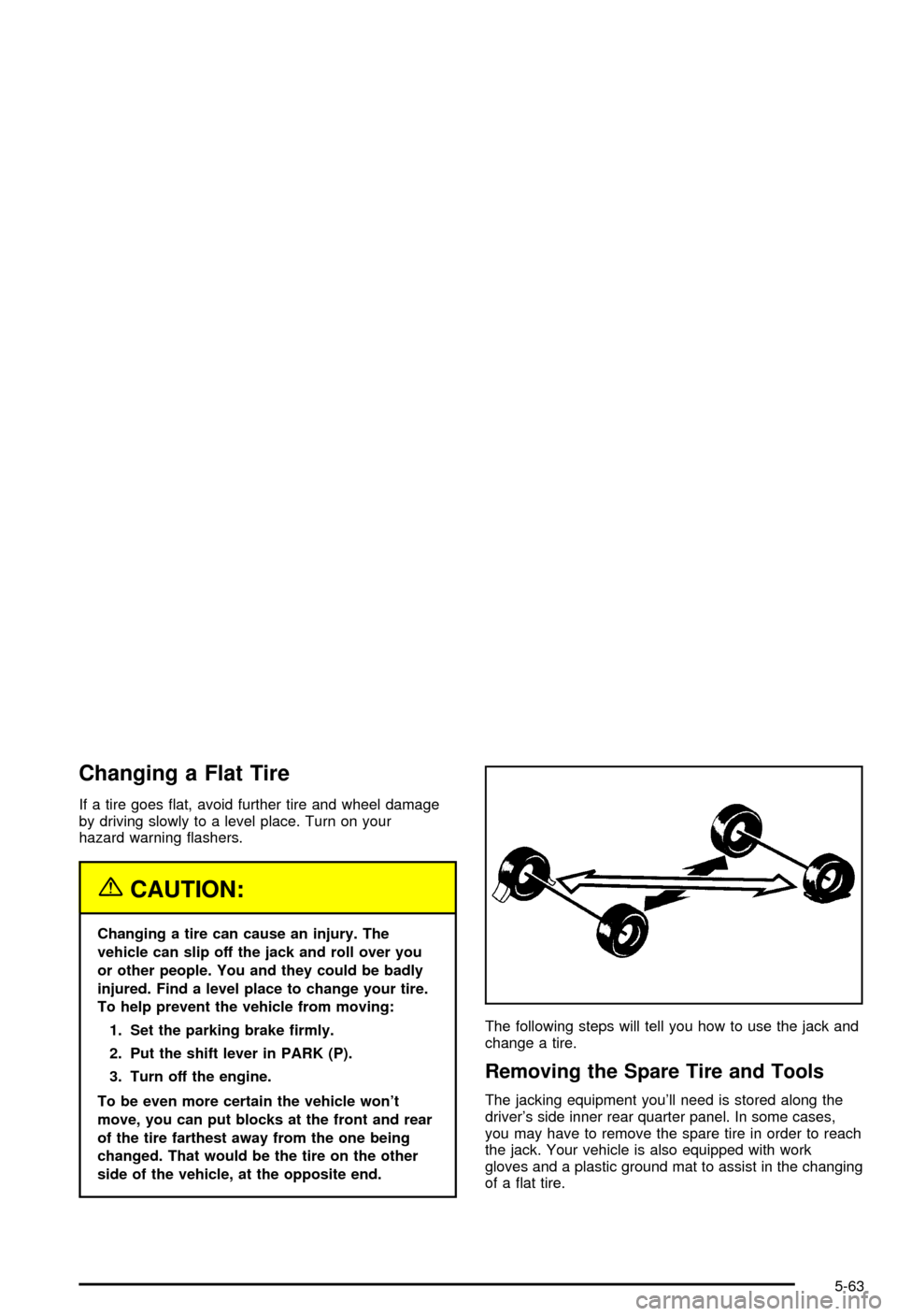
Changing a Flat Tire
If a tire goes ¯at, avoid further tire and wheel damage
by driving slowly to a level place. Turn on your
hazard warning ¯ashers.
{CAUTION:
Changing a tire can cause an injury. The
vehicle can slip off the jack and roll over you
or other people. You and they could be badly
injured. Find a level place to change your tire.
To help prevent the vehicle from moving:
1. Set the parking brake ®rmly.
2. Put the shift lever in PARK (P).
3. Turn off the engine.
To be even more certain the vehicle won't
move, you can put blocks at the front and rear
of the tire farthest away from the one being
changed. That would be the tire on the other
side of the vehicle, at the opposite end.The following steps will tell you how to use the jack and
change a tire.
Removing the Spare Tire and Tools
The jacking equipment you'll need is stored along the
driver's side inner rear quarter panel. In some cases,
you may have to remove the spare tire in order to reach
the jack. Your vehicle is also equipped with work
gloves and a plastic ground mat to assist in the changing
of a ¯at tire.
5-63
Page 402 of 420

Reporting Safety Defects
Reporting Safety Defects to the
United States Government
If you believe that your vehicle has a defect which could
cause a crash or could cause injury or death, you
should immediately inform the National Highway Traffic
Safety Administration (NHTSA), in addition to notifying
General Motors.
If NHTSA receives similar complaints, it may open an
investigation, and if it ®nds that a safety defect exists in
a group of vehicles, it may order a recall and remedy
campaign. However, NHTSA cannot become involved in
individual problems between you, your dealer or
General Motors.
To contact NHTSA, you may either call the Auto Safety
Hotline toll-free at 1-800-424-9393 (or 366-0123 in
the Washington, D.C. area) or write to:
NHTSA, U.S. Department of Transportation
Washington, D.C. 20590
You can also obtain other information about motor
vehicle safety from the hotline.
Reporting Safety Defects to the
Canadian Government
If you live in Canada, and you believe that your vehicle
has a safety defect, you should immediately notify
Transport Canada, in addition to notifying General
Motors of Canada Limited. You may write to:
Transport Canada
330 Sparks Street
Tower C
Ottawa, Ontario K1A 0N5
Reporting Safety Defects to
General Motors
In addition to notifying NHTSA (or Transport Canada) in
a situation like this, we certainly hope you'll notify us.
Please call us at 1-800-222-1020, or write:
Chevrolet Motor Division
Chevrolet Customer Assistance Center
P.O. Box 33170
Detroit, MI 48232-5170
In Canada, please call us at 1-800-263-3777 (English)
or 1-800-263-7854 (French). Or, write:
General Motors of Canada Limited
Customer Communication Centre, 163-005
1908 Colonel Sam Drive
Oshawa, Ontario L1H 8P7
7-10
Page 406 of 420

Audio System(s) (cont.)
Automatic Headlamp System............................3-11
Automatic Transfer Case..................................2-31
Automatic Transmission Check..........................6-28
Automatic Transmission Shift Lock Control
System Check.............................................6-29
Automatic Transmission...................................2-21
Fluid..........................................................5-17
Operation...................................................2-23
B
Backing Up....................................................4-61
Battery Replacement......................................... 2-6
Battery Run-Down Protection............................3-15
Battery..........................................................5-40
Before Leaving on a Long Trip.........................4-35
Before You Go Off-Roading..............................4-16
Body Lubrication Service..................................6-28
Brake Adjustment............................................5-39
Brake Fluid....................................................5-37
Brake Pedal Travel.........................................5-39
Brake Wear...................................................5-39
Brake............................................................2-34
Parking......................................................2-34
System Inspection.......................................6-32
System Warning Light..................................3-28
Brakes..........................................................5-37
Braking in Emergencies...................................4-10Braking........................................................... 4-8
Break-In, New Vehicle.....................................2-19
Bulb Replacement...........................................5-47
Halogen Bulbs............................................5-47
Headlamps.................................................5-48
One-Piece Front Turn Signal Lamps...............5-50
Replacement Bulbs......................................5-52
Taillamps....................................................5-51
Two-Piece Front Turn Signal Lamps...............5-50
Buying New Tires...........................................5-58C
California Fuel.................................................. 5-5
Canada ± Customer Assistance.......................... 7-5
Canadian Owners................................................ ii
Canadian Roadside Assistance........................... 7-8
Capacities and Speci®cations............................5-91
Capacities......................................................5-91
Carbon Monoxide...........................4-38, 4-54, 2-39
Care of.........................................................5-78
Safety Belts................................................5-78
Your Cassette Tape Player............................3-69
Your CD Player...........................................3-70
Your CDs ...................................................3-70
Cargo Cover..................................................2-58
Cargo Tie-Downs............................................2-58
Cassette Tape Messages.................................3-55
Cassette Tape Player Service...........................6-27
2
Page 416 of 420

Radios (cont.)
Theft-Deterrent............................................3-68
Understanding Reception..............................3-69
RDS Messages..............................3-44, 3-52, 3-62
Rear Axle......................................................5-45
Locking......................................................4-10
Rear Door Security Locks................................2-10
Rear Safety Belt Comfort Guides......................1-29
Rear Seat Operation......................................... 1-7
Rear Seat Outside Passenger Positions.............1-24
Rear Seat Passengers, Safety Belts..................1-24
Rear Window Defogger....................................3-19
Rear Window.................................................2-13
Rearview Mirror, Automatic Dimming..................2-41
Rearview Mirrors.............................................2-41
Reclining Seatbacks.......................................... 1-5
Recreational Vehicle Towing.............................4-45
Remote Keyless Entry System, Operation............ 2-5
Remote Keyless Entry System............................ 2-4
Remote Rear Glass Release............................2-15
Removing the Flat Tire and Installing the
Spare Tire..................................................5-67
Removing the Spare Tire and Tools...................5-63
Removing the Wheel Cover..............................5-66
Replacement Bulbs.........................................5-52
Replacing Brake System Parts..........................5-40
Replacing Restraint System Parts
After a Crash..............................................1-59
Reporting Safety Defects.................................7-10
Canadian Government..................................7-10Reporting Safety Defects (cont.)
General Motors...........................................7-10
United States Government............................7-10
Reprogramming a Single HomeLink
žButton.......2-47
Resetting Defaults...........................................2-48
Restraint System Check...................................6-27
Checking Your Restraint Systems...................1-58
Replacing Restraint System Parts
After a Crash..........................................1-59
Restraint Systems...........................................1-58
Checking....................................................1-58
Replacing Parts...........................................1-59
Retained Accessory Power (RAP)......................2-21
Right Front Passenger Position, Safety Belts......1-22
Roadside......................................................... 7-6
Assistance Program....................................... 7-6
Rocking Your Vehicle To Get It Out...................4-43
Running Your Engine While You Are Parked.......2-39
S
Safety Belt.....................................................3-25
Reminder Light............................................3-25
Safety Belts...................................................5-78
Care of......................................................5-78
Center Front Passenger Position....................1-22
Center Rear Passenger Position....................1-27
Driver Position............................................1-15
How to Wear Safety Belts Properly................1-14
12
Page 419 of 420

Tow/Haul Mode...............................................2-26
Towing..........................................................4-45
Recreational Vehicle.....................................4-45
Towing a Trailer..........................................4-54
Your Vehicle...............................................4-45
Trailer Brakes.................................................4-60
Trailer Wiring Harness.....................................4-65
Transfer Case and Front Axle (Four-Wheel Drive)
Inspection...................................................6-32
Transfer Case................................................5-45
Transmission Operation, Automatic....................2-23
Transmission Operation, Manual........................2-27
Transmission, Transaxle, Transfer Case Unit
Repair Manual............................................7-11
Transmission..................................................5-17
Fluid, Automatic...........................................5-17
Fluid, Manual..............................................5-20
Up-Shift Light..............................................3-27
Transportation Options...................................... 7-8
Traveling to Remote Areas...............................4-17
Trip Odometer................................................3-24
Turn and Lane-Change Signals.......................... 3-5
Turn Signal/Multifunction Lever........................... 3-5
Turn Signals When Towing a Trailer..................4-62
U
Underbody Flushing Service.............................6-30
Understanding Radio Reception........................3-69Uniform Tire Quality Grading............................5-59
United States ± Customer Assistance.................. 7-5
Up-Shift Light.................................................2-28
Used Replacement Wheels..............................5-61
Using HomeLink
ž...........................................2-47
Using RDS....................................3-43, 3-51, 3-60
Using Song List Mode.....................................3-66
Using the Recovery Hooks...............................4-43
V
Vehicle Identi®cation........................................5-83
Number (VIN).............................................5-83
Service Parts Identi®cation Label...................5-84
Vehicle Personalization....................................2-61
Memory Seat..............................................2-61
Vehicle Storage..............................................5-40
Vehicle............................................................ 4-7
Control........................................................ 4-7
Damage Warnings........................................... iv
Design......................................................... 4-3
Loading......................................................4-52
Parking Your...............................................2-38
Symbols......................................................... iv
Ventilation Adjustment......................................3-20
Visors...........................................................2-16
Voltmeter Gage..............................................3-27
15