tire size CHEVROLET BOLT EV 2021 User Guide
[x] Cancel search | Manufacturer: CHEVROLET, Model Year: 2021, Model line: BOLT EV, Model: CHEVROLET BOLT EV 2021Pages: 293, PDF Size: 9.21 MB
Page 227 of 293
Chevrolet Bolt EV Owner Manual (GMNA-Localizing-U.S./Canada-
14637856) - 2021 - CRC - 10/2/20
226 Vehicle Care
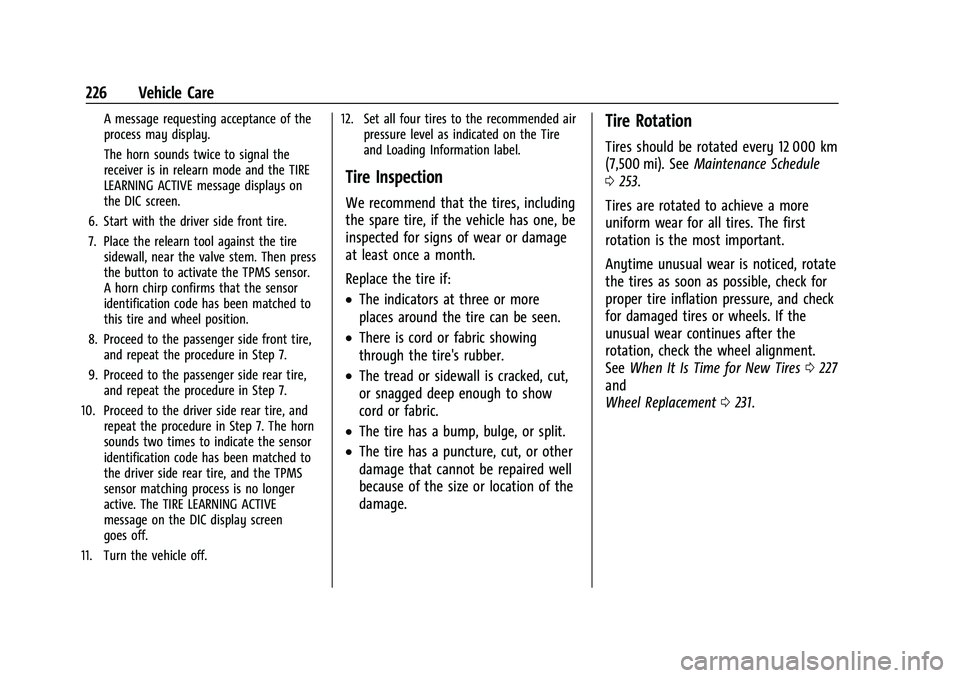
A message requesting acceptance of the
process may display.
The horn sounds twice to signal the
receiver is in relearn mode and the TIRE
LEARNING ACTIVE message displays on
the DIC screen.
6. Start with the driver side front tire.
7. Place the relearn tool against the tire sidewall, near the valve stem. Then press
the button to activate the TPMS sensor.
A horn chirp confirms that the sensor
identification code has been matched to
this tire and wheel position.
8. Proceed to the passenger side front tire, and repeat the procedure in Step 7.
9. Proceed to the passenger side rear tire, and repeat the procedure in Step 7.
10. Proceed to the driver side rear tire, and repeat the procedure in Step 7. The horn
sounds two times to indicate the sensor
identification code has been matched to
the driver side rear tire, and the TPMS
sensor matching process is no longer
active. The TIRE LEARNING ACTIVE
message on the DIC display screen
goes off.
11. Turn the vehicle off. 12. Set all four tires to the recommended air
pressure level as indicated on the Tire
and Loading Information label.
Tire Inspection
We recommend that the tires, including
the spare tire, if the vehicle has one, be
inspected for signs of wear or damage
at least once a month.
Replace the tire if:
.The indicators at three or more
places around the tire can be seen.
.There is cord or fabric showing
through the tire's rubber.
.The tread or sidewall is cracked, cut,
or snagged deep enough to show
cord or fabric.
.The tire has a bump, bulge, or split.
.The tire has a puncture, cut, or other
damage that cannot be repaired well
because of the size or location of the
damage.
Tire Rotation
Tires should be rotated every 12 000 km
(7,500 mi). See Maintenance Schedule
0 253.
Tires are rotated to achieve a more
uniform wear for all tires. The first
rotation is the most important.
Anytime unusual wear is noticed, rotate
the tires as soon as possible, check for
proper tire inflation pressure, and check
for damaged tires or wheels. If the
unusual wear continues after the
rotation, check the wheel alignment.
See When It Is Time for New Tires 0227
and
Wheel Replacement 0231.
Page 229 of 293
Chevrolet Bolt EV Owner Manual (GMNA-Localizing-U.S./Canada-
14637856) - 2021 - CRC - 10/2/20
228 Vehicle Care
how fast aging takes place. GM recommends
that tires, including the spare if equipped,
be replaced after six years, regardless of
tread wear. To identify the age of a tire, use
the tire manufacture date, which is the last
four digits of the DOT Tire Identification
Number (TIN) molded into one side of the
tire sidewall. The last four digits of the TIN
indicate the tire manufactured date. The
first two digits represent the week and the
last two digits, the year. For example, the
third week of the year 2020 would have a
4-digit DOT date of 0320. Week 01 is the
first full week (Sunday through Saturday) of
each year.
Vehicle Storage
Tires age when stored normally mounted on
a parked vehicle. Park a vehicle that will be
stored for at least a month in a cool, dry,
clean area away from direct sunlight to slow
aging. This area should be free of grease,
gasoline, or other substances that can
deteriorate rubber.
Parking for an extended period can cause
flat spots on the tires that may result in
vibrations while driving. When storing a
vehicle for at least a month, remove the
tires or raise the vehicle to reduce the
weight from the tires.
Buying New Tires
GM has developed and matched specific
tires for the vehicle. The original
equipment tires installed were designed
to meet General Motors Tire
Performance Criteria Specification (TPC
Spec) system rating. When replacement
tires are needed, GM strongly
recommends buying tires with the same
TPC Spec rating.
GM's exclusive TPC Spec system
considers over a dozen critical
specifications that impact the overall
performance of the vehicle, including
brake system performance, ride and
handling, traction control, and tire
pressure monitoring performance. GM's
TPC Spec number is molded onto the
tire's sidewall near the tire size. If the
tires have an all-season tread design,
the TPC Spec number will be followed
by MS for mud and snow. SeeTire
Sidewall Labeling 0217 for additional
information. GM recommends replacing worn tires in
complete sets of four. Uniform tread
depth on all tires will help to maintain
the performance of the vehicle. Braking
and handling performance may be
adversely affected if all the tires are not
replaced at the same time. If proper
rotation and maintenance have been
done, all four tires should wear out at
about the same time. However, if it is
necessary to replace only one axle set
of worn tires, place the new tires on
the rear axle. See
Tire Rotation0226.
{Warning
Tires could explode during improper
service. Attempting to mount or
dismount a tire could cause injury or
death. Only your dealer or authorized
tire service center should mount or
dismount the tires.
Page 230 of 293
Chevrolet Bolt EV Owner Manual (GMNA-Localizing-U.S./Canada-
14637856) - 2021 - CRC - 10/2/20
Vehicle Care 229
{Warning
Mixing tires of different sizes (other
than those originally installed on the
vehicle), brands, tread patterns,
or types may cause loss of vehicle
control, resulting in a crash or other
vehicle damage. Use the correct size,
brand, and type of tire on all wheels.
{Warning
Using bias-ply tires on the vehicle
may cause the wheel rim flanges to
develop cracks after many miles of
driving. A tire and/or wheel could fail
suddenly and cause a crash. Use only
radial-ply tires with the wheels on
the vehicle.
Winter tires with the same speed rating
as the original equipment tires may not
be available for H, V, W, Y and ZR
speed rated tires. Never exceed the
winter tires’ maximum speed capability
when using winter tires with a lower
speed rating. If the vehicle tires must be replaced
with a tire that does not have a TPC
Spec number, make sure they are the
same size, load range, speed rating, and
construction (radial) as the original
tires.
The Tire and Loading Information label
indicates the original equipment tires
on the vehicle. See
Vehicle Load Limits
0 153.Different Size Tires and Wheels
If wheels or tires are installed that are a
different size than the original equipment
wheels and tires, vehicle performance,
including its braking, ride and handling
characteristics, stability, and resistance to
rollover may be affected. If the vehicle has
electronic systems such as antilock brakes,
rollover airbags, traction control, electronic
stability control, or All-Wheel Drive, the
performance of these systems can also be
affected.
{Warning
If different sized wheels are used, there
may not be an acceptable level of
performance and safety if tires not
recommended for those wheels are
selected. This increases the chance of a
crash and serious injury. Only use GM
specific wheel and tire systems developed
for the vehicle, and have them properly
installed by a GM certified technician.
See Buying New Tires 0228 and
Accessories and Modifications 0197.
Uniform Tire Quality Grading
The following information relates to the
system developed by the United States
National Highway Traffic Safety
Administration (NHTSA), which grades
tires by treadwear, traction, and
temperature performance. This applies
only to vehicles sold in the United
States. The grades are molded on the
sidewalls of most passenger car tires.
The Uniform Tire Quality Grading
(UTQG) system does not apply to deep
tread, winter tires, compact spare tires,
Page 232 of 293
Chevrolet Bolt EV Owner Manual (GMNA-Localizing-U.S./Canada-
14637856) - 2021 - CRC - 10/2/20
Vehicle Care 231
Wheel Alignment and Tire
Balance
The tires and wheels were aligned and
balanced at the factory to provide the
longest tire life and best overall
performance. Adjustments to wheel
alignment and tire balancing are not
necessary on a regular basis. Consider an
alignment check if there is unusual tire wear
or the vehicle is significantly pulling to one
side or the other. Some slight pull to the
left or right, depending on the crown of the
road and/or other road surface variations
such as troughs or ruts, is normal. If the
vehicle is vibrating when driving on a
smooth road, the tires and wheels may
need to be rebalanced. See your dealer for
proper diagnosis.
Wheel Replacement
Replace any wheel that is bent, cracked,
or badly rusted or corroded. If wheel nuts
keep coming loose, the wheel, wheel bolts,
and wheel nuts should be replaced. If the
wheel leaks air, replace it. Some aluminum
wheels can be repaired. See your dealer if
any of these conditions exist.Your dealer will know the kind of wheel that
is needed.
Each new wheel should have the same
load-carrying capacity, diameter, width,
offset, and be mounted the same way as
the one it replaces.
Replace wheels, wheel bolts, wheel nuts,
or Tire Pressure Monitor System (TPMS)
sensors with new GM original equipment
parts.
{Warning
Using the wrong replacement wheels,
wheel bolts, or wheel nuts can be
dangerous. It could affect the braking and
handling of the vehicle. Tires can lose air,
and cause loss of control, causing a crash.
Always use the correct wheel, wheel
bolts, and wheel nuts for replacement.
Caution
The wrong wheel can also cause
problems with bearing life, brake cooling,
speedometer or odometer calibration,
headlamp aim, bumper height, vehicle
ground clearance, and tire or tire chain
clearance to the body and chassis.
Used Replacement Wheels
{Warning
Replacing a wheel with a used one is
dangerous. How it has been used or how
far it has been driven may be unknown.
It could fail suddenly and cause a crash.
When replacing wheels, use a new GM
original equipment wheel.
Tire Chains
{Warning
Do not use tire chains. There is not
enough clearance. Tire chains used on a
vehicle without the proper amount of
clearance can cause damage to the
brakes, suspension, or other vehicle parts.
The area damaged by the tire chains
could cause loss of control and a crash.
Use another type of traction device only
if its manufacturer recommends it for the
vehicle's tire size combination and road
conditions. Follow that manufacturer's
instructions. To avoid vehicle damage,
drive slow and readjust or remove the
(Continued)
Page 291 of 293
Chevrolet Bolt EV Owner Manual (GMNA-Localizing-U.S./Canada-
14637856) - 2021 - CRC - 10/2/20
290 Index
Storage Compartments . . . . . . . . . . . . . . . . . . . 69
Storing the Tire Sealant andCompressor Kit . . . . . . . . . . . . . . . . . . . . . . . . . 238
Struts Gas . . . . . . . . . . . . . . . . . . . . . . . . . . . . . . . . . . . . 207
Stuck Vehicle . . . . . . . . . . . . . . . . . . . . . . . . . . . . . 152
Sun Visors . . . . . . . . . . . . . . . . . . . . . . . . . . . . . . . . .25
Symbols . . . . . . . . . . . . . . . . . . . . . . . . . . . . . . . . . . . .2
System Forward Collision Alert (FCA) . . . . . . . . . . . 174
Systems
Driver Assistance . . . . . . . . . . . . . . . . . . . . . . 169
T
TaillampsBulb Replacement . . . . . . . . . . . . . . . . . . . . . . 209
Teen Driver . . . . . . . . . . . . . . . . . . . . . . . . . . . . . . . 132
Text Telephone (TTY) Users . . . . . . . . . . . . . . 265
Theft-Deterrent Systems . . . . . . . . . . . . . . . . . . .19
Immobilizer . . . . . . . . . . . . . . . . . . . . . . . . . . . . . 19
Time . . . . . . . . . . . . . . . . . . . . . . . . . . . . . . . . . . . . . . 76
Tires . . . . . . . . . . . . . . . . . . . . . . . . . . . . . . . . . . . . . 216
All-Season . . . . . . . . . . . . . . . . . . . . . . . . . . . . . 216
Buying New Tires . . . . . . . . . . . . . . . . . . . . . . 228
Chains . . . . . . . . . . . . . . . . . . . . . . . . . . . . . . . . . 231
Designations . . . . . . . . . . . . . . . . . . . . . . . . . . . 218
Different Size . . . . . . . . . . . . . . . . . . . . . . . . . . 229
If a Tire Goes Flat . . . . . . . . . . . . . . . . . . . . . 232 Tires (cont'd)
Inspection . . . . . . . . . . . . . . . . . . . . . . . . . . . . . 226
Pressure . . . . . . . . . . . . . . . . . . . . . . . . . . . . . . . 221
Pressure Light . . . . . . . . . . . . . . . . . . . . . . . . . . 88
Pressure Monitor Operation . . . . . . . . . . . 223
Pressure Monitor System . . . . . . . . . . . . . . 222
Rotation . . . . . . . . . . . . . . . . . . . . . . . . . . . . . . . 226
Sealant and Compressor Kit . . . . . . . . . . . . 232
Sealant and Compressor Kit,
Storing . . . . . . . . . . . . . . . . . . . . . . . . . . . . . . . 238
Self-Sealing . . . . . . . . . . . . . . . . . . . . . . . . . . . . . 217
Sidewall Labeling . . . . . . . . . . . . . . . . . . . . . . . 217
Terminology and Definitions . . . . . . . . . . . 219
Uniform Tire Quality Grading . . . . . . . . . . 229
Wheel Alignment and Tire Balance . . . . 231
Wheel Replacement . . . . . . . . . . . . . . . . . . . . 231
When It Is Time for New Tires . . . . . . . . . 227
Winter . . . . . . . . . . . . . . . . . . . . . . . . . . . . . . . . . . 217
Towing General Information . . . . . . . . . . . . . . . . . . . 194
Recreational Vehicle . . . . . . . . . . . . . . . . . . . 242
Vehicle . . . . . . . . . . . . . . . . . . . . . . . . . . . . . . . . 240
Traction Control System (TCS)/StabiliTrakLight . . . . . . . . . . . . . . . . . . . . . . . . . . . . . . . . . . 88
Off Light . . . . . . . . . . . . . . . . . . . . . . . . . . . . . . . . 87
Traction Control/Electronic Stability Control . . . . . . . . . . . . . . . . . . . . . . . . . . . . . . . . . 166 Trademarks and License Agreements . . . . . .134
Transportation Program, Courtesy . . . . . . . 267
Trip Odometer . . . . . . . . . . . . . . . . . . . . . . . . . . . . 82
Turn and Lane-Change Signals . . . . . . . . . . . .110
Turn Signal
Bulb Replacement . . . . . . . . . . . . . . . . . . . . . . 209
U
Underhood Compartment Fuse Block . . . . . 211
Underhood Compartment Overview . . . . . . 200
Uniform Tire Quality Grading . . . . . . . . . . . . 229
UpdatesSoftware . . . . . . . . . . . . . . . . . . . . . . . . . . . . . . . . 116
USB Port . . . . . . . . . . . . . . . . . . . . . . . . . . . . . . . . . 120
Using This Manual . . . . . . . . . . . . . . . . . . . . . . . . . .2
Utility Interruption of Charging . . . . . . . . . . 194
V
Vehicle Alarm System . . . . . . . . . . . . . . . . . . . . . . . . . . 18
Canadian Owners . . . . . . . . . . . . . . . . . . . . . . . . . 1
Control . . . . . . . . . . . . . . . . . . . . . . . . . . . . . . . . 149
Identification Number (VIN) . . . . . . . . . . . . 261
Load Limits . . . . . . . . . . . . . . . . . . . . . . . . . . . . 153
Messages . . . . . . . . . . . . . . . . . . . . . . . . . . . . . . 100
Personalization . . . . . . . . . . . . . . . . . . . . . . . . 101
Security . . . . . . . . . . . . . . . . . . . . . . . . . . . . . . . . . 18
Service Soon Light . . . . . . . . . . . . . . . . . . . . . . 85
Speed Messages . . . . . . . . . . . . . . . . . . . . . . . 101
Page 292 of 293
Chevrolet Bolt EV Owner Manual (GMNA-Localizing-U.S./Canada-
14637856) - 2021 - CRC - 10/2/20
Index 291
Vehicle (cont'd)Starting and Stopping . . . . . . . . . . . . . . . . . . 157
Towing . . . . . . . . . . . . . . . . . . . . . . . . . . . . . . . . 240
Vehicle Ahead Indicator . . . . . . . . . . . . . . . . . . . 87
Vehicle Care Storing the Tire Sealant andCompressor Kit . . . . . . . . . . . . . . . . . . . . . . . 238
Tire Pressure . . . . . . . . . . . . . . . . . . . . . . . . . . . 221
Vehicle Data Recording and Privacy . . . . . . 272
Vehicle Ready Light . . . . . . . . . . . . . . . . . . . . . . . 89
Ventilation, Air . . . . . . . . . . . . . . . . . . . . . . . . . . .143
Visors . . . . . . . . . . . . . . . . . . . . . . . . . . . . . . . . . . . . . .25
Voltage Devices and Wiring . . . . . . . . . . . . . 210
W
Warning Brake System Light . . . . . . . . . . . . . . . . . . . . . 85
Caution and Danger . . . . . . . . . . . . . . . . . . . . . 2
Warning Lights, Gauges, and Indicators . . . . . . . . . . . . . . . . . . . . . . . . . . . . . . . 79
Warnings Hazard Flashers . . . . . . . . . . . . . . . . . . . . . . . . 110
Washer Fluid . . . . . . . . . . . . . . . . . . . . . . . . . . . . 202
Wheels Alignment and Tire Balance . . . . . . . . . . . . 231
Different Size . . . . . . . . . . . . . . . . . . . . . . . . . . 229
Replacement . . . . . . . . . . . . . . . . . . . . . . . . . . . 231
When It Is Time for New Tires . . . . . . . . . . . 227 When to Charge . . . . . . . . . . . . . . . . . . . . . . . . . . 181
Where to Put the Restraint . . . . . . . . . . . . . . . 54
Windows . . . . . . . . . . . . . . . . . . . . . . . . . . . . . . . . . .23
Power . . . . . . . . . . . . . . . . . . . . . . . . . . . . . . . . . . 23
Windshield Replacement . . . . . . . . . . . . . . . . . . . . . . . . . . . 207
Wiper/Washer . . . . . . . . . . . . . . . . . . . . . . . . . . 74
Winter Driving . . . . . . . . . . . . . . . . . . . . . . . . . . . . . . . . 152
Winter Tires . . . . . . . . . . . . . . . . . . . . . . . . . . . . . . 217
Wiper Blade Replacement . . . . . . . . . . . . . . . . 206
Wipers Rear Washer . . . . . . . . . . . . . . . . . . . . . . . . . . . . 75
Wireless Charging . . . . . . . . . . . . . . . . . . . . . . . . .77
Wiring, High Voltage Devices . . . . . . . . . . . . 210