engine coolant CHEVROLET CAVALIER 1994 1.G User Guide
[x] Cancel search | Manufacturer: CHEVROLET, Model Year: 1994, Model line: CAVALIER, Model: CHEVROLET CAVALIER 1994 1.GPages: 243, PDF Size: 15.06 MB
Page 139 of 243
Downloaded from www.Manualslib.com manuals search engine Problems on the Road
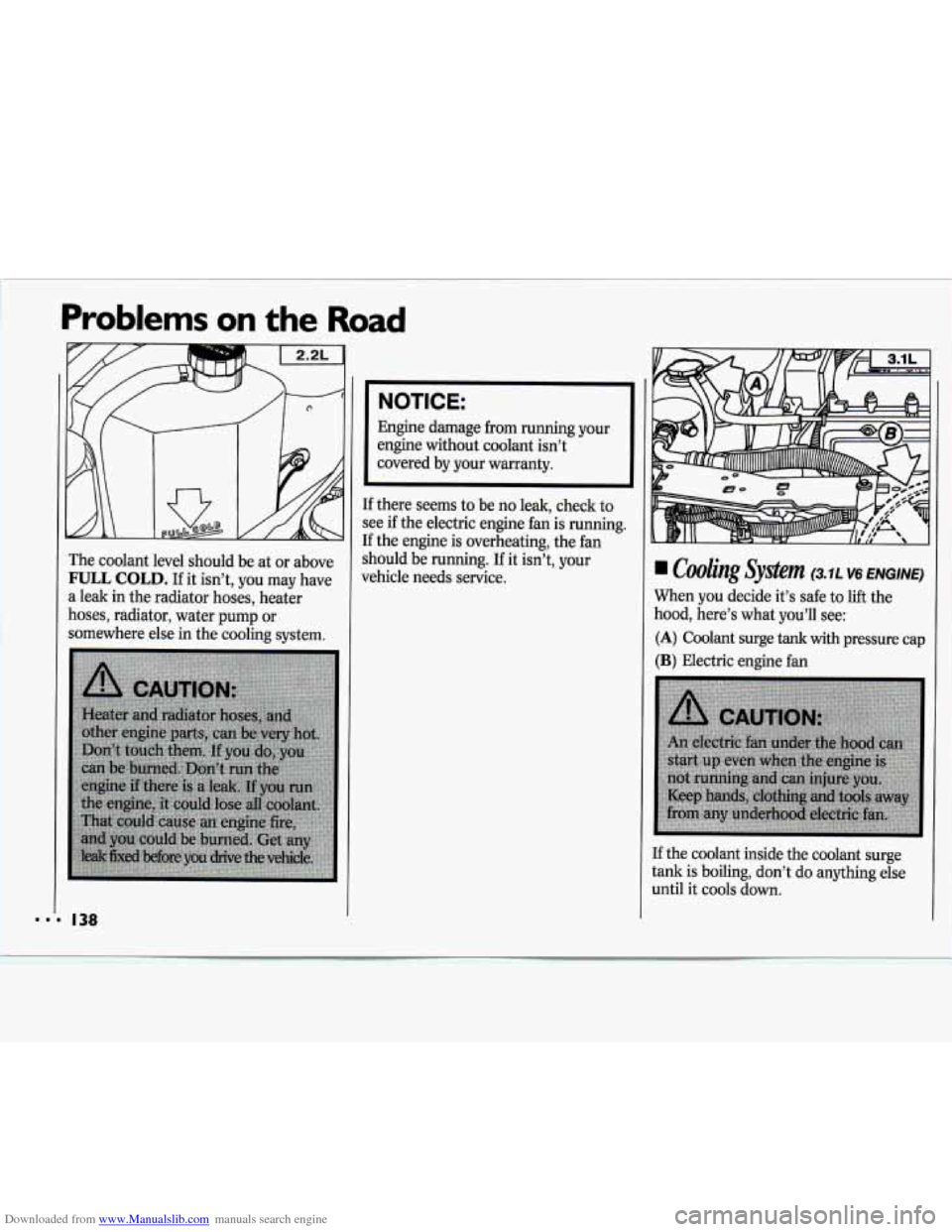
The coolant level should be at or above
FULL COLD. If it isn’t, you may have
a leak in the radiator hoses, heater
hoses, radiator, water pump or
somewhere else in the cooling system.
I.. ’ 138
NOTICE:
Engine damage from running your
engine without coolant isn’t
covered by your warranty.
If there seems to be no leak, check to
see if the electric engine fan is running.
If the engine is overheating, the fan
should be running. If it isn’t, your
vehicle needs service.
coohg Sy&n (3.1 L V6 ENGINE)
When you decide it’s safe to lift the
hood, here’s what you’ll see:
(A) Coolant surge tank with pressure cap
(B) Electric engine fan
If the coolant inside the coolant surge
tank
is boiling, don’t do anything else
until it cools down.
Page 140 of 243
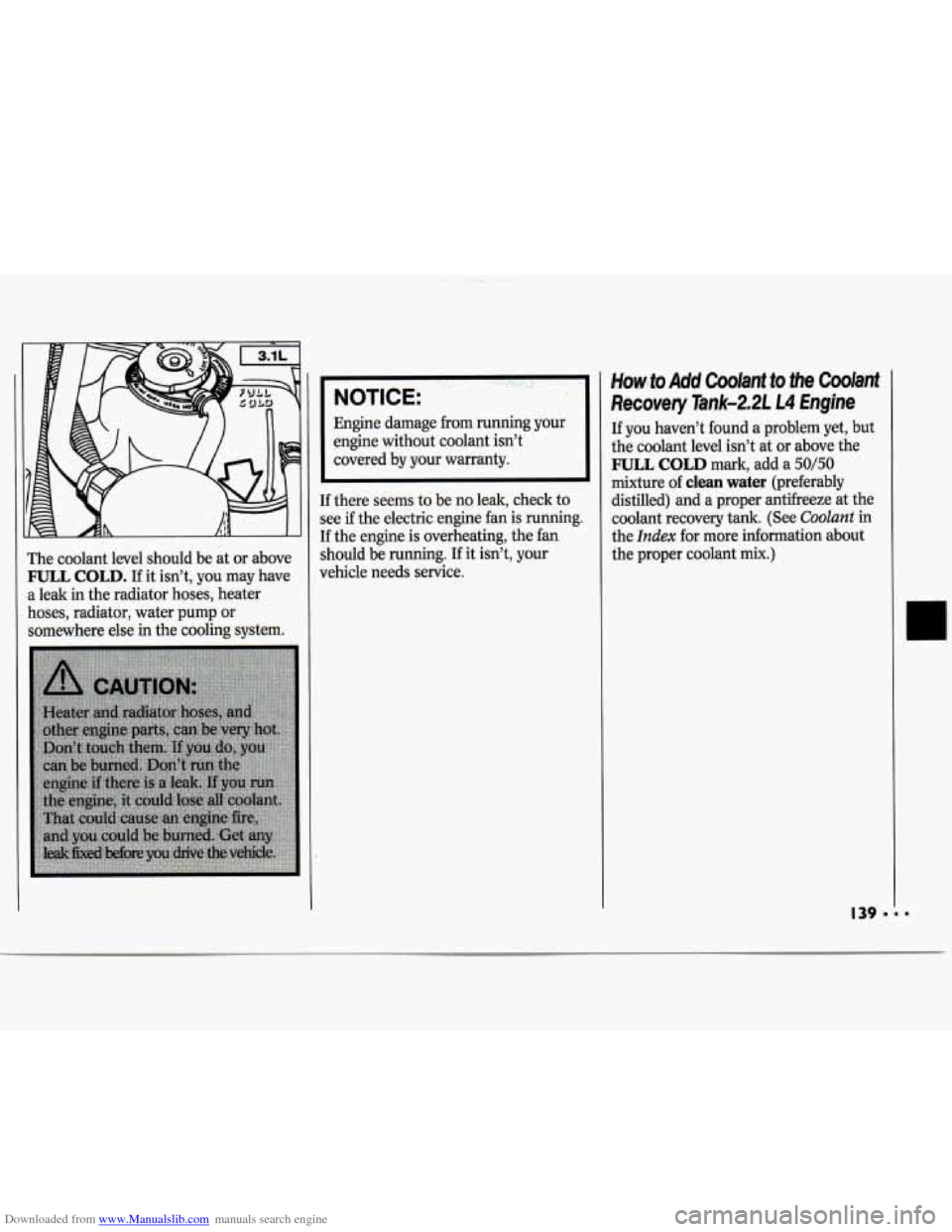
Downloaded from www.Manualslib.com manuals search engine The coolant level should be at or above
FULL COLD. If it isn’t, you may have
a leak in the radiator hoses, heater
hoses, radiator, water pump or
somewhere else in the cooling system.
I.
NOTICE:
’ I ._I
Engine damage from running your
engine without coolant isn’t
covered by your warranty.
If there seems to be no leak, check to
see
if the electric engine fan is running.
If the engine is overheating, the fan
should be running. If it isn’t, your
vehicle needs service.
Howlo Add Coolant to the Coolant
Recovery Tank-2.2L f.4 Engine
If you haven’t found a problem yet, but
the coolant level isn’t at or above the
FULL COLD mark, add a 50/50
mixture of clean water (preferably
distilled) and a proper antifreeze at the
coolant recovery tank. (See
Coolant in
the
Index for more information about
the proper coolant mix.)
Page 141 of 243
Downloaded from www.Manualslib.com manuals search engine Problems on the Road
I NOTICE: I
In cold weather, water can freeze
and crack the engine, radiator,
heater core and other parts. Use the
recommended coolant. When
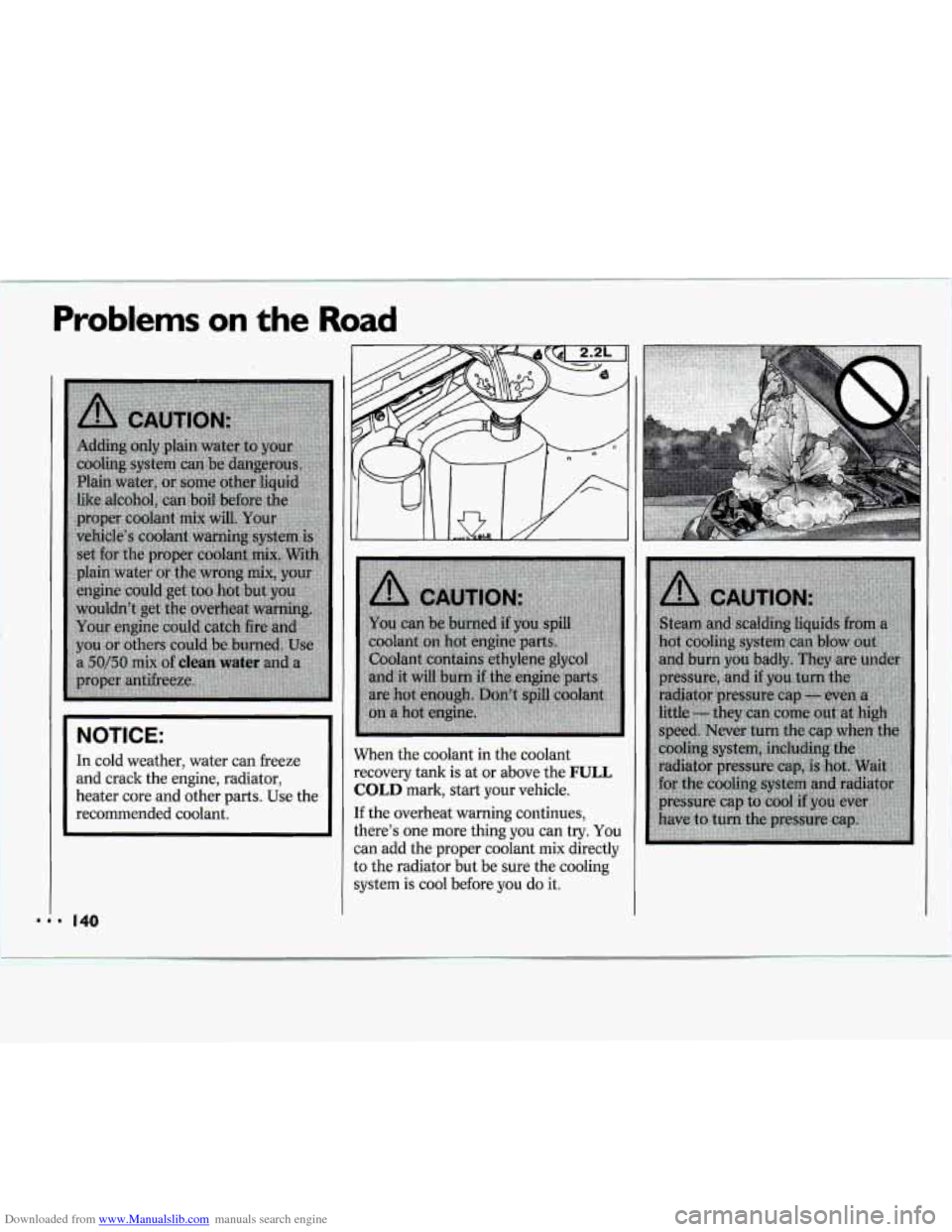
the coolant in the coolant
recovery tank is at or above the FULL
COLD mark, start your vehicle.
If the overheat warning continues,
there's one more thing you can try.
You
can add the proper coolant mix directly
to the radiator but be sure the cooling
system
is cool before you do it.
Page 142 of 243
![CHEVROLET CAVALIER 1994 1.G User Guide Downloaded from www.Manualslib.com manuals search engine I
I 2.2L ]
How to Add Coolant to the 2.21
14 Engne at the Radiator
1. You can remove the radiator pressure
cap when the cooling sys](/img/24/8078/w960_8078-141.png "CHEVROLET CAVALIER 1994 1.G User Guide Downloaded from www.Manualslib.com manuals search engine I
I 2.2L ]
How to Add Coolant to the 2.21
14 Engne at the Radiator
1. You can remove the radiator pressure
cap when the cooling sys")
Downloaded from www.Manualslib.com manuals search engine I
I 2.2L ]
How to Add Coolant to the 2.21
14 Engne at the Radiator
1. You can remove the radiator pressure
cap when the cooling system,
including the radiator pressure cap
and upper radiator hose, is no longer
hot. Turn the pressure cap slowly to
the left until
it first stops. (Don’t
press down while turning the
pressure cap.) If you hear a hiss, wait
for that to stop. A hiss means there is
still some pressure left.
I 2.2L
n
2. Then keep turning the pressure cap,
but now push down as you turn it.
Remove the pressure cap. 3. Fill the radiator with the proper mix,
up to the base of the filler neck.
Page 143 of 243
Downloaded from www.Manualslib.com manuals search engine Problems on the Road
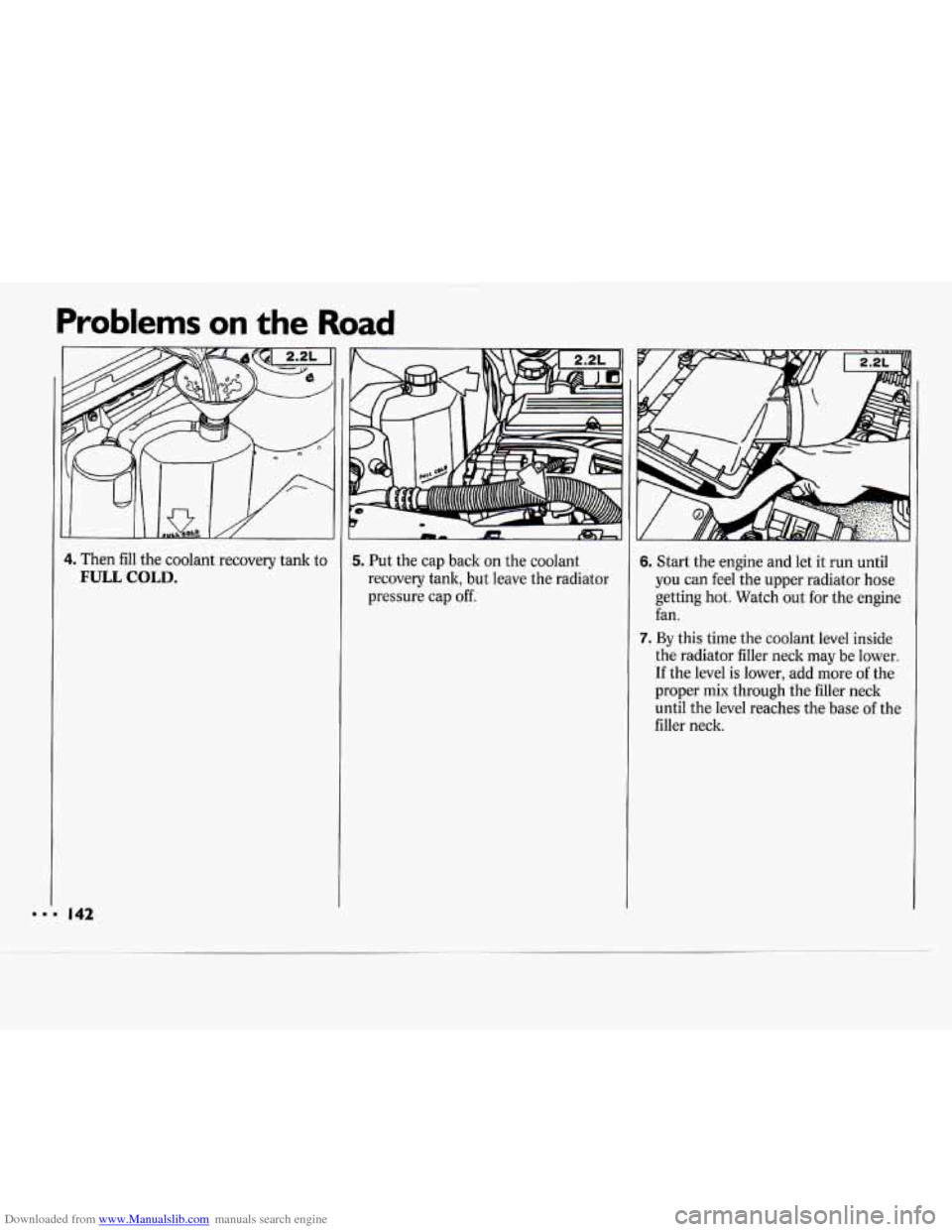
4. Then fill the coolant recovery tank to
FULL COLD.
I
m.4 142
II- m
5. Put the cap back on the coolant
recovery tank, but leave the radiator
pressure cap off. 6. Start the engine and let it run until
you can feel the upper radiator hose
getting hot. Watch out for the engine
fan.
7. By this time the coolant level inside
the radiator filler neck may be lower.
If the level is lower, add more
of the
proper
mix through the filler neck
until the level reaches the base of the
filler neck.
Page 144 of 243
Downloaded from www.Manualslib.com manuals search engine II
R
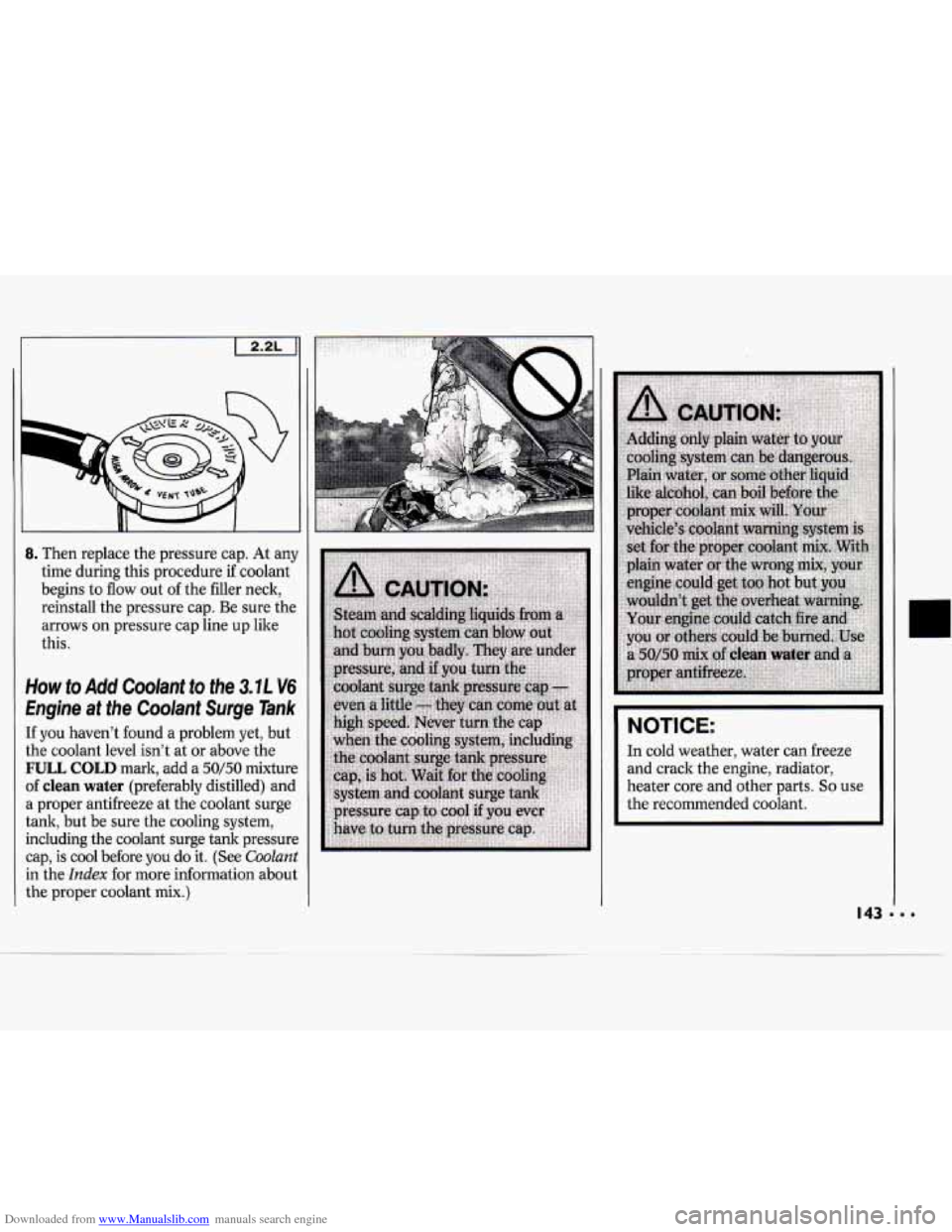
8. Then replace the pressure cap. At anj
time during this procedure
if coolant
begins to flow
out of the filler neck,
reinstall the pressure cap. Be sure the
arrows
on pressure cap line up like
this.
How to Add Coolant to the 3.7L V6
€ngine at the Coolant Surge Tank
If you haven't found a problem yet, but
the coolant level isn't at or above the
FULL COLD mark, add a 50/50 mixture
of clean water (preferably distilled) and
a proper antifreeze at the coolant surge
tank, but be sure the cooling system,
including the coolant surge tank pressure
cap,
is cool before you do it. (See CooZuni
in the Index for more information about
the proper coolant mix.)
NOTICE:
In cold weather, water can freeze
and crack the engine, radiator,
heater core and other parts.
So use
the recommended coolant.
Page 145 of 243
Downloaded from www.Manualslib.com manuals search engine Problems on the Road
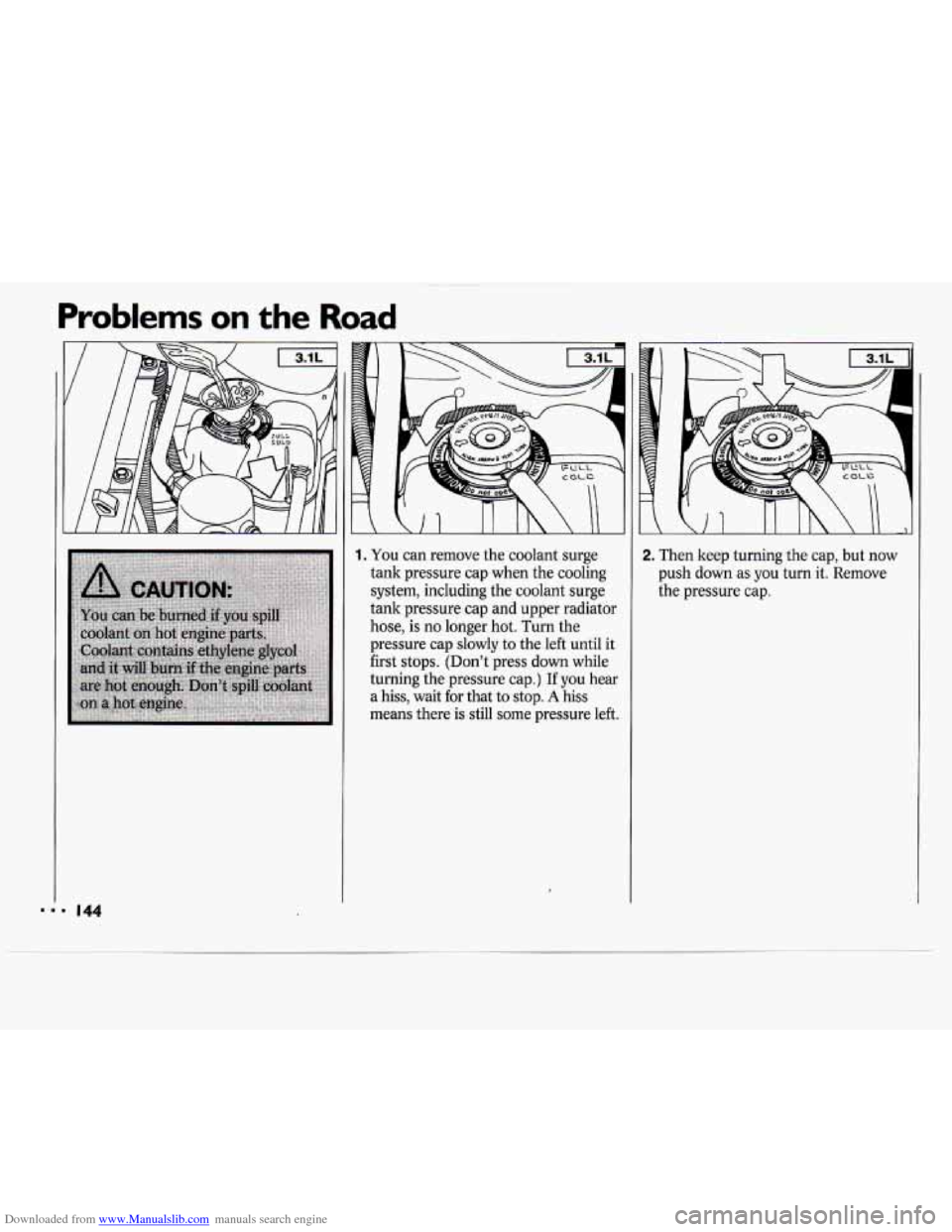
1. You can remove the coolant surge
tank pressure cap when the cooling
system, including the coolant surge
tank pressure cap and upper radiator
hose, is no longer hot. Turn the
pressure
cap slowly to the left until it
first stops. (Don't press down while
turning the pressure cap.)
If you hear
a hiss, wait for that to stop.
A hiss
means there is still some pressure left.
2. Then keep turning the cap, but now
push down as you turn it. Remove
the pressure cap.
Page 146 of 243
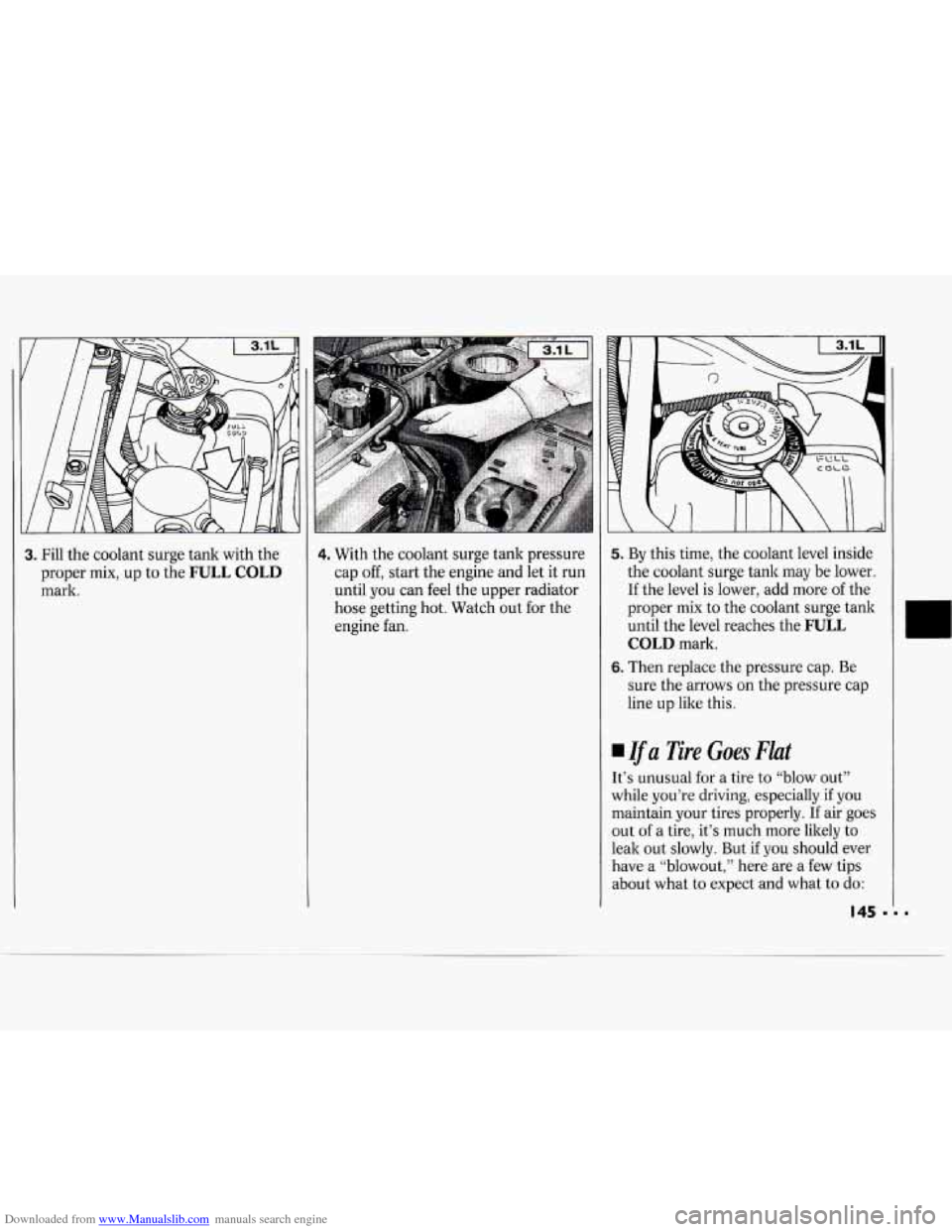
Downloaded from www.Manualslib.com manuals search engine 3. Fill the coolant surge tank with the
proper mix, up to the
FULL COLD
mark.
4. With the coolant surge tank pressure
cap
off, start the engine and let it run
until you can feel the upper radiator
hose getting hot. Watch out for the
engine fan.
5. By this time, the coolant level inside
the coolant surge tank may be lower.
If the level is lower, add more of the
proper mix to the coolant surge tank
until the level reaches the
FULL
COLD mark.
6. Then replace the pressure cap. Be
sure the arrows
on the pressure cap
line up like this.
Ifa Tire Goes Flat
It’s unusual for a tire to “blow out”
while you’re driving, especially
if you
maintain your tires properly. If air goes
out of a tire, it’s much more likely to
leak out slowly. But
if you should ever
have a
blowout^" here are a few tips
about what to expect and what
to do:
Page 154 of 243
Downloaded from www.Manualslib.com manuals search engine Here you will find information
about the care of your Chevrolet
.
This part begins with service and
fuel information. and then it shows how to check important fluid and
lubricant levels
. There is also
technical information about your
vehicle. and a section devoted to
its appearance care
.
Part 6
Service and Appearance Care
Service ........................................................................\
............................................. 154
Fuel ........................................................................\
.................................................. 154
Hood Release ........................................................................\
................................... 158
Engine Oil ........................................................................\
........................................ 162
Air Cleaner ........................................................................\
...................................... 165
Automatic Transaxle Fluid ........................................................................\
............. 167
Manual Transaxle Fluid ........................................................................\
.................. 169
Power Steering Fluid ........................................................................\
....................... i73
Windshield Washer Fluid ........................................................................\
................ 173
Brakes ........................................................................\
.............................................. 174
Engine Coolant ........................................................................\
................................ 170
Battery ........................................................................\
............................................. 176
Bulb Replacement ........................................................................\
............................ 176
Loading Your Vehicle ........................................................................\
..................... 180
Windshield Wiper Blade Replacement ................................................................... 179
Tires ........................................................................\
................................................. 181
Appearance Care ........................................................................\
............................. 187
Vehicle Identification Number (VIN) .................................................................... 194
Add-on Electrical Equipment ........................................................................\
........ 195
Fuses 8I Circuit Breakers ........................................................................\
................ 195
Fluids 81 Lubricants ........................................................................\
........................ 199
Capacities 81 Specifications ........................................................................\
............ 198
Replacement Bulbs ........................................................................\
.......................... 200
Engine Specifications ........................................................................\
...................... 202
Normal Maintenance Replacement Parts ............................................................... f!B
Page 161 of 243
Downloaded from www.Manualslib.com manuals search engine Service & Appearance Care
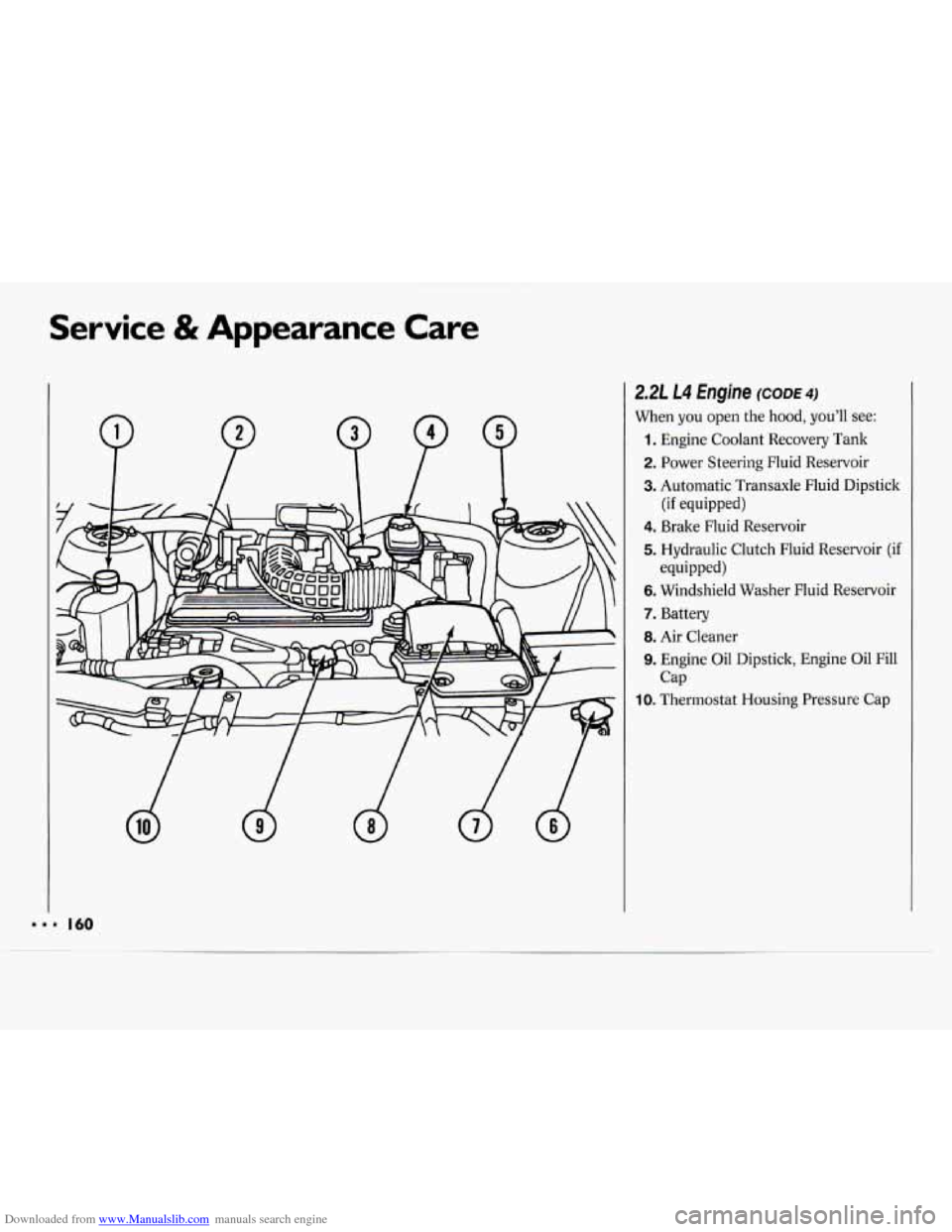
2.21 L4 Engine CODE^)
When you open the hood, you’ll see:
1. Engine Coolant Recovery Tank
2. Power Steering Fluid Reservoir
3. Automatic Transaxle Fluid Dipstick
4. Brake Fluid Reservoir
5. Hydraulic Clutch Fluid Reservoir (if
6. Windshield Washer Fluid Reservoir
7. Battery
8. Air Cleaner
9. Engine Oil Dipstick, Engine Oil Fill
(if equipped)
equipped)
Cap
IO. Thermostat Housing Pressure Cap