power steering CHEVROLET CAVALIER 1994 1.G Owners Manual
[x] Cancel search | Manufacturer: CHEVROLET, Model Year: 1994, Model line: CAVALIER, Model: CHEVROLET CAVALIER 1994 1.GPages: 243, PDF Size: 15.06 MB
Page 51 of 243
Downloaded from www.Manualslib.com manuals search engine Features & Controls
RUN
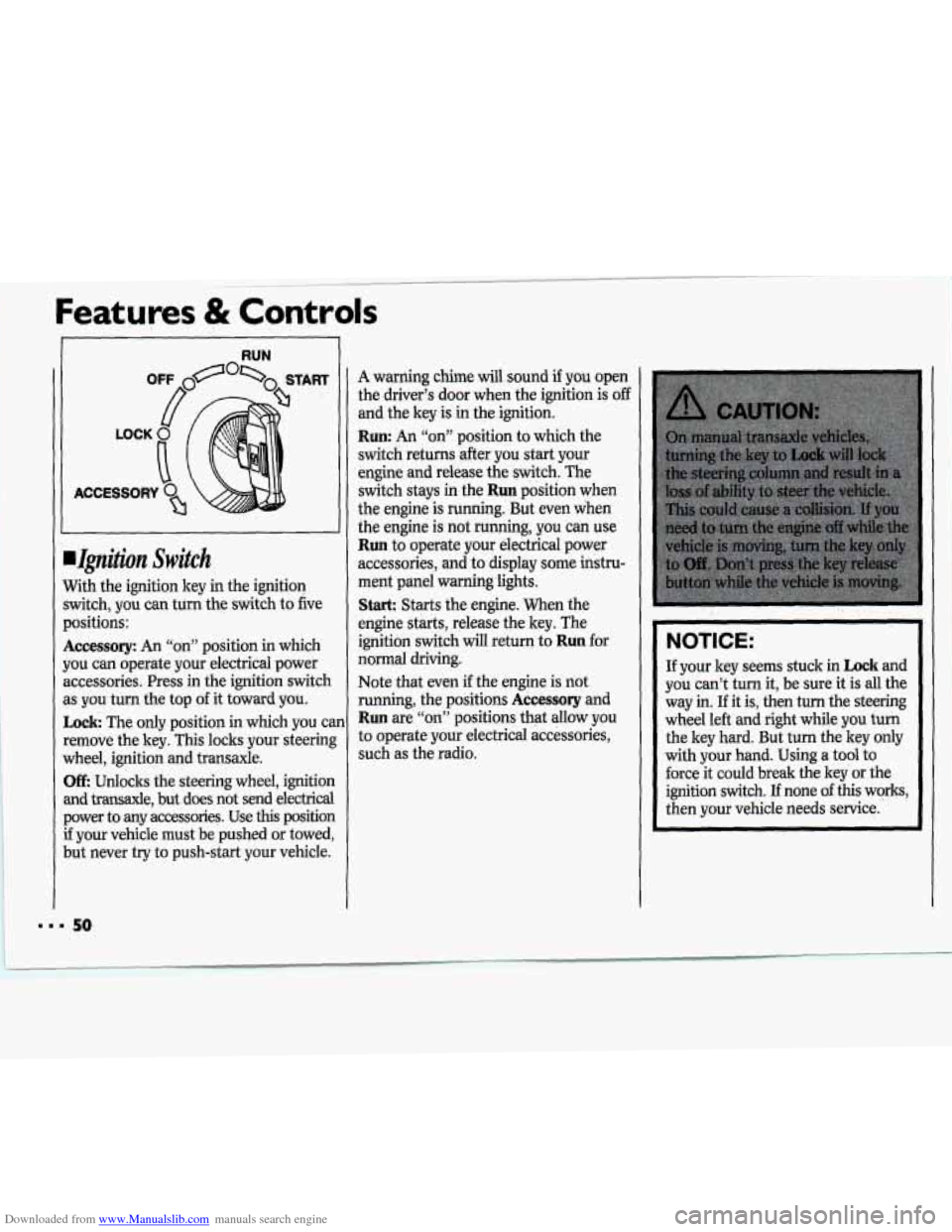
.Ignition Switch
With the ignition key in the ignition
switch, you can turn
the switch to five
positions:
Accessory: An “on” position in which
you cm operate your electrical power
accessories. Press
in the ignition switch
as you turn the top
of it toward you.
Lock The only positiop in which you can
remove the key. This locks your steering
wheel, ignition and transaxle.
Off: ,Unlocks the steering wheel, ignition
and transaxle, but does not send electrical power to any accessories. Use
this position
if your vehicle must be pushed or towed,
but never try to push-start your vehicle.
A warning chime will sound if you open
the driver’s door when the ignition
is off
and the key is in the ignition.
Run: An “on” position to which the
switch returns .after you start your
engine and release’the syitch. The
switch stays
in the Run position when
the engine
is running. But even when
the engine is
not running, you can use
Run to operate your electrical power
accessories, and
to display some histru-
ment panel WarningJights.
Stark Starts the engine. When the
engine starts, release the key. The
ignition switch will return to
Run for
normal driving.
Note that even
if the engine is not
running, the positions
Accessory and
Run are “qd’ positions’that allow you
to operate your electrical accessories,
such as .the radio.
NOTICE:
I.
If your key seems stuck in Lock and
you can’t turn it, be sure
it is all the
way
in. If it is, then turn the steering
wheel le&’and right while you
iurh
the key hard. But turn the key only
with your hand. Using
a tool to
force it could break the key or the
ignition switch.
If none of this works,
then your vehicle needs service.
50
Page 114 of 243
Downloaded from www.Manualslib.com manuals search engine Braking in Emergencies
Use your anti-lock braking system when
you need to. With anti-lock, you can
steer and brake at the same time. In
many emergencies, steering can help
you more than even the very best
braking.
Power Steering
If you lose power steering assist
because the engine stops or the system
is not functioning, you can steer but it
will take much more effort.
Steering Tips
Driving on Curves
It’s important to take curves at a
reasonable speed.
A lot of the “driver lost control”
accidents mentioned
on the news
happen
on curves. Here’s why:
Experienced driver or beginner, each
of
us is subject to the same laws of physics
when driving on curves. The traction of
the tires against the road surface makes
it possible for the vehicle to change its
path when you turn the front wheels.
If
there’s no traction, inertia will keep the
vehicle going in the same direction.
If
you’ve ever tried to steer a vehicle on
wet ice, you’ll understand this.
The traction you can get in a curve
depends on the condition of your tires
and the road surface, the angle at which
the curve
is banked, and your speed.
While you’re in a curve, speed is the one
factor you can control.
Suppose you’re steering through a
sharp curve. Then you suddenly accelerate.
Both control systems
-
steering and acceleration - have to do
their work where the tires meet the
road. Adding the sudden acceleration
can demand too much
of those places.
You can lose control.
What should you do if this ever
happens? Ease up on the accelerator
pedal, steer the vehicle the way you
want it to go, and slow down.
Speed limit signs near curves warn that
you should adjust your speed. Of
course, the posted speeds are based on
good weather and road conditions.
Under less favorable conditions you’ll
want to go slower.
If you need to reduce your speed as you
approach
a curve, do it before you enter
the curve, while your front wheels are
straight ahead.
Try to adjust your speed
so you can
“drive” through the curve. Maintain a
reasonable, steady speed. Wait to
accelerate until you are out of the curve,
and then accelerate gently into the
straightaway.
Page 154 of 243
Downloaded from www.Manualslib.com manuals search engine Here you will find information
about the care of your Chevrolet
.
This part begins with service and
fuel information. and then it shows how to check important fluid and
lubricant levels
. There is also
technical information about your
vehicle. and a section devoted to
its appearance care
.
Part 6
Service and Appearance Care
Service ........................................................................\
............................................. 154
Fuel ........................................................................\
.................................................. 154
Hood Release ........................................................................\
................................... 158
Engine Oil ........................................................................\
........................................ 162
Air Cleaner ........................................................................\
...................................... 165
Automatic Transaxle Fluid ........................................................................\
............. 167
Manual Transaxle Fluid ........................................................................\
.................. 169
Power Steering Fluid ........................................................................\
....................... i73
Windshield Washer Fluid ........................................................................\
................ 173
Brakes ........................................................................\
.............................................. 174
Engine Coolant ........................................................................\
................................ 170
Battery ........................................................................\
............................................. 176
Bulb Replacement ........................................................................\
............................ 176
Loading Your Vehicle ........................................................................\
..................... 180
Windshield Wiper Blade Replacement ................................................................... 179
Tires ........................................................................\
................................................. 181
Appearance Care ........................................................................\
............................. 187
Vehicle Identification Number (VIN) .................................................................... 194
Add-on Electrical Equipment ........................................................................\
........ 195
Fuses 8I Circuit Breakers ........................................................................\
................ 195
Fluids 81 Lubricants ........................................................................\
........................ 199
Capacities 81 Specifications ........................................................................\
............ 198
Replacement Bulbs ........................................................................\
.......................... 200
Engine Specifications ........................................................................\
...................... 202
Normal Maintenance Replacement Parts ............................................................... f!B
Page 161 of 243
Downloaded from www.Manualslib.com manuals search engine Service & Appearance Care
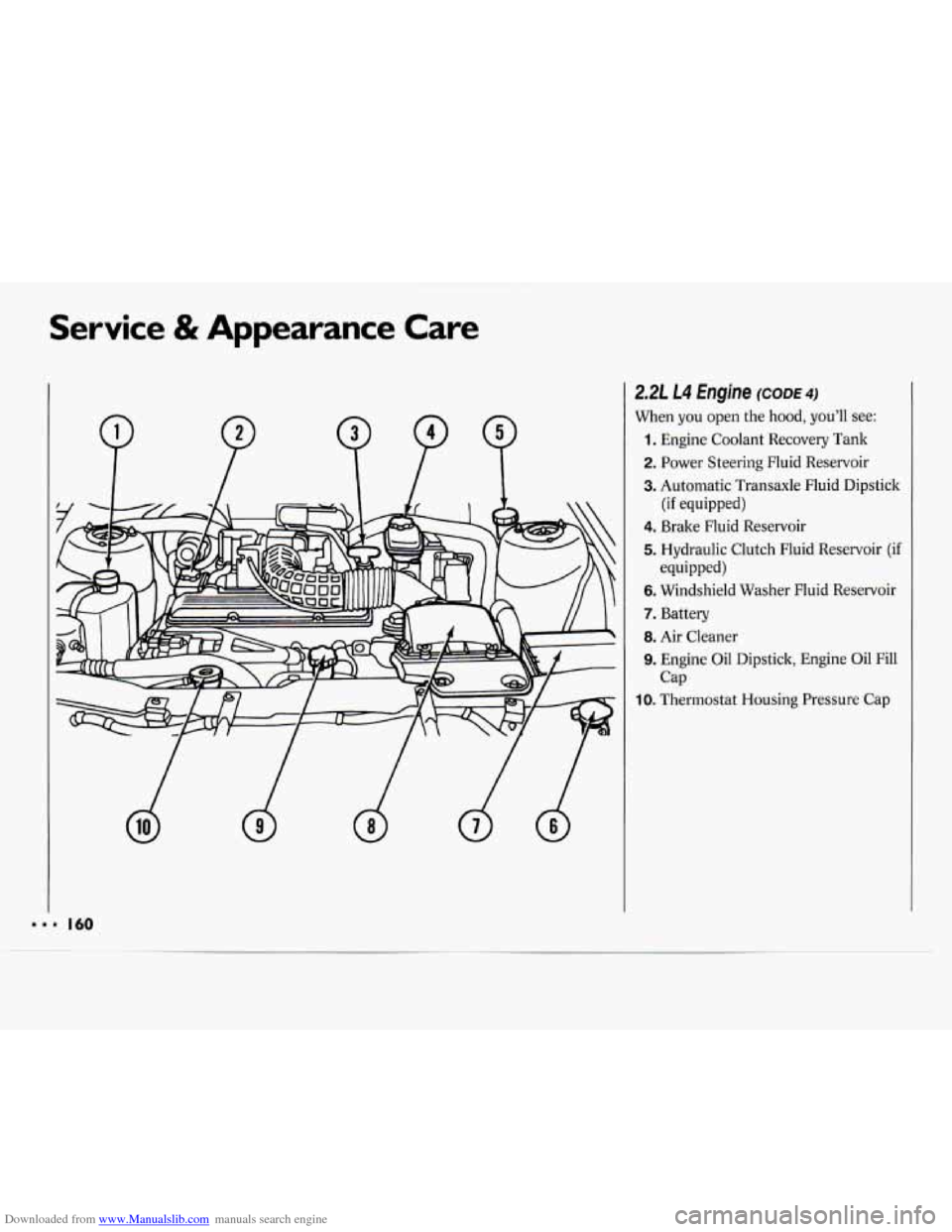
2.21 L4 Engine CODE^)
When you open the hood, you’ll see:
1. Engine Coolant Recovery Tank
2. Power Steering Fluid Reservoir
3. Automatic Transaxle Fluid Dipstick
4. Brake Fluid Reservoir
5. Hydraulic Clutch Fluid Reservoir (if
6. Windshield Washer Fluid Reservoir
7. Battery
8. Air Cleaner
9. Engine Oil Dipstick, Engine Oil Fill
(if equipped)
equipped)
Cap
IO. Thermostat Housing Pressure Cap
Page 162 of 243
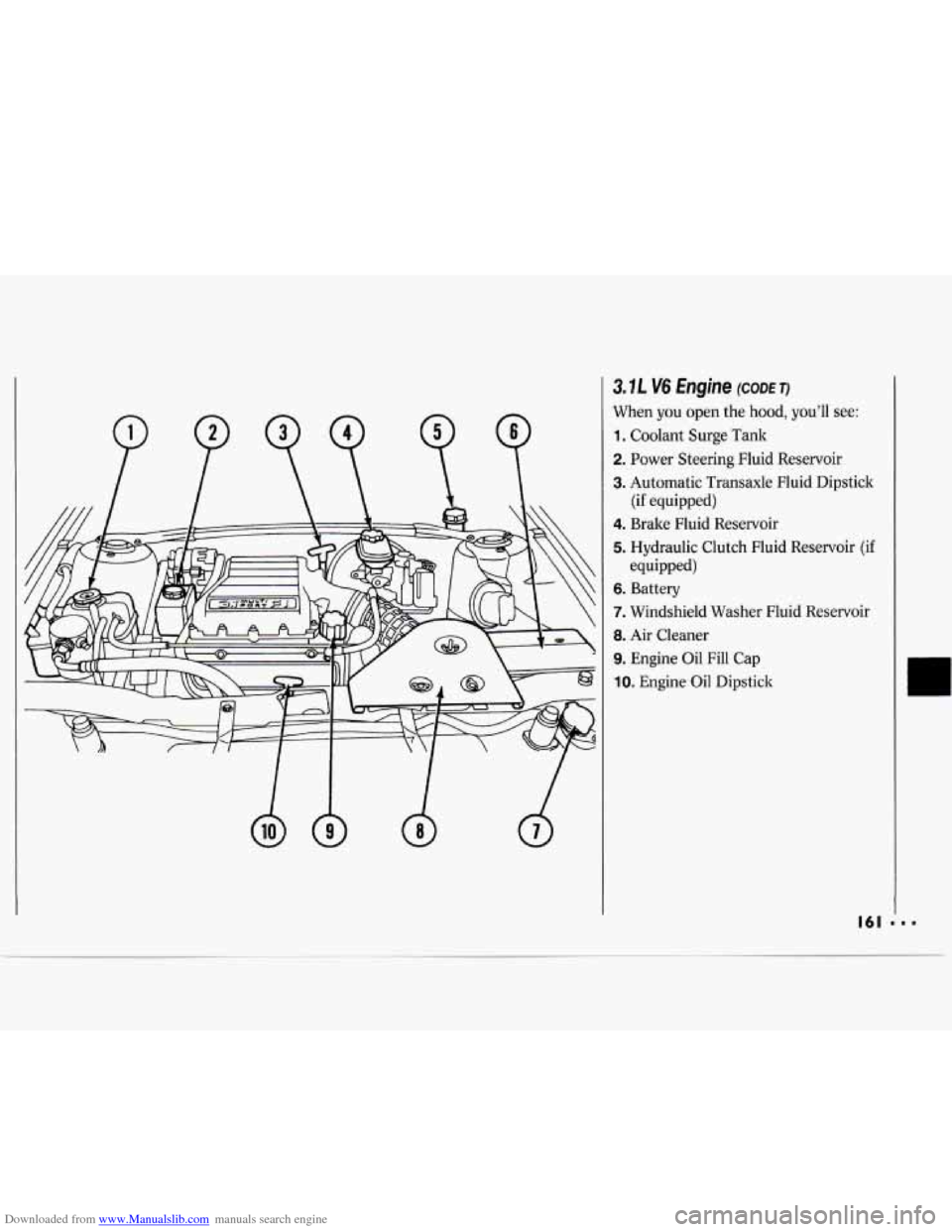
Downloaded from www.Manualslib.com manuals search engine 3.7L V6 Engine (CODE TI
When you open the hood, you’ll see:
1. Coolant Surge Tank
2. Power Steering Fluid Reservoir
3. Automatic Transaxle Fluid Dipstick
4. Brake Fluid Reservoir
5. Hydraulic Clutch Fluid Reservoir (if
6. Battery
7. Windshield Washer Fluid Reservoir
8. Air Cleaner
9. Engine Oil Fill Cap
IO. Engine Oil Dipstick
(if equipped)
equipped)
Page 174 of 243
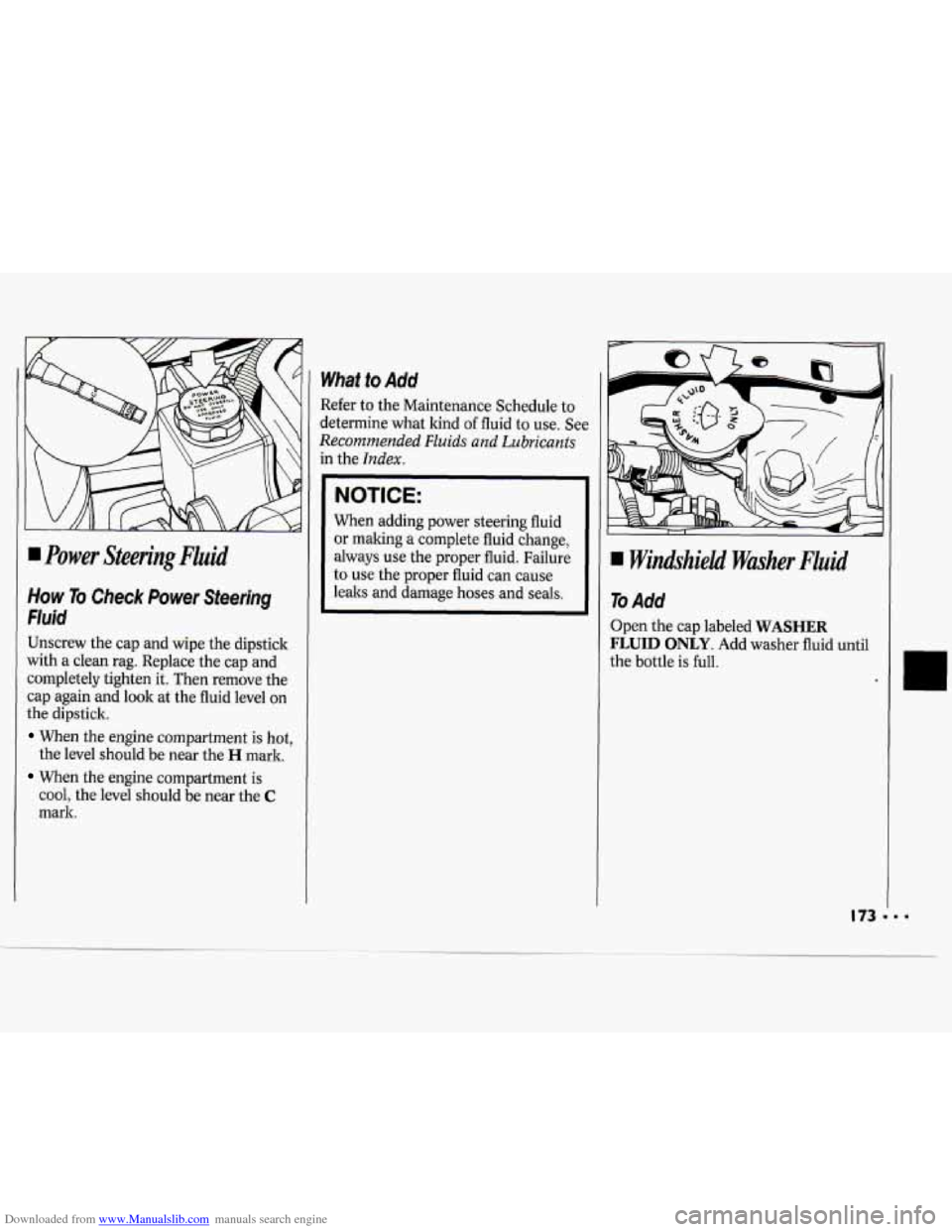
Downloaded from www.Manualslib.com manuals search engine I Power Steering Fluid
How To Check Power Steering
Fluid
Unscrew the cap and wipe the dipstick
with a clean rag. Replace the cap and
completely tighten it. Then remove the
cap again and look at the fluid level on
the dipstick.
When the engine compartment is hot,
the level should be near the
H mark.
When the engine compartment is
cool, the level should be near the
C
mark.
What to Add
Refer to the Maintenance Schedule to
determine what kind of fluid to use. See
Recommended Fluids and Lubricants
in the Index.
NOTICE:
When adding power steering fluid
or malting
a complete fluid change,
always use the proper fluid. Failure
to use the proper fluid can cause
leaks and damage hoses and seals. I Windshield Washer Fluid
ro AM
Open the cap labeled WASHER
FLUID
ONLY. Add washer fluid until
the bottle is full.
Page 199 of 243
Downloaded from www.Manualslib.com manuals search engine Service & Appearance Care
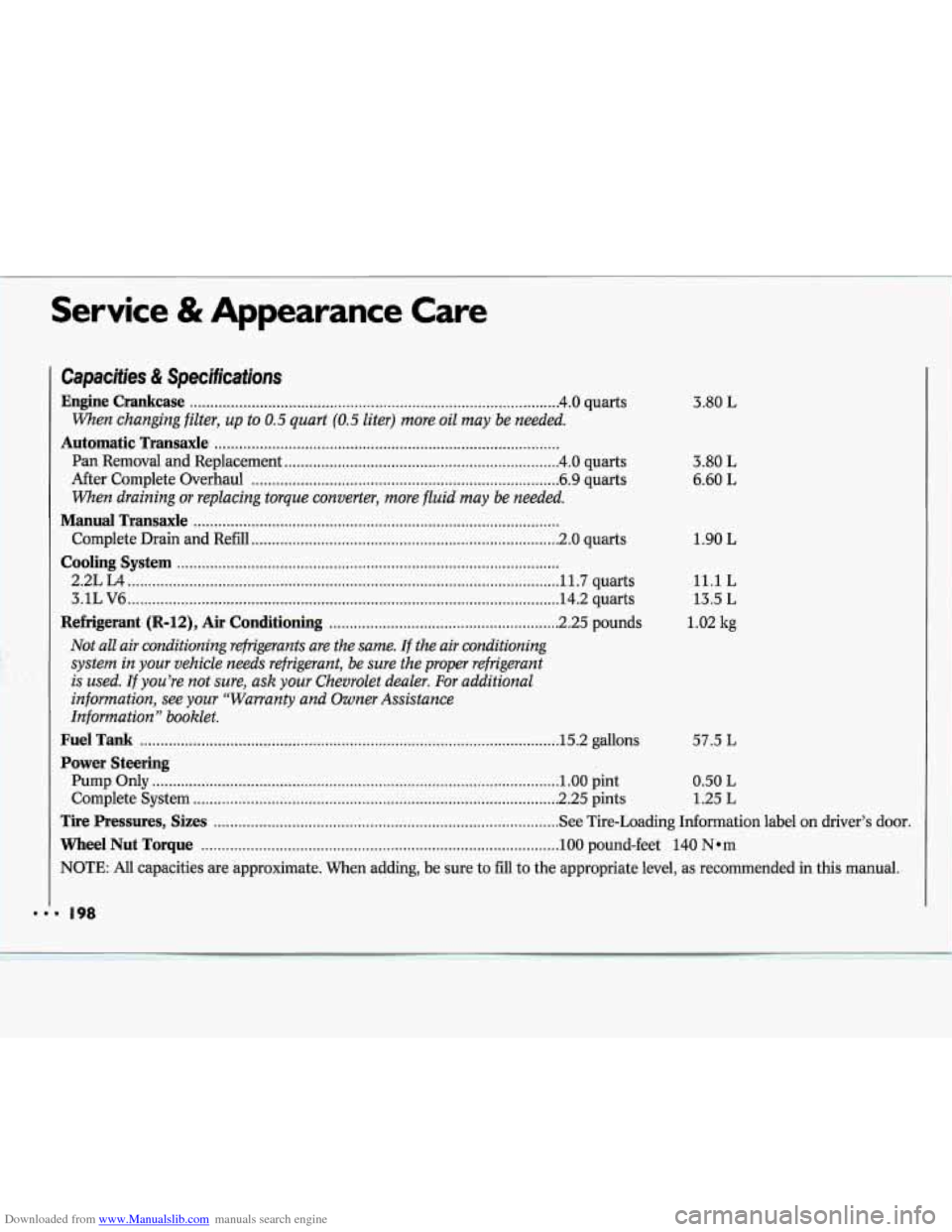
Capacities & Specifications
Engine Crankcase ........................................................................\
.................. 4.0 quarts
When changing filter, up to 0.5 quart (0.5 liter) more oil may be needed.
Automatic Transaxle ........................................................................\
............
Pan Removal and Replacement ................................................................... 4.0 quarts
After Complete Overhaul
........................................................................\
... 6.9 quarts
When draining or replacing torque converter, more fluid may be needed.
Manual Transaxle ........................................................................\
.................
Complete Drain and Refill ........................................................................\
... 2.0 quarts
Cooling System ........................................................................\
.....................
2.2L L4 ........................................................................\
................................. 11.7 quarts
3.1L V6
........................................................................\
................................. 14.2 quarts
Refrigerant (R-12), Air Conditioning ........................................................ 2.25 pounds
Not all air conditioning refrigerants are the same. If the air conditioning
system in your vehicle needs refrigerant, be sure the proper refrigerant
is used. If you’re not sure, ask your Chevrolet dealer. For additional
information, see
your “Warranty and Owner Assistance
Information
” booklet.
Fuel Tank ........................................................................\
............................. .15.2 gallons
Power Steering
Pump Only ........................................................................\
........................... 1.00 pint
Complete System
........................................................................\
................. 2.25 pints 3.80
L
3.80
L
6.60 L
1.90
L
11.1 L
13.5 L
1.02 kg
57.5 L
0.50 L
1.25 L
Tire Pressures, Sizes ........................................................................\
............ See Tire-Loading Information label on driver’s door.
Wheel Nut Torque ........................................................................\
............... 100 pound-feet 140 Nom
NOTE: All capacities are approximate. When adding, be sure to fill to the appropriate level, as recommended in this manual.
Page 200 of 243
Downloaded from www.Manualslib.com manuals search engine ,
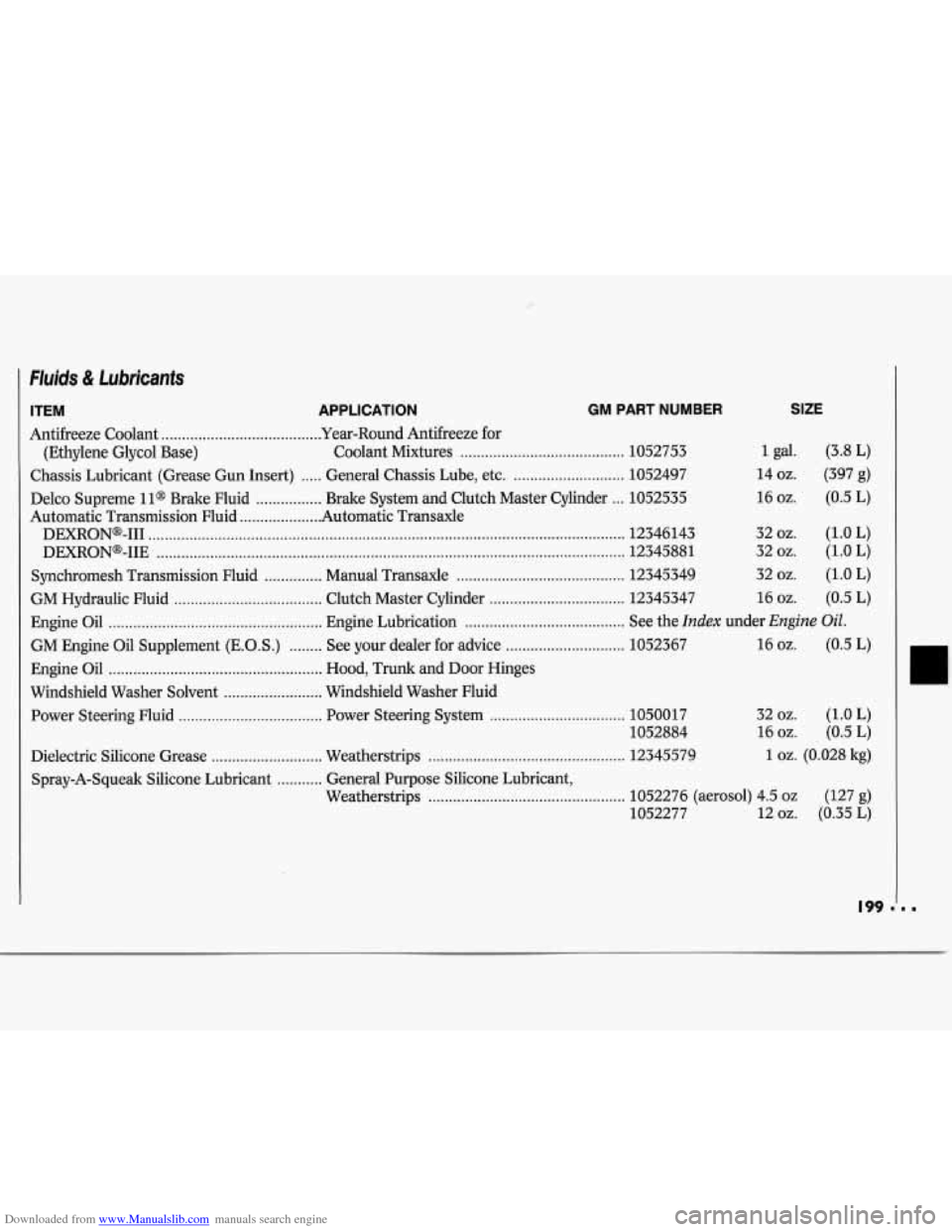
Fluids & Lubricants
ITEM APPLICATION GM PART NUMBER
Antifreeze Coolant ...................................... .Year-Round Antifreeze for
(Ethylene Glycol Base) Coolant Mixtures
........................................ 1052753
Chassis Lubricant (Grease Gun Insert)
..... General Chassis Lube, etc. ........................... 1052497
Delco Supreme
1 l@ Brake Fluid ................ Brake System and Clutch Master Cylinder ... 1052535
Automatic Transmission Fluid
.................... Automatic Transaxle
DEXRON@-I11
........................................................................\
............................................ 12346143
DEXRONa-IIE
........................................................................\
.......................................... 12345881
Synchromesh Transmission Fluid
.............. Manual Transaxle ......................................... 12345349
GM Hydraulic Fluid
.................................... Clutch Master Cylinder ................................. 12345347
SIZE
1 gal.
14 oz.
16 oz.
32 oz.
32 oz.
32 oz.
16 oz. (3.8 L)
(397
8)
(0.5 L)
(1.0
L)
(1.0 L)
(1.0 L)
(0.5 L)
Engine Oil
.................................................... Engine Lubrication ....................................... See the Index under Engine Oil.
GM Engine Oil Supplement (E.O.S.) ........ See your dealer for advice ............................. 1052367 16 oz. (0.5 L)
Engine Oil
.................................................... Hood, Trunk and Door Hinges
Windshield Washer Solvent
........................ Windshield Washer Fluid
Power Steering Fluid
................................... Power Steering System ................................. 1050017 32 oz. (1 .O L)
1052884 16 oz.
(0.5 L)
Dielectric Silicone Grease
........................... Weatherstrips ................................................ 12345579 1 oz. (0.028 kg)
Spray-A-Squeak Silicone Lubricant
........... General Purpose Silicone Lubricant,
Weatherstrips
................................................ 1052276 (aerosol) 4.5 oz (127 g)
1052277 12 02. (0.35 L)
I
Page 217 of 243
Downloaded from www.Manualslib.com manuals search engine Maintenance Schedule
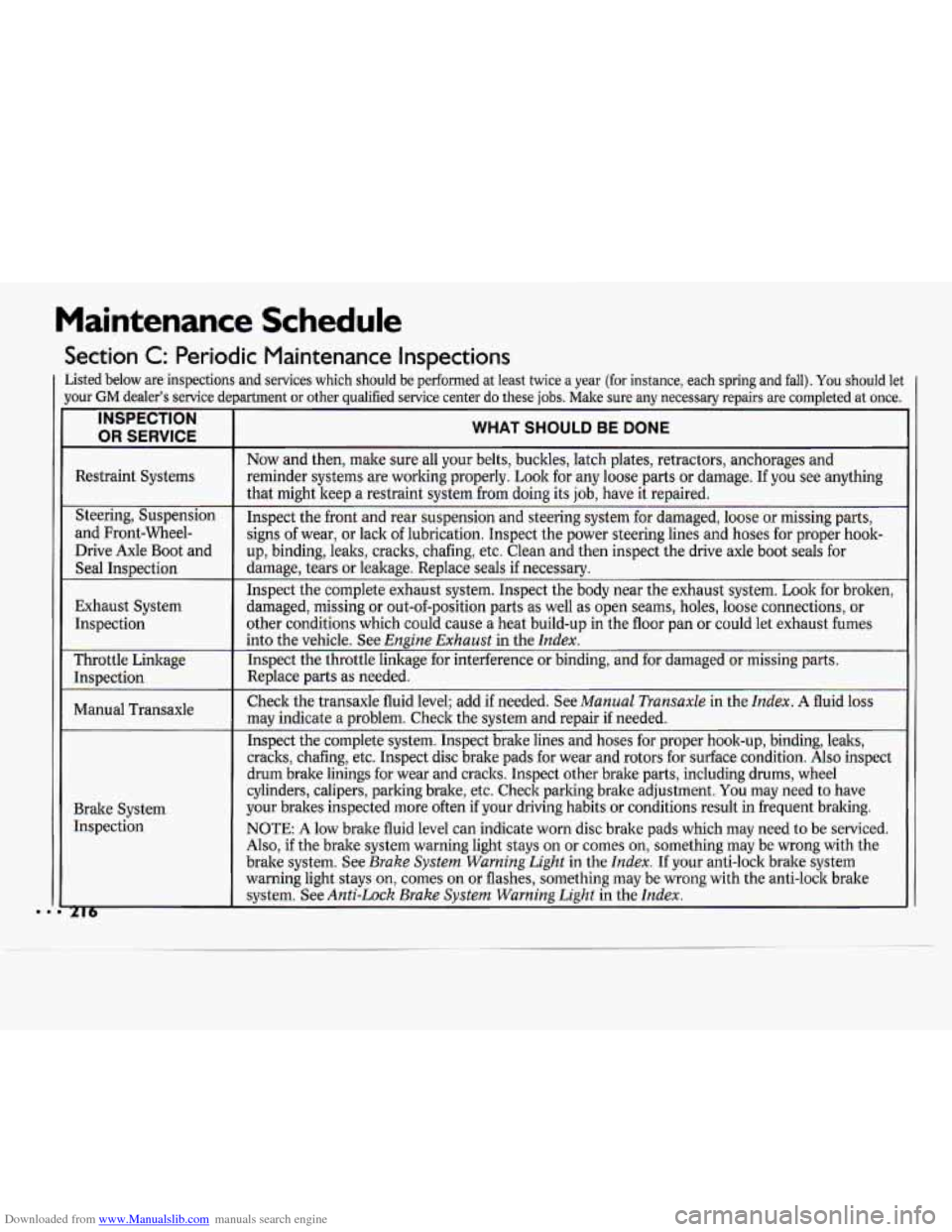
Section C: Periodic Maintenance Inspections
Listed below are inspections and services which should be performed at least twice a year (for instance, each spring and fall). You should let
Jour
GM dealer’s service department or other qualified service center \
do these jobs. Make sure any necessary repairs are completed at once.
INSPECTION
OR SERVICE
Restraint Systems
Steering, Suspension
and Front-Wheel-
Drive Axle Boot and
Seal InsDection
Exhaust System Inspection
Throttle Linkage Inspection
Manual Transaxle
Brake System Inspection
216
WHAT SHOULD BE DONE
Now and then, make sure all your belts, bucltles, latch plates, retractors, anchorages and
reminder systems are worlting properly. Look for any loose parts or damage. If you see anything
that might keep a restraint system from doing its job, have it repaired.
Inspect the front and rear suspension and steering system for damaged, loose or \
missing parts,
signs of wear, or lack
of lubrication. Inspect the power steering lines and hoses for proper hook-
up, binding, leaks, cracks, chafing, etc. Clean and then inspect the drive axle boot seals for
damage, tears or leakage. Replace seals if necessary.
~ ~~~~~~
Inspect the complete exhaust system. Inspect the body near the exhaust system. Look for broken,
damaged, missing or out-of-position parts as well as open seams, holes, loose connections, or
other conditions which could cause a heat build-up in the floor pan or could let exhaust fumes
into the vehicle. See
Engine Exhaust in the Index.
Inspect the throttle linkage for interference or binding, and for damaged or missing parts.
Replace parts as needed.
.-
Check the transaxle fluid level; add if needed. See Manual Transaxle in the Index. A fluid loss
may indicate a problem. Check the system and repair if needed.
Inspect the complete system. Inspect brake lines and hoses for proper hook-\
up, binding, leaks,
cracks, chafing, etc. Inspect disc brake pads for wear and rot\
ors for surface condition. Also inspect
drum brake linings for wear and cracks. Inspect other brake parts, including drums, wheel
cylinders, calipers, parking brake, etc. Check parking brake adj\
ustment. You may need to have
your brakes inspected more often if your driving habits or conditions result in frequent braking.
NOTE: A low brake fluid level can indicate worn disc brake pads which \
may need to be serviced.
Also, if the brake system warning light stays on or comes
on, something may be wrong with the
brake system. See
Brake System Warning Light in the Index. If your anti-lock brake system
warning light stays on, comes on or flashes, something may be wrong with the anti-lock brake
system. See
Anti-Lock Brake System Warning Light in the Index.
11
.
Page 218 of 243
Downloaded from www.Manualslib.com manuals search engine Maintenance Schedule
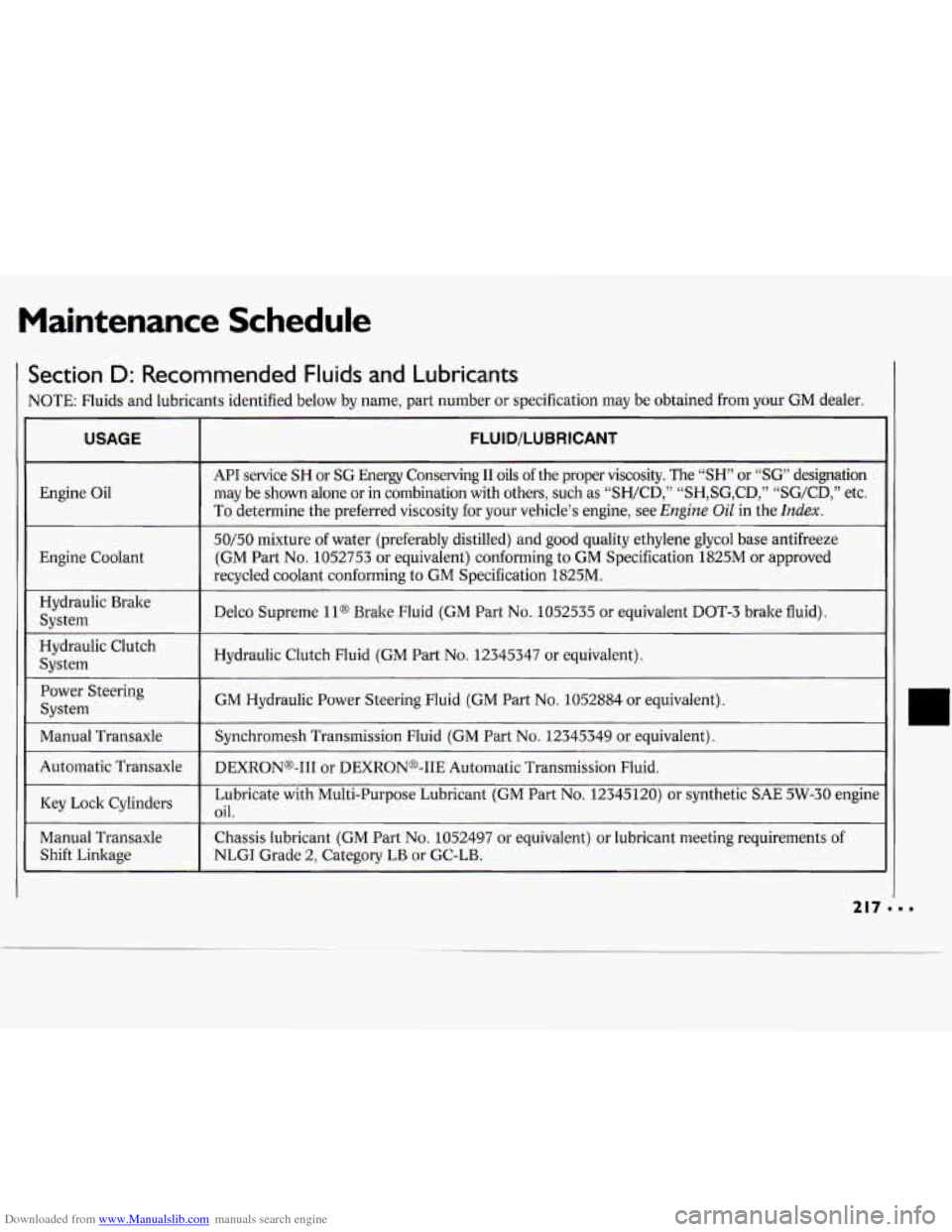
Section D: Recommended Fluids and Lubricants
VOTE: Fluids and lubricants identified below by name, part number or specification may be obtained from your GM dealer. ~~ ~
USAGE
Engine Oil
Engine Coolant Hydraulic Brake
System
~~~~ ~
Hydraulic Clutch
System
Power Steering
System
Manual Transaxle
Automatic Transaxle
Key Lock Cylinders
Manual Transaxle Shift Linkage
FLUID/LUBRICANT
API service SH or SG Energy Conserving I1 oils of the proper viscosity. The “SH” or “SG” designation
may be shown alone or in combination with others, such as “SH/CD,” “SH,SG,CD,” “SG/CD,” etc.
To determine the preferred viscosity for your vehicle’s engine, see Engine Oil in the Index.
50/50 mixture of water (preferably distilled) and good quality ethylene glycol base antifreeze
(GM Part
No. 1052753 or equivalent) conforming to GM Specification 1825M or approved
recycled coolant conforming to
GM Specification 1825M.
Delco Supreme
110 Brake Fluid (GM Part No. 1052535 or equivalent DOT-3 brake fluid).
Hydraulic Clutch Fluid (GM Part No. 12345347 or equivalent).
GM Hydraulic Power Steering Fluid (GM Part
No. 1052884 or equivalent).
~ ~~~
Synchromesh Transmission Fluid (GM Part No. 12345349 or equivalent).
DEXRONo-I11 or DEXRONs-IIE Automatic Transmission Fluid.
Lubricate with Multi-Purpose Lubricant (GM Part No. 12345120) or synthetic
SAE 5W-30 engine
oil.
Chassis lubricant (GM Part No, 1052497 or equivalent) or lubricant meeting requirements of
NLGI Grade 2, Category LB or GC-LB.