lock CHEVROLET COBALT 2009 1.G Owners Manual
[x] Cancel search | Manufacturer: CHEVROLET, Model Year: 2009, Model line: COBALT, Model: CHEVROLET COBALT 2009 1.GPages: 402, PDF Size: 2.15 MB
Page 365 of 402
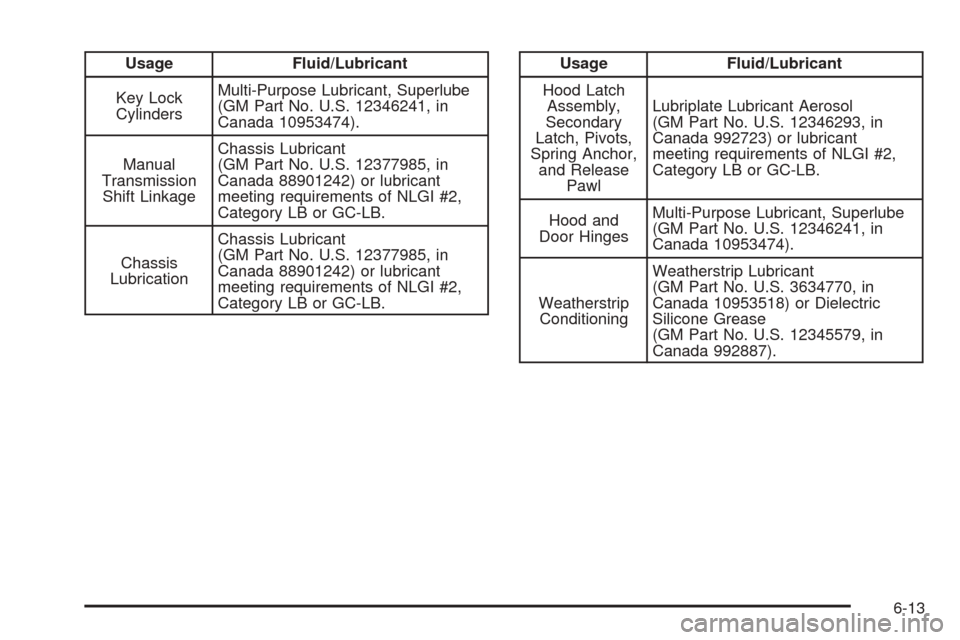
Usage Fluid/Lubricant
Key Lock
CylindersMulti-Purpose Lubricant, Superlube
(GM Part No. U.S. 12346241, in
Canada 10953474).
Manual
Transmission
Shift LinkageChassis Lubricant
(GM Part No. U.S. 12377985, in
Canada 88901242) or lubricant
meeting requirements of NLGI #2,
Category LB or GC-LB.
Chassis
LubricationChassis Lubricant
(GM Part No. U.S. 12377985, in
Canada 88901242) or lubricant
meeting requirements of NLGI #2,
Category LB or GC-LB.Usage Fluid/Lubricant
Hood Latch
Assembly,
Secondary
Latch, Pivots,
Spring Anchor,
and Release
PawlLubriplate Lubricant Aerosol
(GM Part No. U.S. 12346293, in
Canada 992723) or lubricant
meeting requirements of NLGI #2,
Category LB or GC-LB.
Hood and
Door HingesMulti-Purpose Lubricant, Superlube
(GM Part No. U.S. 12346241, in
Canada 10953474).
Weatherstrip
ConditioningWeatherstrip Lubricant
(GM Part No. U.S. 3634770, in
Canada 10953518) or Dielectric
Silicone Grease
(GM Part No. U.S. 12345579, in
Canada 992887).
6-13
Page 377 of 402
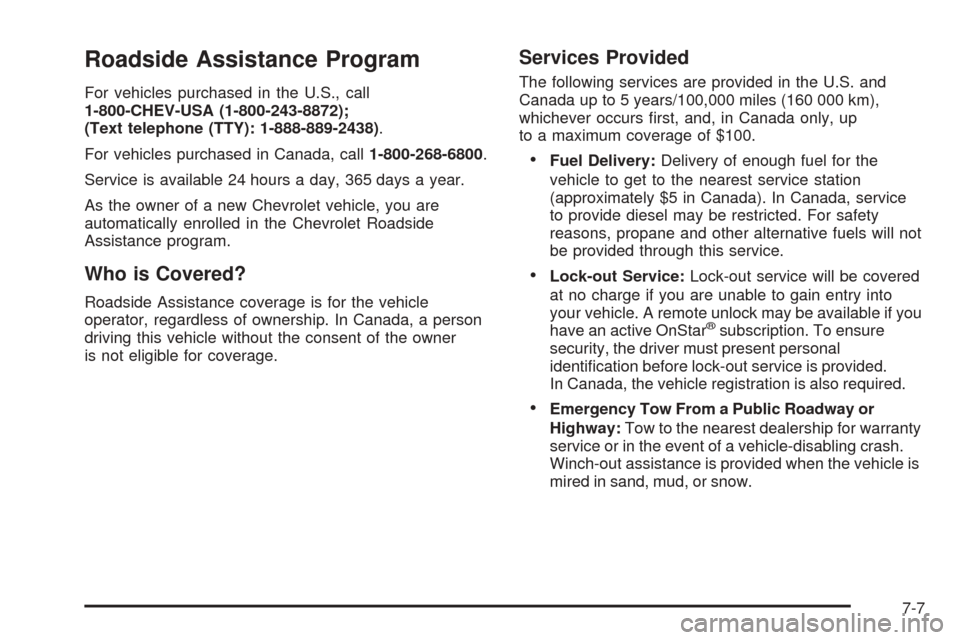
Roadside Assistance Program
For vehicles purchased in the U.S., call
1-800-CHEV-USA (1-800-243-8872);
(Text telephone (TTY): 1-888-889-2438).
For vehicles purchased in Canada, call1-800-268-6800.
Service is available 24 hours a day, 365 days a year.
As the owner of a new Chevrolet vehicle, you are
automatically enrolled in the Chevrolet Roadside
Assistance program.
Who is Covered?
Roadside Assistance coverage is for the vehicle
operator, regardless of ownership. In Canada, a person
driving this vehicle without the consent of the owner
is not eligible for coverage.
Services Provided
The following services are provided in the U.S. and
Canada up to 5 years/100,000 miles (160 000 km),
whichever occurs rst, and, in Canada only, up
to a maximum coverage of $100.
Fuel Delivery:Delivery of enough fuel for the
vehicle to get to the nearest service station
(approximately $5 in Canada). In Canada, service
to provide diesel may be restricted. For safety
reasons, propane and other alternative fuels will not
be provided through this service.
Lock-out Service:Lock-out service will be covered
at no charge if you are unable to gain entry into
your vehicle. A remote unlock may be available if you
have an active OnStar
®subscription. To ensure
security, the driver must present personal
identication before lock-out service is provided.
In Canada, the vehicle registration is also required.
Emergency Tow From a Public Roadway or
Highway:Tow to the nearest dealership for warranty
service or in the event of a vehicle-disabling crash.
Winch-out assistance is provided when the vehicle is
mired in sand, mud, or snow.
7-7
Page 387 of 402
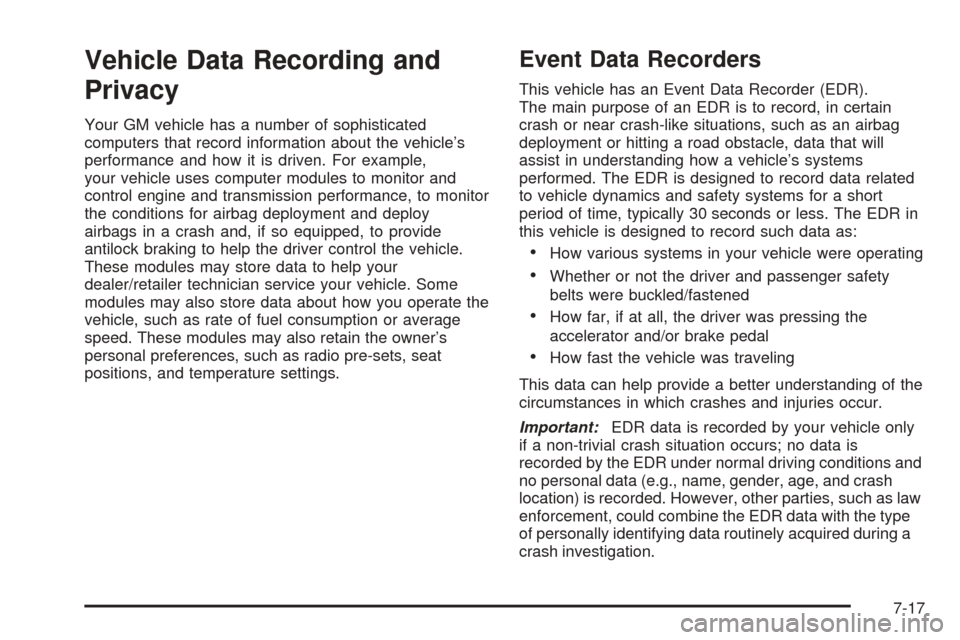
Vehicle Data Recording and
Privacy
Your GM vehicle has a number of sophisticated
computers that record information about the vehicle’s
performance and how it is driven. For example,
your vehicle uses computer modules to monitor and
control engine and transmission performance, to monitor
the conditions for airbag deployment and deploy
airbags in a crash and, if so equipped, to provide
antilock braking to help the driver control the vehicle.
These modules may store data to help your
dealer/retailer technician service your vehicle. Some
modules may also store data about how you operate the
vehicle, such as rate of fuel consumption or average
speed. These modules may also retain the owner’s
personal preferences, such as radio pre-sets, seat
positions, and temperature settings.
Event Data Recorders
This vehicle has an Event Data Recorder (EDR).
The main purpose of an EDR is to record, in certain
crash or near crash-like situations, such as an airbag
deployment or hitting a road obstacle, data that will
assist in understanding how a vehicle’s systems
performed. The EDR is designed to record data related
to vehicle dynamics and safety systems for a short
period of time, typically 30 seconds or less. The EDR in
this vehicle is designed to record such data as:
How various systems in your vehicle were operating
Whether or not the driver and passenger safety
belts were buckled/fastened
How far, if at all, the driver was pressing the
accelerator and/or brake pedal
How fast the vehicle was traveling
This data can help provide a better understanding of the
circumstances in which crashes and injuries occur.
Important:EDR data is recorded by your vehicle only
if a non-trivial crash situation occurs; no data is
recorded by the EDR under normal driving conditions and
no personal data (e.g., name, gender, age, and crash
location) is recorded. However, other parties, such as law
enforcement, could combine the EDR data with the type
of personally identifying data routinely acquired during a
crash investigation.
7-17
Page 388 of 402
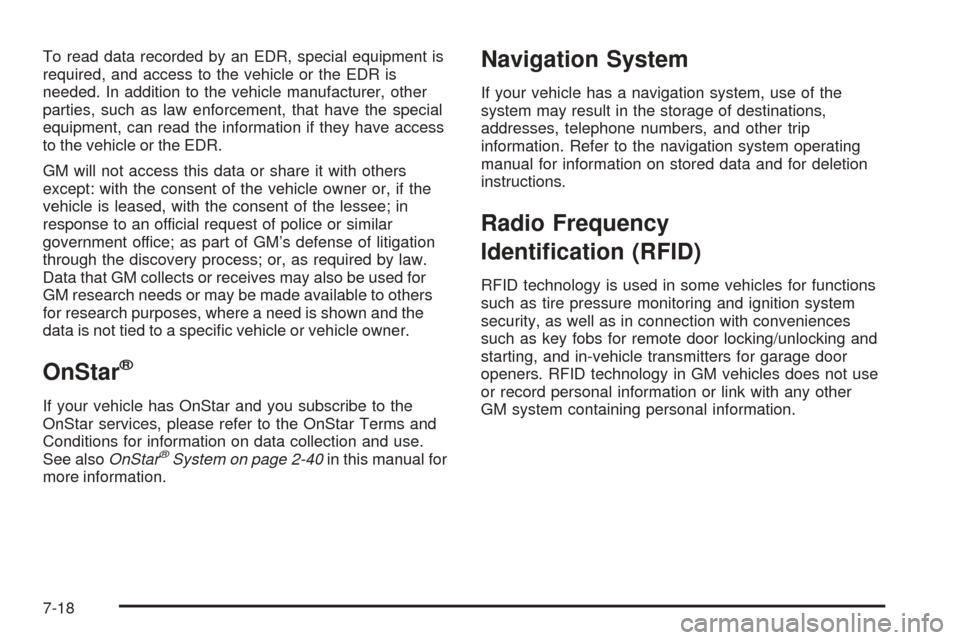
To read data recorded by an EDR, special equipment is
required, and access to the vehicle or the EDR is
needed. In addition to the vehicle manufacturer, other
parties, such as law enforcement, that have the special
equipment, can read the information if they have access
to the vehicle or the EDR.
GM will not access this data or share it with others
except: with the consent of the vehicle owner or, if the
vehicle is leased, with the consent of the lessee; in
response to an official request of police or similar
government office; as part of GM’s defense of litigation
through the discovery process; or, as required by law.
Data that GM collects or receives may also be used for
GM research needs or may be made available to others
for research purposes, where a need is shown and the
data is not tied to a specic vehicle or vehicle owner.
OnStar®
If your vehicle has OnStar and you subscribe to the
OnStar services, please refer to the OnStar Terms and
Conditions for information on data collection and use.
See alsoOnStar
®System on page 2-40in this manual for
more information.
Navigation System
If your vehicle has a navigation system, use of the
system may result in the storage of destinations,
addresses, telephone numbers, and other trip
information. Refer to the navigation system operating
manual for information on stored data and for deletion
instructions.
Radio Frequency
Identication (RFID)
RFID technology is used in some vehicles for functions
such as tire pressure monitoring and ignition system
security, as well as in connection with conveniences
such as key fobs for remote door locking/unlocking and
starting, and in-vehicle transmitters for garage door
openers. RFID technology in GM vehicles does not use
or record personal information or link with any other
GM system containing personal information.
7-18
Page 389 of 402
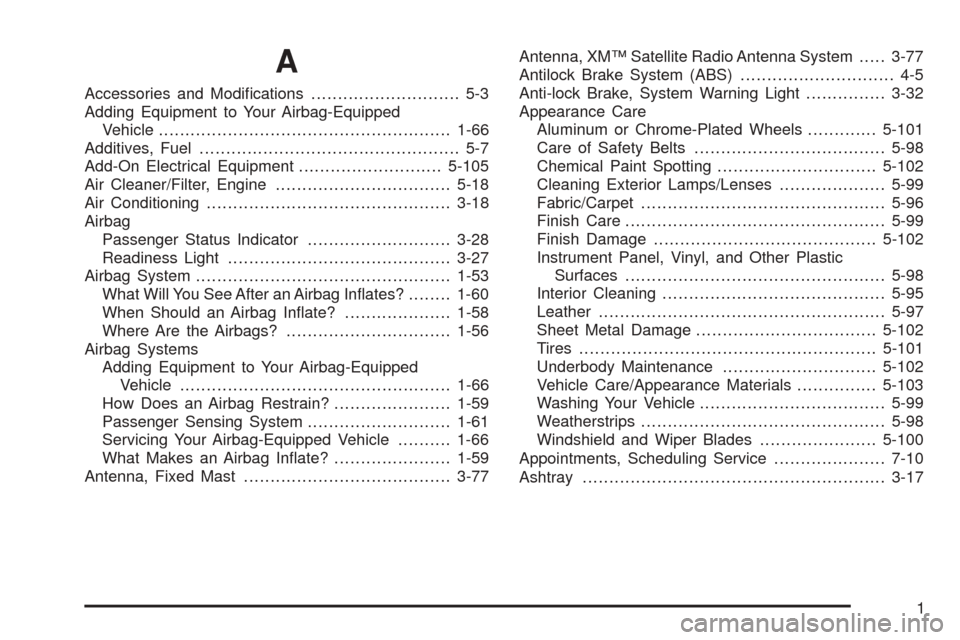
A
Accessories and Modications............................ 5-3
Adding Equipment to Your Airbag-Equipped
Vehicle.......................................................1-66
Additives, Fuel................................................. 5-7
Add-On Electrical Equipment...........................5-105
Air Cleaner/Filter, Engine.................................5-18
Air Conditioning..............................................3-18
Airbag
Passenger Status Indicator...........................3-28
Readiness Light..........................................3-27
Airbag System................................................1-53
What Will You See After an Airbag Inates?........1-60
When Should an Airbag Inate?....................1-58
Where Are the Airbags?...............................1-56
Airbag Systems
Adding Equipment to Your Airbag-Equipped
Vehicle...................................................1-66
How Does an Airbag Restrain?......................1-59
Passenger Sensing System...........................1-61
Servicing Your Airbag-Equipped Vehicle..........1-66
What Makes an Airbag Inate?......................1-59
Antenna, Fixed Mast.......................................3-77Antenna, XM™ Satellite Radio Antenna System.....3-77
Antilock Brake System (ABS)............................. 4-5
Anti-lock Brake, System Warning Light...............3-32
Appearance Care
Aluminum or Chrome-Plated Wheels.............5-101
Care of Safety Belts....................................5-98
Chemical Paint Spotting..............................5-102
Cleaning Exterior Lamps/Lenses....................5-99
Fabric/Carpet..............................................5-96
Finish Care.................................................5-99
Finish Damage..........................................5-102
Instrument Panel, Vinyl, and Other Plastic
Surfaces.................................................5-98
Interior Cleaning..........................................5-95
Leather......................................................5-97
Sheet Metal Damage..................................5-102
Tires........................................................5-101
Underbody Maintenance.............................5-102
Vehicle Care/Appearance Materials...............5-103
Washing Your Vehicle...................................5-99
Weatherstrips..............................................5-98
Windshield and Wiper Blades......................5-100
Appointments, Scheduling Service.....................7-10
Ashtray.........................................................3-17
1
Page 390 of 402
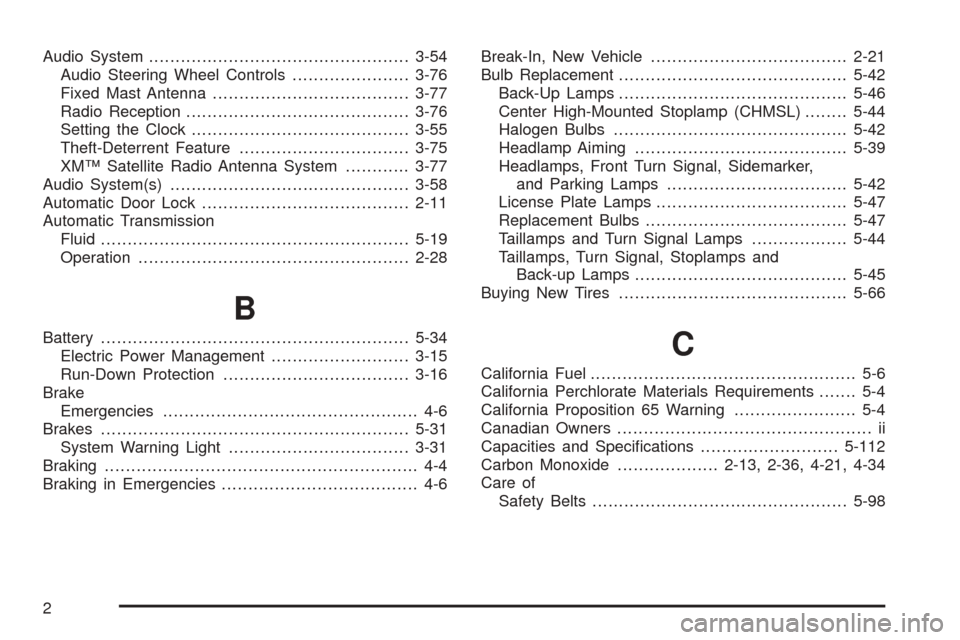
Audio System.................................................3-54
Audio Steering Wheel Controls......................3-76
Fixed Mast Antenna.....................................3-77
Radio Reception..........................................3-76
Setting the Clock.........................................3-55
Theft-Deterrent Feature................................3-75
XM™ Satellite Radio Antenna System............3-77
Audio System(s).............................................3-58
Automatic Door Lock.......................................2-11
Automatic Transmission
Fluid..........................................................5-19
Operation...................................................2-28
B
Battery..........................................................5-34
Electric Power Management..........................3-15
Run-Down Protection...................................3-16
Brake
Emergencies................................................ 4-6
Brakes..........................................................5-31
System Warning Light..................................3-31
Braking........................................................... 4-4
Braking in Emergencies..................................... 4-6Break-In, New Vehicle.....................................2-21
Bulb Replacement...........................................5-42
Back-Up Lamps...........................................5-46
Center High-Mounted Stoplamp (CHMSL)........5-44
Halogen Bulbs............................................5-42
Headlamp Aiming........................................5-39
Headlamps, Front Turn Signal, Sidemarker,
and Parking Lamps..................................5-42
License Plate Lamps....................................5-47
Replacement Bulbs......................................5-47
Taillamps and Turn Signal Lamps..................5-44
Taillamps, Turn Signal, Stoplamps and
Back-up Lamps........................................5-45
Buying New Tires...........................................5-66C
California Fuel.................................................. 5-6
California Perchlorate Materials Requirements....... 5-4
California Proposition 65 Warning....................... 5-4
Canadian Owners................................................ ii
Capacities and Specications..........................5-112
Carbon Monoxide...................2-13, 2-36, 4-21, 4-34
Care of
Safety Belts................................................5-98
2
Page 391 of 402
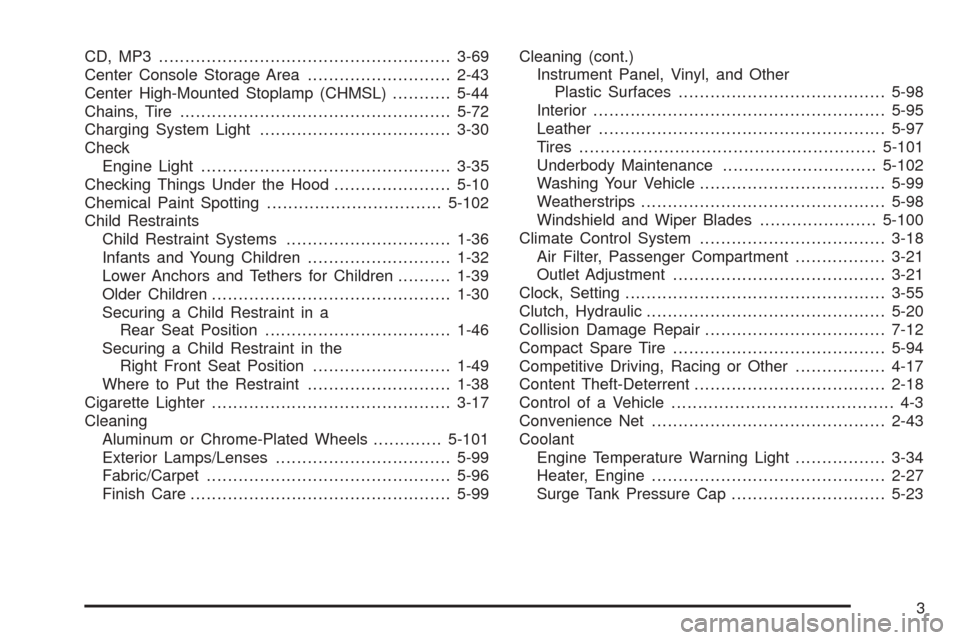
CD, MP3 .......................................................3-69
Center Console Storage Area...........................2-43
Center High-Mounted Stoplamp (CHMSL)...........5-44
Chains, Tire...................................................5-72
Charging System Light....................................3-30
Check
Engine Light...............................................3-35
Checking Things Under the Hood......................5-10
Chemical Paint Spotting.................................5-102
Child Restraints
Child Restraint Systems...............................1-36
Infants and Young Children...........................1-32
Lower Anchors and Tethers for Children..........1-39
Older Children.............................................1-30
Securing a Child Restraint in a
Rear Seat Position...................................1-46
Securing a Child Restraint in the
Right Front Seat Position..........................1-49
Where to Put the Restraint...........................1-38
Cigarette Lighter.............................................3-17
Cleaning
Aluminum or Chrome-Plated Wheels.............5-101
Exterior Lamps/Lenses.................................5-99
Fabric/Carpet..............................................5-96
Finish Care.................................................5-99Cleaning (cont.)
Instrument Panel, Vinyl, and Other
Plastic Surfaces.......................................5-98
Interior.......................................................5-95
Leather......................................................5-97
Tires........................................................5-101
Underbody Maintenance.............................5-102
Washing Your Vehicle...................................5-99
Weatherstrips..............................................5-98
Windshield and Wiper Blades......................5-100
Climate Control System...................................3-18
Air Filter, Passenger Compartment.................3-21
Outlet Adjustment........................................3-21
Clock, Setting.................................................3-55
Clutch, Hydraulic.............................................5-20
Collision Damage Repair..................................7-12
Compact Spare Tire........................................5-94
Competitive Driving, Racing or Other.................4-17
Content Theft-Deterrent....................................2-18
Control of a Vehicle.......................................... 4-3
Convenience Net............................................2-43
Coolant
Engine Temperature Warning Light.................3-34
Heater, Engine............................................2-27
Surge Tank Pressure Cap.............................5-23
3
Page 392 of 402
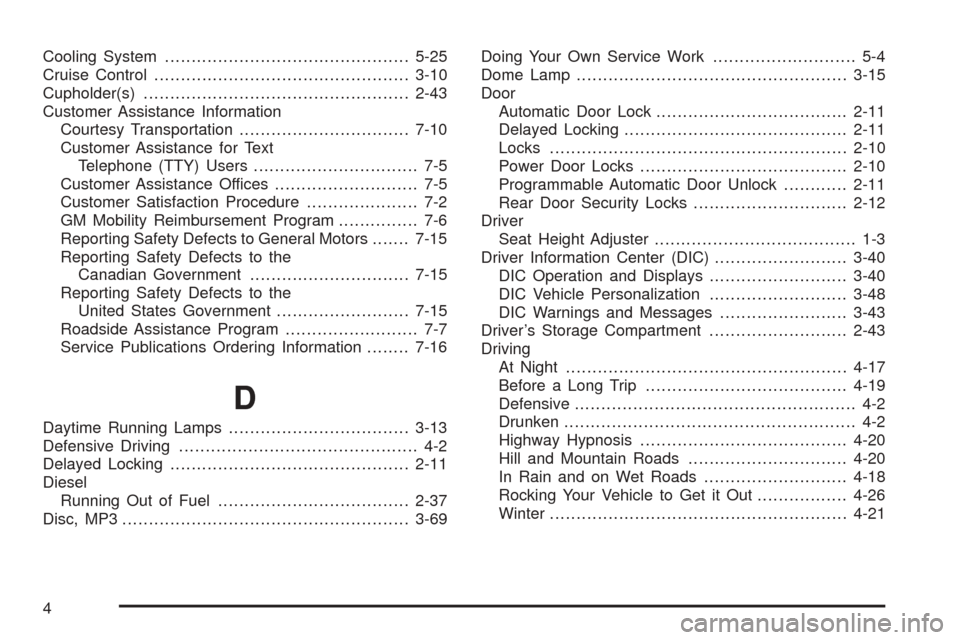
Cooling System..............................................5-25
Cruise Control................................................3-10
Cupholder(s)..................................................2-43
Customer Assistance Information
Courtesy Transportation................................7-10
Customer Assistance for Text
Telephone (TTY) Users............................... 7-5
Customer Assistance Offices........................... 7-5
Customer Satisfaction Procedure..................... 7-2
GM Mobility Reimbursement Program............... 7-6
Reporting Safety Defects to General Motors.......7-15
Reporting Safety Defects to the
Canadian Government..............................7-15
Reporting Safety Defects to the
United States Government.........................7-15
Roadside Assistance Program......................... 7-7
Service Publications Ordering Information........7-16
D
Daytime Running Lamps..................................3-13
Defensive Driving............................................. 4-2
Delayed Locking.............................................2-11
Diesel
Running Out of Fuel....................................2-37
Disc, MP3......................................................3-69Doing Your Own Service Work........................... 5-4
Dome Lamp...................................................3-15
Door
Automatic Door Lock....................................2-11
Delayed Locking..........................................2-11
Locks........................................................2-10
Power Door Locks.......................................2-10
Programmable Automatic Door Unlock............2-11
Rear Door Security Locks.............................2-12
Driver
Seat Height Adjuster...................................... 1-3
Driver Information Center (DIC).........................3-40
DIC Operation and Displays..........................3-40
DIC Vehicle Personalization..........................3-48
DIC Warnings and Messages........................3-43
Driver’s Storage Compartment..........................2-43
Driving
At Night.....................................................4-17
Before a Long Trip......................................4-19
Defensive..................................................... 4-2
Drunken....................................................... 4-2
Highway Hypnosis.......................................4-20
Hill and Mountain Roads..............................4-20
In Rain and on Wet Roads...........................4-18
Rocking Your Vehicle to Get it Out.................4-26
Winter........................................................4-21
4
Page 393 of 402
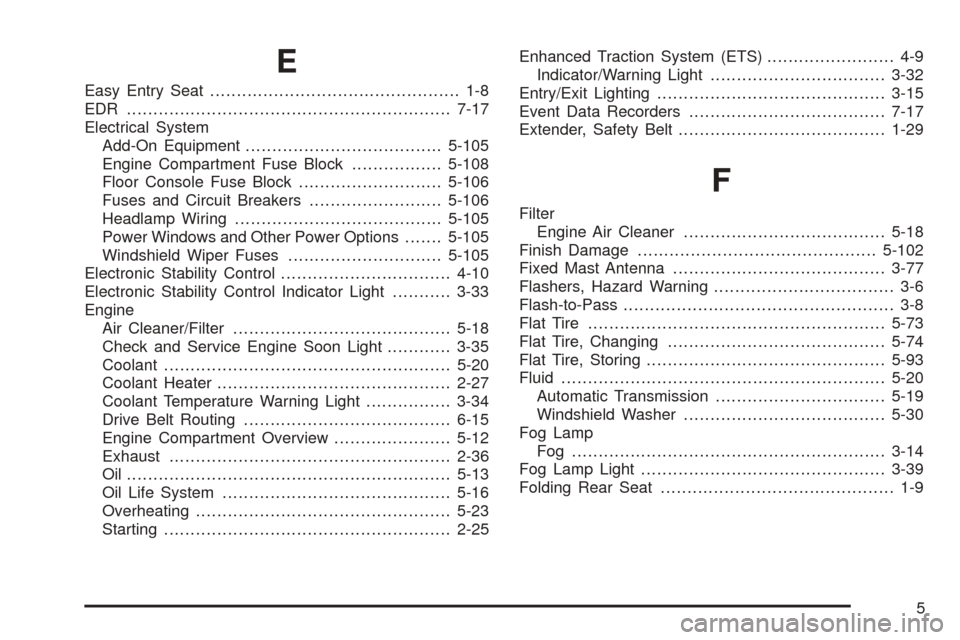
E
Easy Entry Seat............................................... 1-8
EDR .............................................................7-17
Electrical System
Add-On Equipment.....................................5-105
Engine Compartment Fuse Block.................5-108
Floor Console Fuse Block...........................5-106
Fuses and Circuit Breakers.........................5-106
Headlamp Wiring.......................................5-105
Power Windows and Other Power Options.......5-105
Windshield Wiper Fuses.............................5-105
Electronic Stability Control................................4-10
Electronic Stability Control Indicator Light...........3-33
Engine
Air Cleaner/Filter.........................................5-18
Check and Service Engine Soon Light............3-35
Coolant......................................................5-20
Coolant Heater............................................2-27
Coolant Temperature Warning Light................3-34
Drive Belt Routing.......................................6-15
Engine Compartment Overview......................5-12
Exhaust.....................................................2-36
Oil .............................................................5-13
Oil Life System...........................................5-16
Overheating................................................5-23
Starting......................................................2-25Enhanced Traction System (ETS)........................ 4-9
Indicator/Warning Light.................................3-32
Entry/Exit Lighting...........................................3-15
Event Data Recorders.....................................7-17
Extender, Safety Belt.......................................1-29
F
Filter
Engine Air Cleaner......................................5-18
Finish Damage.............................................5-102
Fixed Mast Antenna........................................3-77
Flashers, Hazard Warning.................................. 3-6
Flash-to-Pass................................................... 3-8
Flat Tire........................................................5-73
Flat Tire, Changing.........................................5-74
Flat Tire, Storing.............................................5-93
Fluid.............................................................5-20
Automatic Transmission................................5-19
Windshield Washer......................................5-30
Fog Lamp
Fog ...........................................................3-14
Fog Lamp Light..............................................3-39
Folding Rear Seat............................................ 1-9
5
Page 394 of 402
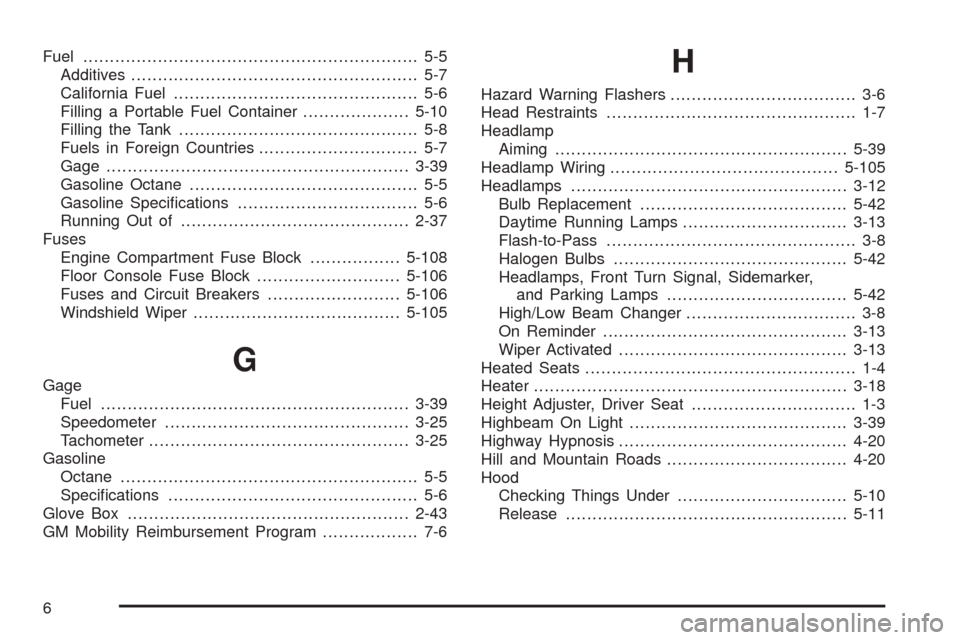
Fuel............................................................... 5-5
Additives...................................................... 5-7
California Fuel.............................................. 5-6
Filling a Portable Fuel Container....................5-10
Filling the Tank............................................. 5-8
Fuels in Foreign Countries.............................. 5-7
Gage.........................................................3-39
Gasoline Octane........................................... 5-5
Gasoline Specications.................................. 5-6
Running Out of...........................................2-37
Fuses
Engine Compartment Fuse Block.................5-108
Floor Console Fuse Block...........................5-106
Fuses and Circuit Breakers.........................5-106
Windshield Wiper.......................................5-105
G
Gage
Fuel..........................................................3-39
Speedometer..............................................3-25
Tachometer.................................................3-25
Gasoline
Octane........................................................ 5-5
Specications............................................... 5-6
Glove Box.....................................................2-43
GM Mobility Reimbursement Program.................. 7-6
H
Hazard Warning Flashers................................... 3-6
Head Restraints............................................... 1-7
Headlamp
Aiming.......................................................5-39
Headlamp Wiring...........................................5-105
Headlamps....................................................3-12
Bulb Replacement.......................................5-42
Daytime Running Lamps...............................3-13
Flash-to-Pass............................................... 3-8
Halogen Bulbs............................................5-42
Headlamps, Front Turn Signal, Sidemarker,
and Parking Lamps..................................5-42
High/Low Beam Changer................................ 3-8
On Reminder..............................................3-13
Wiper Activated...........................................3-13
Heated Seats................................................... 1-4
Heater...........................................................3-18
Height Adjuster, Driver Seat............................... 1-3
Highbeam On Light.........................................3-39
Highway Hypnosis...........................................4-20
Hill and Mountain Roads..................................4-20
Hood
Checking Things Under................................5-10
Release.....................................................5-11
6