belt CHEVROLET EXPRESS CARGO VAN 2004 1.G Manual PDF
[x] Cancel search | Manufacturer: CHEVROLET, Model Year: 2004, Model line: EXPRESS CARGO VAN, Model: CHEVROLET EXPRESS CARGO VAN 2004 1.GPages: 406, PDF Size: 2.66 MB
Page 347 of 406
Care of Safety Belts
Keep belts clean and dry.
{CAUTION:
Do not bleach or dye safety belts. If you do, it
may severely weaken them. In a crash, they
might not be able to provide adequate
protection. Clean safety belts only with mild
soap and lukewarm water.
Weatherstrips
Silicone grease on weatherstrips will make them last
longer, seal better, and not stick or squeak. Apply
silicone grease with a clean cloth. During very cold,
damp weather frequent application may be required. See
Recommended Fluids and Lubricants on page 6-12.
Cleaning the Outside of Your
Vehicle
The paint nish on your vehicle provides beauty, depth
of color, gloss retention and durability.
Washing Your Vehicle
The best way to preserve your vehicle’s nish is to keep it
clean by washing it often with lukewarm or cold water.
Do not wash your vehicle in the direct rays of the sun.
Use a car washing soap. Do not use strong soaps
or chemical detergents. Be sure to rinse the vehicle well,
removing all soap residue completely. You can get
GM-approved cleaning products from your dealer. See
Vehicle Care/Appearance Materials on page 5-99.
Do not use cleaning agents that are petroleum based,
or that contain acid or abrasives. All cleaning agents
should be ushed promptly and not allowed to dry on the
surface, or they could stain. Dry the nish with a soft,
clean chamois or an all-cotton towel to avoid surface
scratches and water spotting.
High pressure car washes may cause water to enter
your vehicle.
5-95
Page 361 of 406
Maintenance Schedule......................................6-2
Introduction...................................................6-2
Maintenance Requirements..............................6-2
Your Vehicle and the Environment....................6-2
Using Your Maintenance Schedule....................6-3
Scheduled Maintenance...................................6-4
Additional Required Services............................6-6
Maintenance Footnotes...................................6-7
Owner Checks and Services............................6-9
At the First 100, 1,000 and 6,000 Miles
(160, 1 600 and 10 000 km).........................6-9At Each Fuel Fill............................................6-9
At Least Once a Month.................................6-10
At Least Once a Year...................................6-10
Recommended Fluids and Lubricants...............6-12
Normal Maintenance Replacement Parts..........6-14
Engine Drive Belt Routing..............................6-15
Maintenance Record.....................................6-16
Section 6 Maintenance Schedule
6-1
Page 367 of 406
Additional Required Services (cont’d)
Service and Miles (Kilometers)25,000
(41 500)50,000
(83 000)75,000
(125 000)100,000
(166 000)125,000
(207 500)150,000
(240 000)
Engine cooling system service (or
every 5 years, whichever occurs
rst).An Emission Control Service.
See footnote (i).•
Inspect engine accessory drive belt.
An Emission Control Service.•
Inspect evaporative control system.
An Emission Control Service. See
footnotes † and (k).•••
Maintenance Footnotes
†The U.S. Environmental Protection Agency or the
California Air Resources Board has determined that the
failure to perform this maintenance item will not nullify
the emission warranty or limit recall liability prior to
the completion of the vehicle’s useful life. We, however,
urge that all recommended maintenance services be
performed at the indicated intervals and the
maintenance be recorded.
#Lubricate the front suspension, kingpin bushings,
steering linkage and rear driveline center splines.(a)Visually inspect brake lines and hoses for proper
hook-up, binding, leaks, cracks, chang, etc. Inspect
disc brake pads for wear and rotors for surface
condition. Inspect other brake parts, including calipers,
parking brake, etc.
(b)Visually inspect front and rear suspension and
steering system for damaged, loose or missing parts,
signs of wear or lack of lubrication. Inspect power
steering lines and hoses for proper hook-up, binding,
leaks, cracks, chang, etc.
6-7
Page 368 of 406
(c)Visually inspect hoses and have them replaced if they
are cracked, swollen or deteriorated. Inspect all pipes,
ttings and clamps; replace with genuine GM parts as
needed. To help ensure proper operation, a pressure test
of the cooling system and pressure cap and cleaning the
outside of the radiator and air conditioning condenser is
recommended at least once a year.
(d)Visually inspect wiper blades for wear or cracking.
Replace blade inserts that appear worn or damaged
or that streak or miss areas of the windshield.
(e)Make sure the safety belt reminder light and all your
belts, buckles, latch plates, retractors and anchorages
are working properly. Look for any other loose or
damaged safety belt system parts. If you see anything
that might keep a safety belt system from doing its
job, have it repaired. Have any torn or frayed safety belts
replaced. Also look for any opened or broken air bag
coverings, and have them repaired or replaced. (The air
bag system does not need regular maintenance.)
(f)Lubricate all key lock cylinders, hood hinges, hood
prop rod pivot, hood latch assembly, secondary
latch, pivots, spring anchor, release pawl, rear
compartment hinges, latches, locks, fuel door hinge and
any moving seat hardware. More frequent lubrication
may be required when exposed to a corrosive
environment. Applying silicone grease on weatherstrips
with a clean cloth will make them last longer, seal
better and not stick or squeak.(g)Vehicles with GVWR above 10,000 lbs. only: Inspect
shields for damage or looseness. Adjust or replace
as required. This is a Noise Emission Control Service.
Applicable only to vehicles sold in the United States.
(h)Change automatic transmission uid and lter if the
vehicle is mainly driven under one or more of these
conditions:
In heavy city traffic where the outside temperature
regularly reaches 90°F (32°C) or higher.
In hilly or mountainous terrain.
When doing frequent trailer towing.
Uses such as found in taxi, police or delivery
service.
(i)Drain, ush and rell cooling system. See Engine
Coolant on page 5-22for what to use. Inspect hoses.
Clean radiator, condenser, pressure cap and ller neck.
Pressure test the cooling system and pressure cap.
(j)A uid loss in any vehicle system could indicate a
problem. Have the system inspected and repaired and
the uid level checked. Add uid if needed.
6-8
Page 375 of 406
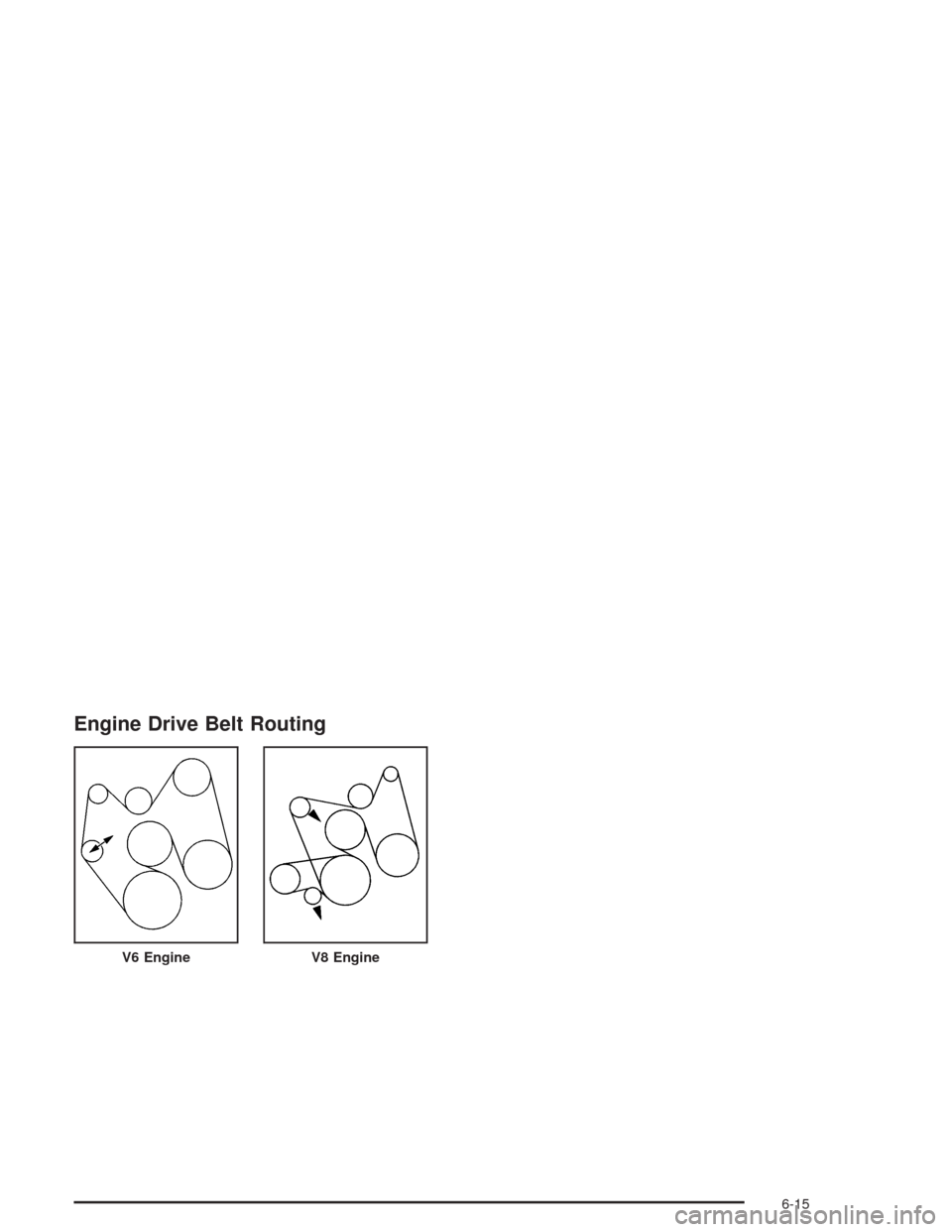
Engine Drive Belt Routing
V6 EngineV8 Engine
6-15
Page 388 of 406
Vehicle Data Collection and Event
Data Recorders
Your vehicle, like other modern motor vehicles, has a
number of sophisticated computer systems that monitor
and control several aspects of the vehicle’s
performance. Your vehicle uses on-board vehicle
computers to monitor emission control components to
optimize fuel economy, to monitor conditions for air bag
deployment and, if so equipped, to provide anti-lock
braking and to help the driver control the vehicle
in difficult driving situations. Some information may be
stored during regular operations to facilitate repair
of detected malfunctions; other information is stored only
in a crash or near crash event by computer systems
commonly called event data recorders (EDR).
In a crash or near crash event, computer systems, such
as the Air Bag Sensing and Diagnostic Module (SDM)
in your vehicle may record information about the
condition of the vehicle and how it was operated, such
as engine speed, brake applications, throttle position,
vehicle speed, safety belt usage, air bag readiness, air
bag performance data, and the severity of a collision.
This information has been used to improve vehicle crash
performance and may be used to improve crash
performance of future vehicles and driving safety. Unlike
the data recorders on many airplanes, these on-board
systems do not record sounds, such as conversation of
vehicle occupants.To read this information, special equipment is needed
and access to the vehicle or the SDM is required. GM will
not access information about a crash event or share it
with others other thanwith the consent of the vehicle owner or, if the vehicle
is leased, with the consent of the lessee,
in response to an official request of police or similar
government office,
as part of GM’s defense of litigation through the
discovery process, or
as required by law.
In addition, once GM collects or receives data, GM may
use the data for GM research needs,
make it available for research where appropriate
condentiality is to be maintained and need is
shown, or
share summary data which is not tied to a specic
vehicle with non-GM organizations for research
purposes.
Others, such as law enforcement, may have access to
the special equipment that can read the information
if they have access to the vehicle or SDM.
If your vehicle is equipped with OnStar
®, please check
the OnStar®subscription service agreement or manual
for information on its operations and data collection.
7-10
Page 393 of 406
A
Accessory Power Outlets.................................3-18
Adding Equipment to Your Air Bag-Equipped
Vehicle.......................................................1-81
Adding Washer Fluid.......................................5-38
Additional Program Information........................... 7-9
Additives, Fuel................................................. 5-6
Add-On Electrical Equipment...........................5-101
Add-On Equipment..........................................4-38
Adjusting the Speakers
(Balance/Fade)....................3-45, 3-47, 3-53, 3-63
Air Bag
Off Light.....................................................3-28
Readiness Light..........................................3-27
Air Bag System..............................................1-70
Adding Equipment to Your Air Bag-Equipped
Vehicle...................................................1-81
Air Bag Off Switch.......................................1-77
How Does an Air Bag Restrain?....................1-75
Servicing Your Air Bag-Equipped Vehicle.........1-80
What Makes an Air Bag Inate?....................1-75
What Will You See After an Air Bag Inates?......1-76
When Should an Air Bag Inate?...................1-74
Where Are the Air Bags?..............................1-72
Air Bag Systems.............................................1-75
Air Cleaner/Filter, Engine.................................5-18
Airbag Sensing and Diagnostic Module (SDM)....7-10
All-Wheel Drive...............................................5-48
All-Wheel Drive (AWD) System.........................2-26AM ...............................................................3-73
AM-FM Radio.................................................3-43
Antenna, Fixed Mast.......................................3-75
Anti-lock Brake System..................................... 4-7
Anti-Lock Brake, System Warning Light..............3-32
Appearance Care............................................5-92
Care of Safety Belts....................................5-95
Chemical Paint Spotting...............................5-98
Cleaning the Inside of Your Vehicle................5-92
Cleaning the Outside of Your Vehicle..............5-95
Finish Damage............................................5-98
Sheet Metal Damage...................................5-98
Underbody Maintenance...............................5-98
Vehicle Care/Appearance Materials................5-99
Weatherstrips..............................................5-95
Ashtrays........................................................3-18
Audio System(s).............................................3-42
AM-FM Radio.............................................3-43
Care of Your Cassette Tape Player................3-73
Care of Your CD Player...............................3-75
Care of Your CDs........................................3-74
Chime Level Adjustment...............................3-75
Fixed Mast Antenna.....................................3-75
Radio with Cassette and CD.........................3-50
Radio with CD............................................3-46
Radio with Six-Disc CD................................3-61
Setting the Time for Radios with Radio Data
Systems (RDS)........................................3-43
Setting the Time for Radios without Radio
Data Systems (RDS)................................3-43
1
Page 394 of 406
Audio System(s) (cont.)
Theft-Deterrent Feature................................3-72
Understanding Radio Reception.....................3-73
Automatic Transmission
Fluid..........................................................5-19
Operation...................................................2-24
B
Backing Up....................................................4-48
Battery..........................................................5-42
Battery Replacement......................................... 2-6
Battery Run-Down Protection............................3-17
Before Leaving on a Long Trip.........................4-23
Brake
Parking......................................................2-26
System Warning Light..................................3-31
Brake Adjustment............................................5-41
Brake Fluid....................................................5-39
Brake Pedal Travel.........................................5-41
Brake Wear...................................................5-41
Brakes..........................................................5-39
Braking........................................................... 4-6
Braking in Emergencies..................................... 4-8
Break-In, New Vehicle.....................................2-20
Bulb Replacement...........................................5-52
Front Turn Signal, Sidemarker and Parking
Lamps....................................................5-54
Halogen Bulbs............................................5-52Bulb Replacement (cont.)
Headlamps.................................................5-52
Replacement Bulbs......................................5-56
Taillamps....................................................5-54
Buying New Tires...........................................5-70
C
California Fuel.................................................. 5-6
Canada – Customer Assistance.......................... 7-5
Canadian Owners................................................ ii
Canadian Roadside Assistance........................... 7-8
Capacities and Specications..........................5-106
Carbon Monoxide...........................2-30, 4-27, 4-38
Care of
Safety Belts................................................5-95
Your Cassette Tape Player............................3-73
Your CD Player...........................................3-75
Your CDs ...................................................3-74
Cargo Door Relocking....................................... 2-8
Cargo Van.....................................................1-51
Cargo Vans and Cab and Chassis Models with
an Air Bag Off Switch..................................1-49
Cargo Vans and Cab and Chassis Models
without an Air Bag Off Switch........................1-48
Cargo Vans with a Passenger Air Bag and an
Air Bag Off Switch, Passenger Vans and Cab
and Chassis Models....................................1-37
2
Page 395 of 406
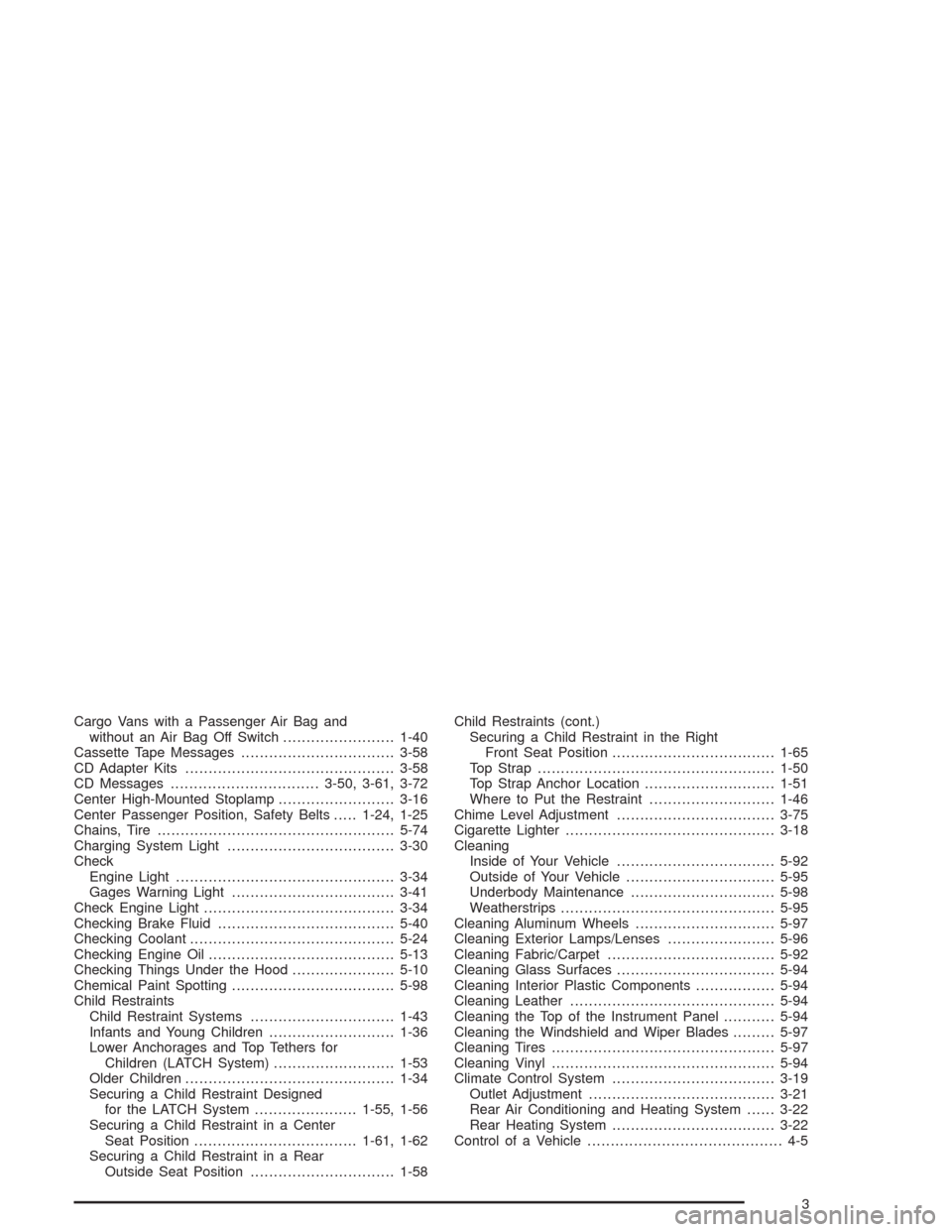
Cargo Vans with a Passenger Air Bag and
without an Air Bag Off Switch........................1-40
Cassette Tape Messages.................................3-58
CD Adapter Kits.............................................3-58
CD Messages................................3-50, 3-61, 3-72
Center High-Mounted Stoplamp.........................3-16
Center Passenger Position, Safety Belts.....1-24, 1-25
Chains, Tire...................................................5-74
Charging System Light....................................3-30
Check
Engine Light...............................................3-34
Gages Warning Light...................................3-41
Check Engine Light.........................................3-34
Checking Brake Fluid......................................5-40
Checking Coolant............................................5-24
Checking Engine Oil........................................5-13
Checking Things Under the Hood......................5-10
Chemical Paint Spotting...................................5-98
Child Restraints
Child Restraint Systems...............................1-43
Infants and Young Children...........................1-36
Lower Anchorages and Top Tethers for
Children (LATCH System)..........................1-53
Older Children.............................................1-34
Securing a Child Restraint Designed
for the LATCH System......................1-55, 1-56
Securing a Child Restraint in a Center
Seat Position...................................1-61, 1-62
Securing a Child Restraint in a Rear
Outside Seat Position...............................1-58Child Restraints (cont.)
Securing a Child Restraint in the Right
Front Seat Position...................................1-65
Top Strap...................................................1-50
Top Strap Anchor Location............................1-51
Where to Put the Restraint...........................1-46
Chime Level Adjustment..................................3-75
Cigarette Lighter.............................................3-18
Cleaning
Inside of Your Vehicle..................................5-92
Outside of Your Vehicle................................5-95
Underbody Maintenance...............................5-98
Weatherstrips..............................................5-95
Cleaning Aluminum Wheels..............................5-97
Cleaning Exterior Lamps/Lenses.......................5-96
Cleaning Fabric/Carpet....................................5-92
Cleaning Glass Surfaces..................................5-94
Cleaning Interior Plastic Components.................5-94
Cleaning Leather............................................5-94
Cleaning the Top of the Instrument Panel...........5-94
Cleaning the Windshield and Wiper Blades.........5-97
Cleaning Tires................................................5-97
Cleaning Vinyl................................................5-94
Climate Control System...................................3-19
Outlet Adjustment........................................3-21
Rear Air Conditioning and Heating System......3-22
Rear Heating System...................................3-22
Control of a Vehicle.......................................... 4-5
3
Page 396 of 406
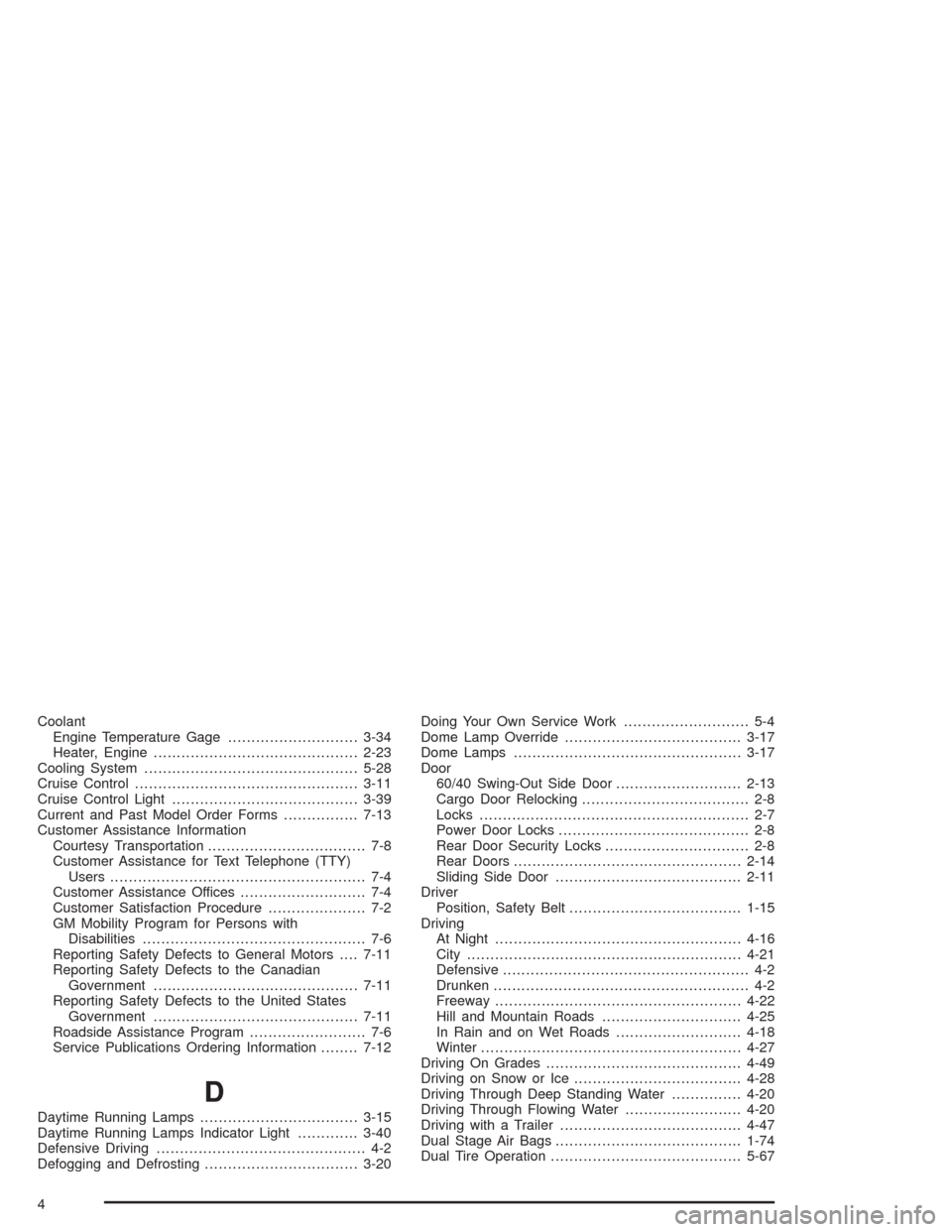
Coolant
Engine Temperature Gage............................3-34
Heater, Engine............................................2-23
Cooling System..............................................5-28
Cruise Control................................................3-11
Cruise Control Light........................................3-39
Current and Past Model Order Forms................7-13
Customer Assistance Information
Courtesy Transportation.................................. 7-8
Customer Assistance for Text Telephone (TTY)
Users....................................................... 7-4
Customer Assistance Offices........................... 7-4
Customer Satisfaction Procedure..................... 7-2
GM Mobility Program for Persons with
Disabilities................................................ 7-6
Reporting Safety Defects to General Motors....7-11
Reporting Safety Defects to the Canadian
Government............................................7-11
Reporting Safety Defects to the United States
Government............................................7-11
Roadside Assistance Program......................... 7-6
Service Publications Ordering Information........7-12
D
Daytime Running Lamps..................................3-15
Daytime Running Lamps Indicator Light.............3-40
Defensive Driving............................................. 4-2
Defogging and Defrosting.................................3-20Doing Your Own Service Work........................... 5-4
Dome Lamp Override......................................3-17
Dome Lamps.................................................3-17
Door
60/40 Swing-Out Side Door...........................2-13
Cargo Door Relocking.................................... 2-8
Locks.......................................................... 2-7
Power Door Locks......................................... 2-8
Rear Door Security Locks............................... 2-8
Rear Doors.................................................2-14
Sliding Side Door........................................2-11
Driver
Position, Safety Belt.....................................1-15
Driving
At Night.....................................................4-16
City...........................................................4-21
Defensive..................................................... 4-2
Drunken....................................................... 4-2
Freeway.....................................................4-22
Hill and Mountain Roads..............................4-25
In Rain and on Wet Roads...........................4-18
Winter........................................................4-27
Driving On Grades..........................................4-49
Driving on Snow or Ice....................................4-28
Driving Through Deep Standing Water...............4-20
Driving Through Flowing Water.........................4-20
Driving with a Trailer.......................................4-47
Dual Stage Air Bags........................................1-74
Dual Tire Operation.........................................5-67
4