seats CHEVROLET KODIAK 2004 User Guide
[x] Cancel search | Manufacturer: CHEVROLET, Model Year: 2004, Model line: KODIAK, Model: CHEVROLET KODIAK 2004Pages: 366, PDF Size: 6.87 MB
Page 40 of 366
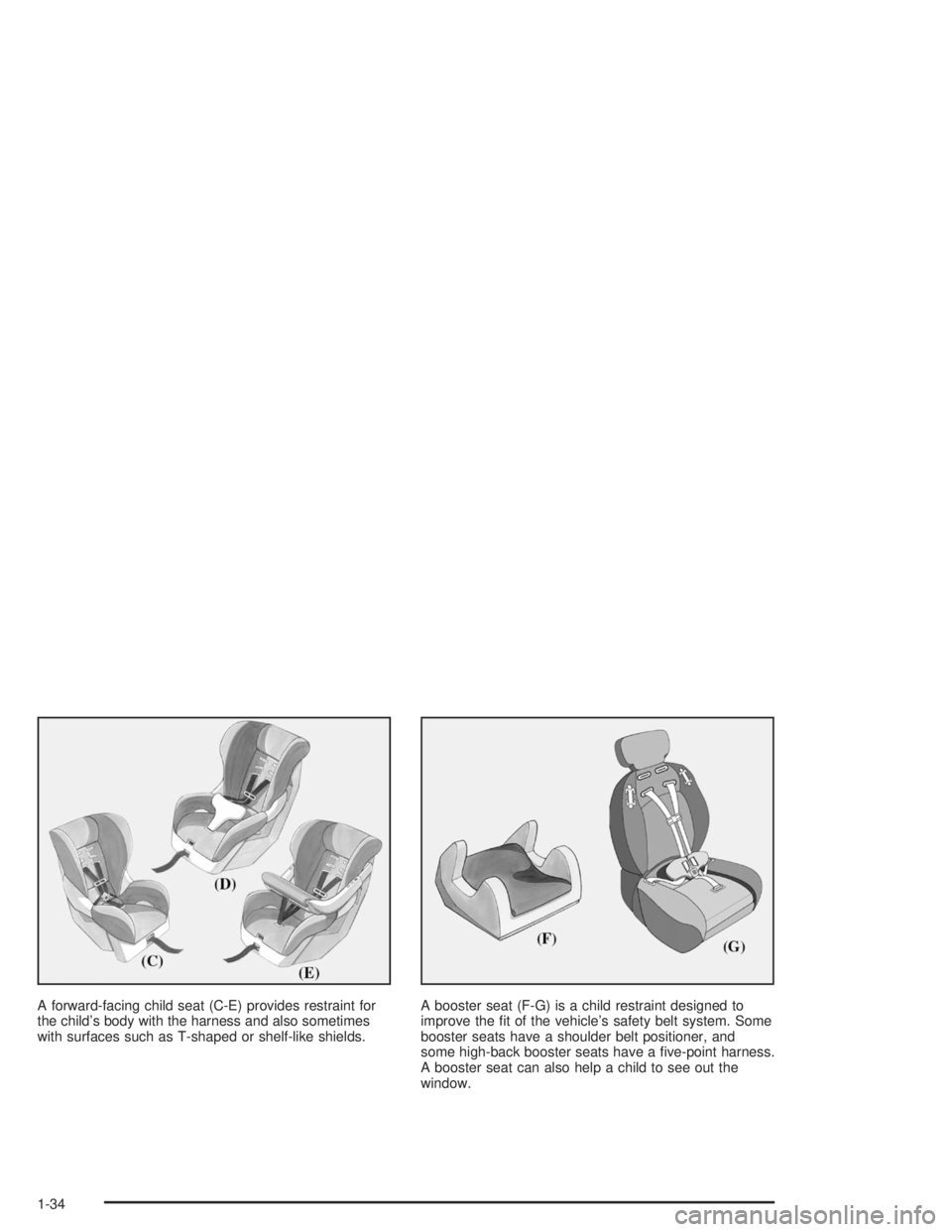
A forward-facing child seat (C-E) provides restraint for
the child’s body with the harness and also sometimes
with surfaces such as T-shaped or shelf-like shields.A booster seat (F-G) is a child restraint designed to
improve the fit of the vehicle’s safety belt system. Some
booster seats have a shoulder belt positioner, and
some high-back booster seats have a five-point harness.
A booster seat can also help a child to see out the
window.
1-34
Page 52 of 366
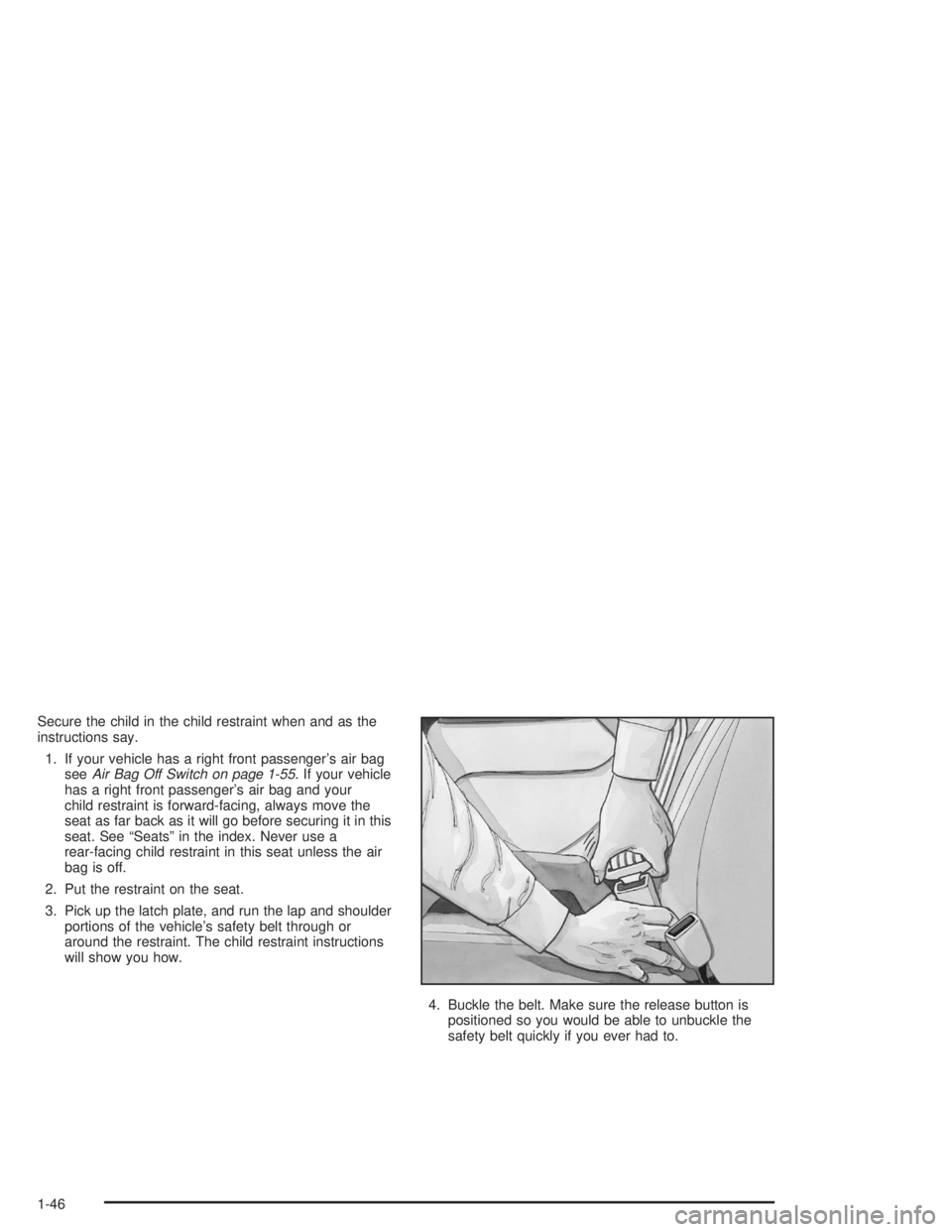
Secure the child in the child restraint when and as the
instructions say.
1. If your vehicle has a right front passenger’s air bag
seeAir Bag Off Switch on page 1-55. If your vehicle
has a right front passenger’s air bag and your
child restraint is forward-facing, always move the
seat as far back as it will go before securing it in this
seat. See “Seats” in the index. Never use a
rear-facing child restraint in this seat unless the air
bag is off.
2. Put the restraint on the seat.
3. Pick up the latch plate, and run the lap and shoulder
portions of the vehicle’s safety belt through or
around the restraint. The child restraint instructions
will show you how.
4. Buckle the belt. Make sure the release button is
positioned so you would be able to unbuckle the
safety belt quickly if you ever had to.
1-46
Page 109 of 366
Outside Heated Mirrors
If your vehicle has this feature, your outside rearview
mirrors can be defrosted.
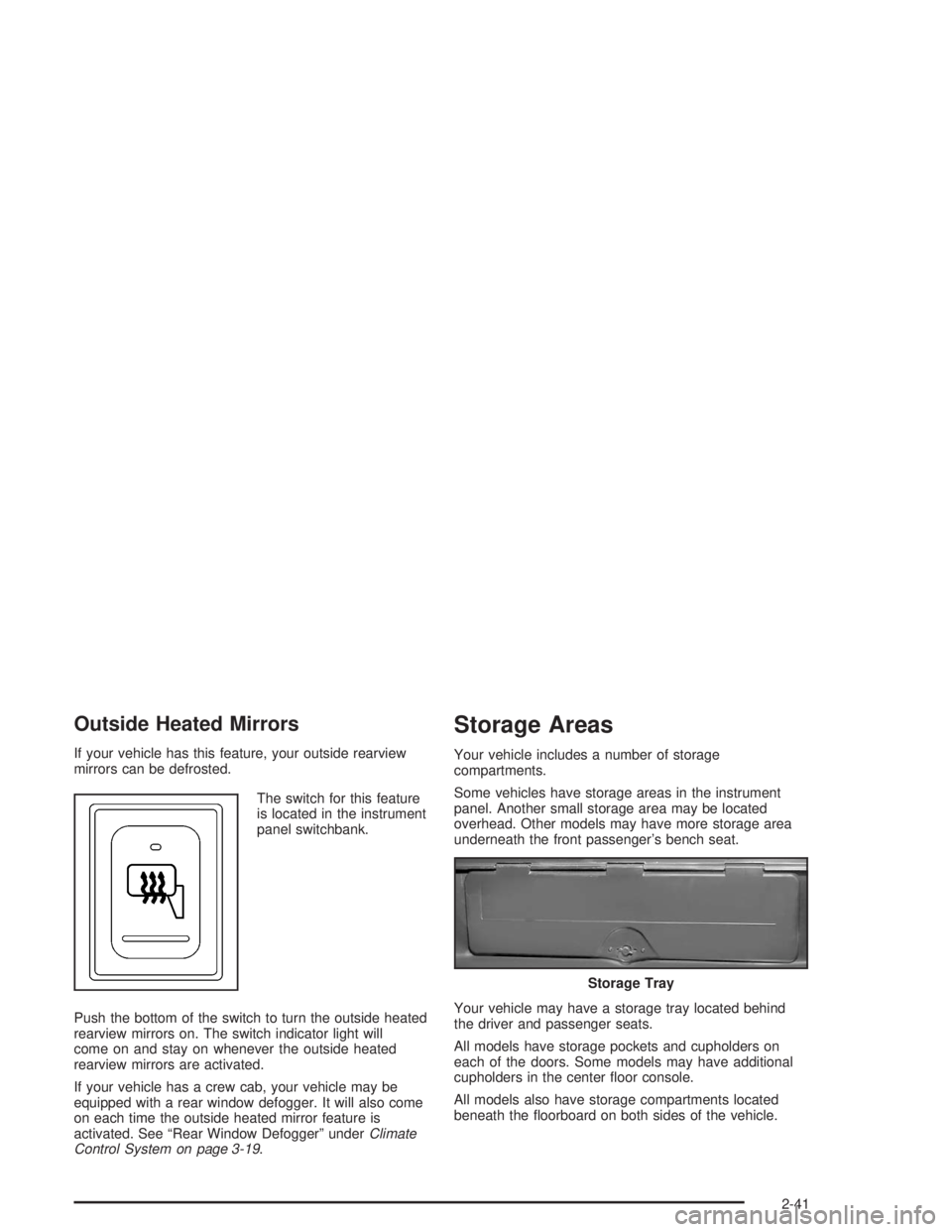
The switch for this feature
is located in the instrument
panel switchbank.
Push the bottom of the switch to turn the outside heated
rearview mirrors on. The switch indicator light will
come on and stay on whenever the outside heated
rearview mirrors are activated.
If your vehicle has a crew cab, your vehicle may be
equipped with a rear window defogger. It will also come
on each time the outside heated mirror feature is
activated. See “Rear Window Defogger” underClimate
Control System on page 3-19.
Storage Areas
Your vehicle includes a number of storage
compartments.
Some vehicles have storage areas in the instrument
panel. Another small storage area may be located
overhead. Other models may have more storage area
underneath the front passenger’s bench seat.
Your vehicle may have a storage tray located behind
the driver and passenger seats.
All models have storage pockets and cupholders on
each of the doors. Some models may have additional
cupholders in the center floor console.
All models also have storage compartments located
beneath the floorboard on both sides of the vehicle.
Storage Tray
2-41
Page 110 of 366
Center Console Storage Area
Your vehicle may have a center console compartment
between the bucket or suspension seats.
The back of your center bench seat may also fold
forward to reveal a console compartment.
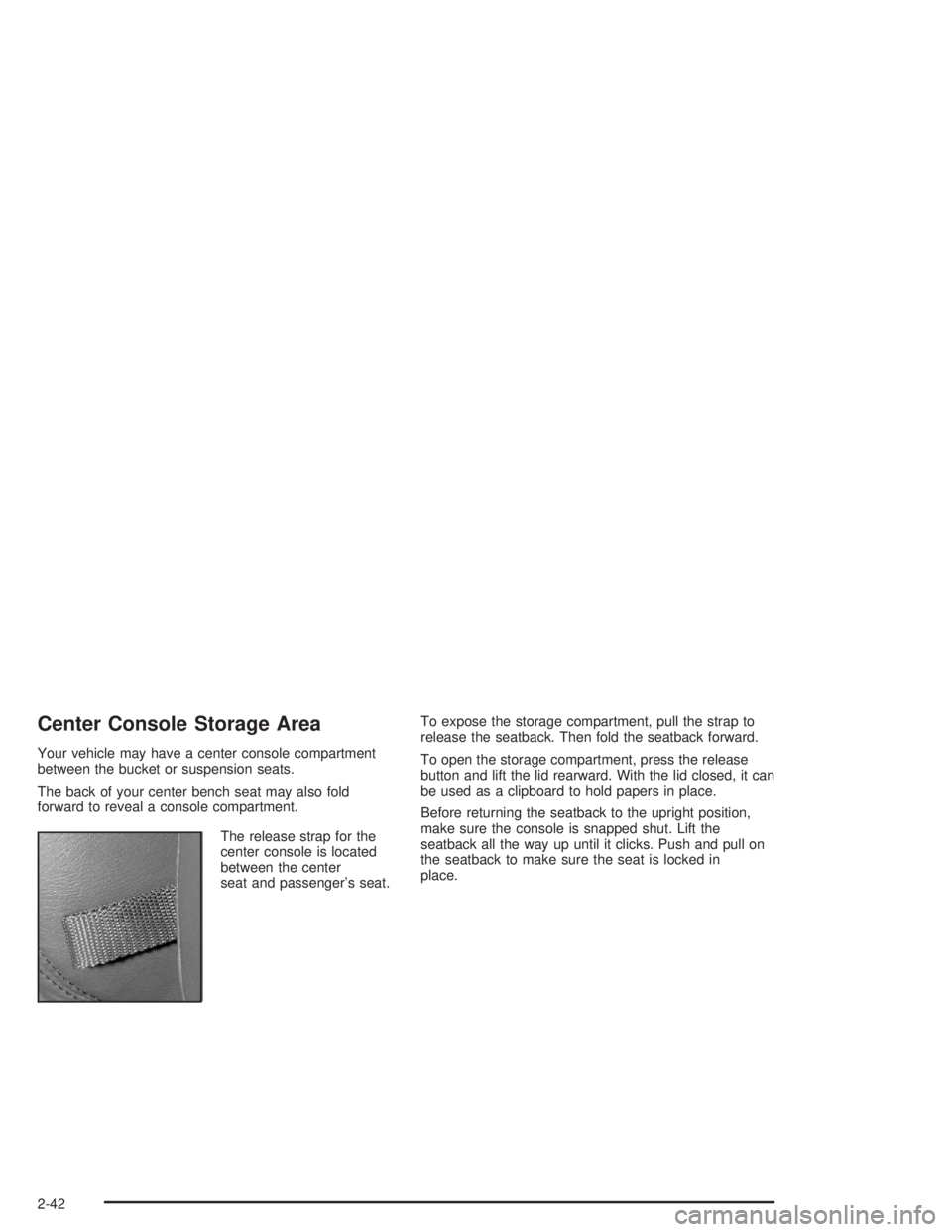
The release strap for the
center console is located
between the center
seat and passenger’s seat.To expose the storage compartment, pull the strap to
release the seatback. Then fold the seatback forward.
To open the storage compartment, press the release
button and lift the lid rearward. With the lid closed, it can
be used as a clipboard to hold papers in place.
Before returning the seatback to the upright position,
make sure the console is snapped shut. Lift the
seatback all the way up until it clicks. Push and pull on
the seatback to make sure the seat is locked in
place.
2-42
Page 129 of 366
Climate Controls
Climate Control System
With these systems, you can control the heating,
cooling and ventilation for your vehicle.
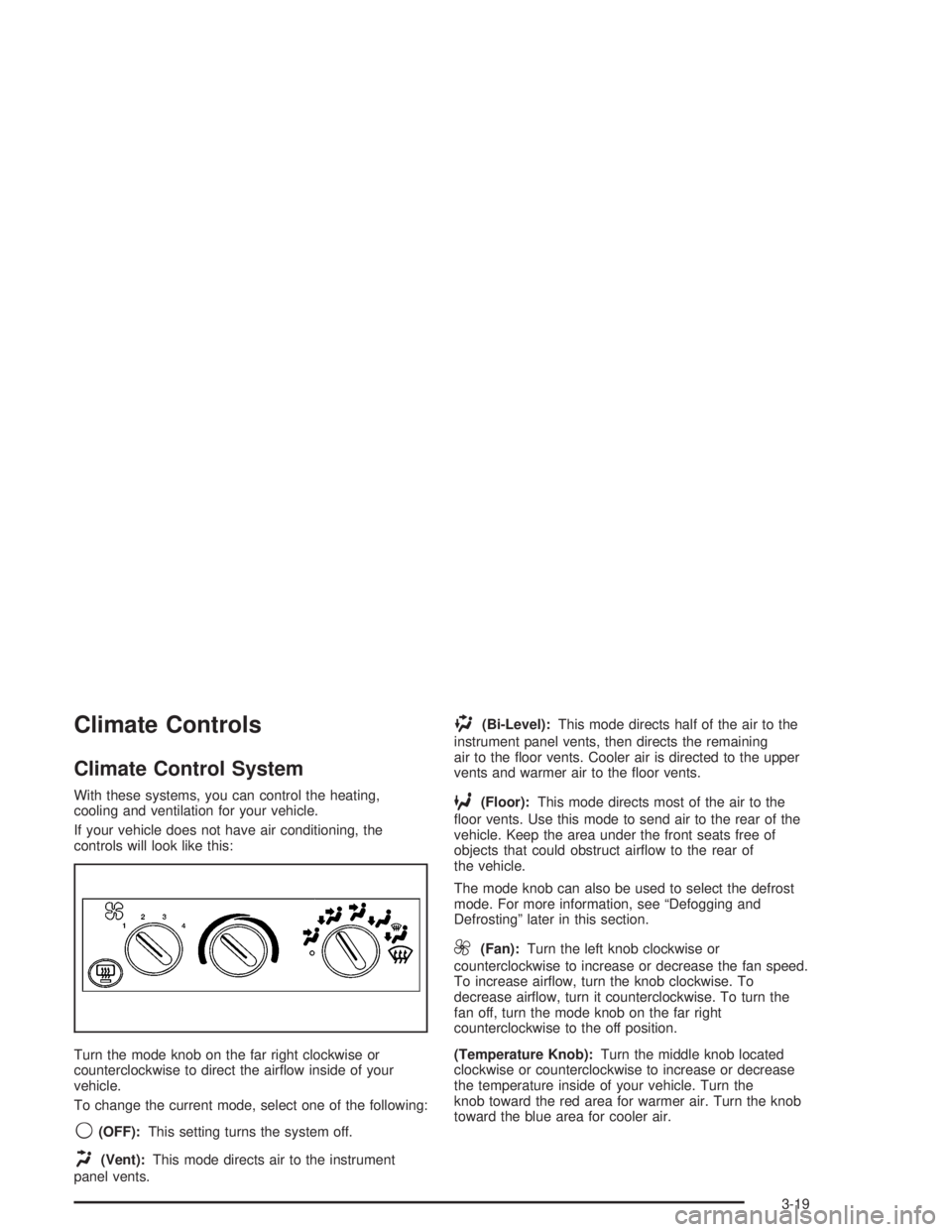
If your vehicle does not have air conditioning, the
controls will look like this:
Turn the mode knob on the far right clockwise or
counterclockwise to direct the airflow inside of your
vehicle.
To change the current mode, select one of the following:
9(OFF):This setting turns the system off.
H(Vent):This mode directs air to the instrument
panel vents.
)(Bi-Level):This mode directs half of the air to the
instrument panel vents, then directs the remaining
air to the floor vents. Cooler air is directed to the upper
vents and warmer air to the floor vents.
6(Floor):This mode directs most of the air to the
floor vents. Use this mode to send air to the rear of the
vehicle. Keep the area under the front seats free of
objects that could obstruct airflow to the rear of
the vehicle.
The mode knob can also be used to select the defrost
mode. For more information, see “Defogging and
Defrosting” later in this section.
9(Fan):Turn the left knob clockwise or
counterclockwise to increase or decrease the fan speed.
To increase airflow, turn the knob clockwise. To
decrease airflow, turn it counterclockwise. To turn the
fan off, turn the mode knob on the far right
counterclockwise to the off position.
(Temperature Knob):Turn the middle knob located
clockwise or counterclockwise to increase or decrease
the temperature inside of your vehicle. Turn the
knob toward the red area for warmer air. Turn the knob
toward the blue area for cooler air.
3-19
Page 132 of 366
Outlet Adjustment
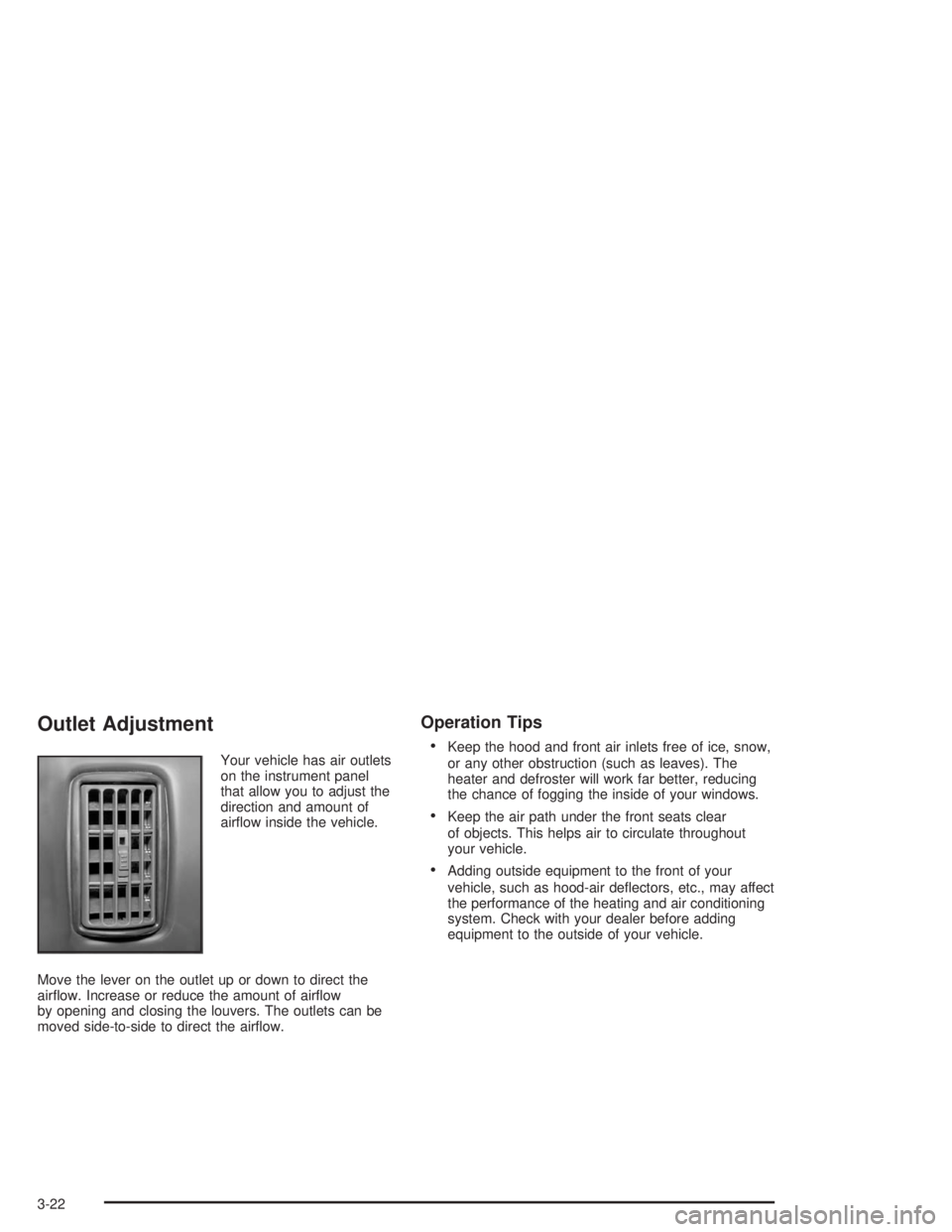
Your vehicle has air outlets
on the instrument panel
that allow you to adjust the
direction and amount of
airflow inside the vehicle.
Move the lever on the outlet up or down to direct the
airflow. Increase or reduce the amount of airflow
by opening and closing the louvers. The outlets can be
moved side-to-side to direct the airflow.
Operation Tips
•
Keep the hood and front air inlets free of ice, snow,
or any other obstruction (such as leaves). The
heater and defroster will work far better, reducing
the chance of fogging the inside of your windows.
•Keep the air path under the front seats clear
of objects. This helps air to circulate throughout
your vehicle.
•Adding outside equipment to the front of your
vehicle, such as hood-air deflectors, etc., may affect
the performance of the heating and air conditioning
system. Check with your dealer before adding
equipment to the outside of your vehicle.
3-22
Page 204 of 366
The GVW Rating label is provided by the final
manufacturer and should be on the door or door jamb. It
also tells you the maximum weights for the front and rear
axles, called Gross Axle Weight Rating (GAWR). To find
out the actual loads on your front and rear axles, you
need to go to a weigh station and weigh your vehicle.
Your dealer can help you with this. Be sure to spread out
your load equally on both sides of the center line.
Never exceed the GVWR for your vehicle, or the GAWR
for either the front or rear axle.
And, if you do have a heavy load, you should spread
it out.
{CAUTION:
Do not load your vehicle any heavier than the
GVWR, or either the maximum front or rear
GAWR. If you do, parts on your vehicle can
break, and it can change the way your vehicle
handles. These could cause you to lose
control and crash. Also, overloading can
shorten the life of your vehicle.
Using heavier suspension components to get added
durability might not change your weight ratings. Ask your
dealer to help you load your vehicle the right way.Notice:Overloading your vehicle may cause
damage. Repairs would not be covered by your
warranty. Do not overload your vehicle.
If you put things inside your vehicle – like suitcases,
tools, packages or anything else – they will go as fast as
the vehicle goes. If you have to stop or turn quickly,
or if there is a crash, they’ll keep going.
{CAUTION:
Things you put inside your vehicle can strike
and injure people in a sudden stop or turn, or
in a crash.
Put things in the cargo area of your
vehicle. Try to spread the weight evenly.
Never stack heavier things, like suitcases,
inside the vehicle so that some of them
are above the tops of the seats.
Do not leave an unsecured child restraint
in your vehicle.
When you carry something inside the
vehicle, secure it whenever you can.
Do not leave a seat folded down unless
you need to.
4-34
Page 351 of 366
A
Accessory Power Outlets.................................3-17
Adding Equipment to Your Air Bag-Equipped
Vehicle.......................................................1-61
Adding Washer Fluid.......................................5-44
Additives, Fuel................................................. 5-7
Add-On Electrical Equipment............................5-86
Adjusting the Speakers
(Balance/Fade)............................3-47, 3-50, 3-54
Air Bag
Off Light.....................................................3-28
Readiness Light..........................................3-27
Air Bag System..............................................1-48
Adding Equipment to Your Air Bag-Equipped
Vehicle...................................................1-61
Air Bag Off Switch.......................................1-55
How Does an Air Bag Restrain?....................1-53
Servicing Your Air Bag-Equipped Vehicle.........1-60
What Makes an Air Bag Inflate?....................1-53
What Will You See After an Air Bag Inflates? . . 1-54
When Should an Air Bag Inflate?...................1-53
Where Are the Air Bags?..............................1-52
Air Brake.......................................................2-35
Air Brake System Warning Light........................3-33
Air Brake Systems..........................................5-50
Air Cleaner/Filter, Engine.................................5-30
Air Conditioning System...................................5-67Air Connections..............................................4-36
Air Dryer.......................................................5-50
Air Pressure Gage..........................................3-44
Air Shift Control (Automatic Transmission)..........2-27
Air Suspension...............................................2-27
Air Suspension Seats........................................ 1-6
Airbag Sensing and Diagnostic Module (SDM)...... 7-5
All Overseas Locations...................................... 7-4
Allison Transmission
®External Filters...............5-100
Aluminum or Chrome-Plated Wheels..................5-82
AM ...............................................................3-57
AM-FM Radio.................................................3-46
Antenna, Fixed Mast.......................................3-59
Anti-lock Brake System (ABS)............................ 4-7
Anti-Lock Brake, System Warning Light..............3-34
Anti-Lock Brakes, Trailer System
Warning Light.............................................3-35
Appearance Care............................................5-76
Care of Safety Belts....................................5-79
Chemical Paint Spotting...............................5-83
Cleaning the Inside of Your Vehicle................5-77
Cleaning the Outside of Your Vehicle..............5-80
Finish Damage............................................5-83
Sheet Metal Damage...................................5-82
Underbody Maintenance...............................5-83
Vehicle Care/Appearance Materials................5-84
Weatherstrips..............................................5-79
Ashtrays........................................................3-18
1
Page 352 of 366
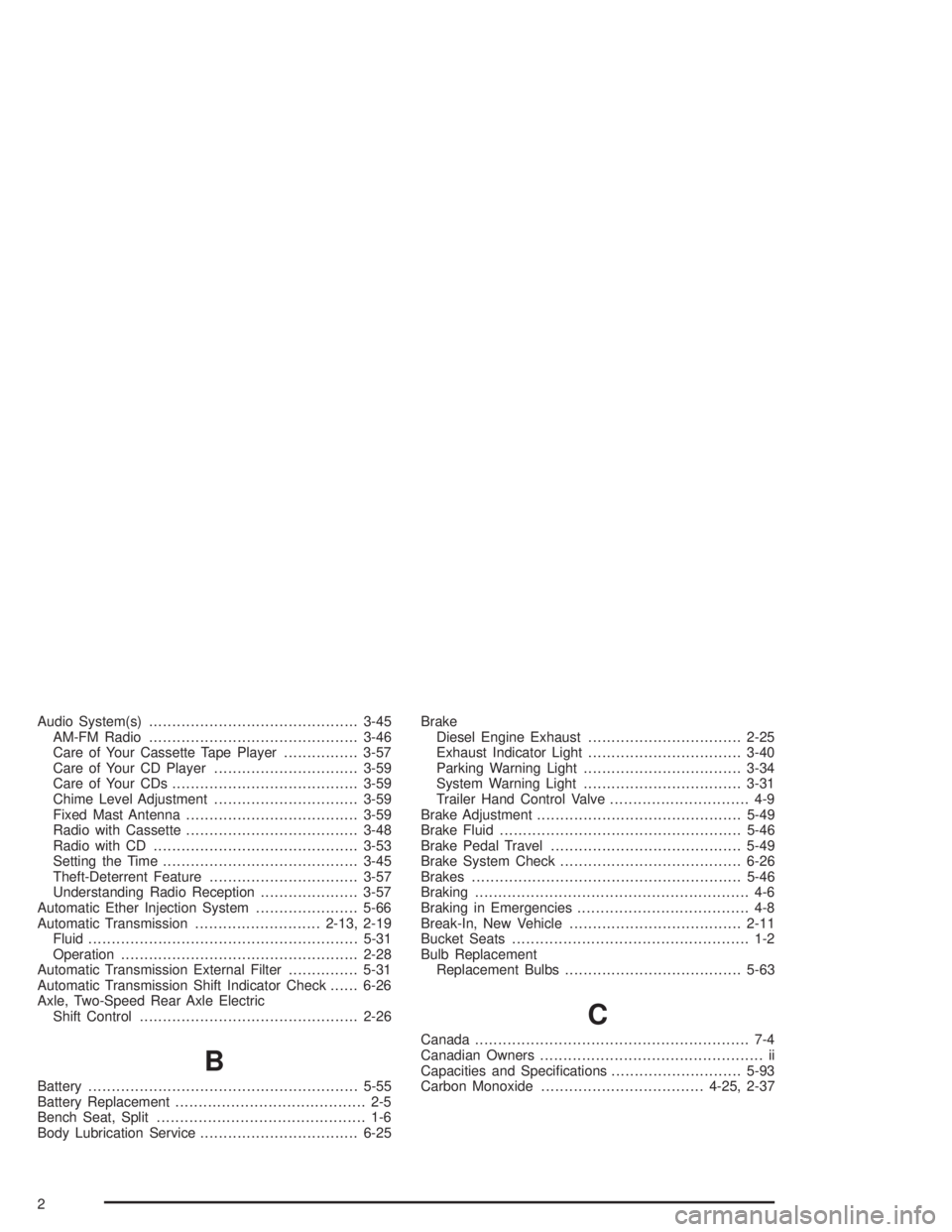
Audio System(s).............................................3-45
AM-FM Radio.............................................3-46
Care of Your Cassette Tape Player................3-57
Care of Your CD Player...............................3-59
Care of Your CDs........................................3-59
Chime Level Adjustment...............................3-59
Fixed Mast Antenna.....................................3-59
Radio with Cassette.....................................3-48
Radio with CD............................................3-53
Setting the Time..........................................3-45
Theft-Deterrent Feature................................3-57
Understanding Radio Reception.....................3-57
Automatic Ether Injection System......................5-66
Automatic Transmission...........................2-13, 2-19
Fluid..........................................................5-31
Operation...................................................2-28
Automatic Transmission External Filter...............5-31
Automatic Transmission Shift Indicator Check......6-26
Axle, Two-Speed Rear Axle Electric
Shift Control...............................................2-26
B
Battery..........................................................5-55
Battery Replacement......................................... 2-5
Bench Seat, Split............................................. 1-6
Body Lubrication Service..................................6-25Brake
Diesel Engine Exhaust.................................2-25
Exhaust Indicator Light.................................3-40
Parking Warning Light..................................3-34
System Warning Light..................................3-31
Trailer Hand Control Valve.............................. 4-9
Brake Adjustment............................................5-49
Brake Fluid....................................................5-46
Brake Pedal Travel.........................................5-49
Brake System Check.......................................6-26
Brakes..........................................................5-46
Braking........................................................... 4-6
Braking in Emergencies..................................... 4-8
Break-In, New Vehicle.....................................2-11
Bucket Seats................................................... 1-2
Bulb Replacement
Replacement Bulbs......................................5-63
C
Canada........................................................... 7-4
Canadian Owners................................................ ii
Capacities and Specifications............................5-93
Carbon Monoxide...................................4-25, 2-37
2
Page 359 of 366
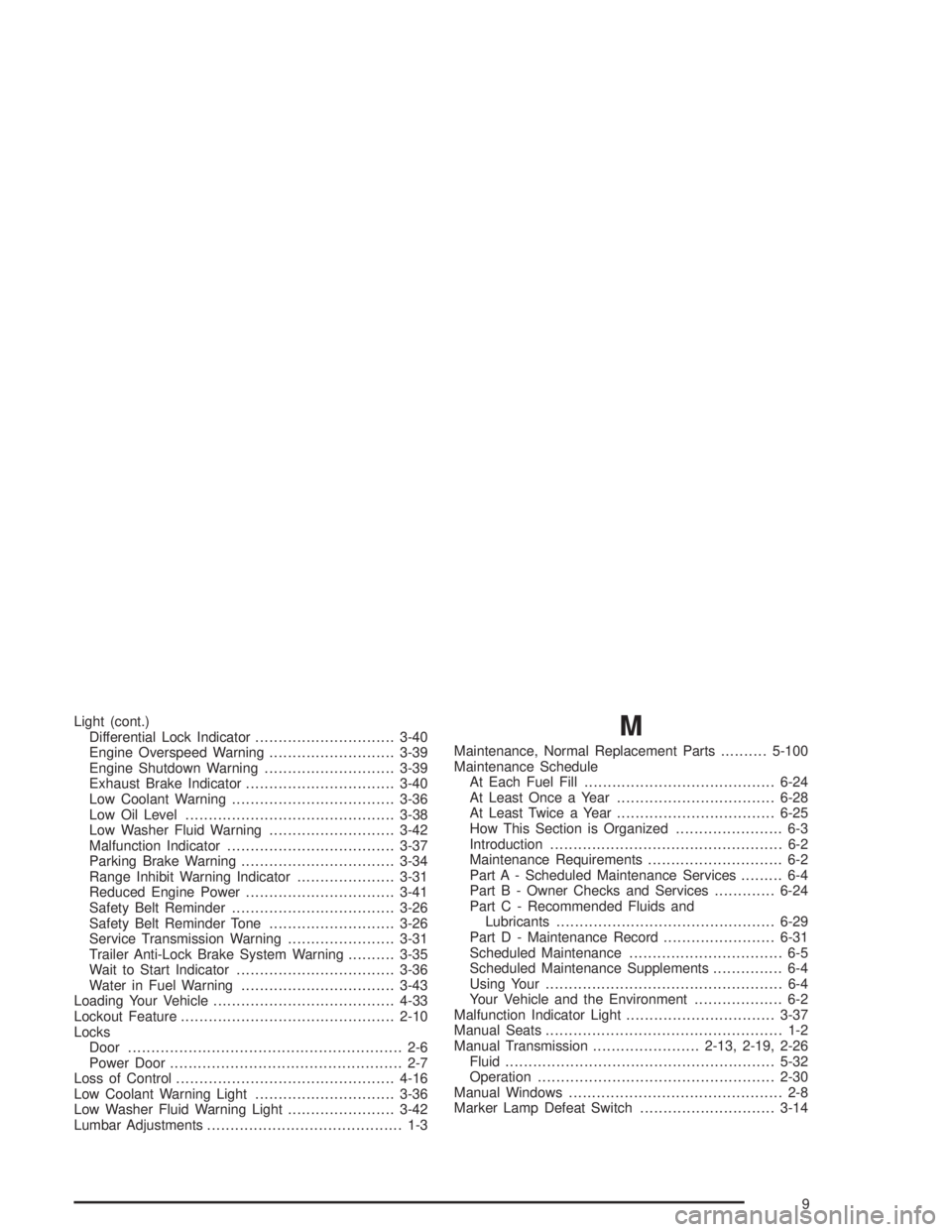
Light (cont.)
Differential Lock Indicator..............................3-40
Engine Overspeed Warning...........................3-39
Engine Shutdown Warning............................3-39
Exhaust Brake Indicator................................3-40
Low Coolant Warning...................................3-36
Low Oil Level.............................................3-38
Low Washer Fluid Warning...........................3-42
Malfunction Indicator....................................3-37
Parking Brake Warning.................................3-34
Range Inhibit Warning Indicator.....................3-31
Reduced Engine Power................................3-41
Safety Belt Reminder...................................3-26
Safety Belt Reminder Tone...........................3-26
Service Transmission Warning.......................3-31
Trailer Anti-Lock Brake System Warning..........3-35
Wait to Start Indicator..................................3-36
Water in Fuel Warning.................................3-43
Loading Your Vehicle.......................................4-33
Lockout Feature..............................................2-10
Locks
Door........................................................... 2-6
Power Door.................................................. 2-7
Loss of Control...............................................4-16
Low Coolant Warning Light..............................3-36
Low Washer Fluid Warning Light.......................3-42
Lumbar Adjustments.......................................... 1-3M
Maintenance, Normal Replacement Parts..........5-100
Maintenance Schedule
At Each Fuel Fill.........................................6-24
At Least Once a Year..................................6-28
At Least Twice a Year..................................6-25
How This Section is Organized....................... 6-3
Introduction.................................................. 6-2
Maintenance Requirements............................. 6-2
Part A - Scheduled Maintenance Services......... 6-4
Part B - Owner Checks and Services.............6-24
Part C - Recommended Fluids and
Lubricants...............................................6-29
Part D - Maintenance Record........................6-31
Scheduled Maintenance................................. 6-5
Scheduled Maintenance Supplements............... 6-4
Using Your................................................... 6-4
Your Vehicle and the Environment................... 6-2
Malfunction Indicator Light................................3-37
Manual Seats................................................... 1-2
Manual Transmission.......................2-13, 2-19, 2-26
Fluid..........................................................5-32
Operation...................................................2-30
Manual Windows.............................................. 2-8
Marker Lamp Defeat Switch.............................3-14
9