wheel DACIA SANDERO 2013 2.G User Guide
[x] Cancel search | Manufacturer: DACIA, Model Year: 2013, Model line: SANDERO, Model: DACIA SANDERO 2013 2.GPages: 146, PDF Size: 6.4 MB
Page 65 of 146
ENG_NU_817-2_NU_Dacia_2
– Study the road ahead so that you are able to brake as l")
JauneNoirNoir texte
2.7
ENG_UD5485_1Conseils antipollution, économies de carburant, conduite (U90 - Daci\
a)ENG_NU_817-2_NU_Dacia_2
– Study the road ahead so that you are able to brake as little as possible, it can be sufficient just to lift off the ac- celerator.
– Avoid sudden acceleration.
– Do not overrev the engine in the in
- termediate gears. Always use the highest gear possible without labour- ing the engine.
– Do not try to maintain the same
speed up a hill, accelerate no more than you would on the level. Keep your foot in the same position on the accelerator pedal.
– Double declutching and accelerating
before switching off are unnecessary in modern vehicles.
– Bad weather, flooded roads.
Do not drive through floods if the water is above the lower edge of the wheel
rims.
Exhaust gas monitoring
system
The exhaust gas monitoring system will detect any operating faults in the vehicle’s antipollution system.
If this system malfunctions, toxic sub- stances may be released into the at- mosphere or damage may occur.
ÄThis warning light on the in- strument panel will indicate if there are any faults in the system:
T h i s c o m e s o n w h e n t h e i g n i- tion is switched on and goes out after three seconds.
– if it lights up continuously, consult
your approved dealer as soon as possible;
– if it flashes, reduce the engine speed
until the light stops flashing. Contact your approved dealer as soon as possible.
Driving
– Drive carefully for the first few miles until the engine reaches its normal operating temperature, rather than let it warm up while the vehicle is sta- tionary.
– Speed is expensive.
– Sporty driving uses a lot of fuel: drive
with a light right foot.
ADVICE ON ANTIPOLLUTION, FUEL ECONOMY AND DRIVING (continued)
Page 69 of 146
power-assisted steering.........................................(current page)driving ....................................................................(current page)power-assisted steering.........................................(current page)handbrake..............................................................(current page)
2.11
ENG_UD6871_1Frein à main / Direction assistée (B90 - Dacia)ENG_NU_817-2_NU_Dacia_2
Handbrake
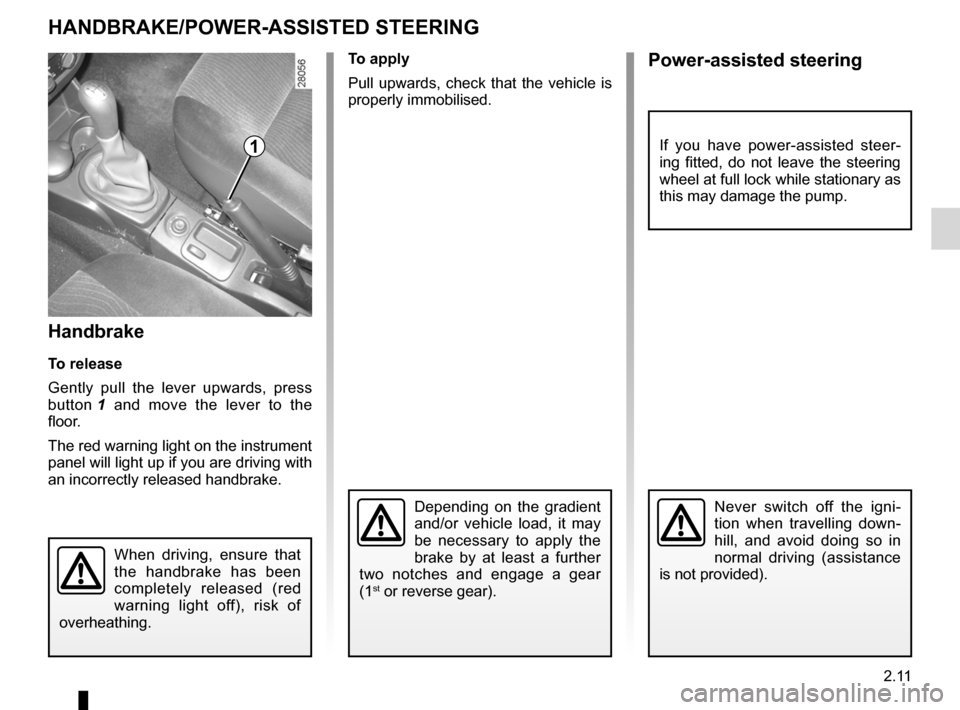
To release
Gently pull the lever upwards, press
button 1 and move the lever to the floor.
The red warning light on the instrument panel will light up if you are driving with an incorrectly released handbrake.
Levier de vitesses - Frein à mainDirection assistée
HANDBRAKE/POWER-ASSISTED STEERING
1
To apply
Pull upwards, check that the vehicle is properly immobilised.
Depending on the gradient and/or vehicle load, it may be necessary to apply the brake by at least a further two notches and engage a gear (1st or reverse gear).
Never switch off the igni- tion when travelling down- hill, and avoid doing so in normal driving (assistance is not provided).
When driving, ensure that the handbrake has been completely released (red warning light off), risk of overheathing.
Power-assisted steering
If you have power-assisted steer- ing fitted, do not leave the steering wheel at full lock while stationary as this may damage the pump.
Page 70 of 146
driving ...................................................(up to the end of the DU)ABS ......................................................(up to the end of the DU)anti-lock braking system: ABS ..............(up to the end of the DU)
2.12
ENG_UD5488_1Système antiblocage des routes : ABS (U90 - Dacia)ENG_NU_817-2_NU_Dacia_2
Operating faults
Two possible situations may occur:
1 – Warning light x is lit on the instrument panel.Braking is still performed, but with- out the ABS system. Contact an approved dealer as soon as pos- sible.
Although this system allows you to make maximum use of stopping dis- tances, even with the ABS you still have to take account of the actual condition of the road surface.
It is still essential to follow the rules of good driving practice (such as driv- ing at a safe distance from the vehicle in front). The fact that the vehicle’s safety has been increased should not encourage you to take risks.
You will feel a pulsation through the brake pedal each time the system is ac- tivated. These tangible signs will warn you that the adhesion between the tyres and the ground has reached its limit and enable you to adapt your driv- ing style to suit the road conditions.
2 – The x and D warning lights on the in- strument panel come on.
This indicates that both the brak- ing system and the ABS system are faulty. Your braking systems are only partially operational. However, it is dangerous to brake suddenly and it is essential to stop immedi- ately, as soon as traffic conditions allow. Contact an approved dealer as soon as possible.
Système antiblocage des roues (ABS)
ANTI-LOCK BRAKING SYSTEM (ABS)
Under heavy braking, the essential re- quirements are to limit the stopping distance and keep your vehicle under control. However, there is a risk that roadholding and directional control may be lost and the wheels may lock under braking, depending on the nature of the ground, weather conditions and your reactions. The Anti-lock Braking System (ABS) has been designed to combat this danger.
The safety enhancement is that the brake control system prevents the wheels from locking, even if the brakes are applied too sharply, and allows the vehicle to be steered and thus its direc- tion to be controlled. Under these cir- cumstances it is quite possible for the driver to steer the vehicle and to avoid an obstacle whilst at the same time applying the brake. This system also allows you to optimise stopping dis- tances, especially when roadholding becomes difficult (wet or slippery roads, varying road surfaces).
The braking modulation provided by the ABS is independent of the effort applied to the brake pedal. In an emergency, apply firm and continuous pressure to the brake pedal. There is no need to pump it repeatedly.
Page 98 of 146
bodywork (maintenance) ......................(up to the end of the DU)maintenance:bodywork ........................................(up to the end of the DU)washing ................................................(up to the end of the DU)paintworkmaintenance ....................................................(current page)
4.10
ENG_UD5594_1Entretien de la carrosserie (B90 - Dacia)ENG_NU_817-2_NU_Dacia_4
JauneNoirNoir texte
Entretien de la carrosserie
BODYWORK MAINTENANCE
Protection against the effects
of corrosive agents
Although your vehicle has been treated with very effective anti-corrosion prod- ucts, it nevertheless remains subject to the effects of:
– corrosives in the atmosphere
– atmospheric pollution (urban and
industrial areas),
– saline atmospheres (near the sea, particularly in hot weather),
– seasonal and damp climatic con- ditions, (e.g.: road salt in winter, water from road cleaners, etc.).
– abrasives
wind-borne dust and sand, mud, road grit thrown up by other vehicles, etc
– minor impacts
You should take a minimum number of precautions in order to safeguard your vehicle against such risks and not to lose the benefit of your vehicle’s anti- corrosion protection.
You should not:
– Wash the vehicle in bright sunlight or freezing temperatures.
– Scrape off mud or dirt without pre
- wetting.
– Allow dirt to accumulate.
– Allow rust to form following minor im
- pacts.
– Use solvents not approved by the
Technical Department to remove stains as this could damage the paintwork.
– Drive frequently in snow or muddy
conditions without washing the vehicle, particularly under the wheel arches and body. –
Degrease or clean mechanical com
- ponents (e.g. engine compartment), underneath the body, parts with hinges (e.g. fuel filler cap, inside of filler flap, sunroof, etc.) and painted external plastic fittings (e.g. bump- ers) using high-pressure cleaning equipment or using spray products not approved by the Technical Department. If adequate precautions are not taken, this could give rise to corrosion or operational faults.
Page 99 of 146
JauneNoirNoir texte
4.11
ENG_UD5594_1Entretien de la carrosserie (B90 - Dacia)ENG_NU_817-2_NU_Dacia_4
BODYWORK MAINTENANCE (continued)
You should
– Wash your car frequently, with the engine off, with cleaning products recommended by the manufacturer (never use abrasive products) and be sure to jet-rinse off:
– spots of tree resin and industrial grime;
– bird droppings, which contain chemicals that rapidly discolour paintwork and may cause the paint to peel off;
Wash the vehicle immediately to
remove these marks since it is im- possible to remove them by pol- ishing;
– salt deposited in the wheel arches and underneath the body after driving in areas where the roads are chemically treated;
– mud in the wheel arches and un- derneath the body which form damp patches. –
Keep well away from the vehicle in
front when driving on gravelled sur- faces to prevent paint damage.
– Repair or have repaired quickly
patches where the paint has been damaged to prevent corrosion spreading.
– Remember to visit the body shop pe
- riodically in order to maintain your anti-corrosion warranty. Refer to the Maintenance Service Booklet.
– Respect local regulations about
washing vehicles (e.g. do not wash your vehicle on a public highway). –
Before using a roller type car wash,
put the windscreen wiper stalk in Park position (refer information on the “Windscreen wash/wipe” in Section 1), check that the external accessories, additional lights, and mirrors are securely fitted and that the wiper blades and radio aerial are taped down.
If your vehicle has a car phone and radio, remove the aerials.
– Spray mechanical components,
hinges, etc. with products approved by the Technical Department to protect them after they have been cleaned.
We have selected special products to care for your vehicle and you can obtain these from approved dealer accessory outlets.
Page 101 of 146
ENG_NU_817-2_NU_Dacia_5
Section 5: Practical advice
Emergency spare wheel . . . . . . . . . . . . . . . . . . . . . . . . . . . . . . . . . . . .\
. . . . . .")
5.1
ENG_UD8705_2Sommaire 5 (B90 - Dacia)ENG_NU_817-2_NU_Dacia_5
Section 5: Practical advice
Emergency spare wheel . . . . . . . . . . . . . . . . . . . . . . . . . . . . . . . . . . . .\
. . . . . . . . . . . . . . . . . . . . . . 5.2
Tools (Jack - Wheelbrace, etc.) . . . . . . . . . . . . . . . . . . . . . . . . . . . . . . . . . . . . \
. . . . . . . . . . . . . . . . . 5.3
Wheel trim - wheels . . . . . . . . . . . . . . . . . . . . . . . . . . . . . . . . . . . . \
. . . . . . . . . . . . . . . . . . . . . . . . . . 5.4
Changing a wheel . . . . . . . . . . . . . . . . . . . . . . . . . . . . . . . . . . . .\
. . . . . . . . . . . . . . . . . . . . . . . . . . . 5.6
Tyres (tyre and wheel safety, use in winter) . . . . . . . . . . . . . . . . . . . . . . . . . . . . . . . . . . . .\
. . . . . . . 5.7
Wiper blades . . . . . . . . . . . . . . . . . . . . . . . . . . . . . . . . . . . .\
. . . . . . . . . . . . . . . . . . . . . . . . . . . . . . . 5.10
Changing bulbs . . . . . . . . . . . . . . . . . . . . . . . . . . . . . . . . . . . .\
. . . . . . . . . . . . . . . . . . . . . . . . . . . . . 5.11
Front lights . . . . . . . . . . . . . . . . . . . . . . . . . . . . . . . . . . . . \
. . . . . . . . . . . . . . . . . . . . . . . . . . . 5.11
Fog lights . . . . . . . . . . . . . . . . . . . . . . . . . . . . . . . . . . . .\
. . . . . . . . . . . . . . . . . . . . . . . . . . . . 5.12
Rear lights . . . . . . . . . . . . . . . . . . . . . . . . . . . . . . . . . . . .\
. . . . . . . . . . . . . . . . . . . . . . . . . . . 5.13
Indicator lights . . . . . . . . . . . . . . . . . . . . . . . . . . . . . . . . . . . .\
. . . . . . . . . . . . . . . . . . . . . . . . 5.15
Interior lights . . . . . . . . . . . . . . . . . . . . . . . . . . . . . . . . . . . . \
. . . . . . . . . . . . . . . . . . . . . . . . . . 5.16
Radio frequency remote control: battery . . . . . . . . . . . . . . . . . . . . . . . . . . . . . . . . . . . . \
. . . . . . . . . . 5.19
Battery . . . . . . . . . . . . . . . . . . . . . . . . . . . . . . . . . . . . \
. . . . . . . . . . . . . . . . . . . . . . . . . . . . . . . . . . . . 5.20
Fuses . . . . . . . . . . . . . . . . . . . . . . . . . . . . . . . . . . . . \
. . . . . . . . . . . . . . . . . . . . . . . . . . . . . . . . . . . . \
. 5.22
Towing: breakdownז . . . . . . . . . . . . . . . . . . . . . . . . . . . . . . . . . . . .\
. . . . . . . . . . . . . . . . . . . . . . . . . 5.25
Towing: equipment. . . . . . . . . . . . . . . . . . . . . . . . . . . . . . . . . . . . \
. . . . . . . . . . . . . . . . . . . . . . . . . . . 5.26
Diesel filter . . . . . . . . . . . . . . . . . . . . . . . . . . . . . . . . . . . . \
. . . . . . . . . . . . . . . . . . . . . . . . . . . . . . . . . 5.27
Fitting a radio . . . . . . . . . . . . . . . . . . . . . . . . . . . . . . . . . . . . \
. . . . . . . . . . . . . . . . . . . . . . . . . . . . . . . 5.28
Accessories . . . . . . . . . . . . . . . . . . . . . . . . . . . . . . . . . . . . \
. . . . . . . . . . . . . . . . . . . . . . . . . . . . . . . . 5.29
Operating faults . . . . . . . . . . . . . . . . . . . . . . . . . . . . . . . . . . . . \
. . . . . . . . . . . . . . . . . . . . . . . . . . . . . 5.30
Page 102 of 146
practical advice .....................................(up to the end of the DU)puncture................................................(up to the end of the DU)emergency spare wheel .......................(up to the end of the DU)lifting the vehiclechanging a wheel ............................(up to the end of the DU)
5.2
ENG_UD5597_1Roue de secours (B90 - Dacia)ENG_NU_817-2_NU_Dacia_5
Roue de secours
EMERGENCY SPARE WHEEL
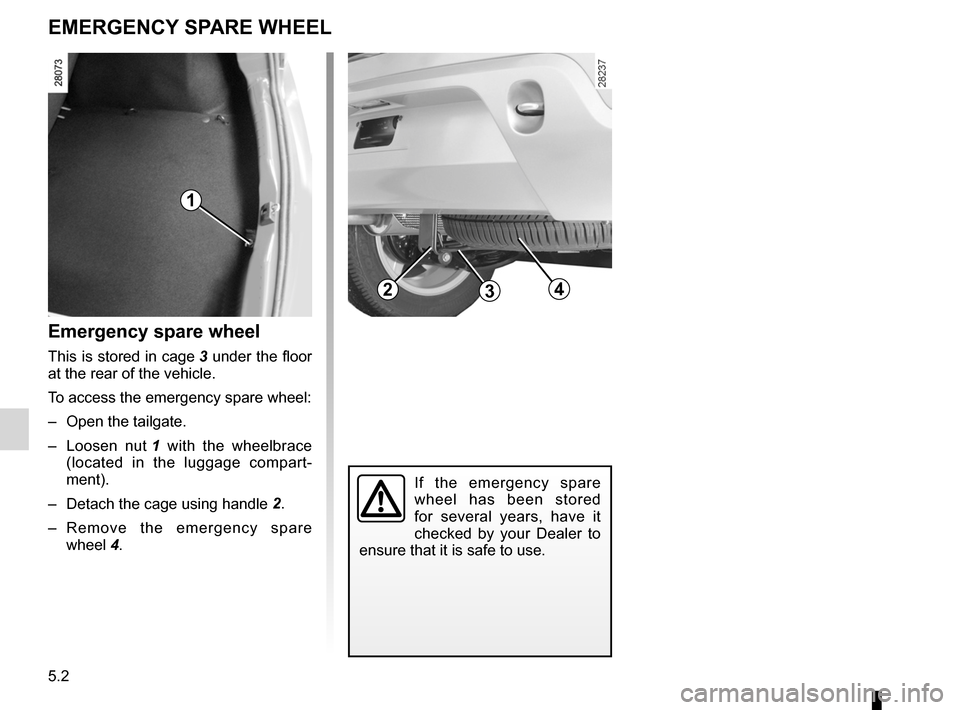
Emergency spare wheel
This is stored in cage 3 under the floor at the rear of the vehicle.
To access the emergency spare wheel:
– Open the tailgate.
– Loosen nut
1 with the wheelbrace (located in the luggage compart- ment).
– Detach the cage using handle
2.
– Remove the emergency spare
wheel 4.
If the emergency spare
wheel has been stored for several years, have it checked by your Dealer to ensure that it is safe to use.
1
324
Page 103 of 146
towing hitch...........................................(up to the end of the DU)practical advice .....................................(up to the end of the DU)jack .......................................................(up to the end of the DU)lifting the vehiclechanging a wheel ............................(up to the end of the DU)wheelbrace ...........................................(up to the end of the DU)
5.3
ENG_UD5598_1Outils (B90 - Dacia)ENG_NU_817-2_NU_Dacia_5
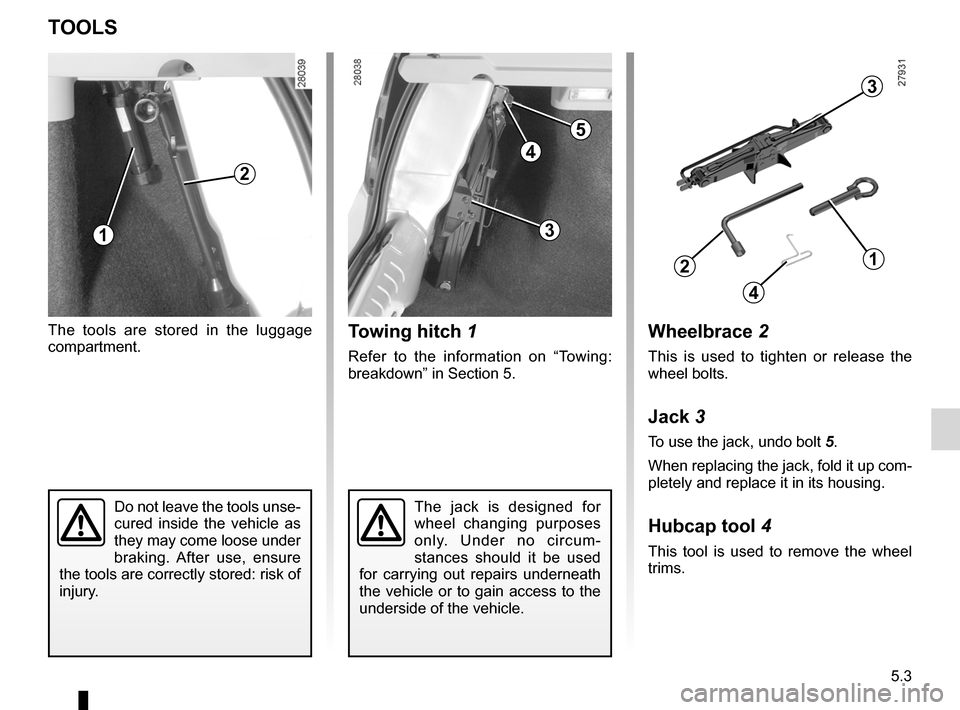
Towing hitch 1
Refer to the information on “Towing: breakdown” in Section 5.
Outils (Cric - Manivelle, etc.)
TOOLS
The tools are stored in the luggage compartment.
Do not leave the tools unse- cured inside the vehicle as they may come loose under braking. After use, ensure the tools are correctly stored: risk of injury.
Wheelbrace 2
This is used to tighten or release the wheel bolts.
Jack 3
To use the jack, undo bolt 5.
When replacing the jack, fold it up com- pletely and replace it in its housing.
Hubcap tool 4
This tool is used to remove the wheel trims.
The jack is designed for wheel changing purposes only. Under no circum- stances should it be used for carrying out repairs underneath the vehicle or to gain access to the
underside of the vehicle.
3
12
2
13
5
4
4
Page 104 of 146
practical advice .....................................(up to the end of the DU)trims ......................................................(up to the end of the DU)lifting the vehiclechanging a wheel ............................(up to the end of the DU)
5.4
ENG_UD5599_1Enjoliveurs - Jantes (B90 - Dacia)ENG_NU_817-2_NU_Dacia_5
JauneNoirNoir texte
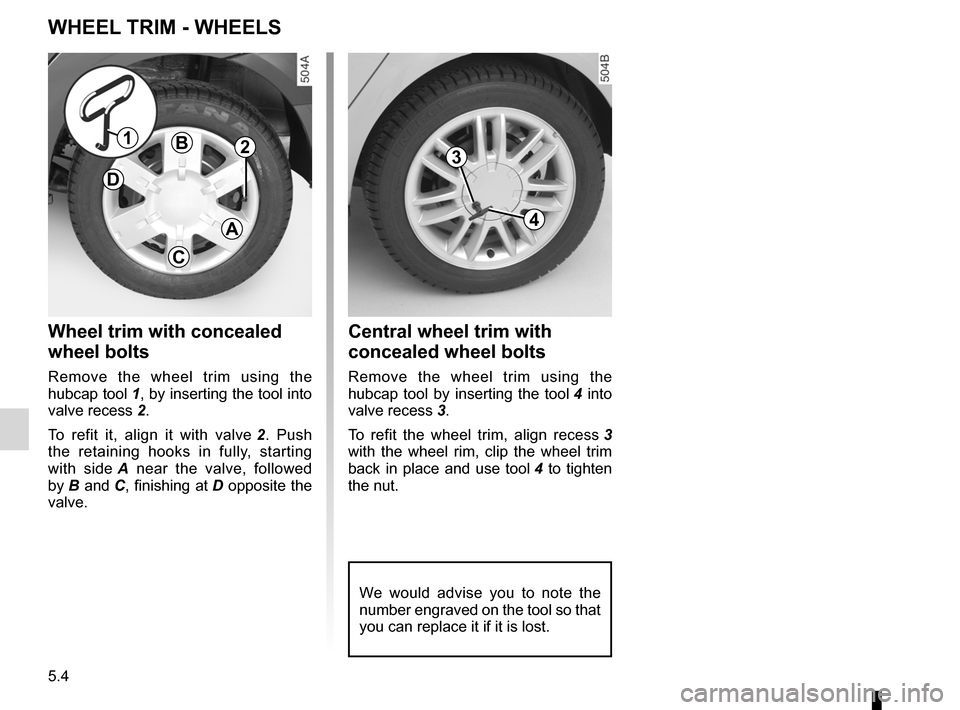
Central wheel trim with
concealed wheel bolts
Remove the wheel trim using the
hubcap tool by inserting the tool 4 into
valve recess 3.
To refit the wheel trim, align recess
3 with the wheel rim, clip the wheel trim
back in place and use tool 4 to tighten the nut.
Enjoliveurs - jantes
WHEEL TRIM - WHEELS
Wheel trim with concealed
wheel bolts
Remove the wheel trim using the
hubcap tool 1, by inserting the tool into
valve recess 2.
To refit it, align it with valve
2. Push the retaining hooks in fully, starting
with side A near the valve, followed
by B and C, finishing at D opposite the
valve.
We would advise you to note the
number engraved on the tool so that you can replace it if it is lost.
B
D
C
A
123
4
Page 105 of 146
JauneNoirNoir texte
5.5
ENG_UD5599_1Enjoliveurs - Jantes (B90 - Dacia)ENG_NU_817-2_NU_Dacia_5
WHEEL TRIM - WHEELS (continued)
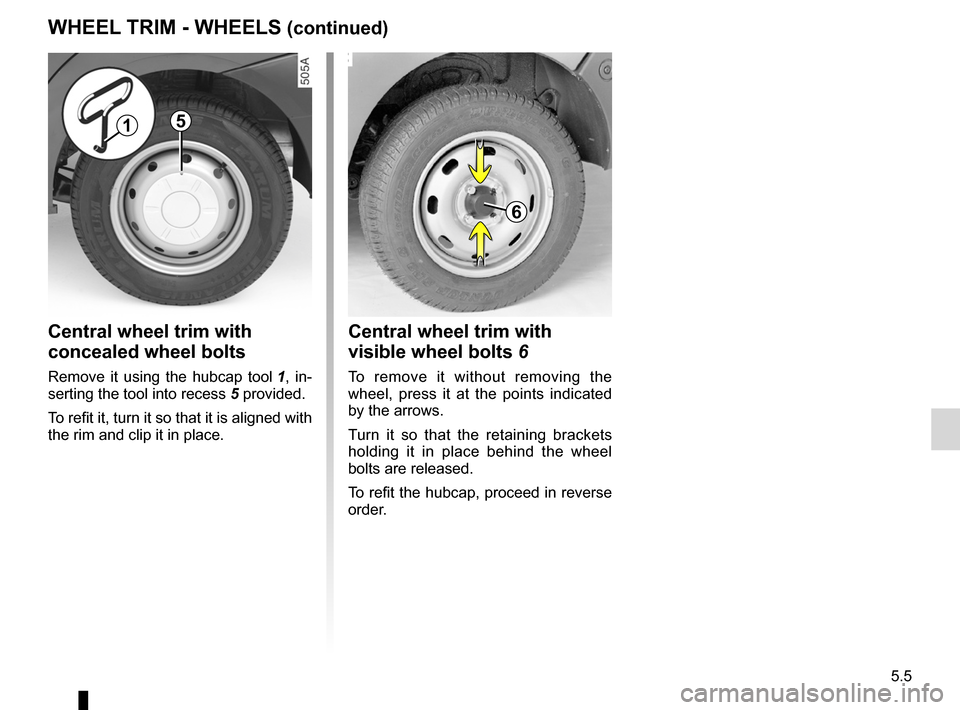
Central wheel trim with
concealed wheel bolts
Remove it using the hubcap tool 1, in-
serting the tool into recess 5 provided.
To refit it, turn it so that it is aligned with the rim and clip it in place.
Central wheel trim with
visible wheel bolts
6
To remove it without removing the wheel, press it at the points indicated by the arrows.
Turn it so that the retaining brackets holding it in place behind the wheel bolts are released.
To refit the hubcap, proceed in reverse order.
15
6