key DODGE SPRINTER 2006 1.G Repair Manual
[x] Cancel search | Manufacturer: DODGE, Model Year: 2006, Model line: SPRINTER, Model: DODGE SPRINTER 2006 1.GPages: 330, PDF Size: 10.82 MB
Page 249 of 330

WHAT TO DO IN EMERGENCIES 249
6
*Vehicle Type 2500 onlyIf the Engine is Damaged
For towing distances up to 30 miles (about 50 km)
Shift gear selector lever to "N" position.
Do not exceed a towing speed of 30 mph (50 km / h).
For towing distances greater than 30 miles (about
50 km)
Remove the propeller shafts leading to the drive
axles.
The vehicle can be towed without restriction.
If the Transmission is Damaged
Remove the propeller shafts leading to the drive
axles.
If the Front Axle is Damaged
Raise the front axle.
Observe the same towing restrictions as for engine
damage.
If the Rear Axle is Damaged
Raise the rear axle.
NOTE: Comply with local legal regulations regarding
towing vehicles.
WARNING!
Do not tow the vehicle if the key cannot be turned
in the ignition lock.
If the key cannot be turned, the ignition lock re-
mains locked and the vehicle cannot be steered.
With the engine not running there is no power
assistance for the braking and steering systems.
In this case, it is important to keep in mind that a
considerably higher degree of effort is necessary
to brake and steer the vehicle.
The vehicle must not be towed with the front axle
raised and the key in position 2 in the ignition
lock as the drive wheels could then lock due to the
acceleration skid control (ASR) or the optional
Electronic Stability Program (ESP
®)*.
Page 256 of 330

256 MAINTAINING YOUR VEHICLE
Disposal of Service Products
Dispose of service products and of parts which come
into contact with them (e.g. filters) in an
environmentally responsible manner. Comply with
applicable bars and regulations.
EMISSION RELATED COMPONENT WARRANTY
STATEMENT
The Manufacturer warrants to the original and each
subsequent owner of a Sprinter heavy-duty on
highway diesel engine that:
(1) the engine was designed, built and equipped so as
to conform at the time of sale with the applicable
regulations adopted by the Federal Environmental
Protection Agency, and
(2) the emission control system of such engine is free
from defects in materials and workmanship which
would cause it not to conform with those regulations
for a period of use of five years or 100 000 miles or
3 000 hours of engine operation, whichever occurs
first.REGULAR CHECKS
WARNING!
When the hood is open, there is a risk of injury
due to very hot engine components.
When the engine is running or the key is in posi-
tion 2 in the ignition lock, there is a risk of injury
due to moving engine components and the electri-
cal system.
If you see flames or smoke coming from the
engine compartment, or if the coolant temperature
gauge indicates that the engine is overheated, do
not open the hood. Move away from vehicle and
do not open the hood until the engine has cooled.
If necessary, call the fire department.
Page 264 of 330

264 MAINTAINING YOUR VEHICLE
Open the hood.
At first, only turn the pressure cap on coolant
reservoir to the first detent to release the pressure
from the cooling system. Only then should the
pressure cap be removed completely.
To add coolant:
If the engine is cold:
Add coolant until the coolant level reaches the base
area which is visible through the filler opening (area
moistened).If the engine is already at its regular operating
temperature:
Add coolant until the coolant level is about 0.6 inch
(1.5 cm) above the base area which is visible
through the filler opening.
Replace and tighten the pressure cap on coolant
reservoir.
If a large quantity of coolant has been lost, or if smaller
amounts are lost at regular intervals, have the engine
cooling system examined by an authorized Sprinter
Dealer.
For coolant composition and water quality, contact
your Sprinter Dealer.
WARNING!
Do not spill antifreeze on hot engine parts. Anti-
freeze contains ethylene glycol which may burn
if it comes into contact with hot engine parts.
Check coolant level only with the engine
switched off and the key in position 0 in the
ignition lock.
Page 266 of 330
266 MAINTAINING YOUR VEHICLE
The auxiliary battery is located underneath the front
passenger seat (optional equipment).
The battery will not achieve its maximum service life
unless it is kept adequately charged at all times. If the
vehicle is used primarily for short distances, or left
parked for lengthy periods, have the battery charge
checked more frequently.
Disconnecting the BatteryReconnecting the Battery
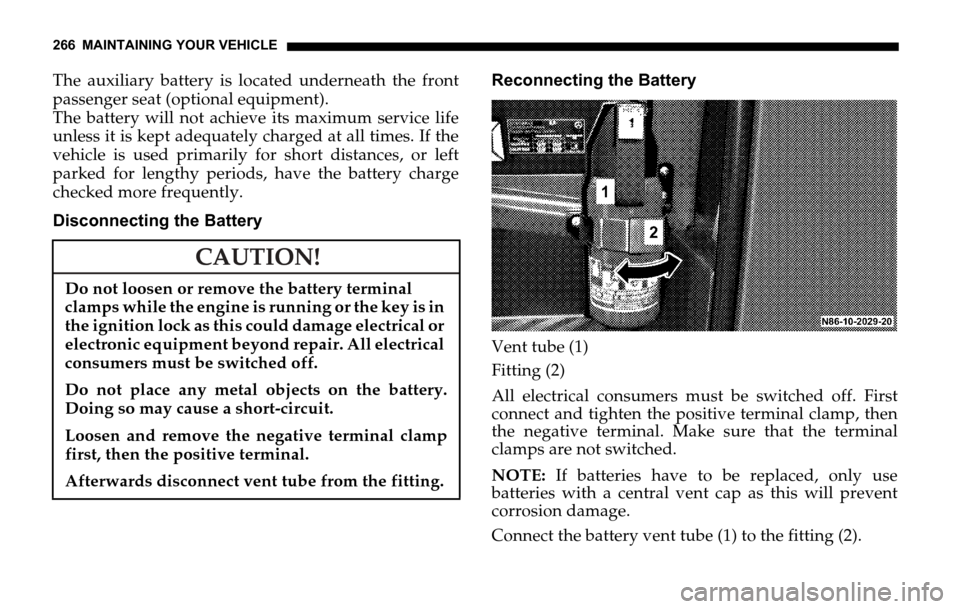
Vent tube (1)
Fitting (2)
All electrical consumers must be switched off. First
connect and tighten the positive terminal clamp, then
the negative terminal. Make sure that the terminal
clamps are not switched.
NOTE: If batteries have to be replaced, only use
batteries with a central vent cap as this will prevent
corrosion damage.
Connect the battery vent tube (1) to the fitting (2).
CAUTION!
Do not loosen or remove the battery terminal
clamps while the engine is running or the key is in
the ignition lock as this could damage electrical or
electronic equipment beyond repair. All electrical
consumers must be switched off.
Do not place any metal objects on the battery.
Doing so may cause a short-circuit.
Loosen and remove the negative terminal clamp
first, then the positive terminal.
Afterwards disconnect vent tube from the fitting.
Page 274 of 330
274 MAINTAINING YOUR VEHICLE
Window Cleaning
Use a window cleaning solution on all glass surfaces.
An automotive glass cleaner is recommended.
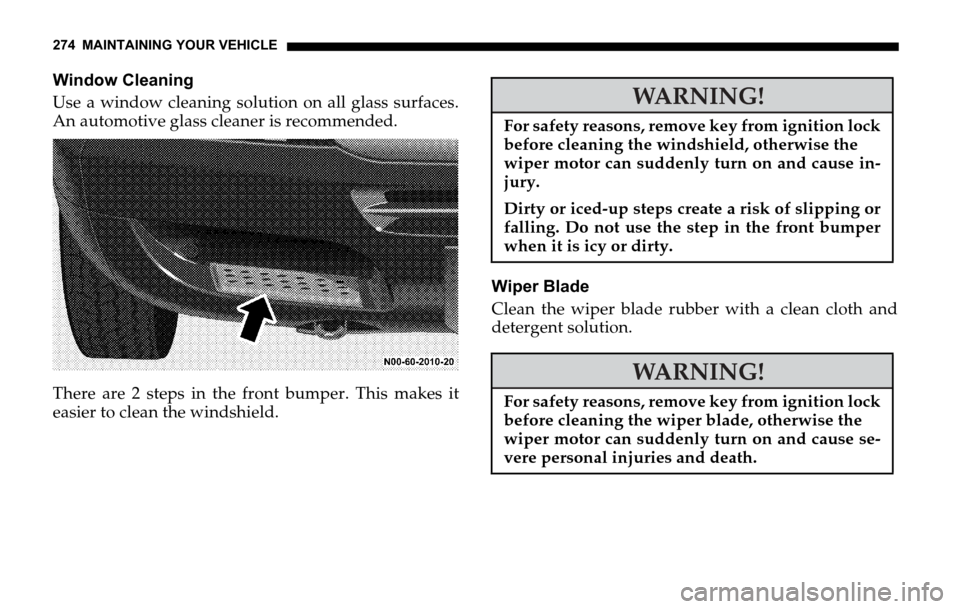
There are 2 steps in the front bumper. This makes it
easier to clean the windshield.Wiper Blade
Clean the wiper blade rubber with a clean cloth and
detergent solution.
WARNING!
For safety reasons, remove key from ignition lock
before cleaning the windshield, otherwise the
wiper motor can suddenly turn on and cause in-
jury.
Dirty or iced-up steps create a risk of slipping or
falling. Do not use the step in the front bumper
when it is icy or dirty.
WARNING!
For safety reasons, remove key from ignition lock
before cleaning the wiper blade, otherwise the
wiper motor can suddenly turn on and cause se-
vere personal injuries and death.
Page 276 of 330

276 MAINTAINING YOUR VEHICLE
Upholstery
Using aftermarket seat covers or wearing clothing that
have the tendency to give off coloring (e.g. when wet
etc.) may cause the upholstery to become permanently
discolored. By lining the seats with a proper
intermediate cover, contact discoloration will be
prevented.
Leather Upholstery
Wipe leather upholstery with a damp cloth and dry
thoroughly or clean with a leather care product.
Exercise particular care when cleaning perforated
leather as its underside should not become wet.
Cloth Upholstery
Clean with soft bristle brush, or use a dry-shampoo
cleaner in case of excessive dirt.
Tex Upholstery
Pour an interior care product onto soft lint-free cloth
and apply with light pressure.
Hard Plastic Trim Items
Pour an interior care product onto soft lint-free cloth
and apply with light pressure.Plastic and Rubber Parts
Do not use oil or wax on these parts.
Do not use any caustic or alcohol-based or solvent-
based substances to clean plastic surfaces.
Avoid the use of stain removers, iodine tincture, nail
varnish and nail varnish remover, acetone, methylated
spirits, chlorine or ammonium-based cleaning agents,
cleaning agents containing abrasive substances.
ELECTRICAL FUSES
Damaged fuses are recognizable from their burnt-out
filament.
Prior to exchanging a fuse, turn the key in the ignition-
column lock to the 0 position and switch off the
consumer involved.
NOTE: Fuses must not be bridged. Replace fuses with
specified rated current. Only replace fuses when the
cause of the malfunction has been rectified.
NOTE: Fuses and relays (standard equipment) are on
the underside of the ignition column, refer to "Fuses
and Relays Standard Equipment".
Page 318 of 330

318 INDEX
ASSYST . . . . . . . . . . . . . . . . . . . . . . . . . . . . . . . . . . . . . 305
ASSYST Maintenance Computer . . . . . . . . . . . . . . . 112
Automatic Lock Feature . . . . . . . . . . . . . . . . . . . . . . . . 19
Automatic Transmission . . . . . . . . . . . . . . . . . . . . . . 148
Accelerator Position . . . . . . . . . . . . . . . . . . . . . . . . 149
Driving . . . . . . . . . . . . . . . . . . . . . . . . . . . . . . . . . . . 148
Gear Selector Lever Position . . . . . . . . . . . . . . . . . 150
Maneuvering . . . . . . . . . . . . . . . . . . . . . . . . . . . . . . 149
Selector Lever Manually Unlocking. . . . . . . . . . . 153
Stopping . . . . . . . . . . . . . . . . . . . . . . . . . . . . . . . . . . 149
Auxiliary Drive . . . . . . . . . . . . . . . . . . . . . . . . . . . . . . 175
Auxiliary Heat Exchanger . . . . . . . . . . . . . . . . . . . . . 139
Auxiliary Heater
Settings . . . . . . . . . . . . . . . . . . . . . . . . . . . . . . . . . . . 138
Timer Auxiliary Heater (Water and Air Heater) 134
Tips for Coping with Problems . . . . . . . . . . . . . . 140
BBatteries. . . . . . . . . . . . . . . . . . . . . . . . . . . . . . . . . . . . . 265
Charging the Battery . . . . . . . . . . . . . . . . . . . . . . . 267
Disconnecting the Battery . . . . . . . . . . . . . . . . . . . 266
Reconnecting the Battery . . . . . . . . . . . . . . . . . . . . 266
Replacing Batteries in Remote Keyless Entry . . . . 22Battery Charge Indicator Lamp . . . . . . . . . . . . . . . . . 106
Belt Tensioners
Location . . . . . . . . . . . . . . . . . . . . . . . . . . . . . . . . . . . 49
Belt Tensioners and Airbag . . . . . . . . . . . . . . . . . . . . . 49
Bleeding the Diesel Fuel System . . . . . . . . . . . . . . . . 216
Body Builder Guideline . . . . . . . . . . . . . . . . . . . . . . . 229
Brake Assist System (BAS) . . . . . . . . . . . . . . . . . . . . . 172
Brake fluid. . . . . . . . . . . . . . . . . . . . . . . . . . . . . . . . . . . 261
Brake Fluid Reservoir . . . . . . . . . . . . . . . . . . . . . . . . . 261
Brake Indicator Lamp . . . . . . . . . . . . . . . . . . . . . . . . . 160
Brake Pad Wear Indicator. . . . . . . . . . . . . . . . . . . . . . 159
Brake System . . . . . . . . . . . . . . . . . . . . . . . . . . . . . . . . 167
Fluid Level . . . . . . . . . . . . . . . . . . . . . . . . . . . . . . . . 261
Brake System, Anti-Lock . . . . . . . . . . . . . . . . . . . . . . 165
Brakes . . . . . . . . . . . . . . . . . . . . . . . . . . . . . . . . . . . . . . 158
Brake Fluid . . . . . . . . . . . . . . . . . . . . . . . . . . . . . . . . 261
Service Brake . . . . . . . . . . . . . . . . . . . . . . . . . . . . . . 158
Bulbs
Bulb Replacement . . . . . . . . . . . . . . . . . . . . . . . . . . 284
Front Lamp Unit . . . . . . . . . . . . . . . . . . . . . . . . . . . 284
CCapacities . . . . . . . . . . . . . . . . . . . . . . . . . . . . . . . . . . . 296
Page 325 of 330

INDEX 325
10
Radio Transmitters . . . . . . . . . . . . . . . . . . . . . . . . . . . . 84
Rear Cargo Doors . . . . . . . . . . . . . . . . . . . . . . . . . . . . . 33
Rear Seat Bench . . . . . . . . . . . . . . . . . . . . . . . . . . . . . . . 64
Removal and Installation . . . . . . . . . . . . . . . . . . . . . 64
Recommended Fluids and Lubricants . . . . . . . . . . . 297
Recommended Tire Inflation Pressure . . . . . . . . . . . 186
Refueling . . . . . . . . . . . . . . . . . . . . . . . . . . . . . . . . . . . . 212
Regular Checks . . . . . . . . . . . . . . . . . . . . . . . . . . . . . . 256
Relay Assignment, Standard Equipment . . . . . . . . . 281
Remote Keyless Entry . . . . . . . . . . . . . . . . . . . . . . . . . . 20
Locking . . . . . . . . . . . . . . . . . . . . . . . . . . . . . . . . . . . . 22
Replacing Batteries . . . . . . . . . . . . . . . . . . . . . . . . . . 22
Unlocking . . . . . . . . . . . . . . . . . . . . . . . . . . . . . . . . . . 21
Removing a Wheel . . . . . . . . . . . . . . . . . . . . . . . . . . . 242
Replacing Wiper Blades . . . . . . . . . . . . . . . . . . . . . . . 268
Reporting safety Defects . . . . . . . . . . . . . . . . . . . . . . . 315
Reserve Fuel Indicator Lamp . . . . . . . . . . . . . . . . . . . 105
Residual Engine Heat Utilization . . . . . . . . . . . . . . . 124
Residual Engine Heat Utilization (REST) . . . . . . . . 124
Restraints, Occupant . . . . . . . . . . . . . . . . . . . . . . . . . . . 39
Retrofitting Seat Mounting Cups . . . . . . . . . . . . . . . . 65Reversing Aid
Audible Warning . . . . . . . . . . . . . . . . . . . . . . . . . . 102
Ribbed V-Belt . . . . . . . . . . . . . . . . . . . . . . . . . . . . . . . . 260
Roof Load . . . . . . . . . . . . . . . . . . . . . . . . . . . . . . . . . . . 216
Rotating Tires . . . . . . . . . . . . . . . . . . . . . . . . . . . . . . . . 204
RPMs, Constant . . . . . . . . . . . . . . . . . . . . . . . . . . . . . . 146
SSafety Tips. . . . . . . . . . . . . . . . . . . . . . . . . . . . . . . . . . . . 53
Seat Belt Warning Lamp and Airbag Malfunction . . 44
Seat Belts
Belt Tensioners . . . . . . . . . . . . . . . . . . . . . . . . . . . . . 49
Fastening and Removing . . . . . . . . . . . . . . . . . . . . . 45
Height Adjustment . . . . . . . . . . . . . . . . . . . . . . . . . . 46
Seat Heater . . . . . . . . . . . . . . . . . . . . . . . . . . . . . . . . . . . 63
Seats
Adjustment . . . . . . . . . . . . . . . . . . . . . . . . . . . . . . . . 60
Armrest . . . . . . . . . . . . . . . . . . . . . . . . . . . . . . . . . . . . 62
Driver’s and Front Passenger’s Seat . . . . . . . . . . . . 60
Folding Seat . . . . . . . . . . . . . . . . . . . . . . . . . . . . . . . . 63
Head Restraint . . . . . . . . . . . . . . . . . . . . . . . . . . . . . . 62
Heater . . . . . . . . . . . . . . . . . . . . . . . . . . . . . . . . . . . . . 63
Lumbar Support . . . . . . . . . . . . . . . . . . . . . . . . . . . . 61