fuse DODGE VIPER 2016 VX / 3.G User Guide
[x] Cancel search | Manufacturer: DODGE, Model Year: 2016, Model line: VIPER, Model: DODGE VIPER 2016 VX / 3.GPages: 423, PDF Size: 2.75 MB
Page 375 of 423
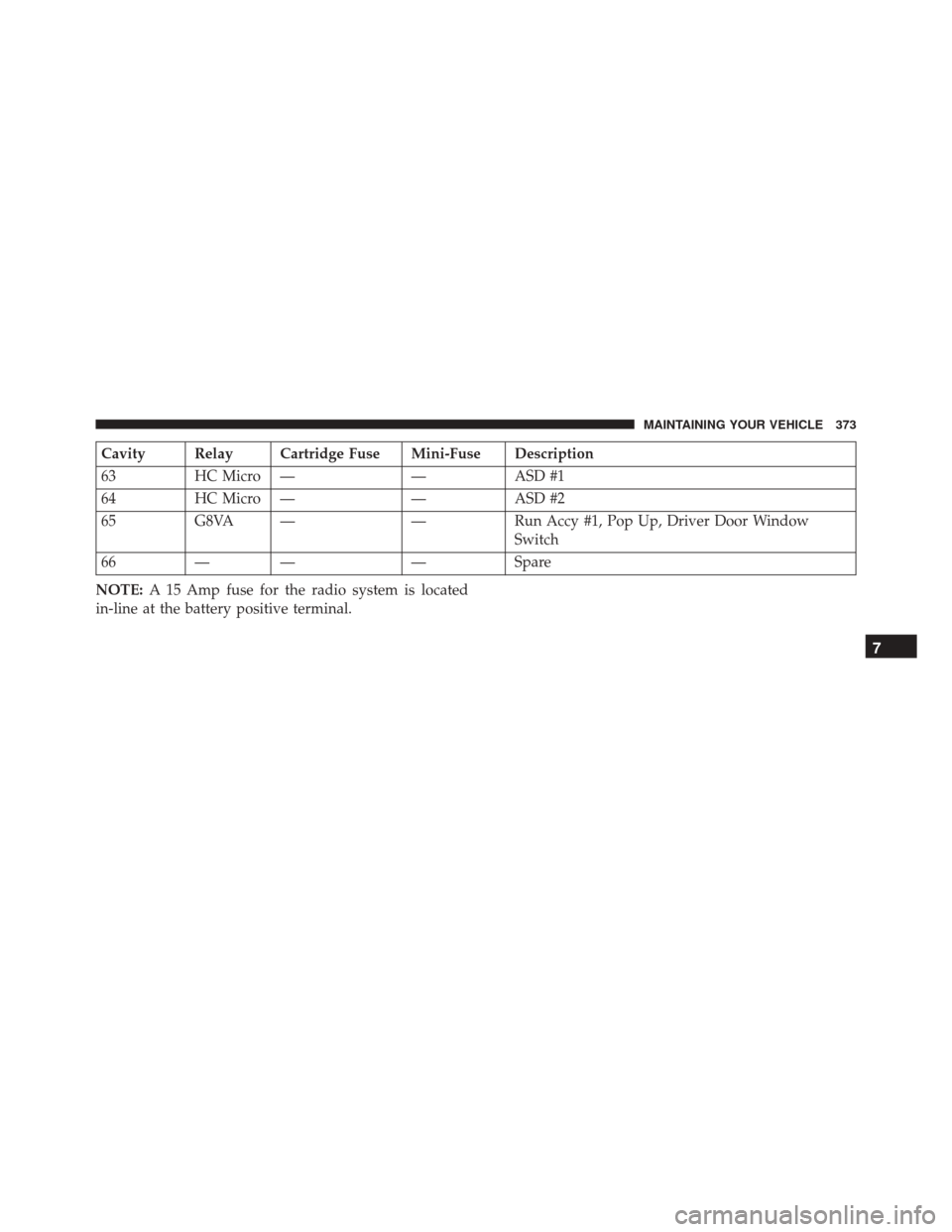
Cavity Relay Cartridge Fuse Mini-Fuse Description
63HC Micro — —ASD #1
64 HC Micro — —ASD #2
65 G8VA — —Run Accy #1, Pop Up, Driver Door Window
Switch
66 — — —Spare
NOTE: A 15 Amp fuse for the radio system is located
in-line at the battery positive terminal.
7
MAINTAINING YOUR VEHICLE 373
Page 376 of 423
CAUTION!
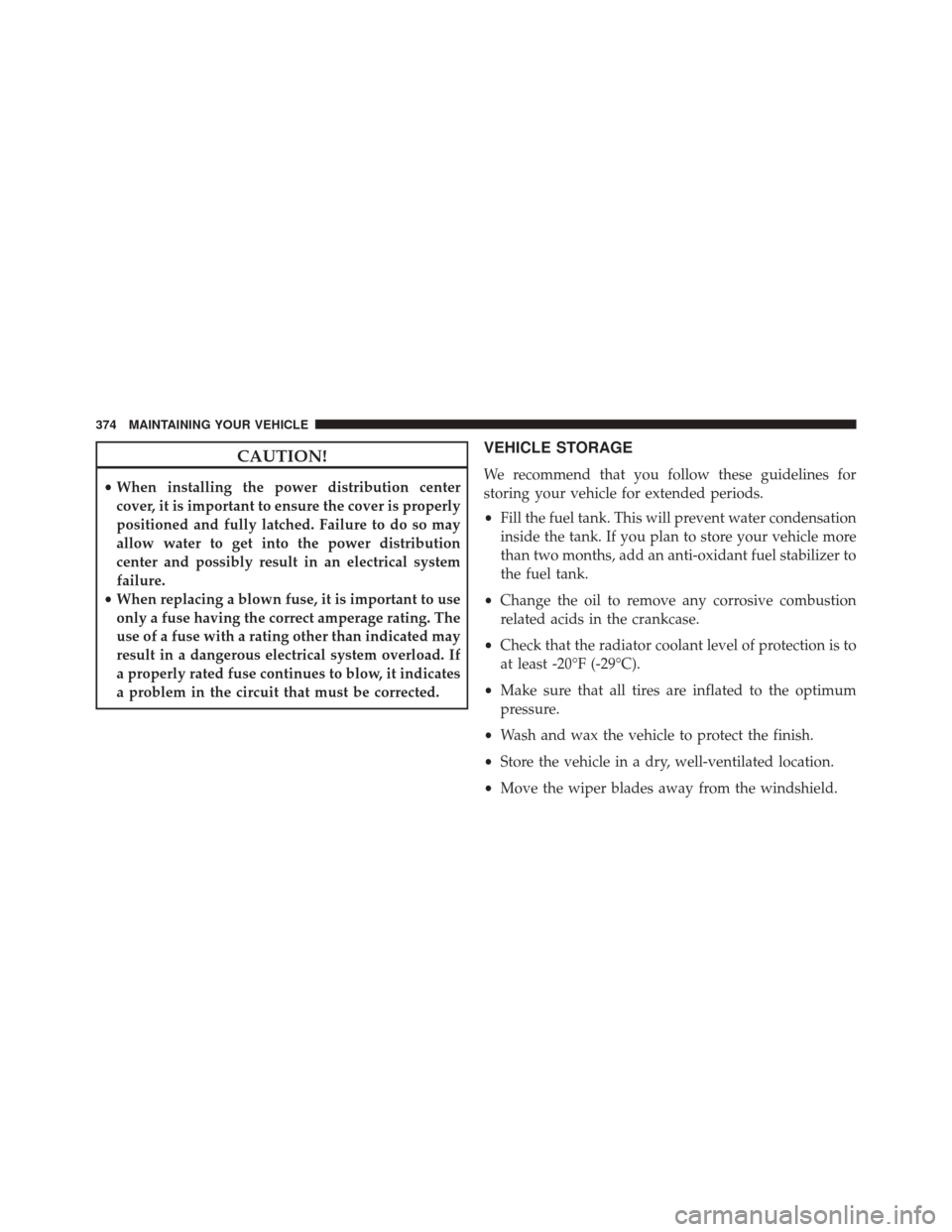
•When installing the power distribution center
cover, it is important to ensure the cover is properly
positioned and fully latched. Failure to do so may
allow water to get into the power distribution
center and possibly result in an electrical system
failure.
• When replacing a blown fuse, it is important to use
only a fuse having the correct amperage rating. The
use of a fuse with a rating other than indicated may
result in a dangerous electrical system overload. If
a properly rated fuse continues to blow, it indicates
a problem in the circuit that must be corrected.
VEHICLE STORAGE
We recommend that you follow these guidelines for
storing your vehicle for extended periods.
• Fill the fuel tank. This will prevent water condensation
inside the tank. If you plan to store your vehicle more
than two months, add an anti-oxidant fuel stabilizer to
the fuel tank.
• Change the oil to remove any corrosive combustion
related acids in the crankcase.
• Check that the radiator coolant level of protection is to
at least -20°F (-29°C).
• Make sure that all tires are inflated to the optimum
pressure.
• Wash and wax the vehicle to protect the finish.
• Store the vehicle in a dry, well-ventilated location.
• Move the wiper blades away from the windshield.
374 MAINTAINING YOUR VEHICLE
Page 411 of 423
Turn Signal..................... .88, 108, 167
Flash-To-Pass ........................... .109
Flooded Engine Starting ....................240
Fluid Capacities ......................... .380
Fluid Leaks ..............................88
Fluid Level Checks Brake ........................... .355, 383
Capacities ........................... .380
Clutch Fluid .......................... .358
Cooling System ........................ .349
Engine Oil ........................... .337
Manual Transmission .................357, 383
Power Steering ..................... .254, 383
Fluids, Lubricants And Genuine Parts ...........381
Four-Way Hazard Flasher ...................310
Freeing A Stuck Vehicle .....................327
Fuel .................................. .297
Additives ............................ .299Clean Air
............................ .297
Ethanol ............................. .298
Gasoline ............................. .297
Light ............................... .165
Materials Added ....................... .299
Methanol ............................ .298
Octane Rating ..................... .297, 381
Requirements ...................... .297, 380
Tank Capacity ......................... .380
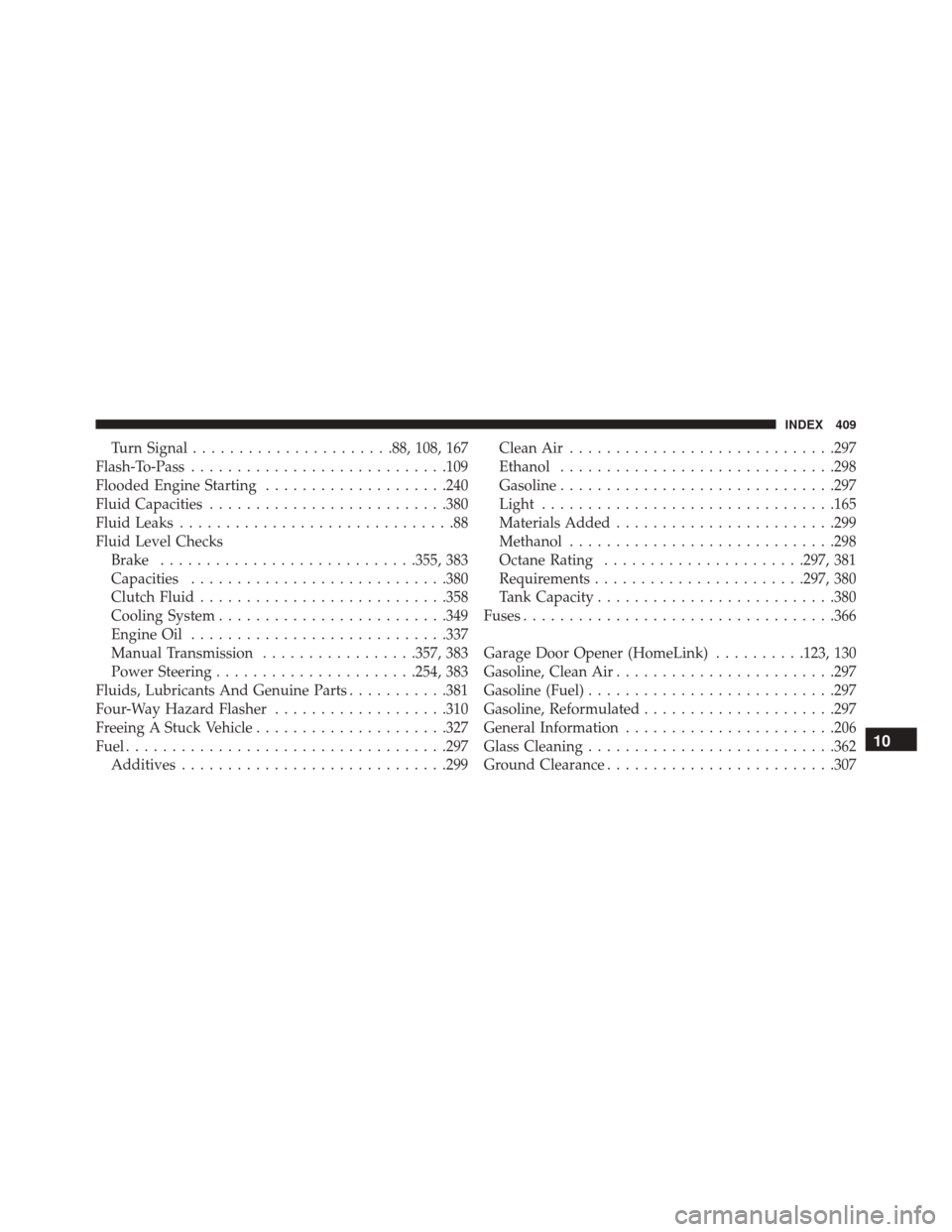
Fuses ................................. .366
Garage Door Opener (HomeLink) ..........123, 130
Gasoline, Clean Air ....................... .297
Gasoline (Fuel) .......................... .297
Gasoline, Reformulated .....................297
General Information ...................... .206
Glass Cleaning .......................... .362
Ground Clearance ........................ .307
10
INDEX 409
Page 422 of 423

INSTALLATION OF RADIO TRANSMITTING
EQUIPMENT
Special design considerations are incorporated into this
vehicle’s electronic system to provide immunity to radio
frequency signals. Mobile two-way radios and telephone
equipment must be installed properly by trained person-
nel. The following must be observed during installation.
The positive power connection should be made directly
to the battery and fused as close to the battery as possible.
The negative power connection should be made to body
sheet metal adjacent to the negative battery connection.
This connection should not be fused.
Antennas for two-way radios should be mounted on the
roof or the rear area of the vehicle. Care should be used
in mounting antennas with magnet bases. Magnets may
affect the accuracy or operation of the compass on
vehicles so equipped.The antenna cable should be as short as practical and
routed away from the vehicle wiring when possible. Use
only fully shielded coaxial cable.
Carefully match the antenna and cable to the radio to
ensure a low Standing Wave Ratio (SWR).
Mobile radio equipment with output power greater than
normal may require special precautions.
All installations should be checked for possible interfer-
ence between the communications equipment and the
vehicle’s electronic systems.