battery FIAT 500L 2015 2.G Owner's Guide
[x] Cancel search | Manufacturer: FIAT, Model Year: 2015, Model line: 500L, Model: FIAT 500L 2015 2.GPages: 438, PDF Size: 12.64 MB
Page 423 of 438
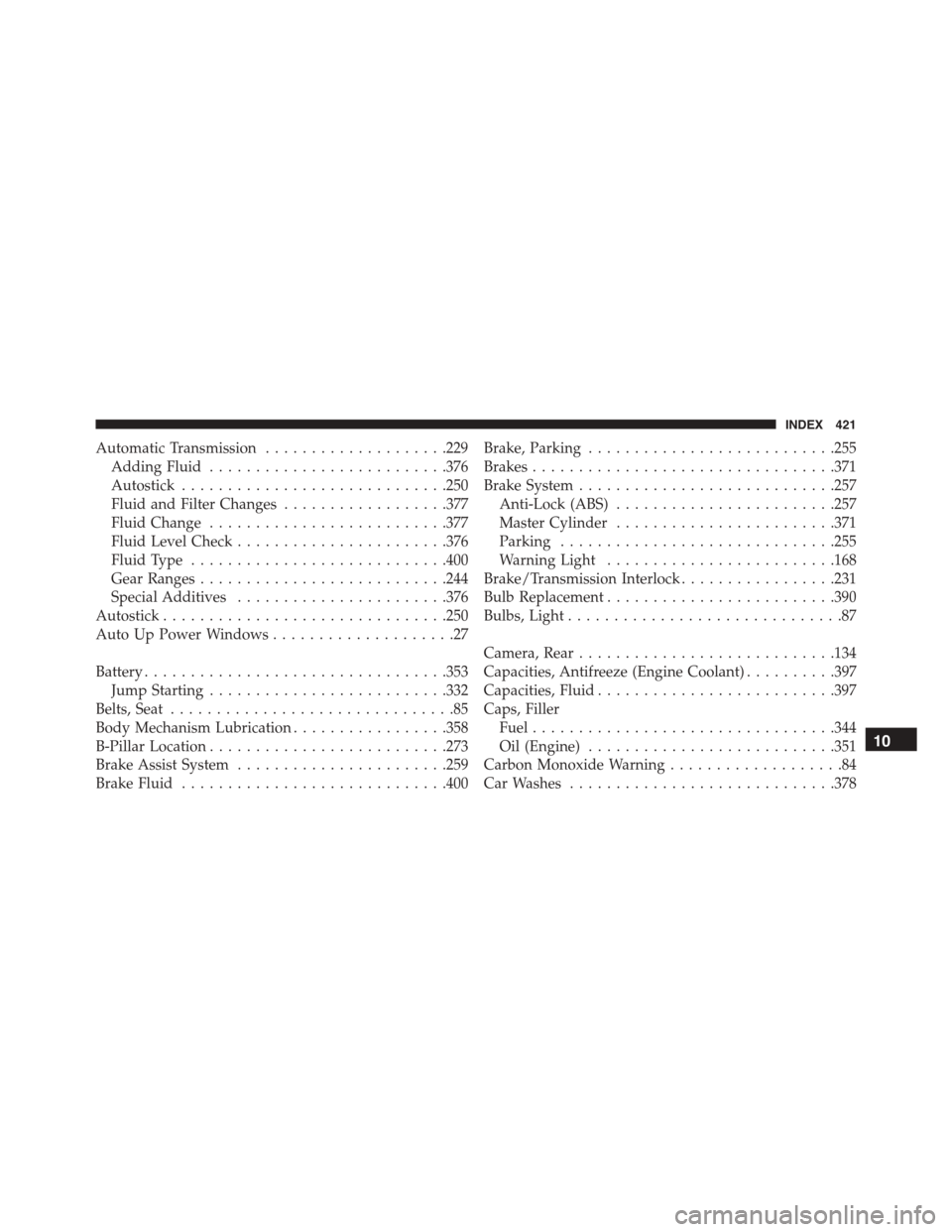
Automatic Transmission....................229
Adding Fluid..........................376
Autostick.............................250
Fluid and Filter Changes..................377
Fluid Change..........................377
Fluid Level Check.......................376
Fluid Type............................400
Gear Ranges...........................244
Special Additives.......................376
Autostick...............................250
Auto Up Power Windows....................27
Battery.................................353
Jump Starting..........................332
Belts, Seat...............................85
Body Mechanism Lubrication.................358
B-Pillar Location..........................273
Brake Assist System.......................259
Brake Fluid.............................400
Brake, Parking...........................255
Brakes.................................371
Brake System............................257
Anti-Lock (ABS)........................257
Master Cylinder........................371
Parking..............................255
Warning Light.........................168
Brake/Transmission Interlock.................231
Bulb Replacement.........................390
Bulbs, Light..............................87
Camera, Rear............................134
Capacities, Antifreeze (Engine Coolant)..........397
Capacities, Fluid..........................397
Caps, Filler
Fuel.................................344
Oil (Engine)...........................351
Carbon Monoxide Warning...................84
Car Washes.............................378
10
INDEX 421
Page 430 of 438
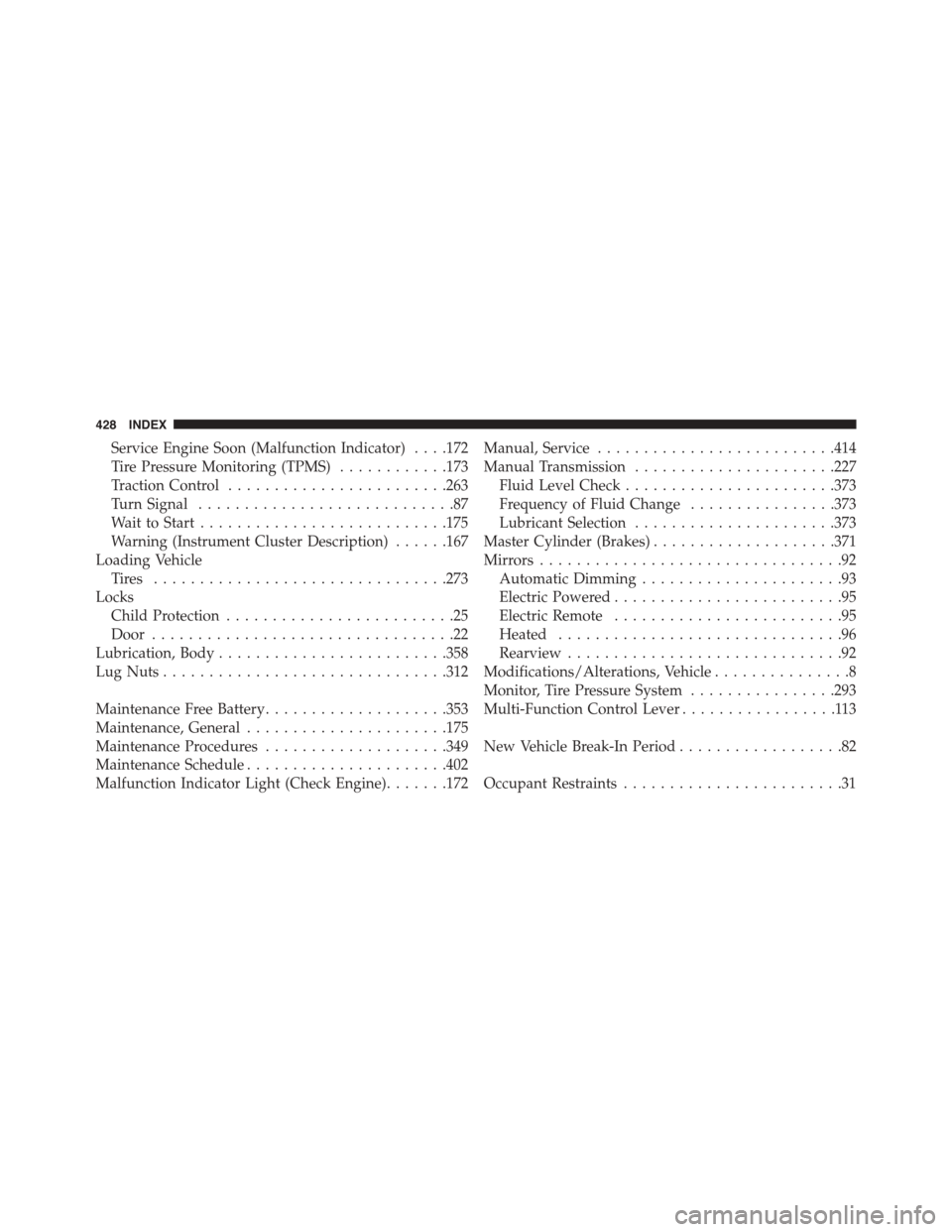
Service Engine Soon (Malfunction Indicator) . . . .172
Tire Pressure Monitoring (TPMS)............173
Traction Control........................263
Turn Signal............................87
Wait to Start...........................175
Warning (Instrument Cluster Description)......167
Loading Vehicle
Ti re s . . . . . . . . . . . . . . . . . . . . . . . . . . . . . . ..273
Locks
Child Protection.........................25
Door.................................22
Lubrication, Body.........................358
Lug Nuts...............................312
Maintenance Free Battery....................353
Maintenance, General......................175
Maintenance Procedures....................349
Maintenance Schedule......................402
Malfunction Indicator Light (Check Engine).......172
Manual, Service..........................414
Manual Transmission......................227
Fluid Level Check.......................373
Frequency of Fluid Change................373
Lubricant Selection......................373
Master Cylinder (Brakes)....................371
Mirrors.................................92
Automatic Dimming......................93
Electric Powered.........................95
Electric Remote.........................95
Heated...............................96
Rearview..............................92
Modifications/Alterations, Vehicle...............8
Monitor, Tire Pressure System................293
Multi-Function Control Lever.................113
New Vehicle Break-In Period..................82
Occupant Restraints........................31
428 INDEX
Page 437 of 438

INSTALLATION OF RADIO TRANSMITTING
EQUIPMENT
Special design considerations are incorporated into this
vehicle’s electronic system to provide immunity to radio
frequency signals. Mobile two-way radios and telephone
equipment must be installed properly by trained person-
nel. The following must be observed during installation.
The positive power connection should be made directly
to the battery and fused as close to the battery as possible.
The negative power connection should be made to body
sheet metal adjacent to the negative battery connection.
This connection should not be fused.
Antennas for two-way radios should be mounted on the
roof or the rear area of the vehicle. Care should be used
in mounting antennas with magnet bases. Magnets may
affect the accuracy or operation of the compass on
vehicles so equipped.
The antenna cable should be as short as practical and
routed away from the vehicle wiring when possible. Use
only fully shielded coaxial cable.
Carefully match the antenna and cable to the radio to
ensure a low Standing Wave Ratio (SWR).
Mobile radio equipment with output power greater than
normal may require special precautions.
All installations should be checked for possible interfer-
ence between the communications equipment and the
vehicle’s electronic systems.