brake light FIAT IDEA 2009 1.G Owner's Manual
[x] Cancel search | Manufacturer: FIAT, Model Year: 2009, Model line: IDEA, Model: FIAT IDEA 2009 1.GPages: 210, PDF Size: 3.62 MB
Page 132 of 210
131
STARTING
AND DRIVING
IN AN
EMERGENCY
MAINTENANCE
AND CARE
TECHNICAL
SPECIFICATIONS
ALPHABETICAL
INDEX
DASHBOARD
AND
CONTROLS
SAFETY
WARNING
LIGHTS AND
MESSAGES
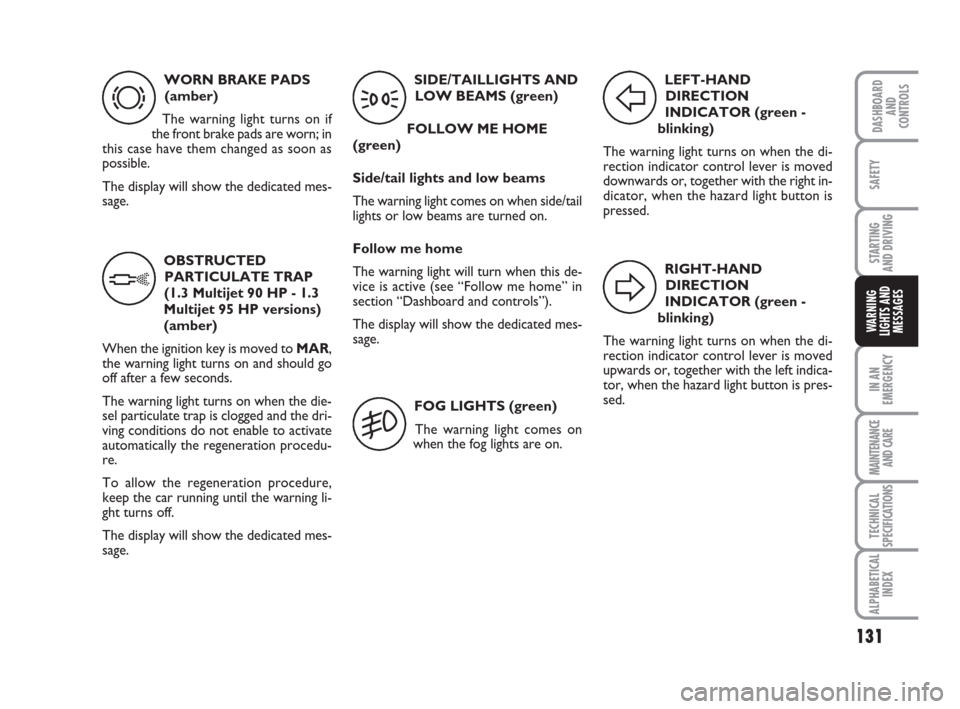
WORN BRAKE PADS
(amber)
The warning light turns on if
the front brake pads are worn; in
this case have them changed as soon as
possible.
The display will show the dedicated mes-
sage.
d
OBSTRUCTED
PARTICULATE TRAP
(1.3 Multijet 90 HP - 1.3
Multijet 95 HP versions)
(amber)
When the ignition key is moved to MAR,
the warning light turns on and should go
off after a few seconds.
The warning light turns on when the die-
sel particulate trap is clogged and the dri-
ving conditions do not enable to activate
automatically the regeneration procedu-
re.
To allow the regeneration procedure,
keep the car running until the warning li-
ght turns off.
The display will show the dedicated mes-
sage.
h
SIDE/TAILLIGHTS AND
LOW BEAMS (green)
FOLLOW ME HOME
(green)
Side/tail lights and low beams
The warning light comes on when side/tail
lights or low beams are turned on.
Follow me home
The warning light will turn when this de-
vice is active (see “Follow me home” in
section “Dashboard and controls”).
The display will show the dedicated mes-
sage.
3
FOG LIGHTS (green)
The warning light comes on
when the fog lights are on.
5
LEFT-HAND
DIRECTION
INDICATOR (green -
blinking)
The warning light turns on when the di-
rection indicator control lever is moved
downwards or, together with the right in-
dicator, when the hazard light button is
pressed.
F
RIGHT-HAND
DIRECTION
INDICATOR (green -
blinking)
The warning light turns on when the di-
rection indicator control lever is moved
upwards or, together with the left indica-
tor, when the hazard light button is pres-
sed.
D
Page 136 of 210
135
STARTING
AND DRIVING
MAINTENANCE
AND CARE
TECHNICAL
SPECIFICATIONS
ALPHABETICAL
INDEX
DASHBOARD
AND
CONTROLS
SAFETY
WARNING
LIGHTS AND
MESSAGES
IN AN
EMERGENCY
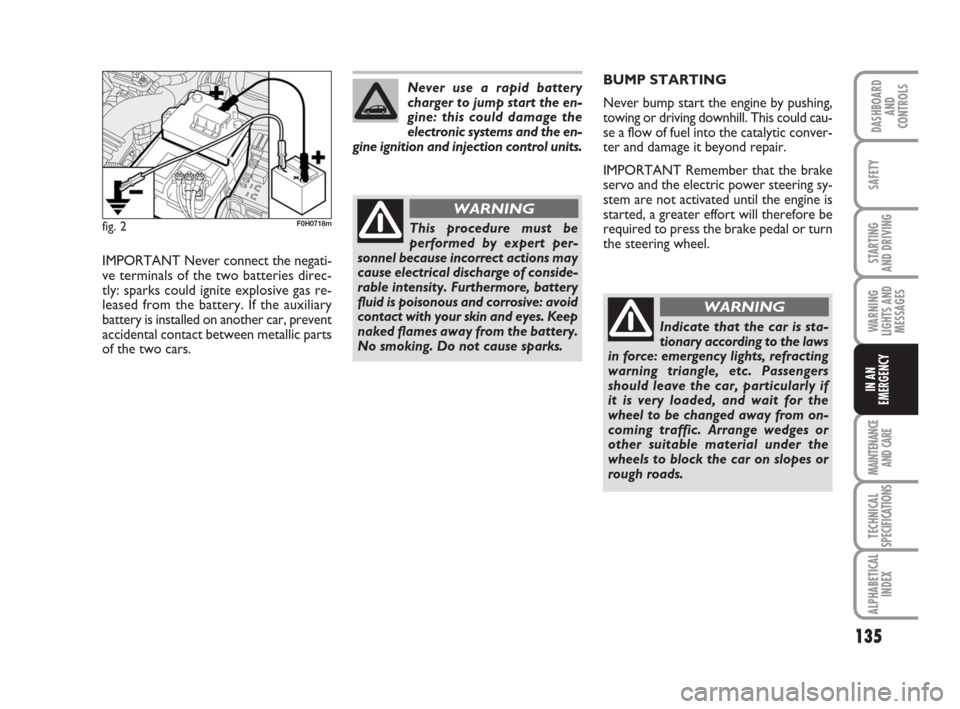
fig. 2F0H0718m
IMPORTANT Never connect the negati-
ve terminals of the two batteries direc-
tly: sparks could ignite explosive gas re-
leased from the battery. If the auxiliary
battery is installed on another car, prevent
accidental contact between metallic parts
of the two cars.
This procedure must be
performed by expert per-
sonnel because incorrect actions may
cause electrical discharge of conside-
rable intensity. Furthermore, battery
fluid is poisonous and corrosive: avoid
contact with your skin and eyes. Keep
naked flames away from the battery.
No smoking. Do not cause sparks.
WARNING
Never use a rapid battery
charger to jump start the en-
gine: this could damage the
electronic systems and the en-
gine ignition and injection control units.BUMP STARTING
Never bump start the engine by pushing,
towing or driving downhill. This could cau-
se a flow of fuel into the catalytic conver-
ter and damage it beyond repair.
IMPORTANT Remember that the brake
servo and the electric power steering sy-
stem are not activated until the engine is
started, a greater effort will therefore be
required to press the brake pedal or turn
the steering wheel.
Indicate that the car is sta-
tionary according to the laws
in force: emergency lights, refracting
warning triangle, etc. Passengers
should leave the car, particularly if
it is very loaded, and wait for the
wheel to be changed away from on-
coming traffic. Arrange wedges or
other suitable material under the
wheels to block the car on slopes or
rough roads.
WARNING
Page 138 of 210
137
STARTING
AND DRIVING
MAINTENANCE
AND CARE
TECHNICAL
SPECIFICATIONS
ALPHABETICAL
INDEX
DASHBOARD
AND
CONTROLS
SAFETY
WARNING
LIGHTS AND
MESSAGES
IN AN
EMERGENCY
The kit cannot be used to re-
pair damage to the tyre si-
dewall. Do not use the quick repair
kit if the tyre was damaged by run-
ning on a flat.
WARNING
The damage cannot be re-
paired with the kit if the
wheel rim is damaged (deformation
of the channel causing leakage of air).
Do not remove the foreign body
(screw or nail) from the tyre.
WARNING
Do not operate the com-
pressor for longer than 20
minutes consecutively. Risk of
overheating. The quick repair kit is
not suitable for definitive repairs. The
tyres may only be repaired tempora-
rily.
WARNING
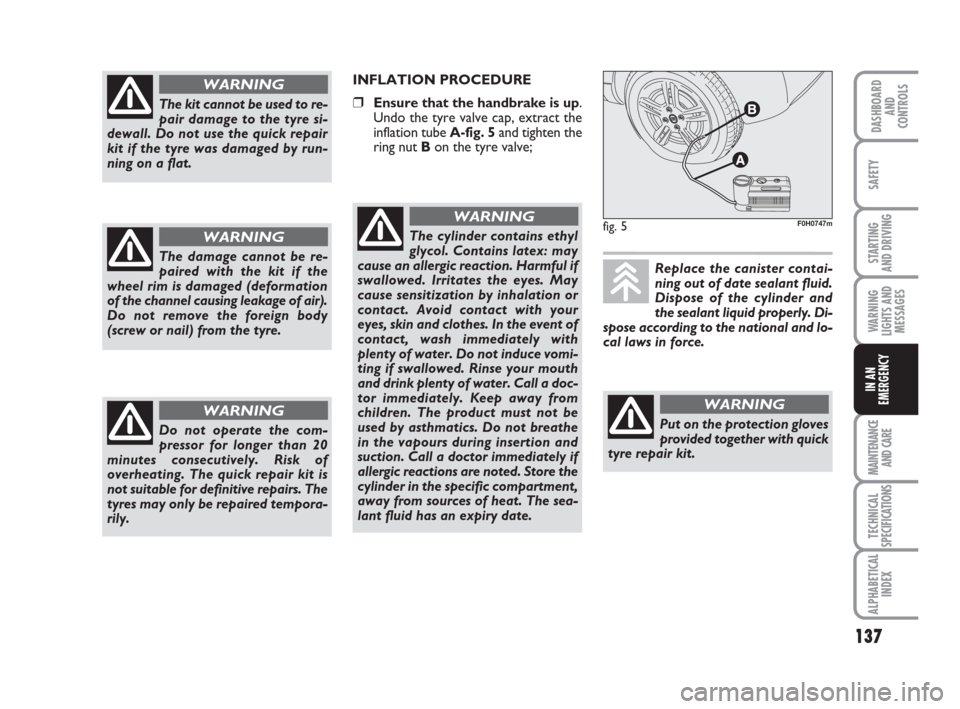
INFLATION PROCEDURE
❒Ensure that the handbrake is up.
Undo the tyre valve cap, extract the
inflation tube A-fig. 5and tighten the
ring nut Bon the tyre valve;
fig. 5F0H0747mThe cylinder contains ethyl
glycol. Contains latex: may
cause an allergic reaction. Harmful if
swallowed. Irritates the eyes. May
cause sensitization by inhalation or
contact. Avoid contact with your
eyes, skin and clothes. In the event of
contact, wash immediately with
plenty of water. Do not induce vomi-
ting if swallowed. Rinse your mouth
and drink plenty of water. Call a doc-
tor immediately. Keep away from
children. The product must not be
used by asthmatics. Do not breathe
in the vapours during insertion and
suction. Call a doctor immediately if
allergic reactions are noted. Store the
cylinder in the specific compartment,
away from sources of heat. The sea-
lant fluid has an expiry date.
WARNING
Replace the canister contai-
ning out of date sealant fluid.
Dispose of the cylinder and
the sealant liquid properly. Di-
spose according to the national and lo-
cal laws in force.
Put on the protection gloves
provided together with quick
tyre repair kit.
WARNING
Page 139 of 210
138
STARTING
AND DRIVING
MAINTENANCE
AND CARE
TECHNICAL
SPECIFICATIONS
ALPHABETICAL
INDEX
DASHBOARD
AND
CONTROLS
SAFETY
WARNING
LIGHTS AND
MESSAGES
IN AN
EMERGENCY
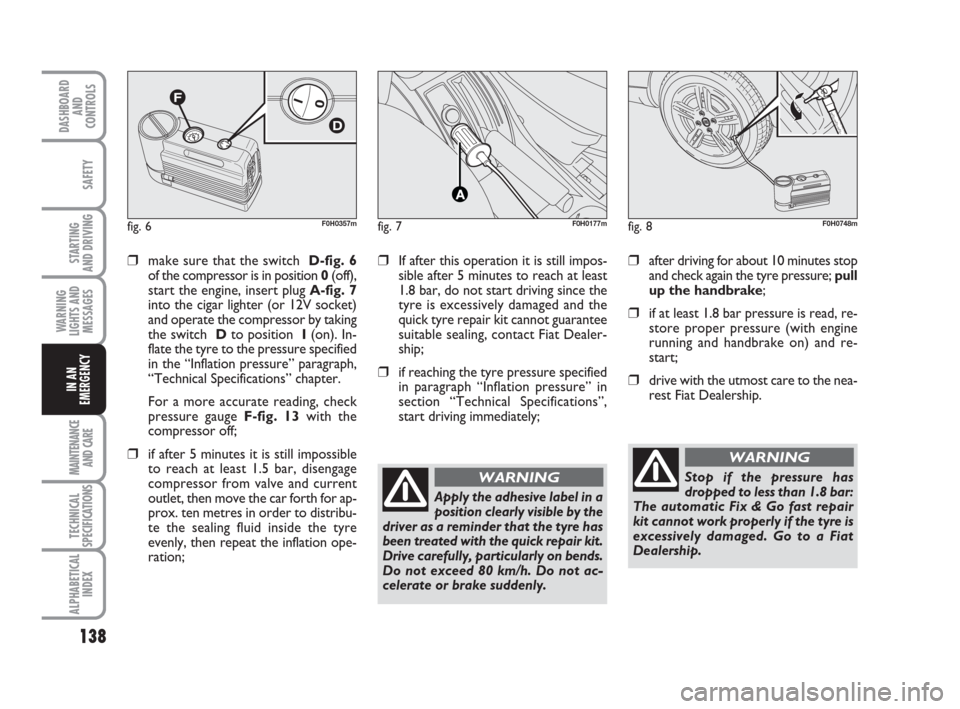
fig. 6F0H0357mfig. 7F0H0177mfig. 8F0H0748m
❒make sure that the switch D-fig. 6
of the compressor is in position 0(off),
start the engine, insert plug A-fig. 7
into the cigar lighter (or 12V socket)
and operate the compressor by taking
the switch Dto position I(on). In-
flate the tyre to the pressure specified
in the “Inflation pressure” paragraph,
“Technical Specifications” chapter.
For a more accurate reading, check
pressure gauge F-fig. 13with the
compressor off;
❒if after 5 minutes it is still impossible
to reach at least 1.5 bar, disengage
compressor from valve and current
outlet, then move the car forth for ap-
prox. ten metres in order to distribu-
te the sealing fluid inside the tyre
evenly, then repeat the inflation ope-
ration;
❒If after this operation it is still impos-
sible after 5 minutes to reach at least
1.8 bar, do not start driving since the
tyre is excessively damaged and the
quick tyre repair kit cannot guarantee
suitable sealing, contact Fiat Dealer-
ship;
❒if reaching the tyre pressure specified
in paragraph “Inflation pressure” in
section “Technical Specifications”,
start driving immediately;
Apply the adhesive label in a
position clearly visible by the
driver as a reminder that the tyre has
been treated with the quick repair kit.
Drive carefully, particularly on bends.
Do not exceed 80 km/h. Do not ac-
celerate or brake suddenly.
WARNINGStop if the pressure has
dropped to less than 1.8 bar:
The automatic Fix & Go fast repair
kit cannot work properly if the tyre is
excessively damaged. Go to a Fiat
Dealership.
WARNING
❒after driving for about 10 minutes stop
and check again the tyre pressure; pull
up the handbrake;
❒if at least 1.8 bar pressure is read, re-
store proper pressure (with engine
running and handbrake on) and re-
start;
❒drive with the utmost care to the nea-
rest Fiat Dealership.
Page 142 of 210
141
STARTING
AND DRIVING
MAINTENANCE
AND CARE
TECHNICAL
SPECIFICATIONS
ALPHABETICAL
INDEX
DASHBOARD
AND
CONTROLS
SAFETY
WARNING
LIGHTS AND
MESSAGES
IN AN
EMERGENCY
The jack may only be used to
replace wheels on the car
which it equips or other cars of the
same model. Never use the jack for
other purposes, such as lifting other
models of vehicle. Never use the jack
to carry out repairs under the car. In-
correct positioning of the jack may
cause the car to fall. Do not use the
jack for loads higher than those
shown on the label. Snow chains can-
not be fitted on a space saver spare
wheel. Therefore, if a front wheel
(drive wheel) is punctured and you
need to use snow chains, swap with a
rear wheel. In this way, you will ha-
ve two normal wheels on the front on
which you can fit snow chains and
solve the emergency.
WARNING
Incorrect wheel cup assem-
bly may cause it to come off
when the car is travelling. Never tam-
per with the inflation valve. Never in-
troduce tools of any kind between the
rim and the tyre. Check tyre and spa-
ce saver spare wheel pressure regu-
larly referring to the values shown in
the “Technical Specifications” chap-
ter.
WARNINGImportant notes:
❒the jack cannot be repaired: replace
with an original spare part if damaged;
❒no tool other than its cranking devi-
ce may be fitted on the jack.
To change a wheel proceed as follows:
❒stop the car in a position so that it is
not a danger for on-coming traffic and
where you can replace the wheel sa-
fely. The ground must be flat and com-
pact;
❒Turn the engine off and pull up the
handbrake.
❒Engage first gear or reverse;
❒lift the boot mat;
❒loosen the fastening device A-fig. 11;
❒take out the tool container Band take
it near to the wheel to be changed;
❒take the space saver spare wheel C;
Page 147 of 210
146
STARTING
AND DRIVING
MAINTENANCE
AND CARE
TECHNICAL
SPECIFICATIONS
ALPHABETICAL
INDEX
DASHBOARD
AND
CONTROLS
SAFETY
WARNING
LIGHTS AND
MESSAGES
IN AN
EMERGENCY
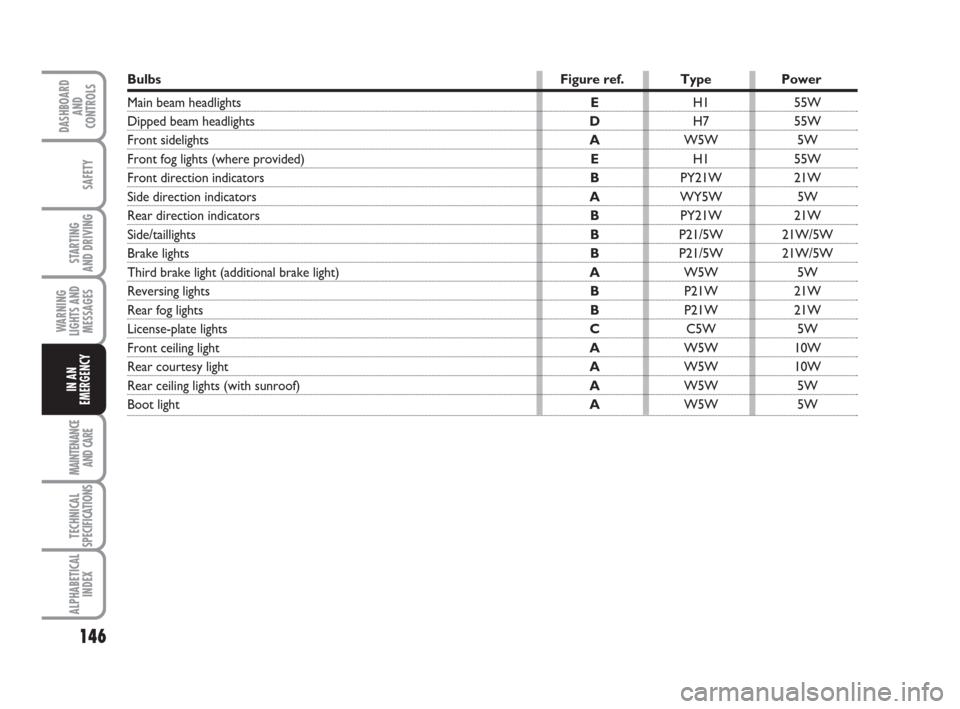
Bulbs Figure ref. Type Power
Main beam headlightsEH1 55W
Dipped beam headlights DH7 55W
Front sidelights AW5W 5W
Front fog lights (where provided)EH1 55W
Front direction indicators BPY21W 21W
Side direction indicators AWY5W 5W
Rear direction indicators BPY21W 21W
Side/taillights BP21/5W 21W/5W
Brake lights BP21/5W 21W/5W
Third brake light (additional brake light) AW5W 5W
Reversing lights BP21W 21W
Rear fog lights BP21W 21W
License-plate lights CC5W 5W
Front ceiling lightAW5W 10W
Rear courtesy lightAW5W 10W
Rear ceiling lights (with sunroof)AW5W 5W
Boot light AW5W 5W
Page 151 of 210
150
STARTING
AND DRIVING
MAINTENANCE
AND CARE
TECHNICAL
SPECIFICATIONS
ALPHABETICAL
INDEX
DASHBOARD
AND
CONTROLS
SAFETY
WARNING
LIGHTS AND
MESSAGES
IN AN
EMERGENCY
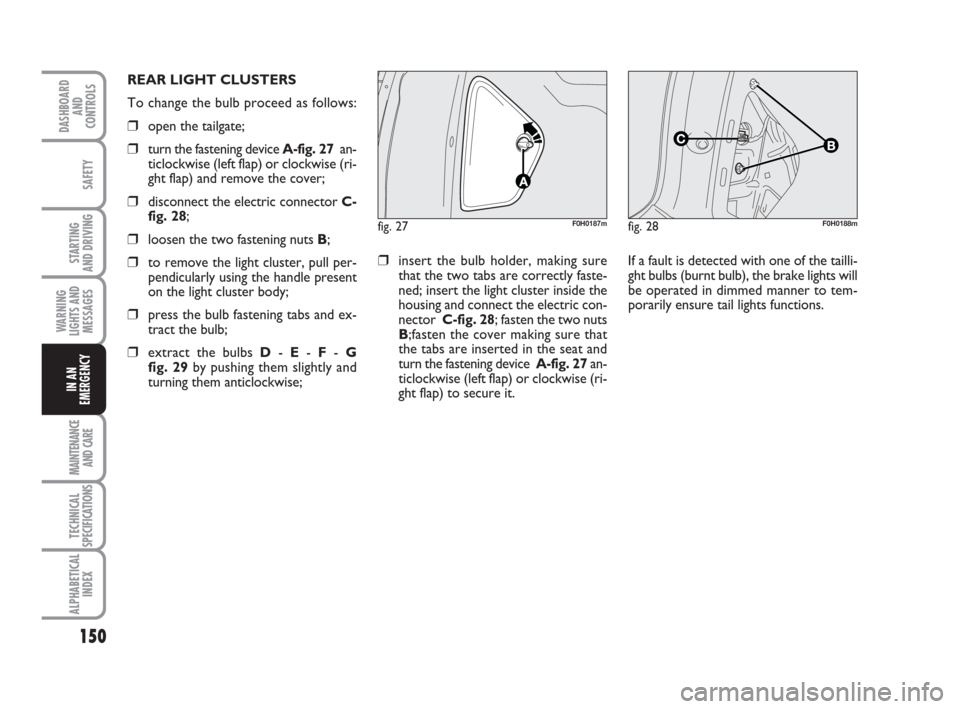
fig. 27F0H0187mfig. 28F0H0188m
REAR LIGHT CLUSTERS
To change the bulb proceed as follows:
❒open the tailgate;
❒turn the fastening device A-fig. 27an-
ticlockwise (left flap) or clockwise (ri-
ght flap) and remove the cover;
❒disconnect the electric connector C-
fig. 28;
❒loosen the two fastening nuts B;
❒to remove the light cluster, pull per-
pendicularly using the handle present
on the light cluster body;
❒press the bulb fastening tabs and ex-
tract the bulb;
❒extract the bulbs D- E- F- G
fig. 29by pushing them slightly and
turning them anticlockwise;
❒insert the bulb holder, making sure
that the two tabs are correctly faste-
ned; insert the light cluster inside the
housing and connect the electric con-
nector C-fig. 28; fasten the two nuts
B;fasten the cover making sure that
the tabs are inserted in the seat and
turn the fastening device A-fig. 27an-
ticlockwise (left flap) or clockwise (ri-
ght flap) to secure it. If a fault is detected with one of the tailli-
ght bulbs (burnt bulb), the brake lights will
be operated in dimmed manner to tem-
porarily ensure tail lights functions.
Page 152 of 210
151
STARTING
AND DRIVING
MAINTENANCE
AND CARE
TECHNICAL
SPECIFICATIONS
ALPHABETICAL
INDEX
DASHBOARD
AND
CONTROLS
SAFETY
WARNING
LIGHTS AND
MESSAGES
IN AN
EMERGENCY
The tail lights will resume normal opera-
tion when the burnt bulb is replaced.
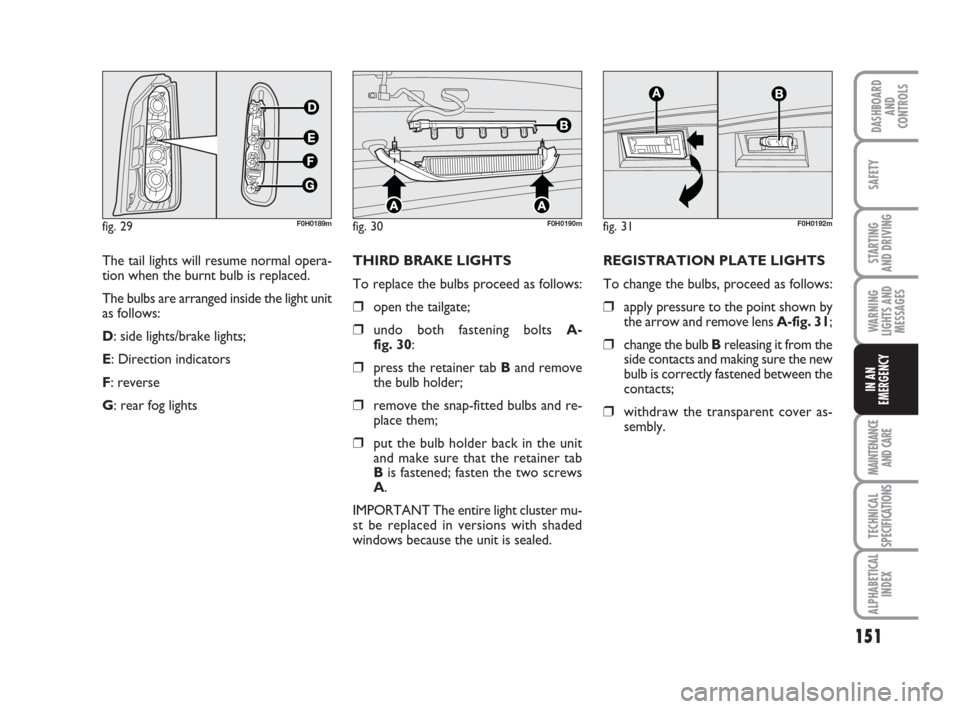
The bulbs are arranged inside the light unit
as follows:
D: side lights/brake lights;
E: Direction indicators
F: reverse
G: rear fog lights
fig. 29F0H0189mfig. 30F0H0190m
THIRD BRAKE LIGHTS
To replace the bulbs proceed as follows:
❒open the tailgate;
❒undo both fastening bolts A-
fig. 30:
❒press the retainer tab Band remove
the bulb holder;
❒remove the snap-fitted bulbs and re-
place them;
❒put the bulb holder back in the unit
and make sure that the retainer tab
Bis fastened; fasten the two screws
A.
IMPORTANT The entire light cluster mu-
st be replaced in versions with shaded
windows because the unit is sealed.REGISTRATION PLATE LIGHTS
To change the bulbs, proceed as follows:
❒apply pressure to the point shown by
the arrow and remove lens A-fig. 31;
❒change the bulb B releasing it from the
side contacts and making sure the new
bulb is correctly fastened between the
contacts;
❒withdraw the transparent cover as-
sembly.
fig. 31F0H0192m
Page 157 of 210
156
STARTING
AND DRIVING
MAINTENANCE
AND CARE
TECHNICAL
SPECIFICATIONS
ALPHABETICAL
INDEX
DASHBOARD
AND
CONTROLS
SAFETY
WARNING
LIGHTS AND
MESSAGES
IN AN
EMERGENCY
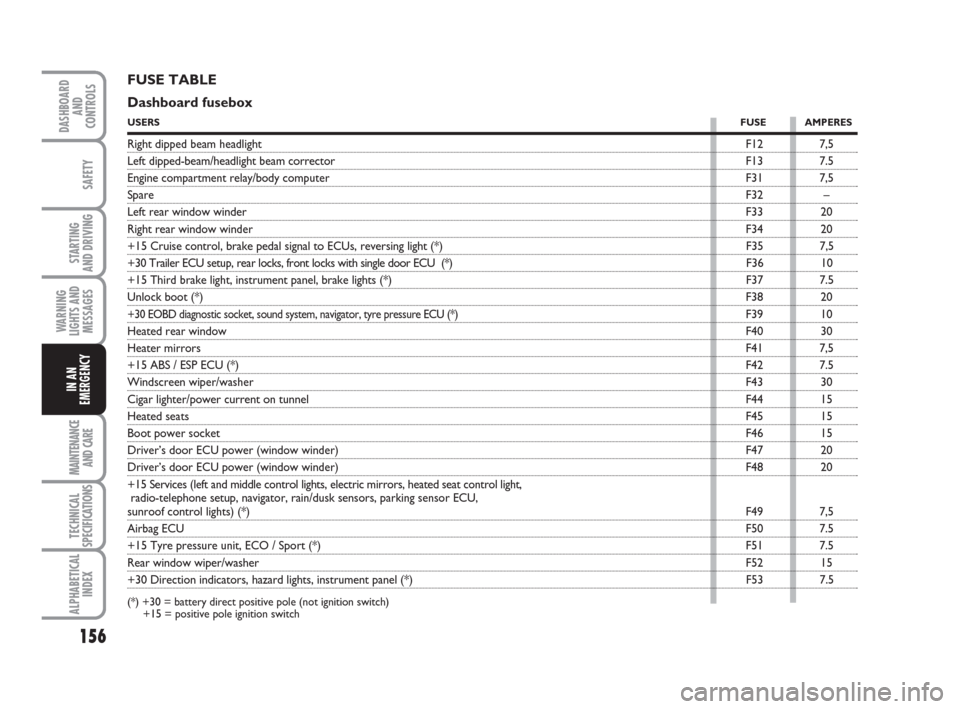
FUSE TABLE
Dashboard fusebox
USERSFUSE AMPERES
Right dipped beam headlightF12 7,5
Left dipped-beam/headlight beam correctorF13 7.5
Engine compartment relay/body computerF31 7,5
SpareF32 –
Left rear window winderF33 20
Right rear window winderF34 20
+15 Cruise control, brake pedal signal to ECUs, reversing light (*) F35 7,5
+30 Trailer ECU setup, rear locks, front locks with single door ECU (*) F36 10
+15 Third brake light, instrument panel, brake lights (*) F37 7.5
Unlock boot (*)F38 20
+30 EOBD diagnostic socket, sound system, navigator, tyre pressure ECU (*)F39 10
Heated rear windowF40 30
Heater mirrorsF41 7,5
+15 ABS / ESP ECU (*)F42 7.5
Windscreen wiper/washerF43 30
Cigar lighter/power current on tunnelF44 15
Heated seatsF45 15
Boot power socketF46 15
Driver’s door ECU power (window winder)F47 20
Driver’s door ECU power (window winder)F48 20
+15 Services (left and middle control lights, electric mirrors, heated seat control light,
radio-telephone setup, navigator, rain/dusk sensors, parking sensor ECU,
sunroof control lights) (*)F49 7,5
Airbag ECUF50 7.5
+15 Tyre pressure unit, ECO / Sport (*)F51 7.5
Rear window wiper/washerF52 15
+30 Direction indicators, hazard lights, instrument panel (*) F53 7.5
(*) +30 = battery direct positive pole (not ignition switch)
+15 = positive pole ignition switch
Page 161 of 210
160
STARTING
AND DRIVING
MAINTENANCE
AND CARE
TECHNICAL
SPECIFICATIONS
ALPHABETICAL
INDEX
DASHBOARD
AND
CONTROLS
SAFETY
WARNING
LIGHTS AND
MESSAGES
IN AN
EMERGENCY
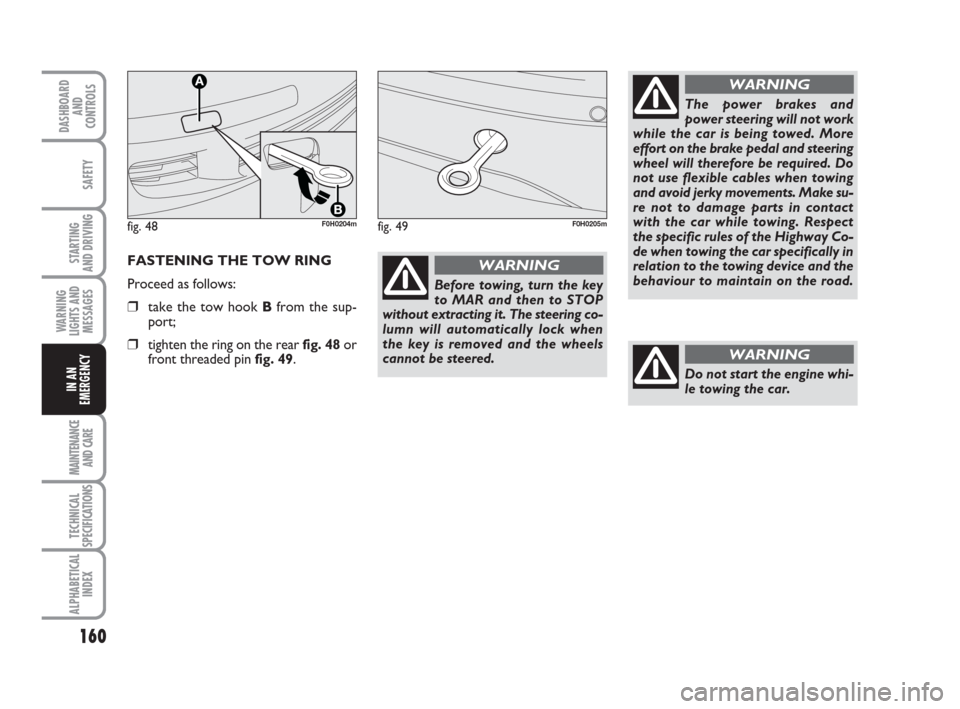
FASTENING THE TOW RING
Proceed as follows:
❒take the tow hook Bfrom the sup-
port;
❒tighten the ring on the rear fig. 48 or
front threaded pin fig. 49.
fig. 48F0H0204mfig. 49F0H0205m
Before towing, turn the key
to MAR and then to STOP
without extracting it. The steering co-
lumn will automatically lock when
the key is removed and the wheels
cannot be steered.
WARNING
The power brakes and
power steering will not work
while the car is being towed. More
effort on the brake pedal and steering
wheel will therefore be required. Do
not use flexible cables when towing
and avoid jerky movements. Make su-
re not to damage parts in contact
with the car while towing. Respect
the specific rules of the Highway Co-
de when towing the car specifically in
relation to the towing device and the
behaviour to maintain on the road.
WARNING
Do not start the engine whi-
le towing the car.
WARNING