lights FORD C MAX HYBRID 2014 2.G Owner's Manual
[x] Cancel search | Manufacturer: FORD, Model Year: 2014, Model line: C MAX HYBRID, Model: FORD C MAX HYBRID 2014 2.GPages: 447, PDF Size: 8.06 MB
Page 373 of 447
Power
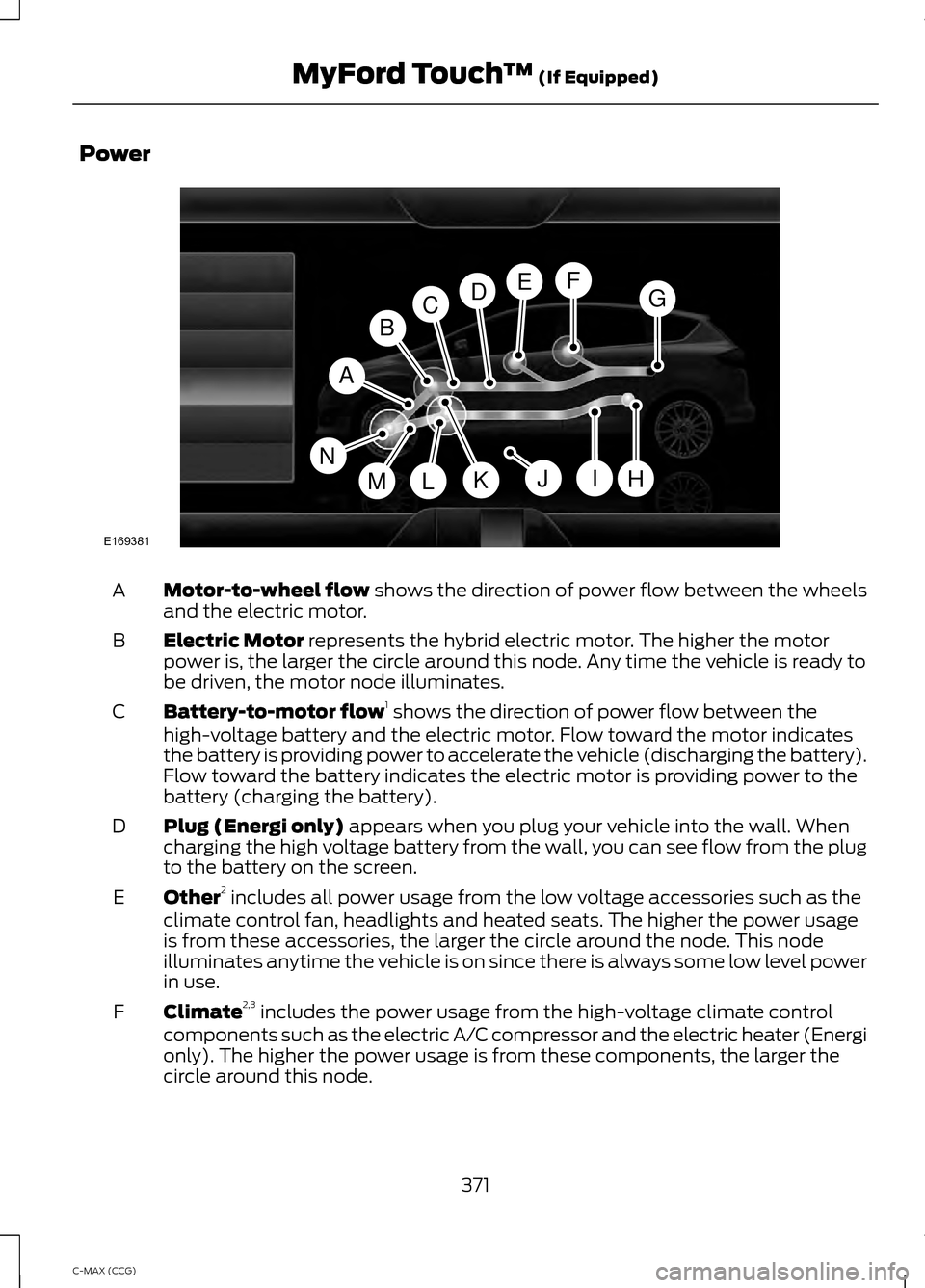
Motor-to-wheel flow shows the direction of power flow between the wheels
and the electric motor.
A
Electric Motor
represents the hybrid electric motor. The higher the motor
power is, the larger the circle around this node. Any time the vehicle is ready to
be driven, the motor node illuminates.
B
Battery-to-motor flow 1
shows the direction of power flow between the
high-voltage battery and the electric motor. Flow toward the motor indicates
the battery is providing power to accelerate the vehicle (discharging the battery).
Flow toward the battery indicates the electric motor is providing power to the
battery (charging the battery).
C
Plug (Energi only)
appears when you plug your vehicle into the wall. When
charging the high voltage battery from the wall, you can see flow from the plug
to the battery on the screen.
D
Other 2
includes all power usage from the low voltage accessories such as the
climate control fan, headlights and heated seats. The higher the power usage
is from these accessories, the larger the circle around the node. This node
illuminates anytime the vehicle is on since there is always some low level power
in use.
E
Climate 2,3
includes the power usage from the high-voltage climate control
components such as the electric A/C compressor and the electric heater (Energi
only). The higher the power usage is from these components, the larger the
circle around this node.
F
371
C-MAX (CCG) MyFord Touch
™
(If Equipped)A
H
DGEF
BC
IKMLJ
E169381
N
Page 374 of 447
High voltage battery power represents your high-voltage battery. A circle
illuminates around the node when the high-voltage battery is receiving power
from regenerative braking, engine charging or external charging (when you plug
it in). The higher the power going into the high-voltage battery, the larger the
circle around this node.
G
Fuel
represents the fuel tank in the vehicle.
H
Fuel-to-engine flow
shows flow from the fuel tank to the engine when the
engine is on and using fuel (there are some cases where the engine is on, but
not using any fuel). When the engine is on, but not using fuel, the engine node
is active, but the fuel flow path is off. An example of this is when your foot is
off the accelerator pedal and the vehicle is traveling at a high speed.
I
Engine On due to
provides you with the reason(s) the gasoline engine is on.
When the gasoline engine is off, this display does not appear. Engine On due
to
reasons displayed by the system are in a chart following this list.
J
Motor-to-engine flow
shows the direction of power flow between the engine
and the electric motor. The direction indicates if the engine is providing power
to the high-voltage electrical system, or if the high-voltage electrical system is
providing power to control or start the engine.
K
Engine power
represents the gasoline engine. It illuminates only when the
gasoline engine is on. The higher the engine power is, the larger the circle around
this node.
L
Engine-to-wheels flow
shows the direction of the power flow between the
engine and the wheels.
M
Drive power
represents the power going to the wheels. The higher the wheel
power is, the larger the circle around this node. When the engine is off, drive
power is shown in blue. When the engine is on, drive power is shown in grey.
N
1 The battery-to-motor flow includes
battery power the vehicle is using for
acceleration. It does not include energy the
vehicle is using for accessories (such as air
conditioning, headlights and radio). This
screen displays accessories and climate
usage separately. 2
Accessories
indicates electrical power
demands from your vehicle ’s accessory
systems. Accessories use power but do not
contribute to making the vehicle move. The
power flow displays power usage from the
climate control system and other
accessories separately.
3 The climate control system may
determine A/C is necessary even when you
turn it off. In this case, you may see some
climate power when the A/C is off.
372
C-MAX (CCG) MyFord Touch
™
(If Equipped)
Page 421 of 447
Oils, Fluids and Flushing
In many cases, fluid discoloration is a
normal operating characteristic and, by
itself, does not necessarily indicate a
concern or that the fluid needs to be
changed. However, a qualified expert, such
as the factory-trained technicians at your
dealership, should inspect discolored fluids
that also show signs of overheating or
foreign material contamination
immediately.
Make sure to change your vehicle
’s oils and
fluids at the specified intervals or in
conjunction with a repair. Flushing is a
viable way to change fluid for many vehicle
sub-systems during scheduled
maintenance. It is critical that systems are
flushed only with new fluid that is the same
as that required to fill and operate the
system or using a Ford-approved flushing
chemical.
Owner Checks and Services
Make sure you perform the following basic
maintenance checks and inspections every
month or at six-month intervals. Check every month
Engine oil level.
Function of all interior and exterior lights.
Tires (including spare) for wear and proper pressure. Windshield washer fluid level. Check every six months
Battery connections. Clean if necessary.
Body and door drain holes for obstructions. Clean if necessary. Cooling system fluid level and coolant strength.
Door weatherstrips for wear. Lubricate if necessary.
Hinges, latches and outside locks for proper operation. Lubricate if necessary. Parking brake for proper operation.
Safety belts and seat latches for wear and function.
Safety warning lamps (brake, ABS, airbag and safety belt) for operation.
Washer spray and wiper operation. Clean or replace blades as necessary.
419
C-MAX (CCG) Scheduled Maintenance
Page 445 of 447
U
Under Hood Overview - 2.0L
Hybrid.............................................................210
Unique Driving Characteristics................129
Universal Garage Door Opener.................117 HomeLink Wireless Control System.............117
USB Port.........................................................285
Using Cruise Control.....................................171
ECO Cruise Control............................................. 172
Switching Cruise Control Off........................... 171
Switching Cruise Control On............................ 171
Using MyKey With Remote Start Systems
...........................................................51
Using Snow Chains.....................................259
Using Stability Control................................161 AdvanceTrac® with Roll Stability Control ™
(RSC®)............................................................... 161
Using SYNC™ With Your Media Player
............................................................308
Accessing Your Play Menu............................... 312
Connecting Your Digital Media Player to the USB Port.......................................................... 308
Media Menu Features....................................... 310
Media Voice Commands................................ 308
System Settings.................................................. 314
What's Playing?................................................ 308
Using SYNC™ With Your Phone
.............291
Accessing Features through the Phone
Menu.................................................................. 295
Accessing Your Phone Settings................... 298
Making Calls........................................................ 294
Pairing a Phone for the First Time...............292
Pairing Subsequent Phones.......................... 292
Phone Options during an Active Call.........294
Phone Voice Commands................................ 292
Receiving Calls................................................... 294
System Settings................................................. 299
Text Messaging................................................... 297
Using Traction Control................................159 Switching the System Off Using a
Switch................................................................ 159
Switching the System Off Using the Information Display Controls.................... 159
System Indicator Lights and Messages.......................................................... 159Using Voice Recognition
...........................289
Initiating a Voice Session................................ 289
System Interaction and Feedback..............290
Utilizing the Mediation/Arbitration Program (Canada Only).........................196
V
Vehicle Care...................................................232 General Information.......................................... 232
Vehicle Certification Label.......................267
Vehicle Identification Number................267
Vehicle Storage
............................................236
Battery.................................................................... 237
Body........................................................................\
236
Brakes..................................................................... 237
Cooling system.................................................... 237
Engine..................................................................... 237
Fuel system.......................................................... 237
General.................................................................. 236
Miscellaneous...................................................... 237
Removing Vehicle From Storage.................. 237
Tires........................................................................\
. 237
Ventilation See: Climate Control......................................... 105
VIN See: Vehicle Identification Number............267
Voice Control...................................................66
443
C-MAX (CCG) Index