engine coolant FORD E SERIES 1997 4.G Owners Manual
[x] Cancel search | Manufacturer: FORD, Model Year: 1997, Model line: E SERIES, Model: FORD E SERIES 1997 4.GPages: 192, PDF Size: 3.44 MB
Page 6 of 192
OVERDRIVE
ON
OFFRES
SET
ACCEL
COAST
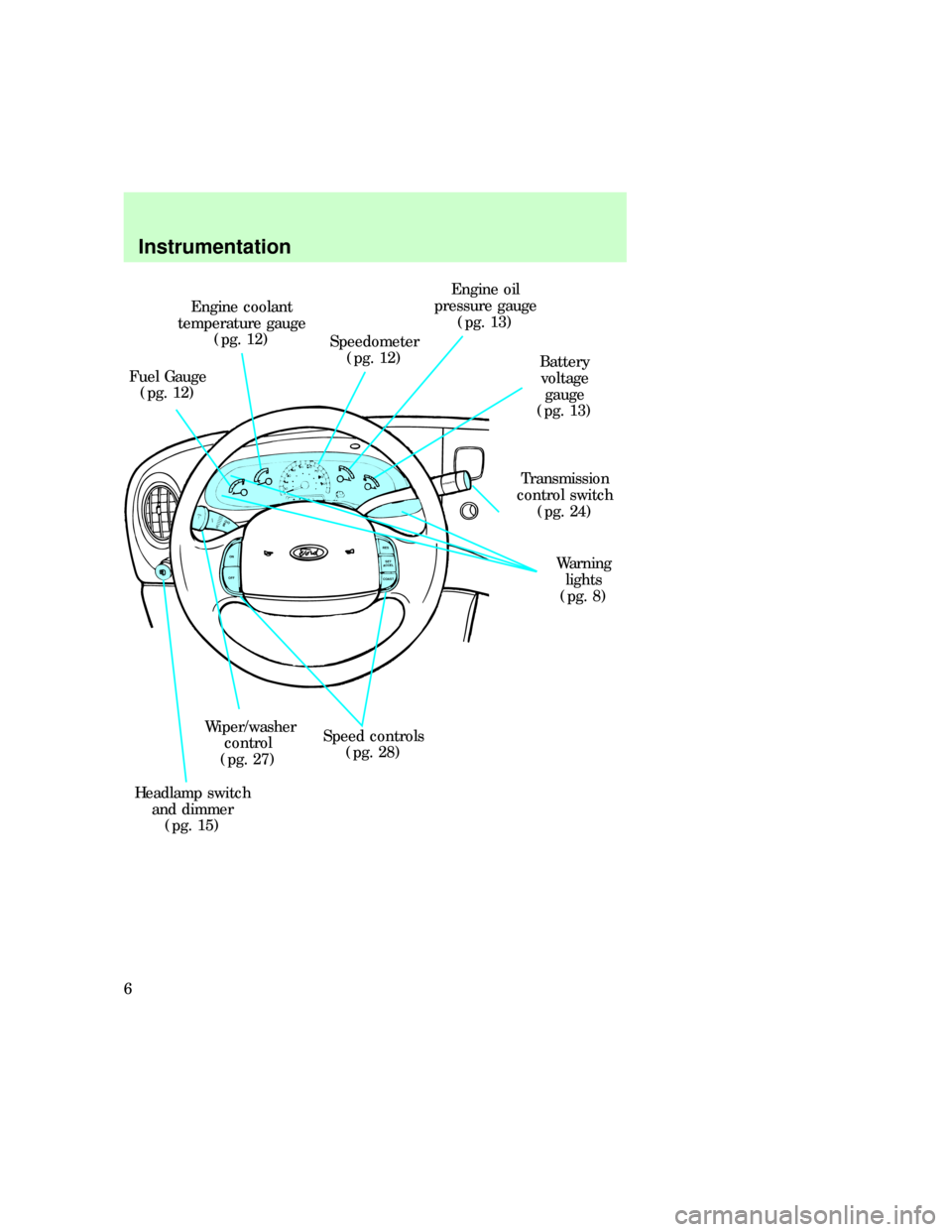
Engine coolant
temperature gauge
(pg. 12)
Fuel Gauge
(pg. 12)Speedometer
(pg. 12)Engine oil
pressure gauge
(pg. 13)
Battery
voltage
gauge
(pg. 13)
Warning
lights
(pg. 8)
Speed controls
(pg. 28)
Headlamp switch
and dimmer
(pg. 15)Transmission
control switch
(pg. 24)
Wiper/washer
control
(pg. 27)
Instrumentation
6
Page 10 of 192

flash or remains on, have the
system serviced immediately.
Turn signal
Illuminates when the left or right
turn signal or the hazard lights are
turned on.
High beams
Illuminates when the headlamp
high beams are on.
Door ajar (if equipped)
Illuminates when the ignition
switch is in the ON or START
position and any door is open.
Oil pressure/Engine coolant
This light will come on when the
key is in the ON position and the:
²engine coolant temperature is
very high
²engine oil pressure is low
The light serves as a notice that a
system needs your attention and to
check the engine coolant
temperature gauge and the engine
oil pressure gauge.
Refer to engine coolant
temperature gauge and engine oil
pressure gauge in this section for
more information.
DOOR
AJAR
com_turn_signal.01
com_high_beams.01
eco_door_ajar
eco_oil-press_eng-temp_light
eco_warning_chimes
Instrumentation
10
Page 12 of 192
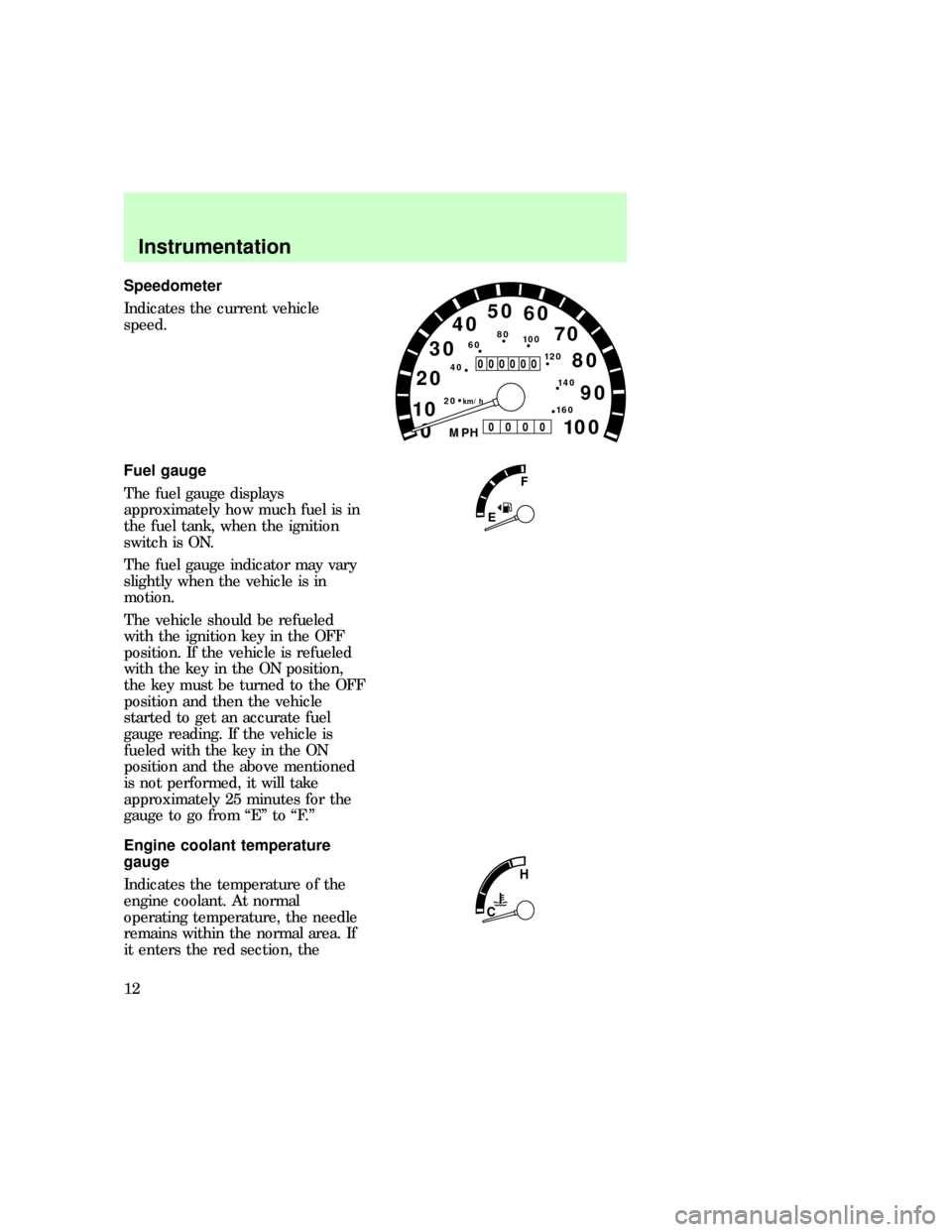
Speedometer
Indicates the current vehicle
speed.
Fuel gauge
The fuel gauge displays
approximately how much fuel is in
the fuel tank, when the ignition
switch is ON.
The fuel gauge indicator may vary
slightly when the vehicle is in
motion.
The vehicle should be refueled
with the ignition key in the OFF
position. If the vehicle is refueled
with the key in the ON position,
the key must be turned to the OFF
position and then the vehicle
started to get an accurate fuel
gauge reading. If the vehicle is
fueled with the key in the ON
position and the above mentioned
is not performed, it will take
approximately 25 minutes for the
gauge to go from ªEº to ªF.º
Engine coolant temperature
gauge
Indicates the temperature of the
engine coolant. At normal
operating temperature, the needle
remains within the normal area. If
it enters the red section, the
0 1020304050
60
70
80
90
10 0
20 km/h
406080
10 0
12 0
14 0
16 0
MPH
000000
0000
F
E
H
C
eco_fuel_gauage
com_coolant_temperature.03
Instrumentation
12
Page 13 of 192
engine is overheating. Switch off
the ignition and let it cool. Refer to
Checking and adding engine
coolantin theMaintenance and
carechapter.
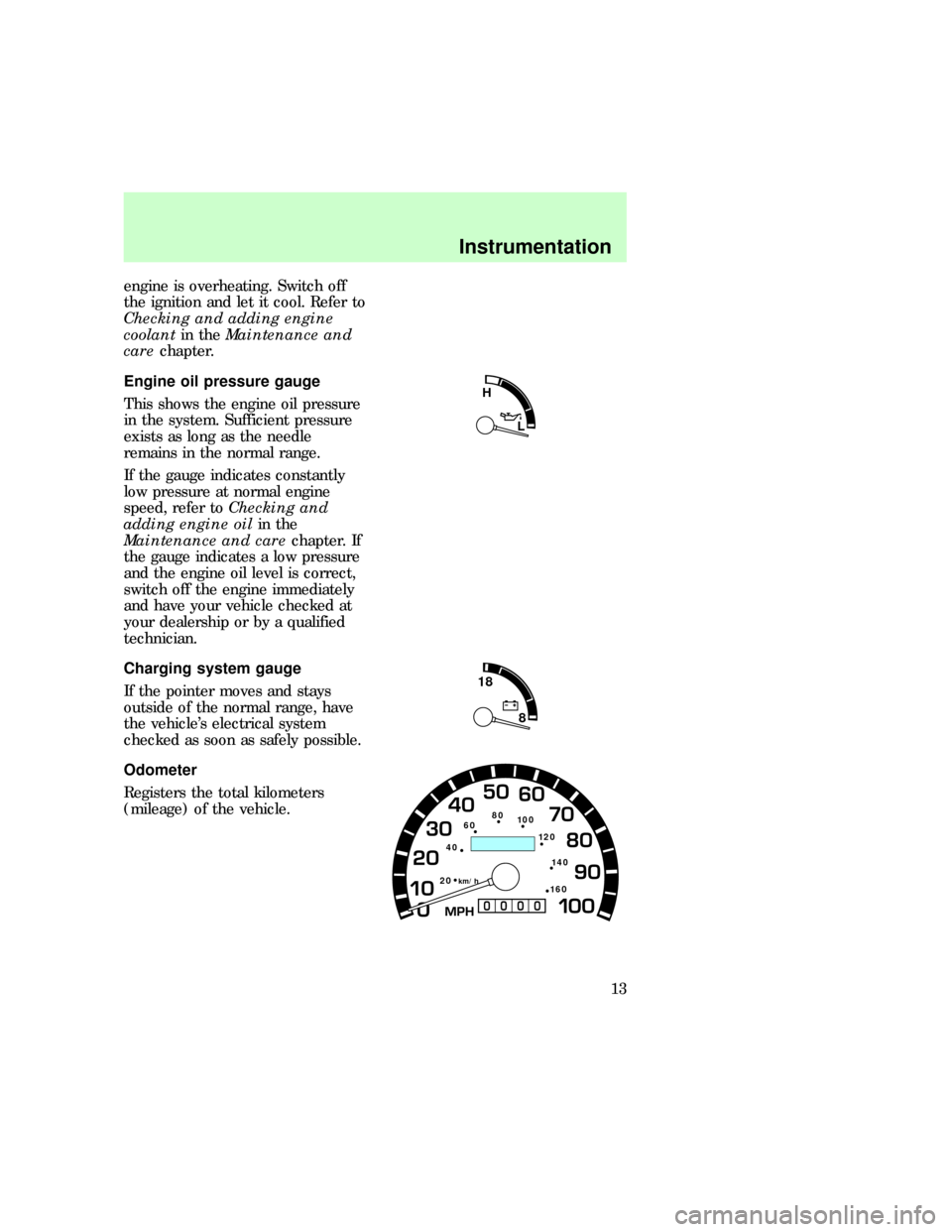
Engine oil pressure gauge
This shows the engine oil pressure
in the system. Sufficient pressure
exists as long as the needle
remains in the normal range.
If the gauge indicates constantly
low pressure at normal engine
speed, refer toChecking and
adding engine oilin the
Maintenance and carechapter. If
the gauge indicates a low pressure
and the engine oil level is correct,
switch off the engine immediately
and have your vehicle checked at
your dealership or by a qualified
technician.
Charging system gauge
If the pointer moves and stays
outside of the normal range, have
the vehicle's electrical system
checked as soon as safely possible.
Odometer
Registers the total kilometers
(mileage) of the vehicle.
H
L
18
8
20 km/h
406080
10 0
12 0
14 0
16 0
com_oil_pressure.03
com_voltage.01
com_odometer.01 com_trip_odometer.01
Instrumentation
13
Page 77 of 192
Make sure the corresponding lights
illuminate briefly. If a light fails to
illuminate, have the vehicle
serviced.
²If the driver's safety belt is
fastened, the
light does not
illuminate.
STARTING PROCEDURE
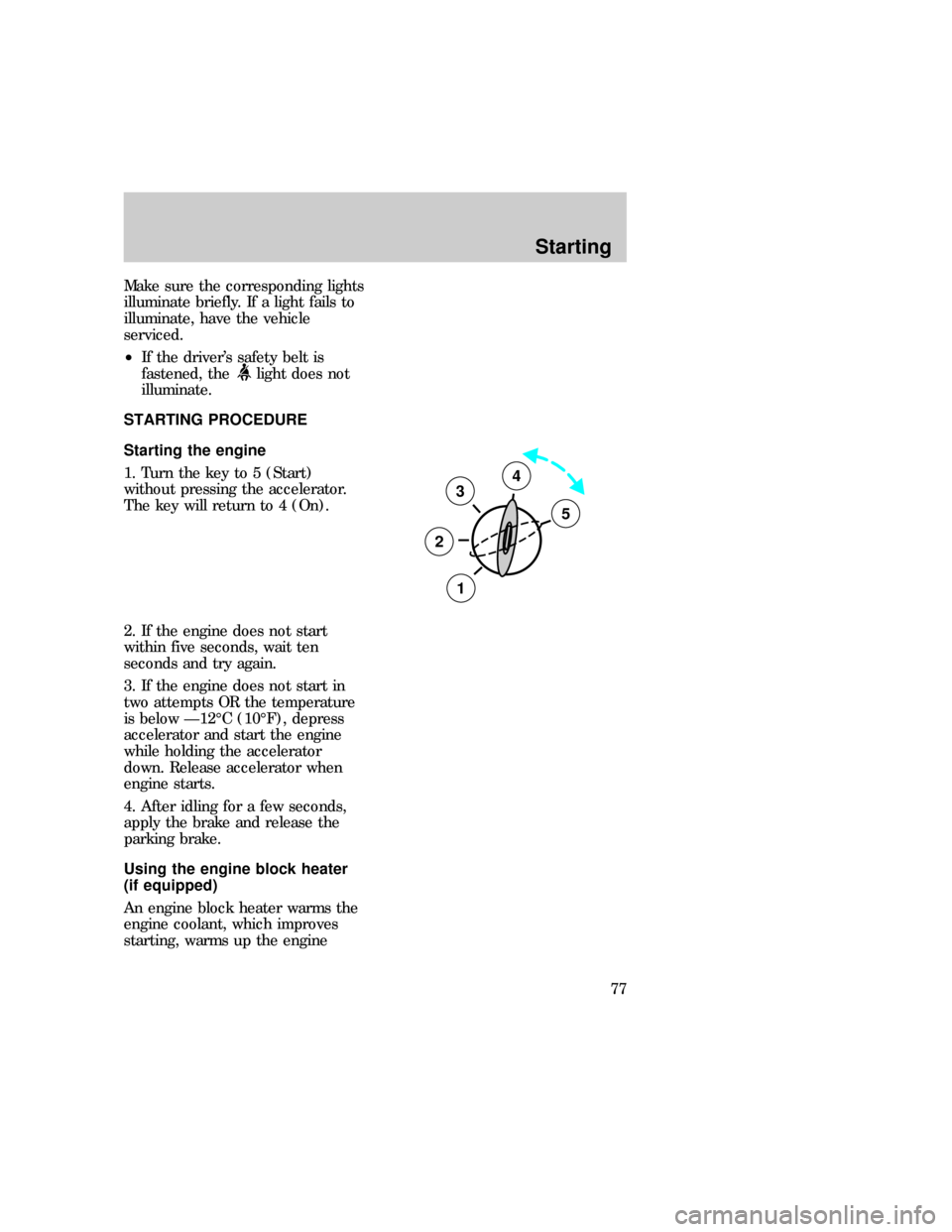
Starting the engine
1. Turn the key to 5 (Start)
without pressing the accelerator.
The key will return to 4 (On).
2. If the engine does not start
within five seconds, wait ten
seconds and try again.
3. If the engine does not start in
two attempts OR the temperature
is below Ð12ÉC (10ÉF), depress
accelerator and start the engine
while holding the accelerator
down. Release accelerator when
engine starts.
4. After idling for a few seconds,
apply the brake and release the
parking brake.
Using the engine block heater
(if equipped)
An engine block heater warms the
engine coolant, which improves
starting, warms up the engine
3
2
1
5
4
eco_start_title
com_starting_vehicle.01
com_engine_heater.01
Starting
77
Page 129 of 192
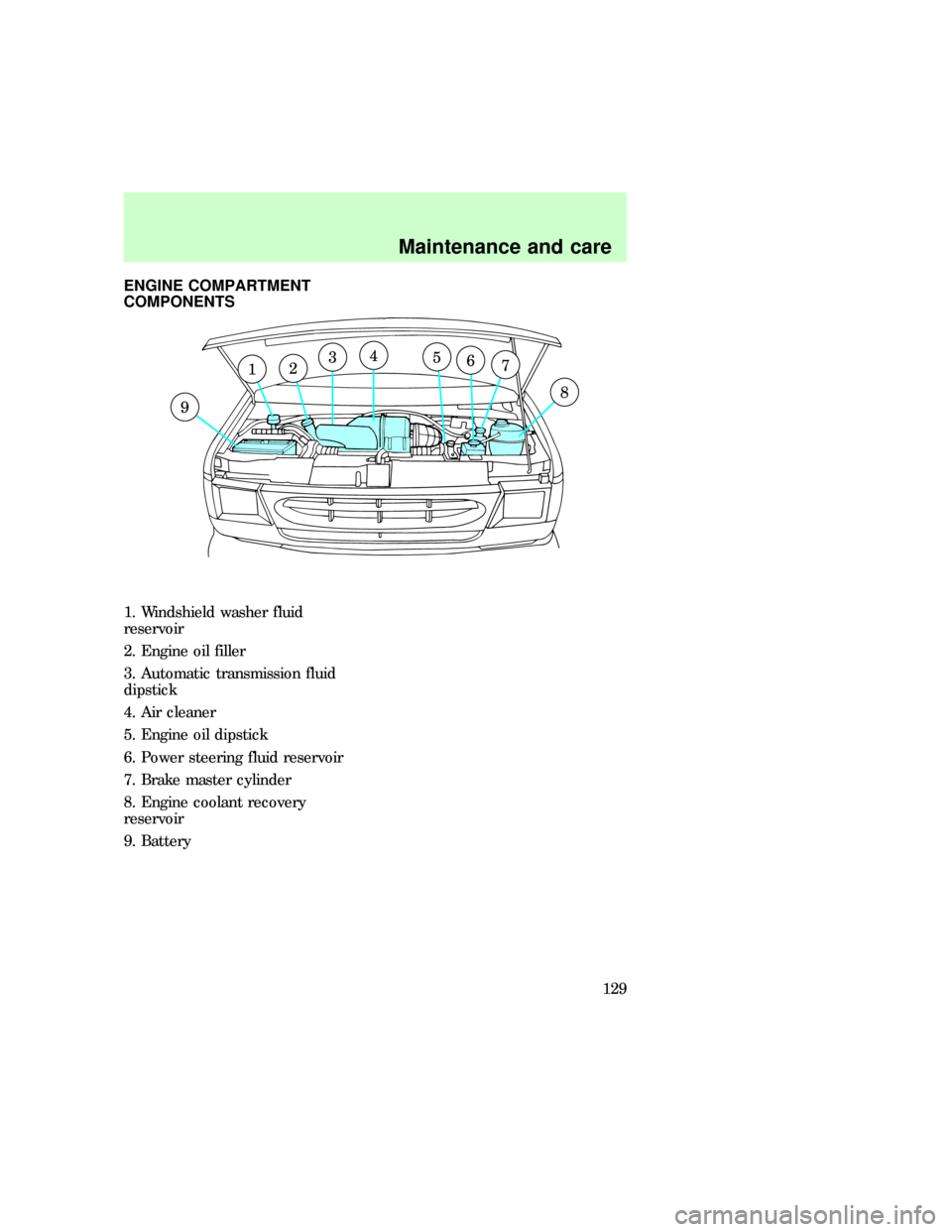
ENGINE COMPARTMENT
COMPONENTS
1. Windshield washer fluid
reservoir
2. Engine oil filler
3. Automatic transmission fluid
dipstick
4. Air cleaner
5. Engine oil dipstick
6. Power steering fluid reservoir
7. Brake master cylinder
8. Engine coolant recovery
reservoir
9. Battery
91234
5
6
7
8
com_check-add_oil.01
Maintenance and care
129
Page 136 of 192
Adding washer fluid
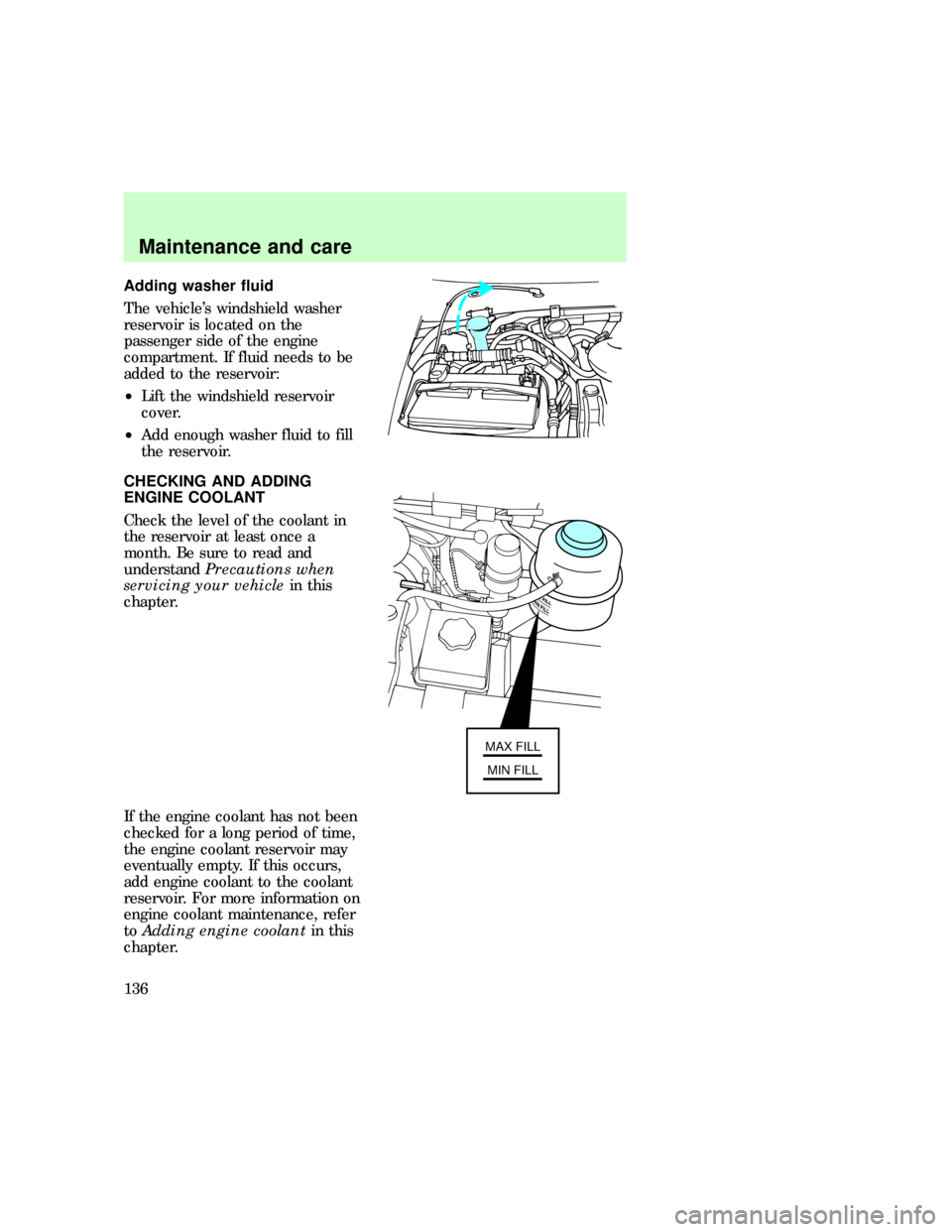
The vehicle's windshield washer
reservoir is located on the
passenger side of the engine
compartment. If fluid needs to be
added to the reservoir:
²Lift the windshield reservoir
cover.
²Add enough washer fluid to fill
the reservoir.
CHECKING AND ADDING
ENGINE COOLANT
Check the level of the coolant in
the reservoir at least once a
month. Be sure to read and
understandPrecautions when
servicing your vehiclein this
chapter.
If the engine coolant has not been
checked for a long period of time,
the engine coolant reservoir may
eventually empty. If this occurs,
add engine coolant to the coolant
reservoir. For more information on
engine coolant maintenance, refer
toAdding engine coolantin this
chapter.
MAX FILL
MIN FILL
com_checking-adding_coolant.01
Maintenance and care
136
Page 137 of 192

Automotive fluids are not
interchangeable; do not use engine
coolant, antifreeze or windshield
washer fluid outside of its specified
function and vehicle location.
When adding engine coolant
Ford recommends Ford Premium
Cooling System Fluid, which is an
optimized formula that will protect
all metals and rubber elastomers
used in Ford engines for four years
or 80,000 km (50,000 miles).
It is neither necessary nor
recommended to use supplemental
coolant additives in your
gasoline-powered vehicle. These
additives may harm your engine
cooling system.
When you change or add engine
coolant, it is important to maintain
engine coolant concentration
between 40% (-24ÉC [-11ÉF]) and
60% (-52ÉC [-62ÉF]), depending on
your local climate conditions.
A coolant concentration below 40%
will result in a loss of freeze
protection. A concentration above
60% may cause the engine to
overheat on a warm day.
Refer toLubricant specifications
in theSpecifications and
capacitieschapter. Use only a
premium nationally-recognized
brand name engine coolant or
equivalent.
Always dispose of used
automotive fluids in a responsible
manner. Follow your community's
com_adding_coolant.01
Maintenance and care
137
Page 138 of 192
standards for disposing of these
types of fluids. Call your local
recycling center to find out more
about recycling automotive fluids.
Adding engine coolant
Never remove the pressure
cap while the engine is
running or hot.
1. Before you remove the cap, turn
the engine off and let it cool.
2. When the engine is cool, wrap a
thick cloth around the cap and
turn it slowly counterclockwise.
3. Step back while the pressure
releases.
4. When you are sure that all the
pressure has been released, use
the cloth to remove the cap.
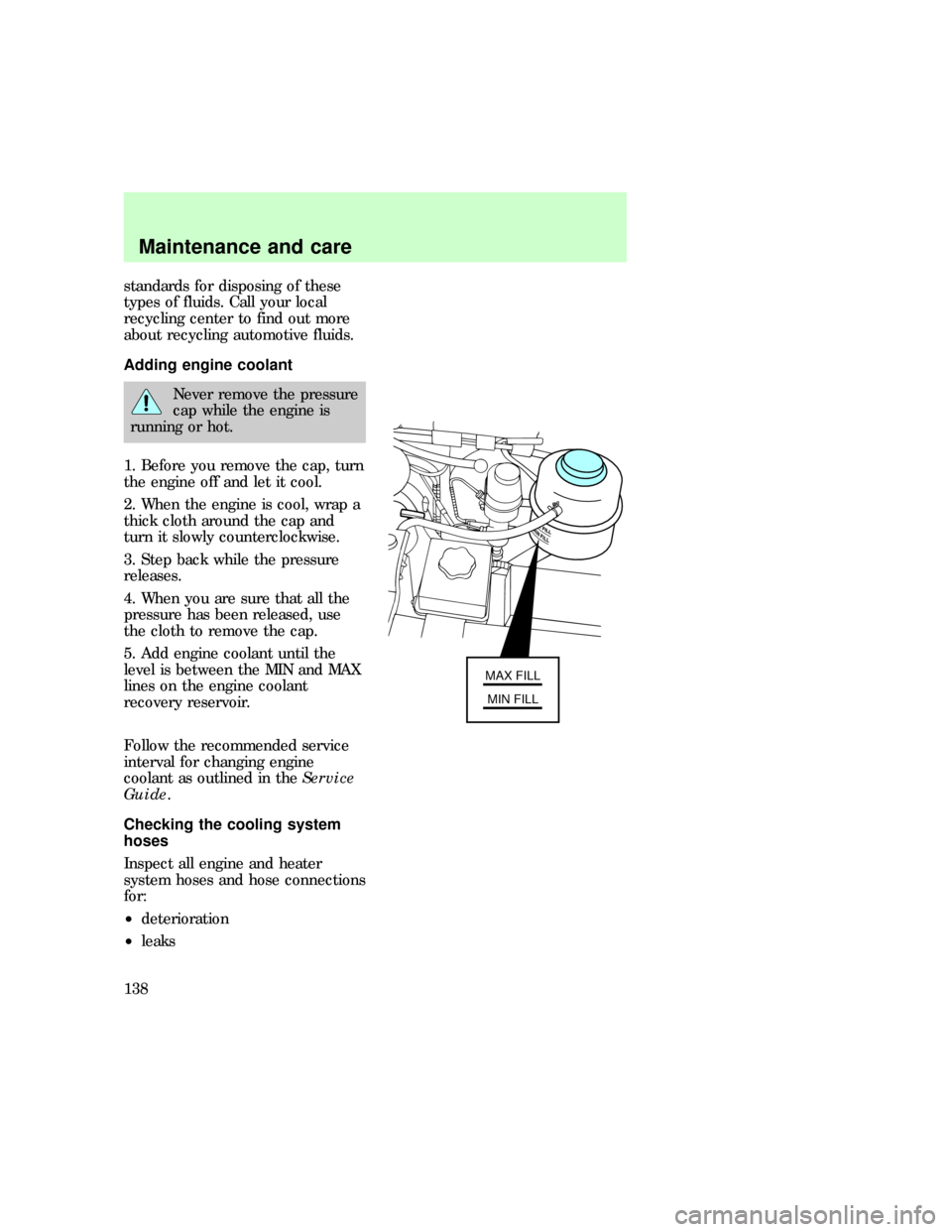
5. Add engine coolant until the
level is between the MIN and MAX
lines on the engine coolant
recovery reservoir.
Follow the recommended service
interval for changing engine
coolant as outlined in theService
Guide.
Checking the cooling system
hoses
Inspect all engine and heater
system hoses and hose connections
for:
²deterioration
²leaks
MAX FILL
MIN FILL
eco_adding_coolant
eco_checking_hoses
Maintenance and care
138
Page 139 of 192
²loose hose clamps
What you should know about
fail-safe cooling (if equipped)
If the engine coolant supply is
depleted, this feature allows the
vehicle to be driven temporarily
before incremental component
damage is incurred. The ªfail safeº
distance depends on ambient
temperatures, vehicle load and
terrain.
How fail-safe cooling works
If the engine overheats, the engine
will automatically switch from
eight to alternating four cylinder
operation. Each disabled cylinder
acts as an air pump and cools the
engine.
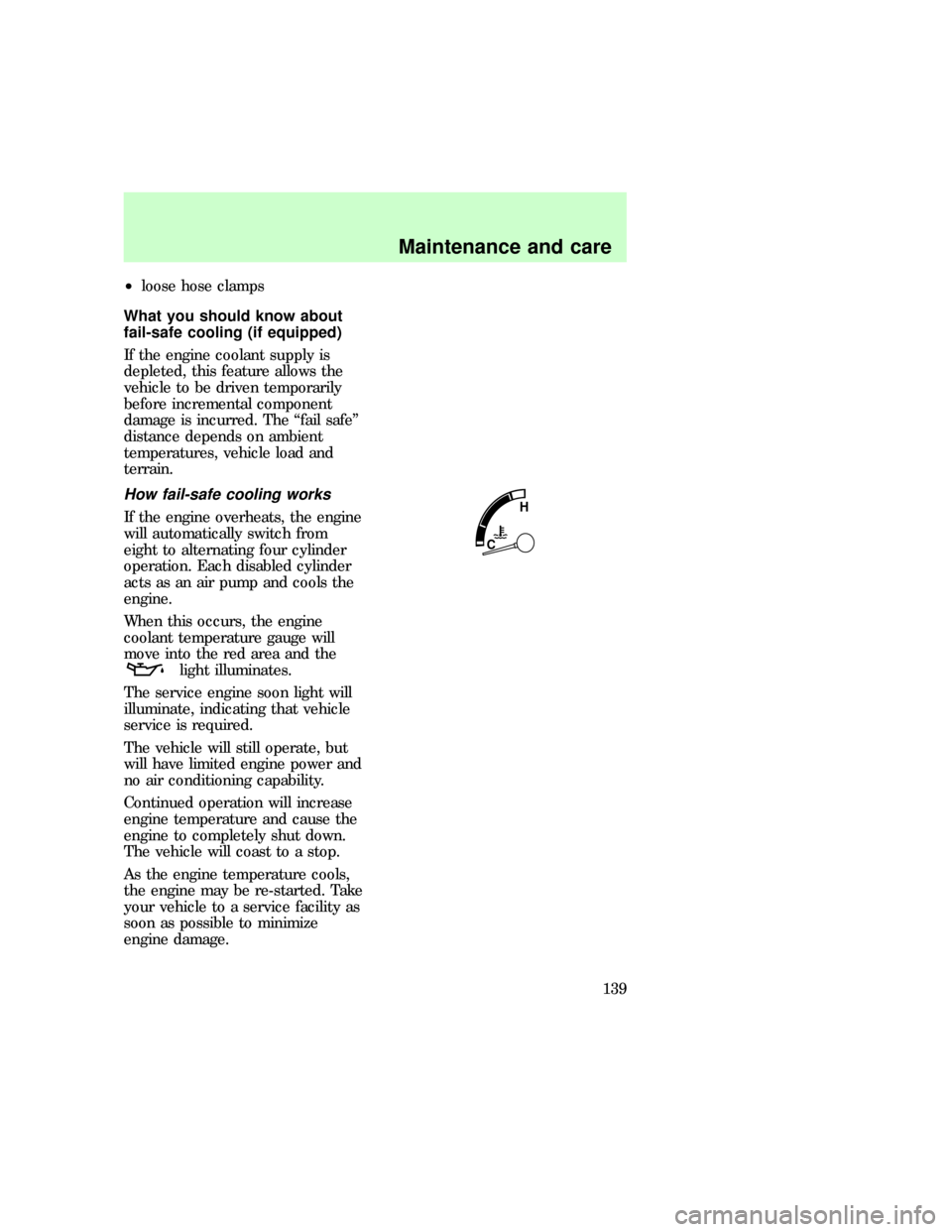
When this occurs, the engine
coolant temperature gauge will
move into the red area and the
light illuminates.
The service engine soon light will
illuminate, indicating that vehicle
service is required.
The vehicle will still operate, but
will have limited engine power and
no air conditioning capability.
Continued operation will increase
engine temperature and cause the
engine to completely shut down.
The vehicle will coast to a stop.
As the engine temperature cools,
the engine may be re-started. Take
your vehicle to a service facility as
soon as possible to minimize
engine damage.
H
C
eco_failsafe_cooling
eco_failsafe_works
eco_failsafe_activated
Maintenance and care
139