lock FORD ESCORT 1997 6.G Owner's Manual
[x] Cancel search | Manufacturer: FORD, Model Year: 1997, Model line: ESCORT, Model: FORD ESCORT 1997 6.GPages: 191, PDF Size: 2.02 MB
Page 58 of 191
Using the automatic locking
mode
The automatic locking mode must
be used when installing an
aftermarket child safety seat in any
outboard passenger seat.
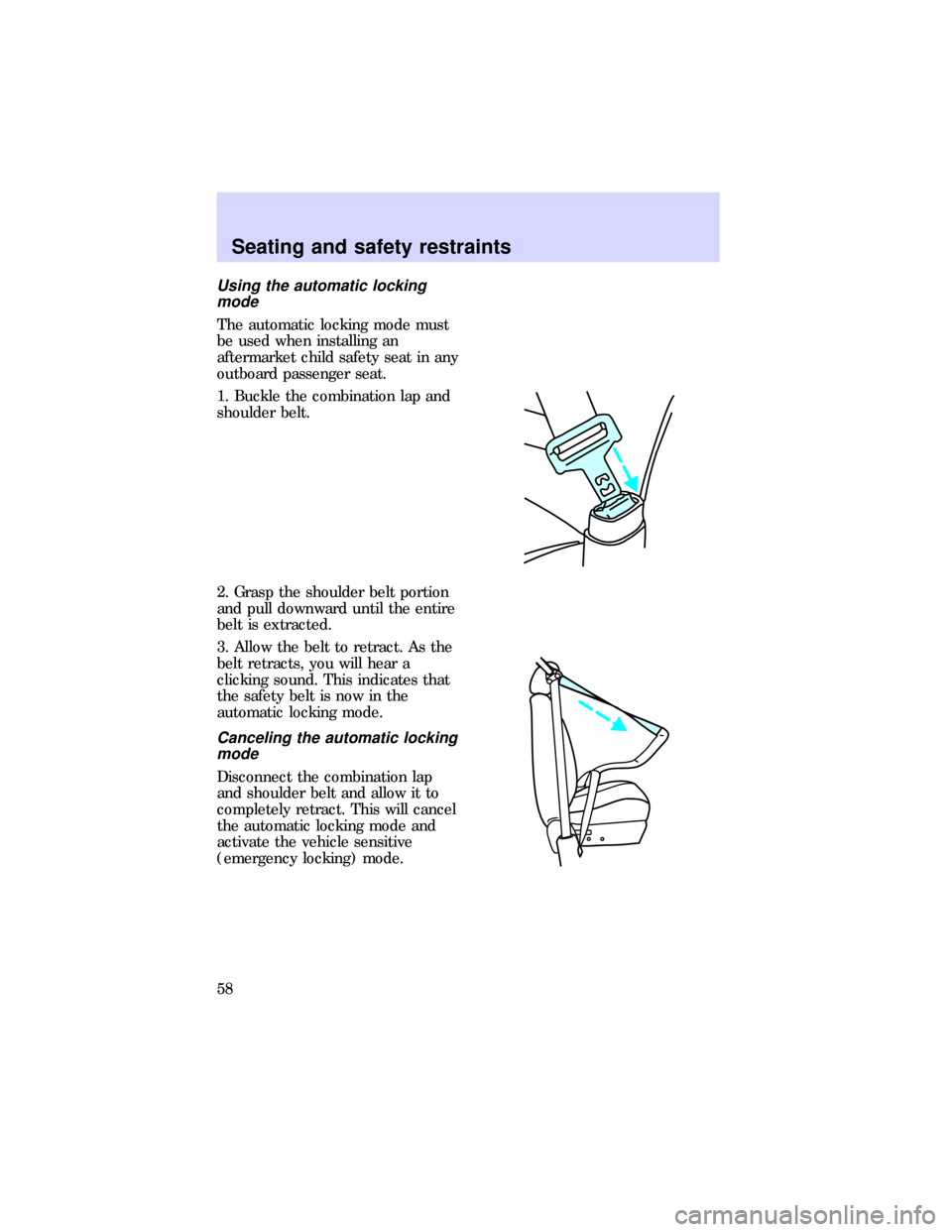
1. Buckle the combination lap and
shoulder belt.
2. Grasp the shoulder belt portion
and pull downward until the entire
belt is extracted.
3. Allow the belt to retract. As the
belt retracts, you will hear a
clicking sound. This indicates that
the safety belt is now in the
automatic locking mode.
Canceling the automatic locking
mode
Disconnect the combination lap
and shoulder belt and allow it to
completely retract. This will cancel
the automatic locking mode and
activate the vehicle sensitive
(emergency locking) mode.
Seating and safety restraints
58
Page 59 of 191
Front seat safety belt height
adjustment
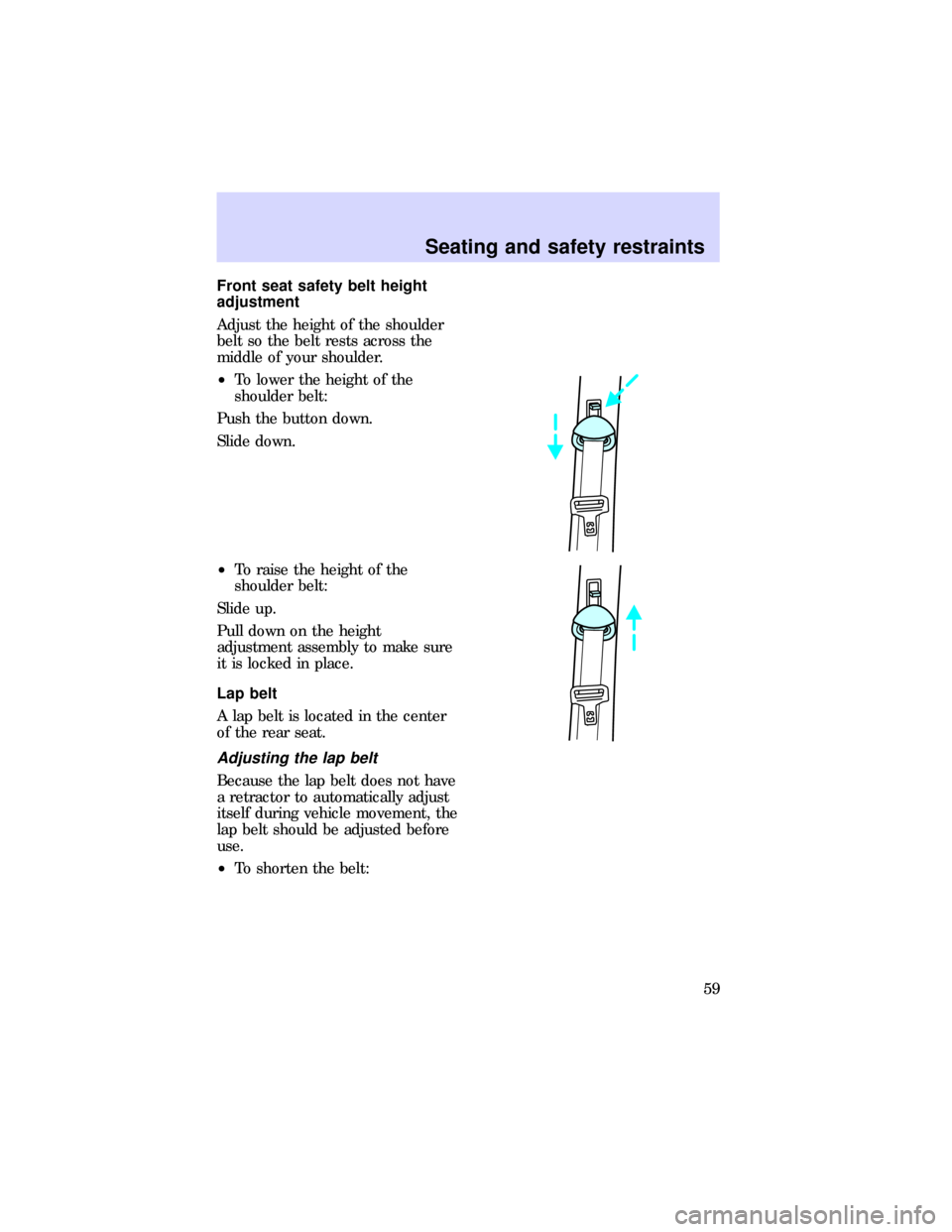
Adjust the height of the shoulder
belt so the belt rests across the
middle of your shoulder.
²To lower the height of the
shoulder belt:
Push the button down.
Slide down.
²To raise the height of the
shoulder belt:
Slide up.
Pull down on the height
adjustment assembly to make sure
it is locked in place.
Lap belt
A lap belt is located in the center
of the rear seat.
Adjusting the lap belt
Because the lap belt does not have
a retractor to automatically adjust
itself during vehicle movement, the
lap belt should be adjusted before
use.
²To shorten the belt:
Seating and safety restraints
59
Page 68 of 191
²put the safety belt in the
automatic locking mode. Refer
toUsing the automatic locking
modein this chapter.
Installing child safety seats in
combination lap and shoulder
belt seating positions
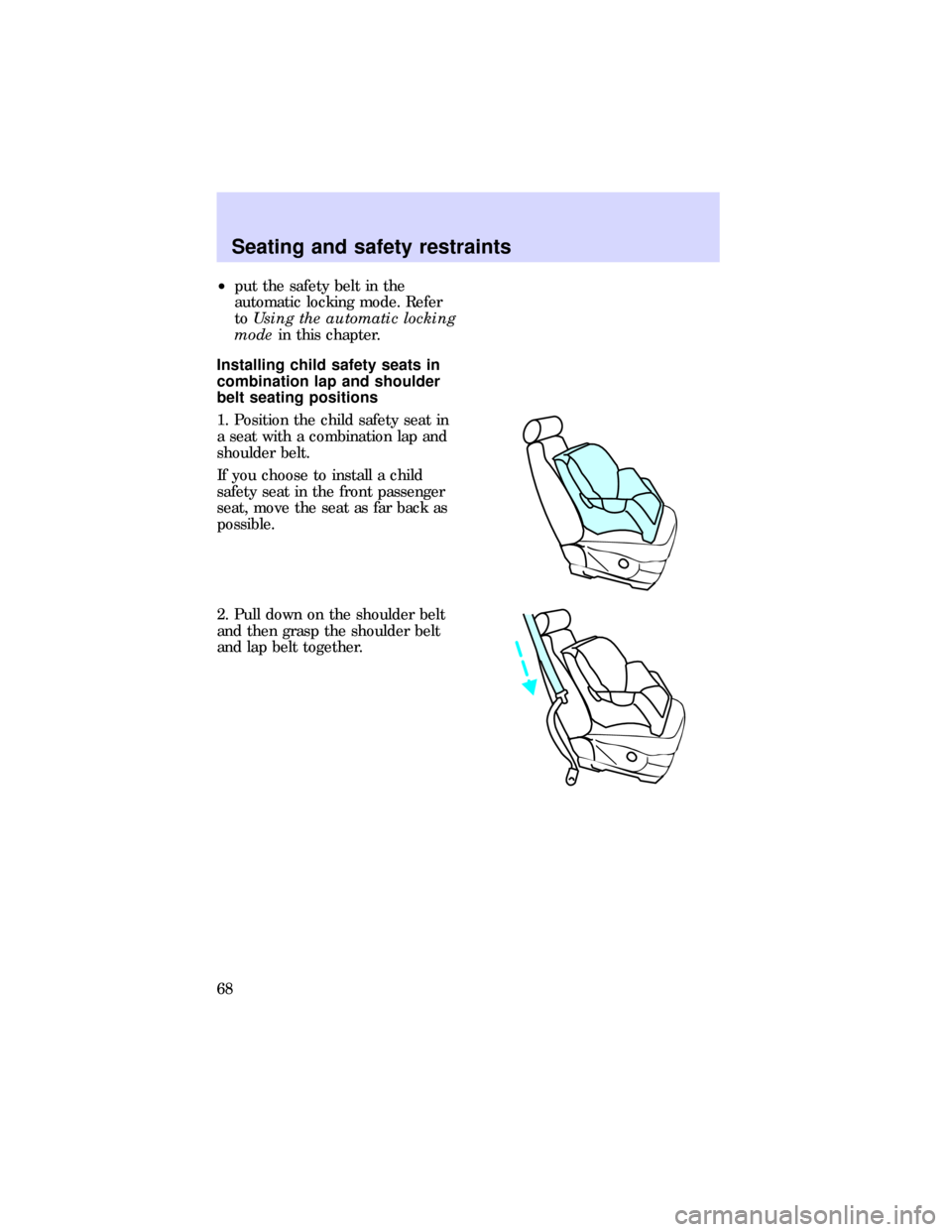
1. Position the child safety seat in
a seat with a combination lap and
shoulder belt.
If you choose to install a child
safety seat in the front passenger
seat, move the seat as far back as
possible.
2. Pull down on the shoulder belt
and then grasp the shoulder belt
and lap belt together.
Seating and safety restraints
68
Page 69 of 191
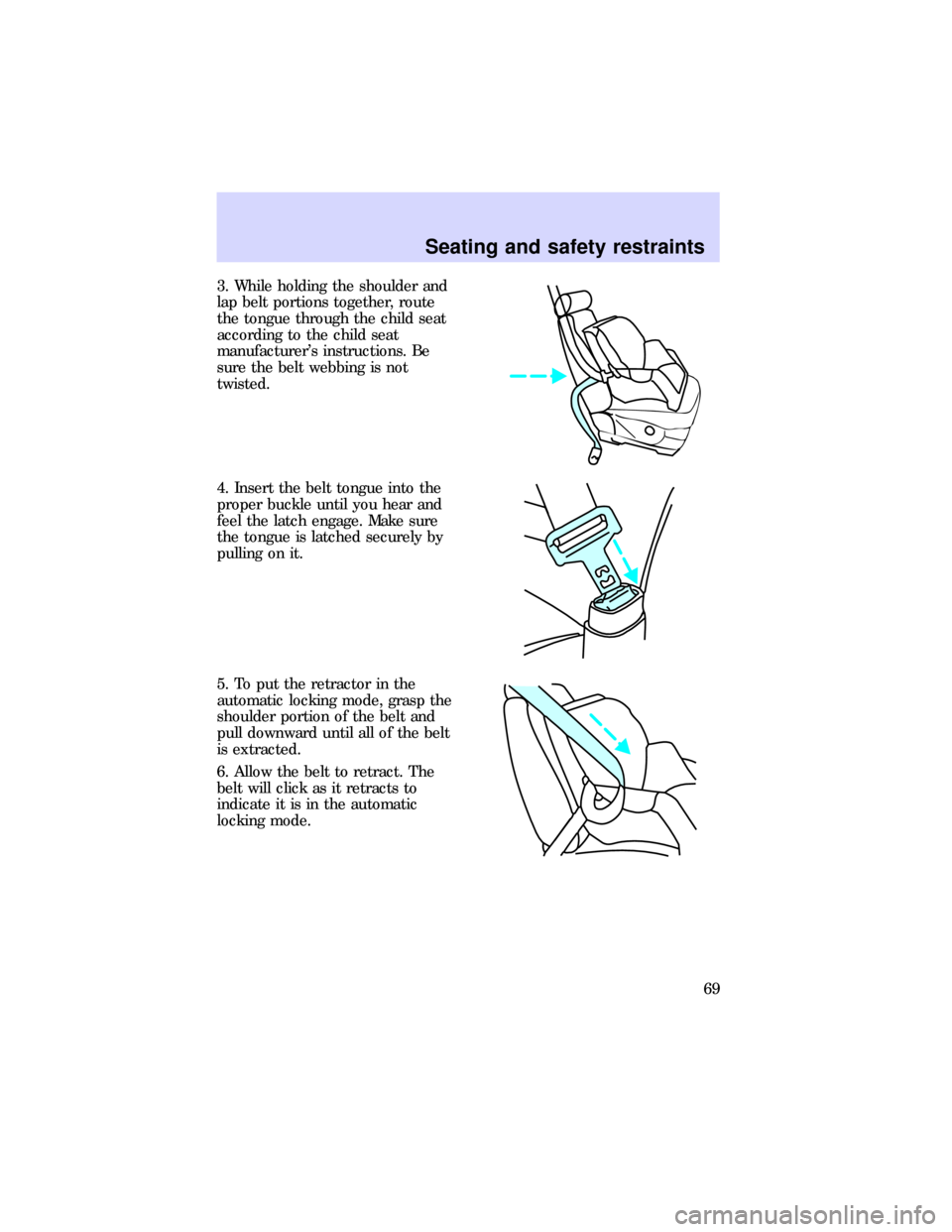
3. While holding the shoulder and
lap belt portions together, route
the tongue through the child seat
according to the child seat
manufacturer's instructions. Be
sure the belt webbing is not
twisted.
4. Insert the belt tongue into the
proper buckle until you hear and
feel the latch engage. Make sure
the tongue is latched securely by
pulling on it.
5. To put the retractor in the
automatic locking mode, grasp the
shoulder portion of the belt and
pull downward until all of the belt
is extracted.
6. Allow the belt to retract. The
belt will click as it retracts to
indicate it is in the automatic
locking mode.
Seating and safety restraints
69
Page 70 of 191
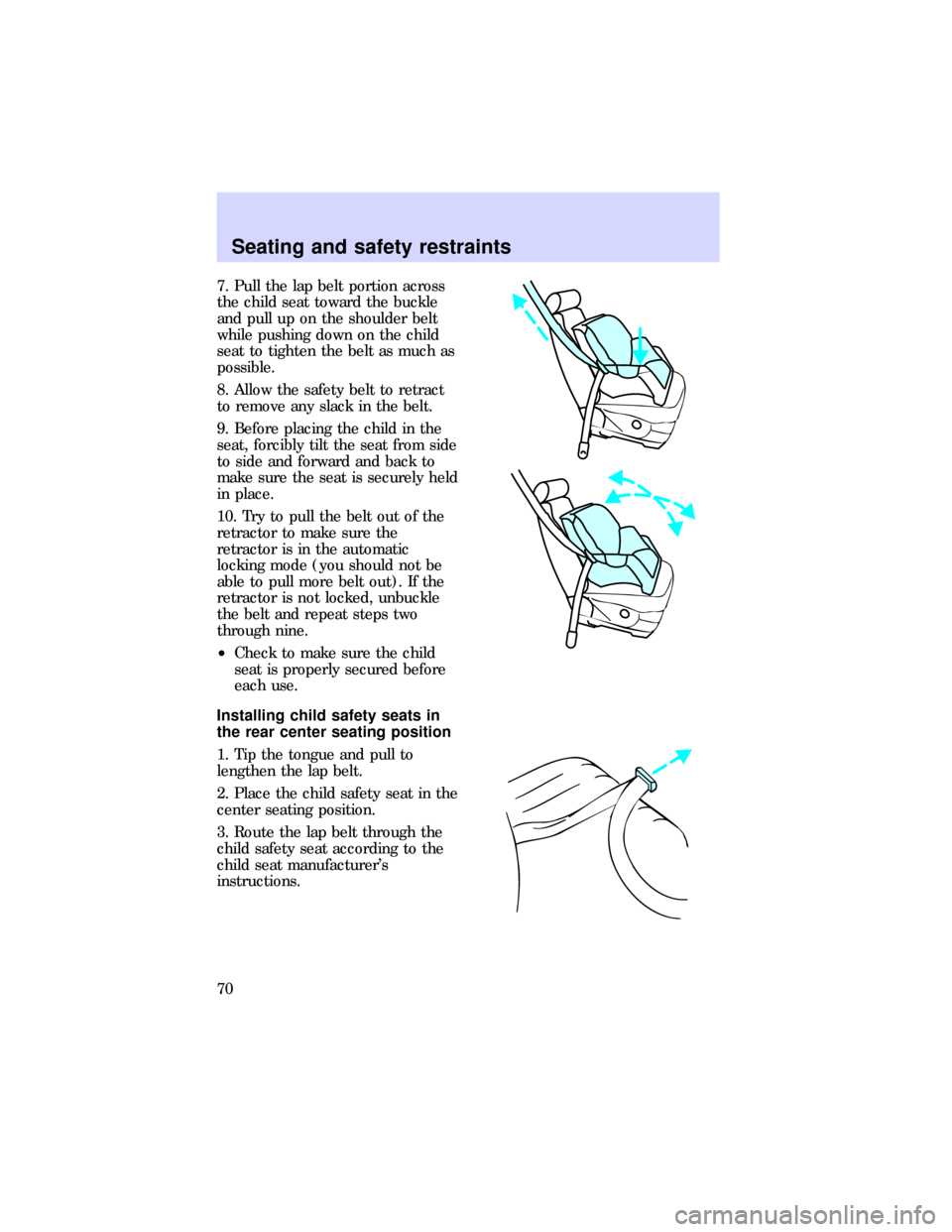
7. Pull the lap belt portion across
the child seat toward the buckle
and pull up on the shoulder belt
while pushing down on the child
seat to tighten the belt as much as
possible.
8. Allow the safety belt to retract
to remove any slack in the belt.
9. Before placing the child in the
seat, forcibly tilt the seat from side
to side and forward and back to
make sure the seat is securely held
in place.
10. Try to pull the belt out of the
retractor to make sure the
retractor is in the automatic
locking mode (you should not be
able to pull more belt out). If the
retractor is not locked, unbuckle
the belt and repeat steps two
through nine.
²Check to make sure the child
seat is properly secured before
each use.
Installing child safety seats in
the rear center seating position
1. Tip the tongue and pull to
lengthen the lap belt.
2. Place the child safety seat in the
center seating position.
3. Route the lap belt through the
child safety seat according to the
child seat manufacturer's
instructions.
Seating and safety restraints
70
Page 75 of 191
Regularly inspect the lap and
shoulder belt system of your child
seat. If there is any damage to the
system or if it is not functioning
properly, see your dealer.
Placing your child in the built-in
child seat
Failure to follow all of the
instructions on the use of
this child restraint system can
result in your child striking the
vehicle's interior during a sudden
stop or crash.
Never use the built-in
child seat as a booster
cushion with the adult safety
belts. A child using the adult
belts could slide forward and out
from under the safety belts.
The rear seatback must be
fully locked before
operating the child restraint
system.
Seating and safety restraints
75
Page 76 of 191
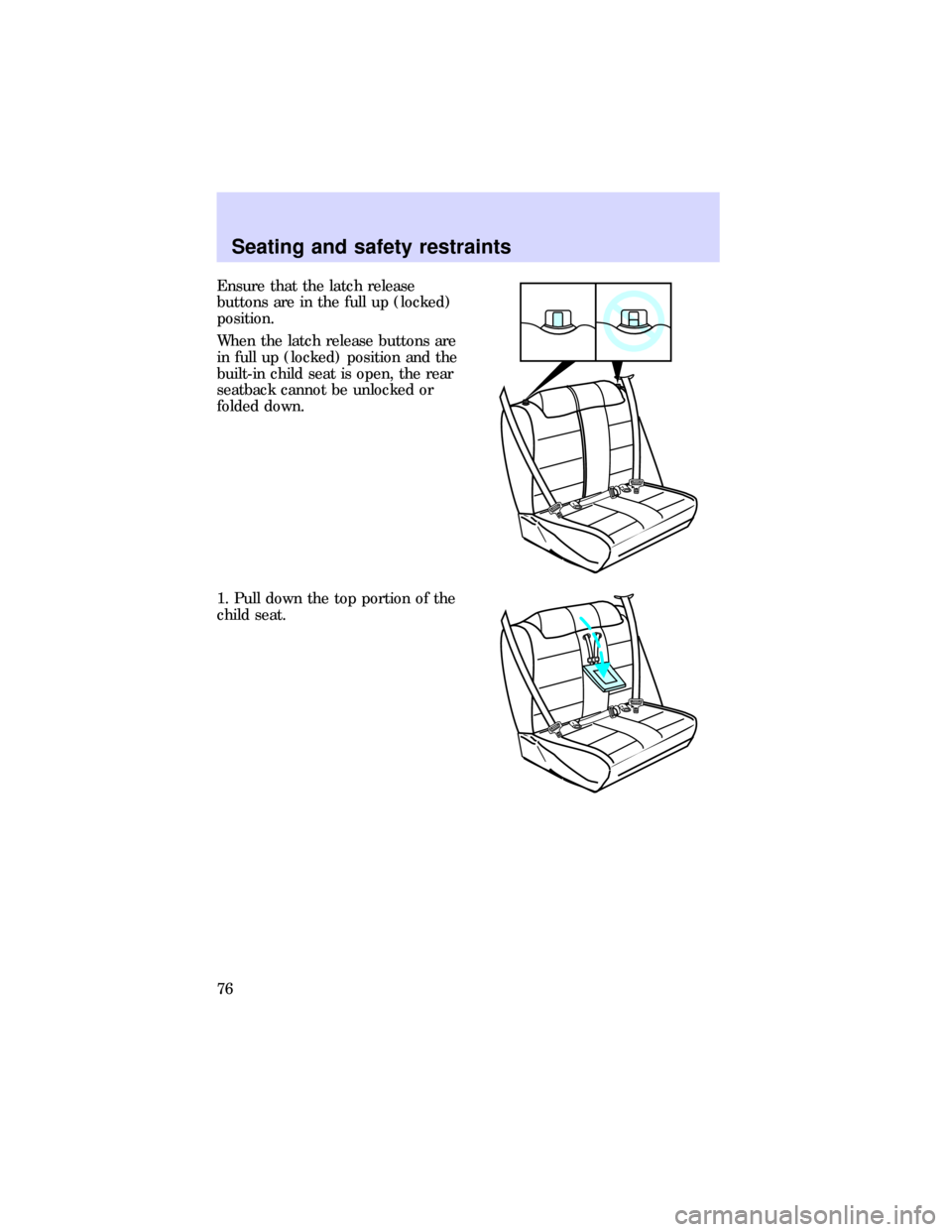
Ensure that the latch release
buttons are in the full up (locked)
position.
When the latch release buttons are
in full up (locked) position and the
built-in child seat is open, the rear
seatback cannot be unlocked or
folded down.
1. Pull down the top portion of the
child seat.
Seating and safety restraints
76
Page 80 of 191
If both tongues do not
latch in the buckle, do not
use the child seat. See your
dealer for repairs.
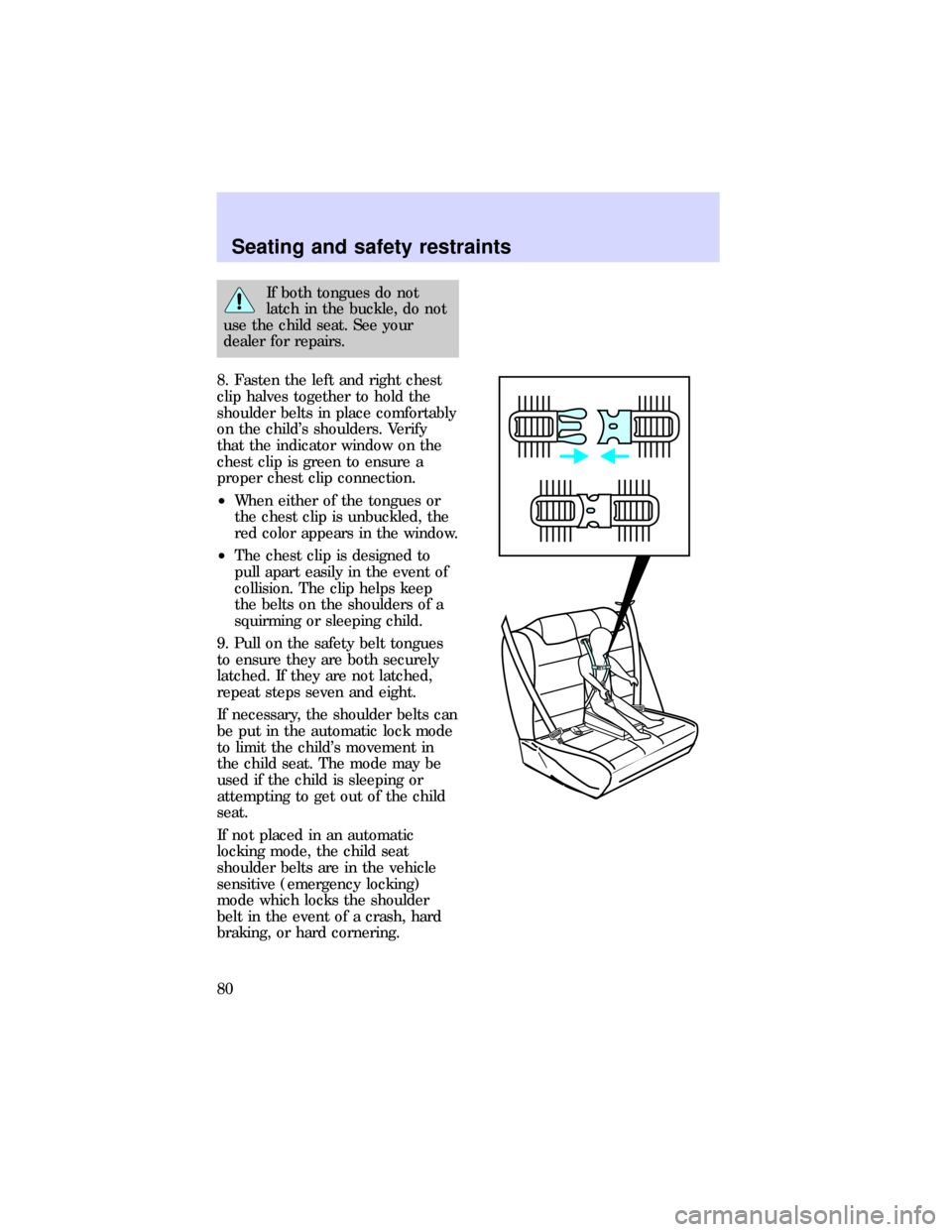
8. Fasten the left and right chest
clip halves together to hold the
shoulder belts in place comfortably
on the child's shoulders. Verify
that the indicator window on the
chest clip is green to ensure a
proper chest clip connection.
²When either of the tongues or
the chest clip is unbuckled, the
red color appears in the window.
²The chest clip is designed to
pull apart easily in the event of
collision. The clip helps keep
the belts on the shoulders of a
squirming or sleeping child.
9. Pull on the safety belt tongues
to ensure they are both securely
latched. If they are not latched,
repeat steps seven and eight.
If necessary, the shoulder belts can
be put in the automatic lock mode
to limit the child's movement in
the child seat. The mode may be
used if the child is sleeping or
attempting to get out of the child
seat.
If not placed in an automatic
locking mode, the child seat
shoulder belts are in the vehicle
sensitive (emergency locking)
mode which locks the shoulder
belt in the event of a crash, hard
braking, or hard cornering.
Seating and safety restraints
80
Page 81 of 191
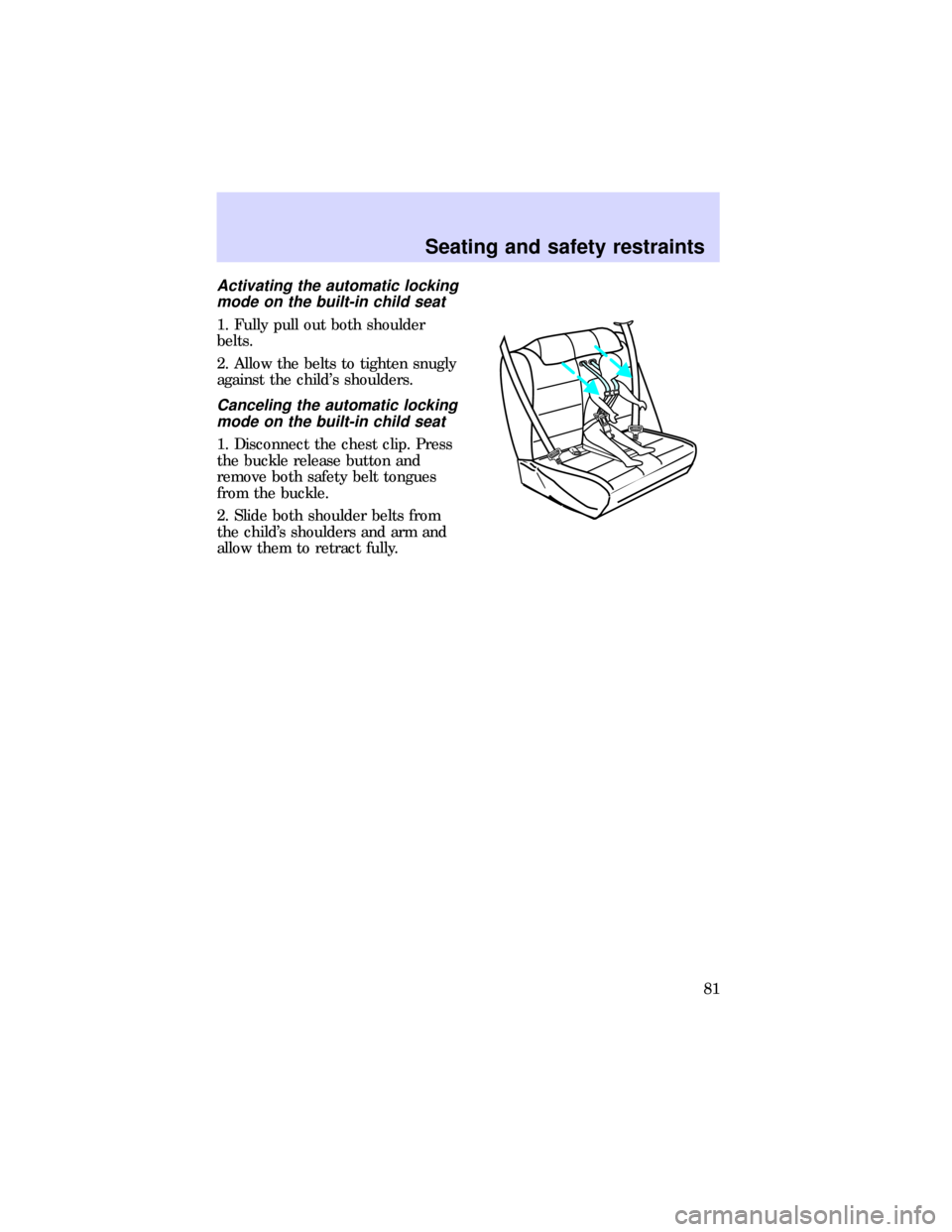
Activating the automatic locking
mode on the built-in child seat
1. Fully pull out both shoulder
belts.
2. Allow the belts to tighten snugly
against the child's shoulders.
Canceling the automatic locking
mode on the built-in child seat
1. Disconnect the chest clip. Press
the buckle release button and
remove both safety belt tongues
from the buckle.
2. Slide both shoulder belts from
the child's shoulders and arm and
allow them to retract fully.
Seating and safety restraints
81
Page 84 of 191
Inspecting the built-in child seat
after a collision
All built-in child restraints,
including seats, buckles,
retractors, seat latches,
interlocks, and attaching
hardware should be inspected by
a qualified Dealer technician
after any collision. If the child
seat was in use during a
collision, Ford recommends
replacing it. However, if the
collision was minor and a
qualified technician finds that
the child restraints do not show
damage and continue to operate
properly, they do not need to be
replaced. Built-in child seats not
in use during a collision should
also be inspected and replaced if
either damage or improper
operation is noted.
For information on cleaning your
built-in child seat, refer to
Cleaning the built-in child seat
in theMaintenance and care
section.
Seating and safety restraints
84