ABS FORD EXPLORER 1999 2.G User Guide
[x] Cancel search | Manufacturer: FORD, Model Year: 1999, Model line: EXPLORER, Model: FORD EXPLORER 1999 2.GPages: 264, PDF Size: 1.83 MB
Page 185 of 264
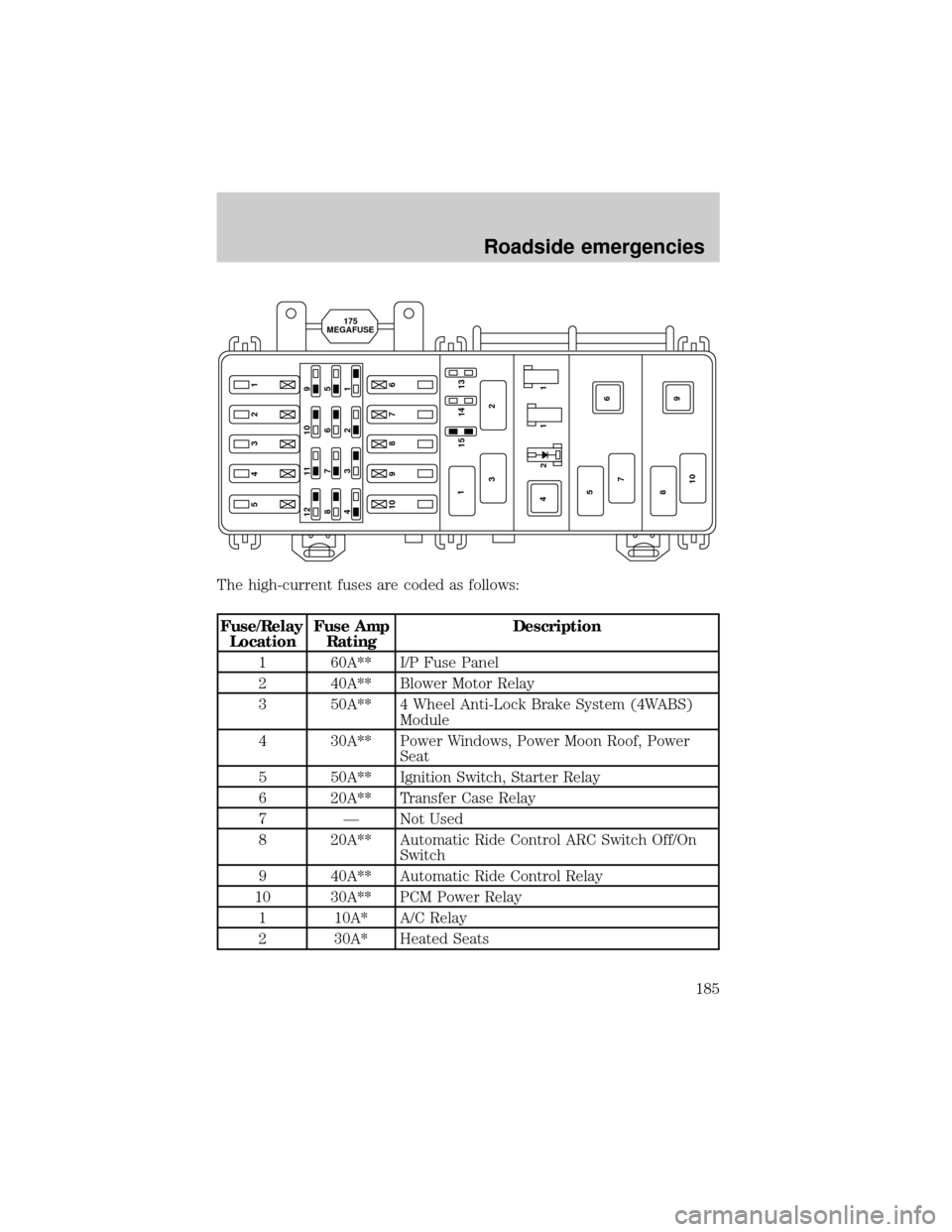
The high-current fuses are coded as follows:
Fuse/Relay
LocationFuse Amp
RatingDescription
1 60A** I/P Fuse Panel
2 40A** Blower Motor Relay
3 50A** 4 Wheel Anti-Lock Brake System (4WABS)
Module
4 30A** Power Windows, Power Moon Roof, Power
Seat
5 50A** Ignition Switch, Starter Relay
6 20A** Transfer Case Relay
7 Ð Not Used
8 20A** Automatic Ride Control ARC Switch Off/On
Switch
9 40A** Automatic Ride Control Relay
10 30A** PCM Power Relay
1 10A* A/C Relay
2 30A* Heated Seats
5432110 9 8 7 612 11 10 9
876 5
432 1
14 15 13
211
9 6
10 87 5 41
2 3
175
MEGAFUSE
Roadside emergencies
185
Page 186 of 264
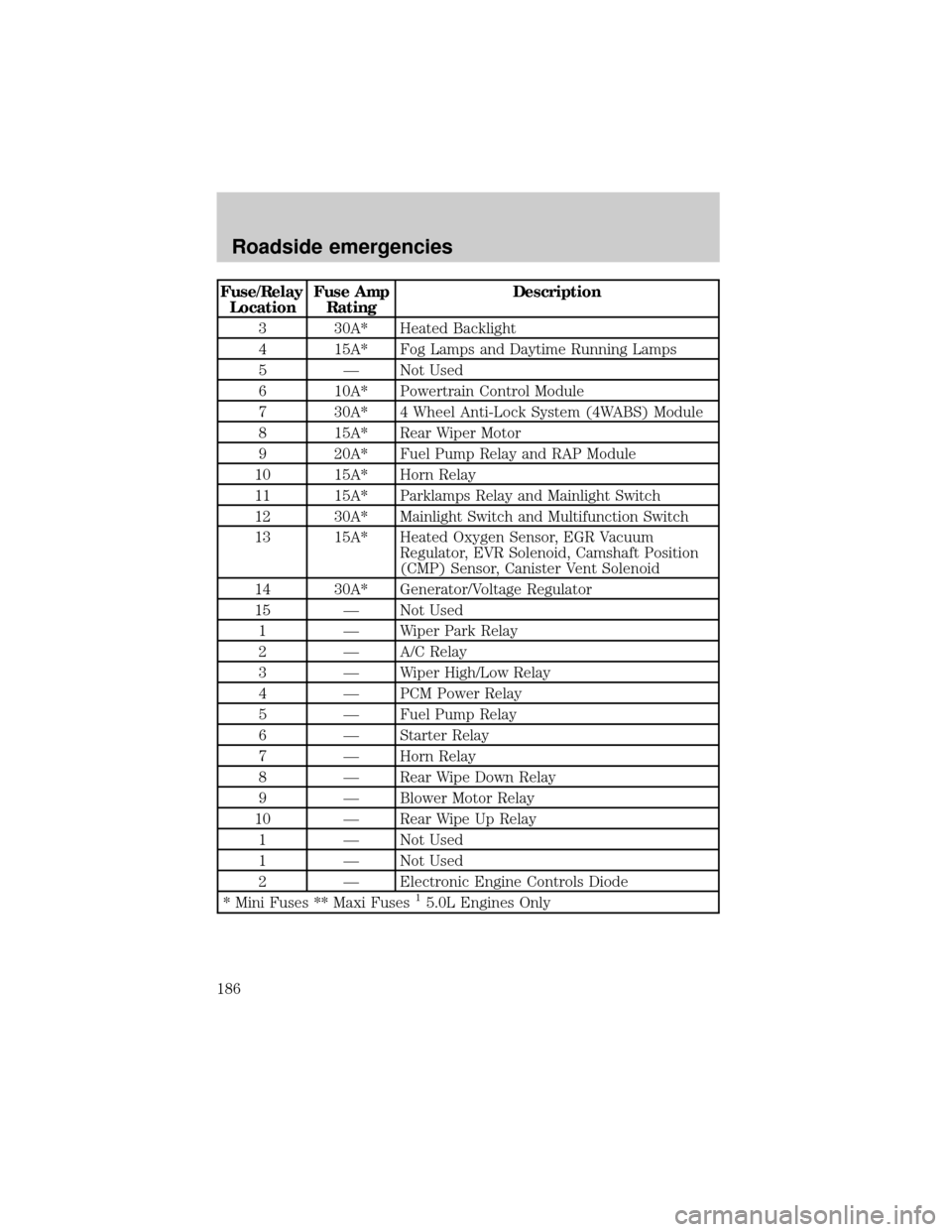
Fuse/Relay
LocationFuse Amp
RatingDescription
3 30A* Heated Backlight
4 15A* Fog Lamps and Daytime Running Lamps
5 Ð Not Used
6 10A* Powertrain Control Module
7 30A* 4 Wheel Anti-Lock System (4WABS) Module
8 15A* Rear Wiper Motor
9 20A* Fuel Pump Relay and RAP Module
10 15A* Horn Relay
11 15A* Parklamps Relay and Mainlight Switch
12 30A* Mainlight Switch and Multifunction Switch
13 15A* Heated Oxygen Sensor, EGR Vacuum
Regulator, EVR Solenoid, Camshaft Position
(CMP) Sensor, Canister Vent Solenoid
14 30A* Generator/Voltage Regulator
15 Ð Not Used
1 Ð Wiper Park Relay
2 Ð A/C Relay
3 Ð Wiper High/Low Relay
4 Ð PCM Power Relay
5 Ð Fuel Pump Relay
6 Ð Starter Relay
7 Ð Horn Relay
8 Ð Rear Wipe Down Relay
9 Ð Blower Motor Relay
10 Ð Rear Wipe Up Relay
1 Ð Not Used
1 Ð Not Used
2 Ð Electronic Engine Controls Diode
* Mini Fuses ** Maxi Fuses
15.0L Engines Only
Roadside emergencies
186
Page 228 of 264

²Avoid inhaling fuel vapors. Inhaling too much fuel vapor of any kind
can lead to eye and respiratory tract irritation. In severe cases,
excessive or prolonged breathing of fuel vapor can cause serious
illness and permanent injury.
²Avoid getting fuel liquid in your eyes. If fuel is splashed in the eyes,
remove contact lenses (if worn), flush with water for 15 minutes and
seek medical attention. Failure to seek proper medical attention could
lead to permanent injury.
²Fuels can also be harmful if absorbed through the skin. If fuel is
splashed on the skin and/or clothing, promptly remove contaminated
clothing and wash skin thoroughly with soap and water. Repeated or
prolonged skin contact with fuel liquid or vapor causes skin irritation.
²Be particularly careful if you are taking ªAntabuseº or other forms of
disulfiram for the treatment of alcoholism. Breathing gasoline vapors,
or skin contact could cause an adverse reaction. In sensitive
individuals, serious personal injury or sickness may result. If fuel is
splashed on the skin, promptly wash skin thoroughly with soap and
water. Consult a physician immediately if you experience an adverse
reaction.
Choosing the right fuel
Use only UNLEADED FUEL. The use of leaded fuel is prohibited by law
and could damage your vehicle.
Do not use gasolines containing methanol. It can damage critical fuel
systems components.
Vehicles certified to meet California emission standards (indicated on the
underhood Vehicle Emissions Control Information label) are designed to
operate on California cleaner-burning, low-sulfur gasolines. If you have a
California-certified vehicle and California cleanerÐburning gasoline is not
available when you refuel, your engine should perform adequately.
However, the performance of the emission control devices and systems
may be adversely affected. In New York and Massachusetts, which have
adopted California's emission standards without requiring the sale of
California cleaner-burning gasoline, repairs to correct the effects of using
non-California fuel may not be covered by the emissions warranty.
Your vehicle was not designed to use fuel or fuel additives with metallic
compounds, including manganese-based compounds containing (MMT).
Repairs to correct the effects of using a fuel for which your vehicle was
not designed may not be covered by your warranty.
Maintenance and care
228
Page 230 of 264
Running out of fuel
Avoid running out fuel because this situation may have an adverse affect
on powertrain components.
If you have run out of fuel:
²You may need to crank the engine several times before the system
starts to pump fuel from the tank to the engine.
²Your ªCheck Engineº light may come on. For more information on the
ªCheck Engineº light, refer to theInstrumentationchapter.
Fuel Filler Cap
Your fuel tank filler cap has an indexed design with a one-eighth turn
on/off feature.
When fueling your vehicle:
1. Turn the engine off.
2. Carefully turn the filler cap counterclockwise 1/8 of a turn until it
stops.
3. Pull to remove the cap from the fuel filler pipe.
4. To install the cap, align the tabs on the cap with the notches on the
filler pipe.
5. Turn the filler cap clockwise 1/8 of a turn until it stops.
If the ªService Engine Soon/Check Engine ª indicator comes on and stays
on when you start the engine, the fuel filler cap may not be properly
installed. Turn off the engine, remove the fuel filler cap and reinstall it
being careful to align the cap properly.
If you must replace the fuel filler cap, replace it with a genuine
Ford or Motorcraft part. The customer warranty may be void for
any damage to the fuel tank or fuel system if a genuine Ford or
Motorcraft fuel filler cap is not used.
The fuel system may be under pressure. If the fuel filler cap is
venting vapor or if you hear a hissing sound, wait until it stops
before completely removing the fuel filler cap. Otherwise, fuel may
spray out and injure you or others.
Maintenance and care
230
Page 238 of 264
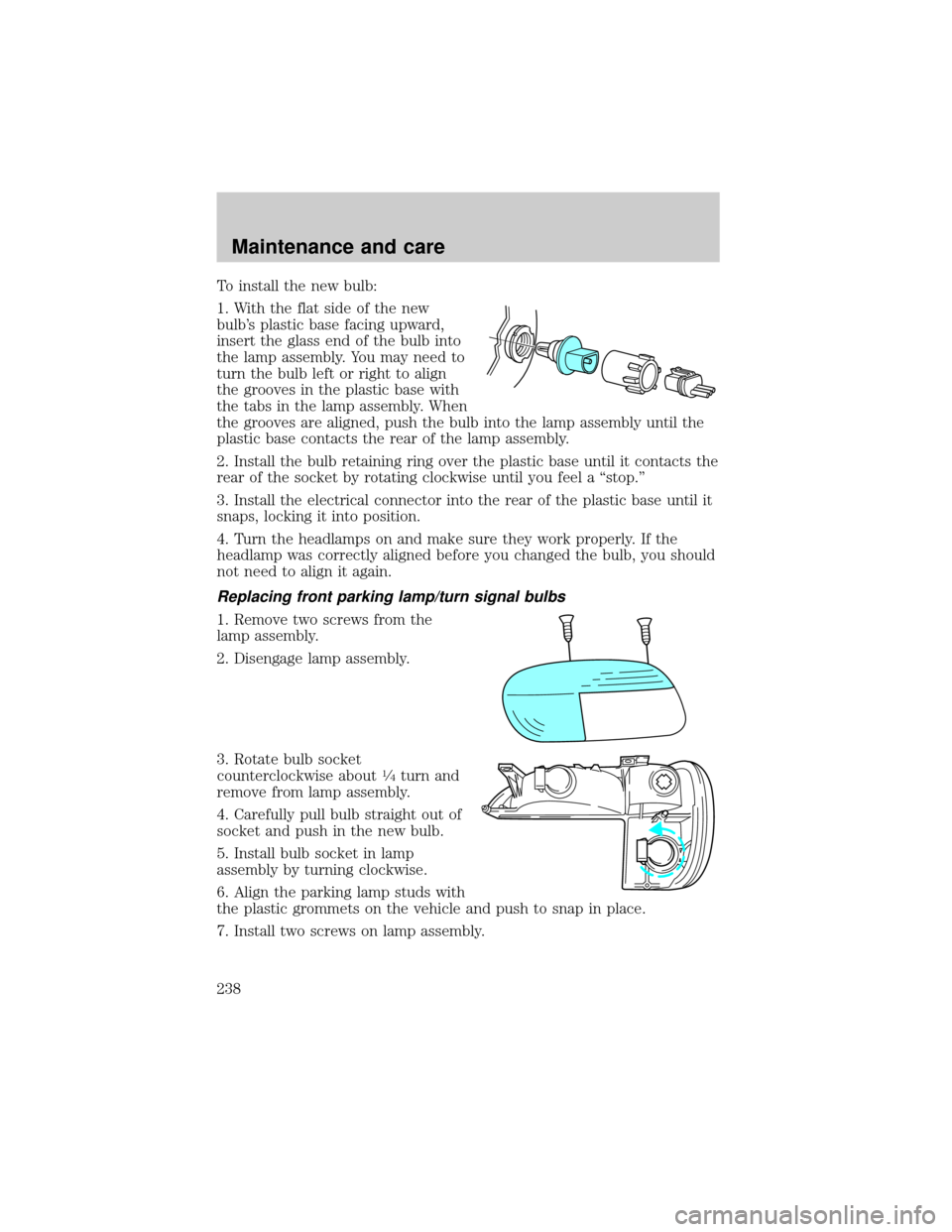
To install the new bulb:
1. With the flat side of the new
bulb's plastic base facing upward,
insert the glass end of the bulb into
the lamp assembly. You may need to
turn the bulb left or right to align
the grooves in the plastic base with
the tabs in the lamp assembly. When
the grooves are aligned, push the bulb into the lamp assembly until the
plastic base contacts the rear of the lamp assembly.
2. Install the bulb retaining ring over the plastic base until it contacts the
rear of the socket by rotating clockwise until you feel a ªstop.º
3. Install the electrical connector into the rear of the plastic base until it
snaps, locking it into position.
4. Turn the headlamps on and make sure they work properly. If the
headlamp was correctly aligned before you changed the bulb, you should
not need to align it again.
Replacing front parking lamp/turn signal bulbs
1. Remove two screws from the
lamp assembly.
2. Disengage lamp assembly.
3. Rotate bulb socket
counterclockwise about
1¤4turn and
remove from lamp assembly.
4. Carefully pull bulb straight out of
socket and push in the new bulb.
5. Install bulb socket in lamp
assembly by turning clockwise.
6. Align the parking lamp studs with
the plastic grommets on the vehicle and push to snap in place.
7. Install two screws on lamp assembly.
Maintenance and care
238
Page 257 of 264

Air bag supplemental restraint
system ........................................126
and child safety seats ............128
description .......................127,130
disposal ....................................133
indicator light ..................130,132
passenger air bag ............128,131
Air conditioning
automatic temperature
control system .23,24,25,26,27,28
rear seat controls .....................29
Air suspension
description ..............................148
warning light .............................10
All Wheel Drive (AWD),
driving off road .........................162
Armrests ....................................102
Automatic transmission
driving an automatic
overdrive .....150,151,152,153,154
Axle
refill capacities ........................247
Battery
voltage gauge ............................14
Brakes ........................................145
anti-lock ............................145,146
anti-lock brake system (ABS)
warning light ...........................146
fluid, checking and adding ....208
shift interlock ..........................149
Break-in period ..........................2,3
Cargo area shade ......................104
Cargo cover ...............................104
CD player .....................75,77,78,79
Child safety seats
attaching with tether straps ..138
in rear seat ..............................136
tether anchorage hardware ...138
Cleaning your vehicle ...............241
engine compartment ..............242
exterior .............................242,244
exterior lamps .........................244interior ..............................245,246
plastic parts ............................244
washing ....................................241
waxing .....................................242
wheels ......................................244
windows ..................................246
wiper blades ............................245
woodtone trim ........................246
Clutch
fluid ..........................................209
operation while driving ...154,155
recommended shift speeds ....156
Compass, electronic ....................90
calibration .................................92
set zone adjustment .................91
Console ...............................101,102
overhead ...............................87,88
rear ..........................................102
Controls
power seat ...............................117
Coolant ...............................212,213
checking and adding ..............211
refill capacities ........................213
Defrost
rear window ..............................30
Driveline universal joint and
slip yoke ....................................219
Driving under special
conditions ...........................161,164
sand ..................................160,163
snow and ice ......160,162,163,164
through water ..................160,163
Emission control system ..........234
Engine
check engine/service engine
soon light ....................................6
coolant .....................................210
idle speed control ...................219
service points ............203,204,205
starting after a collision .........178
Engine block heater .................143
Index
257
Page 258 of 264

Engine oil
checking and adding ..............207
dipstick ....................................205
specifications ...................205,207
Exhaust fumes ..........................143
Floor mats .................................103
Four-Wheel Drive
vehicles ..............................9,10,157
control trac .............................157
description .......................157,159
driving off road ................160,162
electronic shift ..........................31
Fuel
choosing the right fuel ...........228
comparisons with EPA fuel
economy estimates .................234
detergent in fuel .....................229
filling your vehicle
with fuel ...........................227,230
gauge .........................................14
quality ......................................229
running out of fuel .................230
safety information relating to
automotive fuels .....................227
Fuses ............................179,180,181
Gas mileage
(see Fuel economy) .........231,232,
233,234
Gauges .........................................11
engine coolant temperature
gauge .........................................12
engine oil pressure gauge ........14
GVWR
(Gross Vehicle Weight Rating)
calculating ...............................167
Hazard flashers .........................178
Head restraints ...........116,118,119
Headlamps
aiming ......................................241
autolamp system .......................97
bulb specifications ..................240
high beam ..............................9,19warning chime ..........................11
Heating ........................................20
heating and air conditioning
system .............................20,21,22
Hood ..........................................201
Ignition .......................................252
Inspection/maintenance (I/M)
testing ........................................236
Instrument panel
cleaning ...................................245
Keyless entry system
autolock ............................109,110
keypad .....................................111
locking and unlocking doors ..112
programming entry
code ..................................111,112
Keys
key in ignition chime ...............11
positions of the ignition ...........79
Lamps
daytime running light ...............19
fog lamps ...................................19
headlamps .................................19
headlamps, flash to pass ..........20
instrument panel, dimming .....20
replacing bulbs ...............236,237,
238,239,240
Lane change indicator
(see Turn signal) ........................79
Liftgate ......................................103
Lights, warning and indicator
air bag ..........................................7
anti-lock brakes (ABS) ..............8
anti-theft .....................................9
brake ............................................8
charging system ..........................9
check coolant ..............................9
cruise indicator .........................10
door ajar ....................................10
fuel reset .....................................7
overdrive off ..............................10
safety belt ...................................8
Index
258