radio FORD EXPLORER SPORT TRAC 2002 User Guide
[x] Cancel search | Manufacturer: FORD, Model Year: 2002, Model line: EXPLORER SPORT TRAC, Model: FORD EXPLORER SPORT TRAC 2002Pages: 200, PDF Size: 3.34 MB
Page 28 of 200
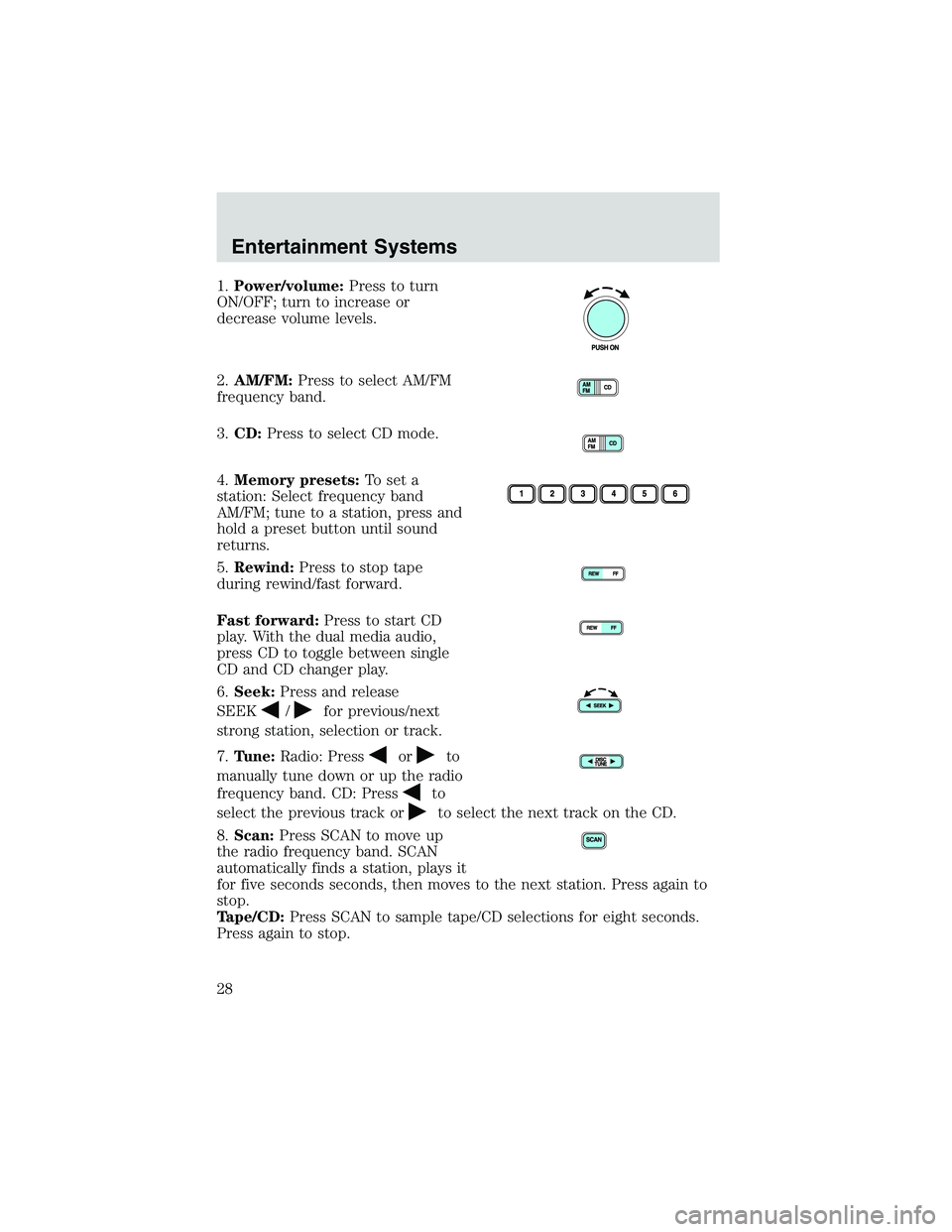
1.Power/volume:Press to turn
ON/OFF; turn to increase or
decrease volume levels.
2.AM/FM:Press to select AM/FM
frequency band.
3.CD:Press to select CD mode.
4.Memory presets:To set a
station: Select frequency band
AM/FM; tune to a station, press and
hold a preset button until sound
returns.
5.Rewind:Press to stop tape
during rewind/fast forward.
Fast forward:Press to start CD
play. With the dual media audio,
press CD to toggle between single
CD and CD changer play.
6.Seek:Press and release
SEEK
/for previous/next
strong station, selection or track.
7.Tune:Radio: Press
orto
manually tune down or up the radio
frequency band. CD: Press
to
select the previous track or
to select the next track on the CD.
8.Scan:Press SCAN to move up
the radio frequency band. SCAN
automatically finds a station, plays it
for five seconds seconds, then moves to the next station. Press again to
stop.
Tape/CD:Press SCAN to sample tape/CD selections for eight seconds.
Press again to stop.
Entertainment Systems
28
Page 30 of 200
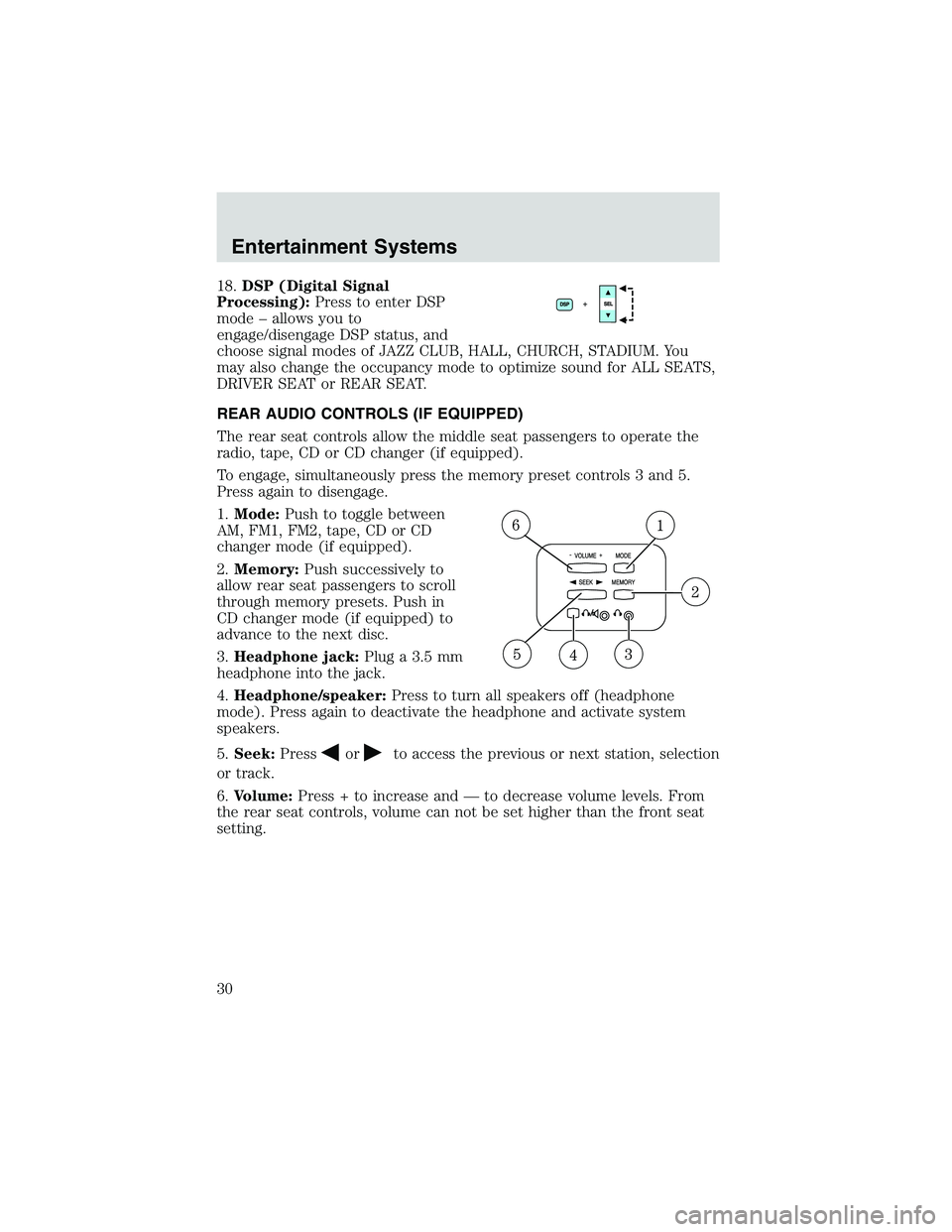
18.DSP (Digital Signal
Processing):Press to enter DSP
mode–allows you to
engage/disengage DSP status, and
choose signal modes of JAZZ CLUB, HALL, CHURCH, STADIUM. You
may also change the occupancy mode to optimize sound for ALL SEATS,
DRIVER SEAT or REAR SEAT.
REAR AUDIO CONTROLS (IF EQUIPPED)
The rear seat controls allow the middle seat passengers to operate the
radio, tape, CD or CD changer (if equipped).
To engage, simultaneously press the memory preset controls 3 and 5.
Press again to disengage.
1.Mode:Push to toggle between
AM, FM1, FM2, tape, CD or CD
changer mode (if equipped).
2.Memory:Push successively to
allow rear seat passengers to scroll
through memory presets. Push in
CD changer mode (if equipped) to
advance to the next disc.
3.Headphone jack:Plug a 3.5 mm
headphone into the jack.
4.Headphone/speaker:Press to turn all speakers off (headphone
mode). Press again to deactivate the headphone and activate system
speakers.
5.Seek:Press
orto access the previous or next station, selection
or track.
6.Volume:Press + to increase and—to decrease volume levels. From
the rear seat controls, volume can not be set higher than the front seat
setting.
Entertainment Systems
30
Page 62 of 200
2. Pressand release again within three seconds to confirm that all the
doors are closed and locked.Note:the doors will lock again, the horn
will chirp once and the headlamps will flash.
If any of the doors are not properly closed the horn will make two quick
chirps.
Sounding a panic alarm
Press
to activate the alarm. The horn will sound for a maximum of
30 seconds and the parklamps will flash for a maximum of 3 minutes.
Press again or turn the ignition to ON to deactivate, or wait for the alarm
to timeout in 3 minutes.
Note:The panic alarm will only operate when the ignition is in the OFF
or ACC position.
Replacing the battery
The remote entry transmitter uses one coin type three-volt lithium
battery CR2032 or equivalent. The typical operating range for your
remote entry transmitter is approximately 10 meters (33 feet). A
decrease in the operating range could be caused by:
•weather conditions,
•nearby radio towers,
•structures around the vehicle and
•other vehicles parked next to the vehicle.
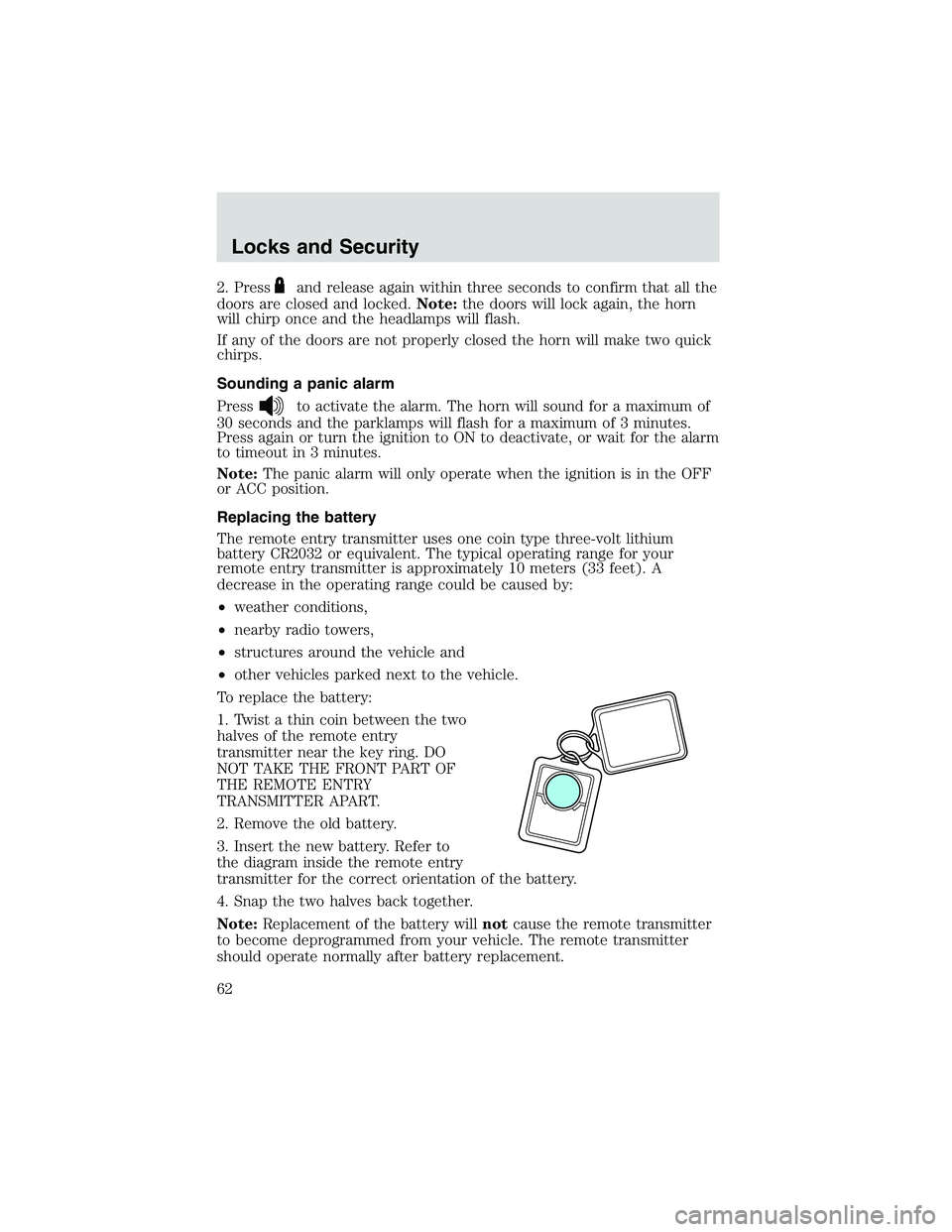
To replace the battery:
1. Twist a thin coin between the two
halves of the remote entry
transmitter near the key ring. DO
NOT TAKE THE FRONT PART OF
THE REMOTE ENTRY
TRANSMITTER APART.
2. Remove the old battery.
3. Insert the new battery. Refer to
the diagram inside the remote entry
transmitter for the correct orientation of the battery.
4. Snap the two halves back together.
Note:Replacement of the battery willnotcause the remote transmitter
to become deprogrammed from your vehicle. The remote transmitter
should operate normally after battery replacement.
Locks and Security
62
Page 99 of 200
STARTING YOUR VEHICLE
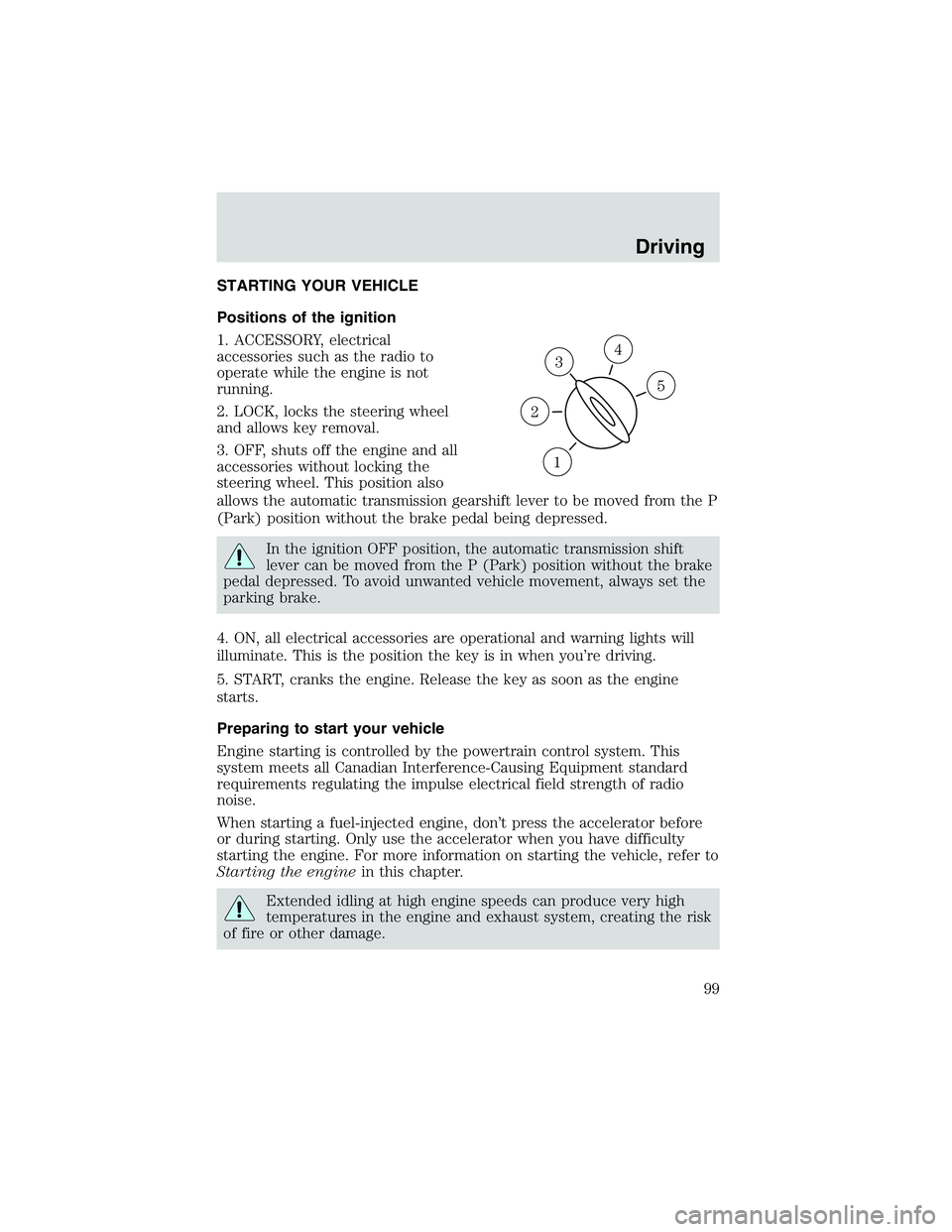
Positions of the ignition
1. ACCESSORY, electrical
accessories such as the radio to
operate while the engine is not
running.
2. LOCK, locks the steering wheel
and allows key removal.
3. OFF, shuts off the engine and all
accessories without locking the
steering wheel. This position also
allows the automatic transmission gearshift lever to be moved from the P
(Park) position without the brake pedal being depressed.
In the ignition OFF position, the automatic transmission shift
lever can be moved from the P (Park) position without the brake
pedal depressed. To avoid unwanted vehicle movement, always set the
parking brake.
4. ON, all electrical accessories are operational and warning lights will
illuminate. This is the position the key is in when you’re driving.
5. START, cranks the engine. Release the key as soon as the engine
starts.
Preparing to start your vehicle
Engine starting is controlled by the powertrain control system. This
system meets all Canadian Interference-Causing Equipment standard
requirements regulating the impulse electrical field strength of radio
noise.
When starting a fuel-injected engine, don’t press the accelerator before
or during starting. Only use the accelerator when you have difficulty
starting the engine. For more information on starting the vehicle, refer to
Starting the enginein this chapter.
Extended idling at high engine speeds can produce very high
temperatures in the engine and exhaust system, creating the risk
of fire or other damage.
3
1
2
5
4
Driving
99
Page 193 of 200
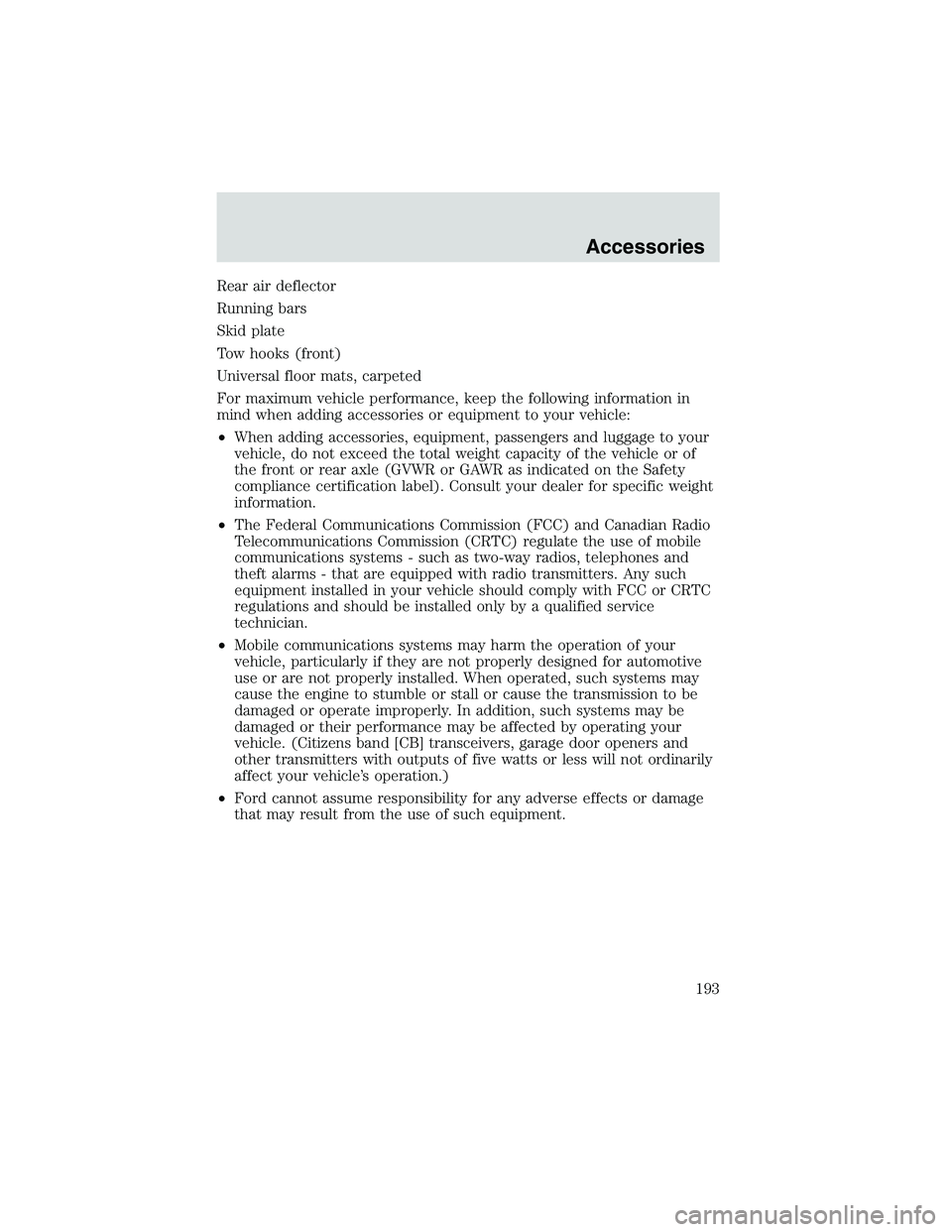
Rear air deflector
Running bars
Skid plate
Tow hooks (front)
Universal floor mats, carpeted
For maximum vehicle performance, keep the following information in
mind when adding accessories or equipment to your vehicle:
•When adding accessories, equipment, passengers and luggage to your
vehicle, do not exceed the total weight capacity of the vehicle or of
the front or rear axle (GVWR or GAWR as indicated on the Safety
compliance certification label). Consult your dealer for specific weight
information.
•The Federal Communications Commission (FCC) and Canadian Radio
Telecommunications Commission (CRTC) regulate the use of mobile
communications systems - such as two-way radios, telephones and
theft alarms - that are equipped with radio transmitters. Any such
equipment installed in your vehicle should comply with FCC or CRTC
regulations and should be installed only by a qualified service
technician.
•Mobile communications systems may harm the operation of your
vehicle, particularly if they are not properly designed for automotive
use or are not properly installed. When operated, such systems may
cause the engine to stumble or stall or cause the transmission to be
damaged or operate improperly. In addition, such systems may be
damaged or their performance may be affected by operating your
vehicle. (Citizens band [CB] transceivers, garage door openers and
other transmitters with outputs of five watts or less will not ordinarily
affect your vehicle’s operation.)
•Ford cannot assume responsibility for any adverse effects or damage
that may result from the use of such equipment.
Accessories
193
Page 194 of 200
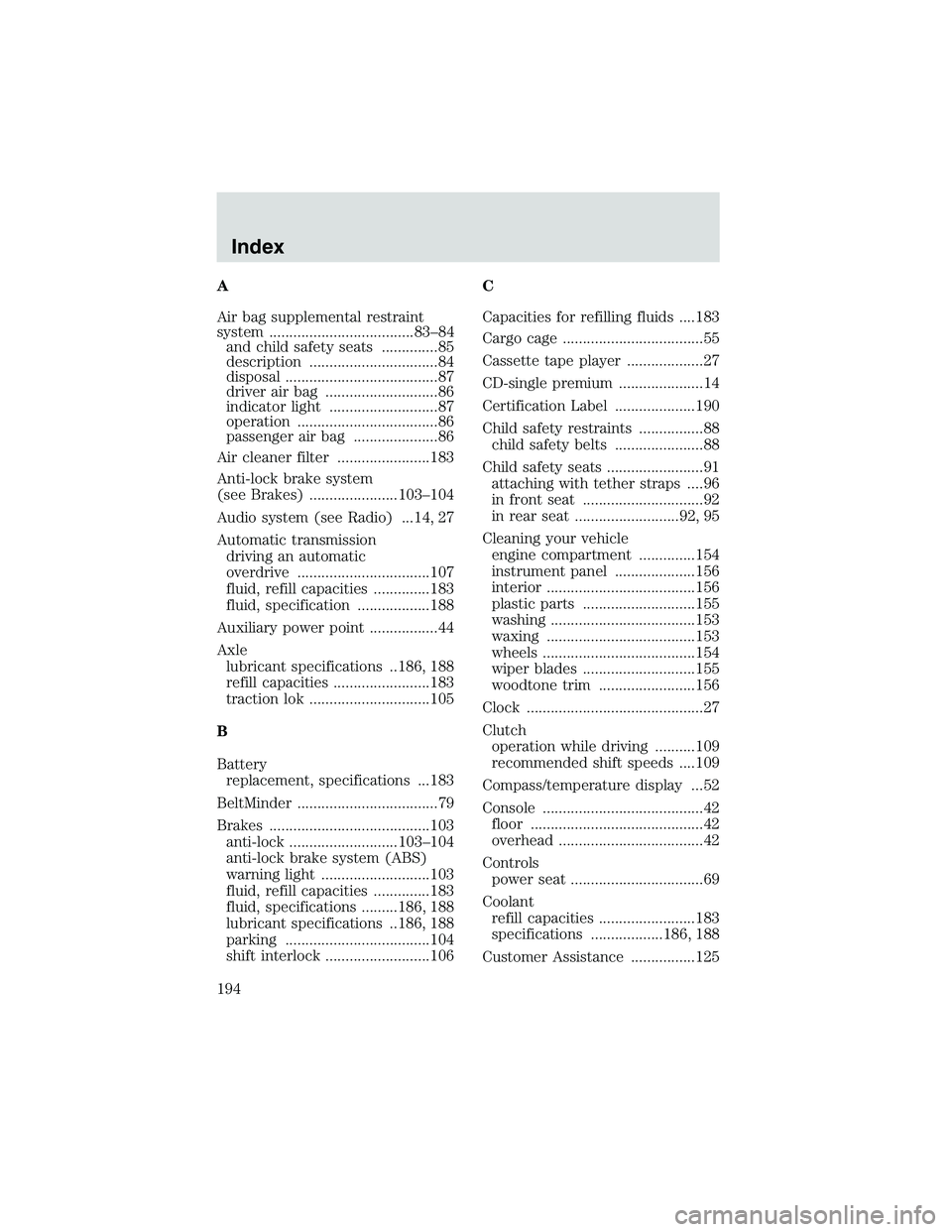
A
Air bag supplemental restraint
system ....................................83–84
and child safety seats ..............85
description ................................84
disposal ......................................87
driver air bag ............................86
indicator light ...........................87
operation ...................................86
passenger air bag .....................86
Air cleaner filter .......................183
Anti-lock brake system
(see Brakes) ......................103–104
Audio system (see Radio) ...14, 27
Automatic transmission
driving an automatic
overdrive .................................107
fluid, refill capacities ..............183
fluid, specification ..................188
Auxiliary power point .................44
Axle
lubricant specifications ..186, 188
refill capacities ........................183
traction lok ..............................105
B
Battery
replacement, specifications ...183
BeltMinder ...................................79
Brakes ........................................103
anti-lock ...........................103–104
anti-lock brake system (ABS)
warning light ...........................103
fluid, refill capacities ..............183
fluid, specifications .........186, 188
lubricant specifications ..186, 188
parking ....................................104
shift interlock ..........................106C
Capacities for refilling fluids ....183
Cargo cage ...................................55
Cassette tape player ...................27
CD-single premium .....................14
Certification Label ....................190
Child safety restraints ................88
child safety belts ......................88
Child safety seats ........................91
attaching with tether straps ....96
in front seat ..............................92
in rear seat ..........................92, 95
Cleaning your vehicle
engine compartment ..............154
instrument panel ....................156
interior .....................................156
plastic parts ............................155
washing ....................................153
waxing .....................................153
wheels ......................................154
wiper blades ............................155
woodtone trim ........................156
Clock ............................................27
Clutch
operation while driving ..........109
recommended shift speeds ....109
Compass/temperature display ...52
Console ........................................42
floor ...........................................42
overhead ....................................42
Controls
power seat .................................69
Coolant
refill capacities ........................183
specifications ..................186, 188
Customer Assistance ................125
Index
194
Page 196 of 200
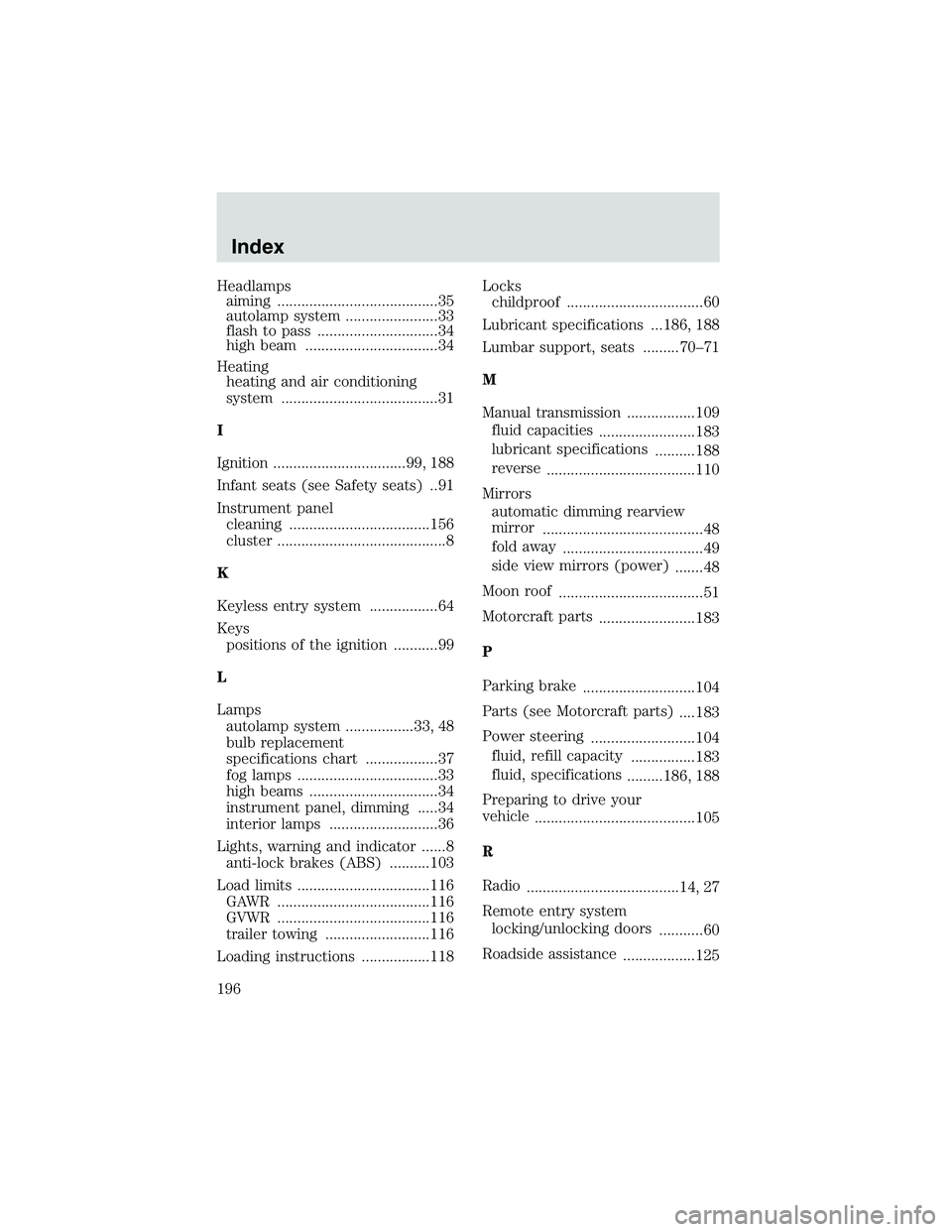
Headlamps
aiming ........................................35
autolamp system .......................33
flash to pass ..............................34
high beam .................................34
Heating
heating and air conditioning
system .......................................31
I
Ignition .................................99, 188
Infant seats (see Safety seats) ..91
Instrument panel
cleaning ...................................156
cluster ..........................................8
K
Keyless entry system .................64
Keys
positions of the ignition ...........99
L
Lamps
autolamp system .................33, 48
bulb replacement
specifications chart ..................37
fog lamps ...................................33
high beams ................................34
instrument panel, dimming .....34
interior lamps ...........................36
Lights, warning and indicator ......8
anti-lock brakes (ABS) ..........103
Load limits .................................116
GAWR ......................................116
GVWR ......................................116
trailer towing ..........................116
Loading instructions .................118Locks
childproof ..................................60
Lubricant specifications ...186, 188
Lumbar support, seats .........70–71
M
Manual transmission .................109
fluid capacities
........................183
lubricant specifications
..........188
reverse
.....................................110
Mirrors
automatic dimming rearview
mirror
........................................48
fold away
...................................49
side view mirrors (power)
.......48
Moon roof
....................................51
Motorcraft parts
........................183
P
Parking brake
............................104
Parts (see Motorcraft parts)
....183
Power steering
..........................104
fluid, refill capacity
................183
fluid, specifications
.........186, 188
Preparing to drive your
vehicle
........................................105
R
Radio
......................................14, 27
Remote entry system
locking/unlocking doors
...........60
Roadside assistance
..................125
Index
196