trailer FORD F-59 2019 Owner's Guide
[x] Cancel search | Manufacturer: FORD, Model Year: 2019, Model line: F-59, Model: FORD F-59 2019Pages: 176, PDF Size: 9.98 MB
Page 103 of 176
2.If you are a member of a roadsideassistance program, we recommendthat you contact your roadsideassistance service provider.
3.If this is not possible, wait a shortperiod for the engine to cool.
4.Check the coolant level. If the coolantlevel is at or below the minimum mark,add prediluted coolant immediately.
5.When the engine temperature cools,you can re-start the engine. Have yourvehicle checked as soon as possible tominimize engine damage.
Note:Driving your vehicle without repairincreases the chance of engine damage.
Engine Coolant TemperatureManagement (If Equipped)
WARNING: To reduce the risk ofcrash and injury, be prepared that thevehicle speed may reduce and thevehicle may not be able to acceleratewith full power until the coolanttemperature reduces.
If you tow a trailer with your vehicle, theengine may temporarily reach a highertemperature during severe operatingconditions, for example ascending a longor steep grade in high ambienttemperatures.
At this time, you may notice the coolanttemperature gauge moves toward the redzone and a message may appear in theinformation display.
You may notice a reduction in vehiclespeed caused by reduced engine power inorder to manage the engine coolanttemperature. Your vehicle may enter thismode if certain high-temperature andhigh-load conditions take place. Theamount of speed reduction depends onvehicle loading, grade and ambienttemperature. If this occurs, there is no needto pull off the road, you can continue todrive your vehicle.
The air conditioning may automaticallyturn on and off during severe operatingconditions to protect the engine fromoverheating. When the coolanttemperature decreases to the normaloperating temperature, the air conditioningturns on.
If the coolant temperature gauge movesfully into the red zone, or if the coolanttemperature warning or service enginesoon messages appear in your informationdisplay, do the following:
1.Pull off the road as soon as safelypossible and shift the transmission intopark (P).
2.Leave the engine running until thecoolant temperature gauge needlereturns to the normal position. Afterseveral minutes, if the temperaturedoes not drop, follow the remainingsteps.
3.Switch the engine off and wait for it tocool. Check the coolant level.
4.If the coolant level is at or below theminimum mark, add prediluted coolantimmediately.
5.If the coolant level is normal, restartthe engine and continue.
100
Motorhome (TY3) Canada/United States of America, enUSA, Edition date: 201803, Third-Printing-Maintenance
Page 104 of 176
AUTOMATIC TRANSMISSION
FLUID CHECK
WARNING: The dipstick andsurrounding components are hot. Usegloves when moving components andchecking the transmission fluid level.Failure to follow this warning could resultin serious personal injury.
Note:Automatic transmission fluidexpands when warmed. To obtain anaccurate fluid check, drive the vehicle untilit is at normal operating temperature(approximately 20 mi (30 km)). If yourvehicle has been operated for an extendedperiod at high speeds, in city traffic duringhot weather or pulling a trailer, the vehicleshould be turned off for about 30 minutesto allow fluid to cool to normal operatingtemperature 196°F - 215°F (91°C - 102°C)before checking.
Refer to your scheduled maintenanceinformation for scheduled intervals for fluidchecks and changes.
Your transmission does not consume fluid.However, the fluid level should be checkedif the transmission is not working properly,(i.e., if the transmission slips or shiftsslowly) or if you notice some sign of fluidleakage. To check the fluid level:
1.Drive the vehicle 20 mi (30 km) or untilit reaches normal operatingtemperature
2.Park the vehicle on a level surface andengage the parking brake
3.With the engine running, parking brakeengaged and your foot on the brakepedal, move the gearshift lever throughall of the gear ranges. Allow sufficienttime for each gear to engage
4.Latch the gearshift lever in P (Park)and leave the engine running.
5.Remove the dipstick, wiping it cleanwith a clean, dry lint free rag. Ifnecessary, refer to Under HoodOverview in this chapter for thelocation of the dipstick.
6.Install the dipstick making sure it is fullyseated in the filler tube.
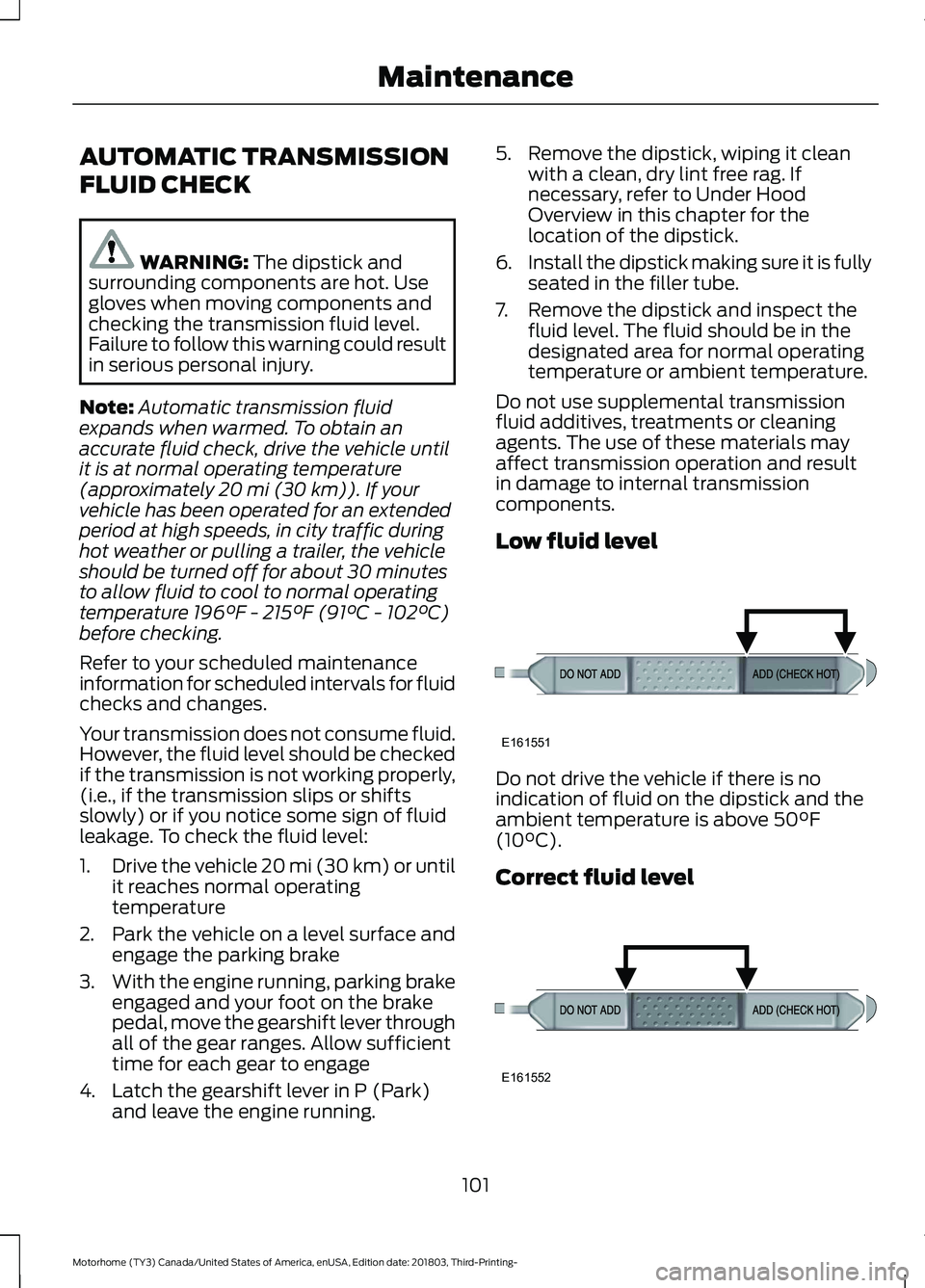
7.Remove the dipstick and inspect thefluid level. The fluid should be in thedesignated area for normal operatingtemperature or ambient temperature.
Do not use supplemental transmissionfluid additives, treatments or cleaningagents. The use of these materials mayaffect transmission operation and resultin damage to internal transmissioncomponents.
Low fluid level
Do not drive the vehicle if there is noindication of fluid on the dipstick and theambient temperature is above 50°F(10°C).
Correct fluid level
101
Motorhome (TY3) Canada/United States of America, enUSA, Edition date: 201803, Third-Printing-MaintenanceE161551 E161552
Page 133 of 176
A dissimilar spare wheel and tire assemblyis defined as a spare wheel and tireassembly that is different in brand, size orappearance from the road tires and wheelsand can be one of three types:
1.T-type mini-spare: This spare tirebegins with the letter T for tire size andmay have Temporary Use Only molded inthe sidewall.
2.Full-size dissimilar spare with labelon wheel: This spare tire has a label onthe wheel that states: THIS WHEEL ANDTIRE ASSEMBLY FOR TEMPORARY USEONLY.
When driving with one of the dissimilarspare tires listed above, do not:
•Exceed 50 mph (80 km/h).
•Load the vehicle beyond maximumvehicle load rating listed on the SafetyCompliance Label.
•Tow a trailer.
•Use snow chains on the end of thevehicle with the dissimilar spare tire.
•Use more than one dissimilar spare tireat a time.
•Use commercial car washingequipment.
•Try to repair the dissimilar spare tire.
Use of one of the dissimilar spare tireslisted above at any one wheel location canlead to impairment of the following:
•Handling, stability and brakingperformance.
•Comfort and noise.
•Ground clearance and parking at curbs.
•Winter weather driving capability.
•Wet weather driving capability.
•All-wheel driving capability.
3.Full-size dissimilar spare withoutlabel on wheel
When driving with the full-size dissimilarspare wheel and tire assembly, do not:
•Exceed 70 mph (113 km/h).
•Use more than one dissimilar sparewheel and tire assembly at a time.
•Use commercial car washingequipment.
•Use snow chains on the end of thevehicle with the dissimilar spare wheeland tire assembly.
The usage of a full-size dissimilar sparewheel and tire assembly can lead toimpairment of the following:
•Handling, stability and brakingperformance.
•Comfort and noise.
•Ground clearance and parking at curbs.
•Winter weather driving capability.
•Wet weather driving capability.
•All-wheel driving capability.
When driving with the full-size dissimilarspare wheel and tire assembly additionalcaution should be given to:
•Towing a trailer.
•Driving vehicles equipped with acamper body.
•Driving vehicles with a load on thecargo rack.
Drive cautiously when using a full-sizedissimilar spare wheel and tire assemblyand seek service as soon as possible.
Tire Change Procedure
WARNING: When one of the frontwheels is off the ground, thetransmission alone will not prevent thevehicle from moving or slipping off thejack, even if the transmission is in park(P).
130
Motorhome (TY3) Canada/United States of America, enUSA, Edition date: 201803, Third-Printing-Wheels and Tires
Page 153 of 176
SPECIAL OPERATING
CONDITIONS SCHEDULED
MAINTENANCE
If you operate your vehicle primarily in anyof the following conditions, you need to
perform extra maintenance as indicated.If you operate your vehicle occasionallyunder any of these conditions, it is notnecessary to perform the extramaintenance. For specificrecommendations, see your dealershipservice advisor or technician.
Towing a trailer or using a car-top carrier
Inspect U-joints.Inspect frequently, serviceas requiredSee axle maintenance items under Exceptions.
Inspect the wheels and related components for abnormalnoise, wear, looseness or drag.Every 5000 miles (8000km)
Rotate tires*, inspect tires for wear and measure treaddepth.
Change engine oil and filter.Every 5000 miles (8000km) or six monthsInspect U-joints.
Replace front wheel bearing grease and grease seals ifnon-sealed bearings are used.Every 30000 miles (48000km)
Replace spark plugs.Every 60000 miles (96000km)
*Vehicles equipped with dual rear wheels should rotate the front wheels when specified;rear wheels only if unusual wear is noted.
Extensive idling or low-speed driving for long distances, as in heavy commercial use(such as delivery, taxi, patrol car or livery)
Inspect brake system.Every 5000 miles (8000km)Inspect wheels and related components for abnormalnoise, wear, looseness or drag.
Rotate tires*, inspect tires for wear and measure treaddepth.
Inspect U-joints.Every 5000 miles (8000km) or six months
150
Motorhome (TY3) Canada/United States of America, enUSA, Edition date: 201803, Third-Printing-Scheduled Maintenance
Page 155 of 176
Rear axle fluid change or level check notrequired unless leak is suspected or theassembly has been submerged in water.During long periods of trailer towing withoutside temperatures above 70°F (21°C)and at wide-open throttle for long periodsabove 45 mph (72 km/h), change rear axlefluid every 24,000 mi (38,000 km) or threemonths, whichever comes first.
California fuel filter replacement: If youregister your vehicle in California, theCalifornia Air Resources Board hasdetermined that the failure to perform thismaintenance item does not nullify theemission warranty or limit recall liabilitybefore the completion of your vehicle'suseful life. Ford Motor Company, however,urges you to have all recommendedmaintenance services performed at thespecified intervals and to record all vehicleservice.
Hot climate oil change intervals:Vehicles operating in the Middle East,North Africa, Sub-Saharan Africa orlocations with similar climates using anAmerican Petroleum Institute (API)Certified for Gasoline Engines (Certificationmark) oil of SM or SN quality, the normaloil change interval is 5000 miles (8000kilometers).
If the available API SM or SN oils are notavailable, then the oil change interval is3000 miles (4800 kilometers).
Engine air filter and cabin air filterreplacement: The life of the engine airfilter and cabin air filter is dependent onexposure to dusty and dirty conditions.Vehicles operated in these conditionsrequire frequent inspection andreplacement of the engine air filter andcabin air filter.
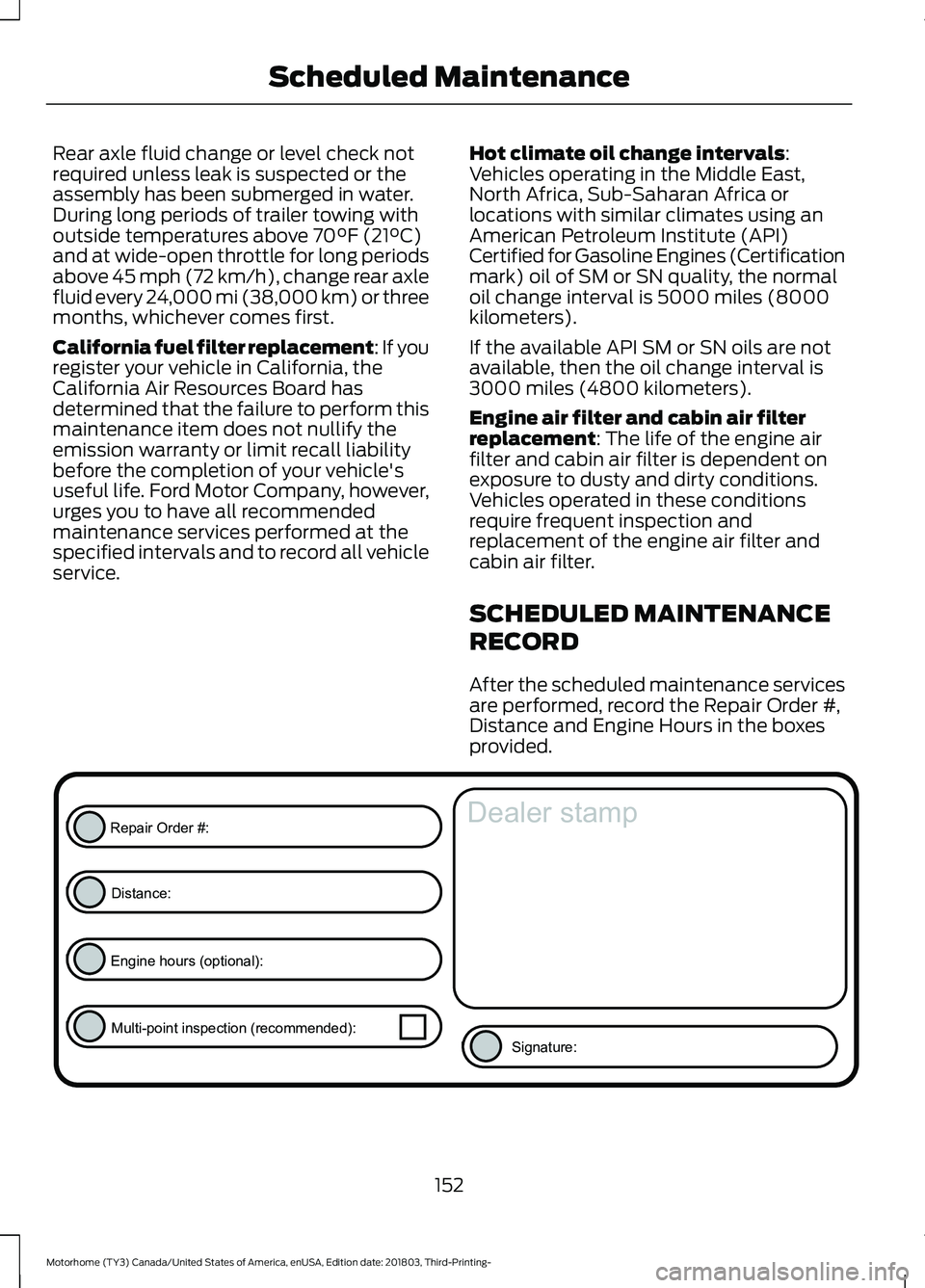
SCHEDULED MAINTENANCE
RECORD
After the scheduled maintenance servicesare performed, record the Repair Order #,Distance and Engine Hours in the boxesprovided.
152
Motorhome (TY3) Canada/United States of America, enUSA, Edition date: 201803, Third-Printing-Scheduled MaintenanceE146852RepairOrder#:Distance:Enginehours(optional):Multi-pointinspection(recommended):Signature:Dealerstamp
Page 173 of 176
E
Economical Driving.......................................56Electromagnetic Compatibility...............163Emission Law...................................................34Noise Emissions Warranty, ProhibitedTampering Acts and Maintenance...........35Tampering With a Noise ControlSystem................................................................34Engine Block Heater......................................27Using the Engine Block Heater........................27Engine Coolant Check..................................96Adding Coolant.....................................................97Coolant Change...................................................99Engine Coolant TemperatureManagement..................................................100Fail-Safe Cooling.................................................99Recycled Coolant.................................................98Severe Climates...................................................98Engine Emission Control.............................34Engine Oil Check............................................95Adding Engine Oil.................................................95Engine Oil Dipstick.........................................95Engine Specifications.................................134Drivebelt Routing................................................134Environment.......................................................11Essential Towing Checks.............................53Before Towing a Trailer......................................54Hitches.....................................................................53Launching or Retrieving a Boat or PersonalWatercraft (PWC)...........................................55Safety Chains.........................................................53Trailer Brakes.........................................................54Trailer Lamps.........................................................54When Towing a Trailer........................................54Export Unique Options.................................10
F
Flat TireSee: Changing a Road Wheel........................129Ford Credit...........................................................8US Only.......................................................................8Ford Protect....................................................143Ford Protect Extended Service Plan(CANADA ONLY)...........................................144Ford Protect Extended Service Plans (U.S.Only)...................................................................143
Fuel and Refueling.........................................29Fuel Consumption..........................................32Advertised Capacity............................................32Fuel Economy........................................................33Fuel Filter.........................................................105Fuel Quality......................................................29Choosing the Right Fuel....................................29Fuses....................................................................71Fuse Specification Chart..............................71Diode and Relay Module...................................83F53 Passenger Compartment FusePanel....................................................................84F53 Power Distribution Box...............................71
G
Gauges................................................................16Engine Coolant Temperature Gauge..............17Engine Oil Pressure Gauge.................................17Fuel Gauge...............................................................17Speedometer..........................................................17Transmission Fluid TemperatureGauge....................................................................17GearboxSee: Transmission................................................38General Maintenance Information.........145Multi-point Inspection.......................................147Owner Checks and Services...........................146Protecting Your Investment............................145Why Maintain Your Vehicle?..........................145Why Maintain Your Vehicle at YourDealership?......................................................145Getting Assistance Outside the U.S. andCanada............................................................67Getting the Services You Need.................64Away From Home................................................64
H
HandbrakeSee: Parking Brake...............................................42Hazard Flashers.............................................60Hints on Driving With Anti-LockBrakes...............................................................41
I
Ignition Switch.................................................25
170
Motorhome (TY3) Canada/United States of America, enUSA, Edition date: 201803, Third-Printing-Index
Page 174 of 176
In California (U.S. Only)...............................65Information Displays......................................21General Information.............................................21Information Messages..................................22Engine.......................................................................23Maintenance..........................................................23Transmission..........................................................24Instrument Cluster..........................................16Instrument Lighting Dimmer......................14Introduction........................................................5
J
Jump Starting the Vehicle..........................60Connecting the Jumper Cables........................61Jump Starting........................................................62Preparing Your Vehicle.......................................60Removing the Jumper Cables..........................62
L
Lighting Control...............................................14Flashing the Headlamp High Beam...............14Headlamp High Beam.........................................14Lighting...............................................................14Load Carrying..................................................45Load Limit.........................................................45Special Loading Instructions for Owners ofPick-up Trucks and Utility-typeVehicles...............................................................49Vehicle Loading - with and without aTrailer...................................................................45Lug NutsSee: Changing a Road Wheel........................129
M
Maintenance....................................................92General Information............................................92Message CenterSee: Information Displays..................................21Mobile Communications Equipment........9Motorcraft Parts............................................134
N
Normal Scheduled Maintenance...........148
O
Oil Change Indicator Reset........................96Resetting the Oil Life MonitoringSystem................................................................96Oil CheckSee: Engine Oil Check........................................95Ordering Additional Owner'sLiterature........................................................69Obtaining a French Owner’s Manual...........69
P
Parking Brake...................................................42Perchlorate..........................................................7Power Steering Fluid Check.....................104Steering linkage lubrication points..............104Protecting the Environment.........................11PunctureSee: Changing a Road Wheel........................129
R
Recommended Towing Weights...............51Reduced Engine Performance..................56Refueling.............................................................31Replacement PartsRecommendation.........................................8Collision Repairs......................................................8Scheduled Maintenance and MechanicalRepairs...................................................................8Warranty on Replacement Parts......................8Reporting Safety Defects (CanadaOnly)................................................................69Reporting Safety Defects (U.S.Only)................................................................69Roadside Assistance....................................59Vehicles Sold in Canada: Getting RoadsideAssistance.........................................................60Vehicles Sold in the United States: GettingRoadside Assistance.....................................59Vehicles Sold in the United States: UsingRoadside Assistance.....................................59Roadside Emergencies................................59Running-InSee: Breaking-In...................................................56Running Out of Fuel......................................30
171
Motorhome (TY3) Canada/United States of America, enUSA, Edition date: 201803, Third-Printing-Index
Page 175 of 176
S
Safety Precautions........................................29Scheduled Maintenance Record.............152Scheduled Maintenance............................145Snow ChainsSee: Using Snow Chains..................................129Spare WheelSee: Changing a Road Wheel........................129Special Notices.................................................8Fleet Telematics Modem.....................................9FordPass Connect..................................................9New Vehicle Limited Warranty..........................8On Board Diagnostics Data LinkConnector.............................................................9Special Instructions...............................................8Special Operating Conditions ScheduledMaintenance...............................................150Exceptions..............................................................151Speed ControlSee: Cruise Control..............................................43Starter SwitchSee: Ignition Switch.............................................25Starting a Gasoline Engine.........................25Failure to Start.......................................................26Guarding Against Exhaust Fumes.................26Important Ventilating Information................26Stopping the Engine When Your Vehicle isMoving.................................................................26Stopping the Engine When Your Vehicle isStationary...........................................................26Starting and Stopping the Engine...........25General Information............................................25Steering Wheel.................................................12Symbols Glossary.............................................5
T
Technical SpecificationsSee: Capacities and Specifications.............134The Better Business Bureau (BBB) AutoLine Program (U.S. Only).........................66Tire Care............................................................113Glossary of Tire Terminology...........................114Information About Uniform Tire QualityGrading...............................................................113Information Contained on the TireSidewall..............................................................115
Temperature A B C..............................................114Traction AA A B C.................................................113Treadwear...............................................................113TiresSee: Wheels and Tires.......................................113Towing a Trailer...............................................50Load Placement...................................................50Towing the Vehicle on Four Wheels........55Emergency Towing..............................................55Towing................................................................50Transmission Code Designation..............137Transmission....................................................38Transporting the Vehicle.............................62Type Approvals.............................................165RF Certification Logos for Tire PressureMonitoring Sensor(s)...................................165
U
Under Hood Overview - CommercialChassis............................................................93Under Hood Overview - MotorhomeChassis............................................................94Using Cruise Control.....................................43Canceling the Set Speed..................................44Changing the Set Speed...................................43Resuming the Set Speed..................................44Setting the Cruise Speed..................................43Switching Cruise Control Off...........................44Switching Cruise Control On............................43Using Snow Chains......................................129Utilizing the Mediation/ArbitrationProgram (Canada Only)...........................67
V
Vehicle Care...................................................109General Information..........................................109Vehicle Certification Label.........................137Vehicle Identification Number.................136Vehicle Storage................................................111Body...........................................................................111Brakes.......................................................................112Cooling system......................................................111Disconnecting Your 12 Volt Battery................111Engine........................................................................111Fuel system.............................................................111General.....................................................................111
172
Motorhome (TY3) Canada/United States of America, enUSA, Edition date: 201803, Third-Printing-Index