brake light GMC ACADIA 2008 Owner's Guide
[x] Cancel search | Manufacturer: GMC, Model Year: 2008, Model line: ACADIA, Model: GMC ACADIA 2008Pages: 472, PDF Size: 5.72 MB
Page 353 of 472
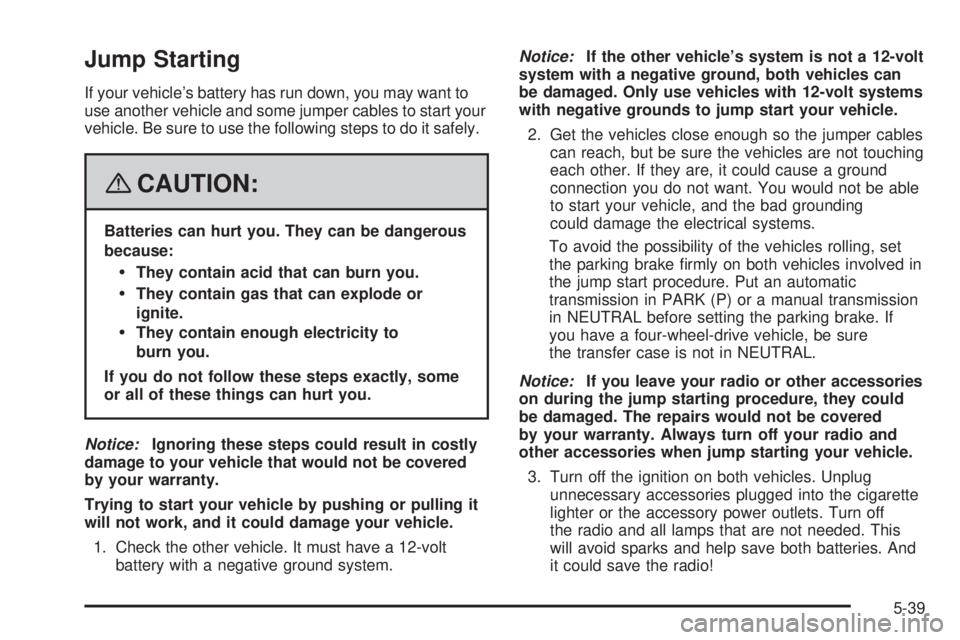
Jump Starting
If your vehicle’s battery has run down, you may want to
use another vehicle and some jumper cables to start your
vehicle. Be sure to use the following steps to do it safely.
{CAUTION:
Batteries can hurt you. They can be dangerous
because:
They contain acid that can burn you.
They contain gas that can explode or
ignite.
They contain enough electricity to
burn you.
If you do not follow these steps exactly, some
or all of these things can hurt you.
Notice:Ignoring these steps could result in costly
damage to your vehicle that would not be covered
by your warranty.
Trying to start your vehicle by pushing or pulling it
will not work, and it could damage your vehicle.
1. Check the other vehicle. It must have a 12-volt
battery with a negative ground system.Notice:If the other vehicle’s system is not a 12-volt
system with a negative ground, both vehicles can
be damaged. Only use vehicles with 12-volt systems
with negative grounds to jump start your vehicle.
2. Get the vehicles close enough so the jumper cables
can reach, but be sure the vehicles are not touching
each other. If they are, it could cause a ground
connection you do not want. You would not be able
to start your vehicle, and the bad grounding
could damage the electrical systems.
To avoid the possibility of the vehicles rolling, set
the parking brake rmly on both vehicles involved in
the jump start procedure. Put an automatic
transmission in PARK (P) or a manual transmission
in NEUTRAL before setting the parking brake. If
you have a four-wheel-drive vehicle, be sure
the transfer case is not in NEUTRAL.
Notice:If you leave your radio or other accessories
on during the jump starting procedure, they could
be damaged. The repairs would not be covered
by your warranty. Always turn off your radio and
other accessories when jump starting your vehicle.
3. Turn off the ignition on both vehicles. Unplug
unnecessary accessories plugged into the cigarette
lighter or the accessory power outlets. Turn off
the radio and all lamps that are not needed. This
will avoid sparks and help save both batteries. And
it could save the radio!
5-39
Page 419 of 472
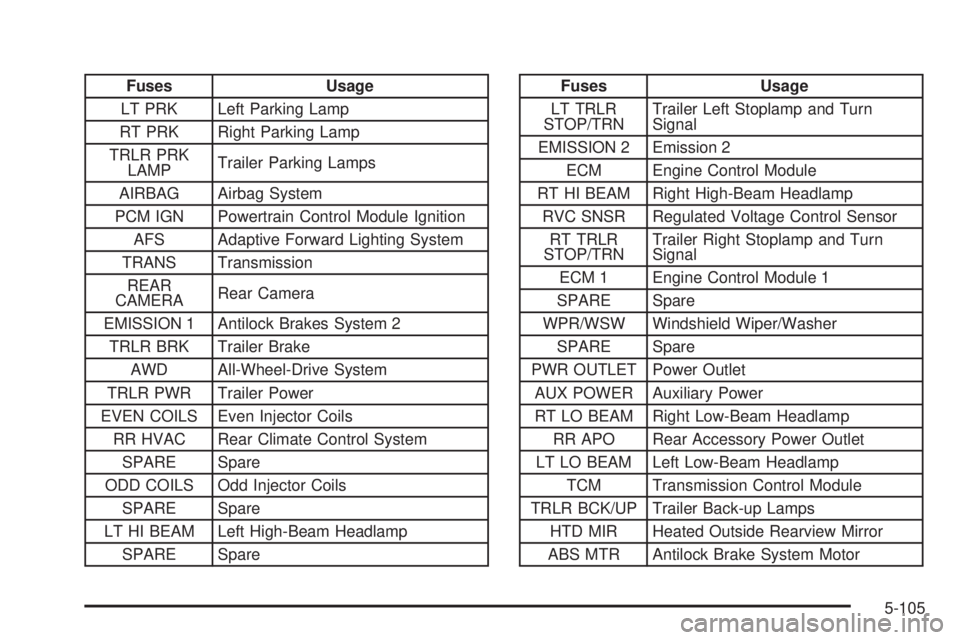
Fuses Usage
LT PRK Left Parking Lamp
RT PRK Right Parking Lamp
TRLR PRK
LAMPTrailer Parking Lamps
AIRBAG Airbag System
PCM IGN Powertrain Control Module Ignition
AFS Adaptive Forward Lighting System
TRANS Transmission
REAR
CAMERARear Camera
EMISSION 1 Antilock Brakes System 2
TRLR BRK Trailer Brake
AWD All-Wheel-Drive System
TRLR PWR Trailer Power
EVEN COILS Even Injector Coils
RR HVAC Rear Climate Control System
SPARE Spare
ODD COILS Odd Injector Coils
SPARE Spare
LT HI BEAM Left High-Beam Headlamp
SPARE SpareFuses Usage
LT TRLR
STOP/TRNTrailer Left Stoplamp and Turn
Signal
EMISSION 2 Emission 2
ECM Engine Control Module
RT HI BEAM Right High-Beam Headlamp
RVC SNSR Regulated Voltage Control Sensor
RT TRLR
STOP/TRNTrailer Right Stoplamp and Turn
Signal
ECM 1 Engine Control Module 1
SPARE Spare
WPR/WSW Windshield Wiper/Washer
SPARE Spare
PWR OUTLET Power Outlet
AUX POWER Auxiliary Power
RT LO BEAM Right Low-Beam Headlamp
RR APO Rear Accessory Power Outlet
LT LO BEAM Left Low-Beam Headlamp
TCM Transmission Control Module
TRLR BCK/UP Trailer Back-up Lamps
HTD MIR Heated Outside Rearview Mirror
ABS MTR Antilock Brake System Motor
5-105
Page 429 of 472
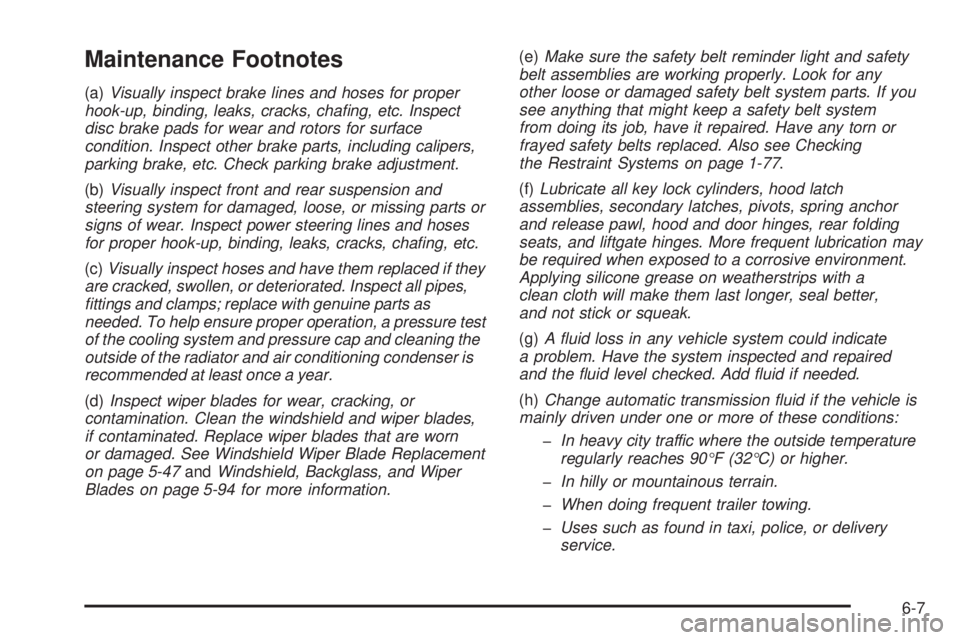
Maintenance Footnotes
(a)Visually inspect brake lines and hoses for proper
hook-up, binding, leaks, cracks, chafing, etc. Inspect
disc brake pads for wear and rotors for surface
condition. Inspect other brake parts, including calipers,
parking brake, etc. Check parking brake adjustment.
(b)Visually inspect front and rear suspension and
steering system for damaged, loose, or missing parts or
signs of wear. Inspect power steering lines and hoses
for proper hook-up, binding, leaks, cracks, chafing, etc.
(c)Visually inspect hoses and have them replaced if they
are cracked, swollen, or deteriorated. Inspect all pipes,
fittings and clamps; replace with genuine parts as
needed. To help ensure proper operation, a pressure test
of the cooling system and pressure cap and cleaning the
outside of the radiator and air conditioning condenser is
recommended at least once a year.
(d)Inspect wiper blades for wear, cracking, or
contamination. Clean the windshield and wiper blades,
if contaminated. Replace wiper blades that are worn
or damaged. See Windshield Wiper Blade Replacement
on page 5-47andWindshield, Backglass, and Wiper
Blades on page 5-94 for more information.(e)Make sure the safety belt reminder light and safety
belt assemblies are working properly. Look for any
other loose or damaged safety belt system parts. If you
see anything that might keep a safety belt system
from doing its job, have it repaired. Have any torn or
frayed safety belts replaced. Also see Checking
the Restraint Systems on page 1-77.
(f)Lubricate all key lock cylinders, hood latch
assemblies, secondary latches, pivots, spring anchor
and release pawl, hood and door hinges, rear folding
seats, and liftgate hinges. More frequent lubrication may
be required when exposed to a corrosive environment.
Applying silicone grease on weatherstrips with a
clean cloth will make them last longer, seal better,
and not stick or squeak.
(g)A fluid loss in any vehicle system could indicate
a problem. Have the system inspected and repaired
and the fluid level checked. Add fluid if needed.
(h)Change automatic transmission fluid if the vehicle is
mainly driven under one or more of these conditions:
In heavy city traffic where the outside temperature
regularly reaches 90°F (32°C) or higher.
In hilly or mountainous terrain.
When doing frequent trailer towing.
Uses such as found in taxi, police, or delivery
service.
6-7
Page 459 of 472
A
Accessories and Modications............................ 5-4
Adding Equipment to Your Airbag-Equipped
Vehicle.......................................................1-76
Additives, Fuel................................................. 5-7
Add-On Electrical Equipment............................5-99
Air Cleaner/Filter, Engine.................................5-20
Air Conditioning......................................3-26, 3-29
Airbag
Passenger Status Indicator...........................3-43
Readiness Light..........................................3-42
Airbag System................................................1-61
What Will You See After an Airbag Inates?....1-69
When Should an Airbag Inate?....................1-67
Where Are the Airbags?...............................1-64
Airbag Systems
Adding Equipment to Your Airbag-Equipped
Vehicle...................................................1-76
How Does an Airbag Restrain?......................1-68
Passenger Sensing System...........................1-70
Servicing Your Airbag-Equipped Vehicle..........1-75
What Makes an Airbag Inate?......................1-68
All-Wheel Drive...............................................5-43
All-Wheel-Drive (AWD) System........................... 4-9
Antilock Brake System (ABS)............................. 4-5
Antilock Brake, System Warning Light................3-48Appearance Care
Aluminum or Chrome-Plated Wheels..............5-94
Care of Safety Belts....................................5-92
Chemical Paint Spotting...............................5-96
Cleaning Exterior Lamps/Lenses....................5-93
Fabric/Carpet..............................................5-90
Finish Care.................................................5-93
Finish Damage............................................5-95
Instrument Panel, Vinyl, and Other Plastic
Surfaces.................................................5-91
Interior Cleaning..........................................5-89
Leather......................................................5-91
Sheet Metal Damage...................................5-95
Tires..........................................................5-95
Underbody Maintenance...............................5-96
Vehicle Care/Appearance Materials................5-97
Washing Your Vehicle...................................5-92
Weatherstrips..............................................5-92
Windshield, Backglass, and Wiper Blades.......5-94
Appointments, Scheduling Service....................... 7-8
Audio System.................................................3-84
Audio Steering Wheel Controls....................3-128
Navigation/Radio System, see Navigation
Manual.................................................3-115
Radio Reception........................................3-129
Rear Audio Controller (RAC)........................3-127
Rear Seat Audio (RSA)...............................3-125
1
Page 460 of 472
Audio System (cont.)
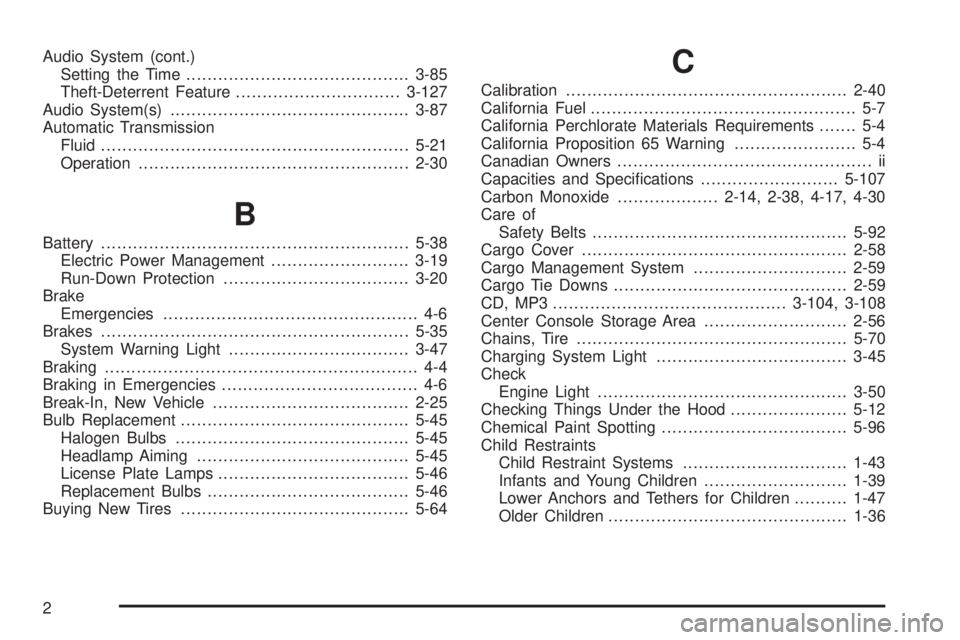
Setting the Time..........................................3-85
Theft-Deterrent Feature...............................3-127
Audio System(s).............................................3-87
Automatic Transmission
Fluid..........................................................5-21
Operation...................................................2-30
B
Battery..........................................................5-38
Electric Power Management..........................3-19
Run-Down Protection...................................3-20
Brake
Emergencies................................................ 4-6
Brakes..........................................................5-35
System Warning Light..................................3-47
Braking........................................................... 4-4
Braking in Emergencies..................................... 4-6
Break-In, New Vehicle.....................................2-25
Bulb Replacement...........................................5-45
Halogen Bulbs............................................5-45
Headlamp Aiming........................................5-45
License Plate Lamps....................................5-46
Replacement Bulbs......................................5-46
Buying New Tires...........................................5-64
C
Calibration.....................................................2-40
California Fuel.................................................. 5-7
California Perchlorate Materials Requirements....... 5-4
California Proposition 65 Warning....................... 5-4
Canadian Owners................................................ ii
Capacities and Specications..........................5-107
Carbon Monoxide...................2-14, 2-38, 4-17, 4-30
Care of
Safety Belts................................................5-92
Cargo Cover..................................................2-58
Cargo Management System.............................2-59
Cargo Tie Downs............................................2-59
CD, MP3 ............................................3-104, 3-108
Center Console Storage Area...........................2-56
Chains, Tire...................................................5-70
Charging System Light....................................3-45
Check
Engine Light...............................................3-50
Checking Things Under the Hood......................5-12
Chemical Paint Spotting...................................5-96
Child Restraints
Child Restraint Systems...............................1-43
Infants and Young Children...........................1-39
Lower Anchors and Tethers for Children..........1-47
Older Children.............................................1-36
2
Page 465 of 472
J
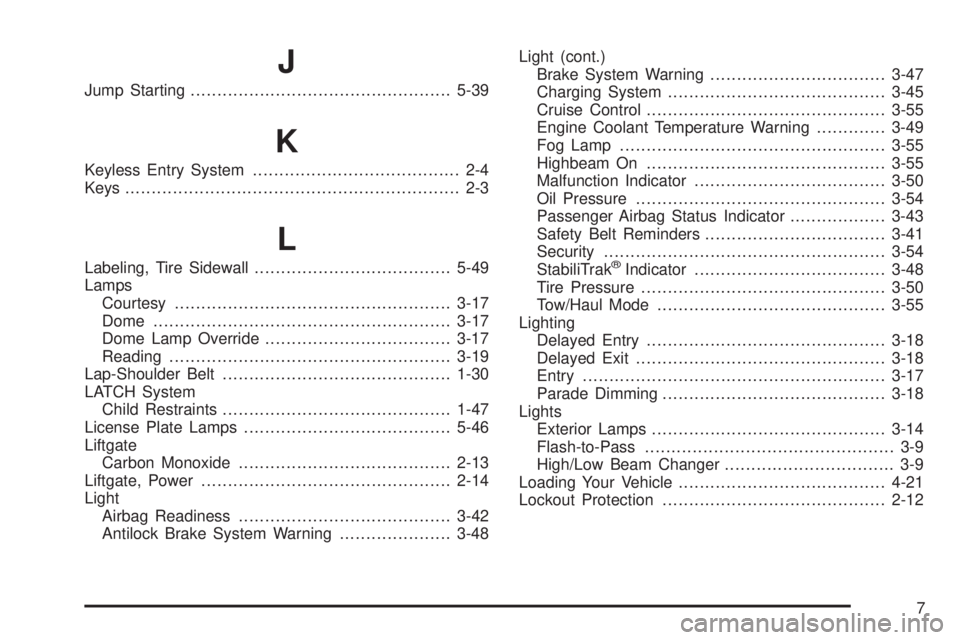
Jump Starting.................................................5-39
K
Keyless Entry System....................................... 2-4
Keys............................................................... 2-3
L
Labeling, Tire Sidewall.....................................5-49
Lamps
Courtesy....................................................3-17
Dome........................................................3-17
Dome Lamp Override...................................3-17
Reading.....................................................3-19
Lap-Shoulder Belt...........................................1-30
LATCH System
Child Restraints...........................................1-47
License Plate Lamps.......................................5-46
Liftgate
Carbon Monoxide........................................2-13
Liftgate, Power...............................................2-14
Light
Airbag Readiness........................................3-42
Antilock Brake System Warning.....................3-48Light (cont.)
Brake System Warning.................................3-47
Charging System.........................................3-45
Cruise Control.............................................3-55
Engine Coolant Temperature Warning.............3-49
Fog Lamp..................................................3-55
Highbeam On.............................................3-55
Malfunction Indicator....................................3-50
Oil Pressure...............................................3-54
Passenger Airbag Status Indicator..................3-43
Safety Belt Reminders..................................3-41
Security.....................................................3-54
StabiliTrak®Indicator....................................3-48
Tire Pressure..............................................3-50
Tow/Haul Mode...........................................3-55
Lighting
Delayed Entry.............................................3-18
Delayed Exit...............................................3-18
Entry.........................................................3-17
Parade Dimming..........................................3-18
Lights
Exterior Lamps............................................3-14
Flash-to-Pass............................................... 3-9
High/Low Beam Changer................................ 3-9
Loading Your Vehicle.......................................4-21
Lockout Protection..........................................2-12
7
Page 467 of 472
O
Odometer......................................................3-41
Off-Road Recovery..........................................4-11
Oil
Engine.......................................................5-15
Pressure Light.............................................3-54
Oil, Engine Oil Life System..............................5-18
Older Children, Restraints................................1-36
Online Owner Center........................................ 7-4
OnStar, Privacy..............................................7-17
OnStar
®System, see OnStar®Manual...............2-47
Operation, Universal Home Remote System........2-51
Orange Covered Wiring...................................5-99
Other Warning Devices...................................... 3-6
Outlet Adjustment............................................3-36
Outlets
Accessory Power.........................................3-24
Outside
Convex Mirror.............................................2-44
Heated Mirrors............................................2-44
Power Foldaway Mirrors...............................2-43
Power Mirrors.............................................2-42
Overheated Engine Protection Operating Mode . . . 5-26
Owner Checks and Services.............................. 6-8
Owners, Canadian............................................... ii
P
Paint, Damage...............................................5-95
Parade Dimming.............................................3-18
Park Aid................................................2-45, 2-47
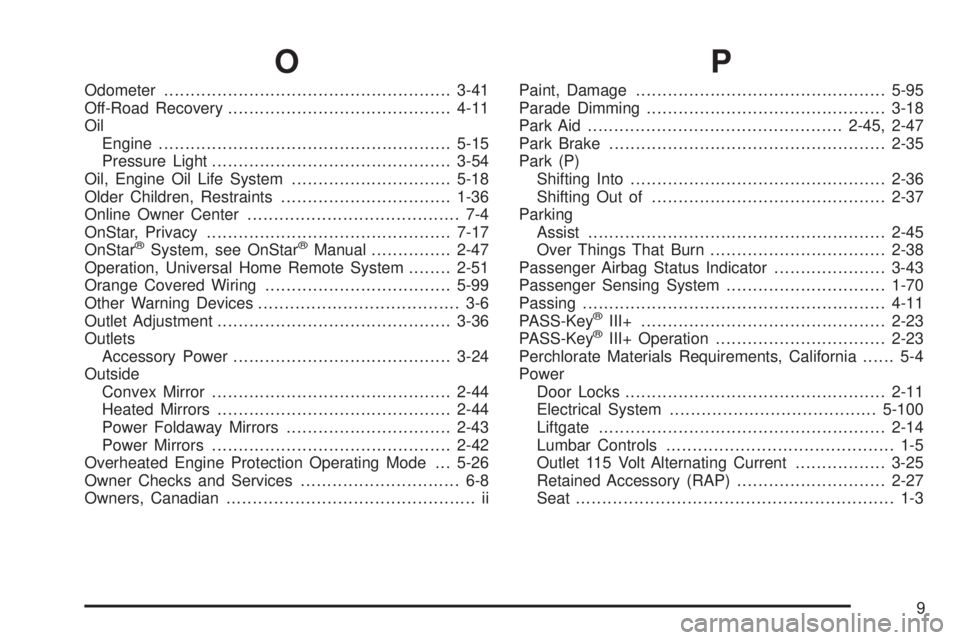
Park Brake....................................................2-35
Park (P)
Shifting Into................................................2-36
Shifting Out of............................................2-37
Parking
Assist........................................................2-45
Over Things That Burn.................................2-38
Passenger Airbag Status Indicator.....................3-43
Passenger Sensing System..............................1-70
Passing.........................................................4-11
PASS-Key
®III+..............................................2-23
PASS-Key®III+ Operation................................2-23
Perchlorate Materials Requirements, California...... 5-4
Power
Door Locks.................................................2-11
Electrical System.......................................5-100
Liftgate......................................................2-14
Lumbar Controls........................................... 1-5
Outlet 115 Volt Alternating Current.................3-25
Retained Accessory (RAP)............................2-27
Seat............................................................ 1-3
9