steering wheel GMC ENVOY XL 2004 Owner's Guide
[x] Cancel search | Manufacturer: GMC, Model Year: 2004, Model line: ENVOY XL, Model: GMC ENVOY XL 2004Pages: 466, PDF Size: 3 MB
Page 309 of 466
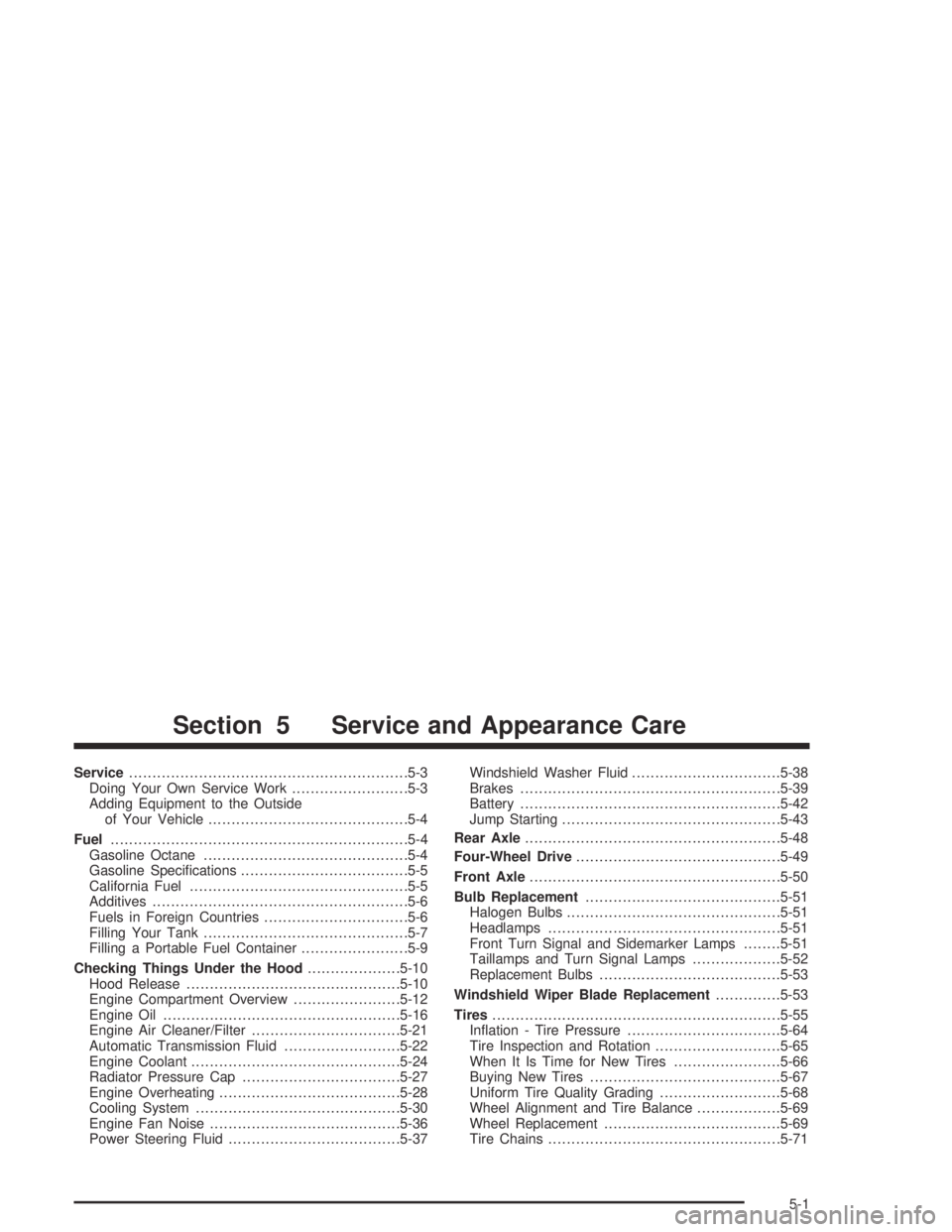
Service............................................................5-3
Doing Your Own Service Work.........................5-3
Adding Equipment to the Outside
of Your Vehicle...........................................5-4
Fuel................................................................5-4
Gasoline Octane............................................5-4
Gasoline Specications....................................5-5
California Fuel...............................................5-5
Additives.......................................................5-6
Fuels in Foreign Countries...............................5-6
Filling Your Tank............................................5-7
Filling a Portable Fuel Container.......................5-9
Checking Things Under the Hood....................5-10
Hood Release..............................................5-10
Engine Compartment Overview.......................5-12
Engine Oil...................................................5-16
Engine Air Cleaner/Filter................................5-21
Automatic Transmission Fluid.........................5-22
Engine Coolant.............................................5-24
Radiator Pressure Cap..................................5-27
Engine Overheating.......................................5-28
Cooling System............................................5-30
Engine Fan Noise.........................................5-36
Power Steering Fluid.....................................5-37Windshield Washer Fluid................................5-38
Brakes........................................................5-39
Battery........................................................5-42
Jump Starting...............................................5-43
Rear Axle.......................................................5-48
Four-Wheel Drive............................................5-49
Front Axle......................................................5-50
Bulb Replacement..........................................5-51
Halogen Bulbs..............................................5-51
Headlamps..................................................5-51
Front Turn Signal and Sidemarker Lamps........5-51
Taillamps and Turn Signal Lamps...................5-52
Replacement Bulbs.......................................5-53
Windshield Wiper Blade Replacement..............5-53
Tires..............................................................5-55
Ination - Tire Pressure.................................5-64
Tire Inspection and Rotation...........................5-65
When It Is Time for New Tires.......................5-66
Buying New Tires.........................................5-67
Uniform Tire Quality Grading..........................5-68
Wheel Alignment and Tire Balance..................5-69
Wheel Replacement......................................5-69
Tire Chains..................................................5-71
Section 5 Service and Appearance Care
5-1
Page 369 of 466

(D) Construction Code:A letter code is used to
indicate the type of ply construction in the tire. The letter
“R” means radial ply construction; the letter “D” means
diagonal or bias ply construction; and the letter “B”
means belted-bias ply construction.
(E) Rim Diameter:Diameter of the wheel in inches.
(F) Service Description:The service description
indicates the load range and speed rating of a tire.
The load index can range from 1 to 279. Speed ratings
range from “A” to “Z”. The light truck tire size example
above shows dual or single tire congurations.
Tire Terminology and Denitions
Air Pressure:The amount of air inside the tire pressing
outward on each square inch of the tire. Air pressure
is expressed in pounds per square inch (psi) or
kilopascal (kPa).
Accessory Weight:This means the combined weight
of optional accessories. Some examples of optional
accessories are, automatic transmission, power steering,
power brakes, power windows, power seats, and air
conditioning.
Aspect Ratio:The relationship of a tire’s height to
its width.Belt:A rubber coated layer of cords that is located
between the plies and the tread. Cords may be made
from steel or other reinforcing materials.
Bead:The tire bead contains steel wires wrapped by
steel cords that hold the tire onto the rim.
Bias Ply Tire:A pneumatic tire in which the plies are
laid at alternate angles less than 90 degrees to the
centerline of the tread.
Cold Ination Pressure:The amount of air pressure
in a tire, measured in pounds per square inch (psi)
or kilopascals (kPa) before a tire has built up heat from
driving. SeeInation - Tire Pressure on page 5-64.
Curb Weight:This means the weight of a motor vehicle
with standard and optional equipment including the
maximum capacity of fuel, oil and coolant, but without
passengers and cargo.
DOT Markings:A code molded into the sidewall
of a tire signifying that the tire is in compliance with
the U.S. Department of Transportation motor vehicle
safety standards. The DOT code includes the Tire
Identication Number (TIN), an alphanumeric designator
which can also identify the tire manufacturer, production
plant, brand and date of production.
5-61
Page 381 of 466

If a Tire Goes Flat
It’s unusual for a tire to “blowout” while you’re driving,
especially if you maintain your tires properly. If air goes
out of a tire, it’s much more likely to leak out slowly.
But if you should ever have a “blowout,” here are a
few tips about what to expect and what to do:
If a front tire fails, the at tire will create a drag that
pulls the vehicle toward that side. Take your foot off
the accelerator pedal and grip the steering wheel rmly.
Steer to maintain lane position, and then gently brake
to a stop well out of the traffic lane.
A rear blowout, particularly on a curve, acts much like
a skid and may require the same correction you’d use
in a skid. In any rear blowout, remove your foot from
the accelerator pedal. Get the vehicle under control
by steering the way you want the vehicle to go. It may
be very bumpy and noisy, but you can still steer.
Gently brake to a stop, well off the road if possible.{CAUTION:
Lifting a vehicle and getting under it to do
maintenance or repairs is dangerous without
the appropriate safety equipment and training.
The jack provided with your vehicle is designed
only for changing a at tire. If it is used for
anything else, you or others could be badly
injured or killed if the vehicle slips off the jack.
Use the jack provided with your vehicle only
for changing a at tire.
If a tire goes at, the next part shows how to use your
jacking equipment to change a at tire safely.
5-73
Page 451 of 466
A
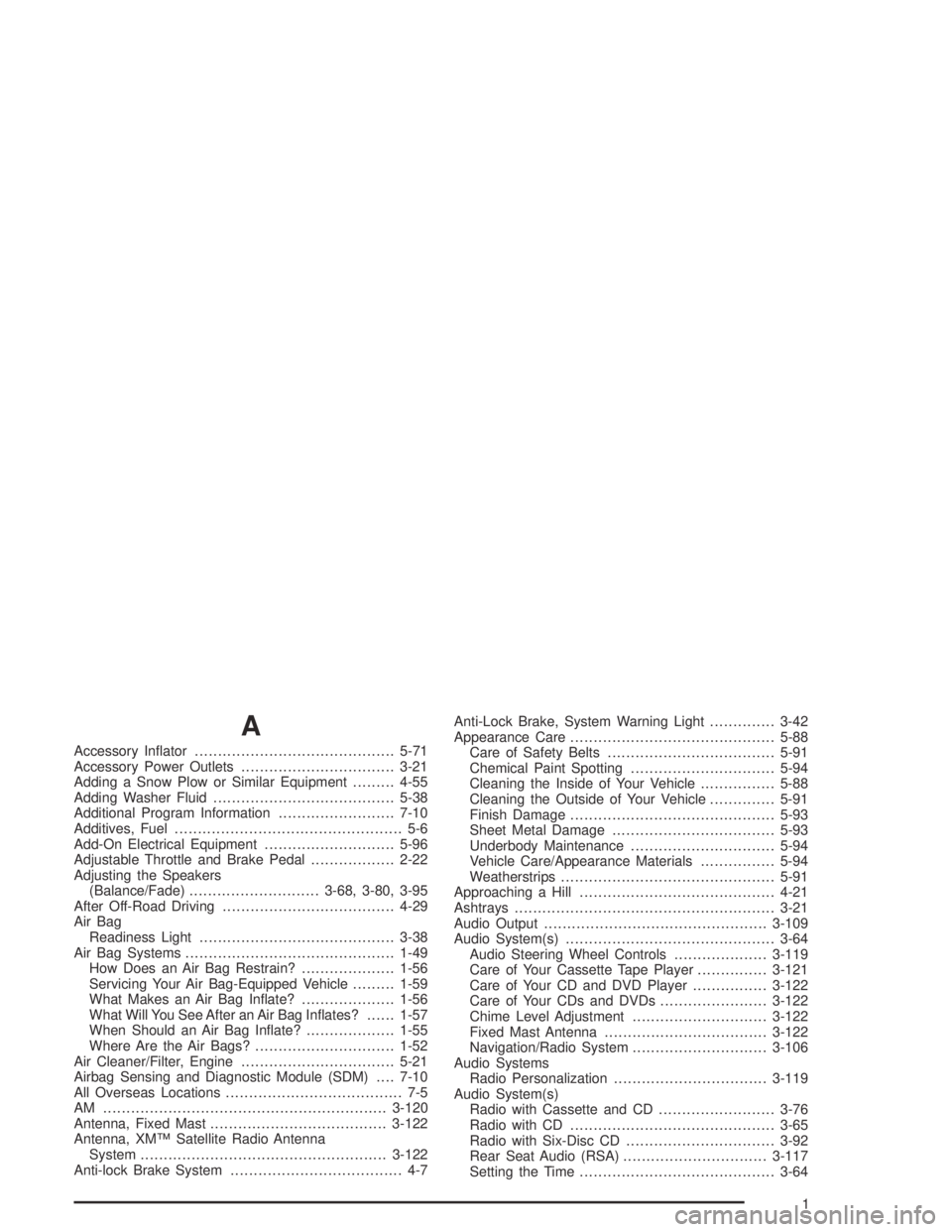
Accessory Inator...........................................5-71
Accessory Power Outlets.................................3-21
Adding a Snow Plow or Similar Equipment.........4-55
Adding Washer Fluid.......................................5-38
Additional Program Information.........................7-10
Additives, Fuel................................................. 5-6
Add-On Electrical Equipment............................5-96
Adjustable Throttle and Brake Pedal..................2-22
Adjusting the Speakers
(Balance/Fade)............................3-68, 3-80, 3-95
After Off-Road Driving.....................................4-29
Air Bag
Readiness Light..........................................3-38
Air Bag Systems.............................................1-49
How Does an Air Bag Restrain?....................1-56
Servicing Your Air Bag-Equipped Vehicle.........1-59
What Makes an Air Bag Inate?....................1-56
What Will You See After an Air Bag Inates?......1-57
When Should an Air Bag Inate?...................1-55
Where Are the Air Bags?..............................1-52
Air Cleaner/Filter, Engine.................................5-21
Airbag Sensing and Diagnostic Module (SDM)....7-10
All Overseas Locations...................................... 7-5
AM .............................................................3-120
Antenna, Fixed Mast......................................3-122
Antenna, XM™ Satellite Radio Antenna
System.....................................................3-122
Anti-lock Brake System..................................... 4-7Anti-Lock Brake, System Warning Light..............3-42
Appearance Care............................................5-88
Care of Safety Belts....................................5-91
Chemical Paint Spotting...............................5-94
Cleaning the Inside of Your Vehicle................5-88
Cleaning the Outside of Your Vehicle..............5-91
Finish Damage............................................5-93
Sheet Metal Damage...................................5-93
Underbody Maintenance...............................5-94
Vehicle Care/Appearance Materials................5-94
Weatherstrips..............................................5-91
Approaching a Hill..........................................4-21
Ashtrays........................................................3-21
Audio Output................................................3-109
Audio System(s).............................................3-64
Audio Steering Wheel Controls....................3-119
Care of Your Cassette Tape Player...............3-121
Care of Your CD and DVD Player................3-122
Care of Your CDs and DVDs.......................3-122
Chime Level Adjustment.............................3-122
Fixed Mast Antenna...................................3-122
Navigation/Radio System.............................3-106
Audio Systems
Radio Personalization.................................3-119
Audio System(s)
Radio with Cassette and CD.........................3-76
Radio with CD............................................3-65
Radio with Six-Disc CD................................3-92
Rear Seat Audio (RSA)...............................3-117
Setting the Time..........................................3-64
1
Page 456 of 466
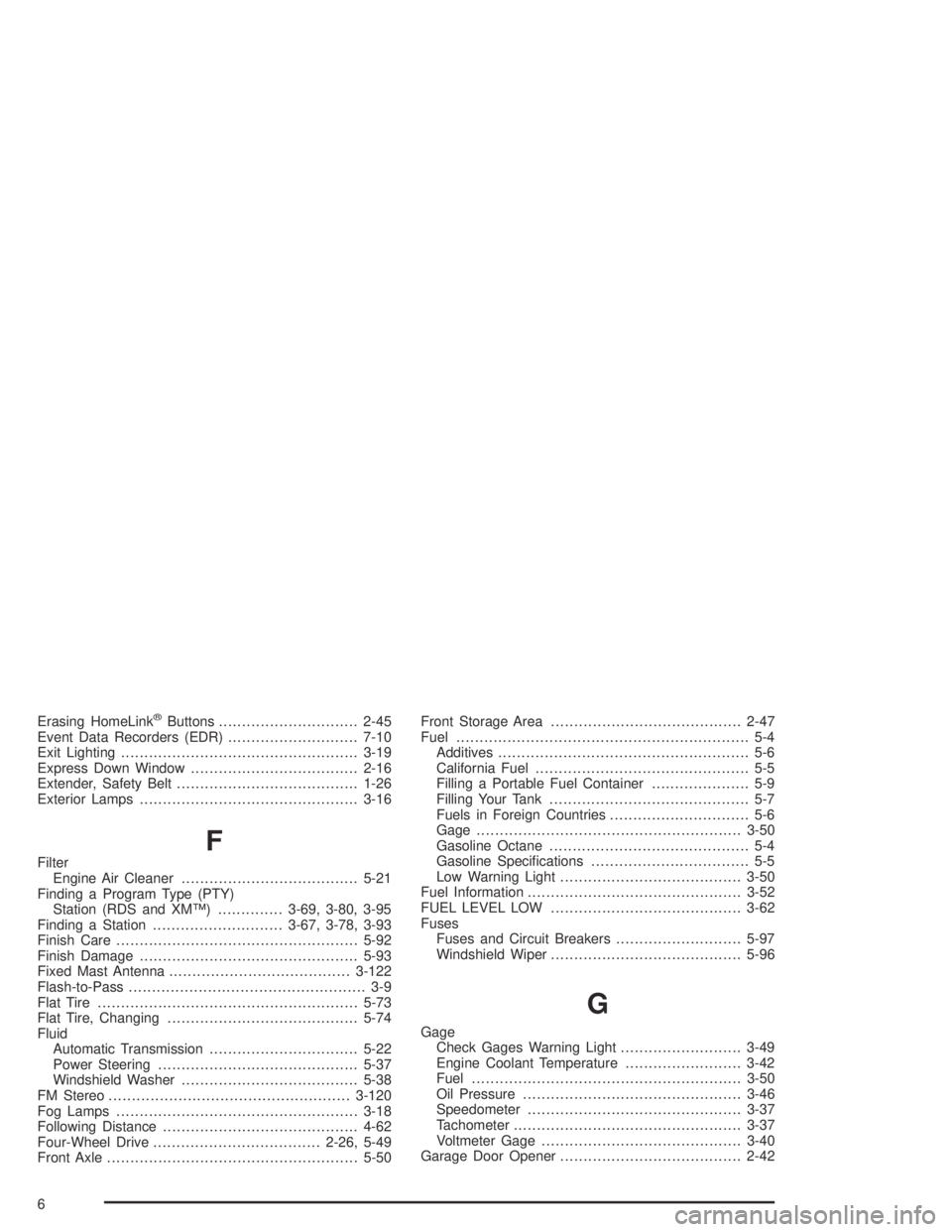
Erasing HomeLink®Buttons..............................2-45
Event Data Recorders (EDR)............................7-10
Exit Lighting...................................................3-19
Express Down Window....................................2-16
Extender, Safety Belt.......................................1-26
Exterior Lamps...............................................3-16
F
Filter
Engine Air Cleaner......................................5-21
Finding a Program Type (PTY)
Station (RDS and XM™)..............3-69, 3-80, 3-95
Finding a Station............................3-67, 3-78, 3-93
Finish Care....................................................5-92
Finish Damage...............................................5-93
Fixed Mast Antenna.......................................3-122
Flash-to-Pass................................................... 3-9
Flat Tire........................................................5-73
Flat Tire, Changing.........................................5-74
Fluid
Automatic Transmission................................5-22
Power Steering...........................................5-37
Windshield Washer......................................5-38
FM Stereo....................................................3-120
Fog Lamps....................................................3-18
Following Distance..........................................4-62
Four-Wheel Drive....................................2-26, 5-49
Front Axle......................................................5-50Front Storage Area.........................................2-47
Fuel............................................................... 5-4
Additives...................................................... 5-6
California Fuel.............................................. 5-5
Filling a Portable Fuel Container..................... 5-9
Filling Your Tank........................................... 5-7
Fuels in Foreign Countries.............................. 5-6
Gage.........................................................3-50
Gasoline Octane........................................... 5-4
Gasoline Specications.................................. 5-5
Low Warning Light.......................................3-50
Fuel Information..............................................3-52
FUEL LEVEL LOW.........................................3-62
Fuses
Fuses and Circuit Breakers...........................5-97
Windshield Wiper.........................................5-96
G
Gage
Check Gages Warning Light..........................3-49
Engine Coolant Temperature.........................3-42
Fuel..........................................................3-50
Oil Pressure...............................................3-46
Speedometer..............................................3-37
Tachometer.................................................3-37
Voltmeter Gage...........................................3-40
Garage Door Opener.......................................2-42
6
Page 460 of 466
OOdometer......................................................3-37
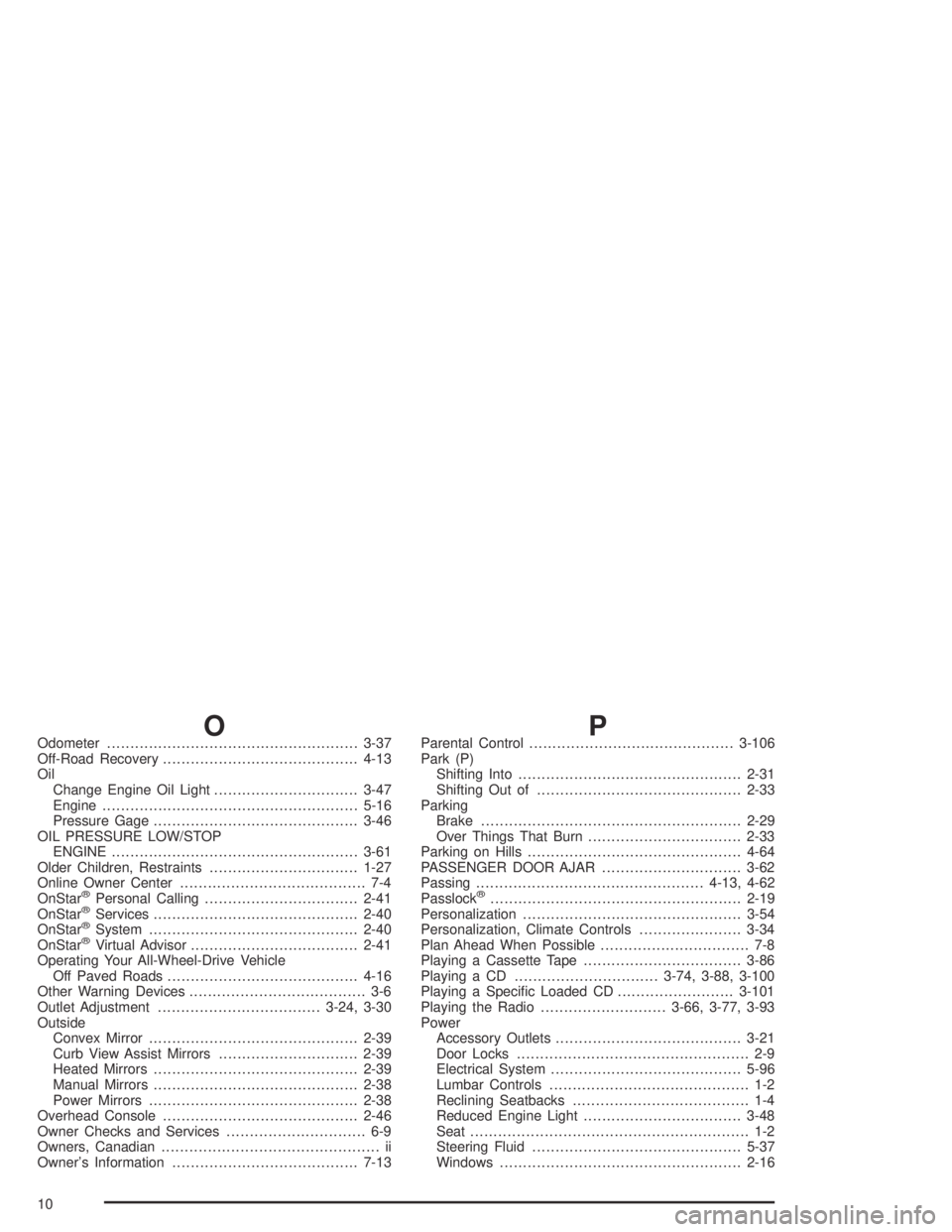
Off-Road Recovery..........................................4-13
Oil
Change Engine Oil Light...............................3-47
Engine.......................................................5-16
Pressure Gage............................................3-46
OIL PRESSURE LOW/STOP
ENGINE.....................................................3-61
Older Children, Restraints................................1-27
Online Owner Center........................................ 7-4
OnStar
®Personal Calling.................................2-41
OnStar®Services............................................2-40
OnStar®System.............................................2-40
OnStar®Virtual Advisor....................................2-41
Operating Your All-Wheel-Drive Vehicle
Off Paved Roads.........................................4-16
Other Warning Devices...................................... 3-6
Outlet Adjustment...................................3-24, 3-30
Outside
Convex Mirror.............................................2-39
Curb View Assist Mirrors..............................2-39
Heated Mirrors............................................2-39
Manual Mirrors............................................2-38
Power Mirrors.............................................2-38
Overhead Console..........................................2-46
Owner Checks and Services.............................. 6-9
Owners, Canadian............................................... ii
Owner’s Information........................................7-13
PParental Control............................................3-106
Park (P)
Shifting Into................................................2-31
Shifting Out of............................................2-33
Parking
Brake........................................................2-29
Over Things That Burn.................................2-33
Parking on Hills..............................................4-64
PASSENGER DOOR AJAR..............................3-62
Passing.................................................4-13, 4-62
Passlock
®......................................................2-19
Personalization...............................................3-54
Personalization, Climate Controls......................3-34
Plan Ahead When Possible................................ 7-8
Playing a Cassette Tape..................................3-86
Playing a CD...............................3-74, 3-88, 3-100
Playing a Specic Loaded CD.........................3-101
Playing the Radio...........................3-66, 3-77, 3-93
Power
Accessory Outlets........................................3-21
Door Locks.................................................. 2-9
Electrical System.........................................5-96
Lumbar Controls........................................... 1-2
Reclining Seatbacks...................................... 1-4
Reduced Engine Light..................................3-48
Seat............................................................ 1-2
Steering Fluid.............................................5-37
Windows....................................................2-16
10
Page 463 of 466
Securing a Child Restraint
Center Seat Position....................................1-45
Designed for the LATCH System...................1-42
Rear Outside Seat Position...........................1-43
Right Front Seat Position..............................1-46
Security Light.................................................3-47
Security While You Travel.................................. 7-7
Select...........................................................3-60
Service........................................................... 5-3
Adding Equipment to the Outside
of Your Vehicle.......................................... 5-4
Doing Your Own Work................................... 5-3
Engine Soon Light.......................................3-43
Four-Wheel-Drive Warning Light.....................3-48
Publications Ordering Information...................7-12
SERVICE AIR BAG.........................................3-61
SERVICE BRAKE SYSTEM.............................3-61
Service Bulletins.............................................7-13
Service Engine Soon Light in the United States
or Check Engine Light in Canada.....................3-43
Service Manuals.............................................7-12
Setting Preset PTYs (RDS Only).......3-70, 3-82, 3-96
Setting Preset Stations....................3-67, 3-79, 3-94
Setting the Time.............................................3-64
Setting the Tone (Bass/Treble)..........3-68, 3-79, 3-94
Sheet Metal Damage.......................................5-93
Shifting Into Park (P).......................................2-31
Shifting Out of Park (P)...................................2-33Skidding........................................................4-15
Snow Plow....................................................4-55
Some Other Rainy Weather Tips.......................4-33
Spare Tire.....................................................5-87
Special Fabric Cleaning Problems.....................5-89
Specications, Capacities...............................5-109
Speedometer..................................................3-37
Stalling on an Incline.......................................4-27
Starting Your Engine.......................................2-21
Steering........................................................4-11
Steering in Emergencies..................................4-12
Steering Tips..................................................4-11
Steering Wheel Controls, Audio.......................3-119
Steering Wheel, Tilt Wheel................................. 3-7
Stereo RCA Jacks.........................................3-108
Storage Areas
Convenience Net.........................................2-51
Front Storage Area......................................2-47
Glove Box..................................................2-46
Luggage Carrier..........................................2-48
Overhead Console.......................................2-46
Rear Floor Storage Lid.................................2-51
Rear Storage Area.......................................2-49
Storing a Flat or Spare Tire and Tools...............5-85
Stuck in Sand, Mud, Ice or Snow......................4-44
Sun Visors.....................................................2-17
Sunglasses Storage Compartment.....................2-47
Sunroof.........................................................2-53
13
Page 465 of 466
U
Understanding Radio Reception.......................3-120
Uniform Tire Quality Grading............................5-68
United States................................................... 7-5
Used Replacement Wheels..............................5-70
Using Cleaner on Fabric..................................5-89
Using HomeLink
®...........................................2-45
Using Song List Mode...................................3-103
V
Vehicle
Control........................................................ 4-6
Damage Warnings........................................... iv
Loading......................................................4-49
Symbols......................................................... iv
Vehicle Data Collection and Event
Data Recorders...........................................7-10
Vehicle Identication
Number (VIN).............................................5-95
Service Parts Identication Label...................5-96
Vehicle Personalization
Memory Seat..............................................2-53
Vehicle Storage..............................................5-42
Video Screen................................................3-109
Visor Vanity Mirror..........................................2-17Visors...........................................................2-17
Voltmeter Gage..............................................3-40
W
Warning Lights, Gages and Indicators................3-35
Warnings
DIC Warnings and Messages........................3-60
Hazard Warning Flashers............................... 3-6
Other Warning Devices.................................. 3-6
Safety and Symbols......................................... iii
Vehicle Damage.............................................. iv
Washing Your Vehicle......................................5-91
Weight Distributing Hitches and
Weight Carrying Hitches...............................4-59
Weight of the Trailer........................................4-56
Weight of the Trailer Tongue.............................4-58
What Kind of Engine Oil to Use........................5-17
What to Do with Used Oil................................5-20
Wheels
Alignment and Tire Balance..........................5-69
Replacement...............................................5-69
When to Add Engine Oil..................................5-17
When to Change Engine Oil
(GM Oil Life System)...................................5-19
When to Check Lubricant.................................5-48
When to Check Power Steering Fluid................5-37
15