belt GMC ENVOY XUV 2005 Repair Manual
[x] Cancel search | Manufacturer: GMC, Model Year: 2005, Model line: ENVOY XUV, Model: GMC ENVOY XUV 2005Pages: 474, PDF Size: 2.67 MB
Page 438 of 474
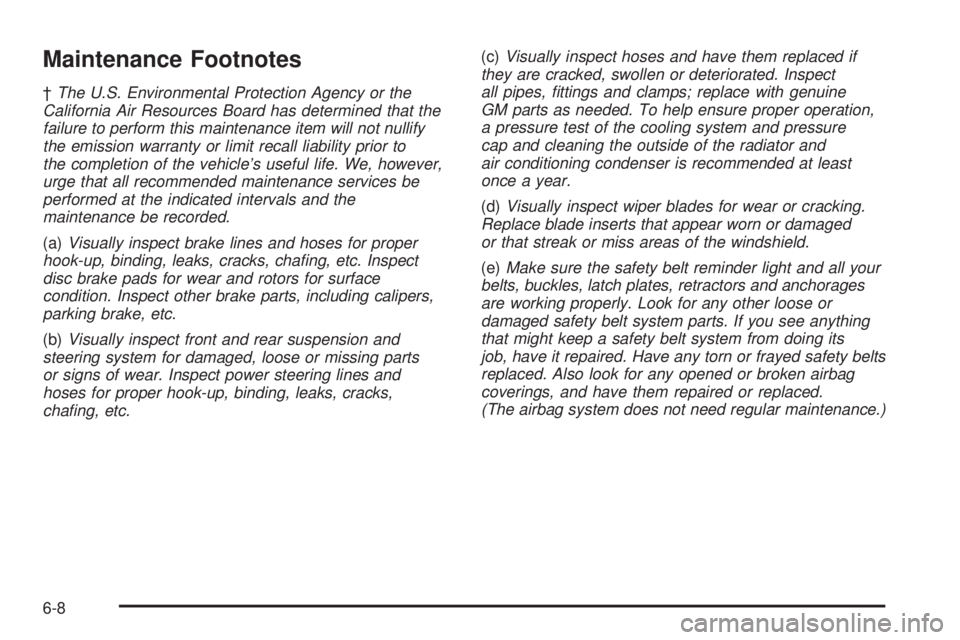
Maintenance Footnotes
†The U.S. Environmental Protection Agency or the
California Air Resources Board has determined that the
failure to perform this maintenance item will not nullify
the emission warranty or limit recall liability prior to
the completion of the vehicle’s useful life. We, however,
urge that all recommended maintenance services be
performed at the indicated intervals and the
maintenance be recorded.
(a)Visually inspect brake lines and hoses for proper
hook-up, binding, leaks, cracks, chang, etc. Inspect
disc brake pads for wear and rotors for surface
condition. Inspect other brake parts, including calipers,
parking brake, etc.
(b)Visually inspect front and rear suspension and
steering system for damaged, loose or missing parts
or signs of wear. Inspect power steering lines and
hoses for proper hook-up, binding, leaks, cracks,
chang, etc.(c)Visually inspect hoses and have them replaced if
they are cracked, swollen or deteriorated. Inspect
all pipes, ttings and clamps; replace with genuine
GM parts as needed. To help ensure proper operation,
a pressure test of the cooling system and pressure
cap and cleaning the outside of the radiator and
air conditioning condenser is recommended at least
once a year.
(d)Visually inspect wiper blades for wear or cracking.
Replace blade inserts that appear worn or damaged
or that streak or miss areas of the windshield.
(e)Make sure the safety belt reminder light and all your
belts, buckles, latch plates, retractors and anchorages
are working properly. Look for any other loose or
damaged safety belt system parts. If you see anything
that might keep a safety belt system from doing its
job, have it repaired. Have any torn or frayed safety belts
replaced. Also look for any opened or broken airbag
coverings, and have them repaired or replaced.
(The airbag system does not need regular maintenance.)
6-8
Page 457 of 474

Additional Program Information
Courtesy Transportation is available during the
Bumper-to-Bumper warranty coverage period,
but it is not part of the New Vehicle Limited Warranty.
A separate booklet entitledWarranty and Owner
Assistance Informationfurnished with each new vehicle
provides detailed warranty coverage information.
Courtesy Transportation is available only at participating
dealers and all program options, such as shuttle
service, may not be available at every dealer.
Please contact your dealer for specic information about
availability. All Courtesy Transportation arrangements
will be administered by appropriate dealer personnel.
Canadian Vehicles:For warranty repairs during
the Complete Vehicle Coverage period of the General
Motors of Canada New Vehicle Limited Warranty,
alternative transportation may be available under the
Courtesy Transportation Program. Please consult
your dealer for details.
General Motors reserves the right to unilaterally modify,
change or discontinue Courtesy Transportation at
any time and to resolve all questions of claim eligibility
pursuant to the terms and conditions described
herein at its sole discretion.
Vehicle Data Collection and
Event Data Recorders
Your vehicle, like other modern motor vehicles, has a
number of sophisticated computer systems that
monitor and control several aspects of the vehicle’s
performance. Your vehicle uses on-board vehicle
computers to monitor emission control components to
optimize fuel economy, to monitor conditions for airbag
deployment and, if so equipped, to provide anti-lock
braking and to help the driver control the vehicle in
difficult driving situations. Some information may be
stored during regular operations to facilitate repair of
detected malfunctions; other information is stored only in
a crash event by computer systems, such as those
commonly called event data recorders (EDR).
In a crash event, computer systems, such as the Airbag
Sensing and Diagnostic Module (SDM) in your vehicle
may record information about the condition of the vehicle
and how it was operated, such as data related to engine
speed, brake application, throttle position, vehicle speed,
safety belt usage, airbag readiness, airbag performance,
and the severity of a collision. This information has been
used to improve vehicle crash performance and may be
used to improve crash performance of future vehicles
and driving safety. Unlike the data recorders on many
airplanes, these on-board systems do not record sounds,
such as conversation of vehicle occupants.
7-9
Page 461 of 474
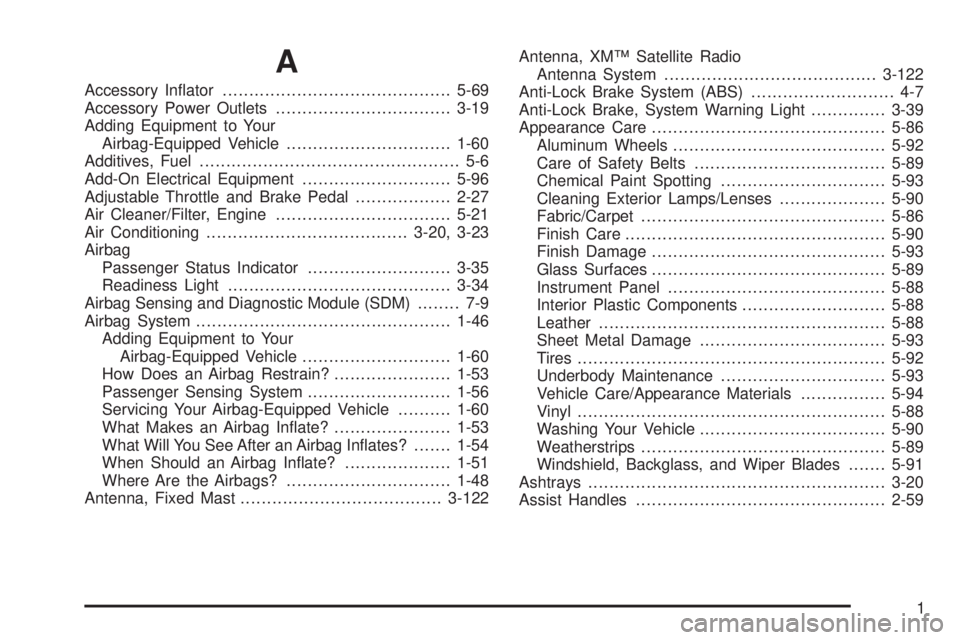
A
Accessory Inator...........................................5-69
Accessory Power Outlets.................................3-19
Adding Equipment to Your
Airbag-Equipped Vehicle...............................1-60
Additives, Fuel................................................. 5-6
Add-On Electrical Equipment............................5-96
Adjustable Throttle and Brake Pedal..................2-27
Air Cleaner/Filter, Engine.................................5-21
Air Conditioning......................................3-20, 3-23
Airbag
Passenger Status Indicator...........................3-35
Readiness Light..........................................3-34
Airbag Sensing and Diagnostic Module (SDM)........ 7-9
Airbag System................................................1-46
Adding Equipment to Your
Airbag-Equipped Vehicle............................1-60
How Does an Airbag Restrain?......................1-53
Passenger Sensing System...........................1-56
Servicing Your Airbag-Equipped Vehicle..........1-60
What Makes an Airbag Inate?......................1-53
What Will You See After an Airbag Inates?.......1-54
When Should an Airbag Inate?....................1-51
Where Are the Airbags?...............................1-48
Antenna, Fixed Mast......................................3-122Antenna, XM™ Satellite Radio
Antenna System........................................3-122
Anti-Lock Brake System (ABS)........................... 4-7
Anti-Lock Brake, System Warning Light..............3-39
Appearance Care............................................5-86
Aluminum Wheels........................................5-92
Care of Safety Belts....................................5-89
Chemical Paint Spotting...............................5-93
Cleaning Exterior Lamps/Lenses....................5-90
Fabric/Carpet..............................................5-86
Finish Care.................................................5-90
Finish Damage............................................5-93
Glass Surfaces............................................5-89
Instrument Panel.........................................5-88
Interior Plastic Components...........................5-88
Leather......................................................5-88
Sheet Metal Damage...................................5-93
Tires..........................................................5-92
Underbody Maintenance...............................5-93
Vehicle Care/Appearance Materials................5-94
Vinyl..........................................................5-88
Washing Your Vehicle...................................5-90
Weatherstrips..............................................5-89
Windshield, Backglass, and Wiper Blades.......5-91
Ashtrays........................................................3-20
Assist Handles...............................................2-59
1
Page 462 of 474

Audio System(s).............................................3-63
Audio Steering Wheel Controls....................3-119
Care of Your Cassette Tape Player...............3-120
Care of Your CD Player..............................3-121
Care of Your CDs......................................3-121
Chime Level Adjustment.............................3-122
Fixed Mast Antenna...................................3-122
Navigation/Radio System.............................3-117
Radio with Cassette and CD.........................3-90
Radio with CD....................................3-64, 3-74
Radio with Six-Disc CD..............................3-103
Rear Seat Audio (RSA)...............................3-117
Setting the Time..........................................3-63
Theft-Deterrent Feature...............................3-119
Understanding Radio Reception...................3-120
XM™ Satellite Radio Antenna System...........3-122
Automatic Headlamp System............................3-16
Automatic Transmission
Fluid..........................................................5-22
Operation...................................................2-29
B
Battery..........................................................5-41
Run-Down Protection...................................3-19
Before Leaving on a Long Trip.........................4-35Brake
Anti-Lock Brake System (ABS)........................ 4-7
Emergencies................................................ 4-8
Parking......................................................2-36
System Warning Light..................................3-38
Brake Pedal, Throttle.......................................2-27
Brakes..........................................................5-38
Braking........................................................... 4-6
Braking in Emergencies..................................... 4-8
Break-In, New Vehicle.....................................2-24
Bulb Replacement...........................................5-50
Back-Up Lamps...........................................5-52
Halogen Bulbs............................................5-50
Headlamps, Front Turn Signal, and
Parking Lamps.........................................5-50
Replacement Bulbs......................................5-52
Taillamps, Turn Signal, and Stoplamps............5-51
Buying New Tires...........................................5-65
C
California Fuel.................................................. 5-6
Canadian Owners................................................ ii
Capacities and Specications..........................5-109
Carbon Monoxide...........2-13, 2-14, 2-40, 4-38, 4-55
Care of
Safety Belts................................................5-89
Your Cassette Tape Player..........................3-120
2
Page 464 of 474

Comfort Guides, Rear Safety Belt.....................1-22
Content Theft-Deterrent....................................2-22
Control of a Vehicle.......................................... 4-6
Coolant
Engine Temperature Gage............................3-39
Heater, Engine............................................2-27
Cooling System..............................................5-30
Cruise Control Lever.......................................3-12
Cruise Control Light........................................3-45
Customer Assistance Information
Courtesy Transportation.................................. 7-7
Customer Assistance for Text
Telephone (TTY) Users............................... 7-4
Customer Assistance Offices........................... 7-4
Customer Satisfaction Procedure..................... 7-2
GM Mobility Reimbursement Program............... 7-5
Reporting Safety Defects to General Motors.......7-11
Reporting Safety Defects to the
Canadian Government..............................7-11
Reporting Safety Defects to the
United States Government.........................7-10
Roadside Assistance Program......................... 7-6
Service Publications Ordering Information........7-11D
Daytime Running Lamps..................................3-16
Defensive Driving............................................. 4-2
Delayed Locking............................................... 2-9
Displacement on Demand (DoD).......................2-28
Doing Your Own Service Work........................... 5-4
Dome Lamp Override......................................3-18
Dome Lamps.................................................3-17
Door
Delayed Locking........................................... 2-9
Locks.......................................................... 2-8
Power Door Locks......................................... 2-9
Programmable Automatic Door Locks.............2-10
Rear Door Security Locks.............................2-12
Driver
Position, Safety Belt.....................................1-12
Driver Information Center (DIC).........................3-48
DIC Operation and Displays..........................3-49
DIC Vehicle Customization............................3-57
DIC Warnings and Messages........................3-52
Driving
At Night.....................................................4-29
City...........................................................4-33
Defensive..................................................... 4-2
Drunken....................................................... 4-3
Freeway.....................................................4-34
4
Page 465 of 474
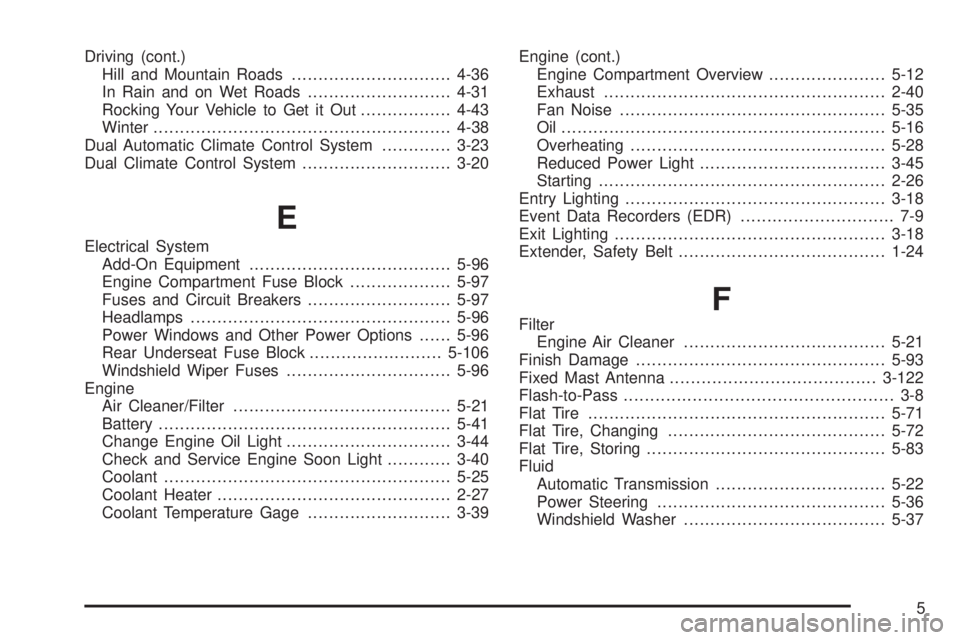
Driving (cont.)
Hill and Mountain Roads..............................4-36
In Rain and on Wet Roads...........................4-31
Rocking Your Vehicle to Get it Out.................4-43
Winter........................................................4-38
Dual Automatic Climate Control System.............3-23
Dual Climate Control System............................3-20
E
Electrical System
Add-On Equipment......................................5-96
Engine Compartment Fuse Block...................5-97
Fuses and Circuit Breakers...........................5-97
Headlamps.................................................5-96
Power Windows and Other Power Options......5-96
Rear Underseat Fuse Block.........................5-106
Windshield Wiper Fuses...............................5-96
Engine
Air Cleaner/Filter.........................................5-21
Battery.......................................................5-41
Change Engine Oil Light...............................3-44
Check and Service Engine Soon Light............3-40
Coolant......................................................5-25
Coolant Heater............................................2-27
Coolant Temperature Gage...........................3-39Engine (cont.)
Engine Compartment Overview......................5-12
Exhaust.....................................................2-40
Fan Noise..................................................5-35
Oil .............................................................5-16
Overheating................................................5-28
Reduced Power Light...................................3-45
Starting......................................................2-26
Entry Lighting.................................................3-18
Event Data Recorders (EDR)............................. 7-9
Exit Lighting...................................................3-18
Extender, Safety Belt.......................................1-24
F
Filter
Engine Air Cleaner......................................5-21
Finish Damage...............................................5-93
Fixed Mast Antenna.......................................3-122
Flash-to-Pass................................................... 3-8
Flat Tire........................................................5-71
Flat Tire, Changing.........................................5-72
Flat Tire, Storing.............................................5-83
Fluid
Automatic Transmission................................5-22
Power Steering...........................................5-36
Windshield Washer......................................5-37
5
Page 467 of 474
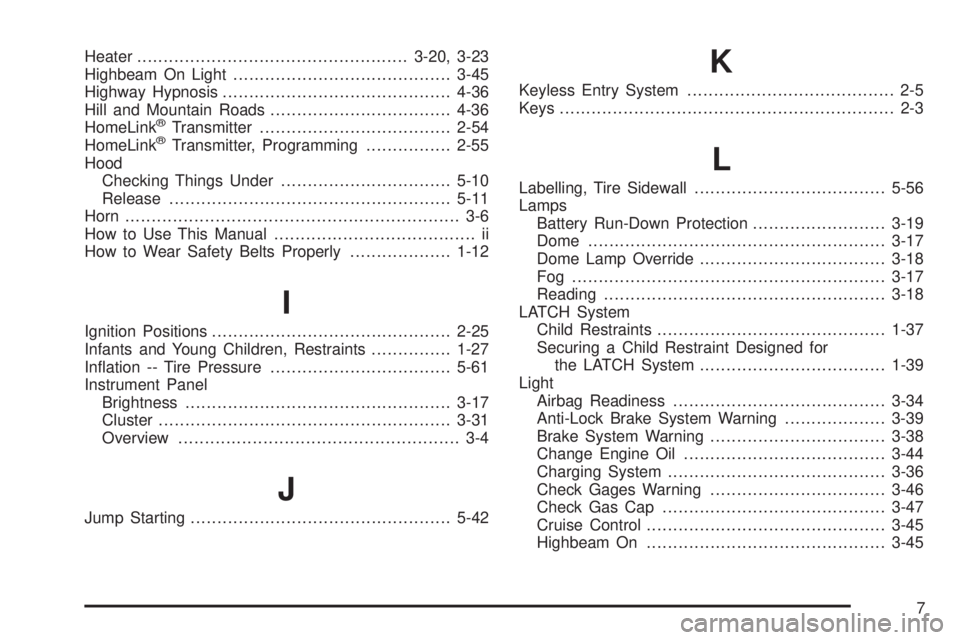
Heater...................................................3-20, 3-23
Highbeam On Light.........................................3-45
Highway Hypnosis...........................................4-36
Hill and Mountain Roads..................................4-36
HomeLink
®Transmitter....................................2-54
HomeLink®Transmitter, Programming................2-55
Hood
Checking Things Under................................5-10
Release.....................................................5-11
Horn............................................................... 3-6
How to Use This Manual...................................... ii
How to Wear Safety Belts Properly...................1-12
I
Ignition Positions.............................................2-25
Infants and Young Children, Restraints...............1-27
Ination -- Tire Pressure..................................5-61
Instrument Panel
Brightness..................................................3-17
Cluster.......................................................3-31
Overview..................................................... 3-4
J
Jump Starting.................................................5-42
K
Keyless Entry System....................................... 2-5
Keys............................................................... 2-3
L
Labelling, Tire Sidewall....................................5-56
Lamps
Battery Run-Down Protection.........................3-19
Dome........................................................3-17
Dome Lamp Override...................................3-18
Fog ...........................................................3-17
Reading.....................................................3-18
LATCH System
Child Restraints...........................................1-37
Securing a Child Restraint Designed for
the LATCH System...................................1-39
Light
Airbag Readiness........................................3-34
Anti-Lock Brake System Warning...................3-39
Brake System Warning.................................3-38
Change Engine Oil......................................3-44
Charging System.........................................3-36
Check Gages Warning.................................3-46
Check Gas Cap..........................................3-47
Cruise Control.............................................3-45
Highbeam On.............................................3-45
7
Page 468 of 474

Light (cont.)
Low Fuel Warning.......................................3-47
Malfunction Indicator....................................3-40
Passenger Airbag Status Indicator..................3-35
Reduced Engine Power................................3-45
Safety Belt Reminder...................................3-33
Security.....................................................3-44
Service Four-Wheel-Drive Warning Light.........3-46
Lighting
Entry.........................................................3-18
Exit...........................................................3-18
Locking Rear Axle...........................................4-10
Lockout Protection..........................................2-12
Locks
Delayed Locking........................................... 2-9
Door........................................................... 2-8
Lockout Protection.......................................2-12
Power Door.................................................. 2-9
Programmable Automatic Door Locks.............2-10
Rear Door Security Locks.............................2-12
Loss of Control...............................................4-15
Low Fuel Warning Light...................................3-47
Lumbar
Power Controls............................................. 1-3M
Maintenance Schedule
Additional Required Services........................... 6-6
At Each Fuel Fill.........................................6-10
At Least Once a Month................................6-10
At Least Once a Year..................................6-11
Introduction.................................................. 6-2
Maintenance Footnotes.................................. 6-8
Maintenance Record....................................6-16
Maintenance Requirements............................. 6-2
Normal Maintenance Replacement Parts.........6-15
Owner Checks and Services.........................6-10
Recommended Fluids and Lubricants.............6-13
Scheduled Maintenance................................. 6-4
Using Your................................................... 6-2
Your Vehicle and the Environment................... 6-2
Malfunction Indicator Light................................3-40
Manual Seats................................................... 1-2
Memory Seat.................................................2-63
Message
DIC Warnings and Messages........................3-52
Midgate.........................................................2-13
8
Page 470 of 474
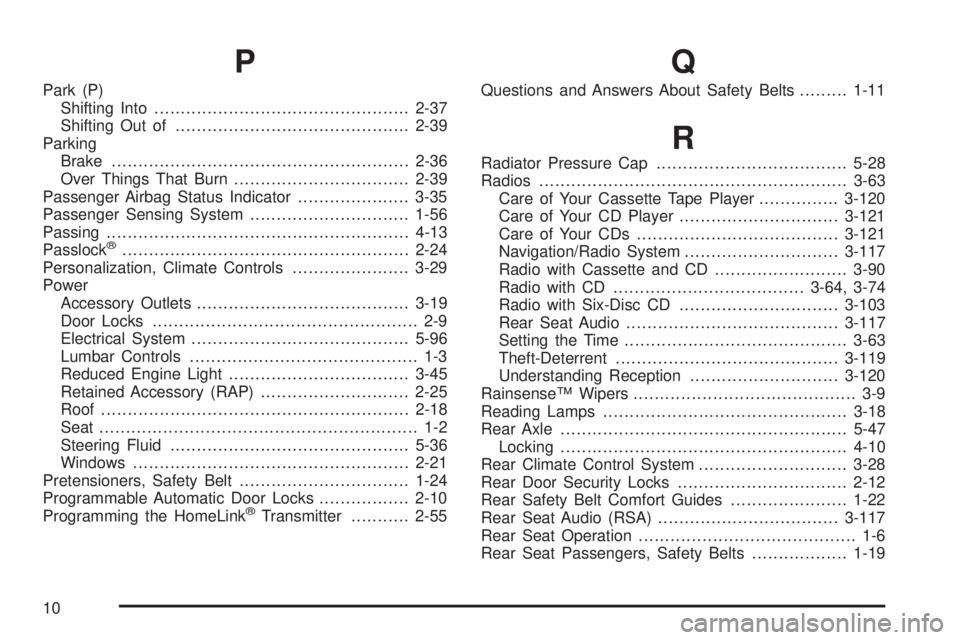
P
Park (P)
Shifting Into................................................2-37
Shifting Out of............................................2-39
Parking
Brake........................................................2-36
Over Things That Burn.................................2-39
Passenger Airbag Status Indicator.....................3-35
Passenger Sensing System..............................1-56
Passing.........................................................4-13
Passlock
®......................................................2-24
Personalization, Climate Controls......................3-29
Power
Accessory Outlets........................................3-19
Door Locks.................................................. 2-9
Electrical System.........................................5-96
Lumbar Controls........................................... 1-3
Reduced Engine Light..................................3-45
Retained Accessory (RAP)............................2-25
Roof..........................................................2-18
Seat............................................................ 1-2
Steering Fluid.............................................5-36
Windows....................................................2-21
Pretensioners, Safety Belt................................1-24
Programmable Automatic Door Locks.................2-10
Programming the HomeLink
®Transmitter...........2-55
Q
Questions and Answers About Safety Belts.........1-11
R
Radiator Pressure Cap....................................5-28
Radios..........................................................3-63
Care of Your Cassette Tape Player...............3-120
Care of Your CD Player..............................3-121
Care of Your CDs......................................3-121
Navigation/Radio System.............................3-117
Radio with Cassette and CD.........................3-90
Radio with CD....................................3-64, 3-74
Radio with Six-Disc CD..............................3-103
Rear Seat Audio........................................3-117
Setting the Time..........................................3-63
Theft-Deterrent..........................................3-119
Understanding Reception............................3-120
Rainsense™ Wipers.......................................... 3-9
Reading Lamps..............................................3-18
Rear Axle......................................................5-47
Locking......................................................4-10
Rear Climate Control System............................3-28
Rear Door Security Locks................................2-12
Rear Safety Belt Comfort Guides......................1-22
Rear Seat Audio (RSA)..................................3-117
Rear Seat Operation......................................... 1-6
Rear Seat Passengers, Safety Belts..................1-19
10
Page 471 of 474

Rearview Mirror with Compass..........................2-42
Rearview Mirror with Compass and
Temperature.......................................2-46, 3-33
Rearview Mirror with OnStar
®...........................2-42
Rearview Mirror with OnStar®and Compass.........2-44
Rearview Mirror with OnStar®, Compass, and
Temperature Display.....................................2-48
Rearview Mirrors.............................................2-42
Reclining Seatbacks.......................................... 1-4
Recommended Fluids and Lubricants.................6-13
Recreational Vehicle Towing.............................4-50
Reduced Engine Power Light............................3-45
Remote Keyless Entry System............................ 2-5
Remote Keyless Entry System, Operation............ 2-6
Removing the Flat Tire and Installing the
Spare Tire..................................................5-75
Removing the Spare Tire and Tools...................5-73
Replacement Bulbs.........................................5-52
Reporting Safety Defects
Canadian Government..................................7-11
General Motors...........................................7-11
United States Government............................7-10
Restraint System Check
Checking Your Restraint Systems...................1-61
Replacing Restraint System Parts
After a Crash..........................................1-62
Restraint Systems
Checking....................................................1-61
Replacing Parts...........................................1-62Retained Accessory Power (RAP)......................2-25
Right Front Passenger Position, Safety Belts......1-19
Roadside
Assistance Program....................................... 7-6
Rocking Your Vehicle to Get it Out....................4-43
Roof
Power........................................................2-18
Running Your Engine While You Are Parked.......2-40
S
Safety Belt
Pretensioners..............................................1-24
Reminder Light............................................3-33
Safety Belts
Care of......................................................5-89
Driver Position............................................1-12
How to Wear Safety Belts Properly................1-12
Questions and Answers About Safety Belts........1-11
Rear Safety Belt Comfort Guides for
Children and Small Adults.........................1-22
Rear Seat Passengers.................................1-19
Right Front Passenger Position......................1-19
Safety Belt Extender....................................1-24
Safety Belt Use During Pregnancy.................1-18
Safety Belts Are for Everyone......................... 1-7
11