coolant GMC SIERRA 1993 User Guide
[x] Cancel search | Manufacturer: GMC, Model Year: 1993, Model line: SIERRA, Model: GMC SIERRA 1993Pages: 436, PDF Size: 23.88 MB
Page 255 of 436
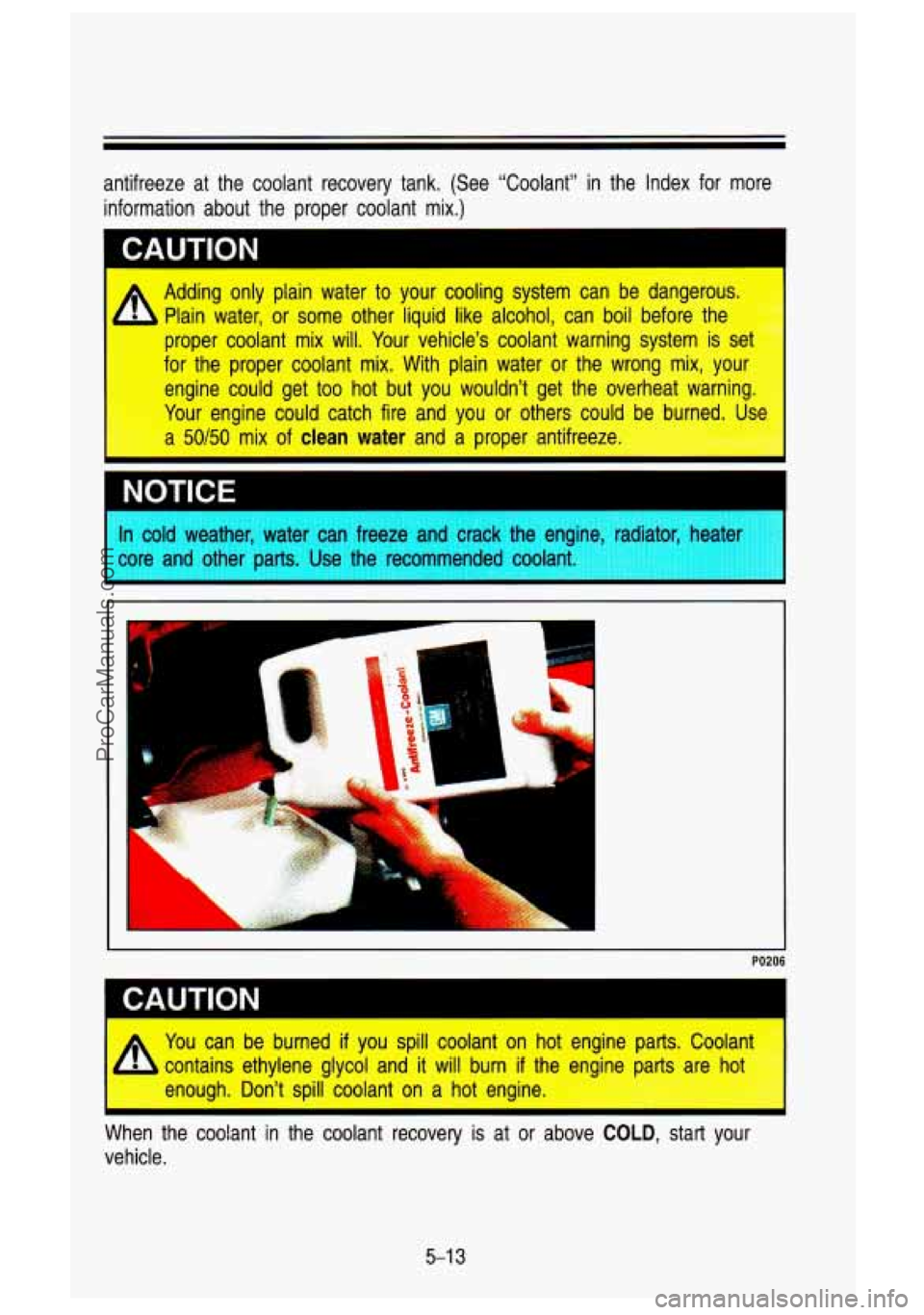
antifreeze at the coolant recovery tank. (See “Coolant” in the Index for more
information about the proper coolant mix.)
* Adding only plain water to your cooling system can be dangerous.
Plain water, or some other liquid like alcohol, can boil before the
proper coolant mix will. Your vehicle’s coolant warning system is
for the proper coolant mix. With plain water or the wrong mix, your
engine could get too hot but you wouldn’t get the overheat warning,
Your engine could catch fire and you or others could be burned.
USE
7 50/50 mix of clean water and a proper antifreeze.
I ln cold weather, water can freeze and crack the engine, radiator, heate\
r
:ore and other parts. Use the recommended coolant.
PO206
I * You can be burned if you spill coolant on hot engine parts. CoolQni
A contains ethylene glycol and it will burn if the engine parts are hut
enough. Don’t spill coolant on a hot engine.
When the coolant in the coolant recovery is at
or above COLD, start your
vehicle.
5-1 3
ProCarManuals.com
Page 256 of 436

If the overheat warning continues, there’s one more thing you c\
an try. You
can add the proper coolant mix directly to the radiator, but \
be sure the radiator is cool before you
do it.
‘ Steam and scalding liquids from a hot cooling system can blow \
out
I- and burn you badly. They are under pressure, and if you turn the
radiator pressure cap-even a little-they can come out at high
speed. Never turn the cap when the cooling system, including t\
he radiator pressure cap, is hot. Wait for the cooling system and\
radiator
pressure cap to cool
if you ever have to turn the pressure cap. I
. . . .
1
K2Jll
How to Add Coolant to the Radiator
1. You can remove the radiator pressure cap when the cooling system,
including the radiator pressure cap and upper radiator hose is \
no longer
hot. Turn the pressure cap slowly to the
left until it first stops. (Don’t
press down while turning the pressure cap.)
If you hear a hiss, wait for that to stop. A hiss means there is still some
pressure left.
5-1 4
ProCarManuals.com
Page 257 of 436
1
PO244
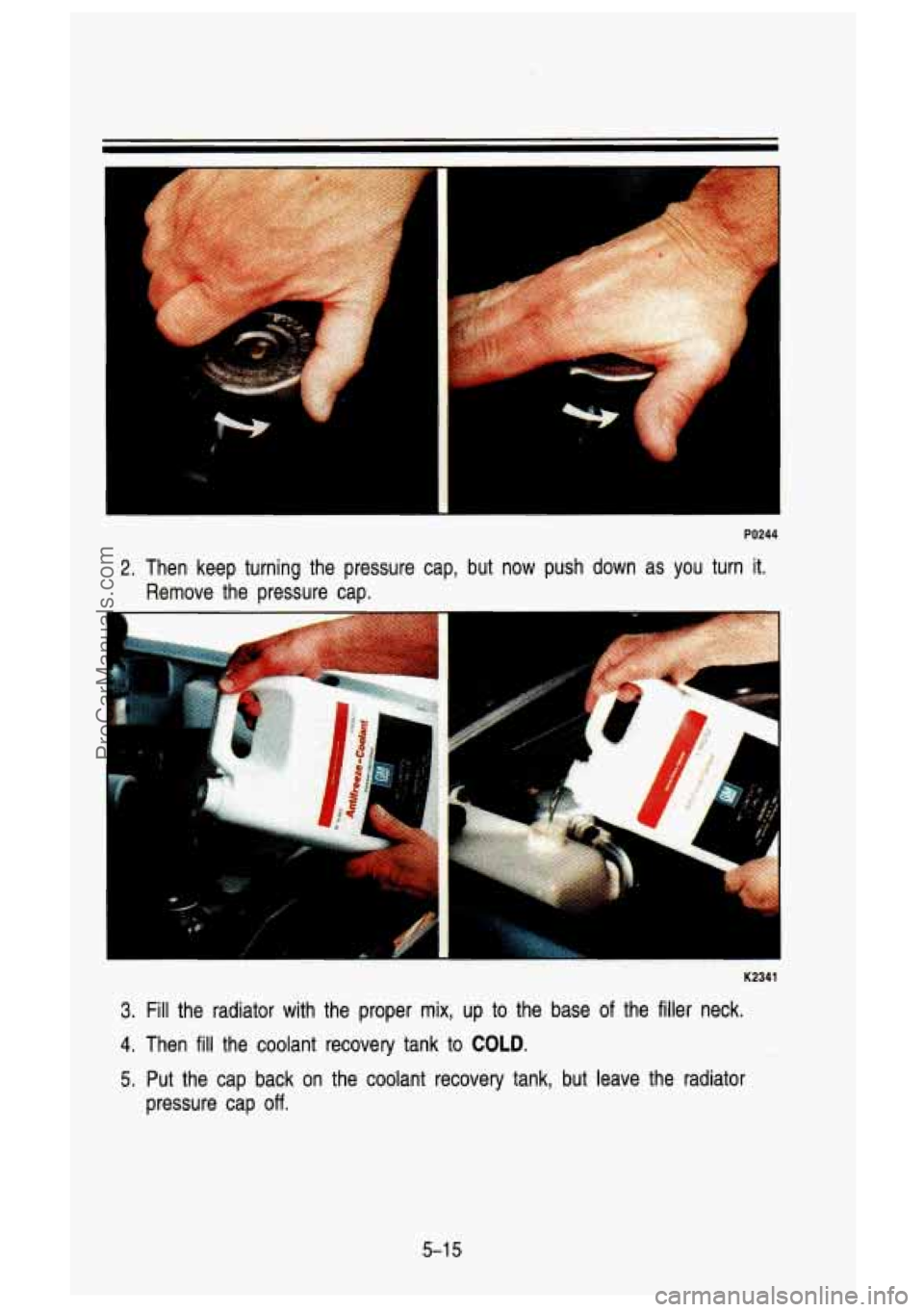
2. Then keep turning the pressure cap, but now push down as you turn it.
Remove the pressure cap.
K2341
3. Fill the radiator with the proper mix, up to the base of the filler neck.
4. Then fill the coolant recovery tank to COLD.
5. Put the cap back on the coolant recovery tank, but leave the \
radiator
pressure cap
off.
5-1 5
ProCarManuals.com
Page 258 of 436
Prob/ems on the Road
t
e;
K2550
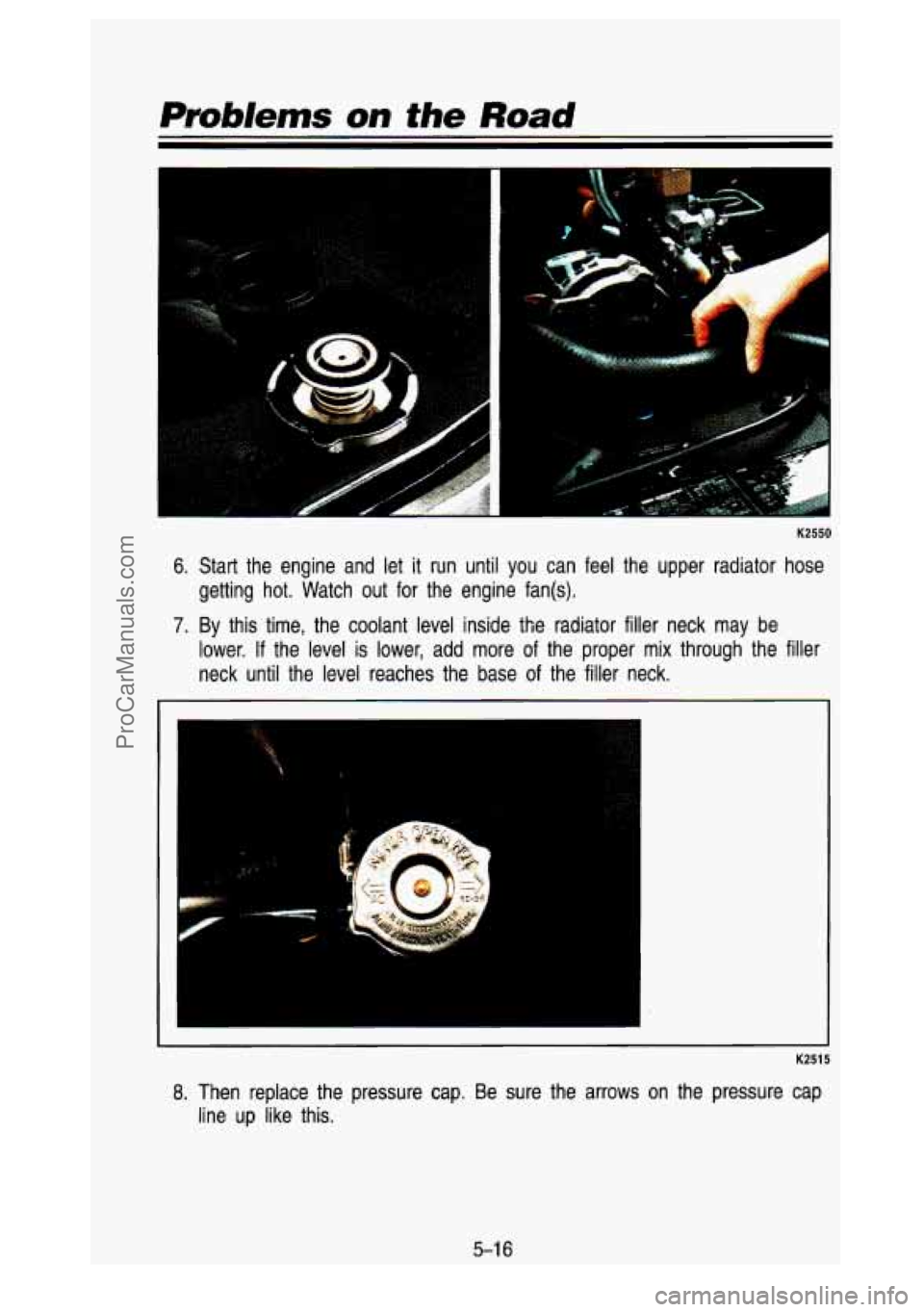
6. Start the engine and let it run until you can feel the upper radiator hose
getting hot. Watch out for the engine fan(s).
7. By this time, the coolant level inside the radiator filler neck m\
ay be
lower.
If the level is lower, add more of the proper mix through the f\
iller
neck until the level reaches the base of the filler neck.
K2515
8. Then replace the pressure cap. Be sure the arrows on the pressure cap
line up like this.
5-1 6
ProCarManuals.com
Page 280 of 436

Service & Appearance Care
Engine Coolant ........................................................................\
........................ 6-42
Power Steering Fluid
........................................................................\
............... 6-46
Windshield Washer Fluid
........................................................................\
......... 6-48
Brake Master Cylinder
........................................................................\
............. 6-49
Replacing Brake System Parts
........................................................................\
.. 6-50
Other Maintenance Items ........................................................................\
........... 6-51
Lubrication
........................................................................\
.................................... 6-52
Electrical System
........................................................................\
......................... 6-54
Battery
........................................................................\
...................................... 6-54
Fuses and Circuit Breakers
........................................................................\
.... 6-64
Bulb Replacement
........................................................................\
.................... 6-54
Exhaust System
........................................................................\
........................... 6-65
Loading Your Vehicle
........................................................................\
.................. 6-67
Tires
........................................................................\
.............................................. 6-72
Inflation-Tire Pressure
........................................................................\
........... 6-73
Tire Inspection and Rotation
........................................................................\
.. 6-78
When It's Time for New Tires
........................................................................\
6-80
Buying New Tires
........................................................................\
.................... 6-81
Wheel Alignment and Tire Balance
............................................................... 6-82
Wheel Replacement
........................................................................\
................. 6-83
Tire Chains
........................................................................\
............................... 6-84
Appearance Care
........................................................................\
........................ 6-84
Cleaning the Inside Of Your Vehicle
............................................................. 6-85
Cleaning the Outside Of Your Vehicle
.......................................................... 6-88
Appearance Care Materials
.r.ikl...rr.r.n.....lr. ........ ... .. 6-91
Vehicle Identification Number
........................................................................\
..... 6-92
Service Parts Identification Label
...................................................................... 6-94
Specification Charts
....++t....,.,.*,..-".,,. .............. , ........... .................... 6-95
Uniform Tire Quality Grading
........................................................................\
.. 6-81
..................................................
6-2
ProCarManuals.com
Page 296 of 436

Service & Appearance Cam
i r:
PO21 7
If your vehicle has air conditioning, the auxiliary fan under the \
hood
can start up and injure you even when the engine is not runn\
ing.
Keep your hands, clothing and tools away from any underhood
electric fan,
if you have one.
Things that burn can get on hot engine parts and start
a fire. These
b include liquids like gasoline or diesel fuel, oil, coolant, bra\
ke fluid,
windshield washer and other fluids, and plastic or rubber. You or
others could be burned. Be careful not
to drop or spill things that will
burn onto a hot engine.
Before closing the hood, be sure all the filler caps are
on properly. Then just
pull the hood down and close it firmly.
6-1 8
ProCarManuals.com
Page 320 of 436

Service & Appearance ,Care
Engine Coolant
r
PO593
The following explains your cooling system and how to add cool\
ant when it is low.
If you have a problem with -engine overheating, see “Engine
Overheating” in the Index.
The proper coolant for your vehicle will:
Give freezing protection down to -34°F (-37°C).
Give boiling protection up to 258°F (125°C).
Protect against rust and corrosion:
Help keep the proper engine temperature.
Let the warning lights and gages work as thiy should.
What to Use:
Use a ,mixture of clean water (preferably distilled), and antifreeze that meets
“GM Specification 6038-M,” which won’t damage aluminum p\
arts.
Also use
GM Engine Coolant Supplement (sealer) with a complete coolant change. If
you use these, you don’t need to add anything else.
,
6-42
ProCarManuals.com
Page 321 of 436
1 CAUTION
4 Adding only plain water to your cooling system can be dangerous.
Plain water, or some other liquid like alcohol, can boil before th(
)per coolant mix will. Your vehicle’s coolant warning system is set
for the proper coolant mix. With plain water or the wrong mix\
, your
engine could get too hot but you wouldn’t get the overheat warning.
Your engine could catch fire and you or others could be burned. Use
a
50/50 mix of clean water and a proper antifreeze.
NOTICE
If you use an improper coolant mix, your engine could overheat an\
d 1:
badly damaged. The repair cost wouldn’t be covered by your warranty. 1
much water in the mix can freeze and xk +?e t line radiator, heater
core and other parts.
Some conditions, such as air trapped in the cooling system, can affect the
coolant level in the radiator. Check the coolant level when the engine is cold
and follow the steps under “Adding Coolant” for the prope\
r way to add
coolant.
If you have the low coolant warning system, refer to the General Motors
Service Manual or see your dealer for the proper coolant
fill procedure. (To
purchase a Service Manual, see “Service Publications’’ in the Index.) Using
the wrong
fill procedure can cause a low coolant warning indication.
If you have to add coolant more than four times a year, have your dealer
check your cooling system.
If you use the proper coolant, you don’t have to add extra inhibitors or
additives which claim to improve
the system. These can be harmful.
-
NOTICE .I
6-43
ProCarManuals.com
Page 322 of 436
Service & Amearance Care
Adding Coolant
r
PO206
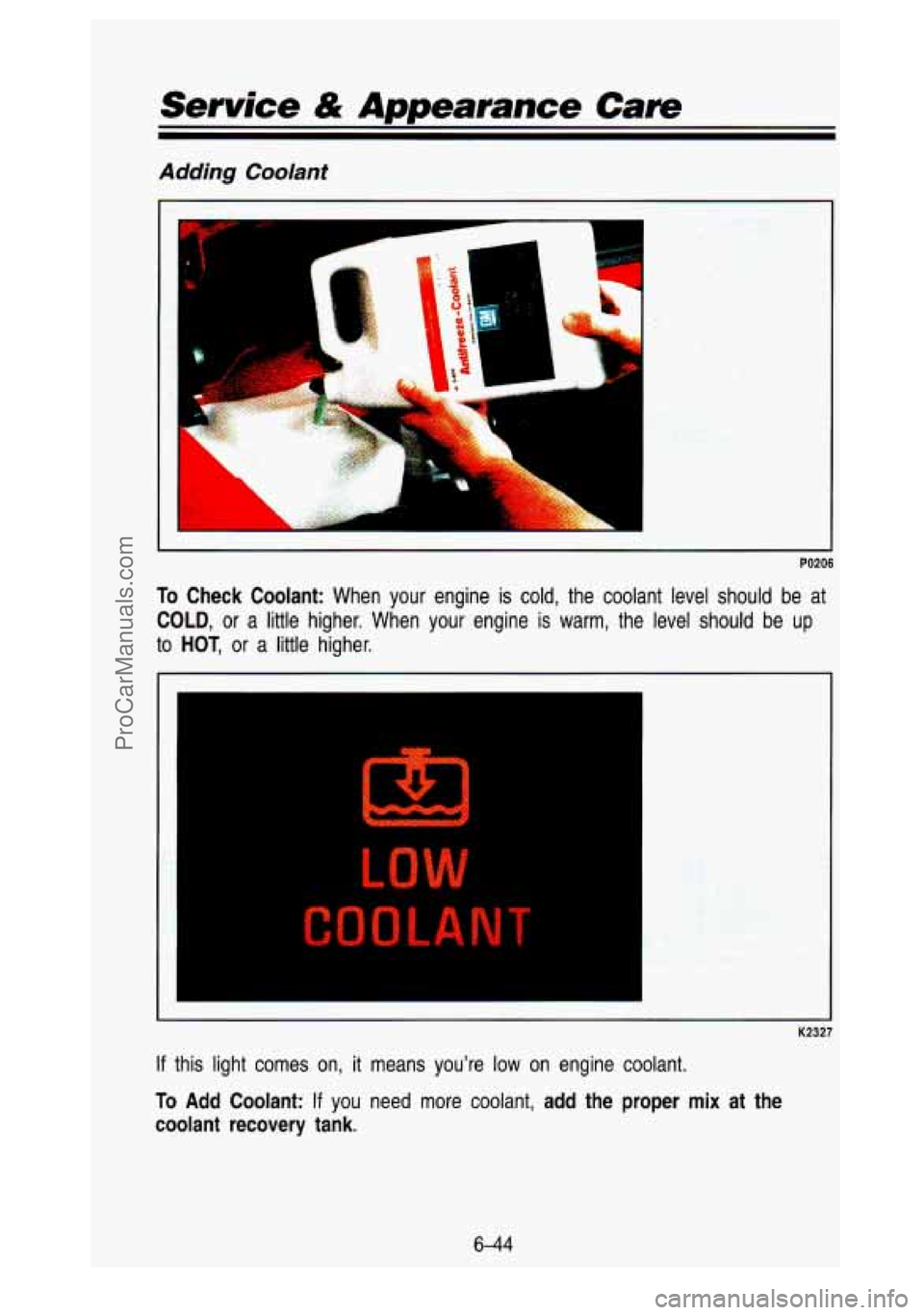
To Check Coolant: When your engine is cold, the coolant level should be at
COLD, or a little higher. When your engine is warm, the level should be up
to HOT, or a little higher.
LOW
COOLANT
K2327
If this light comes on, it means you're low on engine coolant.
To Add Coolant: If you need more coolant, add the proper mix at the
coolant recovery tank.
6-44
ProCarManuals.com
Page 323 of 436
CAUTION
Turning the radiator pressure cap when the engine and radiator are
hot can allow steam and scalding liquids to blow out and burn you
badly. With the coolant recovery tank, you will almost never h\
ave to
add coolant at the radiator. Never turn the radiator pressure cap-even a little-when the engine and radiator are hot.
Add coolant mix at the recovery tank, but be careful not to \
spill it.
You can be burned
if you spill coolant on hot engine parts. Coolant
mtains ethylene glycol, and
it will burn if the engine parts are hot
enough. Don’t spill coolant on a hot engine. ’
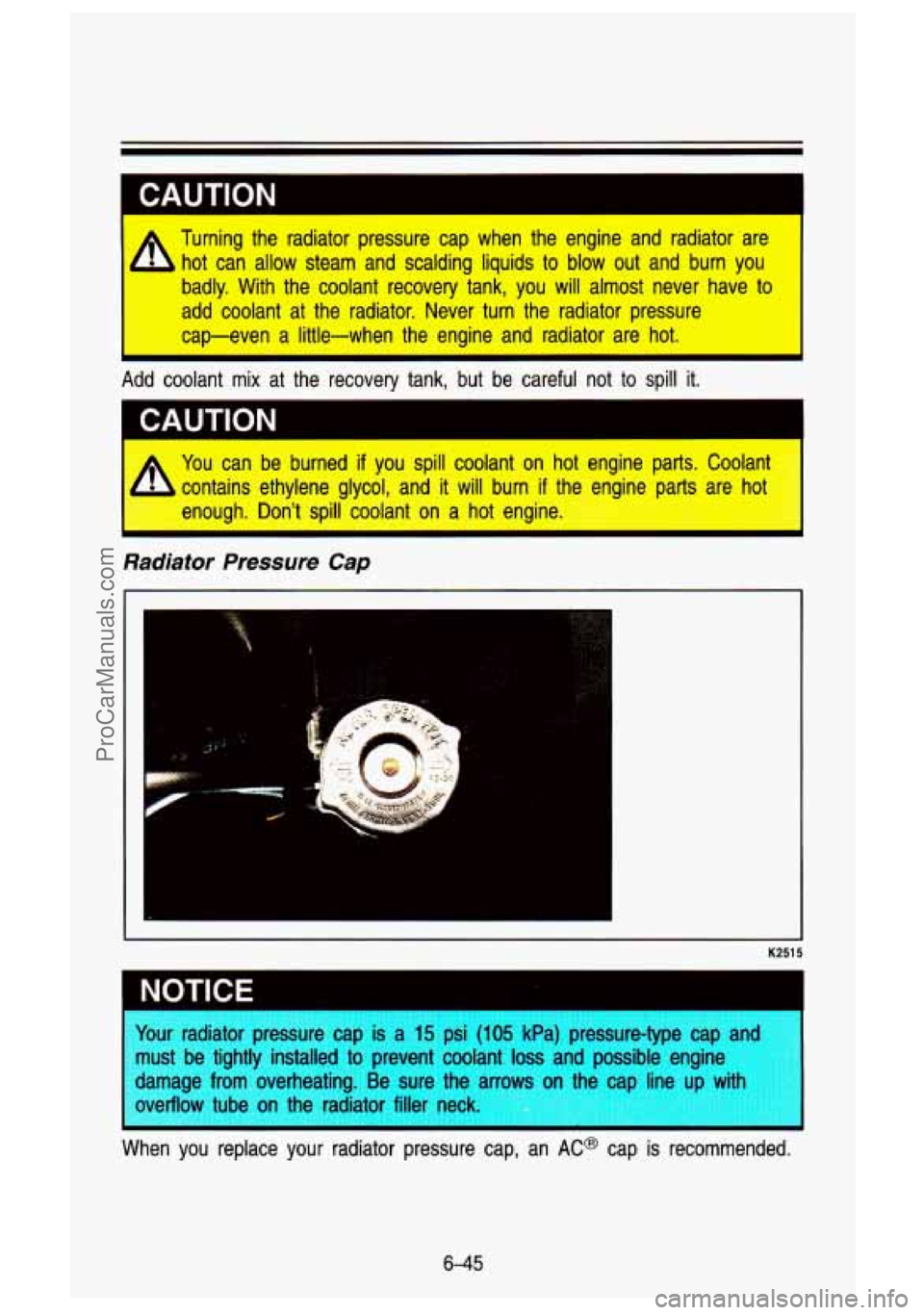
Radiator Pressure Cap
K2515
1
Your radiator pressure cap is a 15 psi (105 kPa) pressure-type cap
must be tightly installed to prevent coolant
loss and possible engine
damage from overheating. Be sure the arrows on the cap line up w
overflow tube on the radiator filler neck.
-
When you replace your radiator pressure cap, an ACa cap is recommended.
-
I
6-45
ProCarManuals.com