brake fluid GREAT WALL HOVER 2006 Service User Guide
[x] Cancel search | Manufacturer: GREAT WALL, Model Year: 2006, Model line: HOVER, Model: GREAT WALL HOVER 2006Pages: 425, PDF Size: 26.05 MB
Page 125 of 425
Automatic transmission-49
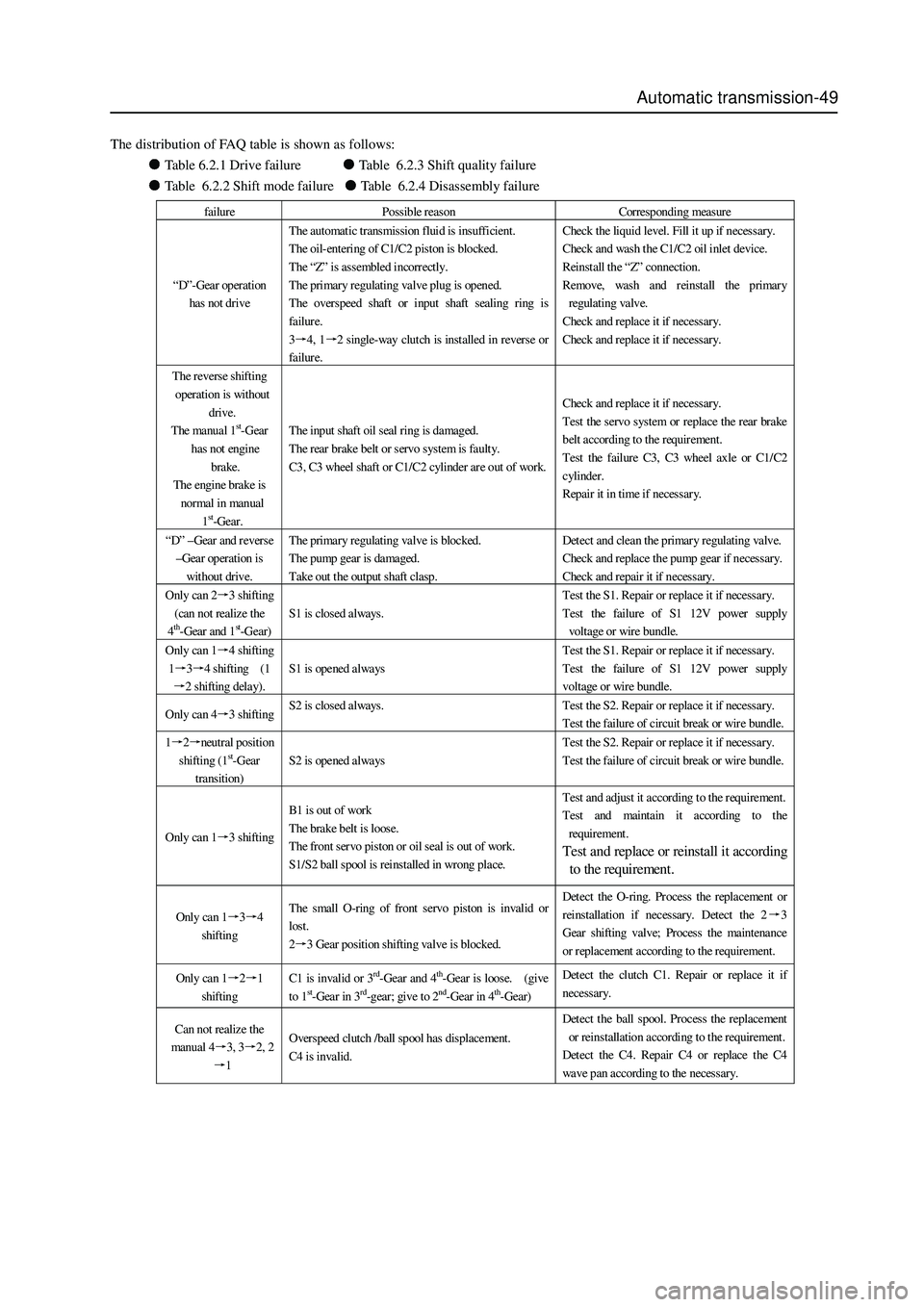
The distribution of FAQ table is shown as follows:
Table 6.2.1 Drive failure Table 6.2.3 Shift quality failure
Table 6.2.2 Shift mode failure Table 6.2.4 Disassembly failure
failure Possible reason Corresponding measure
“D”-Gear operation
has not drive The automatic transmission fluid is insufficient.
The oil-entering of C1/C2 piston is blocked.
The “Z” is assembled incorrectly.
The primary regulating valve plug is opened.
The overspeed shaft or input shaft sealing ring is
failure.
3→4, 1→2 single-way clut ch is installed in revers e or
failure. Check the liquid level. Fill it up if necessary.
Check and wash the C1/C2 oil inlet device.
Reinstall the “Z” connection.
Remove, wash and reinstall the primary
regulating valve.
Check and replace it if necessary.
Check and replace it if necessary.
The reverse shifting
operation is without
drive.
The manual 1
st-Gear
has not engine
brake.
The engine brake is
normal in manual
1
st-Gear. The input shaft oil seal ring is damaged.
The rear brake belt or servo system is faulty.
C3, C3 wheel shaft or C1/C2 cylinder are out of work. Check and replace it if necessary.
Test the servo system or replace the rear brake
belt according to the requirement.
Test the failure C3, C3 wheel axle or C1/C2
cylinder.
Repair it in time if necessary.
“D” –Gear and reverse
–Gear operation is
without drive. The primary regulating valve is blocked.
The pump gear is damaged.
Take out the output shaft clasp. Det ect and clean the primary regulating valve.
Check and replace the pump gear if necessary.
Check and repair it if necessary.
Only can 2→3 shifting
(can not realize the
4
th-Gear and 1st-Gear) S1 is closed always. Test the S1. Repair or replace it if necessary.
Test the failure of S1 12V power supply
voltage or wire bundle.
Only can 1→4 shifting
1→3→4 shifting (1
→2 shifting delay). S1 is opened always Test the S1. Repair or replace it if necessary.
Test the failure of S1 12V power supply
voltage or wire bundle.
Only can 4→3 shifting S2 is closed always.
Test the S2. Repair or replace it if necessary.
Test the failure of circuit break or wire bundle.
1→2→neutral position
shifting (1st-Gear
transition) S2 is opened always Test the S2. Repair or replace it if necessary.
Test the failure of circuit break or wire bundle.
Only can 1→3 shifting B1 is out of work
The brake belt is loose.
The front servo piston or oil s eal is out of work.
S1/S2 ball spool is reinstalled in wrong place. Test and adjust it according to the requirement.
Test and maintain it according to the
requirement. Test and replace or reinstall it according
to the requirement.
Only can 1→3→4
shifting The small O-ring of front s ervo piston is invalid or
lost.
2→3 Gear position shifting valve is blocked. Det ect the O-ring. Process the replacement or
reinstallation if necessary. Detect the 2→3
Gear shifting valve; Process the maintenance
or replacement according to the requirement.
Only can 1→2→1
shifting C1 is invalid or 3rd-Gear and 4th-Gear is loose. (give
to 1st-Gear in 3rd-gear; give to 2nd-Gear in 4th-Gear) Det ect the clutch C1. Repair or replace it if
necessary.
Can not realize the
man ual 4→3, 3→2, 2
→1 Overspeed clutch /ball spool has displacement.
C4 is invalid. Detect the ball spool. Process the replacement
or reinstallation according to the requirement.
Det ect the C4. Repair C4 or r eplace the C4
wave pan according to the necessary.
Page 129 of 425
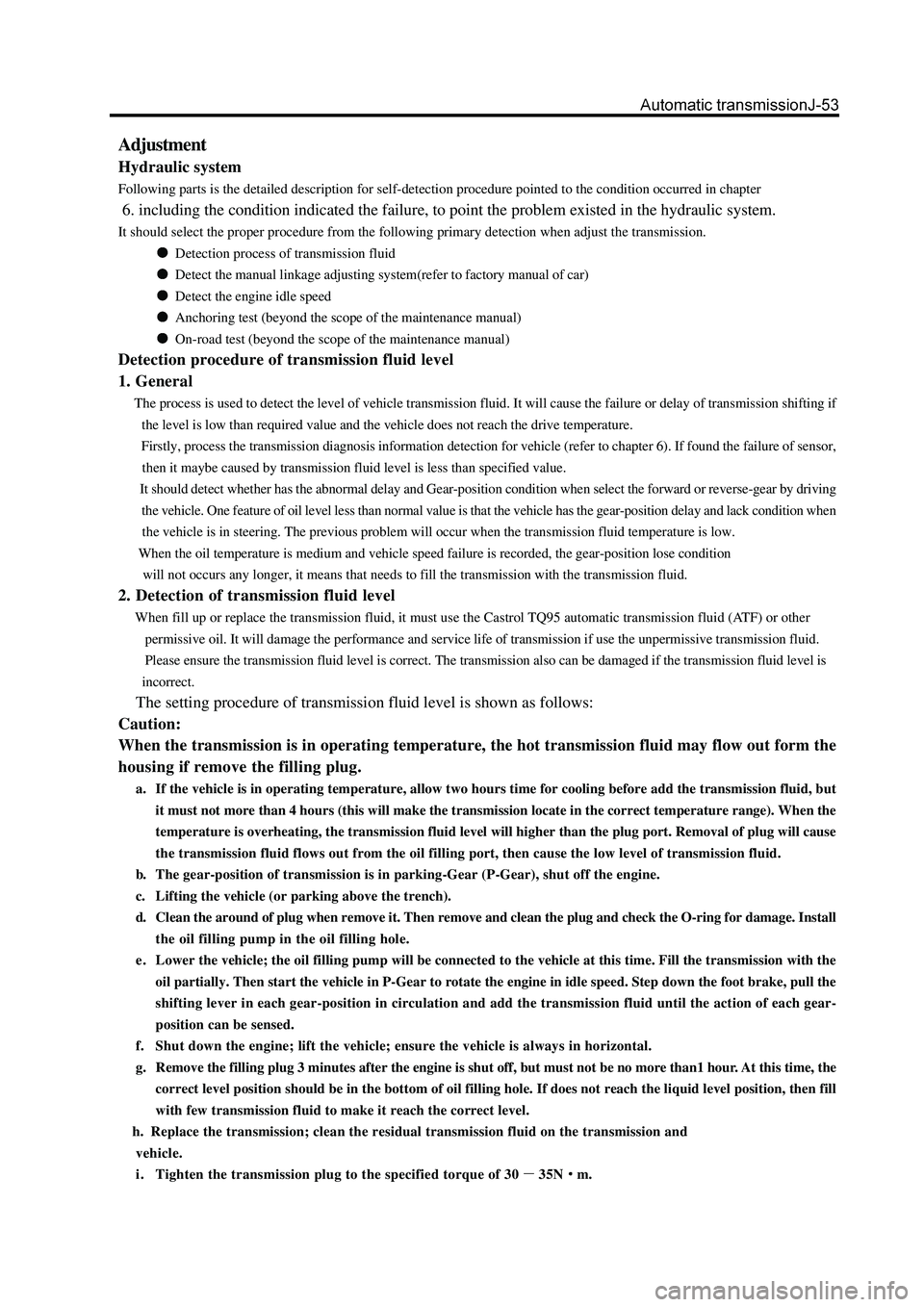
Adjustment
Hydraulic system
Following parts is the detailed description for self-detection procedure pointed to the condition occurred in chapter
6. including the condition indicated the failure, to point the problem existed in the hydraulic system.
It should select the proper procedure from the following primary detection when adjust the transmission.
Detection process of transmission fluid
Detect the manual linkage adjusting system(refer to factory manual of car)
Detect the engine idle speed
Anchoring test (beyond the scope of the maintenance manual)
On-road test (beyond the scope of the maintenance manual)
Detection procedure of transmission fluid level
1. General
The process is used to detect the level of vehicle transmission fluid. It will cause the failure or delay of transmission shifting if
the level is low than required value and the vehicle does not reach the drive temperature.
Firstly, process the transmission diagnosis information detection for vehicle (refer to chapter 6). If found the failure of sensor,
then it maybe caused by transmission fluid level is less than specified value.
It should detect whether has the abnormal delay and Gear-position condition when select the forward or reverse-gear by driving
the vehicle. One feature of oil level less than normal value is that the vehicle has the gear-position delay and lack condition when
the vehicle is in steering. The previous problem will occur when the transmission fluid temperature is low.
When the oil temperature is medium and vehicle speed failure is recorded, the gear-position lose condition
will not occurs any longer, it means that needs to fill the transmission with the transmission fluid.
2. Detection of transmission fluid level
When fill up or replace the transmission fluid, it must use the Castrol TQ95 automatic transmission fluid (ATF) or other
permissive oil. It will damage the performance and service life of transmission if use the unpermissive transmission fluid.
Please ensure the transmission fluid level is correct. The transmission also can be damaged if the transmission fluid level is
incorrect.
The setting procedure of transmission fluid level is shown as follows:
Caution:
When the transmission is in operating temperature, the hot transmission fluid may flow out form the
housing if remove the filling plug.
a. If the vehicle is in operating temperature, allow two hours time for cooling before add the transmission fluid, but
it must not more than 4 hours (this will make the transmission locate in the correct temperature range). When the
temperature is overheating, the transmission fluid level will higher than the plug port. Removal of plug will cause
the transmission fluid flows out from the oil filling port, then cause the low level of transmission fluid.
b. The gear-position of transmission is in parking-Gear (P-Gear), shut off the engine.
c. Lifting the vehicle (or parking above the trench).
d. Clean the around of plug when remove it. Then remove and clean the plug and check the O-ring for damage. Install
the oil filling pump in the oil filling hole.
e. Lower the vehicle; the oil filling pump will be connected to the vehicle at this time. Fill the transmission with the
oil partially. Then start the vehicle in P-Gear to rotate the engine in idle speed. Step down the foot brake, pull the
shifting lever in each gear-position in circulation and add the transmission fluid until the action of each gear-
position can be sensed.
f. Shut down the engine; lift the vehicle; ensure the vehicle is always in horizontal.
g. Remove the filling plug 3 minutes after the engine is shut off, but must not be no more than1 hour. At this time, the
correct level position should be in the bottom of oil filling hole. If does not reach the liquid level position, then fill
with few transmission fluid to make it reach the correct level.
h. Replace the transmission; clean the residual transmission fluid on the transmission and
vehicle.
i. Tighten the transmission plug to the specified torque of 30
35Nm.
Page 130 of 425
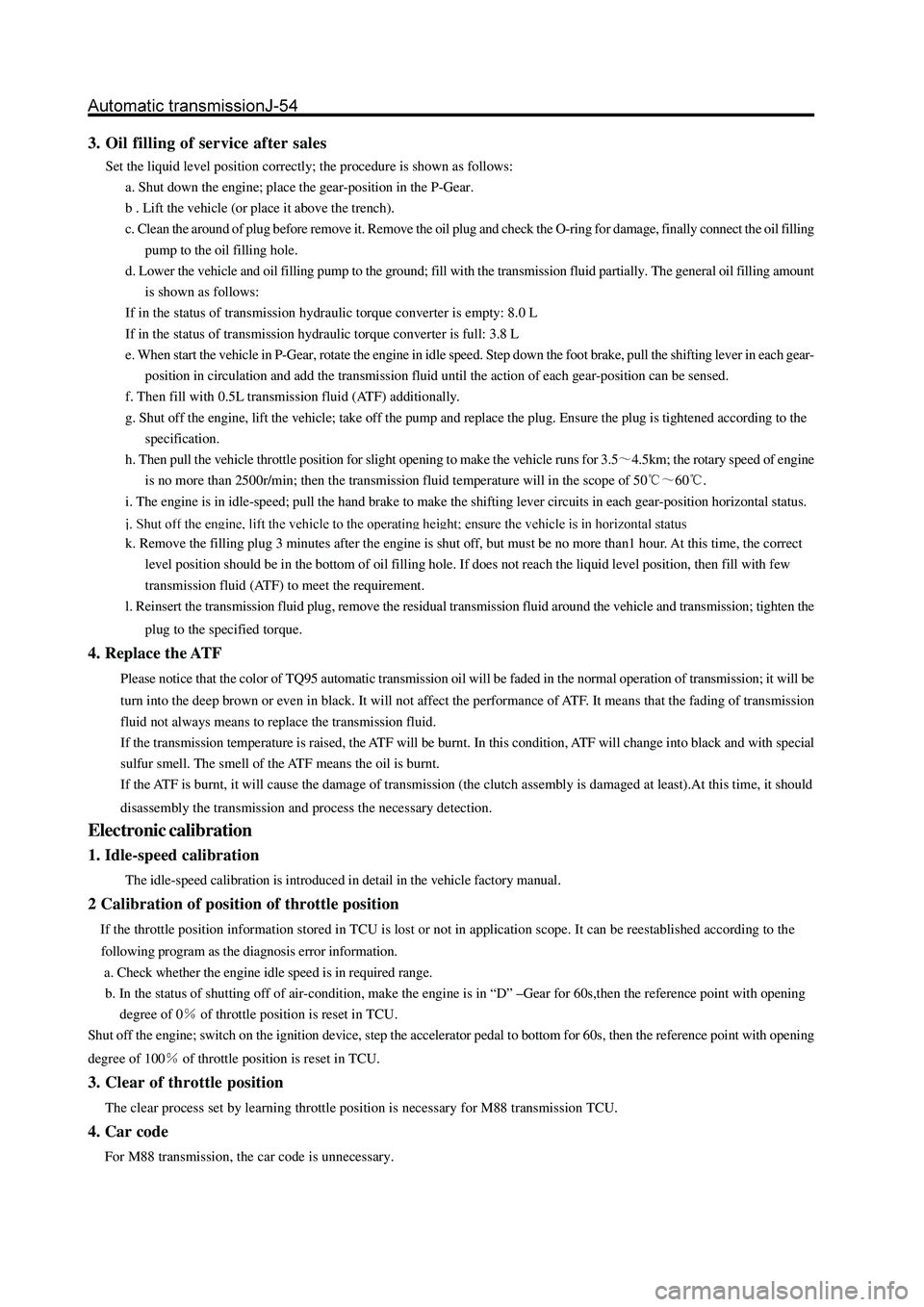
3. Oil filling of service after sales
Set the liquid level position correctly; the procedure is shown as follows:
a. Shut down the engine; place the gear-position in the P-Gear.
b . Lift the vehicle (or place it above the trench).
c. Clean the around of plug before remove it. Remove the oil plug and check the O-ring for damage, finally connect the oil filling
pump to the oil filling hole.
d. Lower the vehicle and oil filling pump to the ground; fill with the transmission fluid partially. The general oil filling amount
is shown as follows:
If in the status of transmission hydraulic torque converter is empty: 8.0 L
If in the status of transmission hydraulic torque converter is full: 3.8 L
e. When start the vehicle in P-Gear, rotate the engine in idle speed. Step down the foot brake, pull the shifting lever in each gear-
position in circulation and add the transmission fluid until the action of each gear-position can be sensed.
f. Then fill with 0.5L transmission fluid (ATF) additionally.
g. Shut off the engine, lift the vehicle; take off the pump and replace the plug. Ensure the plug is tightened according to the
specification.
h. Then pull the vehicle throttle position for slight opening to make the vehicle runs for 3.5
4.5km; the rotary speed of engine
is no more than 2500r/min; then the transmission fluid temperature will in the scope of 50
60.
i. The engine is in idle-speed; pull the hand brake to make the shifting lever circuits in each gear-position horizontal status.
k. Remove the filling plug 3 minutes after the engine is shut off, but must be no more than1 hour. At this time, the correct
level position should be in the bottom of oil filling hole. If does not reach the liquid level position, then fill with few
transmission fluid (ATF) to meet the requirement.
l. Reinsert the transmission fluid plug, remove the residual transmission fluid around the vehicle and transmission; tighten the
plug to the specified torque.
4. Replace the ATF
Please notice that the color of TQ95 automatic transmission oil will be faded in the normal operation of transmission; it will be
turn into the deep brown or even in black. It will not affect the performance of ATF. It means that the fading of transmission
fluid not always means to replace the transmission fluid.
If the transmission temperature is raised, the ATF will be burnt. In this condition, ATF will change into black and with special
sulfur smell. The smell of the ATF means the oil is burnt.
If the ATF is burnt, it will cause the damage of transmission (the clutch assembly is damaged at least).At this time, it should
disassembly the transmission and process the necessary detection.
Electronic calibration
1. Idle-speed calibration
The idle-speed calibration is introduced in detail in the vehicle factory manual.
2 Calibration of position of throttle position
If the throttle position information stored in TCU is lost or not in application scope. It can be reestablished according to the
following program as the diagnosis error information.
a. Check whether the engine idle speed is in required range.
b. In the status of shutting off of air-condition, make the engine is in “D” –Gear for 60s,then the reference point with opening
degree of 0
of throttle position is reset in TCU.
Shut off the engine; switch on the ignition device, step the accelerator pedal to bottom for 60s, then the reference point with opening
degree of 100
of throttle position is reset in TCU.
3. Clear of throttle position
The clear process set by learning throttle position is necessary for M88 transmission TCU.
4. Car code
For M88 transmission, the car code is unnecessary.
Page 141 of 425
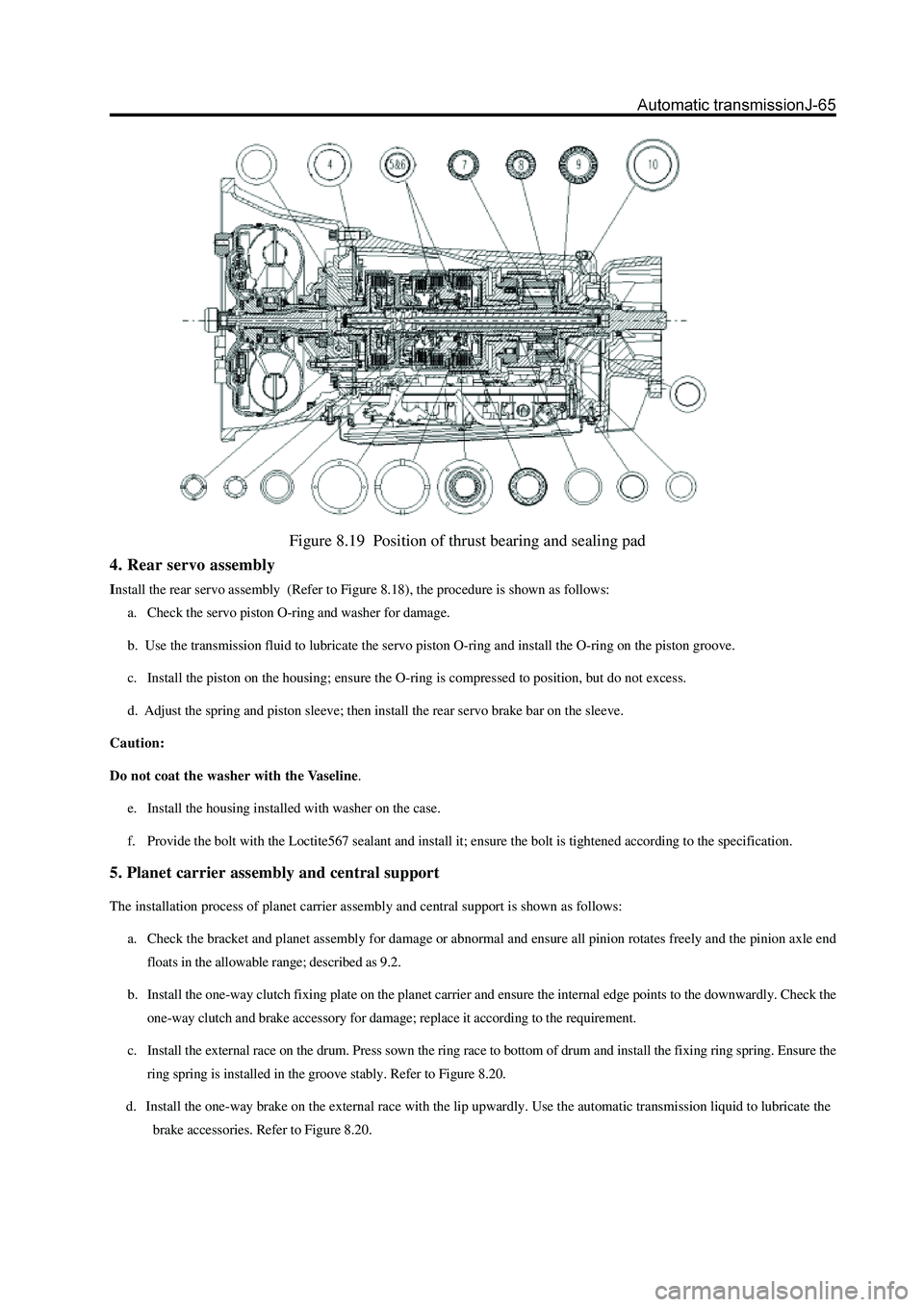
Figure 8.19 Position of thrust bearing and sealing pad
4. Rear servo assembly
Install the rear servo assembly (Refer to Figure 8.18), the procedure is shown as follows:
a. Check the servo piston O-ring and washer for damage.
b. Use the transmission fluid to lubricate the servo piston O-ring and install the O-ring on the piston groove.
c. Install the piston on the housing; ensure the O-ring is compressed to position, but do not excess.
d. Adjust the spring and piston sleeve; then install the rear servo brake bar on the sleeve.
Caution:
Do not coat the washer with the Vaseline.
e. Install the housing installed with washer on the case.
f. Provide the bolt with the Loctite567 sealant and install it; ensure the bolt is tightened according to the specification.
5. Planet carrier assembly and central support
The installation process of planet carrier assembly and central support is shown as follows:
a. Check the bracket and planet assembly for damage or abnormal and ensure all pinion rotates freely and the pinion axle end
floats in the allowable range; described as 9.2.
b. Install the one-way clutch fixing plate on the planet carrier and ensure the internal edge points to the downwardly. Check the
one-way clutch and brake accessory for damage; replace it according to the requirement.
c. Install the external race on the drum. Press sown the ring race to bottom of drum and install the fixing ring spring. Ensure the
ring spring is installed in the groove stably. Refer to Figure 8.20.
d. Install the one-way brake on the external race with the lip upwardly. Use the automatic transmission liquid to lubricate the
brake accessories. Refer to Figure 8.20.
Page 196 of 425
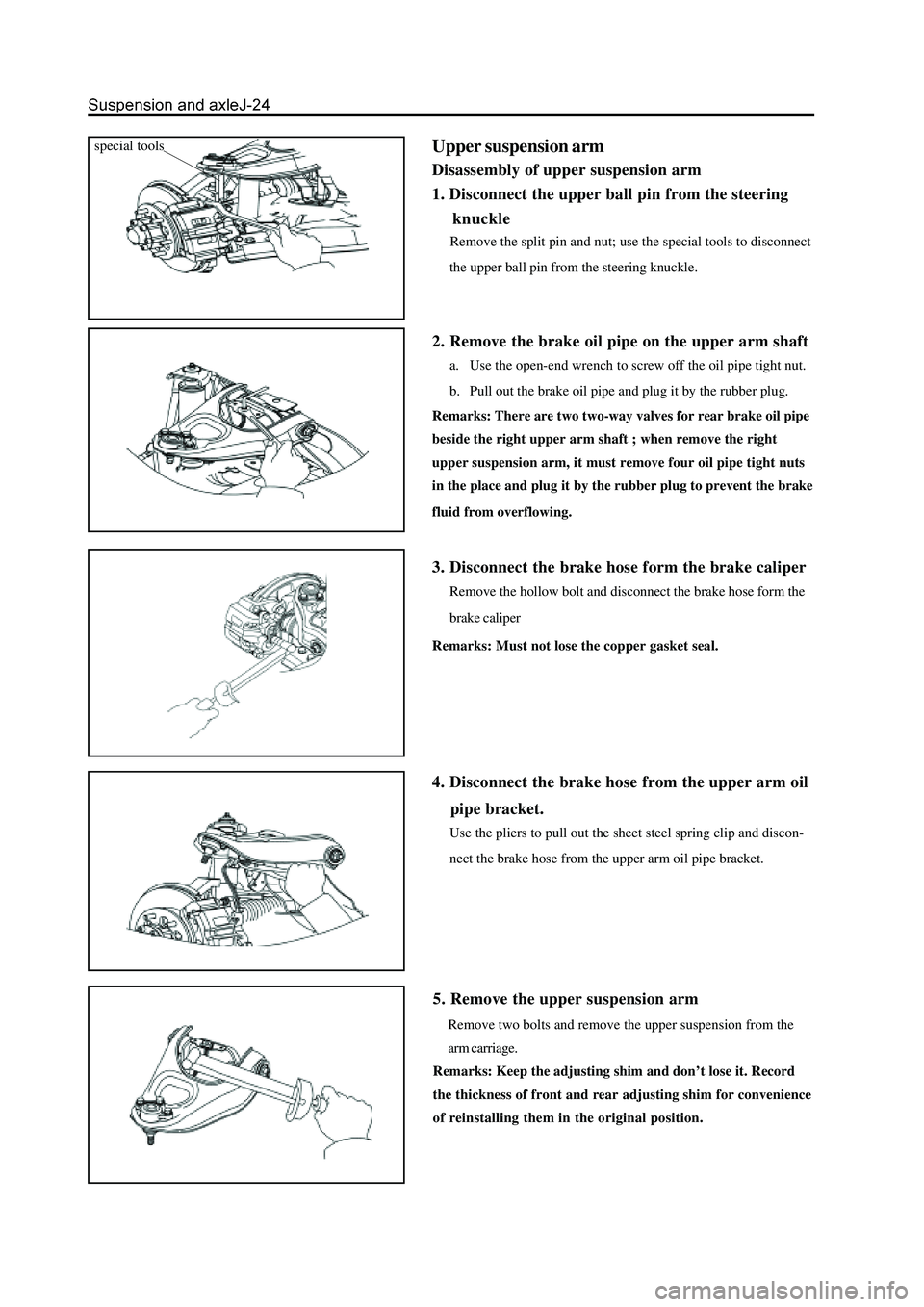
special toolsUpper suspension arm
Disassembly of upper suspension arm
1. Disconnect the upper ball pin from the steering
knuckle
Remove the split pin and nut; use the special tools to disconnect
the upper ball pin from the steering knuckle.
2. Remove the brake oil pipe on the upper arm shaft
a. Use the open-end wrench to screw off the oil pipe tight nut.
b. Pull out the brake oil pipe and plug it by the rubber plug.
Remarks: There are two two-way valves for rear brake oil pipe
beside the right upper arm shaft ; when remove the right
upper suspension arm, it must remove four oil pipe tight nuts
in the place and plug it by the rubber plug to prevent the brake
fluid from overflowing.
3. Disconnect the brake hose form the brake caliper
Remove the hollow bolt and disconnect the brake hose form the
brake caliper
Remarks: Must not lose the copper gasket seal.
4. Disconnect the brake hose from the upper arm oil
pipe bracket.
Use the pliers to pull out the sheet steel spring clip and discon-
nect the brake hose from the upper arm oil pipe bracket.
5. Remove the upper suspension arm
Remove two bolts and remove the upper suspension from the
arm carriage.
Remarks: Keep the adjusting shim and don’t lose it. Record
the thickness of front and rear adjusting shim for convenience
of reinstalling them in the original position.
Page 199 of 425
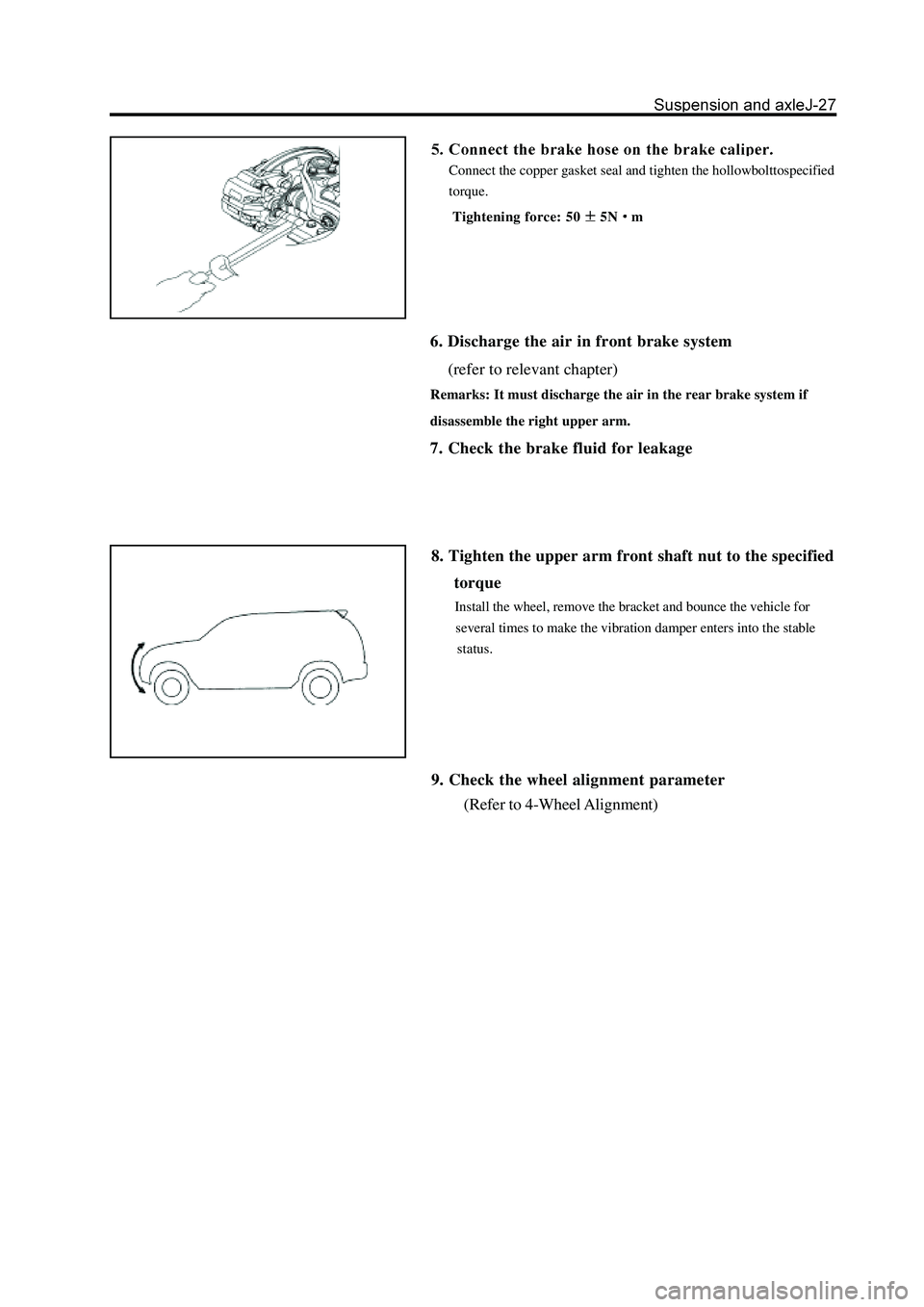
Connect the copper gasket seal and tighten the hollowbolttospecified
torque.
Tightening force: 50
5Nm
6. Discharge the air in front brake system
(refer to relevant chapter)
Remarks: It must discharge the air in the rear brake system if
disassemble the right upper arm.
7. Check the brake fluid for leakage
8. Tighten the upper arm front shaft nut to the specified
torque
Install the wheel, remove the bracket and bounce the vehicle for
several times to make the vibration damper enters into the stable
status.
9. Check the wheel alignment parameter
(Refer to 4-Wheel Alignment)
Page 219 of 425
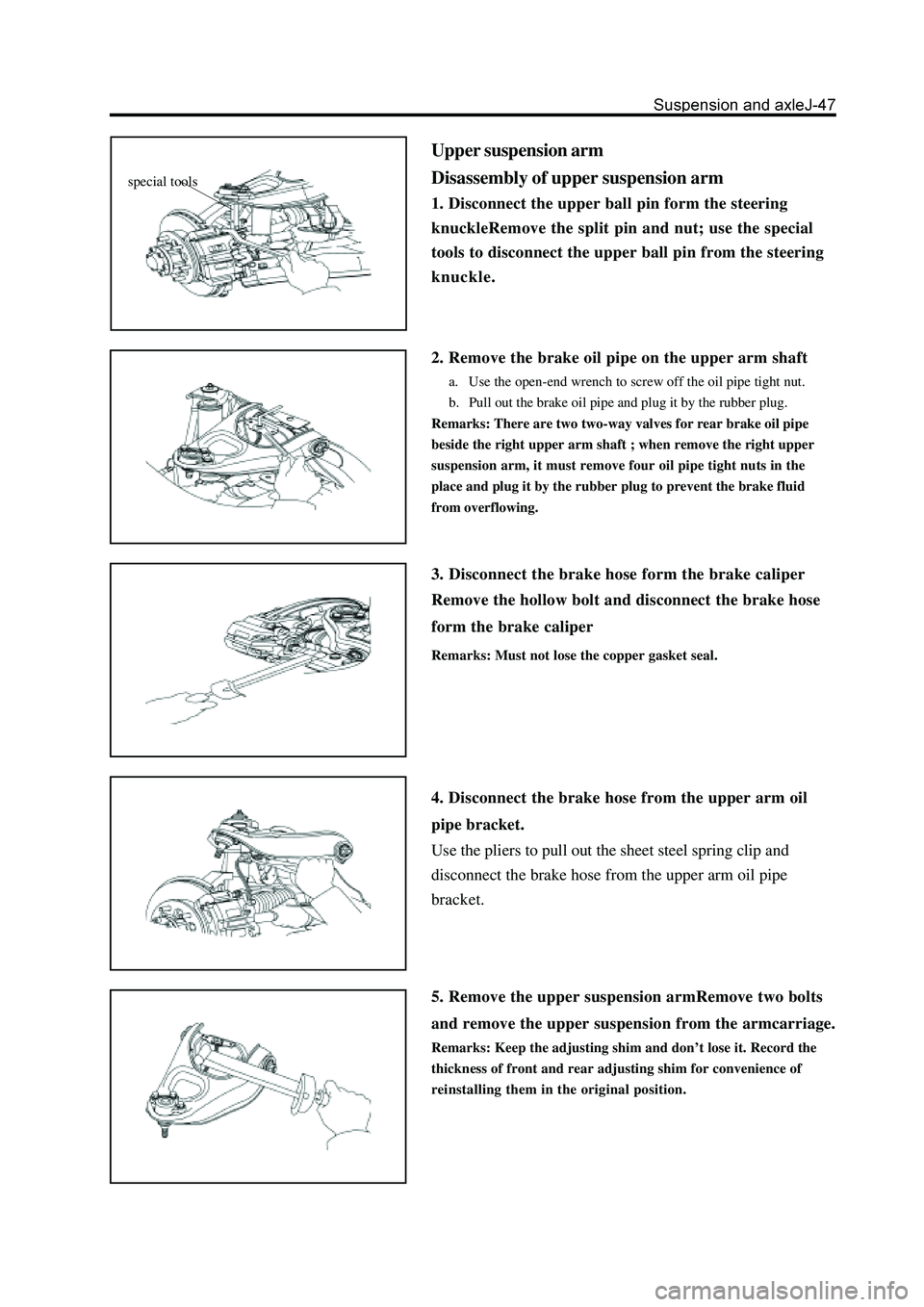
Upper suspension arm
Disassembly of upper suspension arm
1. Disconnect the upper ball pin form the steering
knuckleRemove the split pin and nut; use the special
tools to disconnect the upper ball pin from the steering
knuckle.
2. Remove the brake oil pipe on the upper arm shaft
a. Use the open-end wrench to screw off the oil pipe tight nut.
b. Pull out the brake oil pipe and plug it by the rubber plug.
Remarks: There are two two-way valves for rear brake oil pipe
beside the right upper arm shaft ; when remove the right upper
suspension arm, it must remove four oil pipe tight nuts in the
place and plug it by the rubber plug to prevent the brake fluid
from overflowing.
3. Disconnect the brake hose form the brake caliper
Remove the hollow bolt and disconnect the brake hose
form the brake caliper
Remarks: Must not lose the copper gasket seal.
4. Disconnect the brake hose from the upper arm oil
pipe bracket.
Use the pliers to pull out the sheet steel spring clip and
disconnect the brake hose from the upper arm oil pipe
bracket.
5. Remove the upper suspension armRemove two bolts
and remove the upper suspension from the armcarriage.
Remarks: Keep the adjusting shim and don’t lose it. Record the
thickness of front and rear adjusting shim for convenience of
reinstalling them in the original position.
special tools
Page 222 of 425
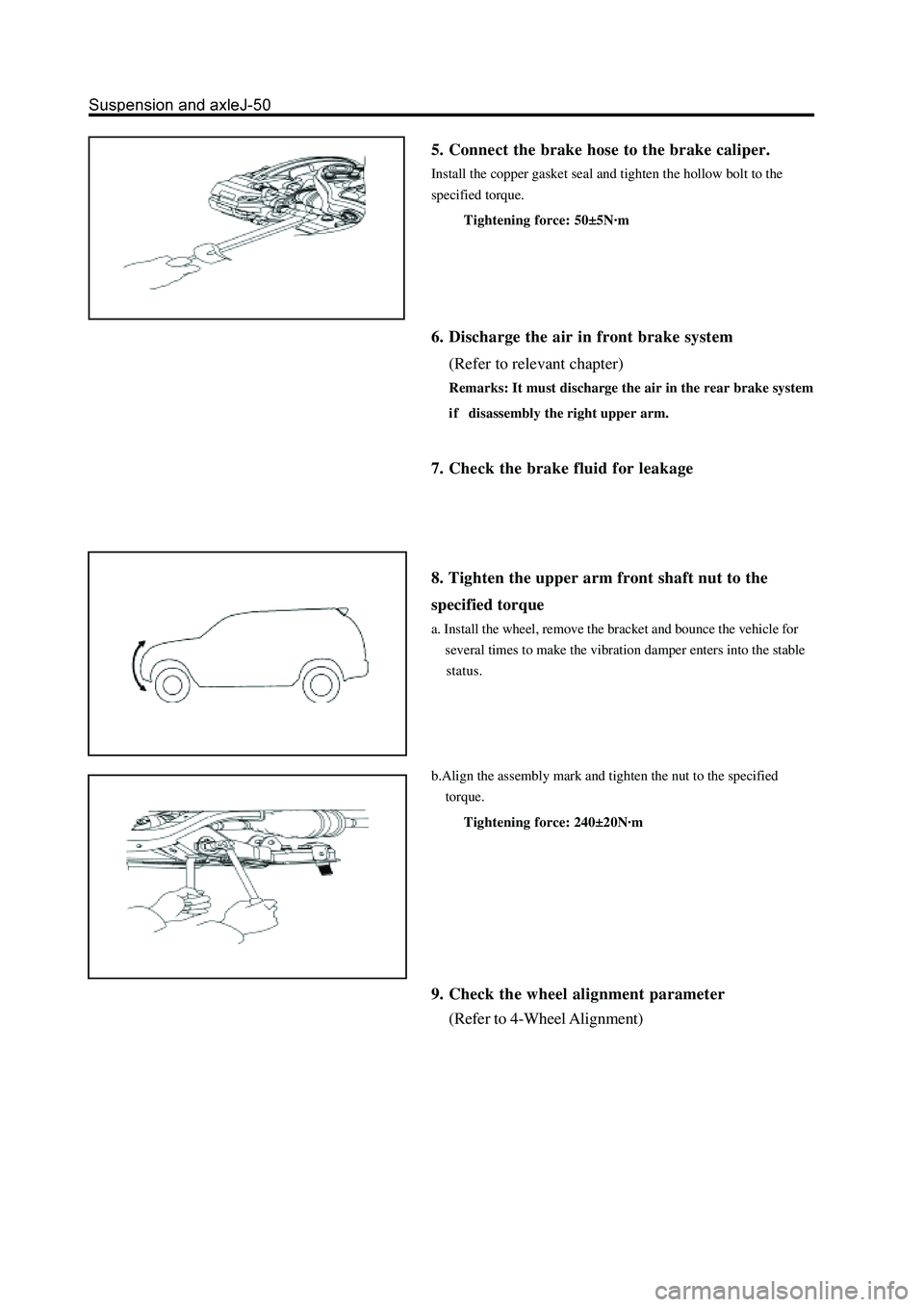
5. Connect the brake hose to the brake caliper.
Install the copper gasket seal and tighten the hollow bolt to the
specified torque.
Tightening force: 50±5N·m
6. Discharge the air in front brake system
(Refer to relevant chapter)
Remarks: It must discharge the air in the rear brake system
i f disassembly the right upper arm.
7. Check the brake fluid for leakage
8. Tighten the upper arm front shaft nut to the
specified torque
a. Install the wheel, remove the bracket and bounce the vehicle for
several times to make the vibration damper enters into the stable
status.
b.Align the assembly mark and tighten the nut to the specified
torque.
Tightening force: 240±20N·m
9. Check the wheel alignment parameter
(Refer to 4-Wheel Alignment)
Page 293 of 425
Brake-7
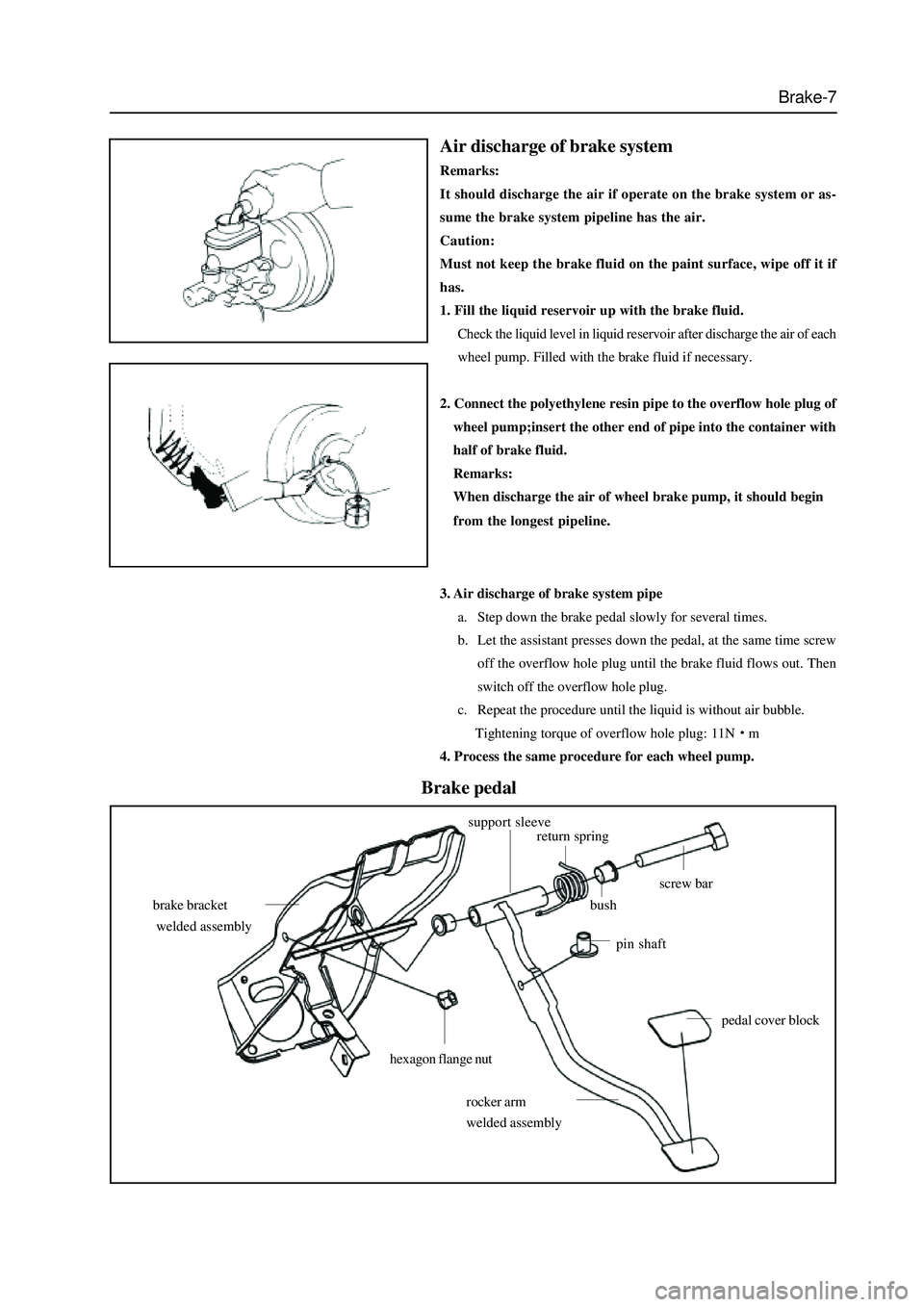
Air discharge of brake system
Remarks:
It should discharge the air if operate on the brake system or as-
sume the brake system pipeline has the air.
Caution:
Must not keep the brake fluid on the paint surface, wipe off it if
has.
1. Fill the liquid reservoir up with the brake fluid.
Check the liquid level in liquid reservoir after discharge the air of each
wheel pump. Filled with the brake fluid if necessary.
2. Connect the polyethylene resin pipe to the overflow hole plug of
wheel pump;insert the other end of pipe into the container with
half of brake fluid.
Remarks:
When discharge the air of wheel brake pump, it should begin
from the longest pipeline.
3. Air discharge of brake system pipe
a. Step down the brake pedal slowly for several times.
b. Let the assistant presses down the pedal, at the same time screw
off the overflow hole plug until the brake fluid flows out. Then
switch off the overflow hole plug.
c. Repeat the procedure until the liquid is without air bubble.
Tightening torque of overflow hole plug: 11N
m
4. Process the same procedure for each wheel pump.
hexagon flange nut
brake bracket
welded assembly
support sleevereturn spring
bush
screw bar
pin shaft
pedal cover block
rocker arm
welded assembly
Brake pedal
Page 297 of 425
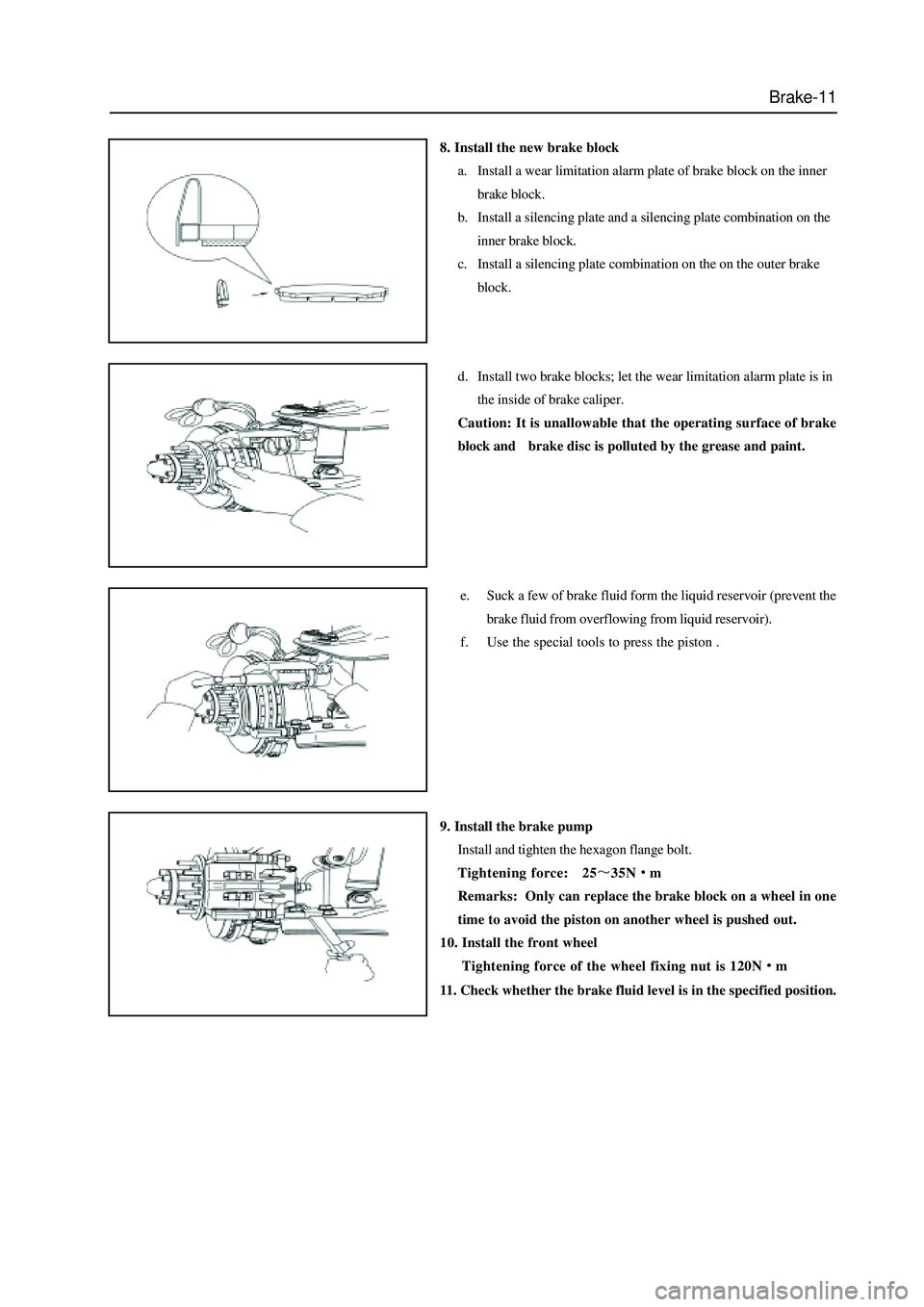
Brake-11
8. Install the new brake block
a. Install a wear limitation alarm plate of brake block on the inner
brake block.
b. Install a silencing plate and a silencing plate combination on the
inner brake block.
c. Install a silencing plate combination on the on the outer brake
block.
d. Install two brake blocks; let the wear limitation alarm plate is in
the inside of brake caliper.
Caution: It is unallowable that the operating surface of brake
block andbrake disc is polluted by the grease and paint.
e. Suck a few of brake fluid form the liquid reservoir (prevent the
brake fluid from overflowing from liquid reservoir).
f. Use the special tools to press the piston .
9. Install the brake pump
Install and tighten the hexagon flange bolt.
Tightening force: 25
35Nm
Remarks: Only can replace the brake block on a wheel in one
time to avoid the piston on another wheel is pushed out.
10. Install the front wheel
Tightening force of the wheel fixing nut is 120N
m
11. Check whether the brake fluid level is in the specified position.