ECO mode HONDA CIVIC 1991 Owners Manual
[x] Cancel search | Manufacturer: HONDA, Model Year: 1991, Model line: CIVIC, Model: HONDA CIVIC 1991Pages: 136, PDF Size: 1.33 MB
Page 3 of 136
Introduction
This manual contains important information about the safe operation and maintenance of your car.
We urge you to read it carefully, become familiar with the controls itdescribes, and follow its recommendations, to help make your
driving trouble-free and enjoyable.
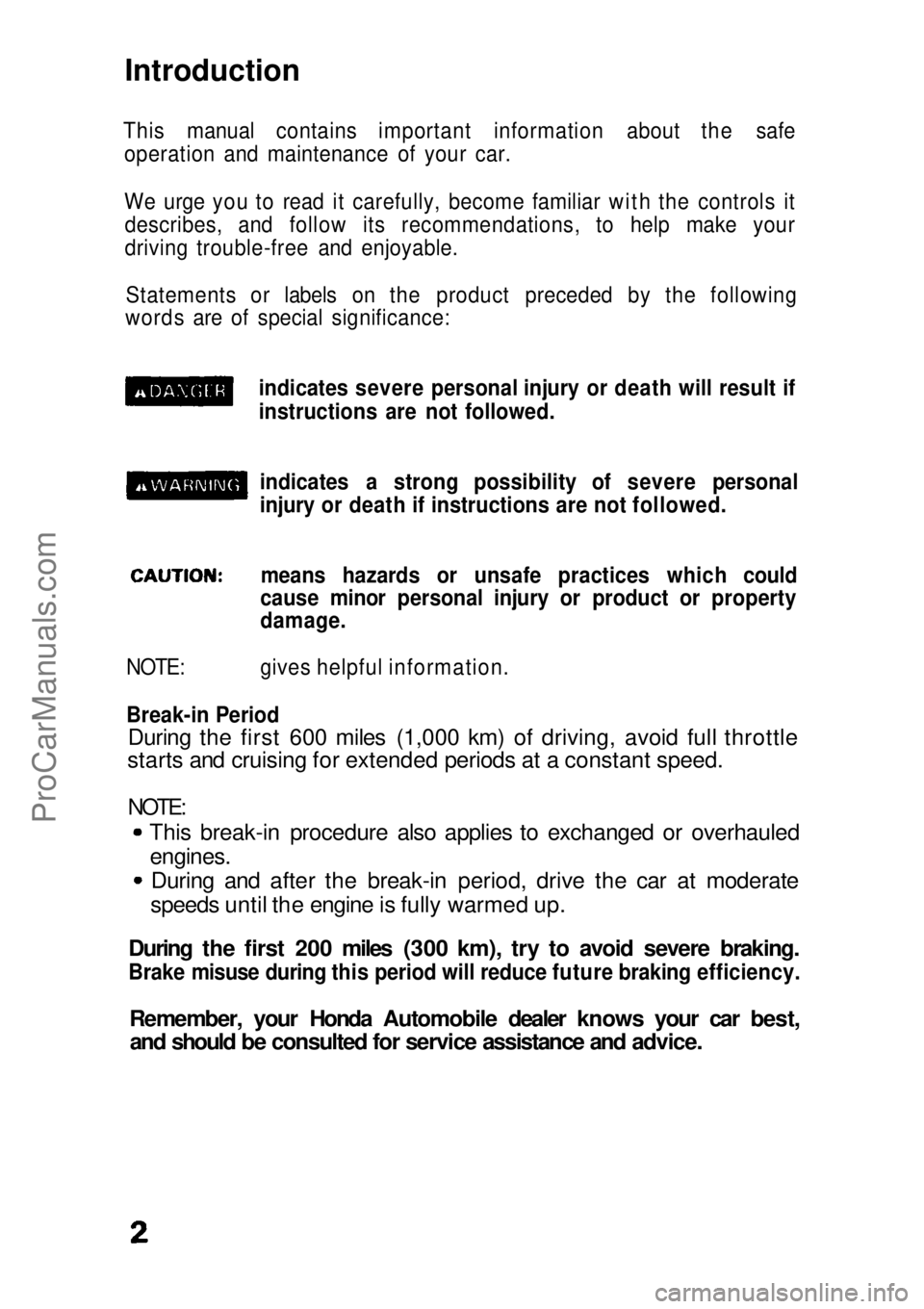
Statements or labels on the product preceded by the following
words are of special significance:
indicates severe personal injury or death will result if
instructions are not followed.indicates a strong possibility of severe personal
injury or death if instructions are not followed.means hazards or unsafe practices which could
cause minor personal injury or product or property
damage.
NOTE: gives helpful information.
Break-in Period
During the first 600 miles (1,000 km) of driving, avoid full throttle
starts and cruising for extended periods at a constant speed.
NOTE:
This break-in procedure also applies to exchanged or overhauled
engines.
During and after the break-in period, drive the car at moderate
speeds until the engine is fully warmed up.
During the first 200 miles (300 km), try to avoid severe braking.
Brake misuse during this period will reduce future braking efficiency.
Remember, your Honda Automobile dealer knows your car best,and should be consulted for service assistance and advice.ProCarManuals.comMain Menu s t
Page 56 of 136
Operation In Foreign Countries
In order to comply with U.S. Federal Emissions Regulations, you
must use unleaded fuels of the recommended octane rating. These
fuels may not be available in other countries. If you intend taking
your car outside the U.S. or Canada, write to American Honda Consumer Affairs (stating the year and model of your car) at the
address below for information regarding modifications you may need to have done.
American Honda Motor Co., Inc.
Consumer Affairs
1919 Torrance Blvd.
Torrance, CA 90501-2722
Fuel Filler Door and Cap
Gasoline is extremely flammable and is explosive under certain
conditions. Perform this operation in a wel-ventilated area with
the engine stopped. Do not smoke or allow open flames or sparks in the area or where gasoline is stored.
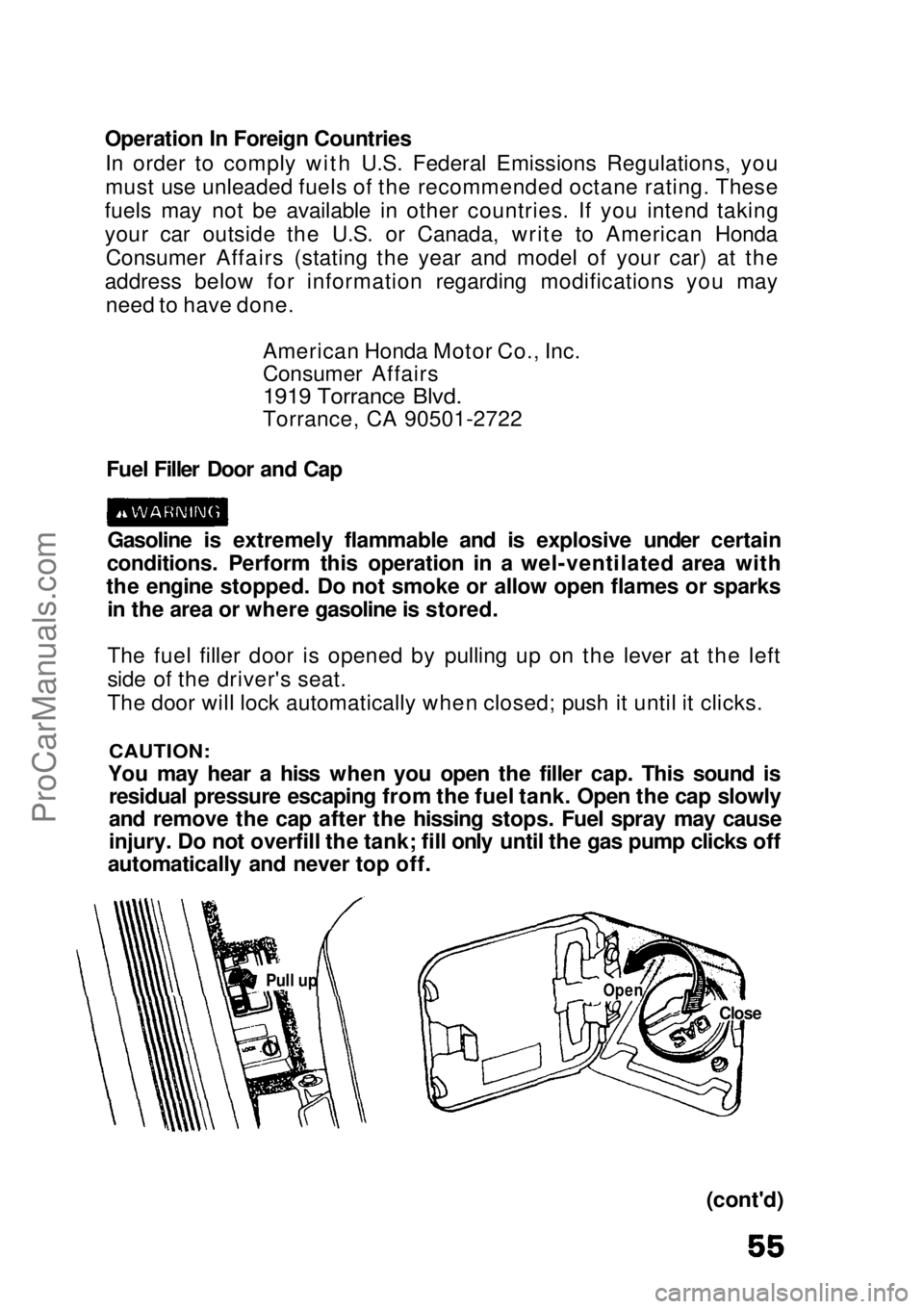
The fuel filler door is opened by pulling up on the lever at the left
side of the driver's seat.
The door will lock automatically when closed; push it until it clicks.
CAUTION:
You may hear a hiss when you open the filler cap. This sound is residual pressure escaping from the fuel tank. Open the cap slowly
and remove the cap after the hissing stops. Fuel spray may cause
injury. Do not overfill the tank; fill only until the gas pump clicks off
automatically and never top off.
(cont'd)
Pull up
Close
OpenProCarManuals.comMain Menu s t
Page 94 of 136
The factory installed tires on your car were selected to match the
car's performance capabilities and to provide the best combination
of handling, ride comfort and tread wear.
We recommend that you get the same size, type, and grade of tires when replacement is necessary. If your tires have an all-season
tread design, the model name will be followed by the marking: "M + S" (mud and snow) or "all-season".
If you decide not to get the same brand of tires as those originally
installed, you should make sure that the replacements are the radial
type, of the same size, load range and speed rating as the original
tires.
If you have any questions about your car's tires, please contact
your Honda dealer.
Inflation Pressures
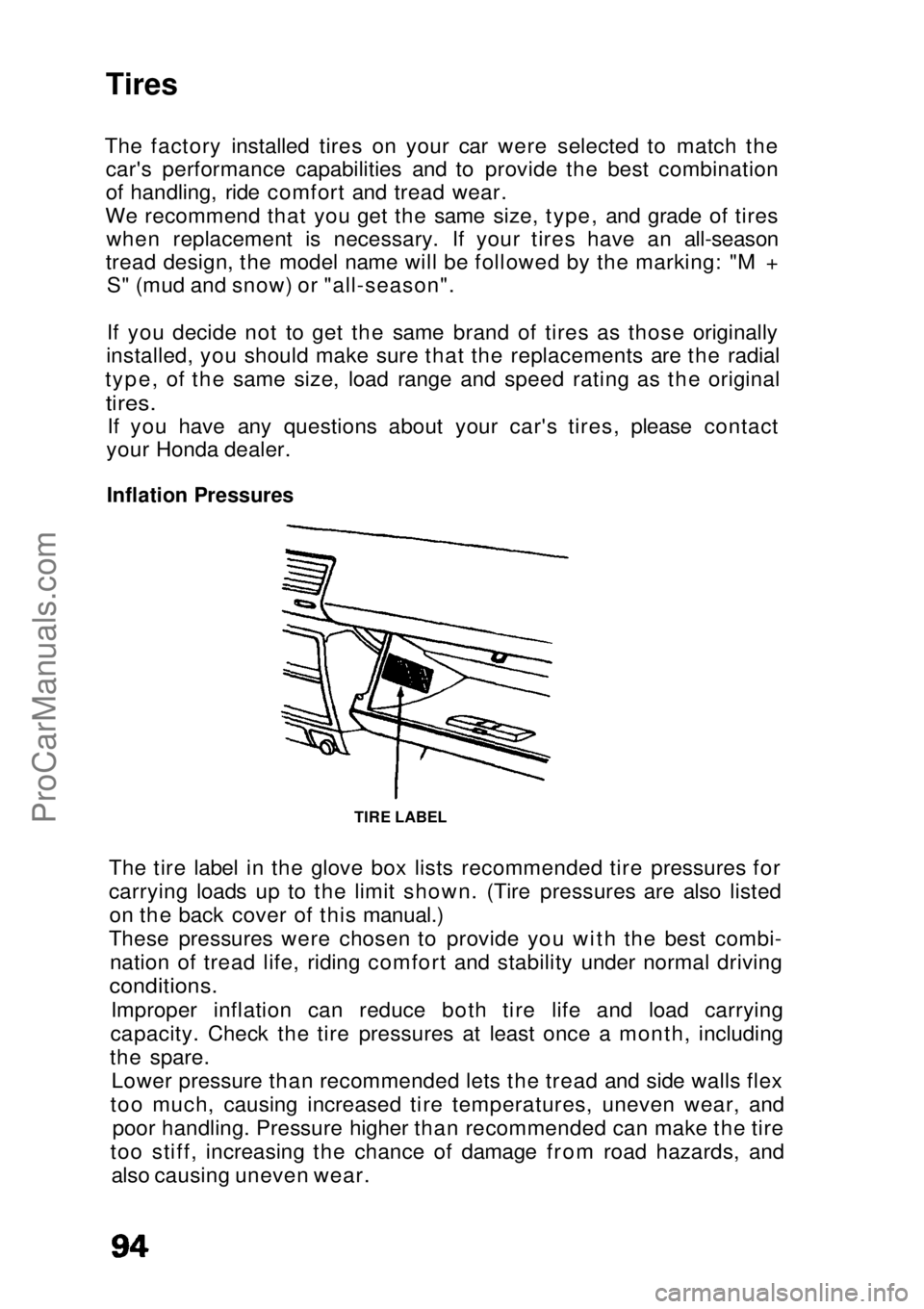
The tire label in the glove box lists recommended tire pressures for
carrying loads up to the limit shown. (Tire pressures are also listedon the back cover of this manual.)
These pressures were chosen to provide you with the best combi- nation of tread life, riding comfort and stability under normal driving
conditions.
Improper inflation can reduce both tire life and load carrying
capacity. Check the tire pressures at least once a month, including
the spare. Lower pressure than recommended lets the tread and side walls flex
too much, causing increased tire temperatures, uneven wear, and poor handling. Pressure higher than recommended can make the tire
too stiff, increasing the chance of damage from road hazards, and also causing uneven wear.
Tires
TIRE LABELProCarManuals.comMain Menu s t