wiring HONDA CIVIC 1991 Owners Manual
[x] Cancel search | Manufacturer: HONDA, Model Year: 1991, Model line: CIVIC, Model: HONDA CIVIC 1991Pages: 136, PDF Size: 1.33 MB
Page 84 of 136
Brakes (cont'd)
Front Brake Wear Indicators
Your car is equipped with audible front brake wear indicators. When
the brake pads wear to point that they should be replaced, they will make a "screeching" sound when the wheels are rolling and when
the brakes are applied.
NOTE:
Due to some driving habits or climates, brakes may "squeal" when
you first apply them or when you have them partially applied; this is normal, and does not indicate excessive wear. The wear indicator
makes a "screeching" sound while the brakes are applied.
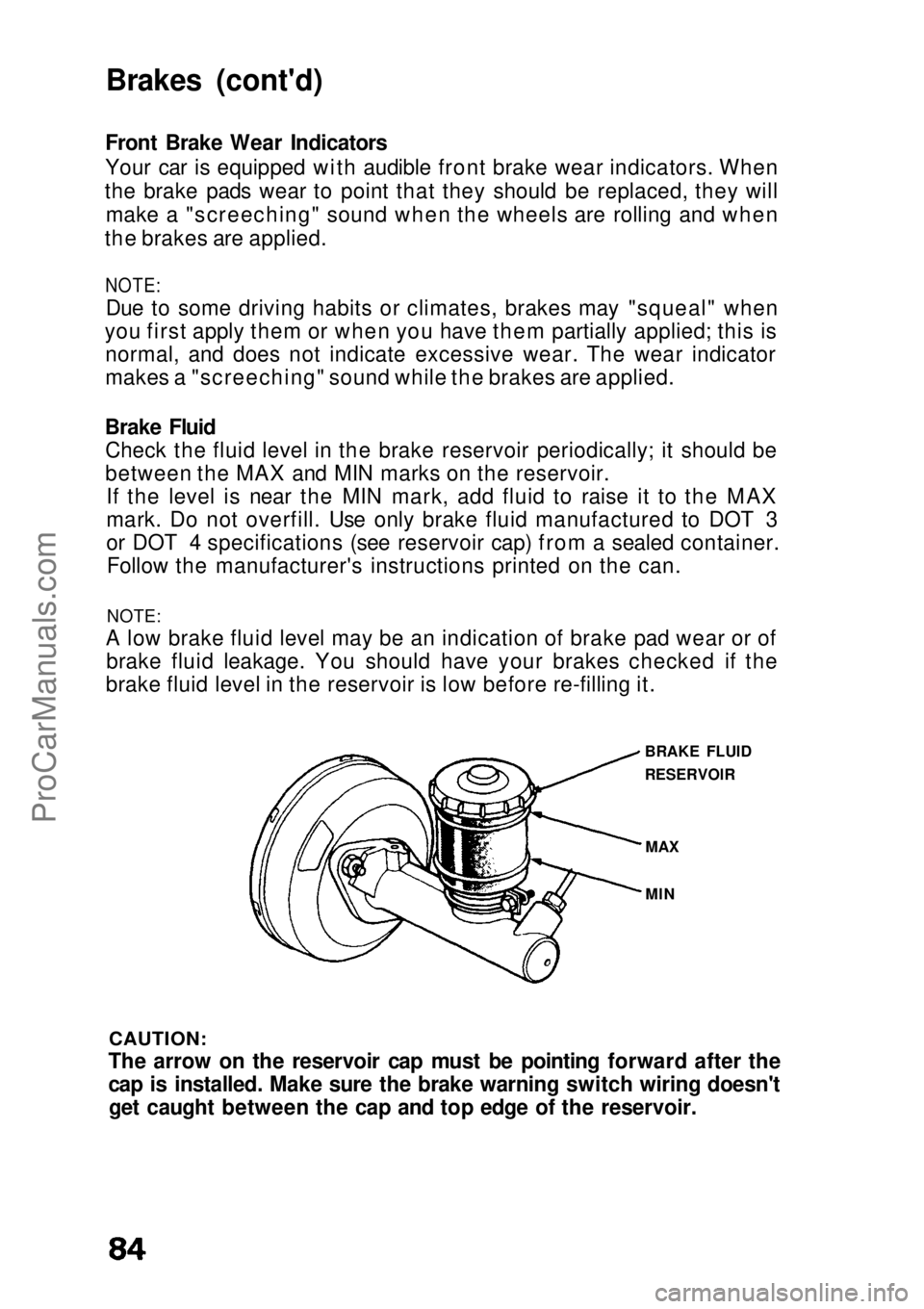
Brake Fluid Check the fluid level in the brake reservoir periodically; it should be
between the MAX and MIN marks on the reservoir. If the level is near the MIN mark, add fluid to raise it to the MAX
mark. Do not overfill. Use only brake fluid manufactured to DOT 3
or DOT 4 specifications (see reservoir cap) from a sealed container.Follow the manufacturer's instructions printed on the can.
NOTE:
A low brake fluid level may be an indication of brake pad wear or of brake fluid leakage. You should have your brakes checked if the
brake fluid level in the reservoir is low before re-filling it.
BRAKE FLUID
RESERVOIR
CAUTION:
The arrow on the reservoir cap must be pointing forward after the
cap is installed. Make sure the brake warning switch wiring doesn't get caught between the cap and top edge of the reservoir. MAX
MINProCarManuals.comMain Menu s t
Page 91 of 136
Checking the fuses:
1 .Turn off the ignition and all other switches.
2. If you find a blown or possibly faulty fuse, use the fuse remover, stored beside the spare fuse to pull the blown fuse out of its clips.
3. Check all other fuses as well as the one you suspect.
4. Push in a new fuse of the same rating, and make sure it fits tightly in the clips. If it fits loosely, have your dealer fix it.If you don't have a spare, take a fuse of the same rating (or lower)
out of a circuit you may not need, like the radio or cigarette lighter.
Remember to replace the borrowed fuse and the missing spares.
CAUTION:
A blown fuse may be just a symptom of some other problem. If a new fuse blows right away, the cause should be diagnosed and
corrected by a qualified Honda technician. Never replace a fuse with anything but another fuse of the same or lower rating. A
higher capacity fuse could cause damage and even start a fire.
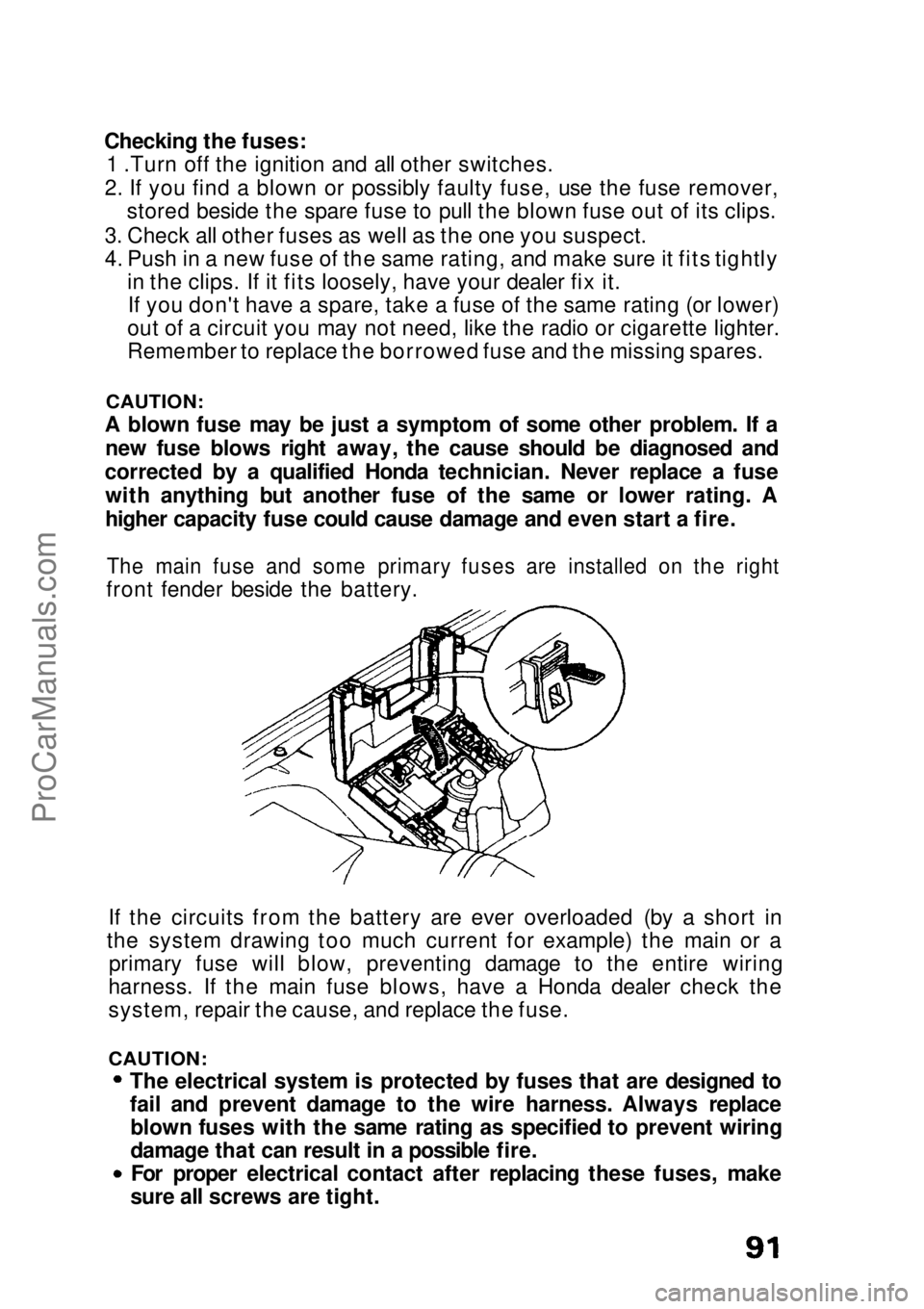
The main fuse and some primary fuses are installed on the right
front fender beside the battery.
If the circuits from the battery are ever overloaded (by a short in
the system drawing too much current for example) the main or a primary fuse will blow, preventing damage to the entire wiring
harness. If the main fuse blows, have a Honda dealer check the
system, repair the cause, and replace the fuse.
CAUTION:
The electrical system is protected by fuses that are designed to
fail and prevent damage to the wire harness. Always replaceblown fuses with the same rating as specified to prevent wiring
damage that can result in a possible fire.For proper electrical contact after replacing these fuses, make
sure all screws are tight.ProCarManuals.comMain Menu s t