wheel Hyundai Santa Fe 2012 Owners Manual
[x] Cancel search | Manufacturer: HYUNDAI, Model Year: 2012, Model line: Santa Fe, Model: Hyundai Santa Fe 2012Pages: 419, PDF Size: 5.61 MB
Page 371 of 419
Maintenance
44
7
Do not drive faster than 75 mph (120
km/h) when your car is equipped with
snow tires.
Tire chains
Tire chains, if necessary, should be
installed on the drive wheels as fol-
lows.
2WD : Front wheels
AWD : All four wheels
If a full set of chains is not
available for a AWD vehicle,
chains may be installed on
the front wheels only.
Be sure that the chains are installed
in accordance with the manufactur-
er's instructions.
To minimize tire and chain wear, do
not continue to use tire chains when
they are no longer needed.Radial-ply tires
Radial-ply tires provide improved
tread life, road hazard resistance and
smoother high speed ride. The radi-
al-ply tires used on this vehicle are of
belted construction, and are selected
to complement the ride and handling
characteristics of your vehicle.
Radial-ply tires have the same load
carrying capacity, as bias-ply or bias
belted tires of the same size, and use
the same recommended inflation
pressure. Mixing of radial-ply tires
with bias-ply or bias belted tires is
not recommended. Any combina-
tions of radial-ply and bias-ply or bias
belted tires when used on the same
vehicle will seriously deteriorate
vehicle handling. The best rule to fol-
low is: Identical radial-ply tires should
always be used as a set of four.
Longer wearing tires can be more
susceptible to irregular tread wear. It
is very important to follow the tire
rotation interval shown in this section
to achieve the tread life potential of
these tires. Cuts and punctures in
radial-ply tires are repairable only in
the tread area, because of sidewall
flexing. Consult your tire dealer for
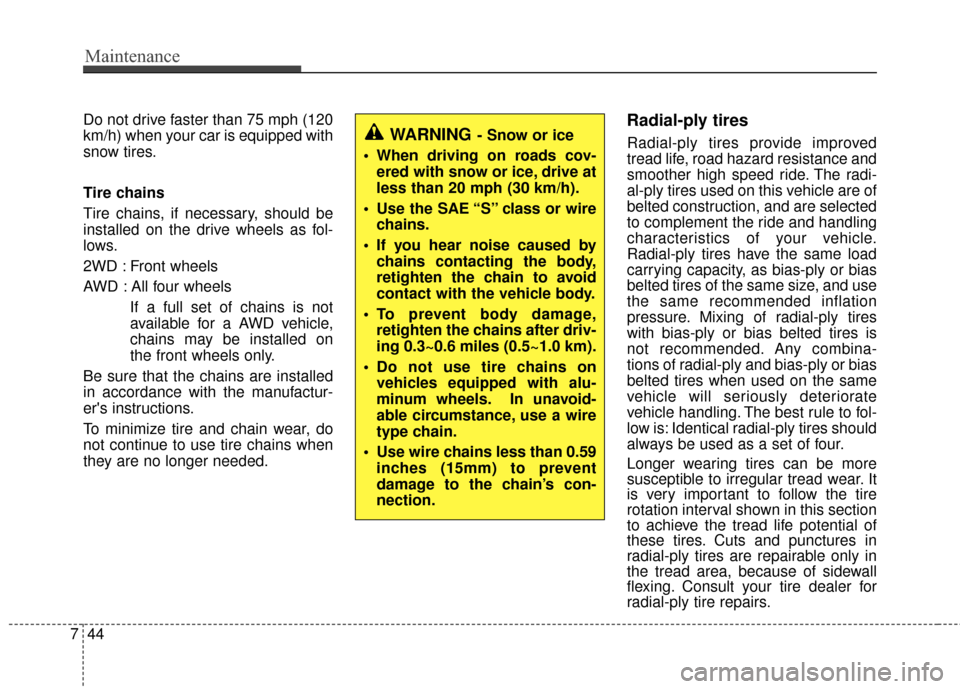
radial-ply tire repairs.WARNING- Snow or ice
When driving on roads cov- ered with snow or ice, drive at
less than 20 mph (30 km/h).
Use the SAE “S” class or wire chains.
If you hear noise caused by chains contacting the body,
retighten the chain to avoid
contact with the vehicle body.
To prevent body damage, retighten the chains after driv-
ing 0.3~0.6 miles (0.5~1.0 km).
Do not use tire chains on vehicles equipped with alu-
minum wheels. In unavoid-
able circumstance, use a wire
type chain.
Use wire chains less than 0.59 inches (15mm) to prevent
damage to the chain’s con-
nection.
Page 393 of 419
Maintenance
66
7
B230104AUN
Bright-metal maintenance
To remove road tar and insects, use a
tar remover, not a scraper or other
sharp object.
To protect the surfaces of bright-metal parts from corrosion, apply a coating of
wax or chrome preservative and rub to
a high luster.
During winter weather or in coastal areas, cover the bright metal parts with
a heavier coating of wax or preserva-
tive. If necessary, coat the parts with
non-corrosive petroleum jelly or other
protective compound.
G230105AUN
Underbody maintenance
Corrosive materials used for ice and
snow removal and dust control may col-
lect on the underbody. If these materials
are not removed, accelerated rusting can
occur on underbody parts such as the
fuel lines, frame, floor pan and exhaust
system, even though they have been
treated with rust protection.
Thoroughly flush the vehicle underbody
and wheel openings with lukewarm or
cold water once a month, after off-road
driving and at the end of each winter. Pay
special attention to these areas because
it is difficult to see all the mud and dirt. It
will do more harm than good to wet down
the road grime without removing it. The
lower edges of doors, rocker panels, and
frame members have drain holes that
should not be allowed to clog with dirt;
trapped water in these areas can cause
rusting.
WARNING
After washing the vehicle, test the
brakes while driving slowly to see if
they have been affected by water. If
braking performance is impaired,
dry the brakes by applying them
lightly while maintaining a slow for-
ward speed.
Page 394 of 419
767
Maintenance
G230106AUN
Aluminum wheel maintenance
The aluminum wheels are coated with a
clear protective finish.
Do not use any abrasive cleaner, pol-ishing compound, solvent, or wire
brushes on aluminum wheels. They
may scratch or damage the finish.
Use only a mild soap or neutral deter- gent, and rinse thoroughly with water.
Also, be sure to clean the wheels after
driving on salted roads. This helps pre-
vent corrosion.
Avoid washing the wheels with high- speed car wash brushes.
Do not use any acid detergent. It may damage and corrode the aluminum
wheels coated with a clear protective
finish.
G230107AUN
Corrosion protection
Protecting your vehicle from corrosion
By using the most advanced design and
construction practices to combat corro-
sion, we produces cars of the highest
quality. However, this is only part of the
job. To achieve the long-term corrosion
resistance your vehicle can deliver, the
owner's cooperation and assistance is
also required.
Common causes of corrosion
The most common causes of corrosion
on your car are:
allowed to accumulate underneath the
car.
Removal of paint or protective coatings by stones, gravel, abrasion or minor
scrapes and dents which leave unpro-
tected metal exposed to corrosion.
High-corrosion areas
If you live in an area where your car is
regularly exposed to corrosive materials,
corrosion protection is particularly impor-
tant. Some of the common causes of
accelerated corrosion are road salts,
dust control chemicals, ocean air and
industrial pollution. Moisture breeds corrosion
Moisture creates the conditions in which
corrosion is most likely to occur. For
example, corrosion is accelerated by
high humidity, particularly when tempera-
tures are just above freezing. In such
conditions, the corrosive material is kept
in contact with the car surfaces by mois-
ture that is slow to evaporate.
Mud is particularly corrosive because it is
slow to dry and holds moisture in contact
with the vehicle. Although the mud
appears to be dry, it can still retain the
moisture and promote corrosion.
High temperatures can also accelerate
corrosion of parts that are not properly
ventilated so the moisture can be dis-
persed. For all these reasons, it is par-
ticularly important to keep your car clean
and free of mud or accumulations of
other materials. This applies not only to
the visible surfaces but particularly to the
underside of the car.
To help prevent corrosion
You can help prevent corrosion from get-
ting started by observing the following:
Page 396 of 419
769
Maintenance
Interior care
G230201BUN
Interior general precautions
Prevent caustic solutions such as per-
fume and cosmetic oil from contacting
the dashboard because they may cause
damage or discoloration. If they do con-
tact the dashboard, wipe them off imme-
diately. See the instructions that follow for
the proper way to clean vinyl.
G230202AUN
Cleaning the upholstery and interiortrim
Vinyl
Remove dust and loose dirt from vinyl
with a whisk broom or vacuum cleaner.
Clean vinyl surfaces with a vinyl cleaner.
Fabric
Remove dust and loose dirt from fabric
with a whisk broom or vacuum cleaner.
Clean with a mild soap solution recom-
mended for upholstery or carpets.
Remove fresh spots immediately with a
fabric spot cleaner. If fresh spots do not
receive immediate attention, the fabric
can be stained and its color can be
affected. Also, its fire-resistant properties
can be reduced if the material is not
properly maintained.
G230203AUN
Cleaning the lap/shoulder belt web-bing
Clean the belt webbing with any mild
soap solution recommended for cleaning
upholstery or carpet. Follow the instruc-
tions provided with the soap. Do not
bleach or re-dye the webbing because
this may weaken it.
G230204AUN
Cleaning the interior window glass
If the interior glass surfaces of the vehi-
cle become fogged (that is, covered with
an oily, greasy or waxy film), they should
be cleaned with glass cleaner. Follow the
directions on the glass cleaner container.CAUTION
Never allow water or other liquids to come in contact withelectrical/electronic componentsinside the vehicle as this may dam-age them.
CAUTION
Using anything but recommendedcleaners and procedures may affect the fabric’s appearance and fire-resistant properties.
CAUTION
When cleaning leather products(steering wheel, seats etc.), useneutral detergents or low alcoholcontent solutions. If you use highalcohol content solutions oracid/alkaline detergents, the color of the leather may fade or the sur-face may get stripped off.
CAUTION
Do not scrape or scratch the insideof the rear window. This may resultin damage to the rear windowdefroster grid.
Page 401 of 419
8
Dimensions / 8-2
Bulb wattage / 8-2
Tires and wheels / 8-3
Recommended lubricants and capacities / 8-4
Vehicle identification number (VIN) / 8-7
Vehicle certification label / 8-7
Tire specification and pressure label / 8-8
Engine number / 8-8
Consumer information / 8-9
Reporting safety defects / 8-10
Binding arbitration / 8-10
Specifications, Consumer information,
Reporting safety defects
Page 402 of 419
Specifications, Consumer information, Reporting safety defects
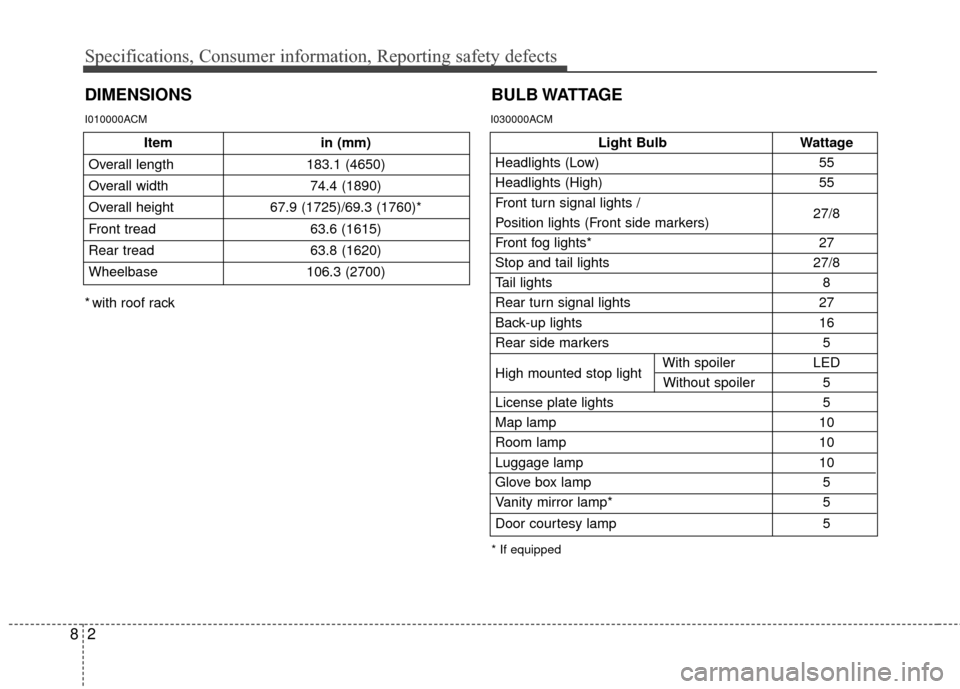
28
Itemin (mm)
Overall length 183.1 (4650)
Overall width 74.4 (1890)
Overall height 67.9 (1725)/69.3 (1760)*
Front tread 63.6 (1615)
Rear tread 63.8 (1620)
Wheelbase 106.3 (2700)
DIMENSIONS
Light BulbWattage
Headlights (Low) 55
Headlights (High) 55
Front turn signal lights / 27/8
Position lights (Front side markers)
Front fog lights* 27
Stop and tail lights 27/8
Tail lights 8
Rear turn signal lights 27
Back-up lights 16
Rear side markers 5
High mounted stop light With spoiler
LED
Without spoiler 5
License plate lights 5
Map lamp 10
Room lamp 10
Luggage lamp 10
Glove box lamp 5
Vanity mirror lamp* 5
Door courtesy lamp 5
BULB WATTAGE
* If equipped
* with roof rack
I010000ACM I030000ACM
Page 403 of 419
83
Specifications, Consumer information, Reporting safety defects
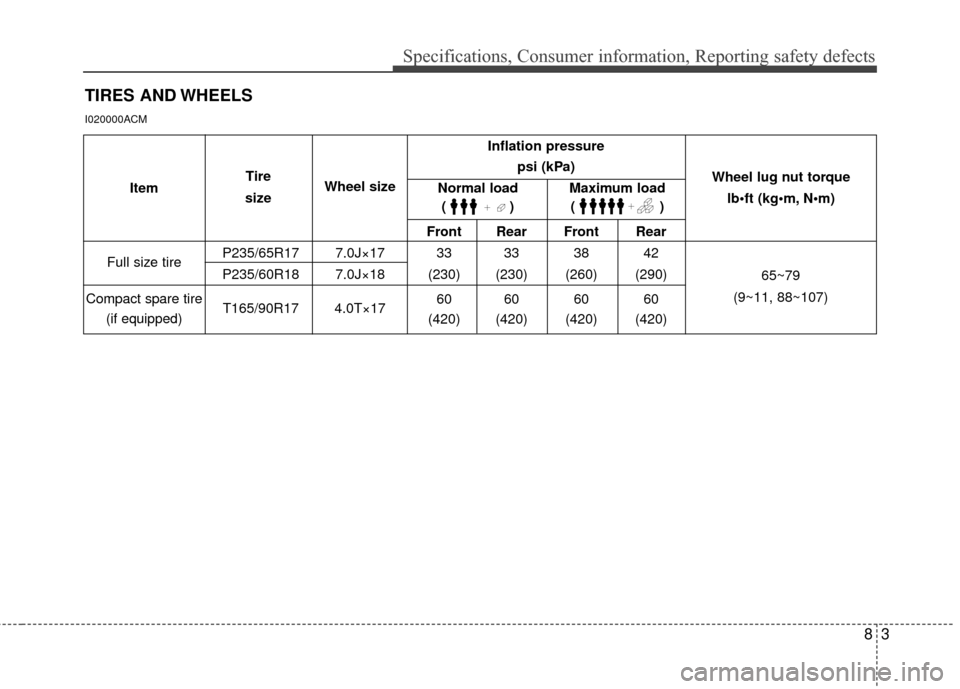
TIRES AND WHEELS
Front Rear Front Rear
P235/65R17 7.0J×17 33 33 38 42
P235/60R18 7.0J×18 (230) (230) (260) (290)
T165/90R17 4.0T×17 60 60 60 60
(420) (420) (420) (420)
Full size tire Wheel lug nut torque
lb•ft (kg N
Inflation pressure
psi (kPa)
65~79
(9~11, 88~107)
Item
Tire
size Wheel size
Maximum load
()
Compact spare tire
(if equipped) Normal load
()
I020000ACM
Page 412 of 419

Index
2I
Air bags-advanced supplemental restraint system ········3-36Air bag warning label ··················\
··················\
··············3-62
Air bag warning light ··················\
··················\
··············3-59
Curtain air bag ··················\
··················\
··················\
·······3-50
Driver's and passenger's front air bag··········\
················3-45
Occupant classification system ··················\
·················3-40\
Side impact air bag ··················\
··················\
··················\
3-49
Air cleaner ··················\
··················\
··················\
···············7-22
All wheel drive (AWD)··················\
··················\
··············5-16
Appearance care··················\
··················\
··················\
·······7-64 Exterior care ··················\
··················\
··················\
··········7-64
Interior care ··················\
··················\
··················\
···········7-69
Audio system ··················\
··················\
··················\
·········4-102 Antenna··················\
··················\
··················\
················4-102
Steering wheel audio control ··················\
··················\
·4-102
Automatic climate control system ··················\
···············4-76 Air conditioning ··················\
··················\
··················\
····4-82
Automatic heating and air conditioning ··················\
····4-77
Manual heating and air conditioning··················\
·········4-67
Automatic transaxle ··················\
··················\
··················\
·5-10 Ignition key interlock system ··················\
··················\
··5-12
Shift lock system ··················\
··················\
··················\
···5-13
Sports mode ··················\
··················\
··················\
···········5-14 Battery··················\
··················\
··················\
··················\
····7-29
Before driving ··················\
··················\
··················\
············5-3
Brake system··················\
··················\
··················\
············5-23
Anti-lock brake system (ABS) ··················\
·················5-26\
Downhill brake system (DBC) ··················\
·················5-31\
Electronic stability control (ESC) ··················\
············5-28
Parking brake··················\
··················\
··················\
········5-24
Power brakes ··················\
··················\
··················\
········5-23
Brake fluid ··················\
··················\
··················\
···············7-18
Bulb wattage ··················\
··················\
··················\
··············8-2
California Perchlorate Notice ··················\
··················\
··· 7-73
Child restraint system ··················\
··················\
················3-28 Placing a passenger seat belt intothe auto lock mode ··················\
··················\
················3-30
Securing a child restraint seat with tether anchor system··················\
··················\
··············3-32
Securing a child restraint seat with child seat lower anchor system ··················\
···············3-34
Climate control air filter ··················\
··················\
············7-24
Consumer information ··················\
··················\
·················8-9
Cruise control system ··················\
··················\
················5-34
AB
C
Page 416 of 419

Index
6I
Lumbar support ··················\
··················\
··················\
·······3-6
Rear seat adjustment··················\
··················\
················3-12
Seatback pocket ··················\
··················\
··················\
·····3-11
Seat warmer ··················\
··················\
··················\
···········3-10
Special driving conditions ··················\
··················\
·········5-40 Driving at night ··················\
··················\
··················\
·····5-41
Driving in flooded areas ··················\
··················\
··········5-42
Driving in the rain ··················\
··················\
··················\
·5-42
Hazardous driving conditions ··················\
··················\
··5-40
Highway driving ··················\
··················\
··················\
····5-43
Rocking the vehicle ··················\
··················\
·················5-40\
Smooth cornering ··················\
··················\
··················\
··5-41
Starting the engine ··················\
··················\
··················\
·····5-6
Steering wheel ··················\
··················\
··················\
·········4-26 Horn ··················\
··················\
··················\
··················\
·····4-27
Power steering ··················\
··················\
··················\
·······4-26
Tilt steering ··················\
··················\
··················\
············4-26
Storage compartment ··················\
··················\
·················4-89\
Center console storage·············\
··················\
··················\
4-89
Glove box ··················\
··················\
··················\
··············4-89
Multi box ··················\
··················\
··················\
···············4-90
Luggage box ··················\
··················\
··················\
··········4-91
Sunglass holder··················\
··················\
··················\
······4-90
Sunroof··················\
··················\
··················\
··················\
···4-22 Tailgate··················\
··················\
··················\
··················\
···4-11
Theft-alarm system ··················\
··················\
··················\
····4-5
Tires pressure monitoring system (TPMS)··················\
····6-7
Changing a tire with TPMS··················\
··················\
·····6-10
Low tire pressure telltale ··················\
··················\
···········6-8
TPMS (Tire pressure monitoring system) malfunction indicator ··················\
··················\
··············6-9
Tire specification and pressure label ··················\
·············8-8
Tires and wheels ··················\
··················\
·················7-32\
, 8-3 All season tires ··················\
··················\
··················\
······7-43
Checking tire inflation pressure ··················\
················7-34
Compact spare tire replacement ··················\
················7-36
Radial-ply tires ··················\
··················\
··················\
······7-44
Recommended cold tire inflation pressures ················7-32
Snow tires ··················\
··················\
··················\
··············7-43
Summer tires··················\
··················\
··················\
··········7-43
Tire care ··················\
··················\
··················\
·················7-32\
Tire chains ··················\
··················\
··················\
·············7-44
Tire maintenance ··················\
··················\
··················\
···7-38
Tire replacement ··················\
··················\
··················\
····7-36
Tire rotation ··················\
··················\
··················\
···········7-35
Tire sidewall labeling ··················\
··················\
··············7-38
Tire terminology and definitions ··················\
···············7-41
Tire traction ··················\
··················\
··················\
···········7-38
Wheel alignment and tire balance ··················\
·············7-36
Wheel replacement ··················\
··················\
··················\
7-36T