tow HYUNDAI SONATA HYBRID 2022 Workshop Manual
[x] Cancel search | Manufacturer: HYUNDAI, Model Year: 2022, Model line: SONATA HYBRID, Model: HYUNDAI SONATA HYBRID 2022Pages: 527, PDF Size: 64.14 MB
Page 467 of 527
Maintenance
8-18
Turn the vehicle off and wait until
the engine cools down. Use extreme
care when removing the engine
coolant cap and/or inverter coolant
cap. Wrap a thick towel around it,
and turn it counterclockwise slowly
while the pressure is released from
the cooling system. When you are sure
all the pressure has been released,
using a thick towel, continue turning
counterclockwise to remove it.
Information
The engine coolant and/or inverter coolant
level is influenced by the hybrid system
temperature. Before checking or refilling
the engine coolant and/or inverter coolant,
turn the hybrid vehicle off.
WARNING
The electric motor for the cooling fan may continue to
operate or start up when the
engine is not running and can
cause serious injury. Keep
hands, clothing and tools away
from the rotating fan blades of
the cooling fan.
Keep hands, clothing and tools away
from the rotating fan blades of the
cooling fan.
Always turn off the vehicle unless the
vehicle has to be inspected with the
engine on. Be cautious as the cooling
fan may operate if the negative (-)
battery terminal is not disconnected.
WARNING
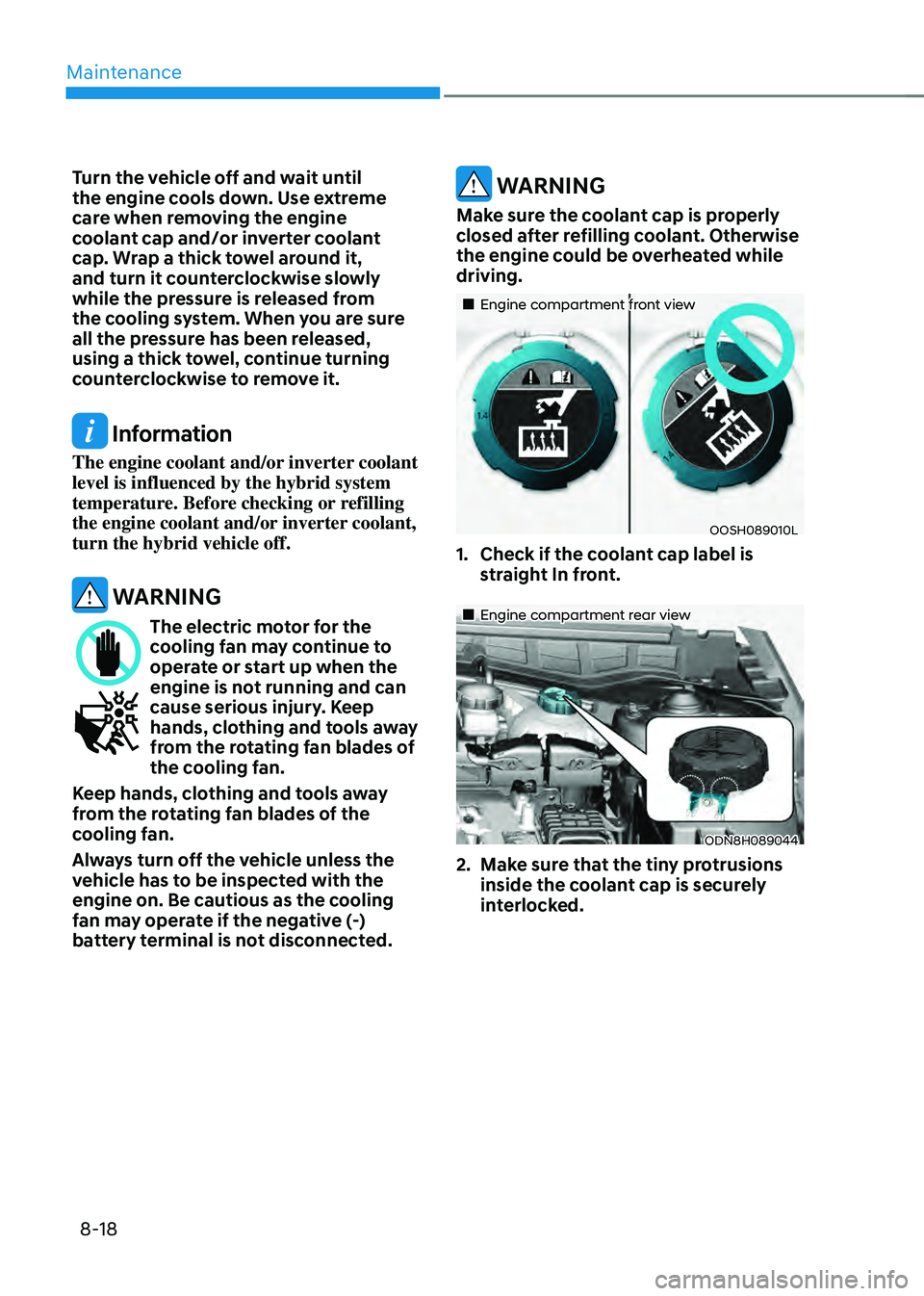
Make sure the coolant cap is properly
closed after refilling coolant. Otherwise
the engine could be overheated while
driving.
„„Engine compartment front view
OOSH089010L
1. Check if the coolant cap label is
straight In front.
„„Engine compartment rear view
ODN8H089044
2. Make sure that the tiny protrusions
inside the coolant cap is securely
interlocked.
Page 468 of 527
08
8-19
Recommended coolant
• When adding coolant, use only
deionized water, distilled water or soft
water for your vehicle and never mix
hard water in the coolant filled at the
factory.
• An incorrect coolant mixture can
result in severe malfunction or
engine/hybrid system damage.
• The engine in your vehicle has
aluminum engine parts and must be
protected by an phosphate-based
ethylene glycol coolant to prevent
corrosion and freezing.
• Do not use alcohol or methanol
coolant or mix them with the specified
coolant.
• Do not use a solution that contains
more than 60% antifreeze or less than
35% antifreeze, which would reduce
the effectiveness of the solution.
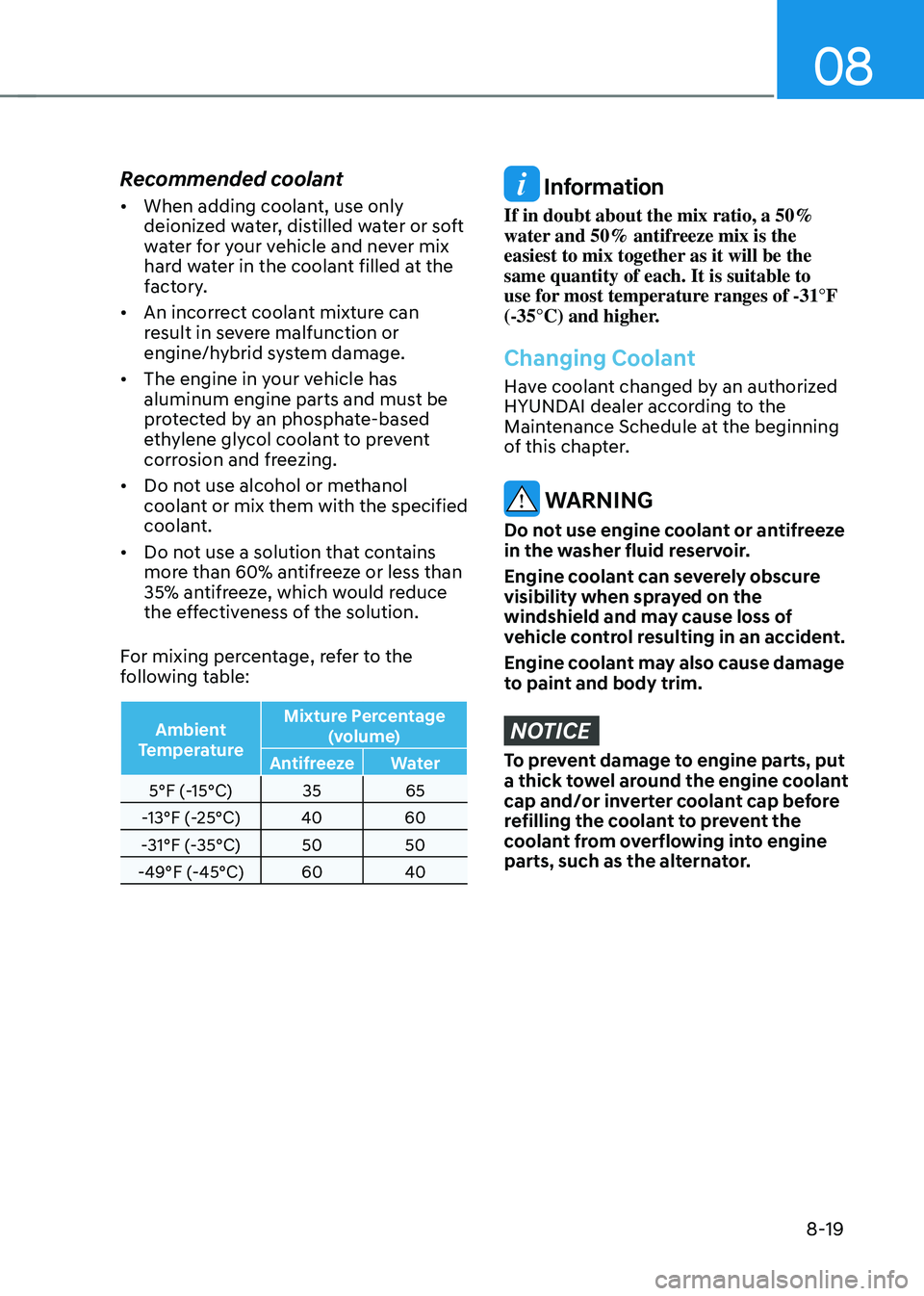
For mixing percentage, refer to the
following table:
Ambient
Temperature Mixture Percentage
(volume)
Antifreeze Water
5°F (-15°C) 3565
-13°F (-25°C) 4060
-31°F (-35°C) 5050
-49°F (-45°C) 6040
Information
If in doubt about the mix ratio, a 50%
water and 50% antifreeze mix is the
easiest to mix together as it will be the
same quantity of each. It is suitable to
use for most temperature ranges of -31°F
(-35°C) and higher.
Changing Coolant
Have coolant changed by an authorized
HYUNDAI dealer according to the
Maintenance Schedule at the beginning
of this chapter.
WARNING
Do not use engine coolant or antifreeze
in the washer fluid reservoir.
Engine coolant can severely obscure
visibility when sprayed on the
windshield and may cause loss of
vehicle control resulting in an accident.
Engine coolant may also cause damage
to paint and body trim.
NOTICE
To prevent damage to engine parts, put
a thick towel around the engine coolant
cap and/or inverter coolant cap before
refilling the coolant to prevent the
coolant from overflowing into engine
parts, such as the alternator.
Page 500 of 527
08
8-51
NOTICE
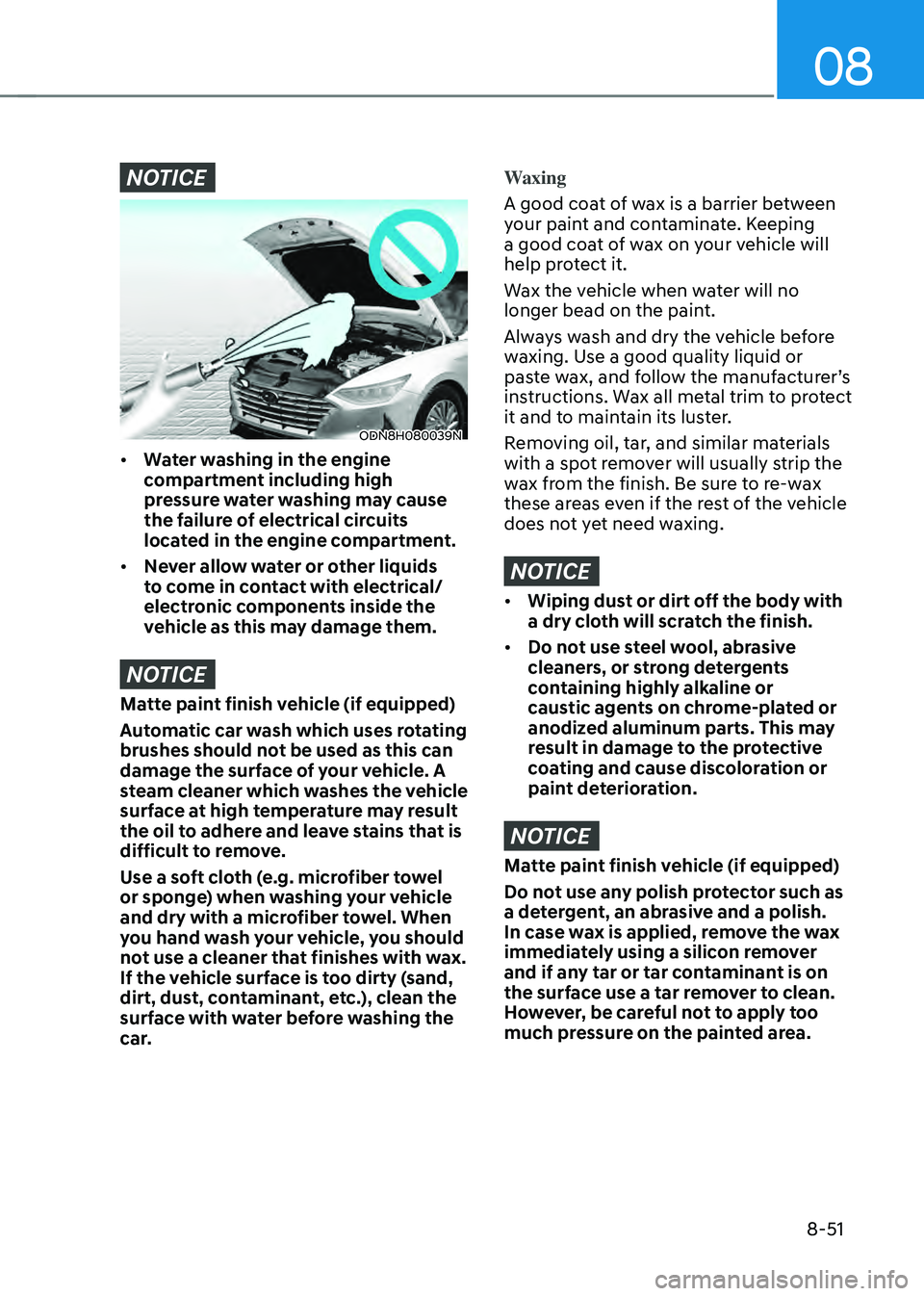
ODN8H080039N
• Water washing in the engine
compartment including high
pressure water washing may cause
the failure of electrical circuits
located in the engine compartment.
• Never allow water or other liquids
to come in contact with electrical/
electronic components inside the
vehicle as this may damage them.
NOTICE
Matte paint finish vehicle (if equipped)
Automatic car wash which uses rotating
brushes should not be used as this can
damage the surface of your vehicle. A
steam cleaner which washes the vehicle
surface at high temperature may result
the oil to adhere and leave stains that is
difficult to remove.
Use a soft cloth (e.g. microfiber towel
or sponge) when washing your vehicle
and dry with a microfiber towel. When
you hand wash your vehicle, you should
not use a cleaner that finishes with wax.
If the vehicle surface is too dirty (sand,
dirt, dust, contaminant, etc.), clean the
surface with water before washing the
car.
Waxing
A good coat of wax is a barrier between
your paint and contaminate. Keeping
a good coat of wax on your vehicle will
help protect it.
Wax the vehicle when water will no
longer bead on the paint.
Always wash and dry the vehicle before
waxing. Use a good quality liquid or
paste wax, and follow the manufacturer’s
instructions. Wax all metal trim to protect
it and to maintain its luster.
Removing oil, tar, and similar materials
with a spot remover will usually strip the
wax from the finish. Be sure to re-wax
these areas even if the rest of the vehicle
does not yet need waxing.
NOTICE
• Wiping dust or dirt off the body with
a dry cloth will scratch the finish.
• Do not use steel wool, abrasive
cleaners, or strong detergents
containing highly alkaline or
caustic agents on chrome-plated or
anodized aluminum parts. This may
result in damage to the protective
coating and cause discoloration or
paint deterioration.
NOTICE
Matte paint finish vehicle (if equipped)
Do not use any polish protector such as
a detergent, an abrasive and a polish.
In case wax is applied, remove the wax
immediately using a silicon remover
and if any tar or tar contaminant is on
the surface use a tar remover to clean.
However, be careful not to apply too
much pressure on the painted area.
Page 514 of 527

........................................................................\
....5-38
Electronic Stability Control (ESC)
....................................")
Index
I-6
E
Electric Power Steering (EPS)
........................................................................\
....5-38
Electronic Stability Control (ESC)
.....................................................................6-28
Emergency towing
........................................................................\
......................7-28
Emergency trunk safety release
........................................................................\
..5-64
Emission control system
........................................................................\
.............8-57
Crankcase emission control system
...............................................................8-57
Evaporative emission control System
............................................................8-57
Exhaust emission control system
...................................................................8-58
Energy flow
........................................................................\
.................................1-20
Engine only propulsion
........................................................................\
..........1-20
EV propulsion
........................................................................\
........................1-20
Power assist
........................................................................\
.............................1-20
Vehicle stop
........................................................................\
............................1-20
Engine brake ........................................................................\
............................ 1-21
Engine generation ........................................................................\
.................... 1-21
Power reserve
........................................................................\
..........................1-21
Regeneration
........................................................................\
..........................1-21
Engine brake/regeneration
........................................................................\
.....1-22
Engine generation/motor drive
........................................................................\
1-22
Engine generation/regeneration
.....................................................................1-22
Start engine to avoid battery discharge
..........................................................1-22
Engine compartment
........................................................................\
.....................2-6
Engine compartment panel fuse replacement
.....................................................8-40
Engine coolant
........................................................................\
............................8-17
Engine number
........................................................................\
............................2-14
Engine oil
........................................................................\
....................................8-15
Engine specification ........................................................................\
....................... 2-7
Engine Start/Stop button
........................................................................\
................6-6
Event Data Recorder (EDR)
........................................................................\
..........1-8
Explanation of scheduled maintenance items
.....................................................8-13
Page 525 of 527

I
I-17
T
Theft-alarm system
........................................................................\
.....................5-34
Tilt steering / Telescope steering
........................................................................\
5-39
Tire care
........................................................................\
......................................8-26
Tire chains ........................................................................\
.................................. 6-136
Tire pressure monitoring system (TPMS)
............................................................7-9
Tire rotation
........................................................................\
................................8-27
Tire specification and pressure label
..................................................................2-14
Tires and wheels
........................................................................\
.................2-9, 8-25
Tire care
........................................................................\
..................................8-26
Recommended cold tire inflation pressures
...................................................8-26
Check tire inflation pressure
........................................................................\
..8-27
Tire rotation
........................................................................\
............................8-27
Wheel alignment and tire balance
..................................................................8-28
Tire replacement
........................................................................\
.....................8-28
Wheel replacement
........................................................................\
.................8-30
Tire maintenance
........................................................................\
....................8-30
Tire traction
........................................................................\
............................8-30
Tire sidewall labeling
........................................................................\
.............8-30
Tire terminology and definitions
....................................................................8-33
All Season Tires
........................................................................\
.....................8-36
Summer Tires
........................................................................\
.........................8-36
Snow Tires
........................................................................\
..............................8-36
Radial-Ply Tires
........................................................................\
......................8-36
Low Aspect Ratio Tires
........................................................................\
..........8-37
Towing
........................................................................\
........................................7-26
Trailer towing
........................................................................\
...........................6-144
Trip computer
........................................................................\
.............................4-36
Average fuel economy
........................................................................\
............4-36
Instant fuel economy
........................................................................\
..............4-37
Accumulated Info display
........................................................................\
......4-37
Driving Info display
........................................................................\
...............4-37
Digital speedometer
........................................................................\
...............4-38
Smart shift
........................................................................\
..............................4-38
Engine coolant temperature ........................................................................\
..... 4-38
Trunk
........................................................................\
...........................................5-63
Turn signals ........................................................................\
.................................. 5-77