roof HYUNDAI TUCSON HYBRID 2022 Owner's Manual
[x] Cancel search | Manufacturer: HYUNDAI, Model Year: 2022, Model line: TUCSON HYBRID, Model: HYUNDAI TUCSON HYBRID 2022Pages: 630, PDF Size: 77.98 MB
Page 525 of 630
08
8-5
if tHe 12 volt Battery is discHar ged
Before Jump Starting
This vehicle does not have a regular 12V
battery that needs periodic replacement.
It is lithium ion polymer type integrated
into the HEV high voltage battery. The
vehicle has a 12V battery protection
system that cuts 12V battery from vehicle
draw to prevent full discharge.
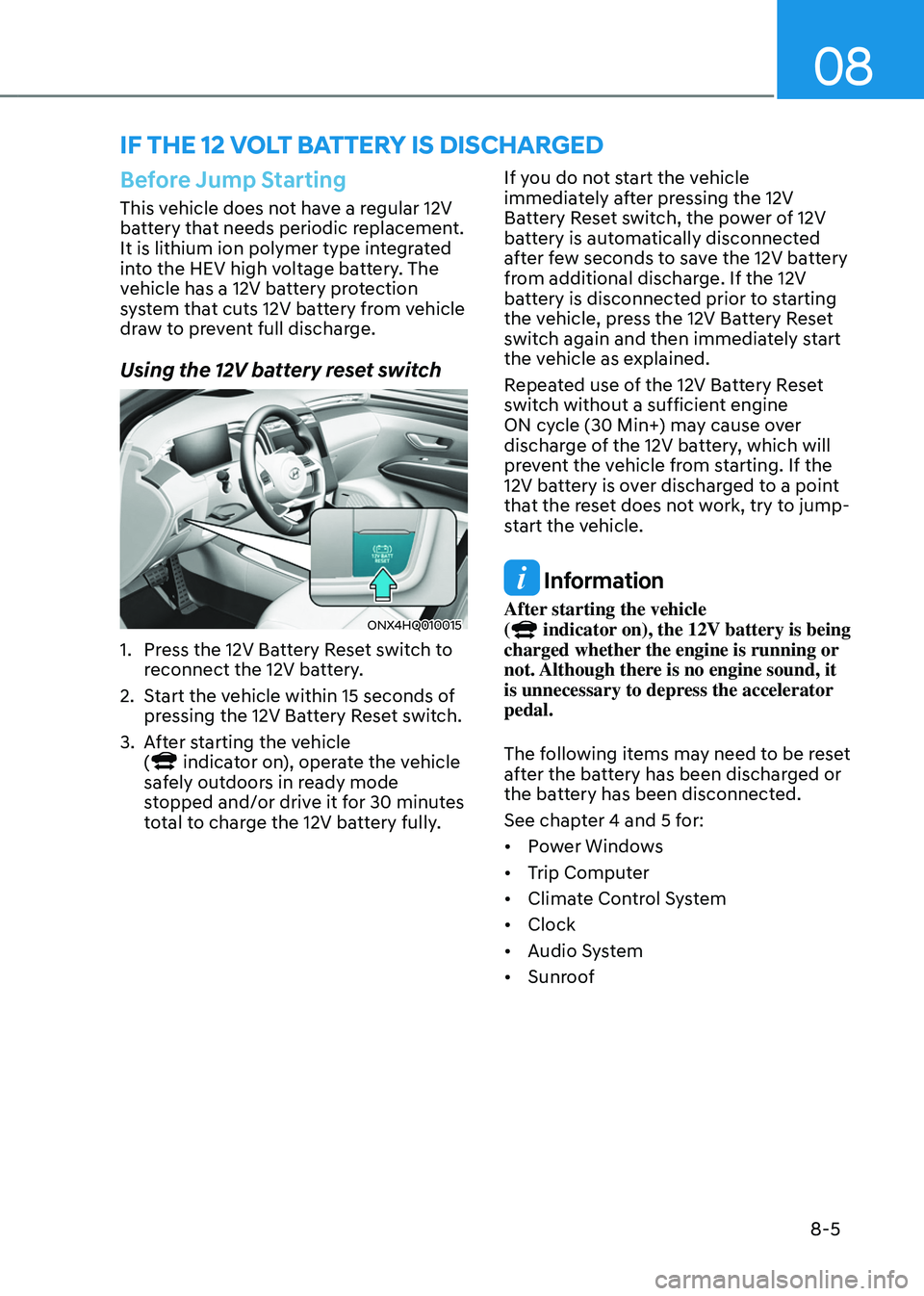
Using the 12V battery reset switch
ONX4HQ010015
1. Press the 12V Battery Reset switch to
r
econnect the 12V battery.
2.
Start the v
ehicle within 15 seconds of
pressing the 12V Battery Reset switch.
3.
Aft
er starting the vehicle
(
indicator on), operate the vehicle
safely outdoors in ready mode
stopped and/or drive it for 30 minutes
total to charge the 12V battery fully. If you do not start the vehicle
immediately after pressing the 12V
Battery Reset switch, the power of 12V
battery is automatically disconnected
after few seconds to save the 12V battery
from additional discharge. If the 12V
battery is disconnected prior to starting
the vehicle, press the 12V Battery Reset
switch again and then immediately start
the vehicle as explained.
Repeated use of the 12V Battery Reset
switch without a sufficient engine
ON cycle (30 Min+) may cause over
discharge of the 12V battery, which will
prevent the vehicle from starting. If the
12V battery is over discharged to a point
that the reset does not work, try to jump-
start the vehicle.
Information
After starting the vehicle
( indicator on), the 12V battery is being
charged whether the engine is running or
not. Although there is no engine sound, it
is unnecessary to depress the accelerator
pedal.
The following items may need to be reset
after the battery has been discharged or
the battery has been disconnected.
See chapter 4 and 5 for:
• Power Windows
• Trip Computer
• Climate Control System
• Clock
• Audio System
• Sunroof
Page 554 of 630
09
9 -7
Follow Normal Maintenance Schedule if the vehicle is usually operated where none of
the following conditions apply. If any of the following conditions apply, you must follow
the Maintenance Under Severe Usage Conditions.
• Repeated driving short distance of less than 5 miles (8 km) in normal temperature or
less than 10 miles (16 km) in freezing temperature
• Extensive engine idling or low speed driving for long distances
• Driving on rough, dusty, muddy, unpaved, graveled or salt-spread roads
• Driving in areas using salt or other corrosive materials or in very cold weather
• Driving in heavy dust conditions
• Driving in heavy traffic area
• Driving on uphill, downhill, or mountain road repeatedly
• Using for towing or camping, and driving with loading on the roof
• Driving as a patrol car, taxi, other commercial use of vehicle towing
• Frequently driving under high speed or rapid acceleration
• Frequently driving in stop-and-go condition
• Engine oil usage which is not recommended (mineral type, semi-synthetic, lower
grade, etc.)
Information
• As it is normal for engine oil to be consumed during driving, the engine oil level should
be checked on regular basis.
• The engine oil change interval for normal operating conditions is based on the use of
the recommended engine specification. If the recommended engine oil specification
is not used, then replace the engine oil according to the maintenance schedule under
severe operating conditions.
If your vehicle is operated under the above conditions, you should inspect, replace
or refill more frequently than the following Normal Maintenance Schedule. After the
periods or distance shown in the chart, continue to follow the prescribed maintenance
intervals.
schEdulEd maintEnancE sErvicEs
Page 559 of 630
Maintenance
9-12
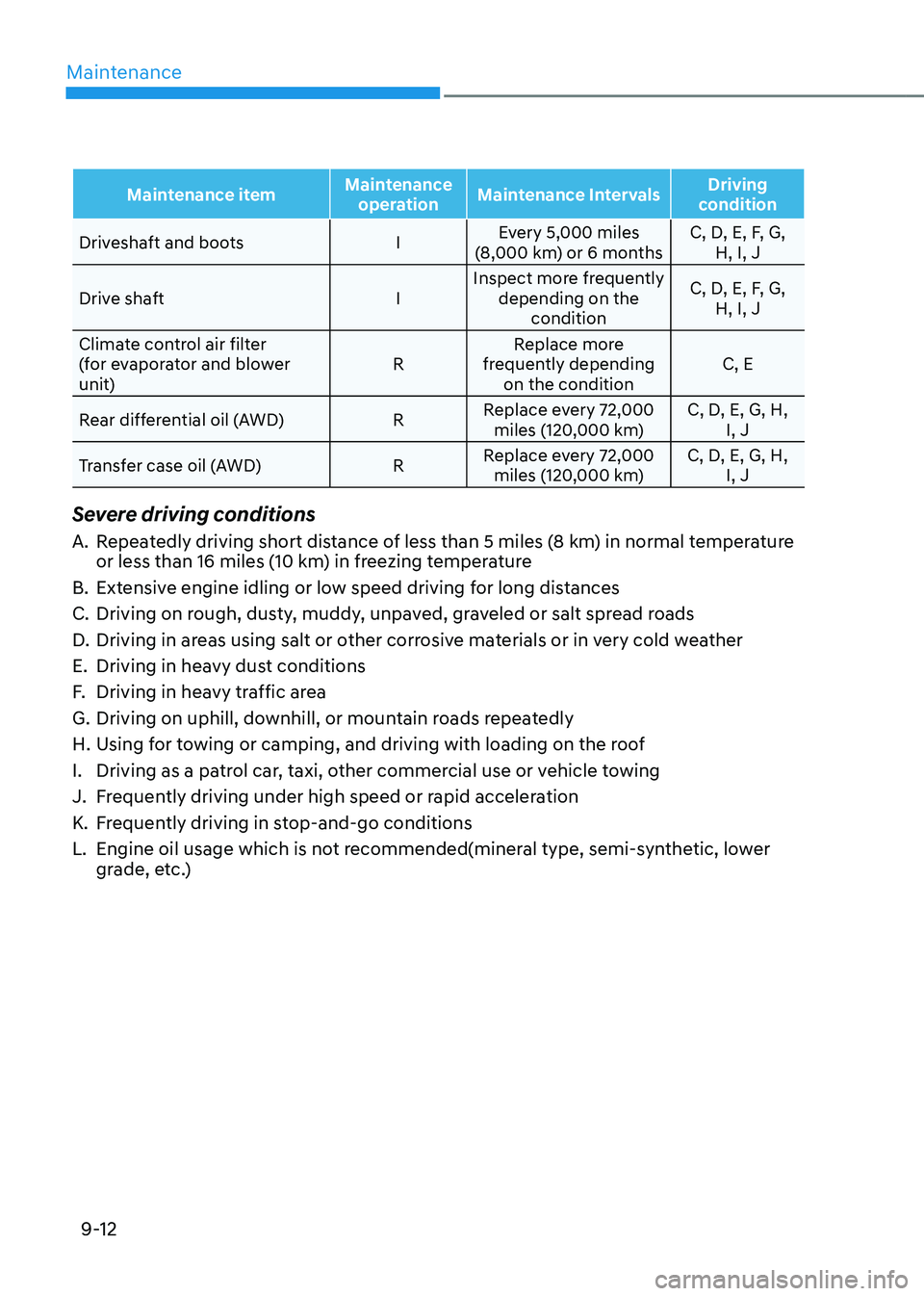
Maintenance itemMaintenance
operation Maintenance Intervals Driving
condition
Driveshaft and boots IEvery 5,000 miles
(8,000 km) or 6 months C, D, E, F, G,
H, I, J
Drive shaft IInspect more frequently
depending on the condition C, D, E, F, G,
H, I, J
Climate control air filter
(for evaporator and blower
unit) RReplace more
frequently depending on the condition C, E
Rear differential oil (AWD) RReplace every 72,000
miles (120,000 km) C, D, E, G, H,
I, J
Transfer case oil (AWD) RReplace every 72,000
miles (120,000 km) C, D, E, G, H,
I, J
Severe driving conditions
A. Repeatedly driving short distance of less than 5 miles (8 km) in normal temperature
or less than 16 miles (10 km ) in freezing temperature
B.
Extensiv
e engine idling or low speed driving for long distances
C.
Driving on rough, dus
ty, muddy, unpaved, graveled or salt spread roads
D.
Driving in areas using salt or o
ther corrosive materials or in very cold weather
E.
Driving in heavy dus
t conditions
F.
Driving in heavy tr
affic area
G.
Driving on uphill, downhill, or moun
tain roads repeatedly
H.
Using f
or towing or camping, and driving with loading on the roof
I.
Driving as a patr
ol car, taxi, other commercial use or vehicle towing
J.
Fr
equently driving under high speed or rapid acceleration
K.
Fr
equently driving in stop-and-go conditions
L.
Engine oil usage which is no
t recommended(mineral type, semi-synthetic, lower
grade, etc.)
Page 577 of 630
Maintenance
9-30
• The negative battery cable must
be removed first and installed last
when the battery is disconnected.
Disconnect the battery charger in the
following order:
1.
Turn o
ff the battery charger main
switch.
2.
Unhook the nega
tive clamp from
the negative battery terminal.
3.
Unhook the positiv
e clamp from
the positive battery terminal.
• We recommend that you use
batteries for replacement from an
authorized HYUNDAI dealer.
NOTICE
AGM battery (if equipped)
• Absorbent Glass Matt (AGM)
batteries are maintenance-free
and we recommend that the AGM
battery be serviced by an authorized
HYUNDAI dealer. For charging
your AGM battery, use only fully
automatic battery chargers that
are specially developed for AGM
batteries.
• When replacing the AGM battery,
we recommend that you use parts
for replacement from an authorized
HYUNDAI dealer.
• Do not open or remove the cap on
top of the battery. This may cause
leaks of internal electrolyte that
could result in severe injury.
By jump starting
After a jump start from a good battery,
drive the vehicle for 20-30 minutes
before it is shutoff. The vehicle may
not restart if you shut it off before the
battery had a chance to adequately
recharge. See “Jump Starting” in chapter
9 for more information on jump starting
procedures.
Information
An inappropriately disposed
battery can be harmful to the
environment and human health.
Dispose of the battery according
to your local law(s) or regulation.
Reset items
The following items may need to be reset
after the battery has been discharged or
the battery has been disconnected.
• Auto up/down window (see chapter 5)
• Sunroof (see chapter 5)
• Trip computer (see chapter 5)
• Climate control system (see chapter 5)
• Driver position memory system (see
chapter 5)
• Clock (see chapter 5)
• Infotainment system (see
infotainment system manual)
Page 591 of 630
Maintenance
9-44
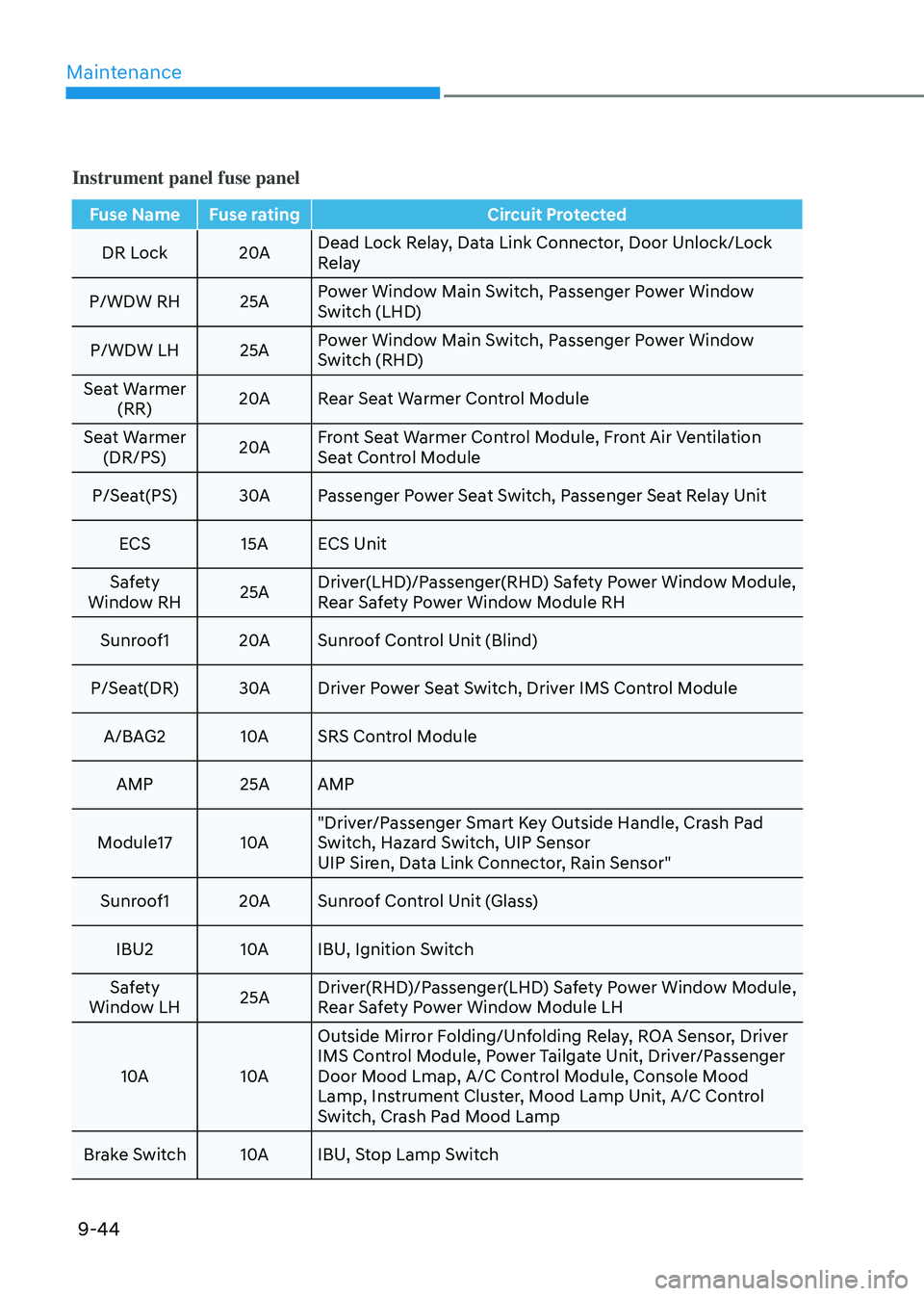
Instrument panel fuse panel
Fuse Name Fuse ratingCircuit Protected
DR Lock 20ADead Lock Relay, Data Link Connector, Door Unlock/Lock
Relay
P/WDW RH 25A Power Window Main Switch, Passenger Power Window
Switch (LHD)
P/WDW LH 25A Power Window Main Switch, Passenger Power Window
Switch (RHD)
Seat Warmer (RR) 20A
Rear Seat Warmer Control Module
Seat Warmer (DR/PS) 20AFront Seat Warmer Control Module, Front Air Ventilation
Seat Control Module
P/Seat(PS) 30APassenger Power Seat Switch, Passenger Seat Relay Unit
ECS 15A ECS Unit
Safety
Window RH 25ADriver(LHD)/Passenger(RHD) Safety Power Window Module,
Rear Safety Power Window Module RH
Sunroof1 20ASunroof Control Unit (Blind)
P/Seat(DR) 30ADriver Power Seat Switch, Driver IMS Control Module
A/BAG2 10ASRS Control Module
AMP 25A AMP
Module17 10A"Driver/Passenger Smart Key Outside Handle, Crash Pad
Switch, Hazard Switch, UIP Sensor
UIP Siren, Data Link Connector, Rain Sensor"
Sunroof1 20ASunroof Control Unit (Glass)
IBU2 10AIBU, Ignition Switch
Safety
Window LH 25ADriver(RHD)/Passenger(LHD) Safety Power Window Module,
Rear Safety Power Window Module LH
10A 10AOutside Mirror Folding/Unfolding Relay, ROA Sensor, Driver
IMS Control Module, Power Tailgate Unit, Driver/Passenger
Door Mood Lmap, A/C Control Module, Console Mood
Lamp, Instrument Cluster, Mood Lamp Unit, A/C Control
Switch, Crash Pad Mood Lamp
Brake Switch 10AIBU, Stop Lamp Switch
Page 621 of 630

Index
I-4
C
Cabin air filter
........................................................................\
..............................9-23
Filter inspection ........................................................................\
........................9-23
Filter replacement ........................................................................\
.....................9-23
California perchlorate notice
........................................................................\
.......9-70
Child Restraint System (CRS)
........................................................................\
.....3-33
Installing a Child Restraint System (CRS) .......................................................3-36
Our recommendation: Children always in the rear ..........................................3-33
Selecting a Child Restraint System (CRS) .......................................................3-34
Climate control additional features
....................................................................5-113
Auto Defogging System on Models with Automatic Temperature Control ...5-113
Auto dehumidify ........................................................................\
....................5-114
Automatic Controls for the Driver Based on
Climate Control System Settings ....................................................................5-115
Recirculating air when washer fluid is used ...................................................5-115
Sunroof inside air recirculation ......................................................................5-115
Coasting guide
........................................................................\
.............................6-20
Consumer Information
........................................................................\
.................2-16
Cruise Control (CC)
........................................................................\
....................7-65
System operation ........................................................................\
.....................7-65
D
Declaration of conformity ........................................................................\
.......... 7-136
Dimensions
........................................................................\
....................................2-8
Door locks
........................................................................\
....................................5-32
Auto door lock/unlock features ........................................................................\
5-36
Child-protector rear door locks ........................................................................\
5-36
Operating door locks from outside the vehicle ................................................5-32
Operating door unlocks from inside the vehicle ..............................................5-34
Drive mode integrated control system (AWD)
....................................................6-48
Drive mode ........................................................................\
...............................6-48
Driving at night ........................................................................\
........................6-52
Driving in flooded areas ........................................................................\
...........6-53
Driving in the rain ........................................................................\
....................6-52
Hazardous driving conditions ........................................................................\
...6-51
Highway driving ........................................................................\
.......................6-53
Page 622 of 630

I
I-5
Reducing the risk of a rollover ........................................................................\
.6-53
Rocking the vehicle ........................................................................\
..................6-51
Smooth cornering ........................................................................\
.....................6-52
Special driving conditions ........................................................................\
........6-51
Driver Attention Warning (DAW)
......................................................................7-57
System malfunction and limitations .................................................................7-60
System operation ........................................................................\
......................7-58
System settings ........................................................................\
........................7-57
E
Emergency / Roadside assistance accessories
....................................................8-27
Fire extinguisher ........................................................................\
.......................8-27
First aid kit ........................................................................\
...............................8-27
Tire pressure gauge ........................................................................\
.................8-27
Triangle reflector ........................................................................\
......................8-27
Emission control system
........................................................................\
..............9-66
Engine
........................................................................\
............................................2-8
Engine compartment
........................................................................\
..............2-7, 9-3
Engine coolant/inverter coolant
........................................................................\
...9-17
Changing coolant ........................................................................\
......................9-19
Checking the coolant level ........................................................................\
.......9-17
Engine number
........................................................................\
.............................2-15
Engine oil
........................................................................\
.....................................9-15
Checking the engine oil level ........................................................................\
...9-15
Checking the engine oil and filter ....................................................................9-16
Explanation of scheduled maintenance items
......................................................9-13
Exterior features ........................................................................\
........................... 5-67
Fuel filler door ........................................................................\
..........................5-78
Hood ........................................................................\
.........................................5-67
Liftgate ........................................................................\
.....................................5-68
Power liftgate ........................................................................\
...........................5-70
Smart liftgate ........................................................................\
............................5-76
Exterior features ........................................................................\
......................... 5-127
Roof side rails ........................................................................\
.........................5-127
Exterior overview (I)
........................................................................\
.....................2-2
Exterior overview (II)
........................................................................\
....................2-3
Page 627 of 630
Index
I-10
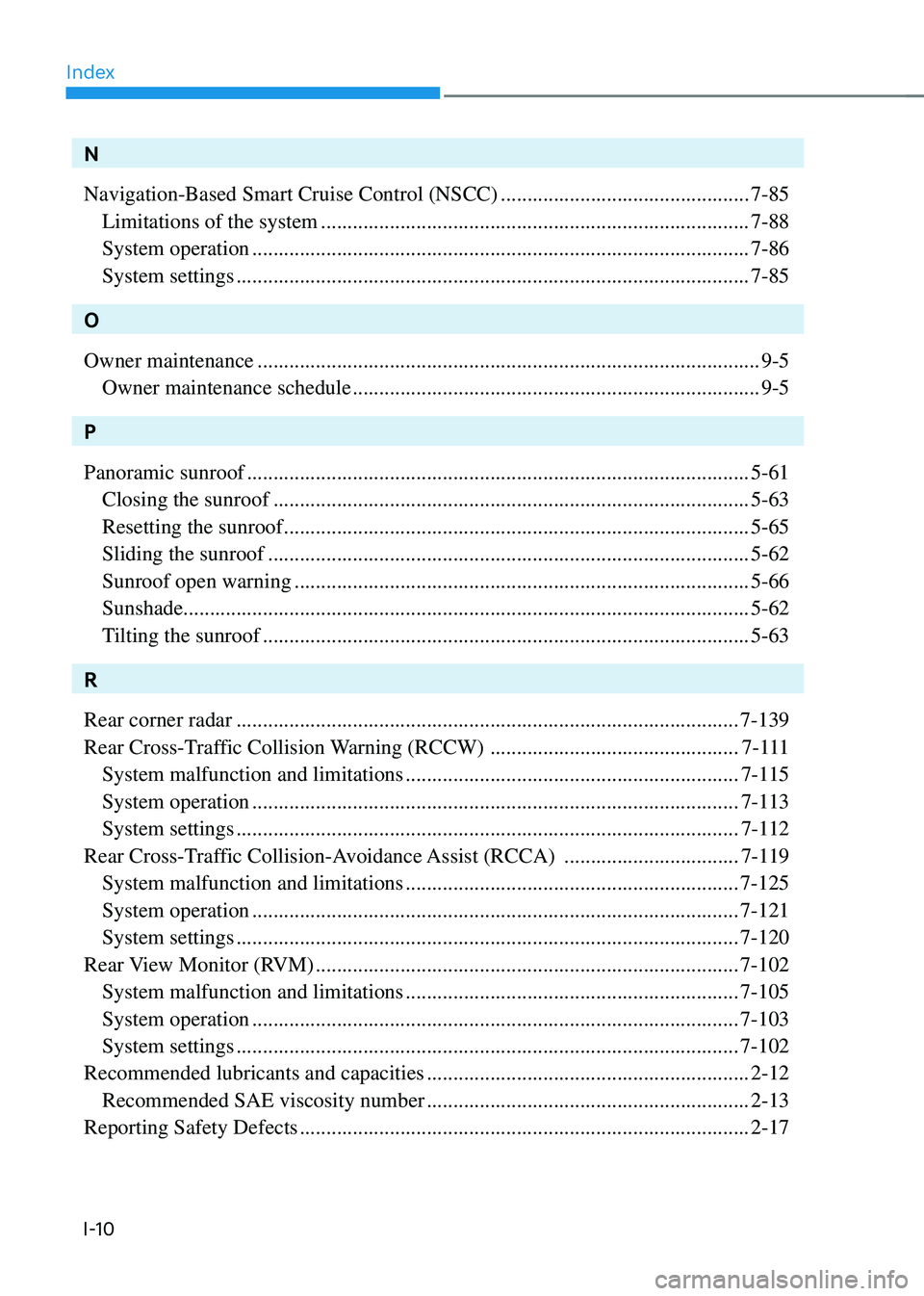
N
Navigation-Based Smart Cruise Control (NSCC)
...............................................7-85
Limitations of the system ........................................................................\
.........7-88
System operation ........................................................................\
......................7-86
System settings ........................................................................\
.........................7-85
O
Owner maintenance
........................................................................\
.......................9-5
Owner maintenance schedule ........................................................................\
.....9-5
P
Panoramic sunroof
........................................................................\
.......................5-61
Closing the sunroof ........................................................................\
..................5-63
Resetting the sunroof ........................................................................\
................5-65
Sliding the sunroof ........................................................................\
...................5-62
Sunroof open warning ........................................................................\
..............5-66
Sunshade........................................................................\
................................... 5-62
Tilting the sunroof ........................................................................\
....................5-63
R
Rear corner radar
........................................................................\
.......................7-139
Rear Cross-Traffic Collision Warning (RCCW)
...............................................7-111
System malfunction and limitations ...............................................................7-115
System operation ........................................................................\
....................7-113
System settings ........................................................................\
.......................7-112
Rear Cross-Traffic Collision-Avoidance Assist (RCCA)
.................................7-119
System malfunction and limitations ...............................................................7-125
System operation ........................................................................\
....................7-121
System settings ........................................................................\
.......................7-120
Rear View Monitor (RVM)
........................................................................\
........7-102
System malfunction and limitations ...............................................................7-105
System operation ........................................................................\
....................7-103
System settings ........................................................................\
.......................7-102
Recommended lubricants and capacities
.............................................................2-12
Recommended SAE viscosity number .............................................................2-13
Reporting Safety Defects
........................................................................\
.............2-17