transmission JEEP LIBERTY 2007 Owners Manual
[x] Cancel search | Manufacturer: JEEP, Model Year: 2007, Model line: LIBERTY, Model: JEEP LIBERTY 2007Pages: 1251, PDF Size: 1.35 MB
Page 125 of 1251
Cavity Fuse Description
36 10 Amp Red Airbag Control Module/
Occupation Classification
Module (Right Front Seat)
37 10 Amp Red Airbag Control Module
38 10 Amp Red ABS Controller/Shifter Assem-
bly
39 10 Amp Red Hazard Flasher (Turn Signals)/
Backup Lamp Switch (Manual
Transmission Only)/
Transmission Range Switch
(Automatic Transmission
Only)
MAINTAINING YOUR VEHICLE 355
Page 174 of 1251
When installing plugs, do not overtighten. You could
damage them and cause them to leak.
Selection of Lubricant
Use only manufacturer’s recommended fluid, refer to
Fluids, Lubricants, and Genuine Parts for correct fluid
type.
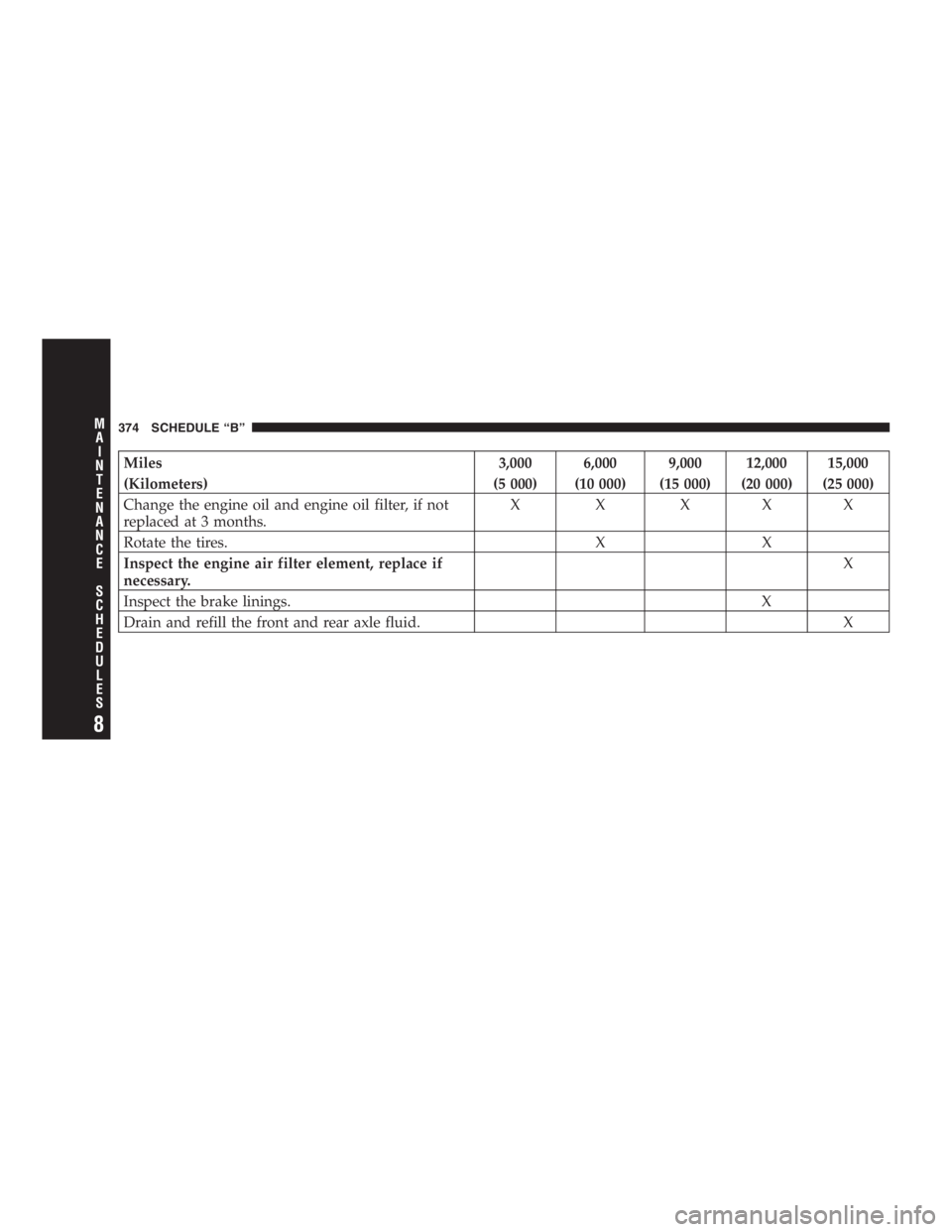
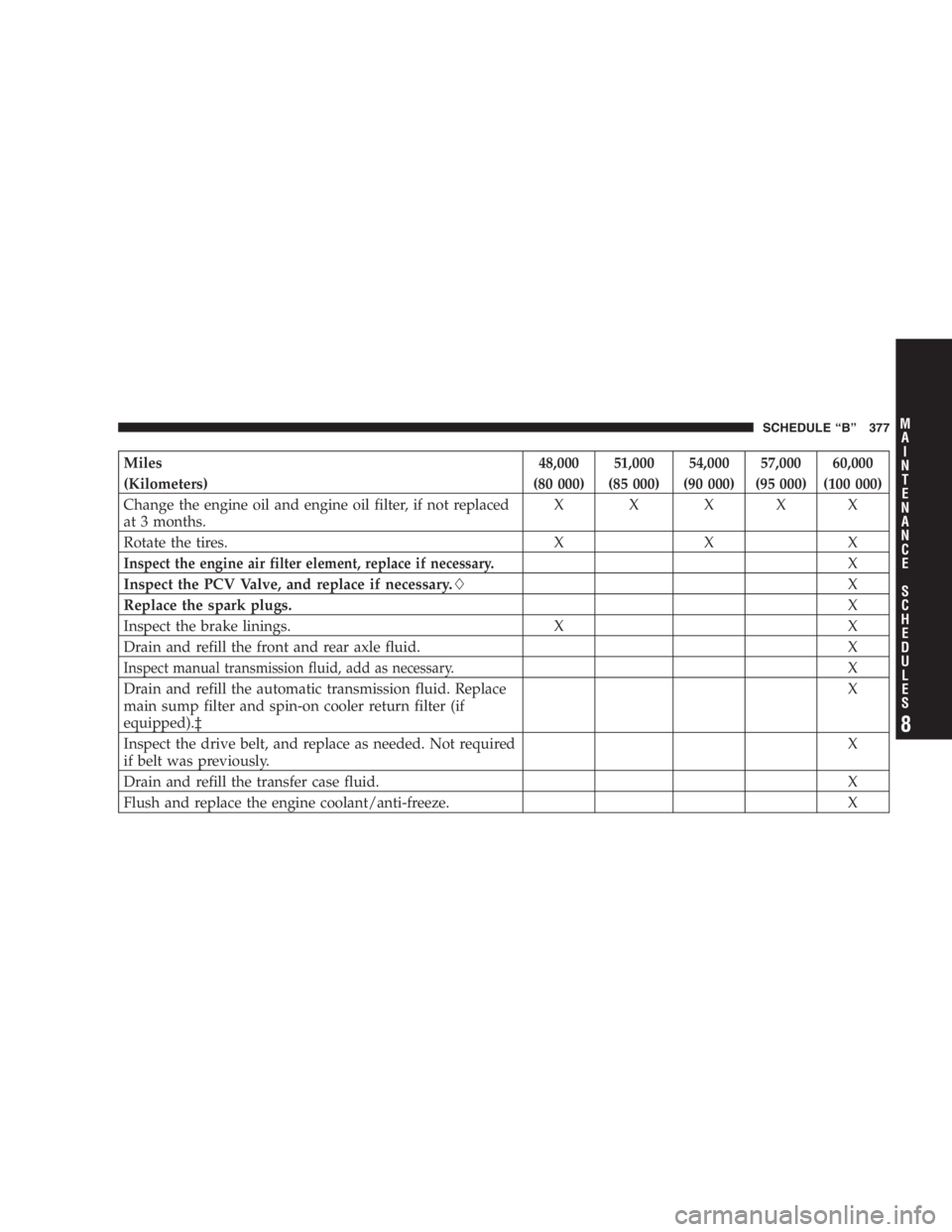
Manual Transmission
Selection of Lubricant
Use only manufacturer’s recommended manual trans-
mission fluid, refer to Fluids, Lubricants, and Genuine
Parts for correct fluid type.
Fluid Level Check
Check the fluid level by removing the fill plug. The fluid
level should be between the bottom of the fill hole and a
point not more than 3/16” (4.76 mm) below the bottom of
the hole.
Add fluid, if necessary, to maintain the proper level.
Frequency of Fluid Change
Under normal operating conditions, the fluid installed at
the factory will give satisfactory lubrication for the life of
the vehicle. Fluid changes are not necessary unless the
lubricant has become contaminated with water. If con-
taminated with water, the fluid should be changed im-
mediately.
344 MAINTAINING YOUR VEHICLE
Page 175 of 1251
Using a transmission fluid other than the manufac-
turer’s recommended fluid may cause deterioration
in transmission shift quality and/or torque converter
shudder. Using a transmission fluid other than the
manufacturer’s recommended fluid will result in
more frequent fluid and filter changes. Refer to
Fluids, Lubricants, and Genuine Parts for correct
fluid type.
Fluid Level Check
This fluid level should be checked when the engine is
fully warmed up and the fluid in the transmission is
heated to its normal operating temperature. Operation of
the transmission with an improper fluid level will greatly
reduce the life of the transmission and of the fluid.
MAINTAINING YOUR VEHICLE 345
Page 224 of 1251
When parking your vehicle, always leave a manual
transmission in first gear and apply the parking
brake fully to guard against vehicle movement and
possible injury or damage. Never use any gear as a
substitute for the parking brake.
CAUTION!
To drive as safely as possible and to prolong the life
of your manual transmission, follow these tips:
Page 227 of 1251
Damage to the transmission may occur if the follow-
ing precautions are not observed:
•Shift into P (Park) only after the vehicle has come
to a complete stop.
•Shift into or out of R (Reverse) only after the
vehicle has come to a complete stop and the
engine is at idle speed.
•Do not shift from R (Reverse), P (Park), or N
(Neutral) into any forward gear when the engine
is above idle speed.
•Before shifting into any gear, make sure your foot
is firmly on the brake pedal.
WARNING!
It is dangerous to shift the selector lever out of P
(Park) or N (Neutral) if the engine speed is higher
than idle speed. If your foot is not firmly on the
brake pedal, the vehicle could accelerate quickly
forward or in reverse. You could lose control of the
vehicle and hit someone or something. Only shift
into gear when the engine is idling normally and
when your foot is firmly on the brake pedal.
Page 245 of 1251
If the engine stalls or you lose headway or cannot
make it to the top of a steep hill or grade, never
attempt to turn around. To do so may result in
tipping and rolling the vehicle. Always back care-
fully straight down a hill in R (Reverse) gear. Never
back down a hill in N (Neutral) using only the brake.
Remember, never drive diagonally across a hill-always
drive straight up or down.
If the wheels start to slip as you approach the crest of a
hill, ease off the accelerator and maintain headway by
turning the front wheels slowly left and right. This may
provide a fresh “bite” into the surface and will usually
provide traction to complete the climb.
Traction Downhill
Shift the transmission into a low gear and the transfer
case to 4L or 4LO range. Let the vehicle go slowly down
the hill with all four wheels turning against engine
compression drag. This will permit you to control the
vehicle speed and direction.
When descending mountains or hills, repeated braking
can cause brake fade with loss of braking control. Avoid
repeated heavy braking by downshifting the transmis-
sion whenever possible.
After Driving Off-Road
Off-road operation puts more stress on your vehicle than
does most on-road driving. After going off-road it is
always a good idea to check for damage. That way you
can get any problems taken care of right away and have
your vehicle ready when you need it.
238 STARTING AND OPERATING
Page 303 of 1251
Front or rear wheel lifts should not be used. Internal
damage to the transmission or transfer case will
occur if a front or rear wheel lift is used when
recreational towing.
NOTE:The transfer case must be shifted into N (Neu-
tral), and the transmission must be shifted into P (Park)
296 STARTING AND OPERATING
Page 305 of 1251
Transmission damage may occur if the automatic
transmission is shifted into P (Park) with the transfer
case in N (Neutral) and the engine running. With the
transfer case in N (Neutral) ensure that the engine is
OFF prior to shifting the transmission into P (Park)
(refer to steps7–8above).
Shifting Out Of Neutral (N)
Use the following procedure to prepare your vehicle for
normal usage.
1. Shift transmission into N (Neutral).
2. Turn engine off.
3. Shift transfer case lever to desired position.
4. Shift automatic transmission into P (Park).5. Start engine.
6. Shift automatic transmission into D (Drive) or manual
transmission into any forward gear.
WARNING!
You or others could be injured if you leave the
vehicle unattended with the transfer case in the N
(Neutral) position without first fully engaging the
parking brake. The transfer case N (Neutral) position
disengages both the front and rear driveshafts from
the powertrain and will allow the vehicle to move
regardless of the transmission position. The parking
brake should always be applied when the driver is
not in the vehicle.
Page 374 of 1251
When parking your vehicle, always leave a manual
transmission in first gear and apply the parking
brake fully to guard against vehicle movement and
possible injury or damage. Never use any gear as a
substitute for the parking brake.
CAUTION!
To drive as safely as possible and to prolong the life
of your manual transmission, follow these tips:
Page 377 of 1251
Damage to the transmission may occur if the follow-
ing precautions are not observed:
•Shift into P (Park) only after the vehicle has come
to a complete stop.
•Shift into or out of R (Reverse) only after the
vehicle has come to a complete stop and the
engine is at idle speed.
•Do not shift from R (Reverse), P (Park), or N
(Neutral) into any forward gear when the engine
is above idle speed.
•Before shifting into any gear, make sure your foot
is firmly on the brake pedal.
WARNING!
It is dangerous to shift the selector lever out of P
(Park) or N (Neutral) if the engine speed is higher
than idle speed. If your foot is not firmly on the
brake pedal, the vehicle could accelerate quickly
forward or in reverse. You could lose control of the
vehicle and hit someone or something. Only shift
into gear when the engine is idling normally and
when your foot is firmly on the brake pedal.