child restraint KIA Carens 2017 3.G Owner's Guide
[x] Cancel search | Manufacturer: KIA, Model Year: 2017, Model line: Carens, Model: KIA Carens 2017 3.GPages: 625, PDF Size: 19.69 MB
Page 89 of 625
373
Safety features of your vehicle
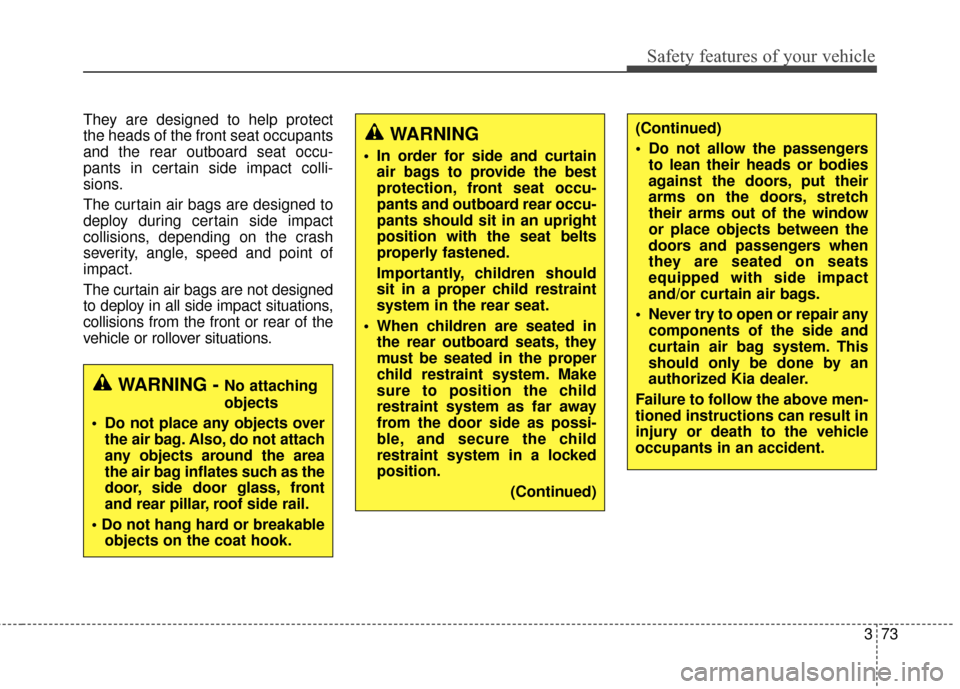
They are designed to help protect
the heads of the front seat occupants
and the rear outboard seat occu-
pants in certain side impact colli-
sions.
The curtain air bags are designed to
deploy during certain side impact
collisions, depending on the crash
severity, angle, speed and point of
impact.
The curtain air bags are not designed
to deploy in all side impact situations,
collisions from the front or rear of the
vehicle or rollover situations.
WARNING
In order for side and curtainair bags to provide the best
protection, front seat occu-
pants and outboard rear occu-
pants should sit in an upright
position with the seat belts
properly fastened.
Importantly, children should
sit in a proper child restraint
system in the rear seat.
When children are seated in the rear outboard seats, they
must be seated in the proper
child restraint system. Make
sure to position the child
restraint system as far away
from the door side as possi-
ble, and secure the child
restraint system in a locked
position.
(Continued)
(Continued)
Do not allow the passengersto lean their heads or bodies
against the doors, put their
arms on the doors, stretch
their arms out of the window
or place objects between the
doors and passengers when
they are seated on seats
equipped with side impact
and/or curtain air bags.
Never try to open or repair any components of the side and
curtain air bag system. This
should only be done by an
authorized Kia dealer.
Failure to follow the above men-
tioned instructions can result in
injury or death to the vehicle
occupants in an accident.
WARNING - No attaching
objects
Do not place any objects over the air bag. Also, do not attach
any objects around the area
the air bag inflates such as the
door, side door glass, front
and rear pillar, roof side rail.
objects on the coat hook.
Page 96 of 625
Safety features of your vehicle
80
3
Additional safety precautions
Never let passengers ride in the
cargo area or on top of a folded-
down back seat. All occupants
should sit upright, fully back in their
seats with their seat belts on and
their feet on the floor.
Passengers should not move
out of or change seats while the
vehicle is moving. A passenger
who is not wearing a seat belt dur-
ing a crash or emergency stop can
be thrown against the inside of the
vehicle, against other occupants,
or out of the vehicle.
Each seat belt is designed to
restrain one occupant. If more
than one person uses the same
seat belt, they could be seriously
injured or killed in a collision.
Do not use any accessories on
seat belts. Devices claiming to
improve occupant comfort or repo-
sition the seat belt can reduce the
protection provided by the seat belt
and increase the chance of serious
injury in a crash.
Passengers should not place
hard or sharp objects between
themselves and the air bags.
Carrying hard or sharp objects on
your lap or in your mouth can result
in injuries if an air bag inflates.
Keep occupants away from the
air bag covers. All occupants
should sit upright, fully back in their
seats with their seat belts on and
their feet on the floor. If occupants
are too close to the air bag covers,
they could be injured if the air bags
inflate.
Do not attach or place objects
on or near the air bag covers.
Any object attached to or placed
on the front or side air bag covers
could interfere with the proper
operation of the air bags.
Do not modify the front seats.
Modification of the front seats
could interfere with the operation of
the supplemental restraint system
sensing components or side air
bags.
Do not place items under the
front seats. Placing items under
the front seats could interfere with
the operation of the supplemental
restraint system sensing compo-
nents and wiring harnesses.
Never hold an infant or child on
your lap. The infant or child could
be seriously injured or killed in the
event of a crash. All infants and chil-
dren should be properly restrained
in appropriate child safety seats or
seat belts in the rear seat.
Page 140 of 625
443
Features of your vehicle
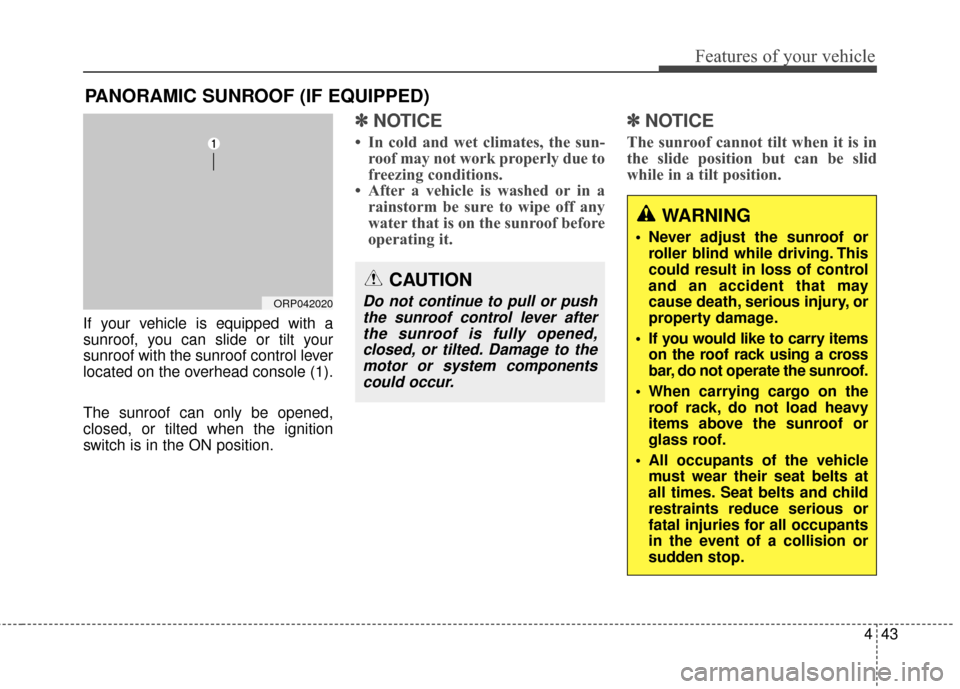
If your vehicle is equipped with a
sunroof, you can slide or tilt your
sunroof with the sunroof control lever
located on the overhead console (1).
The sunroof can only be opened,
closed, or tilted when the ignition
switch is in the ON position.
✽ ✽NOTICE
• In cold and wet climates, the sun-
roof may not work properly due to
freezing conditions.
• After a vehicle is washed or in a rainstorm be sure to wipe off any
water that is on the sunroof before
operating it.
✽ ✽ NOTICE
The sunroof cannot tilt when it is in
the slide position but can be slid
while in a tilt position.
PANORAMIC SUNROOF (IF EQUIPPED)
CAUTION
Do not continue to pull or push
the sunroof control lever afterthe sunroof is fully opened,closed, or tilted. Damage to themotor or system componentscould occur.
WARNING
Never adjust the sunroof or roller blind while driving. This
could result in loss of control
and an accident that may
cause death, serious injury, or
property damage.
If you would like to carry items on the roof rack using a cross
bar, do not operate the sunroof.
When carrying cargo on the roof rack, do not load heavy
items above the sunroof or
glass roof.
All occupants of the vehicle must wear their seat belts at
all times. Seat belts and child
restraints reduce serious or
fatal injuries for all occupants
in the event of a collision or
sudden stop.
ORP042020
Page 470 of 625
Driving your vehicle
82
6
WARNING
Overloading your vehicle can
cause heat buildup in your
vehicle's tires and possible
tire failure that could lead to a
crash.
Overloading your vehicle can cause increased stopping dis-
tances that could lead to a
crash.
A crash resulting from poor handling vehicle damage, tire
failure, or increased stopping
distances could result in seri-
ous injury or death.
WARNING- Loose cargo
Items you carry inside your
vehicle can strike and injure
occupants in a sudden stop or
turn, or in a crash.
Put items in the cargo area ofyour vehicle. Try to spread the
weight evenly.
Never stack items, like suit- cases, inside the vehicle
above the tops of the seats.
Do not leave an unsecured child restraint in your vehicle.
When you carry something inside the vehicle, secure it.
Do not drive with a seat folded down unless necessary.
CAUTION
Overloading your vehicle may cause damage. Repairs wouldnot be covered by your war-ranty. Do not overload yourvehicle.
Using heavier suspension components to get addeddurability might not changeyour weight ratings. Ask yourdealer to help you load yourvehicle the right way.
Page 615 of 625

I3
Index
Battery........................................................................\
....8-45For best battery service ..............................................8-45
Battery recharging ......................................................8-46
Reset items ..................................................................8-47
Battery replacement ........................................................4-7
Battery saver function..................................................4-104
Before driving ..................................................................6-4
Blind Spot Detection System(BSD) ..............................6-49 BSD (Blind Spot Detection) /LCA (Lane Change Assist) ......................................6-50
RCTA (Rear cross traffic alert) ..................................6-53
Driver's Attention ........................................................6-56
Bonnet see the hood ......................................................4-35
Brake fluid ....................................................................8-35\
Checking the brake fluid level ....................................8-35
Brake system..................................................................6-23 Power brakes ..............................................................6-23
Parking brake - Hand type ..........................................6-25
Electronic parking brake (EPB) ..................................6-27
Anti-lock brake system (ABS)....................................6-32
Electronic stability control (ESC) ..............................6-35
Vehicle stability management (VSM) ........................6-39
Hill-start assist control (HAC) ....................................6-40
Bulb wattage ....................................................................9-3 Camera (Rear view) ......................................................4-87
Capacities (Lubricants) ....................................................9-6
Care
Care of seat belts ........................................................3-40
SRS Care ....................................................................3-79\
Tire care ......................................................................8-\
48
Exterior care ................................................................8-92
Interior care ................................................................8-97
Cargo security screen ..................................................4-167
Center console storage ................................................4-152
Central door lock switch................................................4-23
Checking tire inflation pressure ....................................8-51
Child restraint system ....................................................3-42 Securing a child restraint withthe LATCHanchors system ..........................................................3-48
Securing a child restraint seatwith "Tether Anchor" system ......................................................................3-\
47
Placing a passenger seat beltinto the auto lock mode ...... 3-44
Child-protector rear door lock ......................................4-26
Clean air ......................................................................4-\
151
Climate control air filter ................................................8-40 Filter inspection ..........................................................8-40
Coat hook ....................................................................4-16\
4
Combined instrument, see instrument cluster ..............4-58
Coolant ........................................................................\
..8-31
Cooling fluid, see engine coolant ..................................8-31
BC
Page 622 of 625
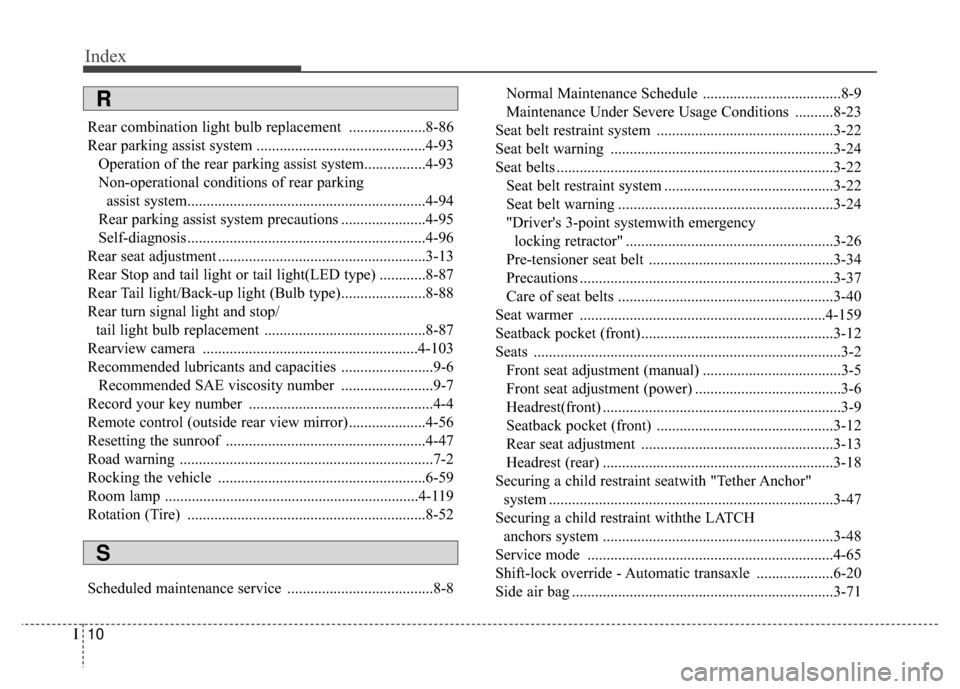
Index
10I
Rear combination light bulb replacement ....................8-86
Rear parking assist system ............................................4-93Operation of the rear parking assist system................4-93
Non-operational conditions of rear parking assist system..............................................................4-94
Rear parking assist system precautions ......................4-95
Self-diagnosis..............................................................4-96
Rear seat adjustment ......................................................3-13
Rear Stop and tail light or tail light(LED type) ............8-87
Rear Tail light/Back-up light (Bulb type)......................8-88
Rear turn signal light and stop/ tail light bulb replacement ..........................................8-87
Rearview camera ........................................................4-103
Recommended lubricants and capacities ........................9-6 Recommended SAE viscosity number ........................9-7
Record your key number ................................................4-4
Remote control (outside rear view mirror) ....................4-56
Resetting the sunroof ....................................................4-47
Road warning ..................................................................7-2
Rocking the vehicle ......................................................6-59
Room lamp ..................................................................4-119
Rotation (Tire) ..............................................................8-52
Scheduled maintenance service ......................................8-8 Normal Maintenance Schedule ....................................8-9
Maintenance Under Severe Usage Conditions ..........8-23
Seat belt restraint system ..............................................3-22
Seat belt warning ..........................................................3-24
Seat belts ........................................................................\
3-22 Seat belt restraint system ............................................3-22
Seat belt warning ........................................................3-24
"Driver's 3-point systemwith emergency locking retractor" ......................................................3-26
Pre-tensioner seat belt ................................................3-34
Precautions ..................................................................3-37
Care of seat belts ........................................................3-40
Seat warmer ................................................................4-159
Seatback pocket (front)..................................................3-12
Seats ........................................................................\
........3-2 Front seat adjustment (manual) ....................................3-5
Front seat adjustment (power) ......................................3-6
Headrest(front) ..............................................................3-9
Seatback pocket (front) ..............................................3-12
Rear seat adjustment ..................................................3-13
Headrest (rear) ............................................................3-18
Securing a child restraint seatwith "Tether Anchor" system ........................................................................\
..3-47
Securing a child restraint withthe LATCH anchors system ............................................................3-48
Service mode ................................................................4-65
Shift-lock override - Automatic transaxle ....................6-20
Side air bag ....................................................................3-71\
R
S