oil KIA FORTE 2020 Service Manual
[x] Cancel search | Manufacturer: KIA, Model Year: 2020, Model line: FORTE, Model: KIA FORTE 2020Pages: 568, PDF Size: 8.58 MB
Page 541 of 568
Maintenance
104
7
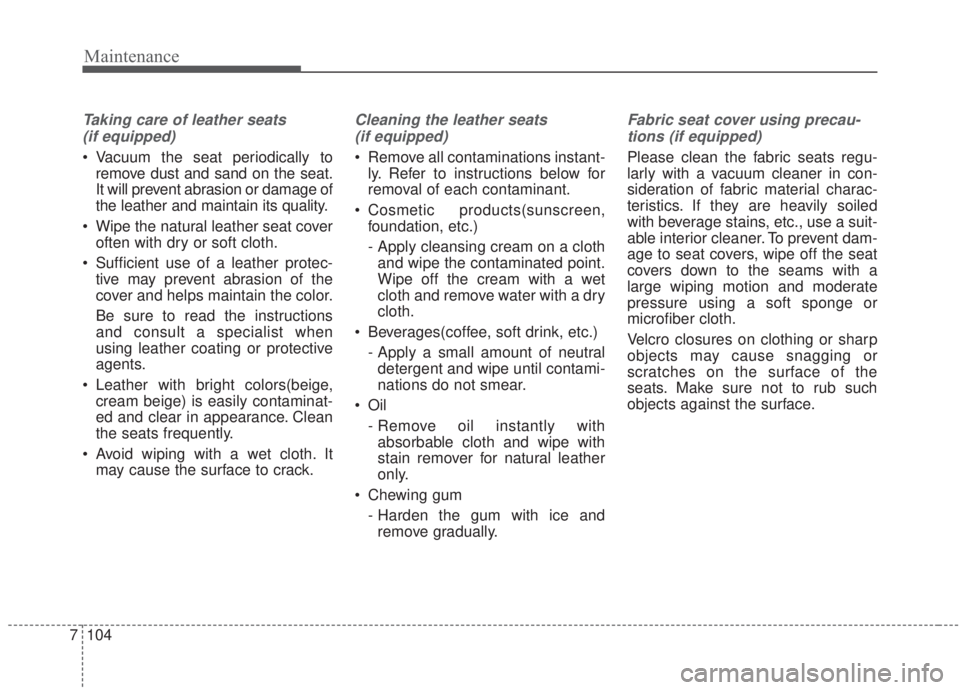
Taking care of leather seats
(if equipped)
Vacuum the seat periodically to remove dust and sand on the seat.
It will prevent abrasion or damage of
the leather and maintain its quality.
Wipe the natural leather seat cover often with dry or soft cloth.
Sufficient use of a leather protec- tive may prevent abrasion of the
cover and helps maintain the color.
Be sure to read the instructions
and consult a specialist when
using leather coating or protective
agents.
Leather with bright colors(beige, cream beige) is easily contaminat-
ed and clear in appearance. Clean
the seats frequently.
Avoid wiping with a wet cloth. It may cause the surface to crack.
Cleaning the leather seats
(if equipped)
Remove all contaminations instant- ly. Refer to instructions below for
removal of each contaminant.
Cosmetic products(sunscreen, foundation, etc.)
- Apply cleansing cream on a clothand wipe the contaminated point.
Wipe off the cream with a wet
cloth and remove water with a dry
cloth.
Beverages(coffee, soft drink, etc.) - Apply a small amount of neutraldetergent and wipe until contami-
nations do not smear.
Oil - Remove oil instantly withabsorbable cloth and wipe with
stain remover for natural leather
only.
Chewing gum - Harden the gum with ice andremove gradually.
Fabric seat cover using precau-
tions (if equipped)
Please clean the fabric seats regu-
larly with a vacuum cleaner in con-
sideration of fabric material charac-
teristics. If they are heavily soiled
with beverage stains, etc., use a suit-
able interior cleaner. To prevent dam-
age to seat covers, wipe off the seat
covers down to the seams with a
large wiping motion and moderate
pressure using a soft sponge or
microfiber cloth.
Velcro closures on clothing or sharp
objects may cause snagging or
scratches on the surface of the
seats. Make sure not to rub such
objects against the surface.
Page 553 of 568
Specifications & Consumer information
88
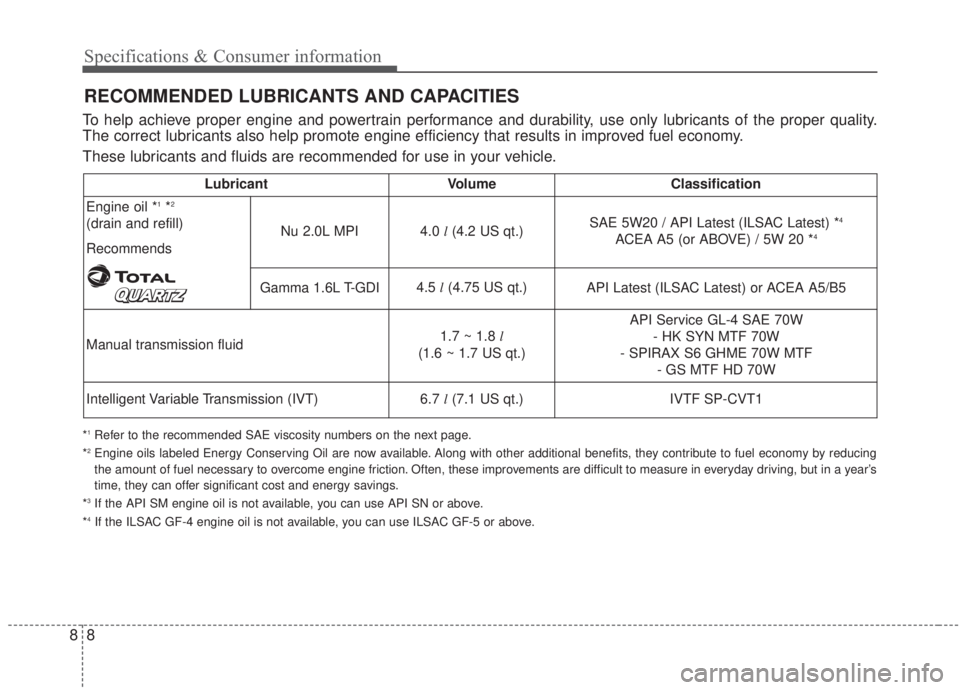
RECOMMENDED LUBRICANTS AND CAPACITIES
To help achieve proper engine and powertrain performance and durability, use only lubricants of the proper quality.
The correct lubricants also help promote engine efficiency that results in improved fuel economy.
These lubricants and fluids are recommended for use in your vehicle.
*1Refer to the recommended SAE viscosity numbers on the next page.
*2Engine oils labeled Energy Conserving Oil are now available. Along with other additional benefits, they contribute to fuel econo my by reducing
the amount of fuel necessary to overcome engine friction. Often, these improvements are difficult to measure in everyday driving, but in a year’s
time, they can offer significant cost and energy savings.
*
3If the API SM engine oil is not available, you can use API SN or above.
*4If the ILSAC GF-4 engine oil is not available, you can use ILSAC GF-5 or above.
LubricantVolume Classification
Engine oil *
1*2
(drain and refill)
Recommends Nu 2.0L MPI4.0
l(4.2 US qt.) SAE 5W20 / API Latest (ILSAC Latest) *4
ACEA A5 (or ABOVE) / 5W 20 *4
Gamma 1.6L T-GDI4.5
l(4.75 US qt.)API Latest (ILSAC Latest) or ACEA A5/B5
Manual transmission fluid
1.7 ~ 1.8 l
(1.6 ~ 1.7 US qt.) API Service GL-4 SAE 70W
- HK SYN MTF 70W
- SPIRAX S6 GHME 70W MTF - GS MTF HD 70W
Intelligent Variable Transmission (IVT)
6.7 l(7.1 US qt.)
IVTF SP-CVT1
Page 555 of 568
Specifications & Consumer information
10
8
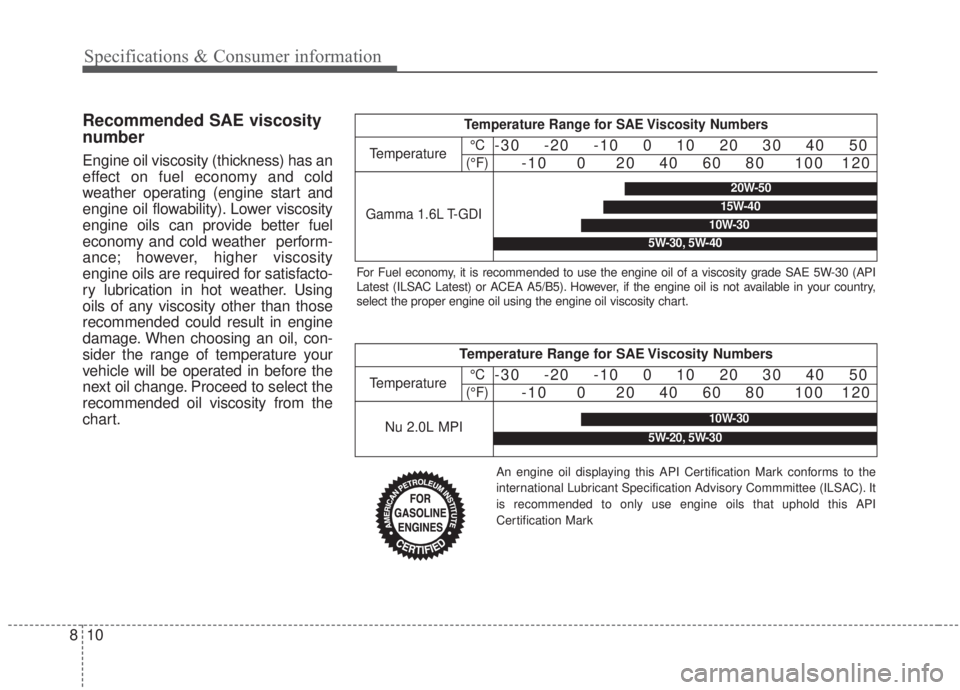
Recommended SAE viscosity
number
Engine oil viscosity (thickness) has an
effect on fuel economy and cold
weather operating (engine start and
engine oil flowability). Lower viscosity
engine oils can provide better fuel
economy and cold weather perform-
ance; however, higher viscosity
engine oils are required for satisfacto-
ry lubrication in hot weather. Using
oils of any viscosity other than those
recommended could result in engine
damage. When choosing an oil, con-
sider the range of temperature your
vehicle will be operated in before the
next oil change. Proceed to select the
recommended oil viscosity from the
chart.
Temperature Range for SAE Viscosity Numbers
An engine oil displaying this API Certification Mark conforms to the
international Lubricant Specification Advisory Commmittee (ILSAC). It
is recommended to only use engine oils that uphold this API
Certification Mark
Temperature°C
(°F)-30 -20 -10 0 10 20 30 40 50 -10 0 20 40 60 80 100 120
Nu 2.0L MPI10W-30
5W-20, 5W-30
Temperature Range for SAE Viscosity Numbers
Temperature°C
(°F)-30 -20 -10 0 10 20 30 40 50 -10 0 20 40 60 80 100 120
Gamma 1.6L T-GDI
For Fuel economy, it is recommended to use the engine oil of a viscosity grade SAE 5W-30 (API
Latest (ILSAC Latest) or ACEA A5/B5). However, if the engine oil is not available in your country,
select the proper engine oil using the engine oil viscosity chart.
10W-30
20W-50
15W-40
5W-30, 5W-40
Page 561 of 568
Index
4I
Emission control system ..............................................7-105Crankcase emission control system ..........................7-105
Evaporative emission control (including ORVR: Onboard Refueling Vapor Recovery) system ........7-105
Exhaust emission control system ..............................7-106
Engine ........................................................................\
......8-3
Engine compartment ................................................2-6, 7-4
Engine coolant ..............................................................7-28 Changing the coolant ..................................................7-31
Checking the coolant level..........................................7-28
Engine number ..............................................................8-12
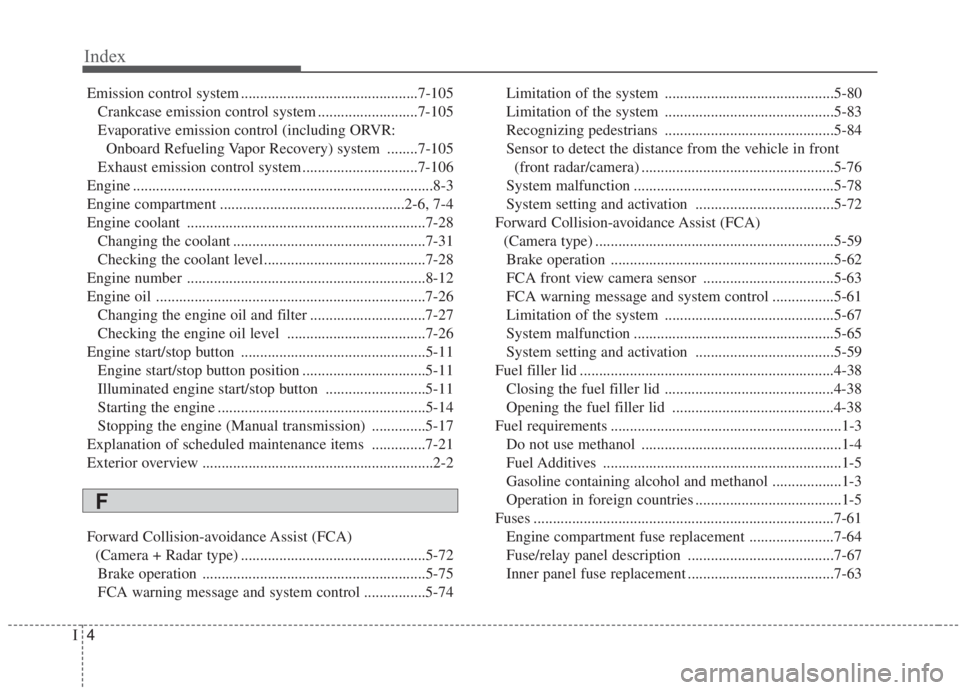
Engine oil ......................................................................7-\
26 Changing the engine oil and filter ..............................7-27
Checking the engine oil level ....................................7-26
Engine start/stop button ................................................5-11 Engine start/stop button position ................................5-11
Illuminated engine start/stop button ..........................5-11
Starting the engine ......................................................5-14
Stopping the engine (Manual transmission) ..............5-17
Explanation of scheduled maintenance items ..............7-21
Exterior overview ............................................................2-2
Forward Collision-avoidance Assist (FCA) (Camera + Radar type) ................................................5-72Brake operation ..........................................................5-75
FCA warning message and system control ................5-74 Limitation of the system ............................................5-80
Limitation of the system ............................................5-83
Recognizing pedestrians ............................................5-84
Sensor to detect the distance from the vehicle in front (front radar/camera) ..................................................5-76
System malfunction ....................................................5-78
System setting and activation ....................................5-72
Forward Collision-avoidance Assist (FCA) (Camera type) ..............................................................5-59Brake operation ..........................................................5-62
FCA front view camera sensor ..................................5-63
FCA warning message and system control ................5-61
Limitation of the system ............................................5-67
System malfunction ....................................................5-65
System setting and activation ....................................5-59
Fuel filler lid ..................................................................4-38 Closing the fuel filler lid ............................................4-38
Opening the fuel filler lid ..........................................4-38
Fuel requirements ............................................................1-3 Do not use methanol ....................................................1-4
Fuel Additives ..............................................................1-5
Gasoline containing alcohol and methanol ..................1-3
Operation in foreign countries ......................................1-5
Fuses ........................................................................\
......7-61 Engine compartment fuse replacement ......................7-64
Fuse/relay panel description ......................................7-67
Inner panel fuse replacement ......................................7-63
F
Page 567 of 568
Index
10I
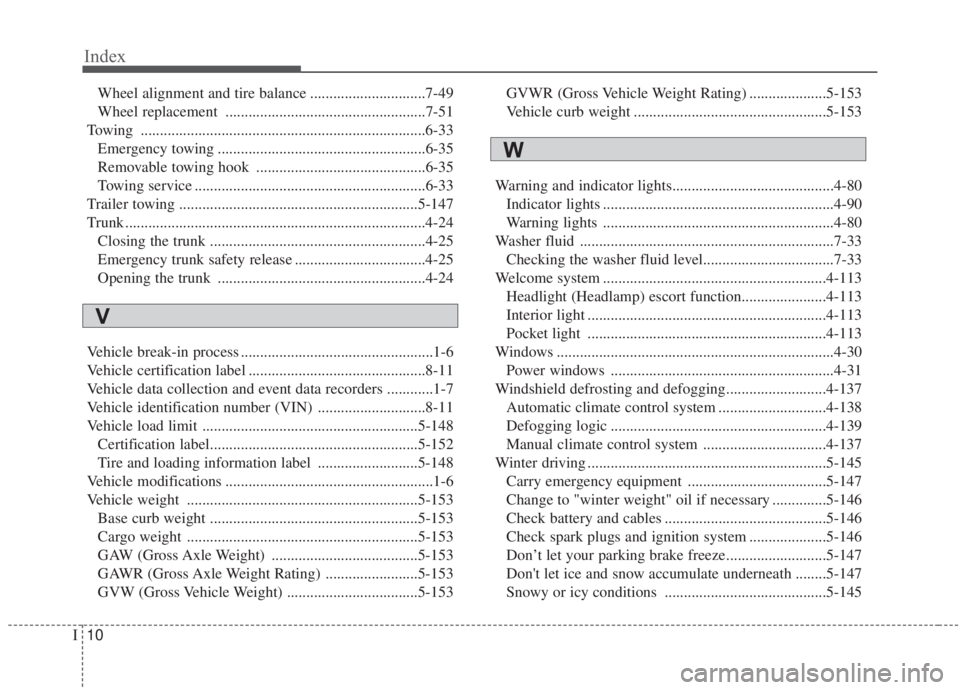
Wheel alignment and tire balance ..............................7-49
Wheel replacement ....................................................7-51
Towing ........................................................................\
..6-33 Emergency towing ......................................................6-35
Removable towing hook ............................................6-35
Towing service ............................................................6-33
Trailer towing ..............................................................5-147
Trunk ........................................................................\
......4-24 Closing the trunk ........................................................4-25
Emergency trunk safety release ..................................4-25
Opening the trunk ......................................................4-24
Vehicle break-in process ..................................................1-6
Vehicle certification label ..............................................8-11
Vehicle data collection and event data recorders ............1-7
Vehicle identification number (VIN) ............................8-11
Vehicle load limit ........................................................5-148 Certification label......................................................5-152
Tire and loading information label ..........................5-148
Vehicle modifications ......................................................1-6
Vehicle weight ............................................................5-153 Base curb weight ......................................................5-153
Cargo weight ............................................................5-153
GAW (Gross Axle Weight) ......................................5-153
GAWR (Gross Axle Weight Rating) ........................5-153
GVW (Gross Vehicle Weight) ..................................5-153 GVWR (Gross Vehicle Weight Rating) ....................5-153
Vehicle curb weight ..................................................5-153
Warning and indicator lights..........................................4-80 Indicator lights ............................................................4-90
Warning lights ............................................................4-80
Washer fluid ..................................................................7-33 Checking the washer fluid level..................................7-33
Welcome system ..........................................................4-113 Headlight (Headlamp) escort function......................4-113
Interior light ..............................................................4-113
Pocket light ..............................................................4-113
Windows ........................................................................\
4-30 Power windows ..........................................................4-31
Windshield defrosting and defogging..........................4-137 Automatic climate control system ............................4-138
Defogging logic ........................................................4-139
Manual climate control system ................................4-137
Winter driving ..............................................................5-145 Carry emergency equipment ....................................5-147
Change to "winter weight" oil if necessary ..............5-146
Check battery and cables ..........................................5-146
Check spark plugs and ignition system ....................5-146
Don’t let your parking brake freeze..........................5-147
Don't let ice and snow accumulate underneath ........5-147
Snowy or icy conditions ..........................................5-145
V
W