park KIA OPTIMA HYBRID 2019 Manual Online
[x] Cancel search | Manufacturer: KIA, Model Year: 2019, Model line: OPTIMA HYBRID, Model: KIA OPTIMA HYBRID 2019Pages: 553, PDF Size: 11.97 MB
Page 407 of 553
79
What to do in an emergency
TIRE PRESSURE MONITORING SYSTEM (TPMS)
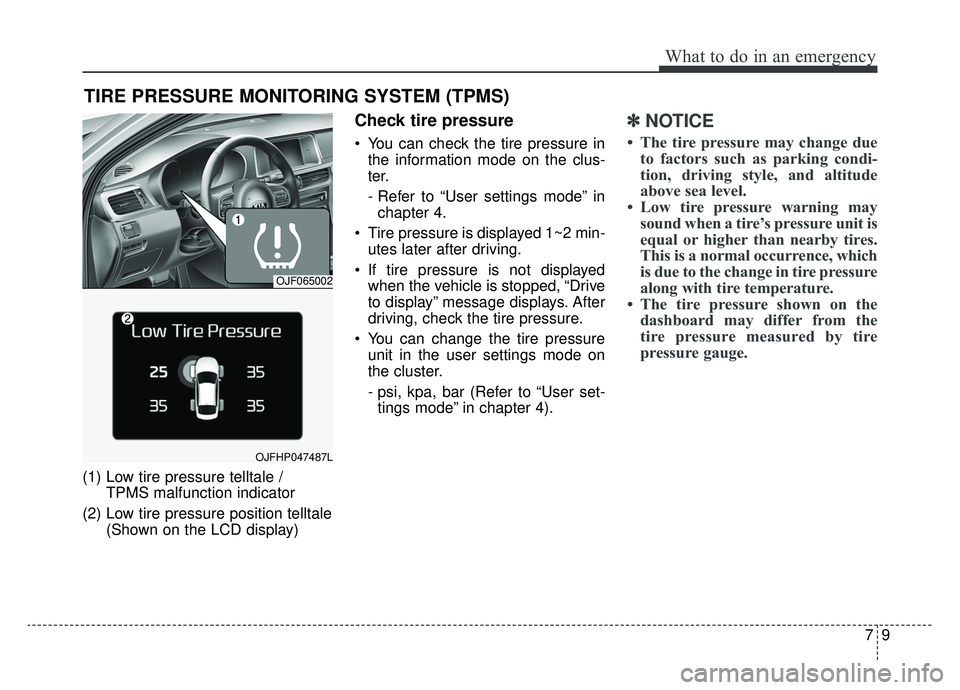
(1) Low tire pressure telltale / TPMS malfunction indicator
(2) Low tire pressure position telltale (Shown on the LCD display)
Check tire pressure
You can check the tire pressure inthe information mode on the clus-
ter.
- Refer to “User settings mode” inchapter 4.
Tire pressure is displayed 1~2 min- utes later after driving.
If tire pressure is not displayed when the vehicle is stopped, “Drive
to display” message displays. After
driving, check the tire pressure.
You can change the tire pressure unit in the user settings mode on
the cluster.
- psi, kpa, bar (Refer to “User set-tings mode” in chapter 4).
✽ ✽ NOTICE
• The tire pressure may change due
to factors such as parking condi-
tion, driving style, and altitude
above sea level.
• Low tire pressure warning may sound when a tire’s pressure unit is
equal or higher than nearby tires.
This is a normal occurrence, which
is due to the change in tire pressure
along with tire temperature.
• The tire pressure shown on the dashboard may differ from the
tire pressure measured by tire
pressure gauge.
OJF065002
OJFHP047487L
Page 415 of 553
717
What to do in an emergency
Introduction
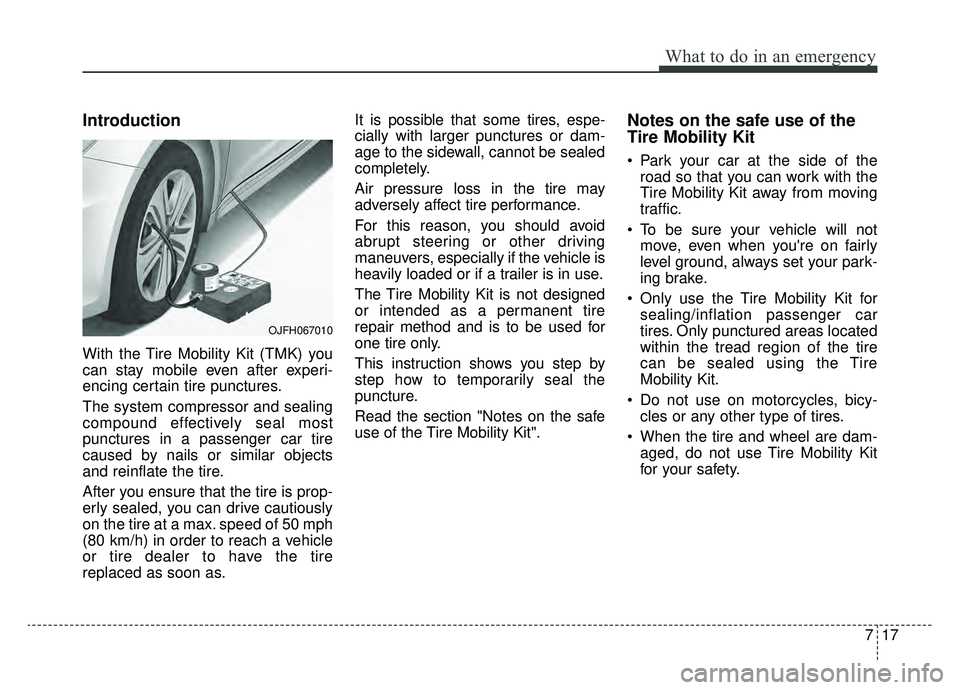
With the Tire Mobility Kit (TMK) you
can stay mobile even after experi-
encing certain tire punctures.
The system compressor and sealing
compound effectively seal most
punctures in a passenger car tire
caused by nails or similar objects
and reinflate the tire.
After you ensure that the tire is prop-
erly sealed, you can drive cautiously
on the tire at a max. speed of 50 mph
(80 km/h) in order to reach a vehicle
or tire dealer to have the tire
replaced as soon as.It is possible that some tires, espe-
cially with larger punctures or dam-
age to the sidewall, cannot be sealed
completely.
Air pressure loss in the tire may
adversely affect tire performance.
For this reason, you should avoid
abrupt steering or other driving
maneuvers, especially if the vehicle is
heavily loaded or if a trailer is in use.
The Tire Mobility Kit is not designed
or intended as a permanent tire
repair method and is to be used for
one tire only.
This instruction shows you step by
step how to temporarily seal the
puncture.
Read the section "Notes on the safe
use of the Tire Mobility Kit".
Notes on the safe use of the
Tire Mobility Kit
Park your car at the side of the
road so that you can work with the
Tire Mobility Kit away from moving
traffic.
To be sure your vehicle will not move, even when you're on fairly
level ground, always set your park-
ing brake.
Only use the Tire Mobility Kit for sealing/inflation passenger car
tires. Only punctured areas located
within the tread region of the tire
can be sealed using the Tire
Mobility Kit.
Do not use on motorcycles, bicy- cles or any other type of tires.
When the tire and wheel are dam- aged, do not use Tire Mobility Kit
for your safety.
OJFH067010
Page 423 of 553
725
What to do in an emergency
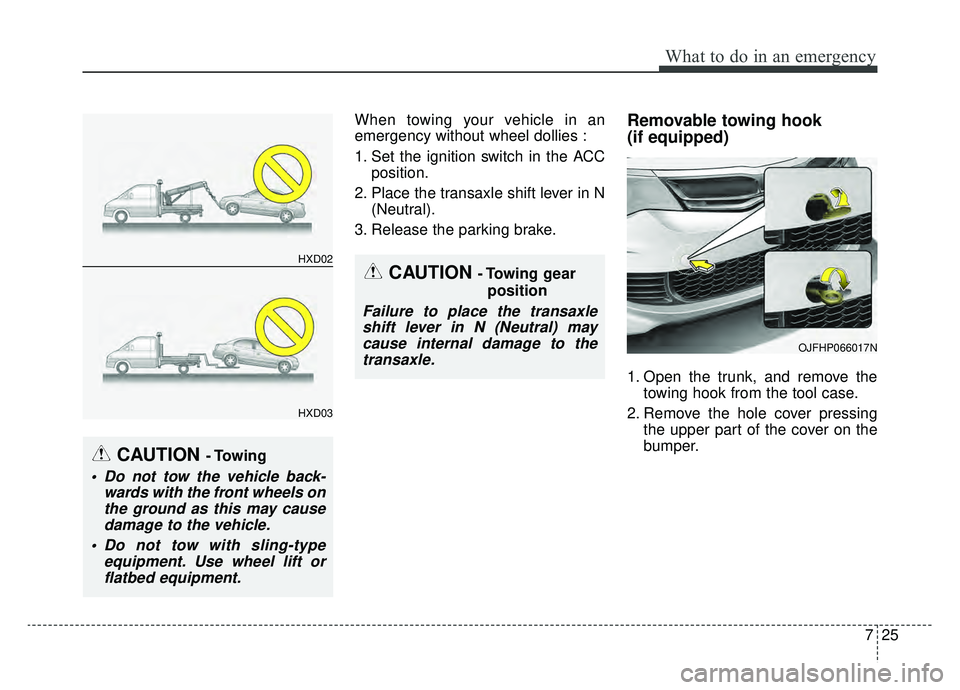
When towing your vehicle in an
emergency without wheel dollies :
1. Set the ignition switch in the ACCposition.
2. Place the transaxle shift lever in N (Neutral).
3. Release the parking brake.Removable towing hook
(if equipped)
1. Open the trunk, and remove the towing hook from the tool case.
2. Remove the hole cover pressing the upper part of the cover on the
bumper.
CAUTION - Towing gear
position
Failure to place the transaxleshift lever in N (Neutral) maycause internal damage to thetransaxle.
CAUTION - Towing
Do not tow the vehicle back- wards with the front wheels onthe ground as this may causedamage to the vehicle.
Do not tow with sling-type equipment. Use wheel lift orflatbed equipment.
HXD02
HXD03
OJFHP066017N
Page 426 of 553
What to do in an emergency
28
7
Emergency towing precautions
Turn the ignition switch to ACC so
the steering wheel isn’t locked.
Place the transaxle shift lever in N (Neutral).
Release the parking bake.
Press the brake pedal with more force than normal since you will
have reduced brake performance.
More steering effort will be required because the power steer-
ing system will be disabled.
If you are driving down a long hill, the brakes may overheat and brake
performance will be reduced. Stop
often and let the brakes cool off. If the car is being towed with all
four wheels on the ground, it can
be towed only from the front. Be
sure that the transaxle is in neutral.
Be sure the steering is unlocked by
placing the ignition switch in the
ACC position. A driver must be in
the towed vehicle to operate the
steering and brakes.
CAUTION - Automatic
transaxle
To avoid serious damage to the automatic transaxle, limitthe vehicle speed to 10 mph(15 km/h) and drive less than 1mile (1.5 km) when towing.
Before towing, check the auto- matic transaxle for fluid leaksunder your vehicle. If the auto-matic transaxle fluid is leak-ing, flatbed equipment or atowing dolly must be used.
Page 427 of 553
729
What to do in an emergency
IF AN ACCIDENT OCCURS
✽ ✽ NOTICE
Any gas or electrolyte leakage from
your vehicle is not only poisonous
but also flammable. Upon witness-
ing gas or electrolyte leakage, make
sure your car is parked in a safe area
away from any roads, open the win-
dows, and maintain a safe distance
away from the vehicle. Immediately
contact an authorized Kia dealer
and advise them that a hybrid vehi-
cle is involved.
If you need towing, refer to
"Towing" in the previous pages.
When the vehicle is severely dam- aged, remain a safe distance of 50
feet (15 meter) or more between
your vehicle and other
vehicles/flammables.
If a small scale fire occurs, use a fire extinguisher (ABC, BC) that is
meant for electrical fires.
If it is impossible to extinguish the
fire in the early stage, remain a
safe distance from the vehicle and
immediately call 911. Also, advise
them that a hybrid vehicle is
involved.
If the fire spreads to the high volt-
age battery, a large amount of
water is needed to put out the fire.
Using small amount of water or fire
extinguishers not meant for electri-
cal fires could cause serious injury
or death from electrical shocks.
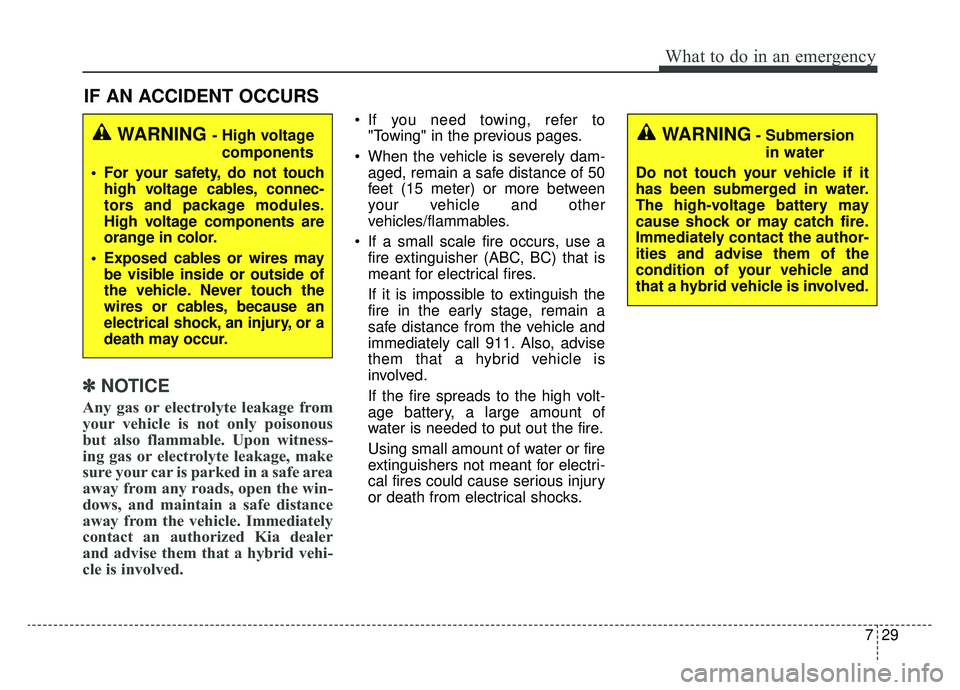
WARNING - High voltage
components
For your safety, do not touch high voltage cables, connec-
tors and package modules.
High voltage components are
orange in color.
Exposed cables or wires may be visible inside or outside of
the vehicle. Never touch the
wires or cables, because an
electrical shock, an injury, or a
death may occur.WARNING- Submersion
in water
Do not touch your vehicle if it
has been submerged in water.
The high-voltage battery may
cause shock or may catch fire.
Immediately contact the author-
ities and advise them of the
condition of your vehicle and
that a hybrid vehicle is involved.
Page 428 of 553
Maintenance
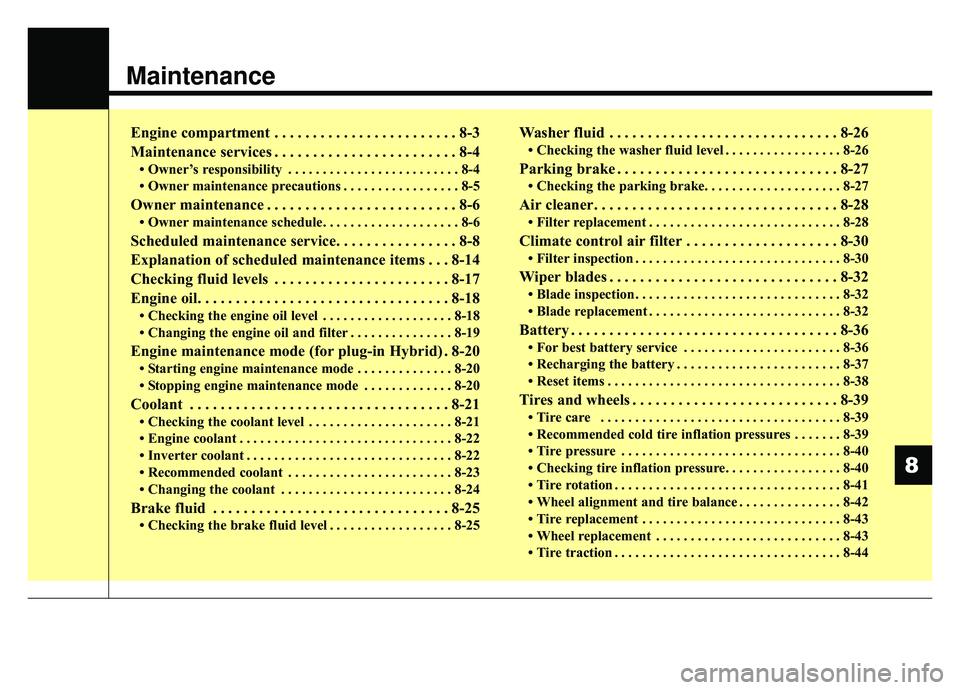
Engine compartment . . . . . . . . . . . . . . . . . . . . . . . . 8-3
Maintenance services . . . . . . . . . . . . . . . . . . . . . . . . 8-4
• Owner’s responsibility . . . . . . . . . . . . . . . . . . . . . . . . . 8-4
• Owner maintenance precautions . . . . . . . . . . . . . . . . . 8-5
Owner maintenance . . . . . . . . . . . . . . . . . . . . . . . . . 8-6
• Owner maintenance schedule. . . . . . . . . . . . . . . . . . . . 8-6
Scheduled maintenance service. . . . . . . . . . . . . . . . 8-8
Explanation of scheduled maintenance items . . . 8-14
Checking fluid levels . . . . . . . . . . . . . . . . . . . . . . . 8-17
Engine oil. . . . . . . . . . . . . . . . . . . . . . . . . . . . . . . . . 8-18
• Checking the engine oil level . . . . . . . . . . . . . . . . . . . 8-18
• Changing the engine oil and filter . . . . . . . . . . . . . . . 8-19
Engine maintenance mode (for plug-in Hybrid) . 8-20
• Starting engine maintenance mode . . . . . . . . . . . . . . 8-20
• Stopping engine maintenance mode . . . . . . . . . . . . . 8-20
Coolant . . . . . . . . . . . . . . . . . . . . . . . . . . . . . . . . . . 8-21\
• Checking the coolant level . . . . . . . . . . . . . . . . . . . . . 8-21
• Engine coolant . . . . . . . . . . . . . . . . . . . . . . . . . . . . . . . 8-22
• Inverter coolant . . . . . . . . . . . . . . . . . . . . . . . . . . . . . . 8-22
• Recommended coolant . . . . . . . . . . . . . . . . . . . . . . . . 8-23
• Changing the coolant . . . . . . . . . . . . . . . . . . . . . . . . . 8-24
Brake fluid . . . . . . . . . . . . . . . . . . . . . . . . . . . . . . . 8-25
• Checking the brake fluid level . . . . . . . . . . . . . . . . . . 8-25
Washer fluid . . . . . . . . . . . . . . . . . . . . . . . . . . . . . . 8-26
• Checking the washer fluid level . . . . . . . . . . . . . . . . . 8-26
Parking brake . . . . . . . . . . . . . . . . . . . . . . . . . . . . . 8-27
• Checking the parking brake. . . . . . . . . . . . . . . . . . . . 8-27
Air cleaner. . . . . . . . . . . . . . . . . . . . . . . . . . . . . . . . 8-28
• Filter replacement . . . . . . . . . . . . . . . . . . . . . . . . . . . . 8-28
Climate control air filter . . . . . . . . . . . . . . . . . . . . 8-30
• Filter inspection . . . . . . . . . . . . . . . . . . . . . . . . . . . . . . 8-30
Wiper blades . . . . . . . . . . . . . . . . . . . . . . . . . . . . . . 8-32
• Blade inspection . . . . . . . . . . . . . . . . . . . . . . . . . . . . . . 8-32
• Blade replacement . . . . . . . . . . . . . . . . . . . . . . . . . . . . 8-32
Battery . . . . . . . . . . . . . . . . . . . . . . . . . . . . . . . . . . . 8-\
36
• For best battery service . . . . . . . . . . . . . . . . . . . . . . . 8-36
• Recharging the battery . . . . . . . . . . . . . . . . . . . . . . . . 8-37
• Reset items . . . . . . . . . . . . . . . . . . . . . . . . . . . . . . . . . . 8-38\
Tires and wheels . . . . . . . . . . . . . . . . . . . . . . . . . . . 8-39
• Tire care . . . . . . . . . . . . . . . . . . . . . . . . . . . . . . . . . . . 8-\
39
• Recommended cold tire inflation pressures . . . . . . . 8-39
• Tire pressure . . . . . . . . . . . . . . . . . . . . . . . . . . . . . . . . 8-40
• Checking tire inflation pressure. . . . . . . . . . . . . . . . . 8-40
• Tire rotation . . . . . . . . . . . . . . . . . . . . . . . . . . . . . . . . . 8-41
• Wheel alignment and tire balance . . . . . . . . . . . . . . . 8-42
• Tire replacement . . . . . . . . . . . . . . . . . . . . . . . . . . . . . 8-43
• Wheel replacement . . . . . . . . . . . . . . . . . . . . . . . . . . . 8-43
• Tire traction . . . . . . . . . . . . . . . . . . . . . . . . . . . . . . . . . 8-44
8
Page 433 of 553
Maintenance
68
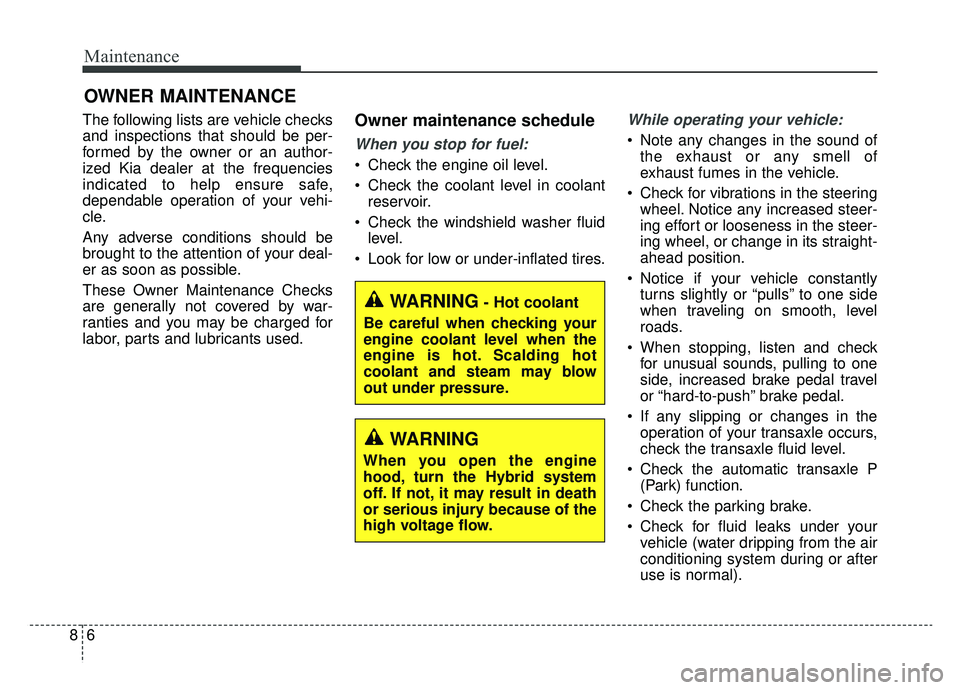
OWNER MAINTENANCE
The following lists are vehicle checks
and inspections that should be per-
formed by the owner or an author-
ized Kia dealer at the frequencies
indicated to help ensure safe,
dependable operation of your vehi-
cle.
Any adverse conditions should be
brought to the attention of your deal-
er as soon as possible.
These Owner Maintenance Checks
are generally not covered by war-
ranties and you may be charged for
labor, parts and lubricants used.Owner maintenance schedule
When you stop for fuel:
Check the engine oil level.
Check the coolant level in coolantreservoir.
Check the windshield washer fluid level.
Look for low or under-inflated tires.
While operating your vehicle:
Note any changes in the sound of the exhaust or any smell of
exhaust fumes in the vehicle.
Check for vibrations in the steering wheel. Notice any increased steer-
ing effort or looseness in the steer-
ing wheel, or change in its straight-
ahead position.
Notice if your vehicle constantly turns slightly or “pulls” to one side
when traveling on smooth, level
roads.
When stopping, listen and check for unusual sounds, pulling to one
side, increased brake pedal travel
or “hard-to-push” brake pedal.
If any slipping or changes in the operation of your transaxle occurs,
check the transaxle fluid level.
Check the automatic transaxle P (Park) function.
Check the parking brake.
Check for fluid leaks under your vehicle (water dripping from the air
conditioning system during or after
use is normal).
WARNING- Hot coolant
Be careful when checking your
engine coolant level when the
engine is hot. Scalding hot
coolant and steam may blow
out under pressure.
WARNING
When you open the engine
hood, turn the Hybrid system
off. If not, it may result in death
or serious injury because of the
high voltage flow.
Page 436 of 553
89
Maintenance
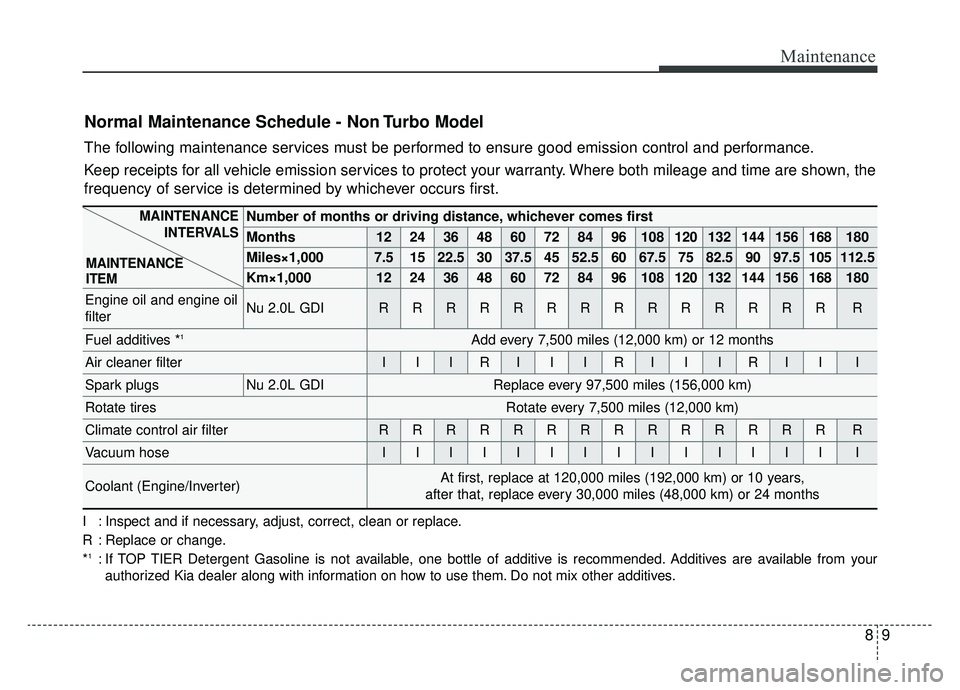
Normal Maintenance Schedule - Non Turbo Model
The following maintenance services must be performed to ensure good emission control and performance.
Keep receipts for all vehicle emission services to protect your warranty. Where both mileage and time are shown, the
frequency of service is determined by whichever occurs first.
Number of months or driving distance, whichever comes first
Months1224364860728496108120132144156168180
Miles×1,0007.51522.530 37.5 45 52.5 60 67.5 75 82.5 90 97.5 105 112.5
Km×1,00012 24 36 48 60 72 84 96 108 120 132 144 156 168 180
Engine oil and engine oil
filterNu 2.0L GDIRRRRRRRRRRRRRRR
Fuel additives *1Add every 7,500 miles (12,000 km) or 12 months
Air cleaner filterIIIRIIIRIIIRIII
Spark plugsNu 2.0L GDIReplace every 97,500 miles (156,000 km)
Rotate tiresRotate every 7,500 miles (12,000 km)
Climate control air filterRRRRRRRRRRRRRRR
Vacuum hoseIIIIIIIIIIIIIII
Coolant (Engine/Inverter)At first, replace at 120,000 miles (192,000 km) or 10 years,
after that, replace every 30,000 miles (48,000 km) or 24 months
MAINTENANCE INTERVALS
MAINTENANCE
ITEM
I : Inspect and if necessary, adjust, correct, clean or replace.
R : Replace or change.
*
1: If TOP TIER Detergent Gasoline is not available, one bottle of additive is recommended. Additives are available from your authorized Kia dealer along with information on how to use them. Do not mix other additives.
Page 438 of 553
811
Maintenance
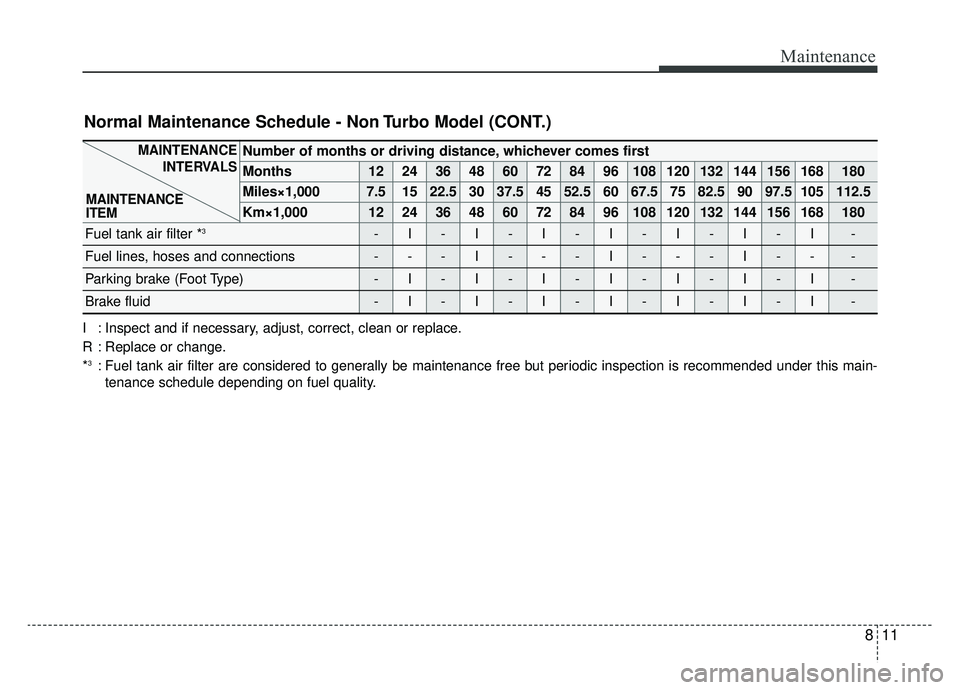
Number of months or driving distance, whichever comes first
Months1224364860728496108120132144156168180
Miles×1,0007.51522.530 37.5 45 52.5 60 67.5 75 82.5 90 97.5 105 112.5
Km×1,00012 24 36 48 60 72 84 96 108 120 132 144 156 168 180
Fuel tank air filter *3-I-I-I-I-I-I-I-
Fuel lines, hoses and connections---I---I---I---
Parking brake (Foot Type)-I-I-I-I-I-I-I-
Brake fluid-I-I-I-I-I-I-I-
MAINTENANCEINTERVALS
MAINTENANCE
ITEM
Normal Maintenance Schedule - Non Turbo Model (CONT.)
I : Inspect and if necessary, adjust, correct, clean or replace.
R : Replace or change.
*
3: Fuel tank air filter are considered to generally be maintenance free but periodic inspection is recommended under this main- tenance schedule depending on fuel quality.
Page 439 of 553
Maintenance
12
8
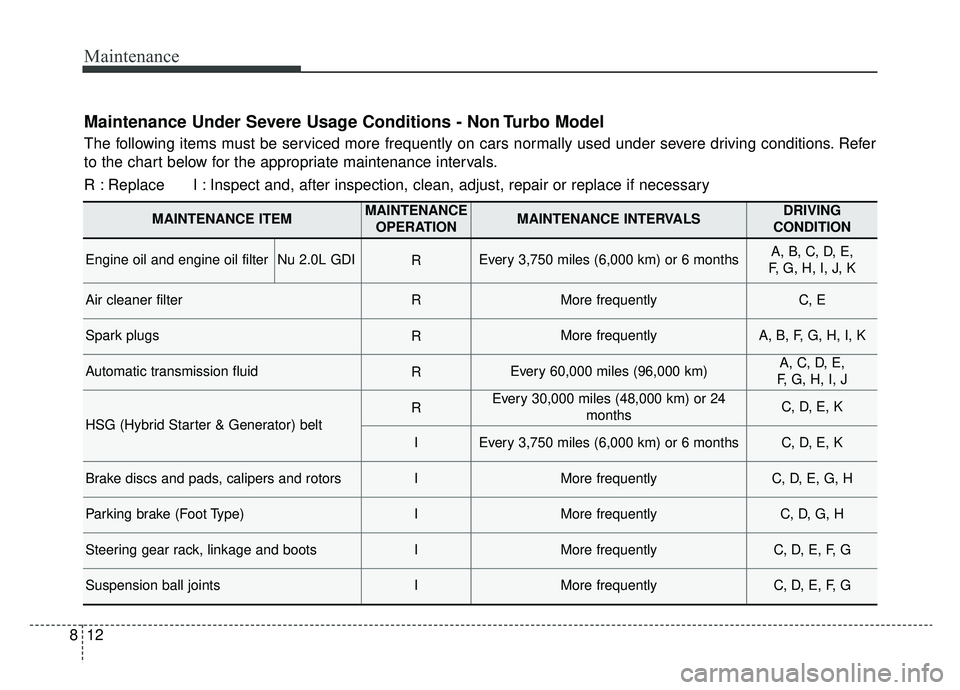
Maintenance Under Severe Usage Conditions - Non Turbo Model
The following items must be serviced more frequently on cars normally used under severe driving conditions. Refer
to the chart below for the appropriate maintenance intervals.
R : Replace I : Inspect and, after inspection, clean, adjust, repair or replace if neces\
sary
MAINTENANCE ITEMMAINTENANCE
OPERATIONMAINTENANCE INTERVALSDRIVING
CONDITION
Engine oil and engine oil filterNu 2.0L GDIREvery 3,750 miles (6,000 km) or 6 monthsA, B, C, D, E,
F, G, H, I, J, K
Air cleaner filterRMore frequentlyC, E
Spark plugs RMore frequentlyA, B, F, G, H, I, K
Automatic transmission fluidREvery 60,000 miles (96,000 km)A, C, D, E,
F, G, H, I, J
HSG (Hybrid Starter & Generator) belt
REvery 30,000 miles (48,000 km) or 24 monthsC, D, E, K
IEvery 3,750 miles (6,000 km) or 6 monthsC, D, E, K
Brake discs and pads, calipers and rotorsIMore frequentlyC, D, E, G, H
Parking brake (Foot Type)IMore frequentlyC, D, G, H
Steering gear rack, linkage and bootsIMore frequentlyC, D, E, F, G
Suspension ball jointsIMore frequentlyC, D, E, F, G