battery KIA Rio 2010 2.G Owner's Guide
[x] Cancel search | Manufacturer: KIA, Model Year: 2010, Model line: Rio, Model: KIA Rio 2010 2.GPages: 236, PDF Size: 4.54 MB
Page 214 of 236
723
Maintenance
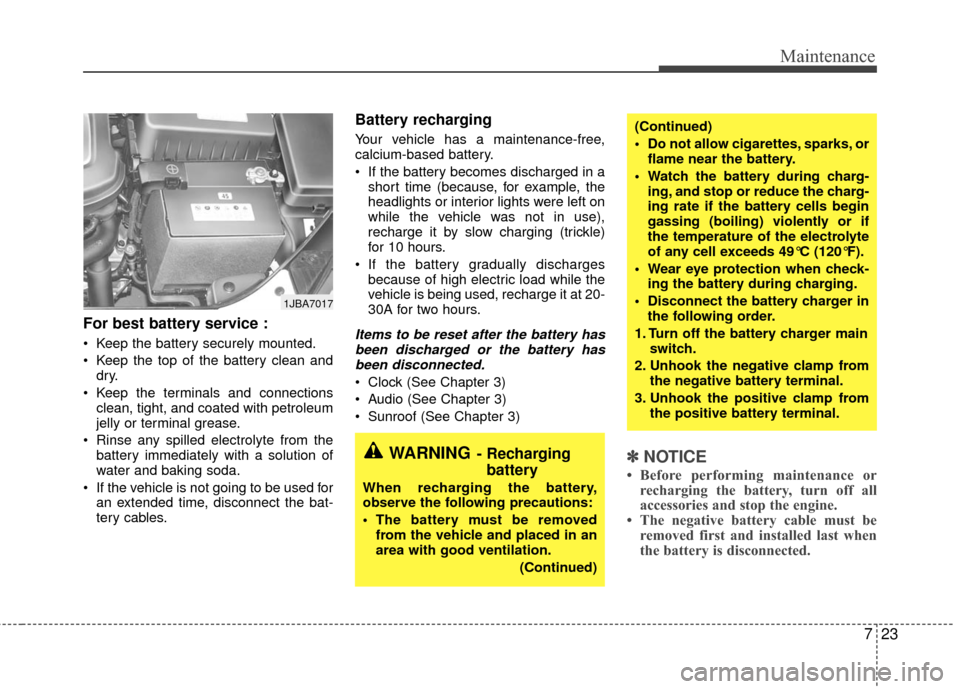
For best battery service :
Keep the battery securely mounted.
Keep the top of the battery clean anddry.
Keep the terminals and connections clean, tight, and coated with petroleum
jelly or terminal grease.
Rinse any spilled electrolyte from the battery immediately with a solution of
water and baking soda.
If the vehicle is not going to be used for an extended time, disconnect the bat-
tery cables.
Battery recharging
Your vehicle has a maintenance-free,
calcium-based battery.
If the battery becomes discharged in ashort time (because, for example, the
headlights or interior lights were left on
while the vehicle was not in use),
recharge it by slow charging (trickle)
for 10 hours.
If the battery gradually discharges because of high electric load while the
vehicle is being used, recharge it at 20-
30A for two hours.
Items to be reset after the battery hasbeen discharged or the battery hasbeen disconnected.
Clock (See Chapter 3)
Audio (See Chapter 3)
Sunroof (See Chapter 3)
✽ ✽ NOTICE
• Before performing maintenance or
recharging the battery, turn off all
accessories and stop the engine.
• The negative battery cable must be removed first and installed last when
the battery is disconnected.
1JBA7017
WARNING- Recharging
battery
When recharging the battery,
observe the following precautions:
The battery must be removed
from the vehicle and placed in an
area with good ventilation.
(Continued)
(Continued)
Do not allow cigarettes, sparks, orflame near the battery.
Watch the battery during charg- ing, and stop or reduce the charg-
ing rate if the battery cells begin
gassing (boiling) violently or if
the temperature of the electrolyte
of any cell exceeds 49°C (120°F).
Wear eye protection when check- ing the battery during charging.
Disconnect the battery charger in the following order.
1. Turn off the battery charger main switch.
2. Unhook the negative clamp from the negative battery terminal.
3. Unhook the positive clamp from the positive battery terminal.
Page 231 of 236
83
Specifications
Weights
Refer to the label describing GVWR & GAWR weights
attached to your vehicle.
(see page 5-10, Label information)
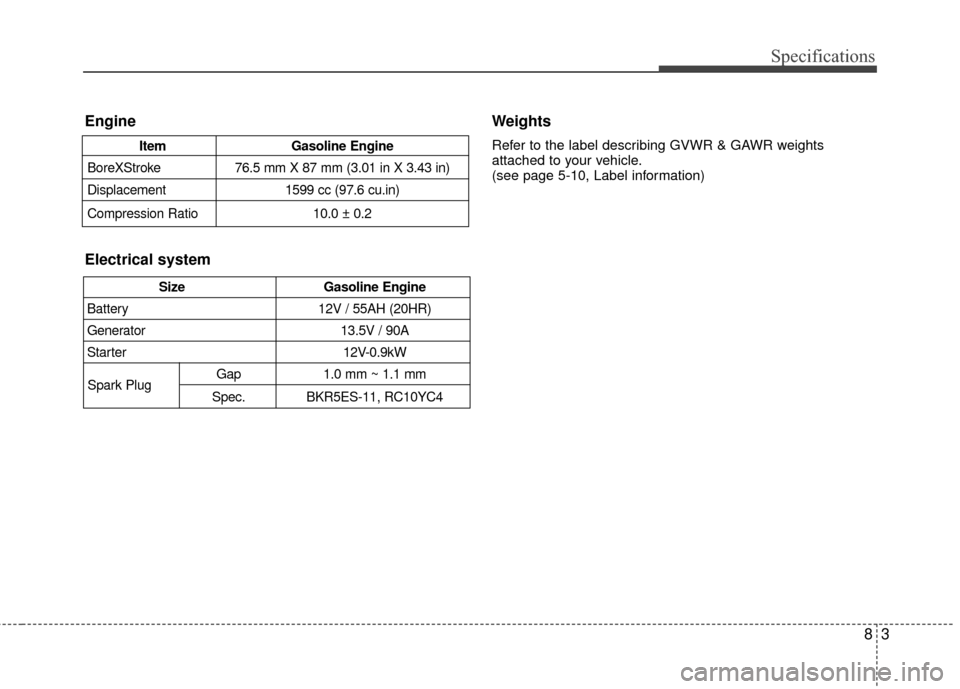
SizeGasoline Engine
Battery 12V / 55AH (20HR)
Generator 13.5V / 90A
Starter 12V-0.9kW
Gap 1.0 mm ~ 1.1 mm
Spec. BKR5ES-11, RC10YC4
Spark Plug
Engine
Electrical system
Item Gasoline Engine
BoreXStroke 76.5 mm X 87 mm (3.01 in X 3.43 in)
Displacement 1599 cc (97.6 cu.in)
Compression Ratio 10.0 ± 0.2
Page 234 of 236

Index
29
Air bags-supplemental restraint system··················\
·······3-49
Air cleaner ··················\
··················\
··················\
···············7-18
Antenna ··················\
··················\
··················\
··················\
··3-80
Audio remote control ··················\
··················\
·················3-83\
Audio system ··················\
··················\
··················\
···········3-84
Automatic transaxle··················\
··················\
············4-6, 7-16
Battery··················\
··················\
··················\
··················\
····7-22
Before driving ··················\
··················\
··················\
············5-4
Brake fluid ··················\
··················\
··················\
···············7-14
Brake system··················\
··················\
··················\
··············4-9
Climate control air filter ··················\
··················\
············7-19
Climate control system ··················\
··················\
··············4-39
Cruise control system ··················\
··················\
················4-14
Defroster ··················\
··················\
··················\
··················\
4-38
Door locks··················\
··················\
··················\
··················\
3-9
Drive belts··················\
··················\
··················\
················7-15Electrical circuit protection ··················\
··················\
·········6-6
Emergency starting ··················\
··················\
··················\
····6-4
Emission control system ··················\
··················\
··············5-2
Engine compartment ··················\
··················\
············2-4, 7-9
Engine cooling system ··················\
··················\
···············7-12
Engine oil ··················\
··················\
··················\
·················7-11
Exterior care··················\
··················\
··················\
·············7-34
Fuel filler lid ··················\
··················\
··················\
············3-67
Fuel requirements ··················\
··················\
··················\
······5-2
Gauges ··················\
··················\
··················\
··················\
···4-21
Hazard warning flasher··················\
··················\
··············4-38
Hood··················\
··················\
··················\
··················\
·······3-66
How to use this manual ··················\
··················\
···············1-2
If you have a flat tire ··················\
··················\
·················6-17\
Ignition switch ··················\
··················\
··················\
···········4-2
Immobilizer system ··················\
··················\
··················\
···3-7
AE
B
C
D
F
G
H
I