coolant level KIA RIO HATCHBACK 2018 User Guide
[x] Cancel search | Manufacturer: KIA, Model Year: 2018, Model line: RIO HATCHBACK, Model: KIA RIO HATCHBACK 2018Pages: 492, PDF Size: 10.36 MB
Page 404 of 492
Maintenance
54
8
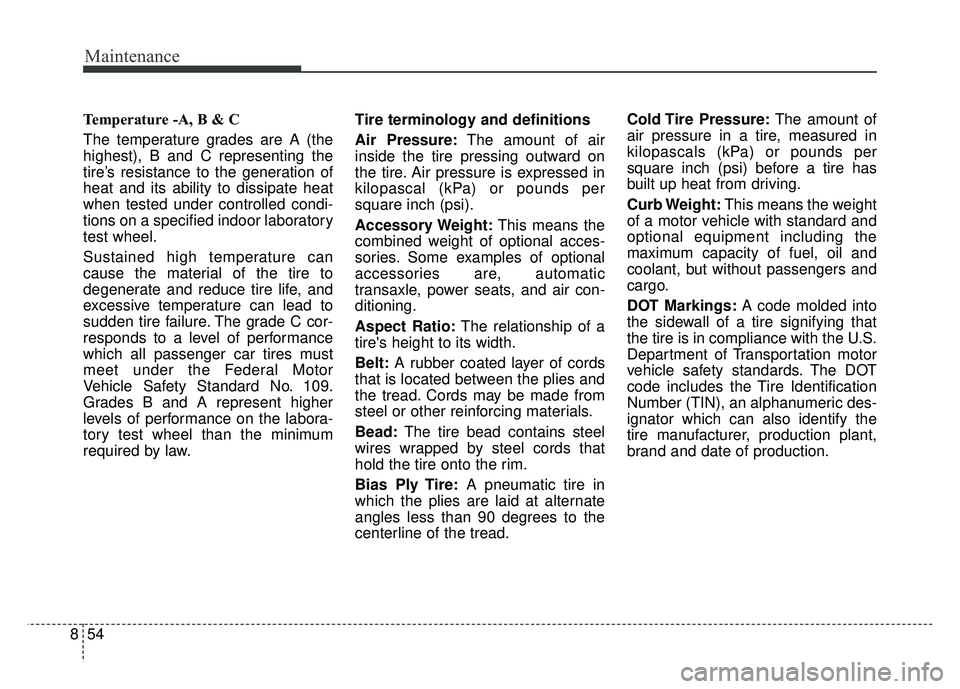
Temperature -A, B & C
The temperature grades are A (the
highest), B and C representing the
tire’s resistance to the generation of
heat and its ability to dissipate heat
when tested under controlled condi-
tions on a specified indoor laboratory
test wheel.
Sustained high temperature can
cause the material of the tire to
degenerate and reduce tire life, and
excessive temperature can lead to
sudden tire failure. The grade C cor-
responds to a level of performance
which all passenger car tires must
meet under the Federal Motor
Vehicle Safety Standard No. 109.
Grades B and A represent higher
levels of performance on the labora-
tory test wheel than the minimum
required by law. Tire terminology and definitions
Air Pressure:
The amount of air
inside the tire pressing outward on
the tire. Air pressure is expressed in
kilopascal (kPa) or pounds per
square inch (psi).
Accessory Weight: This means the
combined weight of optional acces-
sories. Some examples of optional
accessories are, automatic
transaxle, power seats, and air con-
ditioning.
Aspect Ratio: The relationship of a
tire's height to its width.
Belt: A rubber coated layer of cords
that is located between the plies and
the tread. Cords may be made from
steel or other reinforcing materials.
Bead: The tire bead contains steel
wires wrapped by steel cords that
hold the tire onto the rim.
Bias Ply Tire: A pneumatic tire in
which the plies are laid at alternate
angles less than 90 degrees to the
centerline of the tread. Cold Tire Pressure:
The amount of
air pressure in a tire, measured in
kilopascals (kPa) or pounds per
square inch (psi) before a tire has
built up heat from driving.
Curb Weight: This means the weight
of a motor vehicle with standard and
optional equipment including the
maximum capacity of fuel, oil and
coolant, but without passengers and
cargo.
DOT Markings: A code molded into
the sidewall of a tire signifying that
the tire is in compliance with the U.S.
Department of Transportation motor
vehicle safety standards. The DOT
code includes the Tire Identification
Number (TIN), an alphanumeric des-
ignator which can also identify the
tire manufacturer, production plant,
brand and date of production.
Page 481 of 492

I3
Index
Battery........................................................................\
....8-42For best battery service ..............................................8-42
Recharging the battery ................................................8-43
Reset items ..................................................................8-44
Battery saver function ....................................................4-87
Battery saver function ....................................................4-87
Before driving ..................................................................6-4
Bonnet see the hood ......................................................4-36
Brake system..................................................................6-23 Parking brake ..............................................................6-25
Anti-lock brake system (ABS)....................................6-27
Electronic stability control (ESC) ..............................6-29
Vehicle stability management (VSM) ........................6-34
Hill-start assist control (HAC) ....................................6-33
Brake/clutch fluid ..........................................................8-31 Checking the brake/clutch fluid level ........................8-31
Bulb replacement ..........................................................8-75
Bulb replacement precaution ........................................8-75
Bulb wattage ....................................................................9-3
California Perchlorate notice ......................................8-112
Camera (Rear view) ......................................................4-86
Capacities (Lubricants) ....................................................9-7
Care Care of seat belts ........................................................3-22
Tire care ......................................................................8-\
45 Exterior care ..............................................................8-101
Interior care ..............................................................8-106
Center console storage ................................................4-128
Central door lock switch................................................4-18
Checking fluid levels ....................................................8-25
Checking tire inflation pressure ....................................8-46
Child restraint system ....................................................3-23 Placing a passenger seat belt into the auto lock mode .. 3-25
Securing a child restraint seat with child seat lower anchor system ..........................................................3-28
Securing a child restraint seat with tether anchorage system ......................................................................3-\
27
Child-protector rear door lock ......................................4-20
Climate control air filter ................................................8-36 Filter inspection ..........................................................8-36
Clothes hanger ............................................................4-135
Combined instrument, see instrument cluster ..............4-52
Consumer assistance (U.S. ONLY) ..............................9-12
Coolant ........................................................................\
..8-28
Cooling fluid, see engine coolant ..................................8-28
Covering shelf ..............................................................4-137
Crankcase emission control system ............................8-109
Cruise control system ....................................................6-48 Cruise control switch ..................................................6-48
To set cruise control speed..........................................6-49
To increase cruise control set speed ..........................6-50
To decrease the cruising speed ..................................6-50
To temporarily accelerate with the cruise control on ..6-50
C
Page 482 of 492
Index
4I
To cancel cruise control ..............................................6-51
To resume cruising speed at more than approximately 20 mph (3 0km/h) ....................................................6-51
To turn cruise control off ............................................6-52
Cup holder ..................................................................4-131
Curtain air bag ..............................................................3-48
Dashboard illumination, see instrument panel illumination..................................................................4-53
Dashboard, see instrument cluster ................................4-52
Day/night rearview mirror ............................................4-49
Declaration of Conformity ............................................5-39
Defogging (Windshield) ..............................................4-123
Defroster (Rear window) ............................................4-103
Defrosting (Windshield) ..............................................4-123
Dimensions ......................................................................9-\
2
Display illumination, see instrument panel illumination ..4-53
Displays, see instrument cluster ....................................4-52
Door locks......................................................................4-\
17 from outside the vehicle..............................................4-17
from inside the vehicle................................................4-18
Central door lock switch ............................................4-18
Child-protector rear door lock ....................................4-20
Driver's and passenger's front air bag ............................3-44
Driving at night ..............................................................6-58
Driving in flooded areas ................................................6-59 Driving in the rain..........................................................6-59
Driving off-road ............................................................6-60
DRL (Bulb type) bulb replacement ..............................8-85
Economical operation ....................................................6-55
Electric power steering ..................................................4-46
Electrical equipment (U.S. ONLY) ..............................9-15
Electronic stability control (ESC) ................................6-29
Emergency starting ..........................................................7-5
Jump starting ................................................................7-5
Emergency while driving ................................................7-3
Emission control system ..............................................8-109 Crankcase emission control system ..........................8-109
Evaporative emission control (including ORVR: Onboard Refueling Vapor Recovery) system ........8-109
Exhaust emission control system ..............................8-110
Engine ........................................................................\
......9-2
Engine compartment ........................................................8-4
Engine coolant ..............................................................8-28 Checking the coolant level..........................................8-28
Changing the coolant ..................................................8-30
Engine coolant temperature gauge ................................4-55
Engine number ..............................................................9-11
Engine oil ......................................................................8-\
26 Checking the engine oil level ....................................8-26
Changing the engine oil and filter ..............................8-27
D
E