warning light KIA Soul 2012 1.G Owner's Manual
[x] Cancel search | Manufacturer: KIA, Model Year: 2012, Model line: Soul, Model: KIA Soul 2012 1.GPages: 393, PDF Size: 8.76 MB
Page 5 of 393

Index
2I
Active eco system ··················\
··················\
··················\
····5-41
Advanced lighting speaker··················\
··················\
·······4-111
Air bag warning label ··················\
··················\
················3-56
Air bag warning light··················\
··················\
·················3-35\
Air bags··················\
··················\
··················\
··················\
··3-32Air bag warning label··················\
··················\
············3-56
Air bag warning light ··················\
··················\
············3-35
Curtain air bag··················\
··················\
··················\
·····3-48
Driver's and passenger's front air bag ··················\
·····3-44
Occupant detection system··················\
··················\
····3-38
Side impact air bag··················\
··················\
················3-47
SRS components and functions ··················\
··············3-36
Air cleaner ··················\
··················\
··················\
···············7-34
Antenna (Roof) ··················\
··················\
··················\
······4-109
Anti-lock brake system (ABS) ··················\
··················\
··5-28
Appearance care··················\
··················\
··················\
·······7-66 Exterior care ··················\
··················\
··················\
········7-66
Interior care ··················\
··················\
··················\
·········7-71
Armrest(front) ··················\
··················\
··················\
············3-9
Ashtray ··················\
··················\
··················\
··················\
·4-100
Audio system ··················\
··················\
··················\
·········4-109 Advanced lighting speaker ··················\
··················\
··4-111
Aux, USB and iPod ··················\
··················\
·············4-111
Roof antenna ··················\
··················\
··················\
·····4-109
Steering wheel audio control··················\
·················4-110 Automatic climate control system ··················\
···············4-85
Air conditioning ··················\
··················\
··················\
··4-92
Automatic heating and air conditioning··················\
··4-87
Manual heating and air conditioning ··················\
······4-88
Automatic transaxle ··················\
··················\
··················\
·5-20 Sports mode··················\
··················\
··················\
·········5-22
Automatic transaxle shift position indicator ·················4-49\
Aux, USB and iPod··················\
··················\
··················\
4-111
Base curb weight ··················\
··················\
··················\
·····5-57
Battery··················\
··················\
··················\
··················\
····7-38
Battery saver function··················\
··················\
················4-65
Before driving ··················\
··················\
··················\
············5-3
Bottle holders, see cup holders ··················\
··················\
4-101
Brake system··················\
··················\
··················\
············5-25 Anti-lock brake system (ABS) ··················\
················5-28
Electronic stability control(ESC) ··················\
············5-30
Hill-start assist control ··················\
··················\
··········5-33
Parking brake ··················\
··················\
··················\
······5-26
Power brakes ··················\
··················\
··················\
·······5-25
Vehicle stability management ··················\
·················5-34\
Brakes/clutch fluid ··················\
··················\
··················\
···7-31
Bulb wattage ··················\
··················\
··················\
··············8-2
Button start/stop, see engine start/stop button·················5-8
A
B
Page 8 of 393

I5
Index
Fuses ··················\
··················\
··················\
··················\
······7-54Fuse/relay panel description··················\
··················\
··7-58
Instrument panel fuse ··················\
··················\
············7-55
Memory fuse ··················\
··················\
··················\
·······7-56
Gauge Engine temperature gauge··················\
··················\
·····4-42
Fuel gauge ··················\
··················\
··················\
···········4-43
GAW (Gross axle weight) ··················\
··················\
·········5-57
GAWR (Gross axle weight rating) ··················\
··············5-57
Glove box··················\
··················\
··················\
·················4-98\
GVW (Gross vehicle weight) ··················\
··················\
····5-57
GVWR (Gross vehicle weight rating) ··················\
·········5-57
Hazard warning flasher··················\
··················\
··············4-64
Hazardous driving conditions ··················\
··················\
····5-44
Headlamp escort ··················\
··················\
··················\
······4-65
Headrest(front) ··················\
··················\
··················\
···········3-6
Headrest(rear) ··················\
··················\
··················\
··········3-12
Hight adjustment··················\
··················\
··················\
······3-16
Highway driving ··················\
··················\
··················\
······5-48
Hill-start assist control ··················\
··················\
···············5-33
Hood··················\
··················\
··················\
··················\
·······4-25
Horn ··················\
··················\
··················\
··················\
·······4-35
How to use this manual ··················\
··················\
···············1-2 Indicator symbols on the instrument cluster ··················\
·1-6
Indicators and warnings ··················\
··················\
·············4-50
Inside rearview mirror ··················\
··················\
···············4-36
Instrument cluster ··················\
··················\
··················\
····4-40
Automatic transaxle shift position indicator ·············4-49
Engine temperature gauge··················\
··················\
·····4-42
Fuel gauge ··················\
··················\
··················\
···········4-43
Instrument panel illumination ··················\
·················4-40\
Manual transaxle shift indicator··················\
··············4-47
Odometer ··················\
··················\
··················\
·············4-43
Outside temperature ··················\
··················\
··············4-48
Speedometer ··················\
··················\
··················\
········4-41
Tachometer ··················\
··················\
··················\
··········4-41
Trip computer ··················\
··················\
··················\
······4-44
Warning and indicators ··················\
··················\
·········4-50
Instrument panel fuse··················\
··················\
·················7-55\
Instrument panel illumination··················\
··················\
····4-41
Instrument panel overview ··················\
··················\
··········2-3
Interior care··················\
··················\
··················\
··············7-71
Interior features··················\
··················\
··················\
······4-100 Ashtray ··················\
··················\
··················\
··············4-100
Cargo screen ··················\
··················\
··················\
······4-105
Cigarette lighter··················\
··················\
··················\
·4-100
Clothes hanger··················\
··················\
··················\
···4-103
Cup holder ··················\
··················\
··················\
·········4-101
Floor mat anchor(s) ··················\
··················\
·············4-104
Luggage net ··················\
··················\
··················\
·······4-104
G
H
I
Page 9 of 393

Index
6I
Power outlet ··················\
··················\
··················\
······4-102
Shopping bag holder ··················\
··················\
···········4-103
Sunvisor··················\
··················\
··················\
·············4-101
Interior light ··················\
··················\
··················\
·············4-72
Interior overview ··················\
··················\
··················\
·······2-2
ISG (Idle stop and go) system ··················\
··················\
···5-13
Jump starting··················\
··················\
··················\
··············6-5
Key position ··················\
··················\
··················\
···············5-5
Keys ··················\
··················\
··················\
··················\
·········4-2
Label Air bag warning label··················\
··················\
············3-56
Refrigerant label ··················\
··················\
··················\
····8-8
Tire sidewall labeling ··················\
··················\
············7-46
Tire specification and pressure label··················\
·········8-8
Vehicle certification label··················\
··················\
········8-7
Lighting··················\
··················\
··················\
··················\
··4-65 Battery saver function ··················\
··················\
···········4-65
Headlamp escort ··················\
··················\
··················\
··4-65 Lower anchor ··················\
··················\
··················\
···········3-29
Lubricants and capacities··················\
··················\
·············8-4
Luggage box ··················\
··················\
··················\
············4-99
Luggage net ··················\
··················\
··················\
···········4-104
Maintenance
Explanation of scheduled maintenance items ···········7-22
Maintenance services ··················\
··················\
··············7-4
Maintenance under severe usage conditions ·············7-21
Normal maintenance schedule ··················\
··················\
7-9
Owner maintenance··················\
··················\
·················7-6
Scheduled maintenance service ··················\
················7-8
Tire maintenance ··················\
··················\
··················\
·7-46
Maintenance schedule··················\
··················\
··················\
7-8 Maintenance under severe usage conditions ·············7-21
Normal maintenance schedule ··················\
··················\
7-9
Maintenance services ··················\
··················\
··················\
·7-4
Manual climate control system··················\
··················\
··4-76 Air conditioning ··················\
··················\
··················\
··4-81
Climate control air filter··················\
··················\
········4-84
Heating and air conditioning··················\
··················\
·4-77
Manual transaxle··················\
··················\
··················\
······5-17
Manual transaxle shift indicator ··················\
··················\
4-49
Memory fuse ··················\
··················\
··················\
············7-56
M
J
K
L
Page 16 of 393
13
Introduction
Your new vehicle is designed to use
only unleaded fuel having a pump
octane number ((R+M)/2) of 87
(Research Octane Number 91) or
higher.
Your new vehicle is designed to
obtain maximum performance with
UNLEADED FUEL, as well as mini-
mize exhaust emissions and spark
plug fouling.
Never add any fuel system cleaning
agents to the fuel tank other than
what has been specified. (Consult an
authorized Kia dealer for details.)
✽ ✽NOTICE
Tighten the cap until it clicks one
time, otherwise the fuel cap open
warning indicator light will illu-
minate.
Gasoline containing alcohol and
methanol
Gasohol, a mixture of gasoline and
ethanol (also known as grain alco-
hol), and gasoline or gasohol con-
taining methanol (also known as
wood alcohol) are being marketed
along with or instead of leaded or
unleaded gasoline.
Do not use gasohol containing more
than 10% ethanol, and do not use
gasoline or gasohol containing any
methanol. Either of these fuels may
cause drivability problems and dam-
age to the fuel system.
Discontinue using gasohol of any
kind if drivability problems occur.
Vehicle damage or drivability prob-
lems may not be covered by the
manufacturer’s warranty if they result
from the use of:
1.Gasohol containing more than 10% ethanol.
2.Gasoline or gasohol containing methanol.
3.Leaded fuel or leaded gasohol.
FUEL REQUIREMENTS
WARNING - Refueling
• Do not "top off" after the noz- zle automatically shuts off.
Attempts to force more fuel
into the tank can cause fuel
overflow onto you and the
ground causing a risk of fire.
Always check that the fuel cap is installed securely to pre-
vent fuel spillage in the event
of an accident.
Page 19 of 393
Introduction
61
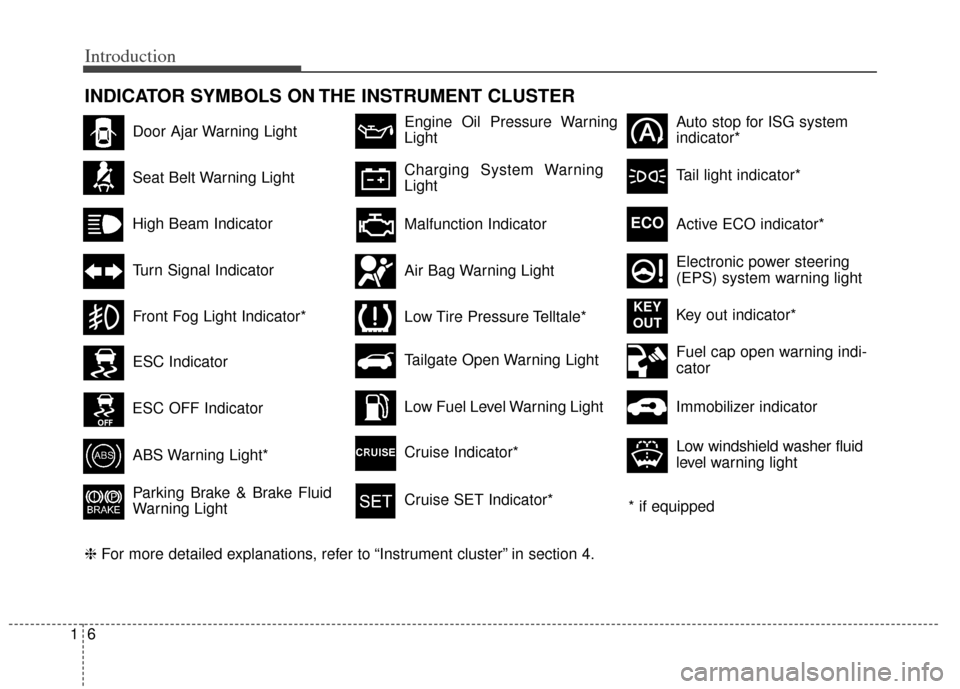
INDICATOR SYMBOLS ON THE INSTRUMENT CLUSTER
Seat Belt Warning Light
High Beam Indicator
Turn Signal Indicator
ABS Warning Light*
Parking Brake & Brake Fluid
Warning Light
Malfunction Indicator
Low Fuel Level Warning Light Tailgate Open Warning Light
❈ For more detailed explanations, refer to “Instrument cluster” in section 4.
Charging System Warning
Light
Door Ajar Warning Light
Front Fog Light Indicator*
Engine Oil Pressure Warning
Light
Air Bag Warning Light
Low Tire Pressure Telltale*
Cruise Indicator*
Cruise SET Indicator*
ESC Indicator
ESC OFF Indicator
Tail light indicator*
Electronic power steering
(EPS) system warning light
Auto stop for ISG system
indicator*
Active ECO indicator*
ECO
Key out indicator*
KEY
OUT
* if equipped
Fuel cap open warning indi-
cator
Low windshield washer fluid
level warning light Immobilizer indicator
Page 22 of 393
23
Your vehicle at a glance
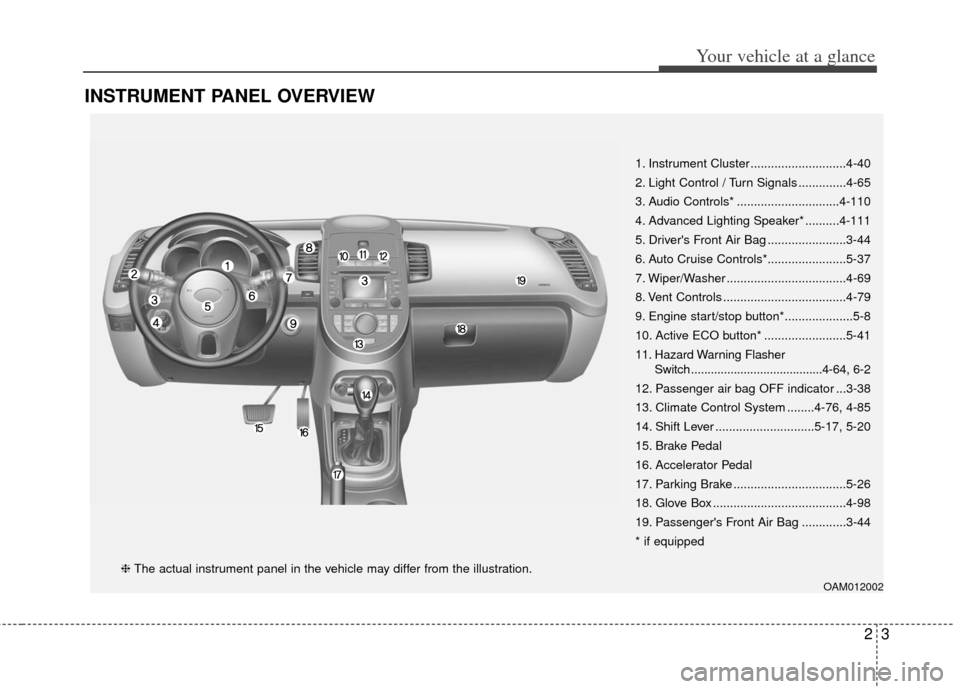
INSTRUMENT PANEL OVERVIEW
1. Instrument Cluster ............................4-40
2. Light Control / Turn Signals ..............4-65
3. Audio Controls* ..............................4-110
4. Advanced Lighting Speaker* ..........4-111
5. Driver's Front Air Bag .......................3-44
6. Auto Cruise Controls*.......................5-37
7. Wiper/Washer ...................................4-69
8. Vent Controls ....................................4-79
9. Engine start/stop button*....................5-8
10. Active ECO button* ........................5-41
11. Hazard Warning Flasher Switch ........................................4-64, 6-2
12. Passenger air bag OFF indicator ...3-38
13. Climate Control System ........4-76, 4-85
14. Shift Lever .............................5-17, 5-20
15. Brake Pedal
16. Accelerator Pedal
17. Parking Brake .................................5-26
18. Glove Box .......................................4-98
19. Passenger's Front Air Bag .............3-44
* if equipped
OAM012002
❈ The actual instrument panel in the vehicle may differ from the illustration.
Page 28 of 393
35
Safety features of your vehicle
Seatback angle
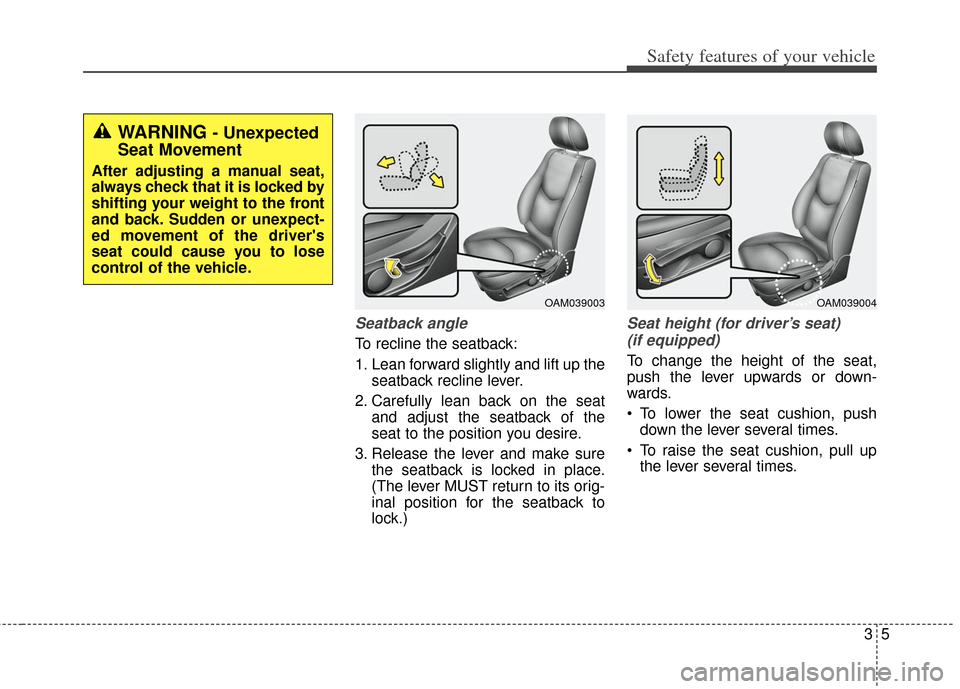
To recline the seatback:
1. Lean forward slightly and lift up theseatback recline lever.
2. Carefully lean back on the seat and adjust the seatback of the
seat to the position you desire.
3. Release the lever and make sure the seatback is locked in place.
(The lever MUST return to its orig-
inal position for the seatback to
lock.)
Seat height (for driver’s seat)
(if equipped)
To change the height of the seat,
push the lever upwards or down-
wards.
To lower the seat cushion, push down the lever several times.
To raise the seat cushion, pull up the lever several times.
OAM039004OAM039003
WARNING - Unexpected
Seat Movement
After adjusting a manual seat,
always check that it is locked by
shifting your weight to the front
and back. Sudden or unexpect-
ed movement of the driver's
seat could cause you to lose
control of the vehicle.
Page 38 of 393
315
Safety features of your vehicle
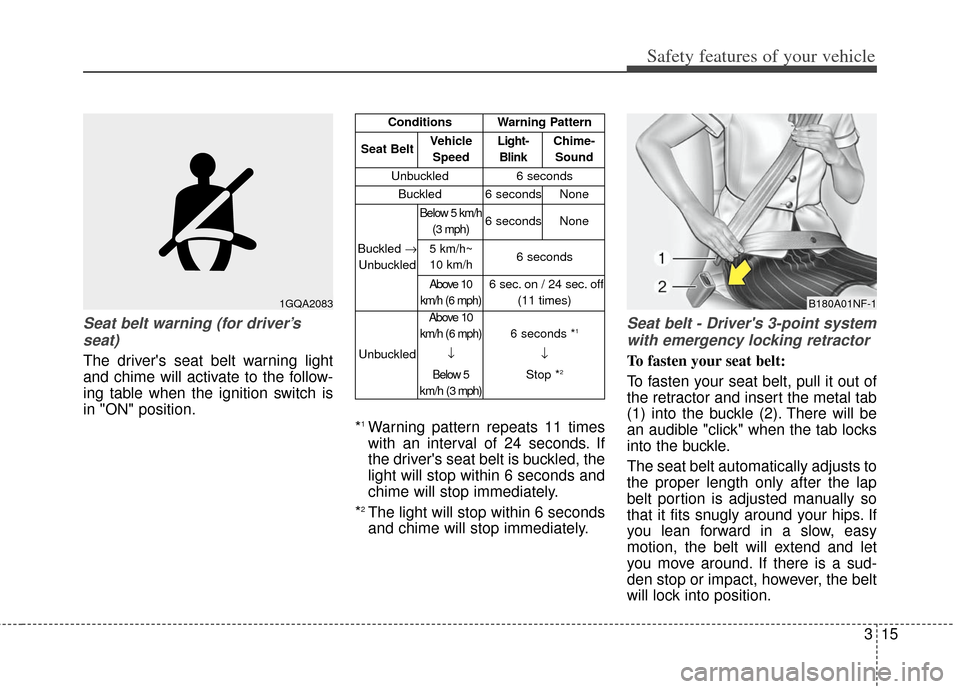
Seat belt warning (for driver’sseat)
The driver's seat belt warning light
and chime will activate to the follow-
ing table when the ignition switch is
in "ON" position.
*
1Warning pattern repeats 11 times
with an interval of 24 seconds. If
the driver's seat belt is buckled, the
light will stop within 6 seconds and
chime will stop immediately.
*
2The light will stop within 6 seconds
and chime will stop immediately.
Seat belt - Driver's 3-point system with emergency locking retractor
To fasten your seat belt:
To fasten your seat belt, pull it out of
the retractor and insert the metal tab
(1) into the buckle (2). There will be
an audible "click" when the tab locks
into the buckle.
The seat belt automatically adjusts to
the proper length only after the lap
belt portion is adjusted manually so
that it fits snugly around your hips. If
you lean forward in a slow, easy
motion, the belt will extend and let
you move around. If there is a sud-
den stop or impact, however, the belt
will lock into position.
1GQA2083
ConditionsWarning Pattern
Seat BeltVehicle
SpeedLight-BlinkChime-Sound
Unbuckled6 seconds
Buckled6 secondsNone
Buckled →
Unbuckled
Below 5 km/h
(3 mph)6 secondsNone
5 km/h~10 km/h6 seconds
Above 10
km/h (6 mph)6 sec. on / 24 sec. off (11 times)
Unbuckled
Above 10
km/h (6 mph)
↓
Below 5
km/h (3 mph)
6 seconds *1
↓
Stop *
2
B180A01NF-1
Page 43 of 393
Safety features of your vehicle
20
3
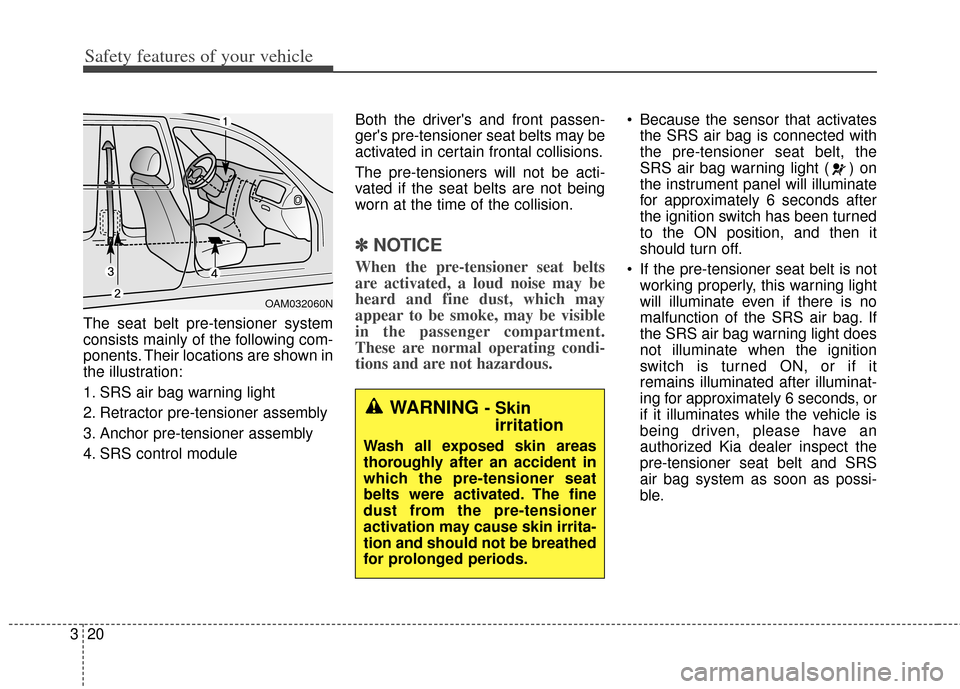
The seat belt pre-tensioner system
consists mainly of the following com-
ponents. Their locations are shown in
the illustration:
1. SRS air bag warning light
2. Retractor pre-tensioner assembly
3. Anchor pre-tensioner assembly
4. SRS control module Both the driver's and front passen-
ger's pre-tensioner seat belts may be
activated in certain frontal collisions.
The pre-tensioners will not be acti-
vated if the seat belts are not being
worn at the time of the collision.
✽ ✽
NOTICE
When the pre-tensioner seat belts
are activated, a loud noise may be
heard and fine dust, which may
appear to be smoke, may be visible
in the passenger compartment.
These are normal operating condi-
tions and are not hazardous.
Because the sensor that activates
the SRS air bag is connected with
the pre-tensioner seat belt, the
SRS air bag warning light ( ) on
the instrument panel will illuminate
for approximately 6 seconds after
the ignition switch has been turned
to the ON position, and then it
should turn off.
If the pre-tensioner seat belt is not working properly, this warning light
will illuminate even if there is no
malfunction of the SRS air bag. If
the SRS air bag warning light does
not illuminate when the ignition
switch is turned ON, or if it
remains illuminated after illuminat-
ing for approximately 6 seconds, or
if it illuminates while the vehicle is
being driven, please have an
authorized Kia dealer inspect the
pre-tensioner seat belt and SRS
air bag system as soon as possi-
ble.
OAM032060N
WARNING - Skin irritation
Wash all exposed skin areas
thoroughly after an accident in
which the pre-tensioner seat
belts were activated. The fine
dust from the pre-tensioner
activation may cause skin irrita-
tion and should not be breathed
for prolonged periods.
Page 45 of 393
Safety features of your vehicle
22
3
Larger children
Children who are too large for child
restraint systems should always
occupy the rear seat and use the
available lap/shoulder belts. The lap
portion should be fastened and
snugged on the hips and as low as
possible. Check if the belt fits period-
ically. A child's squirming could put
the belt out of position. Children are
given the most safety in the event of
an accident when they are restrained
by a proper restraint system in the
rear seat. If a larger child (over age
12) must be seated in the front seat,
the child should be securely
restrained by the available lap/shoul-
der belt and the seat should be
placed in the rearmost position.
Children age 12 and under should be
restrained securely in the rear seat.
NEVER place a child age 12 and
under in the front seat. NEVER place
a rear facing child seat in the front
seat of a vehicle. If the shoulder belt portion slightly
touches the child’s neck or face, try
placing the child closer to the center
of the vehicle. If the shoulder belt still
touches their face or neck they need
to be returned to a child restraint sys-
tem.
Restraint of pregnant women
Pregnant women should wear
lap/shoulder belt assemblies when-
ever possible according to specific
recommendations by their doctors.
The lap portion of the belt should be
worn AS SNUGLY AND LOW AS
POSSIBLE on the hips, not a cross
the abdomen.
WARNING - Small
children
Do not allow small children to
ride in the vehicle without an
appropriate child restraint sys-
tem. If the shoulder belt comes
in contact with your child's neck
or face your child is too small to
ride in the vehicle. In a crash the
seat belt will inflict injury to
your child's neck, throat and
face.WARNING - Pregnantwomen
Pregnant women must never
place the lap portion of the seat
belt above or on the abdomen
where the fetus is located. The
force of the seat belt during a
collision will crush the fetus.