washer fluid KIA VENGA 2013 User Guide
[x] Cancel search | Manufacturer: KIA, Model Year: 2013, Model line: VENGA, Model: KIA VENGA 2013Pages: 751, PDF Size: 27.49 MB
Page 324 of 751
731
Maintenance
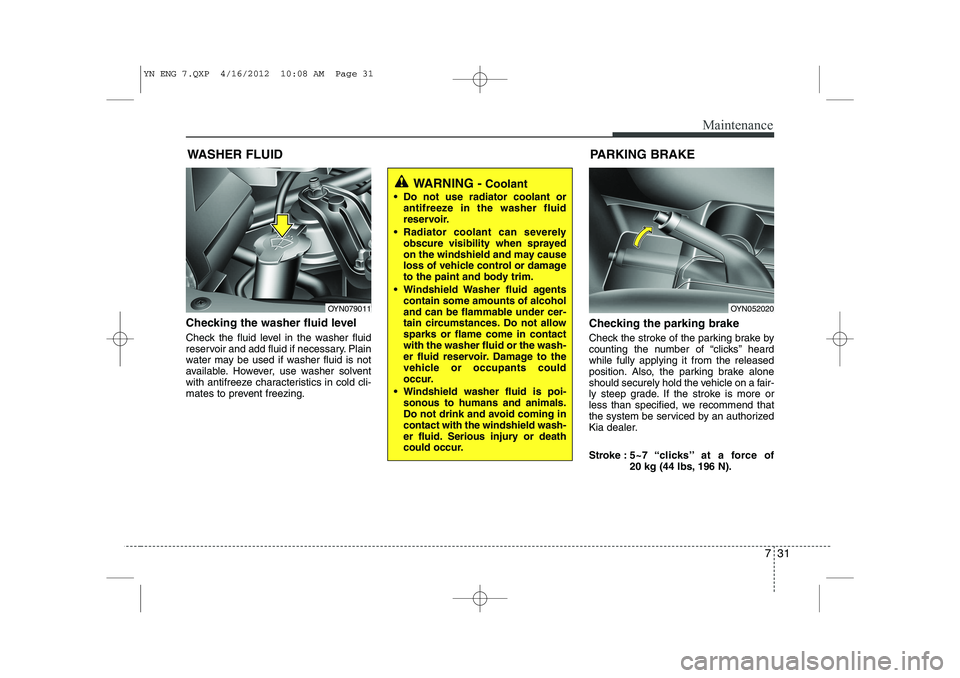
WASHER FLUID
Checking the washer fluid level
Check the fluid level in the washer fluid
reservoir and add fluid if necessary. Plain
water may be used if washer fluid is not
available. However, use washer solvent
with antifreeze characteristics in cold cli-
mates to prevent freezing. Checking the parking brake
Check the stroke of the parking brake by
counting the number of “clicks’’ heardwhile fully applying it from the released
position. Also, the parking brake alone
should securely hold the vehicle on a fair-
ly steep grade. If the stroke is more or
less than specified, we recommend that
the system be serviced by an authorized
Kia dealer.
Stroke :
5~7 “clicks’’ at a force of
20 kg (44 lbs, 196 N).
PARKING BRAKE
WARNING -
Coolant
Do not use radiator coolant or antifreeze in the washer fluid
reservoir.
Radiator coolant can severely obscure visibility when sprayed
on the windshield and may cause
loss of vehicle control or damage
to the paint and body trim.
Windshield Washer fluid agents contain some amounts of alcohol
and can be flammable under cer-
tain circumstances. Do not allowsparks or flame come in contactwith the washer fluid or the wash-
er fluid reservoir. Damage to the
vehicle or occupants could
occur.
Windshield washer fluid is poi- sonous to humans and animals.
Do not drink and avoid coming incontact with the windshield wash-
er fluid. Serious injury or death
could occur.
OYN052020OYN079011
YN ENG 7.QXP 4/16/2012 10:08 AM Page 31
Page 387 of 751
Index
4
I
Drinks holders, see cup holders . . . . . . . . . . . . . . . . . . 4-94
Driver's and passenger's front air bag. . . . . . . . . . . . . . 3-44
Driving at night. . . . . . . . . . . . . . . . . . . . . . . . . . . . . . . 5-45
Driving in flooded areas . . . . . . . . . . . . . . . . . . . . . . . . 5-46
Driving in the rain . . . . . . . . . . . . . . . . . . . . . . . . . . . . 5-46
Economical operation . . . . . . . . . . . . . . . . . . . . . . . . . . 5-41
Electric power steering . . . . . . . . . . . . . . . . . . . . . . . . . 4-33
Electronic stability program (ESP). . . . . . . . . . . . . . . . 5-29
Emergency starting . . . . . . . . . . . . . . . . . . . . . . . . . . . . . 6-4
Jump starting . . . . . . . . . . . . . . . . . . . . . . . . . . . . . . . . 6-4
Push starting . . . . . . . . . . . . . . . . . . . . . . . . . . . . . . . . . 6-5
Emergency while driving . . . . . . . . . . . . . . . . . . . . . . . . 6-2
Emission control system . . . . . . . . . . . . . . . . . . . . . . . . 7-78 Crankcase emission control system . . . . . . . . . . . . . . 7-78
Evaporative emission control System . . . . . . . . . . . . 7-78
Exhaust emission control system . . . . . . . . . . . . . . . . 7-79
Engine compartment . . . . . . . . . . . . . . . . . . . . . . . . . . . . 2-4
Engine coolant . . . . . . . . . . . . . . . . . . . . . . . . . . . . . . . 7-25
Engine number . . . . . . . . . . . . . . . . . . . . . . . . . . . . . . . . 8-8
Engine oil . . . . . . . . . . . . . . . . . . . . . . . . . . . . . . . . . . . 7-24
Engine overheats. . . . . . . . . . . . . . . . . . . . . . . . . . . . . . . 6-6
Engine start/stop button . . . . . . . . . . . . . . . . . . . . . . . . . 5-8
Engine will not start . . . . . . . . . . . . . . . . . . . . . . . . . . . . 6-3
Evaporative emission control system . . . . . . . . . . . . . . 7-78 Exhaust emission control system . . . . . . . . . . . . . . . . . 7-79
Explanation of scheduled maintenance items . . . . . . . 7-20
Exterior care . . . . . . . . . . . . . . . . . . . . . . . . . . . . . . . . . 7-72
Flat tire . . . . . . . . . . . . . . . . . . . . . . . . . . . . . . . . . . . . . . 6-7
Changing tires. . . . . . . . . . . . . . . . . . . . . . . . . . . . . . . . 6-8
Compact spare tire . . . . . . . . . . . . . . . . . . . . . . . . . . . 6-13
Components of the tire mobility kit . . . . . . . . . . . . . . 6-16
Jack and tools . . . . . . . . . . . . . . . . . . . . . . . . . . . . . . . . 6-7
Removing and storing the spare tire . . . . . . . . . . . . . . 6-8
Tiremobilitykit . . . . . . . . . . . . . . . . . . . . . . . . . . . . . . 6-15
Floor mat anchor(s) . . . . . . . . . . . . . . . . . . . . . . . . . . . 4-97Fluid Automatic transaxle fluid . . . . . . . . . . . . . . . . . . . . . . 7-29
Brakes fluid . . . . . . . . . . . . . . . . . . . . . . . . . . . . . . . . 7-28
Washer fluid . . . . . . . . . . . . . . . . . . . . . . . . . . . . . . . . 7-31
Fog light (front) . . . . . . . . . . . . . . . . . . . . . . . . . . . . . . 7-66
Fog light (rear) . . . . . . . . . . . . . . . . . . . . . . . . . . . . . . . 7-69Fog light bulbs replacement Fog light (front) . . . . . . . . . . . . . . . . . . . . . . . . . . . . . 7-66
Fog light (rear) . . . . . . . . . . . . . . . . . . . . . . . . . . . . . . 7-69
Folding the rear seat . . . . . . . . . . . . . . . . . . . . . . . . . . . 3-10
Front seat adjustment . . . . . . . . . . . . . . . . . . . . . . . . . . . 3-5
Fuel filler lid . . . . . . . . . . . . . . . . . . . . . . . . . . . . . . . . . 4-26
Fuel filter . . . . . . . . . . . . . . . . . . . . . . . . . . . . . . . . . . . 7-32
E
F
YN eng INDEX.QXP 2011.09.22. 16:35 Page 4
Page 392 of 751
I9
Index
Checking tire inflation pressure . . . . . . . . . . . . . . . . . 7-43
Compact spare tire replacement . . . . . . . . . . . . . . . . . 7-47
Recommended cold tire inflation pressures . . . . . . . . 7-42
Tire care . . . . . . . . . . . . . . . . . . . . . . . . . . . . . . . . . . . 7-42
Tire maintenance . . . . . . . . . . . . . . . . . . . . . . . . . . . . 7-47
Tire replacement . . . . . . . . . . . . . . . . . . . . . . . . . . . . . 7-46
Tire rotation . . . . . . . . . . . . . . . . . . . . . . . . . . . . . . . . 7-44
Tire sidewall labeling . . . . . . . . . . . . . . . . . . . . . . . . . 7-48
Tire traction . . . . . . . . . . . . . . . . . . . . . . . . . . . . . . . . 7-47
Wheel alignment and tire balance . . . . . . . . . . . . . . . 7-45
Wheel replacement . . . . . . . . . . . . . . . . . . . . . . . . . . . 7-47
TMK, see tiremobilitykit . . . . . . . . . . . . . . . . . . . . . . . 6-15
Towing . . . . . . . . . . . . . . . . . . . . . . . . . . . . . . . . . . . . . 6-25
TPMS . . . . . . . . . . . . . . . . . . . . . . . . . . . . . . . . . . . . . . 6-20
Trailer towing . . . . . . . . . . . . . . . . . . . . . . . . . . . . . . . . 5-52
Transaxle Automatic transaxle . . . . . . . . . . . . . . . . . . . . . . . . . . 5-19
Manual transaxle . . . . . . . . . . . . . . . . . . . . . . . . . . . . 5-16
Trip computer . . . . . . . . . . . . . . . . . . . . . . . . . . . . . . . . 4-44
Using the tiremobilitykit. . . . . . . . . . . . . . . . . . . . . . . . 6-15 Vehicle break-in process . . . . . . . . . . . . . . . . . . . . . . . . . 1-5
Vehicle certification label . . . . . . . . . . . . . . . . . . . . . . . . 8-7
Vehicle identification number (VIN) . . . . . . . . . . . . . . . 8-7
Vehicle stability management . . . . . . . . . . . . . . . . . . . . 5-33
Vehicle weight . . . . . . . . . . . . . . . . . . . . . . . . . . . . . . . 5-60
Warning and indicators . . . . . . . . . . . . . . . . . . . . . . . . . 4-47
Washer fluid . . . . . . . . . . . . . . . . . . . . . . . . . . . . . . . . . 7-31
Wheel alignment and tire balance . . . . . . . . . . . . . . . . 7-45
Wheel replacement . . . . . . . . . . . . . . . . . . . . . . . . . . . . 7-47
Windows . . . . . . . . . . . . . . . . . . . . . . . . . . . . . . . . . . . . 4-19
Auto up/down window . . . . . . . . . . . . . . . . . . . . . . . . 4-21
Manual window . . . . . . . . . . . . . . . . . . . . . . . . . . . . . 4-23
Power window lock button. . . . . . . . . . . . . . . . . . . . . 4-22
Winter driving . . . . . . . . . . . . . . . . . . . . . . . . . . . . . . . . 5-48
Snow tires . . . . . . . . . . . . . . . . . . . . . . . . . . . . . . . . . . 5-48
Tire chains . . . . . . . . . . . . . . . . . . . . . . . . . . . . . . . . . 5-49
Wiper blades . . . . . . . . . . . . . . . . . . . . . . . . . . . . . . . . . 7-36
Wipers and washers . . . . . . . . . . . . . . . . . . . . . . . . . . . 4-67
U
V
W
YN eng INDEX.QXP 2011.09.22. 16:35 Page 9
Page 405 of 751
Your vehicle at a glance
4
2
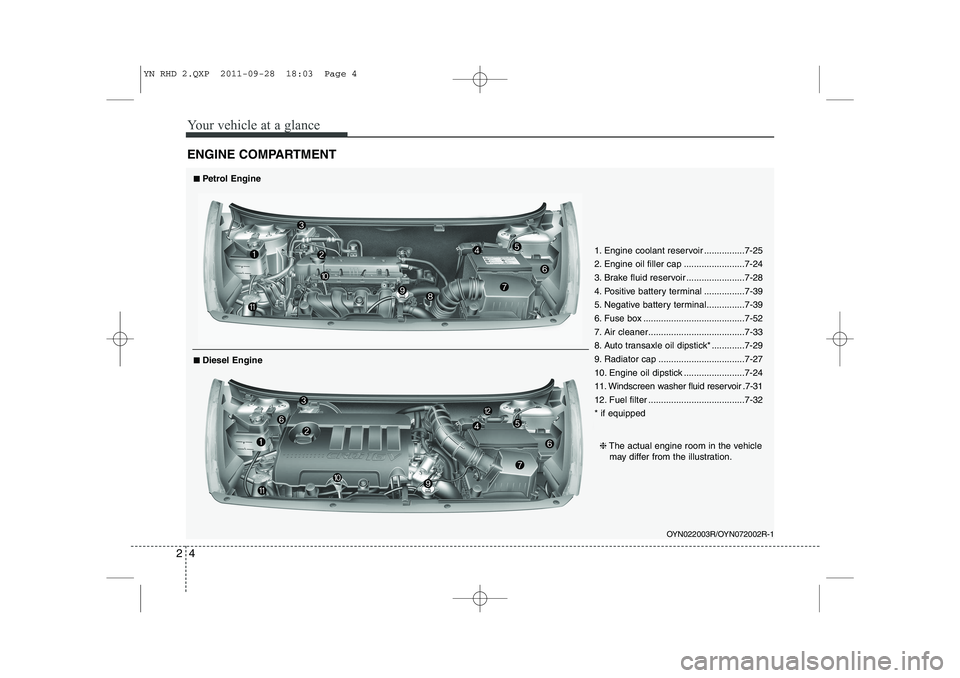
ENGINE COMPARTMENT
OYN022003R/OYN072002R-1
■■
Petrol Engine
❈ The actual engine room in the vehicle
may differ from the illustration.
■■ Diesel Engine 1. Engine coolant reservoir ................7-25
2. Engine oil filler cap ........................7-24
3. Brake fluid reservoir .......................7-28
4. Positive battery terminal ................7-39
5. Negative battery terminal...............7-39
6. Fuse box ........................................7-52
7. Air cleaner......................................7-33
8. Auto transaxle oil dipstick* .............7-29
9. Radiator cap ..................................7-27
10. Engine oil dipstick ........................7-24
11. Windscreen washer fluid reservoir .7-31
12. Fuel filter ......................................7-32 * if equipped
YN RHD 2.QXP 2011-09-28 18:03 Page 4
Page 532 of 751
Features of your vehicle
68
4
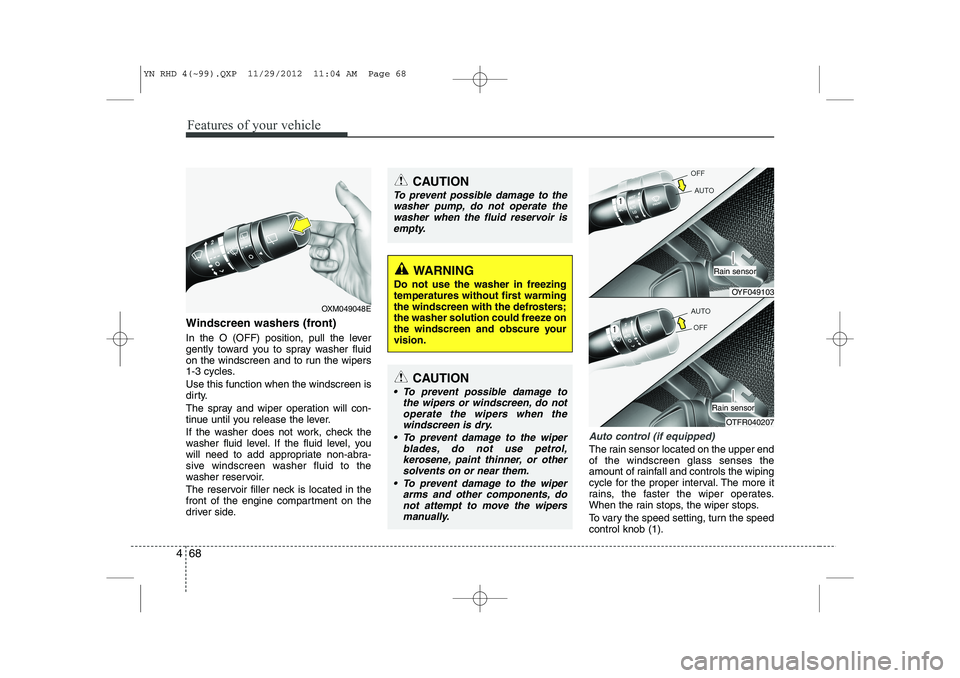
Windscreen washers (front)
In the O (OFF) position, pull the lever
gently toward you to spray washer fluid
on the windscreen and to run the wipers
1-3 cycles. Use this function when the windscreen is
dirty.
The spray and wiper operation will con-
tinue until you release the lever.
If the washer does not work, check the
washer fluid level. If the fluid level, you
will need to add appropriate non-abra-
sive windscreen washer fluid to the
washer reservoir.
The reservoir filler neck is located in the
front of the engine compartment on the
driver side.
Auto control (if equipped)
The rain sensor located on the upper end of the windscreen glass senses the
amount of rainfall and controls the wiping
cycle for the proper interval. The more it
rains, the faster the wiper operates.
When the rain stops, the wiper stops.
To vary the speed setting, turn the speed control knob (1).
OXM049048E
WARNING
Do not use the washer in freezing
temperatures without first warming
the windscreen with the defrosters;
the washer solution could freeze on
the windscreen and obscure yourvision.
CAUTION
To prevent possible damage to the wipers or windscreen, do not
operate the wipers when the windscreen is dry.
To prevent damage to the wiper blades, do not use petrol,
kerosene, paint thinner, or othersolvents on or near them.
To prevent damage to the wiper arms and other components, donot attempt to move the wipers
manually.
CAUTION
To prevent possible damage to the
washer pump, do not operate the
washer when the fluid reservoir isempty.
OYF049103
Rain sensor
OTFR040207
Rain sensor
YN RHD 4(~99).QXP 11/29/2012 11:04 AM Page 68
Page 533 of 751
469
Features of your vehicle
If the wiper switch is set in AUTO mode
when the ignition switch is ON, the wiper
will operate once to perform a self-check
of the system. Set the wiper to OFF posi-
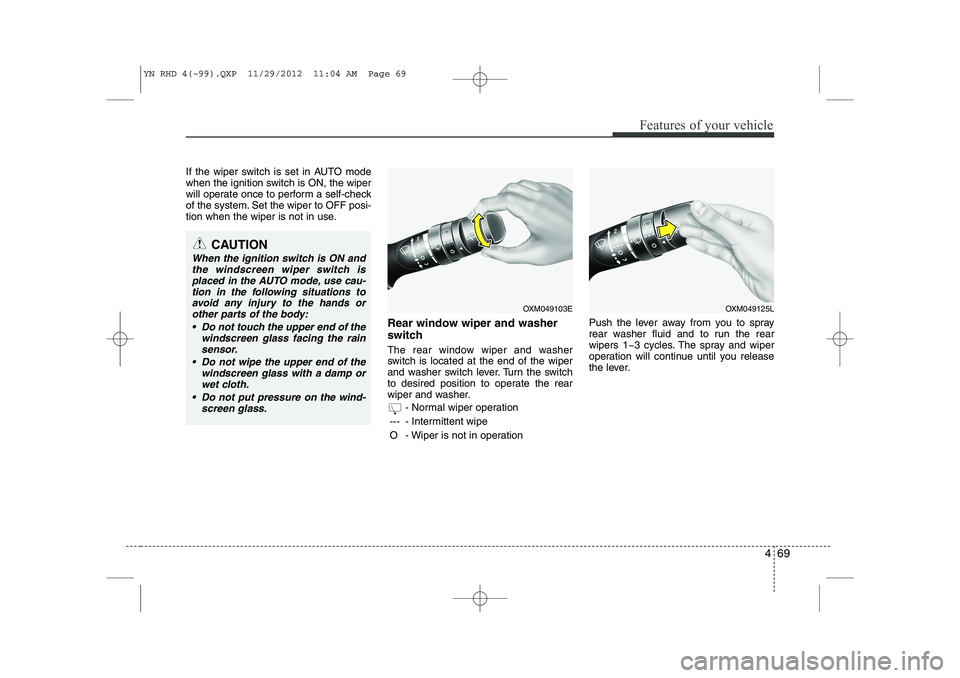
tion when the wiper is not in use.Rear window wiper and washer
switch
The rear window wiper and washer
switch is located at the end of the wiper
and washer switch lever. Turn the switch
to desired position to operate the rear
wiper and washer.- Normal wiper operation
--- - Intermittent wipe
O - Wiper is not in operation Push the lever away from you to spray
rear washer fluid and to run the rear
wipers 1~3 cycles. The spray and wiper
operation will continue until you release
the lever.
OXM049103EOXM049125L
CAUTION
When the ignition switch is ON and
the windscreen wiper switch isplaced in the AUTO mode, use cau- tion in the following situations toavoid any injury to the hands or
other parts of the body:
Do not touch the upper end of the windscreen glass facing the rainsensor.
Do not wipe the upper end of the windscreen glass with a damp orwet cloth.
Do not put pressure on the wind- screen glass.
YN RHD 4(~99).QXP 11/29/2012 11:04 AM Page 69
Page 566 of 751
53
Driving your vehicle
Before entering vehicle
• Be sure that all windows, outside mir-ror(s), and outside lights are clean.
Check the condition of the tyres.
Check under the vehicle for any sign of leaks.
Be sure there are no obstacles behind you if you intend to back up.
Necessary inspections
Fluid levels, such as engine oil, engine
coolant, brake fluid, and washer fluid
should be checked on a regular basis,
with the exact interval depending on the
fluid. Further details are provided in sec-
tion 7, “Maintenance”. Before starting
Close and lock all doors.
Position the seat so that all controls are
easily reached.
Adjust the inside and outside rearview mirrors.
Be sure that all lights work.
Check all gauges.
Check the operation of warning lights when the ignition switch is turned to the ON position.
Release the parking brake and make sure the brake warning light goes out.
For safe operation, be sure you are famil-
iar with your vehicle and its equipment.
BEFORE DRIVING
WARNING
All passengers must be properly
belted whenever the vehicle is mov-
ing. Refer to “Seat belts” in section
3 for more information on their
proper use.
WARNING
Always check the surrounding
areas near your vehicle for people,
especially children, before putting a
car into D (Drive) or R (Reverse).
WARNING - Driving under
the influence of alcohol or drugs
Drinking and driving is dangerous.
Drunk driving is the number one
contributor to the highway death
toll each year. Even a small amount
of alcohol will affect your reflexes,
perceptions and judgment. Drivingwhilst under the influence of drugs
is as dangerous or more dangerousthan driving drunk.
You are much more likely to have a
serious accident if you drink or
take drugs and drive.
If you are drinking or taking drugs,
don’t drive. Do not ride with a driv-er who has been drinking or taking
drugs. Choose a designated driveror call a cab.
WARNING
Driving whilst distracted can result in
a loss of vehicle control, that may
lead to an accident, severe personal
injury, and death. The driver's pri-
mary responsibility is in the safe and
legal operation of a vehicle, and use
of any handheld devices, other
equipment, or vehicle systems which
take the driver's eyes, attention and
focus away from the safe operation
of a vehicle or which are not permis-
sible by law should never be used
during operation of the vehicle.
YN RHD 5.QXP 3/31/2012 4:06 PM Page 3
Page 614 of 751
551
Driving your vehicle
To keep locks from freezing
To keep the locks from freezing, squirt an
approved de-icer fluid or glycerine into
the key opening. If a lock is covered with
ice, squirt it with an approved de-icing
fluid to remove the ice. If the lock is
frozen internally, you may be able to thaw
it out by using a heated key. Handle the
heated key with care to avoid injury.
Use approved window washer
anti-freeze in system
To keep the water in the window washer
system from freezing, add an approved
window washer anti-freeze solution in
accordance with instructions on the con-
tainer. Window washer anti-freeze is
available from an authorised Kia dealer
and most auto parts outlets. Do not useengine coolant or other types of anti-
freeze as these may damage the paintfinish.Don't let your parking brake
freeze
Under some conditions your parking
brake can freeze in the engaged position.
This is most likely to happen when there
is an accumulation of snow or ice around
or near the rear brakes or if the brakes
are wet. If there is a risk the parking
brake may freeze, apply it only temporar-
ily whilst you put the shift lever in P (auto-
matic transaxle) or in first or reverse gear
(manual transaxle) and block the rear
wheels so the vehicle cannot roll. Then
release the parking brake.
Don't let ice and snow accumu- late underneath
Under some conditions, snow and ice
can build up under the fenders and inter-
fere with the steering. When driving in
severe winter conditions where this may
happen, you should periodically check
underneath the car to be sure the move-
ment of the front wheels and the steering
components is not obstructed.Carry emergency equipment
Depending on the severity of the weath-
er, you should carry appropriate emer-
gency equipment. Some of the items you
may want to carry include tyre chains,
tow straps or chains, flashlight, emer-
gency flares, sand, shovel, jumper
cables, window scraper, gloves, ground
cloth, coveralls, blanket, etc.
YN RHD 5.QXP 3/31/2012 4:08 PM Page 51
Page 653 of 751
7
Engine compartment / 7-2 Maintenance services / 7-3
Owner maintenance / 7-5Scheduled maintenance service / 7-7Explanation of scheduled maintenance items / 7-20Engine oil / 7-24Engine coolant / 7-25Brake/clutch fluid / 7-28Automatic transaxle fluid / 7-29
Washer fluid / 7-31Parking brake / 7-31
Fuel filter / 7-32
Air cleaner / 7-33
Climate control air filter / 7-34
Wiper blades / 7-36Battery / 7-39
Tyres and wheels / 7-42Fuses / 7-52 Light bulbs / 7-63
Appearance care / 7-72
Emission control system / 7-78
Maintenance
YN RHD 7.QXP 3/31/2012 4:12 PM Page 1
Page 654 of 751
Maintenance
2
7
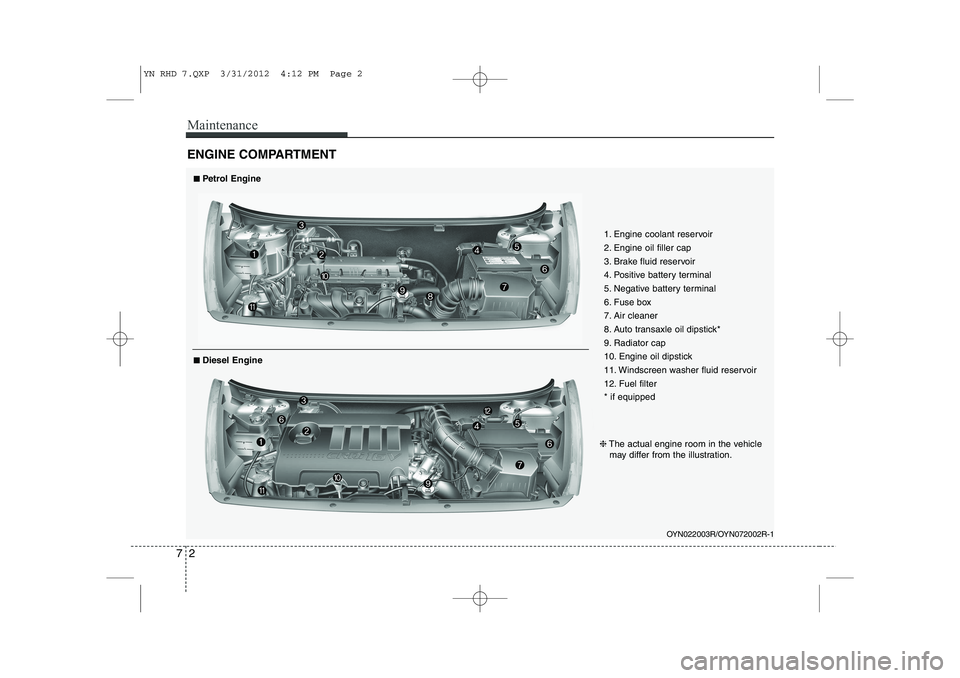
ENGINE COMPARTMENT
OYN022003R/OYN072002R-1
■■
Petrol Engine
❈ The actual engine room in the vehicle
may differ from the illustration.
■■ Diesel Engine 1. Engine coolant reservoir
2. Engine oil filler cap
3. Brake fluid reservoir
4. Positive battery terminal
5. Negative battery terminal
6. Fuse box
7. Air cleaner
8. Auto transaxle oil dipstick*
9. Radiator cap
10. Engine oil dipstick
11. Windscreen washer fluid reservoir
12. Fuel filter * if equipped
YN RHD 7.QXP 3/31/2012 4:12 PM Page 2