engine overheat KIA VENGA 2013 Owner's Guide
[x] Cancel search | Manufacturer: KIA, Model Year: 2013, Model line: VENGA, Model: KIA VENGA 2013Pages: 751, PDF Size: 27.49 MB
Page 620 of 751
557
Driving your vehicle
When you are ready to leave after park- ing on a hill
1. With the manual transaxle in Neutralor automatic transaxle in P (Park),
apply your brakes and hold the brake
pedal down whilst you:
Start your engine;
Shift into gear; and
Release the parking brake.
2. Slowly remove your foot from the brake pedal.
3. Drive slowly until the trailer is clear of the chocks.
4. Stop and have someone pick up and store the chocks. Maintenance when trailer towing
Your vehicle will need service more often
when you regularly pull a trailer.
Important items to pay particular atten-tion to include engine oil, automatic
transaxle fluid, axle lubricant and cooling
system fluid. Brake condition is another
important item to frequently check. Each
item is covered in this manual, and the
Index will help you find them quickly. If
you’re trailering, it’s a good idea to review
these sections before you start your trip.
Don’t forget to also maintain your trailer
and towbar hitch. Follow the mainte-
nance schedule that accompanied your
trailer and check it periodically.
Preferably, conduct the check at the start
of each day’s driving. Most importantly,
all towbar hitch nuts and bolts should betight.CAUTION
Due to higher load during trailer
usage, overheating might occur
in hot days or during uphill driv- ing. If the coolant gauge indicatesover-heating, switch off the A/Cand stop the vehicle in a safe area
to cool down the engine.
When towing, check the transaxle fluid more frequently.
If your vehicle is not equipped with an air conditioner, you
should install a condenser fan to improve engine performancewhen towing a trailer.
YN RHD 5.QXP 3/31/2012 4:08 PM Page 57
Page 624 of 751
6
Road warning / 6-2 In case of an emergency whilst driving / 6-2If the engine will not start / 6-3Emergency starting / 6-4If the engine overheats / 6-6
If you have a flat tyre (with spare tyre) / 6-7
If you have a flat tyre (with Tyre Mobility Kit) / 6-15
Tyre pressure monitoring system (TPMS) / 6-20
Towing / 6-25
What to do in an emergency
YN RHD 6.QXP 3/31/2012 4:10 PM Page 1
Page 628 of 751
65
What to do in an emergency
1. Make sure the booster battery is 12-volt and that its negative terminal is
grounded.
2. If the booster battery is in another vehicle, do not allow the vehicles comein contact.
3. Turn off all unnecessary electrical loads.
4. Connect the jumper cables in the exact sequence shown in the illustration.First connect one end of a jumper
cable to the positive terminal of the
discharged battery (1), then connect
the other end to the positive terminal
on the booster battery (2). 5. Proceed to connect one end of the
other jumper cable to the negative ter-
minal of the booster battery (3), then
the other end to a solid, stationary,
metallic point (for example, the engine
lifting bracket) away from the battery
(4). Do not connect it to or near any
part that moves when the engine is
cranked.
Do not allow the jumper cables to con-
tact anything except the correct battery
terminals or the correct ground. Do not
lean over the battery when making
connections.
6. Start the engine of the vehicle with the booster battery and let it run at 2,000
rpm, then start the engine of the vehi-
cle with the discharged battery.
If the cause of your battery discharging is
not apparent, we recommend that thesystem be checked by an authorised Kia
dealer.
Push-starting
Your manual transaxle-equipped vehicle
should not be push-started because itmight damage the emission control sys-tem.
Vehicles equipped with automatic
transaxle cannot be push-started.
Follow the directions in this section for
jump-starting.
WARNING
Never tow a vehicle to start it
because the sudden surge forward
when the engine starts could cause
a collision with the tow vehicle.
CAUTION - Battery cables
Do not connect the jumper cable
from the negative terminal of the booster battery to the negative ter-minal of the discharged battery. This can cause the discharged bat-
tery to overheat and crack, releas- ing battery acid.
(Continued)
If the AGM battery is reconnected or replaced, ISG function will notoperate immediately.
If you want to use the ISG func-tion, the battery sensor needs to be calibrated for approximately 4hours with the ignition off.
YN RHD 6.QXP 3/31/2012 4:10 PM Page 5
Page 629 of 751
What to do in an emergency
6
6
IF THE ENGINE OVERHEATS
If your temperature gauge indicates over-
heating, you will experience a loss of
power, or hear loud pinging or knocking,
the engine is probably too hot. If this hap-
pens, you should:
1. Pull off the road and stop as soon as it is safe to do so.
2. Place the shift lever in P (automatic transaxle) or Neutral (manual
transaxle) and set the parking brake. If
the air conditioning is on, turn it off.
3. If engine coolant is running out under the vehicle or steam is coming out
from the bonnet, stop the engine. Donot open the bonnet until the coolant
has stopped running or the steaming
has stopped. If there is no visible loss
of engine coolant and no steam, leave
the engine running and check to be
sure the engine cooling fan is operat-
ing. If the fan is not running, turn the
engine off. 4. Check to see if the water pump drive
belt is missing. If it is not missing,
check to see that it is tight. If the drive
belt seems to be satisfactory, check for
coolant leaking from the radiator,
hoses or under the vehicle. (If the air
conditioning had been in use, it is nor-
mal for cold water to be draining from
it when you stop).
5. If the water pump drive belt is broken or engine coolant is leaking out, stop
the engine immediately and we recom-
mend that you call an authorised Kia
dealer. 6. If you cannot find the cause of over-
heating, wait until the engine tempera-
ture has returned to normal. Then, ifcoolant has been lost, carefully add
coolant to the reservoir to bring the
fluid level in the reservoir up to the
halfway mark.
7. Proceed with caution, keeping alert for further signs of overheating. If over-
heating happens again, we recommend
that you call an authorised Kia dealer.
WARNING
Whilst the engine is running, keep
hair, hands and clothing away from
moving parts such as the fan and
drive belts to prevent injury.
WARNING
Do not remove the radiator cap
when the engine is hot. This can
allow coolant to be blown out of the
opening and cause serious burns.
CAUTION
Serious loss of coolant indicates there is a leak in the cooling system
and we recommend that the system be checked by an authorised Kiadealer.
YN RHD 6.QXP 3/31/2012 4:10 PM Page 6
Page 642 of 751
619
What to do in an emergency
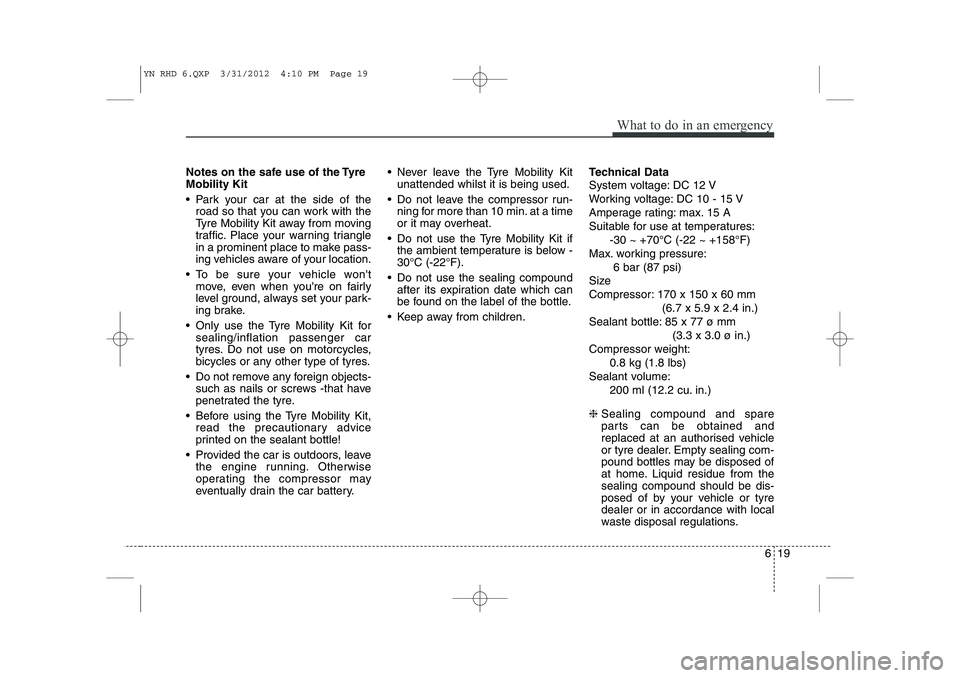
Notes on the safe use of the Tyre Mobility Kit
Park your car at the side of theroad so that you can work with the
Tyre Mobility Kit away from moving
traffic. Place your warning triangle
in a prominent place to make pass-
ing vehicles aware of your location.
To be sure your vehicle won't move, even when you're on fairly
level ground, always set your park-
ing brake.
Only use the Tyre Mobility Kit for sealing/inflation passenger car
tyres. Do not use on motorcycles,
bicycles or any other type of tyres.
Do not remove any foreign objects- such as nails or screws -that have
penetrated the tyre.
Before using the Tyre Mobility Kit, read the precautionary advice
printed on the sealant bottle!
Provided the car is outdoors, leave the engine running. Otherwise
operating the compressor may
eventually drain the car battery. Never leave the Tyre Mobility Kit
unattended whilst it is being used.
Do not leave the compressor run- ning for more than 10 min. at a time
or it may overheat.
Do not use the Tyre Mobility Kit if the ambient temperature is below -30°C (-22°F).
Do not use the sealing compound after its expiration date which can
be found on the label of the bottle.
Keep away from children. Technical Data
System voltage: DC 12 V
Working voltage: DC 10 - 15 V
Amperage rating: max. 15 A
Suitable for use at temperatures:
-30 ~ +70°C (-22 ~ +158°F)
Max. working pressure: 6 bar (87 psi)
Size
Compressor: 170 x 150 x 60 mm (6.7 x 5.9 x 2.4 in.)
Sealant bottle: 85 x 77 ø mm (3.3 x 3.0 ø in.)
Compressor weight: 0.8 kg (1.8 lbs)
Sealant volume: 200 ml (12.2 cu. in.)
❈ Sealing compound and spare
parts can be obtained and
replaced at an authorised vehicle
or tyre dealer. Empty sealing com-
pound bottles may be disposed of
at home. Liquid residue from thesealing compound should be dis-
posed of by your vehicle or tyredealer or in accordance with local
waste disposal regulations.
YN RHD 6.QXP 3/31/2012 4:10 PM Page 19
Page 746 of 751
Index
4
I
DPF . . . . . . . . . . . . . . . . . . . . . . . . . . . . . . . . . . . . . . . . 7-81
Drinks holders, see cup holders . . . . . . . . . . . . . . . . . . 4-94
Driver's and passenger's front air bag. . . . . . . . . . . . . . 3-44
Driving at night. . . . . . . . . . . . . . . . . . . . . . . . . . . . . . . 5-44
Driving in flooded areas . . . . . . . . . . . . . . . . . . . . . . . . 5-45
Driving in the rain . . . . . . . . . . . . . . . . . . . . . . . . . . . . 5-45
Economical operation . . . . . . . . . . . . . . . . . . . . . . . . . . 5-40
Electric power steering . . . . . . . . . . . . . . . . . . . . . . . . . 4-33
Electronic stability program (ESP). . . . . . . . . . . . . . . . 5-29
Emergency starting . . . . . . . . . . . . . . . . . . . . . . . . . . . . . 6-4
Jump starting . . . . . . . . . . . . . . . . . . . . . . . . . . . . . . . . 6-4
Push starting . . . . . . . . . . . . . . . . . . . . . . . . . . . . . . . . . 6-5
Emergency whilst driving . . . . . . . . . . . . . . . . . . . . . . . . 6-2
Emission control system . . . . . . . . . . . . . . . . . . . . . . . . 7-78 Crankcase emission control system . . . . . . . . . . . . . . 7-78
Evaporative emission control System . . . . . . . . . . . . 7-78
Exhaust emission control system . . . . . . . . . . . . . . . . 7-79
Engine compartment . . . . . . . . . . . . . . . . . . . . . . . . . . . . 7-2
Engine coolant . . . . . . . . . . . . . . . . . . . . . . . . . . . . . . . 7-25
Engine number . . . . . . . . . . . . . . . . . . . . . . . . . . . . . . . . 8-7
Engine oil . . . . . . . . . . . . . . . . . . . . . . . . . . . . . . . . . . . 7-24
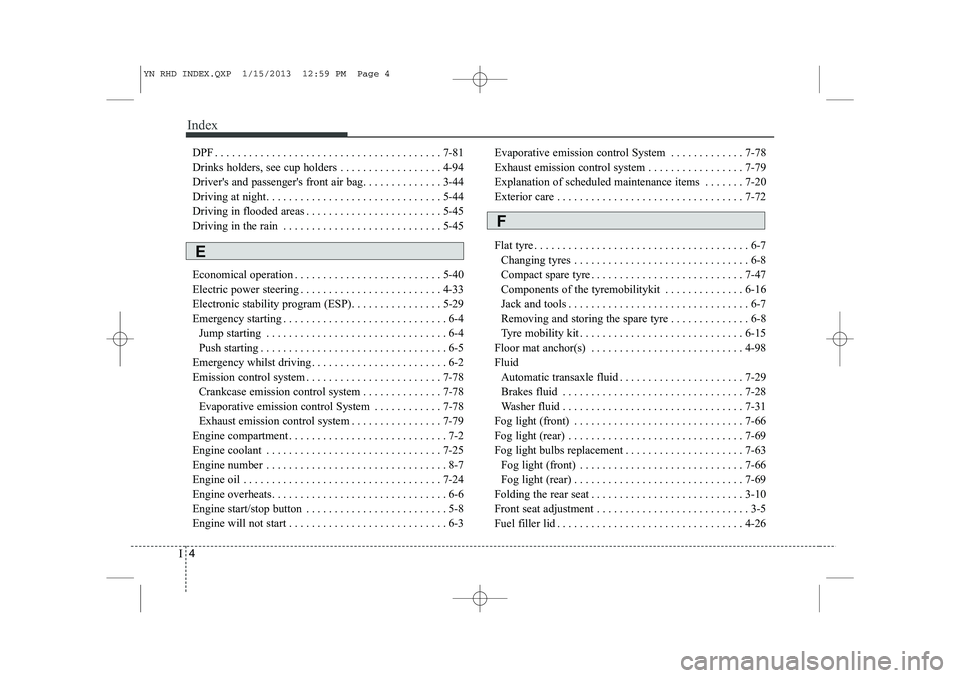
Engine overheats. . . . . . . . . . . . . . . . . . . . . . . . . . . . . . . 6-6
Engine start/stop button . . . . . . . . . . . . . . . . . . . . . . . . . 5-8
Engine will not start . . . . . . . . . . . . . . . . . . . . . . . . . . . . 6-3 Evaporative emission control System . . . . . . . . . . . . . 7-78
Exhaust emission control system . . . . . . . . . . . . . . . . . 7-79
Explanation of scheduled maintenance items . . . . . . . 7-20
Exterior care . . . . . . . . . . . . . . . . . . . . . . . . . . . . . . . . . 7-72
Flat tyre . . . . . . . . . . . . . . . . . . . . . . . . . . . . . . . . . . . . . . 6-7
Changing tyres . . . . . . . . . . . . . . . . . . . . . . . . . . . . . . . 6-8
Compact spare tyre . . . . . . . . . . . . . . . . . . . . . . . . . . . 7-47
Components of the tyremobilitykit . . . . . . . . . . . . . . 6-16
Jack and tools . . . . . . . . . . . . . . . . . . . . . . . . . . . . . . . . 6-7
Removing and storing the spare tyre . . . . . . . . . . . . . . 6-8
Tyre mobility kit . . . . . . . . . . . . . . . . . . . . . . . . . . . . . 6-15
Floor mat anchor(s) . . . . . . . . . . . . . . . . . . . . . . . . . . . 4-98Fluid Automatic transaxle fluid . . . . . . . . . . . . . . . . . . . . . . 7-29
Brakes fluid . . . . . . . . . . . . . . . . . . . . . . . . . . . . . . . . 7-28
Washer fluid . . . . . . . . . . . . . . . . . . . . . . . . . . . . . . . . 7-31
Fog light (front) . . . . . . . . . . . . . . . . . . . . . . . . . . . . . . 7-66
Fog light (rear) . . . . . . . . . . . . . . . . . . . . . . . . . . . . . . . 7-69
Fog light bulbs replacement . . . . . . . . . . . . . . . . . . . . . 7-63 Fog light (front) . . . . . . . . . . . . . . . . . . . . . . . . . . . . . 7-66
Fog light (rear) . . . . . . . . . . . . . . . . . . . . . . . . . . . . . . 7-69
Folding the rear seat . . . . . . . . . . . . . . . . . . . . . . . . . . . 3-10
Front seat adjustment . . . . . . . . . . . . . . . . . . . . . . . . . . . 3-5
Fuel filler lid . . . . . . . . . . . . . . . . . . . . . . . . . . . . . . . . . 4-26
E
F
YN RHD INDEX.QXP 1/15/2013 12:59 PM Page 4
Page 749 of 751
I7
Index
Mirrors
Day/night rearview mirror . . . . . . . . . . . . . . . . . . . . . 4-35
Folding the outside rearview mirror. . . . . . . . . . . . . . 4-39
Inside rearview mirror . . . . . . . . . . . . . . . . . . . . . . . . 4-35
Outside rearview mirror . . . . . . . . . . . . . . . . . . . . . . . 4-36
Odometer . . . . . . . . . . . . . . . . . . . . . . . . . . . . . . . . . . . 4-43
Oil (Engine) . . . . . . . . . . . . . . . . . . . . . . . . . . . . . . . . . 7-24
Outside rearview mirror . . . . . . . . . . . . . . . . . . . . . . . . 4-36
Overheats . . . . . . . . . . . . . . . . . . . . . . . . . . . . . . . . . . . . 6-6
Owner maintenance . . . . . . . . . . . . . . . . . . . . . . . . . . . . 7-5
Parking brake . . . . . . . . . . . . . . . . . . . . . . . . . . . . . . . . 5-25
Power brakes. . . . . . . . . . . . . . . . . . . . . . . . . . . . . . . . . 5-24
Power outlet . . . . . . . . . . . . . . . . . . . . . . . . . . . . . . . . . 4-96
Power window lock button . . . . . . . . . . . . . . . . . . . . . . 4-22
Pre-tensioner seat belt. . . . . . . . . . . . . . . . . . . . . . . . . . 3-21
Push starting . . . . . . . . . . . . . . . . . . . . . . . . . . . . . . . . . . 6-5
Rear combination light bulb replacement . . . . . . . . . . 7-68
Rear parking assist system . . . . . . . . . . . . . . . . . . . . . . 4-57
Rear seat . . . . . . . . . . . . . . . . . . . . . . . . . . . . . . . . . . . . . 3-9 Rear view camera . . . . . . . . . . . . . . . . . . . . . . . . . . . . . 4-60
Recommended cold tyre inflation pressures . . . . . . . . 7-42
Recommended lubricants and capacities . . . . . . . . . . . . 8-4
Recommended SAE viscosity number . . . . . . . . . . . . . 8-5
Remote keyless entry . . . . . . . . . . . . . . . . . . . . . . . . . . . 4-5Replacement light bulb Fog light (front) . . . . . . . . . . . . . . . . . . . . . . . . . . . . . 7-66
Fog light (rear) . . . . . . . . . . . . . . . . . . . . . . . . . . . . . . 7-69
Headlight bulb replacement . . . . . . . . . . . . . . . . . . . . 7-64
Interior light bulb replacement . . . . . . . . . . . . . . . . . . 7-71
Rear combination light bulb replacement . . . . . . . . . 7-68
Road warning . . . . . . . . . . . . . . . . . . . . . . . . . . . . . . . . . 6-2
Rocking the vehicle . . . . . . . . . . . . . . . . . . . . . . . . . . . 5-44
Scheduled maintenance service . . . . . . . . . . . . . . . . . . . 7-7
Maintenance under severe usage conditions. . . 7-12, 7-18
Normal maintenance schedule . . . . . . . . . . . . . . 7-8, 7-14
Seat belt warning (front). . . . . . . . . . . . . . . . . . . . . . . . 3-15
Seat belt warning (rear) . . . . . . . . . . . . . . . . . . . . . . . . 3-15Seat belts Height adjustment. . . . . . . . . . . . . . . . . . . . . . . . . . . . 3-16
Lap/shoulder belt . . . . . . . . . . . . . . . . . . . . . . . . . . . . 3-16
Pre-tensioner seat belt . . . . . . . . . . . . . . . . . . . . . . . . 3-21
Seat belt warning (front) . . . . . . . . . . . . . . . . . . . . . . 3-15
Seat warmer(front) . . . . . . . . . . . . . . . . . . . . . . . . . . . . . 3-8
O
SP
R
YN RHD INDEX.QXP 1/15/2013 12:59 PM Page 7