cooling LEXUS LS430 2003 Factory Repair Manual
[x] Cancel search | Manufacturer: LEXUS, Model Year: 2003, Model line: LS430, Model: LEXUS LS430 2003Pages: 4500, PDF Size: 87.45 MB
Page 1 of 4500
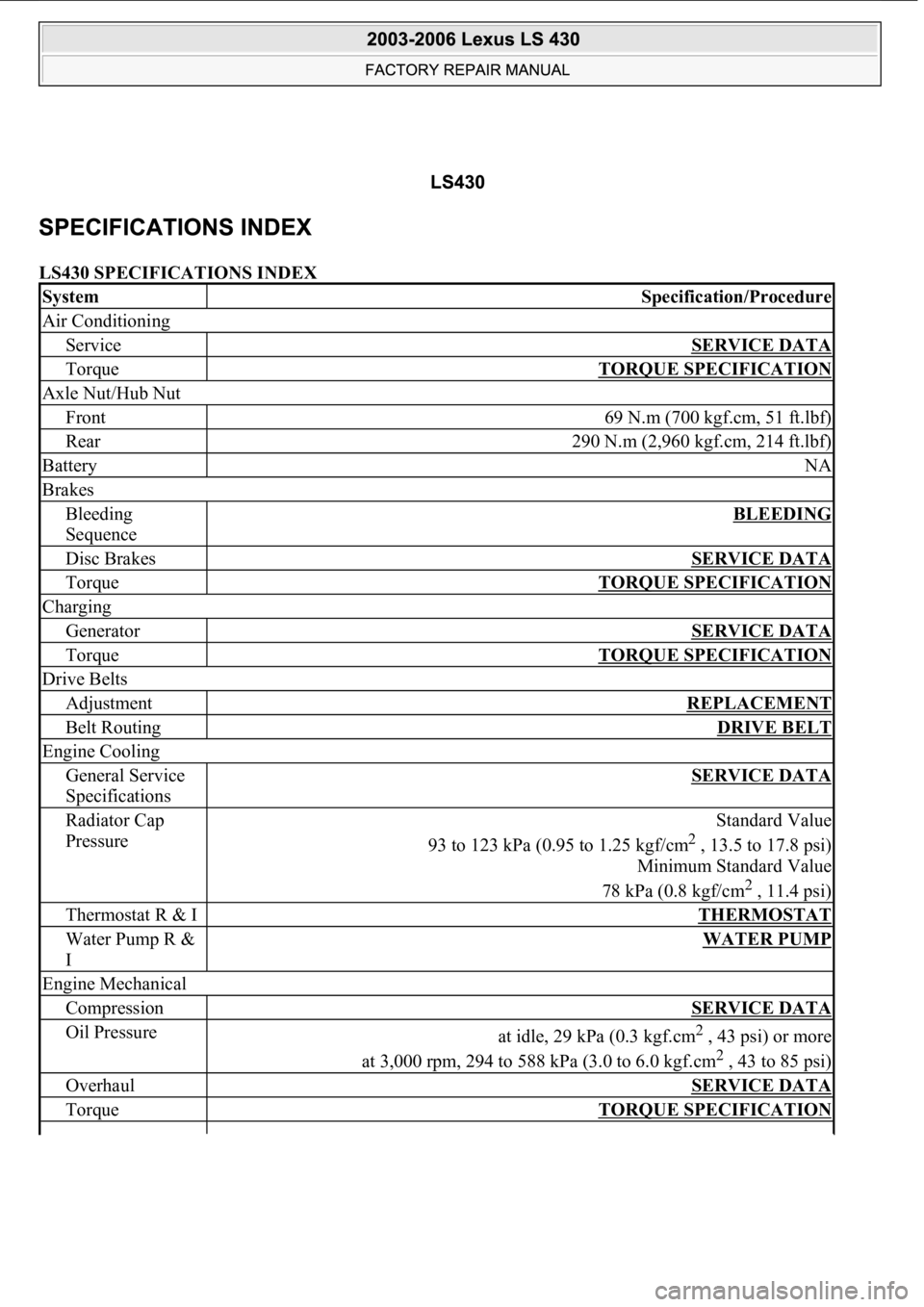
LS430 SPECIFICATIONS INDEX
SystemSpecification/Procedure
Air Conditioning
ServiceSERVICE DATA
TorqueTORQUE SPECIFICATION
Axle Nut/Hub Nut
Front69 N.m (700 kgf.cm, 51 ft.lbf)
Rear290 N.m (2,960 kgf.cm, 214 ft.lbf)
BatteryNA
Brakes
Bleeding
SequenceBLEEDING
Disc BrakesSERVICE DATA
TorqueTORQUE SPECIFICATION
Charging
GeneratorSERVICE DATA
TorqueTORQUE SPECIFICATION
Drive Belts
AdjustmentREPLACEMENT
Belt RoutingDRIVE BELT
Engine Cooling
General Service
SpecificationsSERVICE DATA
Radiator Cap
PressureStandard Value
93 to 123 kPa (0.95 to 1.25 kgf/cm
2 , 13.5 to 17.8 psi)
Minimum Standard Value
78 kPa (0.8 kgf/cm
2 , 11.4 psi)
Thermostat R & ITHERMOSTAT
Water Pump R &
IWATER PUMP
Engine Mechanical
CompressionSERVICE DATA
Oil Pressureat idle, 29 kPa (0.3 kgf.cm2 , 43 psi) or more
at 3,000 rpm, 294 to 588 kPa (3.0 to 6.0 kgf.cm
2 , 43 to 85 psi)
OverhaulSERVICE DATA
TorqueTORQUE SPECIFICATION
Page 204 of 4500
FRONT POWER SEAT CONTROL SYSTEM REFERENCE
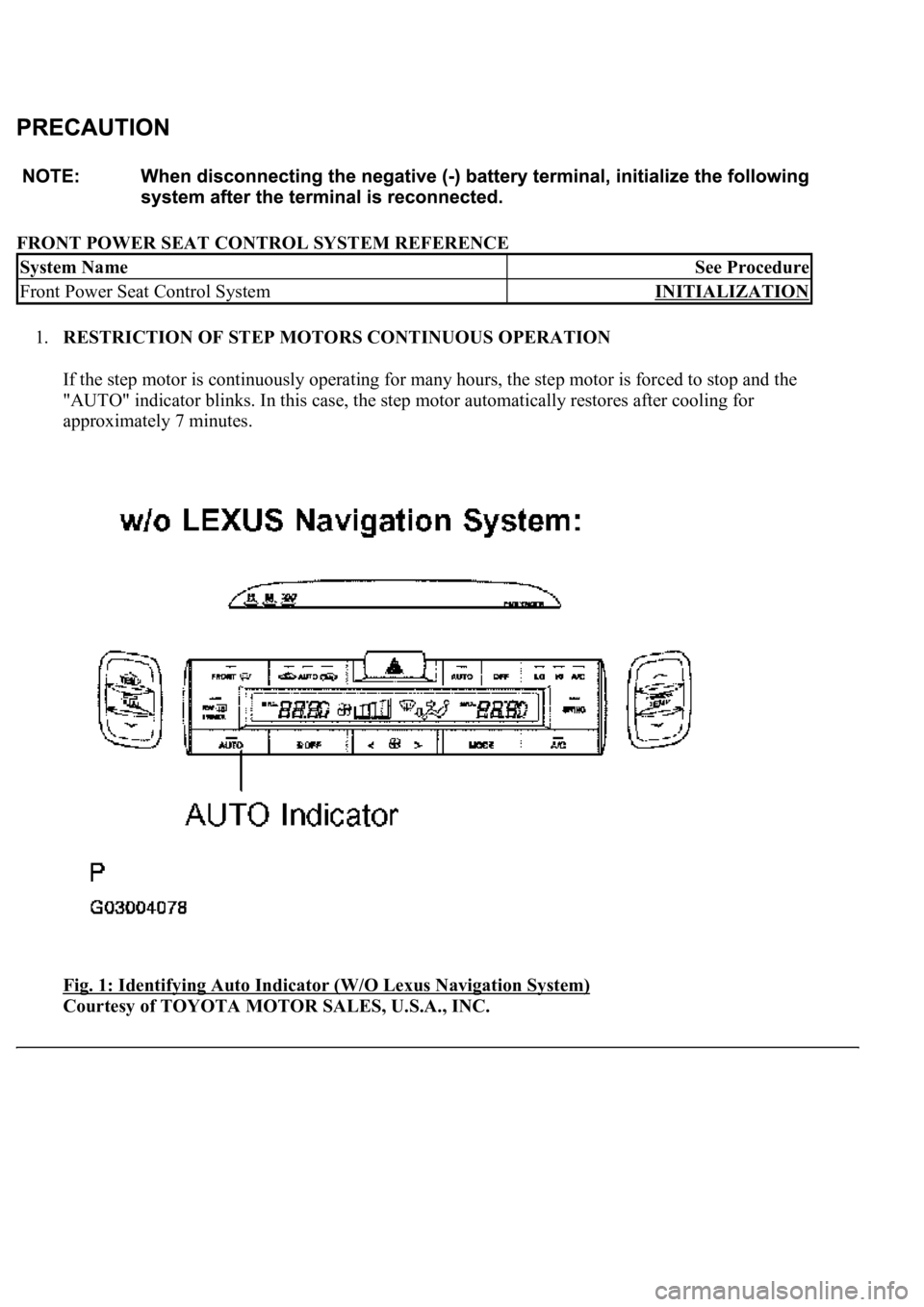
1.RESTRICTION OF STEP MOTORS CONTINUOUS OPERATION
If the step motor is continuously operating for many hours, the step motor is forced to stop and the
"AUTO" indicator blinks. In this case, the step motor automatically restores after cooling for
approximately 7 minutes.
Fig. 1: Identifying Auto Indicator (W/O Lexus Navigation System)
Courtesy of TOYOTA MOTOR SALES, U.S.A., INC.
System NameSee Procedure
Front Power Seat Control SystemINITIALIZATION
Page 301 of 4500
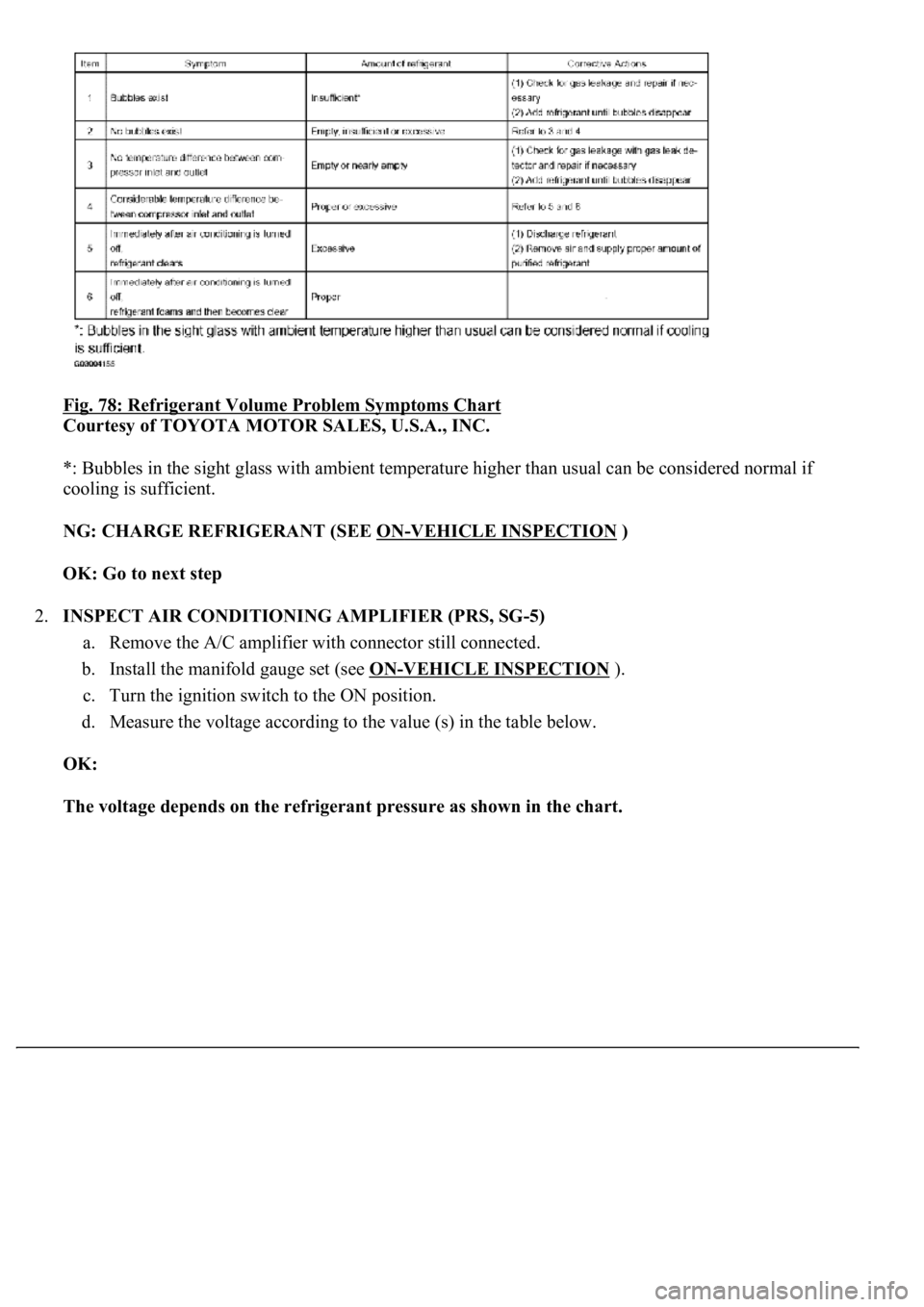
Fig. 78: Refrigerant Volume Problem Symptoms Chart
Courtesy of TOYOTA MOTOR SALES, U.S.A., INC.
*: Bubbles in the sight glass with ambient temperature higher than usual can be considered normal if
cooling is sufficient.
NG: CHARGE REFRIGERANT (SEE ON
-VEHICLE INSPECTION )
OK: Go to next step
2.INSPECT AIR CONDITIONING AMPLIFIER (PRS, SG-5)
a. Remove the A/C amplifier with connector still connected.
b. Install the manifold gauge set (see ON
-VEHICLE INSPECTION ).
c. Turn the ignition switch to the ON position.
d. Measure the voltage according to the value (s) in the table below.
OK:
The voltage depends on the refrigerant pressure as shown in the chart.
Page 1849 of 4500
ON-VEHICLE INSPECTION
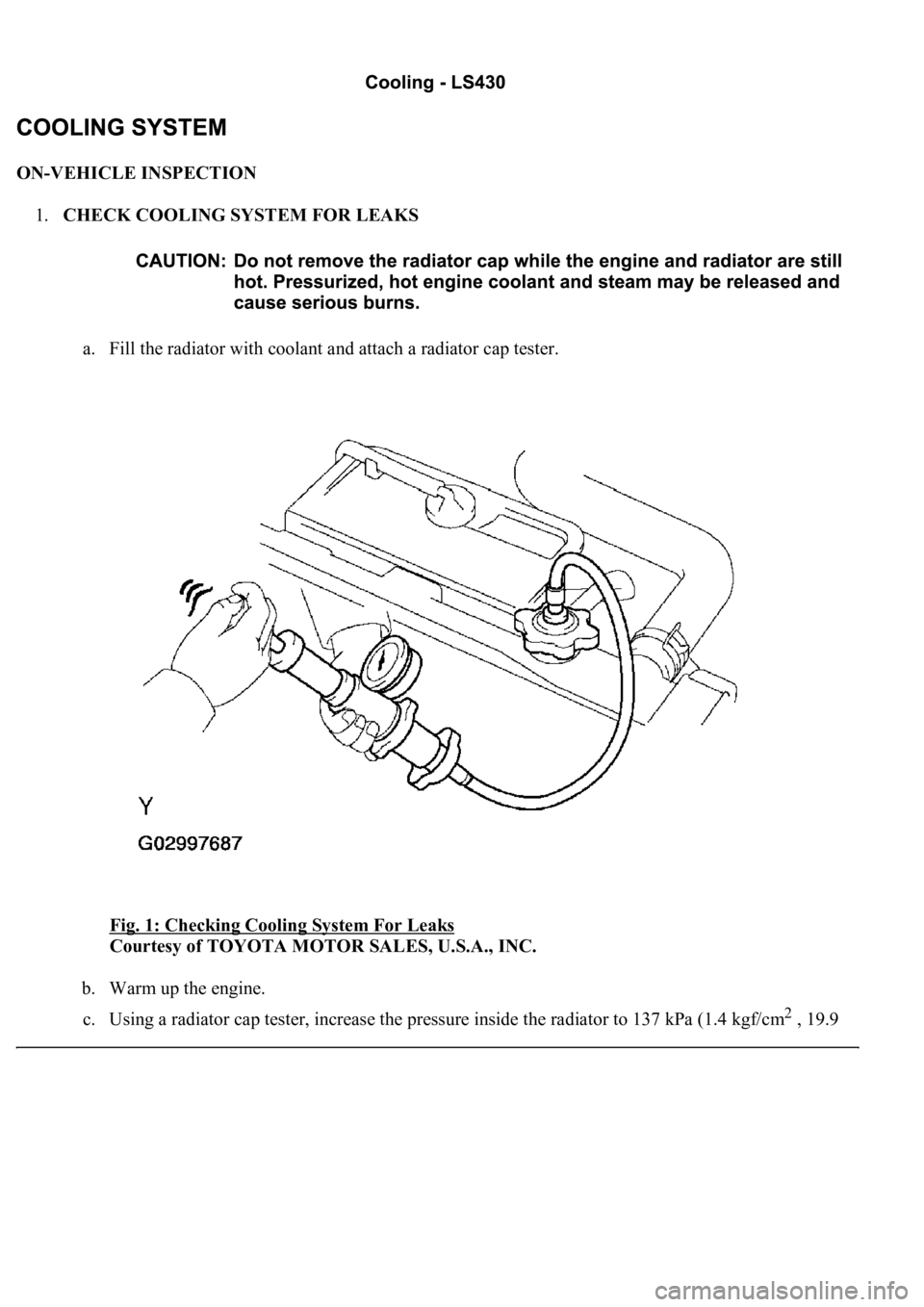
1.CHECK COOLING SYSTEM FOR LEAKS
a. Fill the radiator with coolant and attach a radiator cap tester.
Fig. 1: Checking Cooling System For Leaks
Courtesy of TOYOTA MOTOR SALES, U.S.A., INC.
b. Warm up the engine.
c. Using a radiator cap tester, increase the pressure inside the radiator to 137 kPa (1.4 kgf/cm
2, 19.9
Page 1857 of 4500
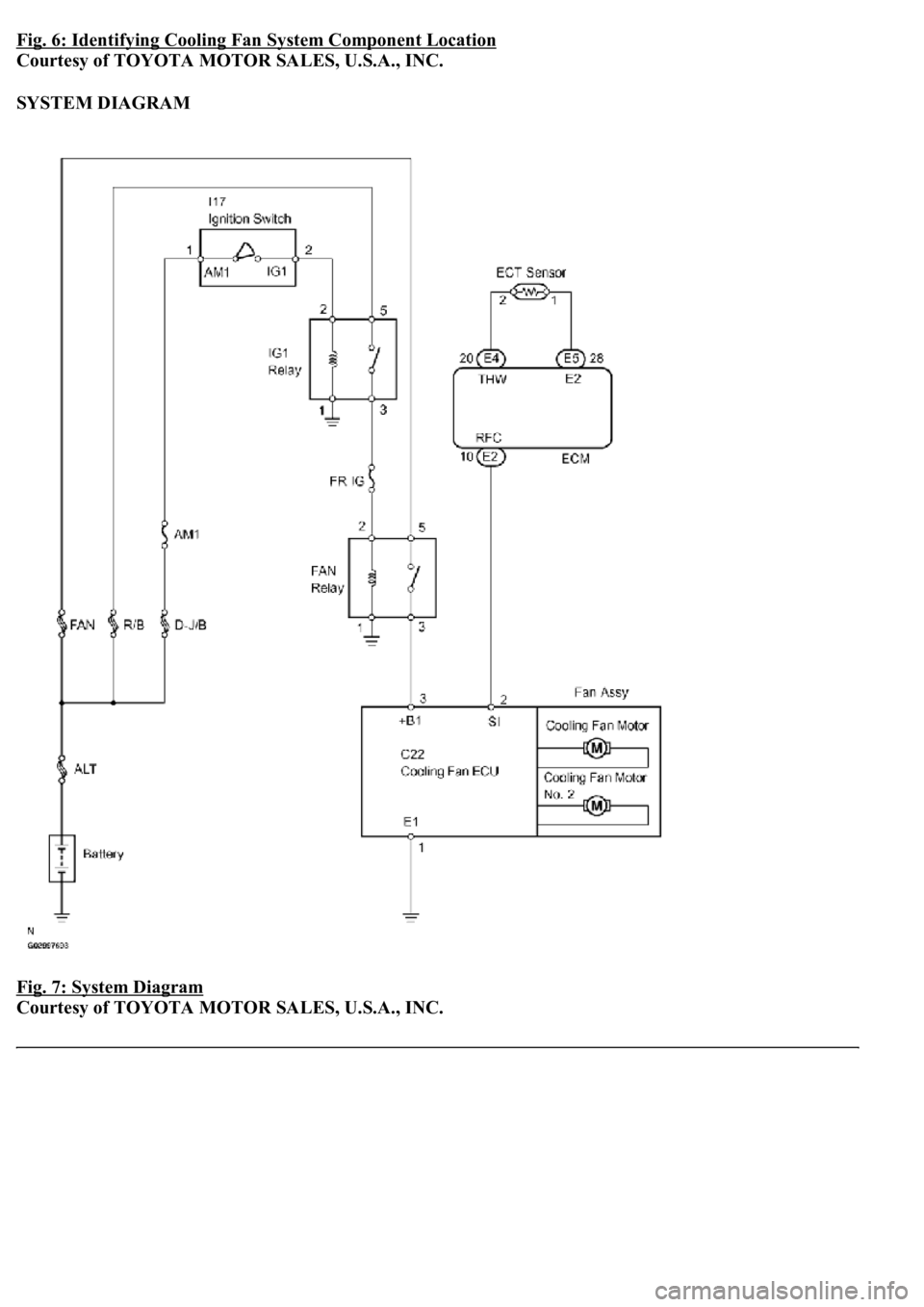
Fig. 6: Identifying Cooling Fan System Component Location
Courtesy of TOYOTA MOTOR SALES, U.S.A., INC.
SYSTEM DIAGRAM
Fig. 7: System Diagram
Courtesy of TOYOTA MOTOR SALES, U.S.A., INC.
Page 1858 of 4500
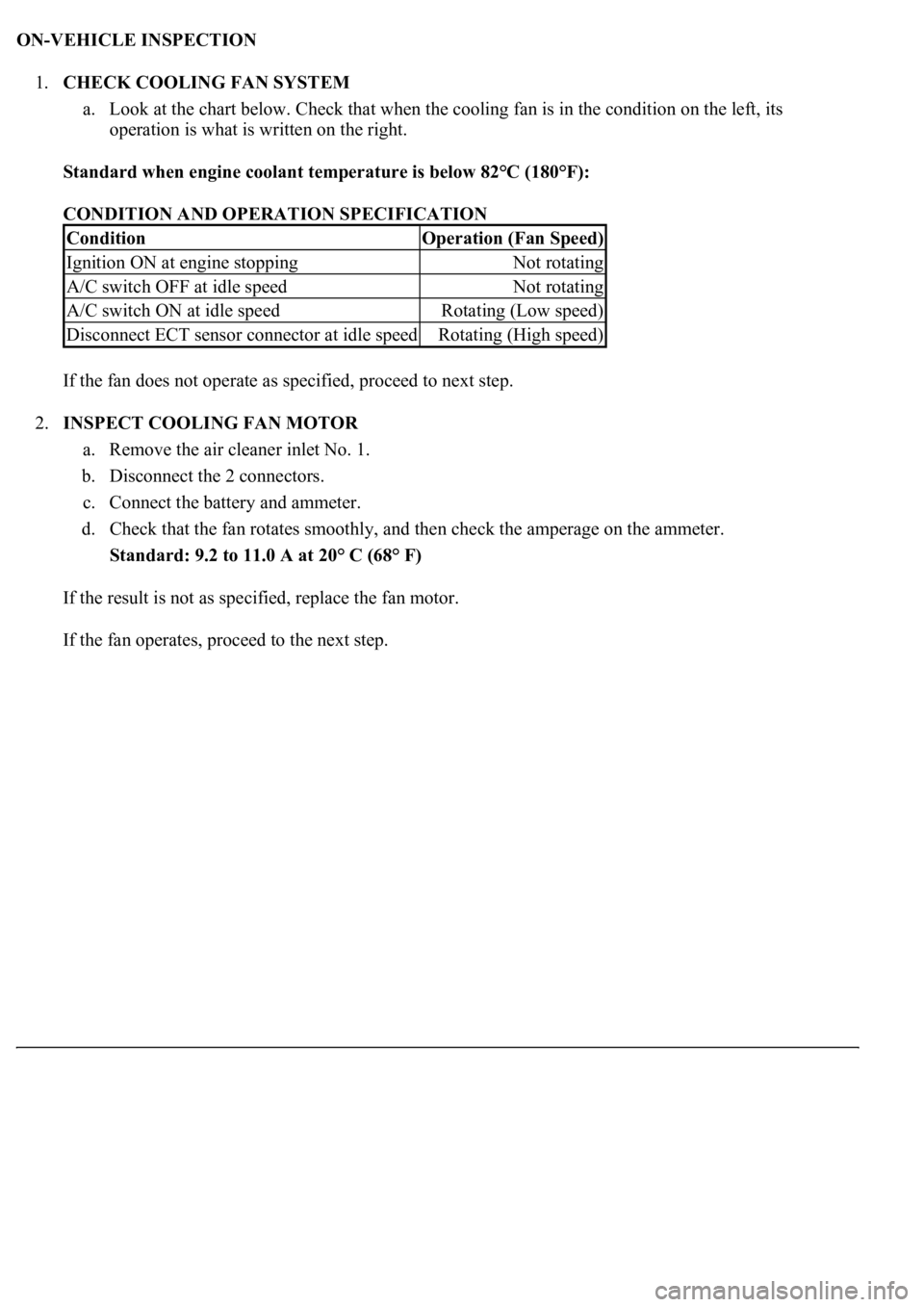
ON-VEHICLE INSPECTION
1.CHECK COOLING FAN SYSTEM
a. Look at the chart below. Check that when the cooling fan is in the condition on the left, its
operation is what is written on the right.
Standard when engine coolant temperature is below 82°C (180°F):
CONDITION AND OPERATION SPECIFICATION
If the fan does not operate as specified, proceed to next step.
2.INSPECT COOLING FAN MOTOR
a. Remove the air cleaner inlet No. 1.
b. Disconnect the 2 connectors.
c. Connect the battery and ammeter.
d. Check that the fan rotates smoothly, and then check the amperage on the ammeter.
Standard: 9.2 to 11.0 A at 20° C (68° F)
If the result is not as specified, replace the fan motor.
If the fan operates, proceed to the next step.
ConditionOperation (Fan Speed)
Ignition ON at engine stoppingNot rotating
A/C switch OFF at idle speedNot rotating
A/C switch ON at idle speedRotating (Low speed)
Disconnect ECT sensor connector at idle speedRotating (High speed)
Page 1859 of 4500
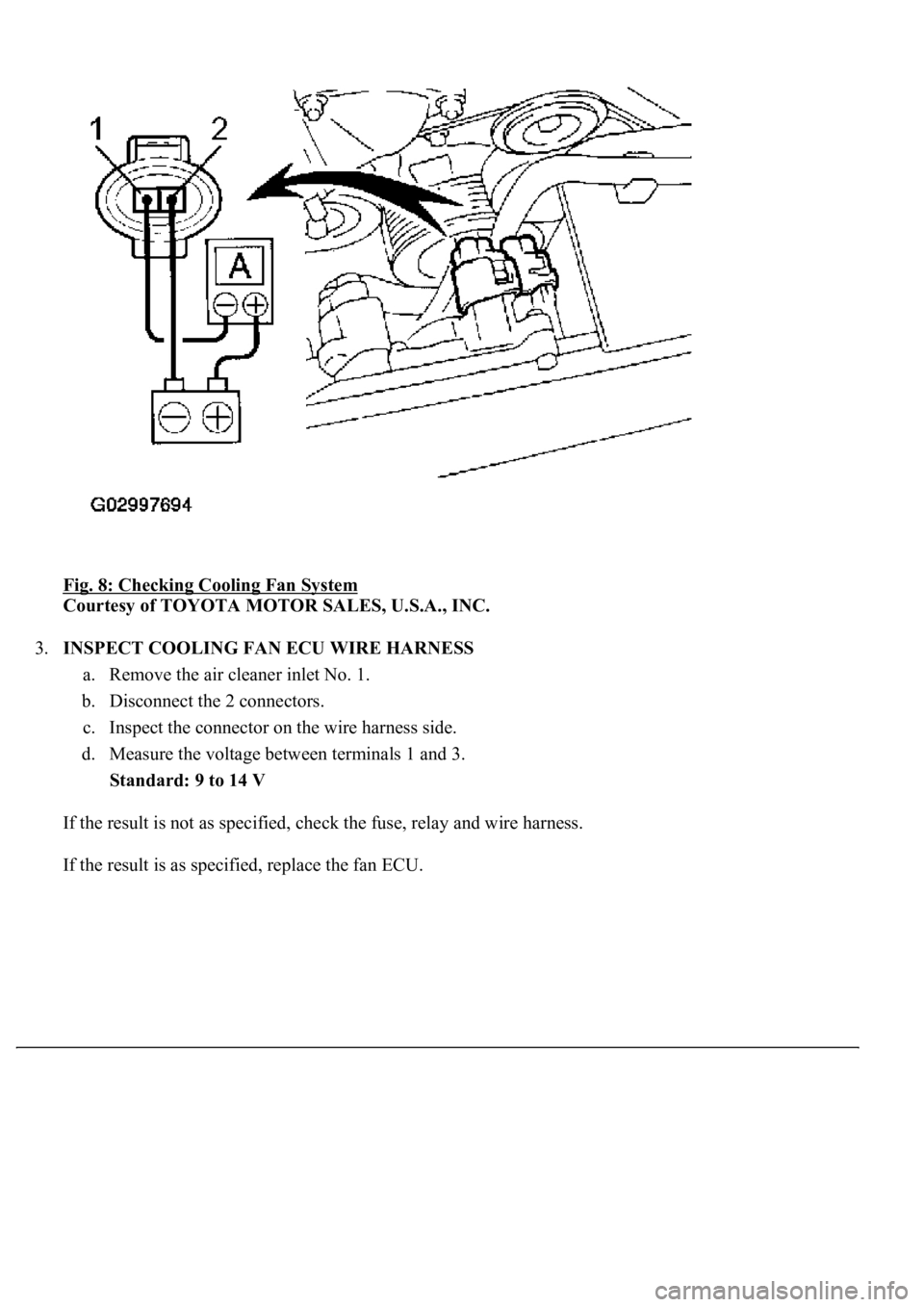
Fig. 8: Checking Cooling Fan System
Courtesy of TOYOTA MOTOR SALES, U.S.A., INC.
3.INSPECT COOLING FAN ECU WIRE HARNESS
a. Remove the air cleaner inlet No. 1.
b. Disconnect the 2 connectors.
c. Inspect the connector on the wire harness side.
d. Measure the voltage between terminals 1 and 3.
Standard: 9 to 14 V
If the result is not as specified, check the fuse, relay and wire harness.
If the result is as specified, replace the fan ECU.
Page 1863 of 4500
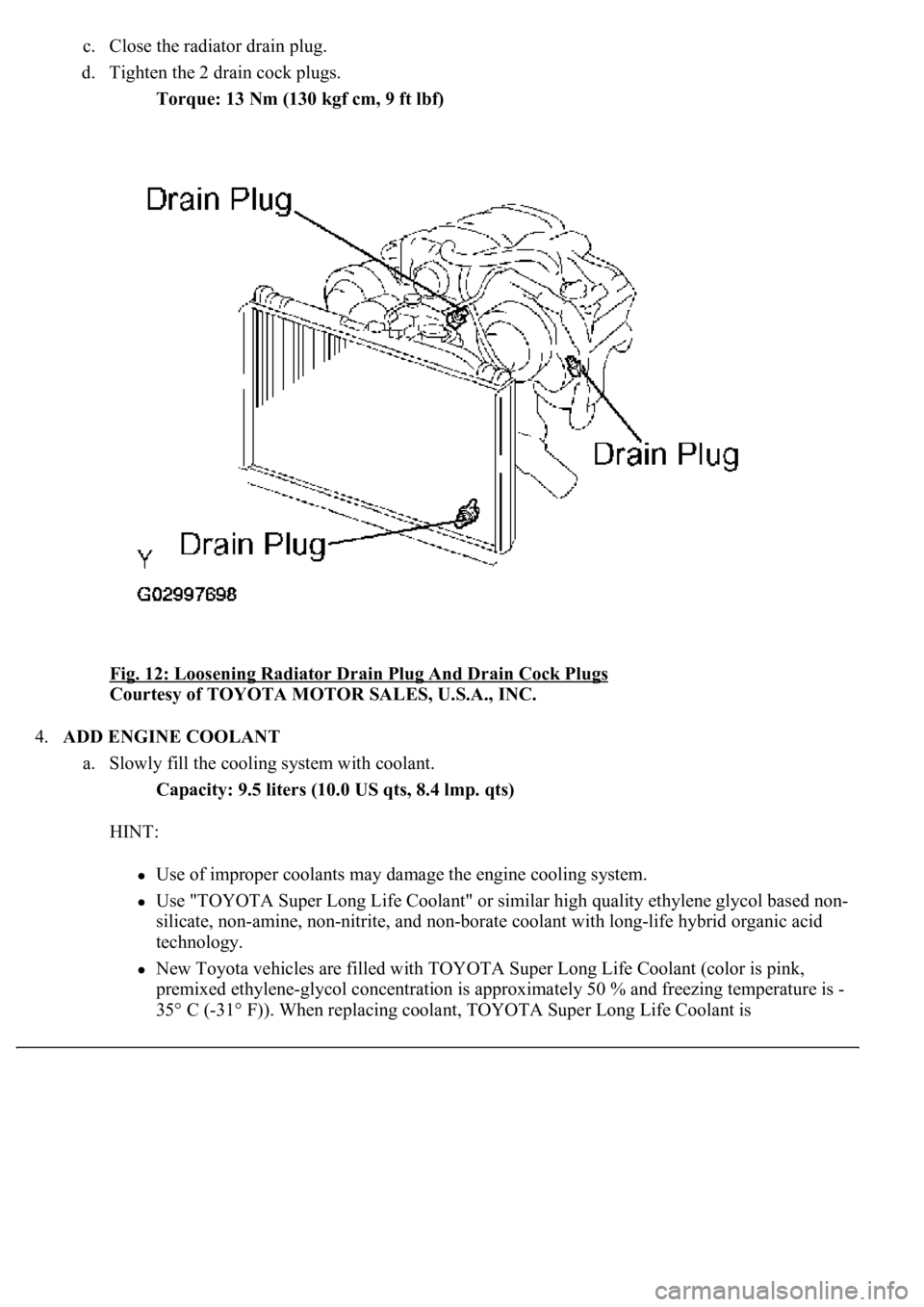
c. Close the radiator drain plug.
d. Tighten the 2 drain cock plugs.
Torque: 13 Nm (130 kgf cm, 9 ft lbf)
Fig. 12: Loosening Radiator Drain Plug And Drain Cock Plugs
Courtesy of TOYOTA MOTOR SALES, U.S.A., INC.
4.ADD ENGINE COOLANT
a. Slowly fill the cooling system with coolant.
Capacity: 9.5 liters (10.0 US qts, 8.4 lmp. qts)
HINT:
Use of improper coolants may damage the engine cooling system.
Use "TOYOTA Super Long Life Coolant" or similar high quality ethylene glycol based non-
silicate, non-amine, non-nitrite, and non-borate coolant with long-life hybrid organic acid
technology.
New Toyota vehicles are filled with TOYOTA Super Long Life Coolant (color is pink,
premixed ethylene-glycol concentration is approximately 50 % and freezing temperature is -
35° C (-31° F)). When replacing coolant, TOYOTA Super Long Life Coolant is
Page 1864 of 4500
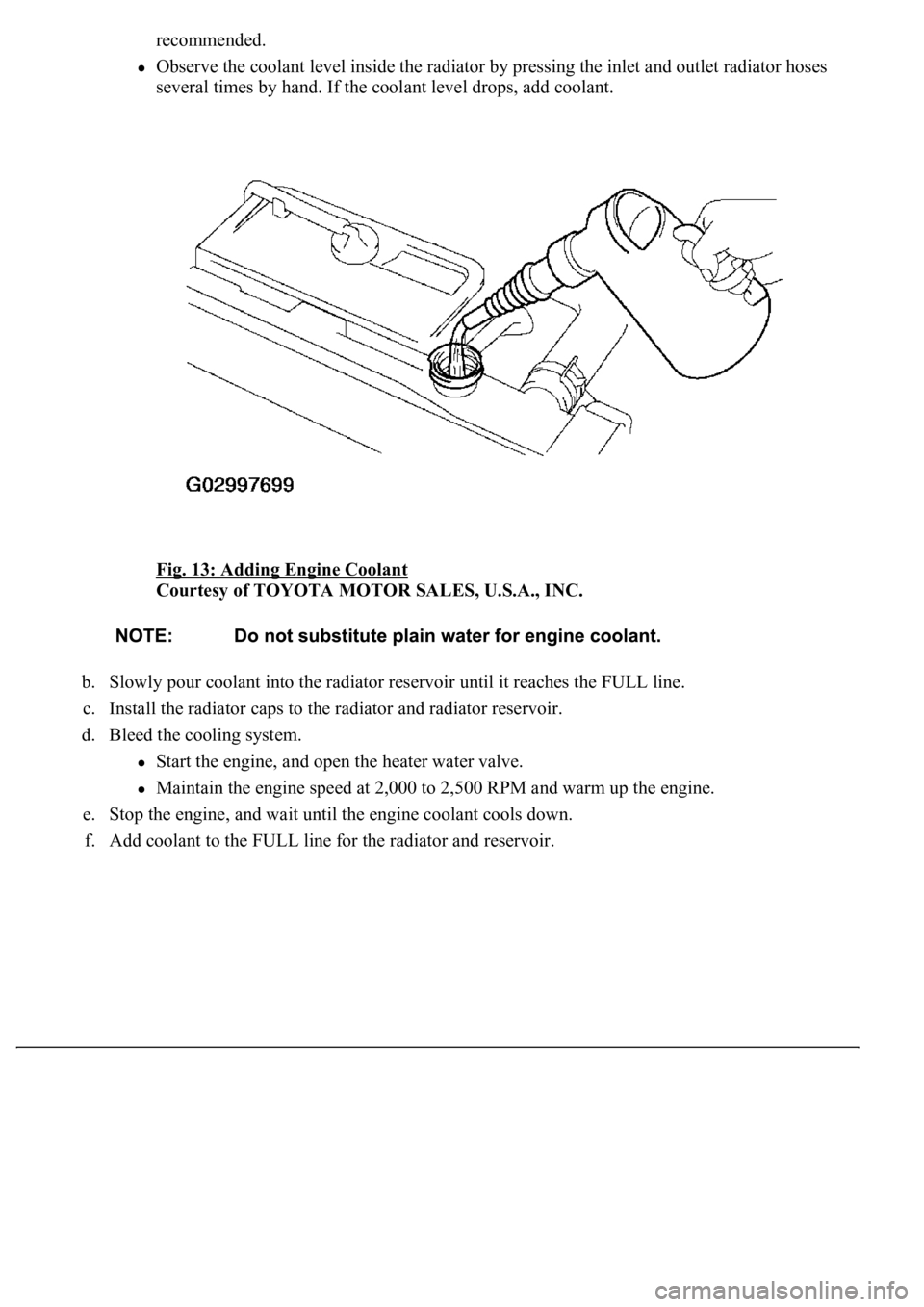
recommended.
<003200450056004800550059004800030057004b00480003004600520052004f0044005100570003004f004800590048004f0003004c00510056004c0047004800030057004b00480003005500440047004c004400570052005500030045005c0003005300
55004800560056004c0051004a00030057004b00480003004c[nlet and outlet radiator hoses
several times by hand. If the coolant level drops, add coolant.
Fig. 13: Adding Engine Coolant
Courtesy of TOYOTA MOTOR SALES, U.S.A., INC.
b. Slowly pour coolant into the radiator reservoir until it reaches the FULL line.
c. Install the radiator caps to the radiator and radiator reservoir.
d. Bleed the cooling system.
Start the engine, and open the heater water valve.
<00300044004c005100570044004c005100030057004b0048000300480051004a004c0051004800030056005300480048004700030044005700030015000f00130013001300030057005200030015000f001800130013000300350033003000030044005100
470003005a00440055005000030058005300030057004b0048[ engine.
e. Stop the engine, and wait until the engine coolant cools down.
f. Add coolant to the FULL line for the radiator and reservoir.
Page 1880 of 4500

3.REMOVE AIR CLEANER INLET NO.1
4.DRAIN ENGINE COOLANT (See REPLACEMENT
)
5.REMOVE V-BANK COVER
6.REMOVE INTAKE AIR CONNECTOR PIPE
7.DISCONNECT RADIATOR HOSE NO.1
8.DISCONNECT RADIATOR HOSE NO.2
9.DISCONNECT OIL COOLER INLET TUBE NO.1
10.DISCONNECT OIL COOLER OUTLET TUBE NO.1
11.REMOVE AIR CLEANER ASSY
12.REMOVE RADIATOR AND FAN ASSEMBLY
a. Disconnect the cooling fan ECU connector.
b. Remove the 2 nuts and 2 radiator upper supports.
c. Remove the radiator and fan assembly.
d. Remove the 2 radiator lower supports.
Fig. 29: Removing Nuts And Radiator Upper Supports
Courtesy of TOYOTA MOTOR SALES, U.S.A., INC.