cooling LINCOLN MKT 2016 User Guide
[x] Cancel search | Manufacturer: LINCOLN, Model Year: 2016, Model line: MKT, Model: LINCOLN MKT 2016Pages: 452, PDF Size: 4.69 MB
Page 300 of 452
Do not mix different colors or types of
coolant in your vehicle. Mixing of engine
coolants may harm your engine
’s cooling
system. Use prediluted engine coolant
meeting the correct specification. See
Capacities and Specifications (page 351).
The use of an incorrect coolant may harm
the engine or cooling system components
and may not be covered by the vehicle
Warranty.
In case of emergency, you can add a large
amount of water without engine coolant in
order to reach a vehicle service location. In
this instance, qualified personnel:
1. Must drain the cooling system.
2. Chemically clean the cooling system with
Motorcraft Premium Cooling System
Flush.
3. Refill with engine coolant as soon as possible.
Water alone, without engine coolant, can
cause engine damage from corrosion,
overheating or freezing. Do not use the following as a coolant
substitute:
•
Alcohol.
• Methanol.
• Brine.
• Any engine coolant mixed with alcohol
or methanol antifreeze or coolant.
Alcohol and other liquids can cause engine
damage from overheating or freezing.
Do not add extra inhibitors or additives to
the coolant. These can be harmful and
compromise the corrosion protection of the
engine coolant.
When adding coolant:
1. Unscrew the cap slowly. Any pressure will escape as you unscrew the cap.
2. Add prediluted engine coolant meeting the correct specification. See Capacities
and Specifications
(page 351).
3. Check the coolant level in the coolant reservoir the next few times you drive
your vehicle. 4. If necessary, add enough prediluted
engine coolant to bring the coolant level
to the proper level.
Recycled Engine Coolant
We do not recommend the use of recycled
engine coolant as an approved recycling
process is not yet available.
Used engine coolant should be disposed of
in an appropriate manner. Follow your
community’ s regulations and standards for
recycling and disposing of automotive fluids.
Severe Climates
If you drive in extremely cold climates:
• It may be necessary to have an
authorized dealer increase the coolant
concentration above 50%.
• A coolant concentration of 60% provides
improved freeze point protection. Engine
coolant concentrations above 60%
decrease the overheat protection
characteristics of the engine coolant and
may cause engine damage.
297
MKT (), enUSA, First Printing Maintenance
Page 301 of 452
If you drive in extremely hot climates:
•
It may be necessary to have an
authorized dealer decrease the coolant
concentration to 40%.
• A coolant concentration of 40% provides
improved overheat protection. Engine
coolant concentrations below 40%
decrease the freeze and corrosion
protection characteristics of the engine
coolant and may cause engine damage.
Vehicles driven year-round in non-extreme
climates should use prediluted engine
coolant for optimum cooling system and
engine protection.
What You Should Know About Fail-Safe
Cooling
If you deplete the engine coolant supply,
fail-safe cooling allows you to temporarily
drive your vehicle before you incur
incremental component damage. The
fail-safe distance depends on ambient
temperatures, vehicle load and terrain. How Fail-Safe Cooling Works
If the engine begins to overheat, the engine
coolant temperature gauge will move to the
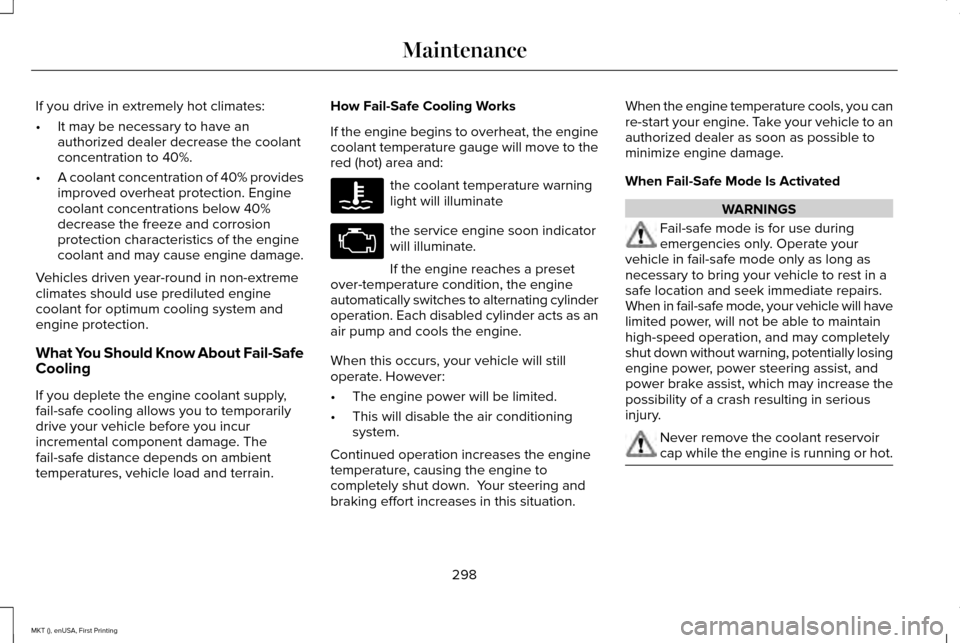
red (hot) area and: the coolant temperature warning
light will illuminate
the service engine soon indicator
will illuminate.
If the engine reaches a preset
over-temperature condition, the engine
automatically switches to alternating cylinder
operation. Each disabled cylinder acts as an
air pump and cools the engine.
When this occurs, your vehicle will still
operate. However:
• The engine power will be limited.
• This will disable the air conditioning
system.
Continued operation increases the engine
temperature, causing the engine to
completely shut down. Your steering and
braking effort increases in this situation. When the engine temperature cools, you can
re-start your engine. Take your vehicle to an
authorized dealer as soon as possible to
minimize engine damage.
When Fail-Safe Mode Is Activated
WARNINGS
Fail-safe mode is for use during
emergencies only. Operate your
vehicle in fail-safe mode only as long as
necessary to bring your vehicle to rest in a
safe location and seek immediate repairs.
When in fail-safe mode, your vehicle will have
limited power, will not be able to maintain
high-speed operation, and may completely
shut down without warning, potentially losing
engine power, power steering assist, and
power brake assist, which may increase the
possibility of a crash resulting in serious
injury. Never remove the coolant reservoir
cap while the engine is running or hot.
298
MKT (), enUSA, First Printing Maintenance
Page 303 of 452
2. Leave the engine running until the
coolant temperature gauge needle
moves away from the red (hot) area. After
several minutes, if the temperature does
not drop, follow the remaining steps.
3. Switch the engine off and wait for it to cool before checking the coolant level.
4. If the coolant level is normal, restart your
engine and continue.
5. If the coolant is low, add coolant, and restart the engine. See Adding Engine
Coolant or How Fail-Safe Cooling Works
in this chapter for more information.
AUTOMATIC TRANSMISSION
FLUID CHECK - 2.0L ECOBOOST™
Note: Transmission fluid should be checked
by an authorized dealer. If required, fluid
should be added by an authorized dealer.
The automatic transmission does not have
a transmission fluid dipstick. Have an authorized dealer check and change
the transmission fluid at the correct service
interval. See Scheduled Maintenance (page
387
). Your transmission does not consume
fluid. However, the fluid level should be
checked if the transmission is not working
properly, (i.e., if the transmission slips or
shifts slowly) or if you notice some sign of
fluid leakage.
Do not use supplemental transmission fluid
additives, treatments or cleaning agents. The
use of these materials may affect
transmission operation and result in damage
to internal transmission components.
AUTOMATIC TRANSMISSION
FLUID CHECK - 3.5L ECOBOOST™/
3.7L WARNING
Do not use supplemental transmission
fluid additives, treatments or cleaning
agents. The use of these materials may affect
transmission operation and result in damage
to internal transmission components. The transmission does not consume fluid.
However, if the transmission slips or shifts
slowly you should check the fluid level. If you
notice a sign of leaking fluid, contact an
authorized dealer.
Checking the Transmission Fluid Level
WARNING
The dipstick and surrounding
components are hot. Use gloves when
moving components and checking the
transmission fluid level. Failure to follow this
warning could result in serious personal
injury. Only check the transmission fluid level when
the engine is at normal operating
temperature
179°F (82°C)-199°F (93°C).
Normal operating temperature is reached
after driving approximately
20 mi (30 km).
300
MKT (), enUSA, First Printing Maintenance
Page 323 of 452
•
Cover interior trim to prevent fading.
• Keep all rubber parts free from oil and
solvents.
Engine
• Change the engine oil and filter prior to
storage because used engine oil contains
contaminates which may cause engine
damage.
• Start the engine every 15 days for a
minimum of 15 minutes. Run at fast idle
with the climate controls set to defrost
until the engine reaches normal
operating temperature.
• With your foot on the brake, shift through
all the gears while the engine is running.
• We recommend that you change the
engine oil before you use your vehicle
again.
Fuel system
• Fill the fuel tank with high-quality fuel
until the first automatic shutoff of the fuel
pump nozzle. Cooling system
•
Protect against freezing temperatures.
• When removing your vehicle from
storage, check coolant fluid level.
Confirm that there are no cooling system
leaks and that fluid is at the
recommended level.
Battery
• Check and recharge as necessary. Keep
connections clean.
• If storing your vehicle for more than 30
days without recharging the battery, we
recommend that you disconnect the
battery cables to maintain battery charge
for quick starting.
Note: It is necessary to reset memory
features if battery cables are disconnected.
Brakes
• Make sure the brakes and parking brake
release fully.
Tires
• Maintain recommended air pressure. Miscellaneous
•
Make sure all linkages, cables, levers and
pins under your vehicle are covered with
grease to prevent rust.
• Move vehicles at least 25 ft (7.5 m) every
15 days to lubricate working parts and
prevent corrosion.
Removing Vehicle From Storage
When your vehicle is ready to come out of
storage, do the following:
• Wash your vehicle to remove any dirt or
grease film build-up on window surfaces.
• Check windshield wipers for any
deterioration.
• Check under the hood for any foreign
material that may have collected during
storage such as mice or squirrel nests.
• Check the exhaust for any foreign
material that may have collected during
storage.
• Check tire pressures and set tire inflation
per the Tire Label.
320
MKT (), enUSA, First Printing Vehicle Care
Page 392 of 452
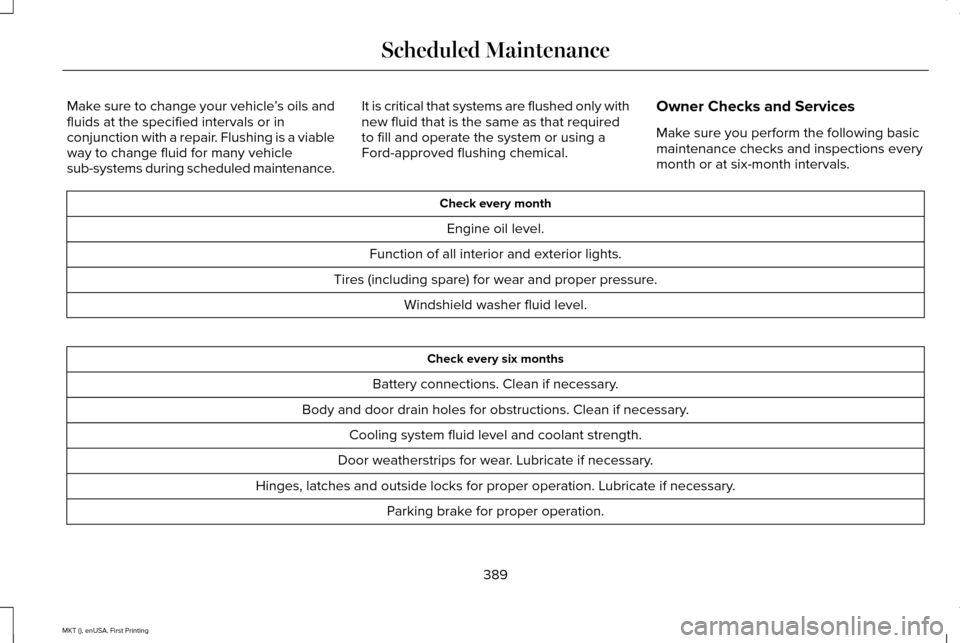
Make sure to change your vehicle
’s oils and
fluids at the specified intervals or in
conjunction with a repair. Flushing is a viable
way to change fluid for many vehicle
sub-systems during scheduled maintenance. It is critical that systems are flushed only with
new fluid that is the same as that required
to fill and operate the system or using a
Ford-approved flushing chemical.
Owner Checks and Services
Make sure you perform the following basic
maintenance checks and inspections every
month or at six-month intervals. Check every month
Engine oil level.
Function of all interior and exterior lights.
Tires (including spare) for wear and proper pressure. Windshield washer fluid level. Check every six months
Battery connections. Clean if necessary.
Body and door drain holes for obstructions. Clean if necessary. Cooling system fluid level and coolant strength.
Door weatherstrips for wear. Lubricate if necessary.
Hinges, latches and outside locks for proper operation. Lubricate if necessary. Parking brake for proper operation.
389
MKT (), enUSA, First Printing Scheduled Maintenance
Page 396 of 452
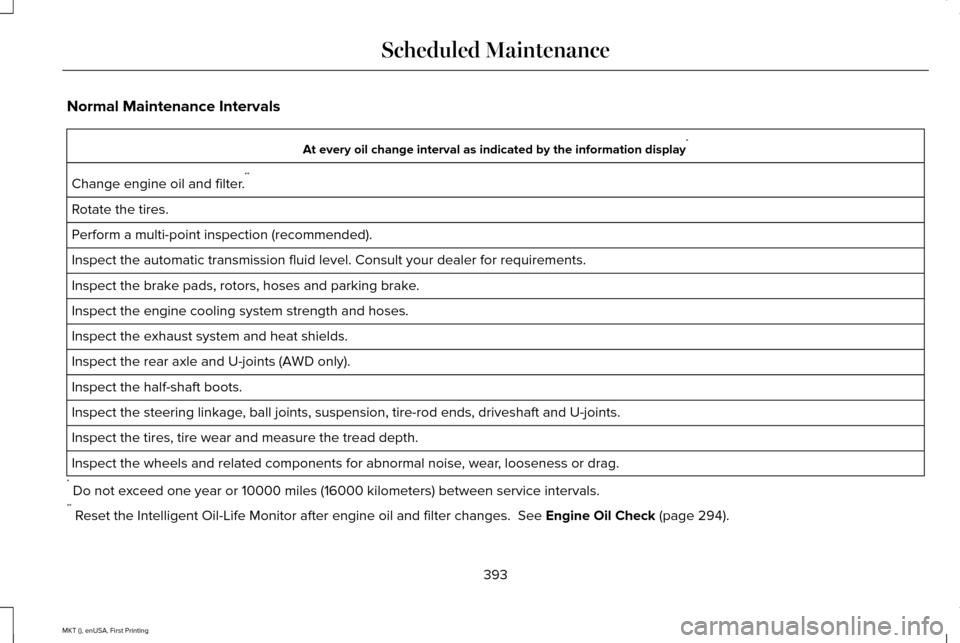
Normal Maintenance Intervals
At every oil change interval as indicated by the information display
*
Change engine oil and filter. **
Rotate the tires.
Perform a multi-point inspection (recommended).
Inspect the automatic transmission fluid level. Consult your dealer for \
requirements.
Inspect the brake pads, rotors, hoses and parking brake.
Inspect the engine cooling system strength and hoses.
Inspect the exhaust system and heat shields.
Inspect the rear axle and U-joints (AWD only).
Inspect the half-shaft boots.
Inspect the steering linkage, ball joints, suspension, tire-rod ends, driveshaft and U-joints.
Inspect the tires, tire wear and measure the tread depth.
Inspect the wheels and related components for abnormal noise, wear, looseness or drag.
* Do not exceed one year or 10000 miles (16000 kilometers) between service interv\
als.
** Reset the Intelligent Oil-Life Monitor after engine oil and filter change\
s. See Engine Oil Check (page 294).
393
MKT (), enUSA, First Printing Scheduled Maintenance
Page 444 of 452

Cleaning the Interior.....................................315
Cleaning Black Label or Presidential
Interior................................................................\
316
Cleaning the Windows and Wiper Blades............................................................315
Clearing All MyKeys.......................................65
Climate Control..............................................127
Climate Controlled Seats............................150 Cooled Seats........................................................150
Heated Seats........................................................150
Collision Warning System..........................229 PRINCIPLE OF OPERATION............................229
Coolant Check See: Engine Coolant Check............................296
Crash Sensors and Airbag Indicator..........55
Creating a MyKey...........................................64 Programming/Changing Configurable
Settings...............................................................64
Cross Traffic Alert.........................................224 False Alerts..........................................................228
Switching the System Off and On..................228
System Errors......................................................228
System Lights, Messages and Audible
Alerts.................................................................227
System Limitations.............................................227
Using the System...............................................224 Cruise Control..................................................83
Principle of Operation.......................................206
Type 1.......................................................................83
Type 2......................................................................84
Cruise control See: Using Cruise Control...............................206
Customer Assistance...................................261
D
Data Recording
..................................................9
Event Data Recording...........................................10
Service Data Recording.........................................9
Daytime Running Lamps...............................92
Direction Indicators
........................................95
Lane Change..........................................................95
Drive Control.................................................232 LINCOLN DRIVE CONTROL............................232
Driver Alert......................................................215 Using Driver Alert................................................215
Driver and Passenger Airbags....................49 Children and Airbags...........................................50
Proper Driver and Front Passenger Seating
Adjustment .........................................................50
Driving Aids
....................................................215
Driving Hints..................................................253
Driving Through Water
...............................253 DRL
See: Daytime Running Lamps...........................92
E
Economical Driving
......................................253
Emission Control System.............................173 On-Board Diagnostics (OBD-II)........................174
Readiness for Inspection and Maintenance
(I/M) Testing......................................................175
End User License Agreement....................419 VEHICLE SOFTWARE END USER LICENSE
AGREEMENT (EULA) .....................................419
Engine Block Heater....................................165 Using the Engine Block Heater.......................166
Engine Coolant Check
................................296
Adding Engine Coolant....................................296
Checking the Engine Coolant.........................296
Recycled Engine Coolant.................................297
Severe Climates..................................................297
What You Should Know About Fail-Safe
Cooling.............................................................298
Engine Immobilizer See: Passive Anti-Theft System........................79
Engine Oil Check.........................................294 Adding Engine Oil..............................................294
Engine Oil Dipstick - 2.0L EcoBoost™....................................................294
441
MKT (), enUSA, First Printing Index
Page 446 of 452
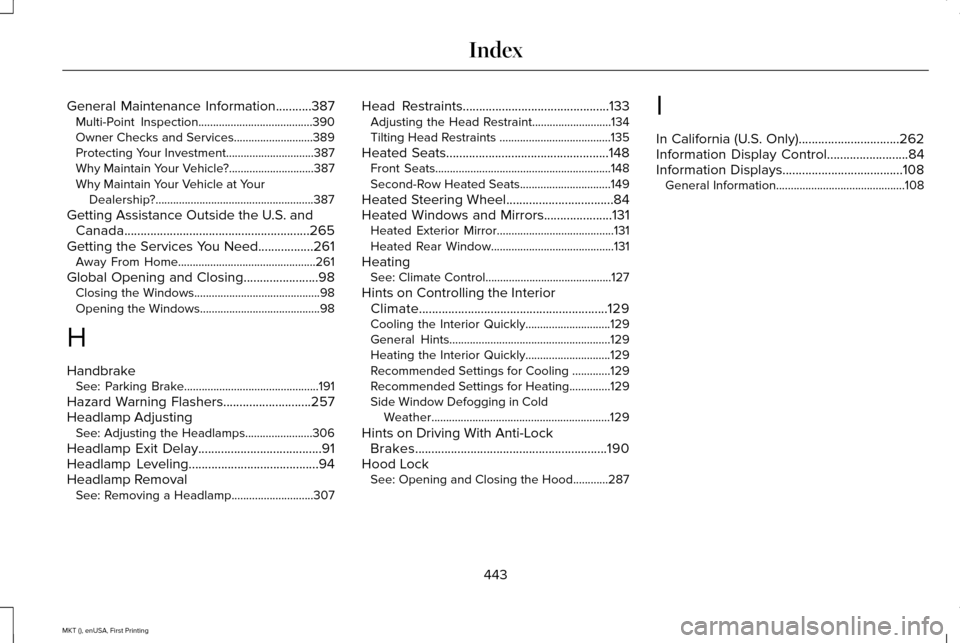
General Maintenance Information...........387
Multi-Point Inspection.......................................390
Owner Checks and Services...........................389
Protecting Your Investment..............................387
Why Maintain Your Vehicle?.............................387
Why Maintain Your Vehicle at Your
Dealership?......................................................387
Getting Assistance Outside the U.S. and Canada.........................................................265
Getting the Services You Need.................261 Away From Home...............................................261
Global Opening and Closing.......................98 Closing the Windows...........................................98
Opening the Windows.........................................98
H
Handbrake See: Parking Brake..............................................191
Hazard Warning Flashers...........................257
Headlamp Adjusting See: Adjusting the Headlamps.......................306
Headlamp Exit Delay......................................91
Headlamp Leveling........................................94
Headlamp Removal See: Removing a Headlamp............................307 Head Restraints.............................................133
Adjusting the Head Restraint...........................134
Tilting Head Restraints ......................................135
Heated Seats
..................................................148
Front Seats............................................................148
Second-Row Heated Seats...............................149
Heated Steering Wheel.................................84
Heated Windows and Mirrors.....................131 Heated Exterior Mirror........................................131
Heated Rear Window..........................................131
Heating See: Climate Control...........................................127
Hints on Controlling the Interior Climate..........................................................129
Cooling the Interior Quickly.............................129
General Hints.......................................................129
Heating the Interior Quickly.............................129
Recommended Settings for Cooling .............
129
Recommended Settings for Heating..............129
Side Window Defogging in Cold Weather.............................................................129
Hints on Driving With Anti-Lock Brakes...........................................................190
Hood Lock See: Opening and Closing the Hood............287 I
In California (U.S. Only)...............................262
Information Display Control.........................84
Information Displays.....................................108
General Information............................................108
443
MKT (), enUSA, First Printing Index
Page 451 of 452

Towing the Vehicle on Four Wheels - 3.5L
Ecoboost™/3.7L............................................251
Emergency Towing.............................................251
Recreational Towing...........................................251
Towing.............................................................243
Traction Control.............................................192
Principle of Operation........................................192
Trailer Sway Control....................................244
Transmission Code Designation..............359
Transmission...................................................177
Transmission See: Transmission................................................177
Transporting the Vehicle............................249
U
Under Hood Overview - 2.0L EcoBoost™...................................................288
Under Hood Overview - 3.5L Ecoboost™....................................................290
Under Hood Overview - 3.7L....................292 Engine Shield......................................................293
Universal Garage Door Opener................152 HomeLink Wireless Control System...............152
USB Port
..........................................................381 Using Adaptive Cruise Control.................207
Automatic Cancellation.......................................211
Blocked Sensor....................................................213
Canceling the Set Speed..................................210
Changing the Set Speed....................................211
Detection Issues...................................................211
Following a Vehicle...........................................208
Hilly Condition Usage.........................................211
Overriding the System.......................................210
Resuming the Set Speed....................................211
Setting the Adaptive Cruise Speed...............208
Setting the Gap Distance.................................209
Switching Adaptive Cruise Control Off...........211
Switching Adaptive Cruise Control On........208
Switching to Normal Cruise Control...............214
System Not Available.........................................213
Using All-Wheel Drive...................................181 Driving In Special Conditions With All-Wheel
Drive (AWD)......................................................184
Operating AWD Vehicles With Mismatched Tires....................................................................183
Operating AWD Vehicles With Spare Tires ....................................................................182
Using Cruise Control...................................206 Switching Cruise Control Off...........................207
Switching Cruise Control On...........................206
Using MyKey With Remote Start Systems..........................................................68 Using Snow Chains......................................337
Using Stability Control.................................195
Using Traction Control
.................................192
Switching the System Off..................................192
System Indicator Lights and Messages.........192
Using a Switch.....................................................192
Using the Information Display Controls........192
Utilizing the Mediation/Arbitration Program (Canada Only)
.............................................264
V
Vehicle Care...................................................312 General Information............................................312
Vehicle Certification Label.........................358
Vehicle Identification Number..................358
Vehicle Storage.............................................319 Battery...................................................................320
Body........................................................................\
319
Brakes...................................................................320
Cooling system...................................................320
Engine...................................................................320
Fuel system..........................................................320
General..................................................................319
Miscellaneous.....................................................320
Removing Vehicle From Storage...................320
Tires.......................................................................320
448
MKT (), enUSA, First Printing Index