ECU MERCEDES-BENZ E-CLASS CABRIOLET 2010 User Guide
[x] Cancel search | Manufacturer: MERCEDES-BENZ, Model Year: 2010, Model line: E-CLASS CABRIOLET, Model: MERCEDES-BENZ E-CLASS CABRIOLET 2010Pages: 333, PDF Size: 7.64 MB
Page 52 of 333
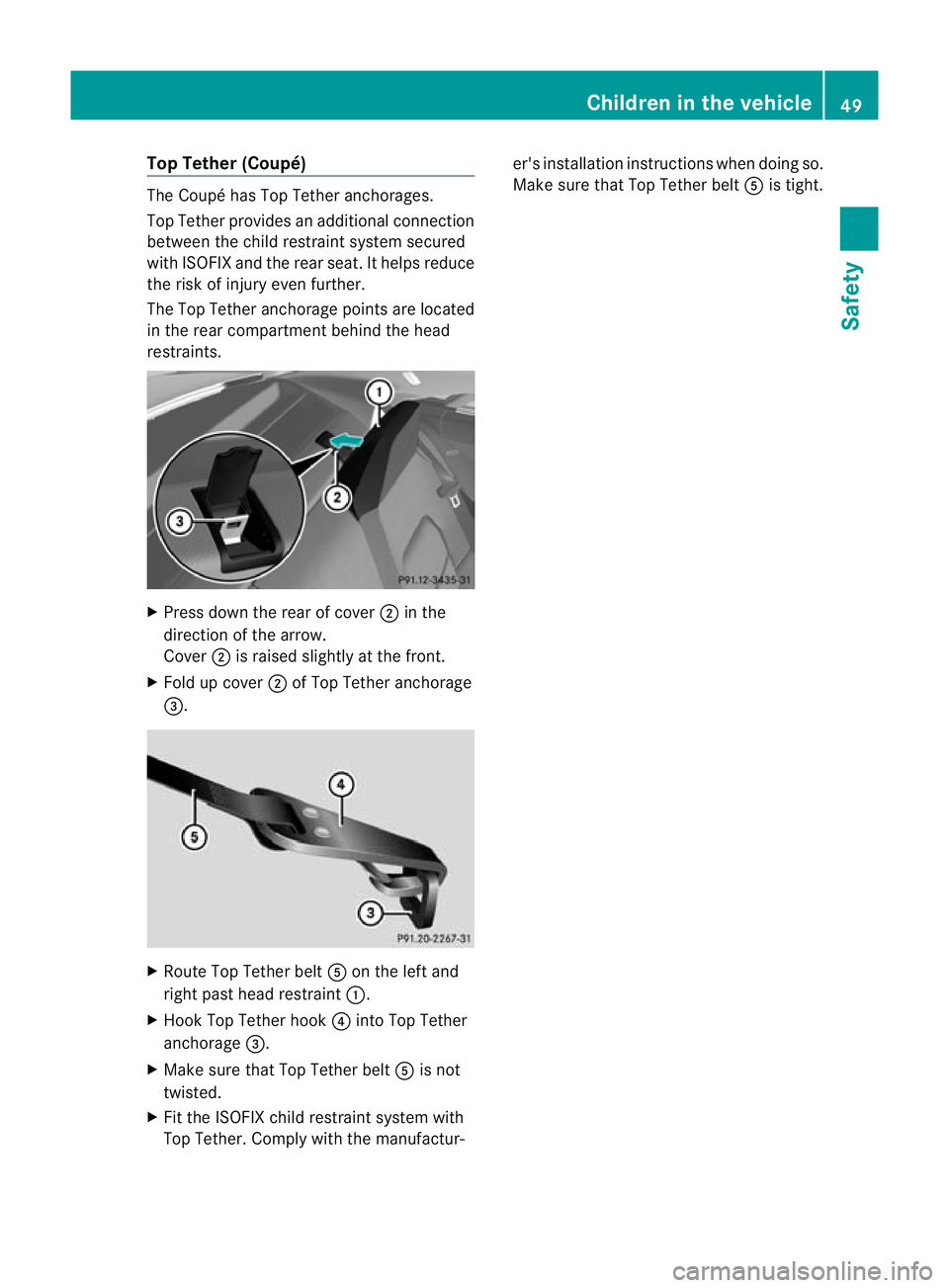
Top Tether (Coupé)
The Coup
éhas Top Tethe ranchorages.
To pT ethe rprovides an additional connecti on
between the child restraint system secured
with ISOFIX and the rear seat. It help sreduce
the risk of injury even further.
The Top Tether anchorage point sare located
in th erear compartmen tbehind the head
restraints. X
Press down the rear of cover ;in the
direc tion of the arrow.
Cover ;is raised slightly at the front.
X Fold up cover ;of Top Tether anchorage
=. X
Rout eTop Tether belt Aon the left and
right past head restraint :.
X Hook Top Tether hook ?intoT op Tether
anchorage =.
X Make sure that Top Tether belt Ais not
twisted.
X Fit the ISOFIX child restraint system with
Top Tether .Compl ywith the manufactur- er'
sinstallatio ninstructions whe ndoing so.
Make sure that Top Tether belt Ais tight. Children in th
evehicle
49Safety
BA 207ECE ÄJ 2010 /1a; 1; 2, en-GB
mkalafa Version: 3.0.2.11 2010-01-26T13:03:22+01:00 -Seite 49 Z
Page 54 of 333
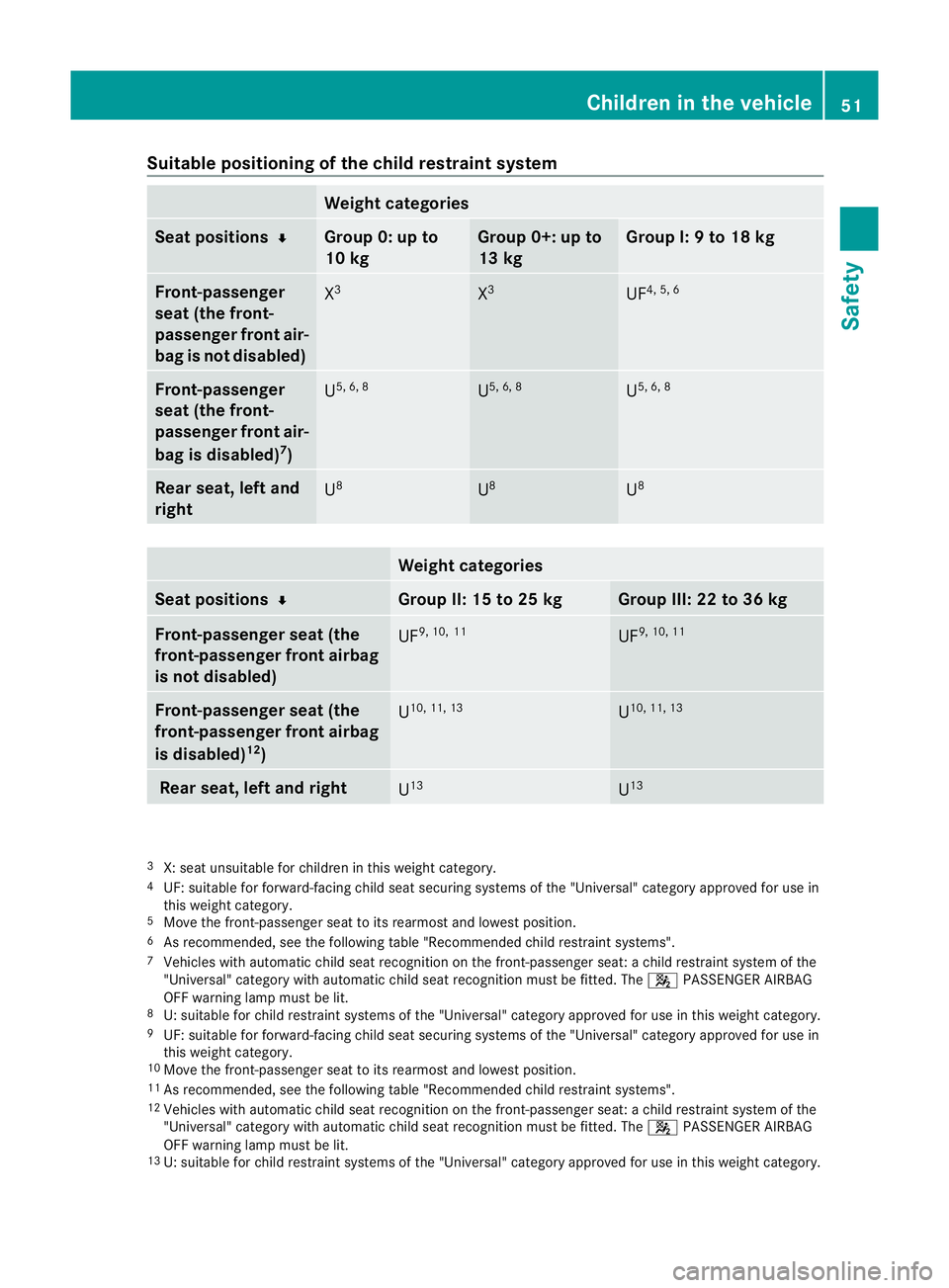
Suitabl
epositioning of the child restraint system Weight categories
Seat positions
¬ Grou
p0:upto
10 kg Group 0+: up to
13 kg Group I:
9to18kg Front-passenger
seat (the front-
passenger front air-
bag is not disabled)
X
3 X
3 UF
4, 5, 6 Front-passenger
seat (the front-
passenger front air-
bag is disabled)
7
) U
5, 6, 8 U
5, 6, 8 U
5, 6, 8 Rear seat, left and
right
U
8 U
8 U
8 Weight categories
Seat positions
¬ Group II: 15 to 25 kg Group III
:22to36kg Front-passenger seat (the
front-passenger front airbag
is not disabled)
UF
9, 10, 11 UF
9, 10, 11 Front-passenger seat (the
front-passenger front airbag
is disabled)
12
) U
10, 11, 13 U
10, 11, 13 Rear seat, left and right
U
13 U
13 3
X: seat unsuitable for children in this weight category.
4 UF: suitable for forward-facin gchild seat securing system softhe "Universal" category approved for use in
this weight category.
5 Move the front-passenger seat to its rearmost and lowest position.
6 As recommended, see the following table "Recommended child restraint systems".
7 Vehicles with automatic child seat recognition on the front-passenger seat: achild restraint system of the
"Universal "category with automatic child seat recognition must be fitted. The 4PASSENGER AIRBAG
OFF warning lamp must be lit.
8 U: suitable for child restraint systems of the "Universal" category approved for use in this weight category.
9 UF: suitable for forward-facing child seat securing systems of the "Universal" category approved for use in
this weight category.
10 Move the front-passenger seat to its rearmost and lowest position.
11 As recommended, see the following table "Recommended child restraint systems".
12 Vehicles with automatic child seat recognition on the front-passenger seat: achild restraint system of the
"Universal "category with automatic child seat recognition must be fitted. The 4PASSENGER AIRBAG
OFF warning lamp must be lit.
13 U: suitable for child restraint systems of the "Universal" category approved for use in this weight category. Childre
ninthe vehic le
51Safety
BA 207ECE ÄJ 2010 /1a; 1; 2, en-GB
mkalafa Version: 3.0.2.11 2010-01-26T13:03:22+01:00 -Seite 51 Z
Page 55 of 333
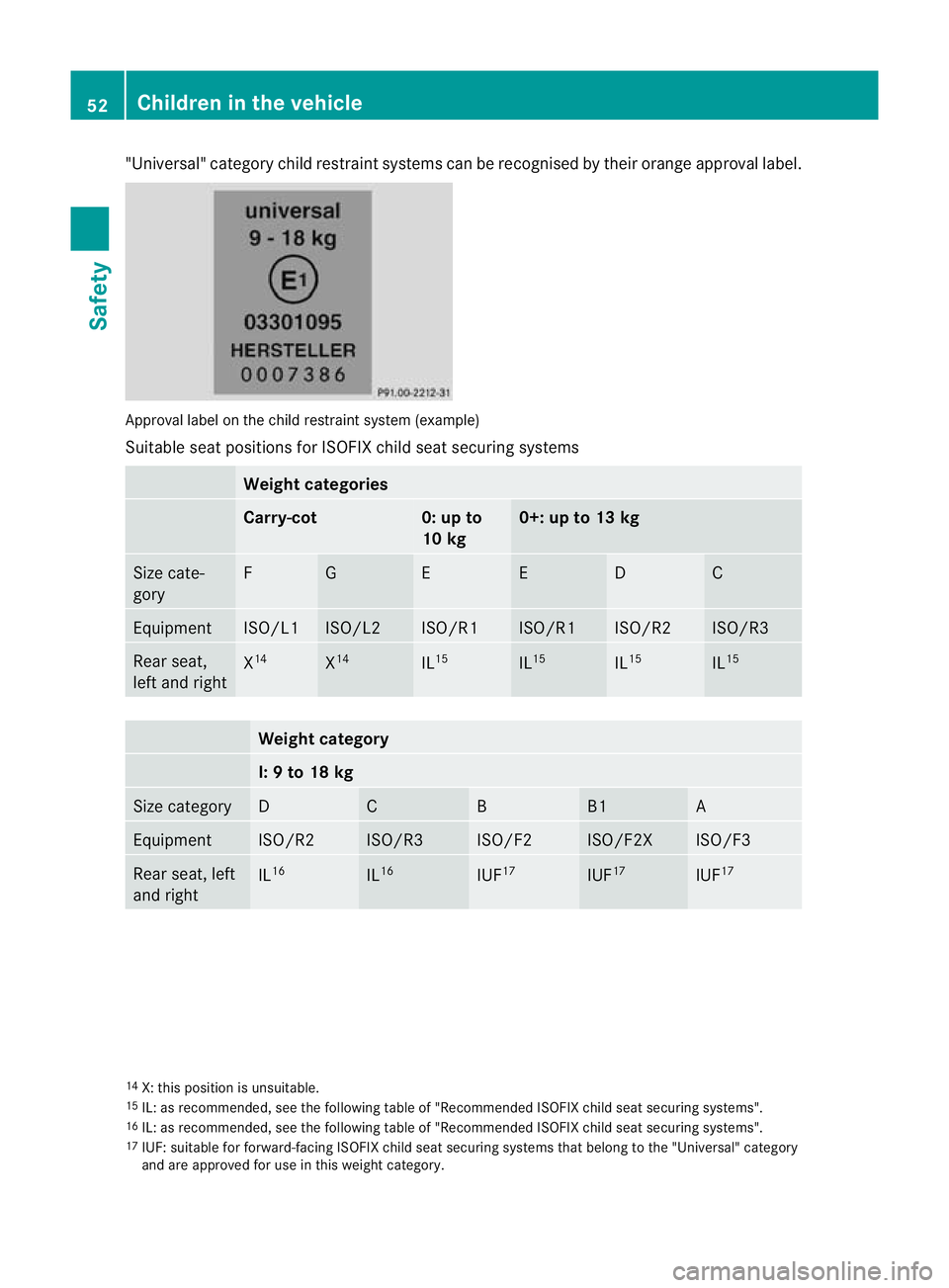
"Universal" category child restraint systems can be recognised by their orange approval label.
Approval label on the child restraint system (example)
Suitable seat positions for ISOFIX child seat securing systems
Weight categories
Carry-cot 0: up to
10 kg 0+: up to 13 kg
Size cate-
gory F G E E D C
Equipment ISO/L1 ISO/L2 ISO/R1 ISO/R1 ISO/R2 ISO/R3
Rear seat,
left and right
X
14 X
14 IL
15 IL
15 IL
15 IL
15 Weight category
I:
9to18kg Size category D C B B1 A
Equipment ISO/R2 ISO/R3 ISO/F2 ISO/F2X ISO/F3
Rear seat, left
and right
IL
16 IL
16 IUF
17 IUF
17 IUF
17 14
X: this position is unsuitable.
15 IL: as recommended ,see the following table of "Recommended ISOFIX child seat securing systems".
16 IL:a sr ecommended, see the following table of "Recommended ISOFIX child seat securing systems".
17 IUF: suitable for forward-facing ISOFIX child seat securing systems that belong to the "Universal" category
and are approved for use in this weight category. 52
Children in the vehicleSafety
BA 20
7ECE ÄJ 2010/1a; 1; 2, en-GB
mkalafa Version: 3.0.2.11
2010-01-26T13:03:22+01:00
-Seite 52
Page 56 of 333
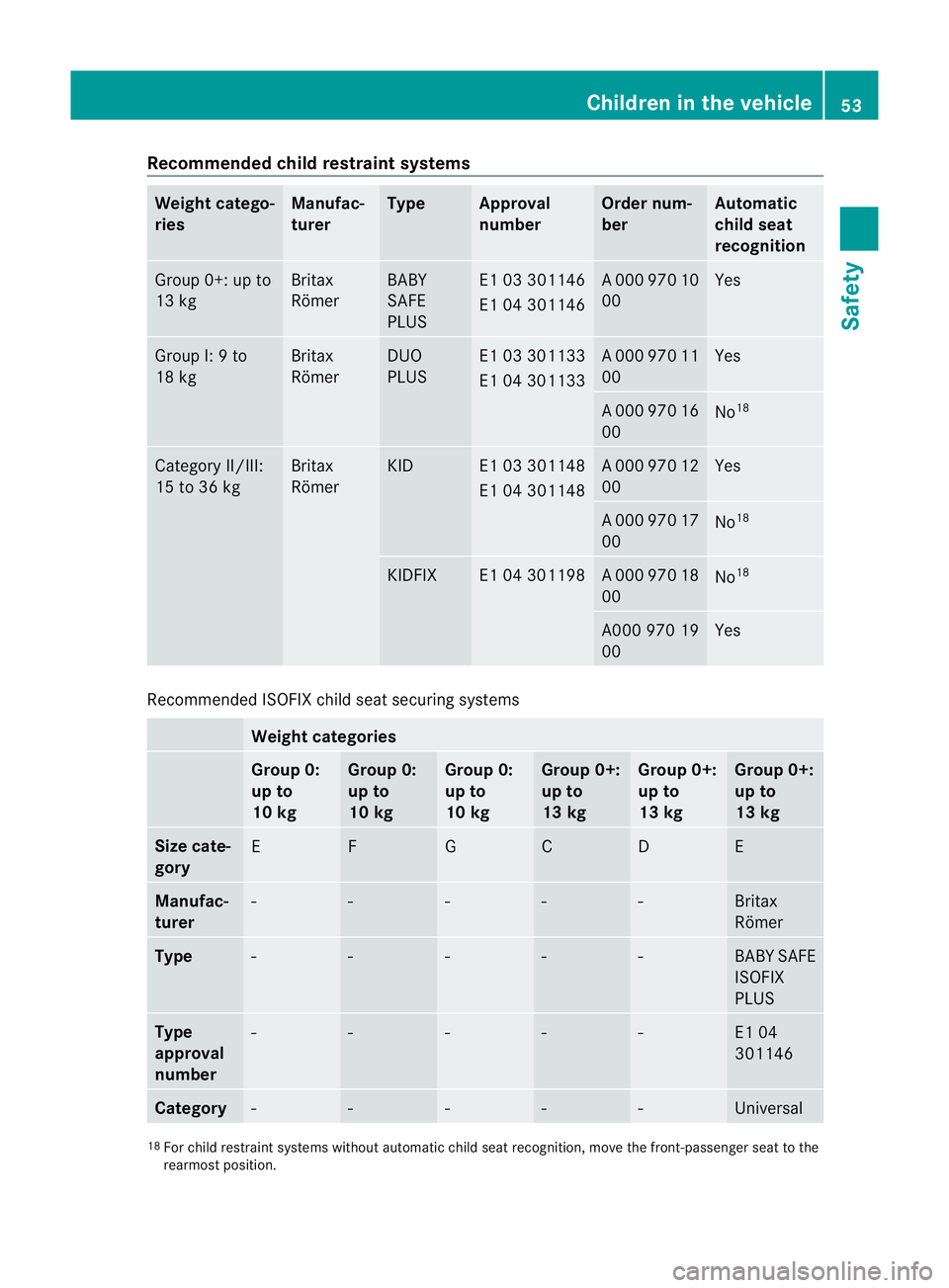
Recommende
dchild restraint systems Weight catego-
ries Manufac-
turer Type Approval
number Ord
er nu m-
ber Automatic
child seat
recognition
Group 0+: up to
13 kg Britax
Römer BABY
SAFE
PLUS E1 03 301146
E1 04 301146 A0
00 970 10
00 Yes
Group I:
9to
18 kg Britax
Römer DUO
PLUS E1 03 301133
E1 04 301133 A0
00 970 11
00 Yes
A0
00 970 16
00 No
18 Categ
oryI I/III:
15 to 36 kg Brit
ax
Römer KID E1 03 301148
E1 04 301148 A0
00 970 12
00 Yes
A0
00 970 17
00 No
18 KIDFIX E1 04 301198 A0
00 970 18
00 No
18 A000 970 19
00 Yes
Recommende
dISOFIX child se at securing systems Weight categories
Group 0:
up to
10 kg Group 0:
up to
10 kg Group 0:
up to
10 kg Group 0+:
up to
13 kg Group 0+:
up to
13 kg Group 0+:
up to
13 kg
Size cate-
gory
E F G C D E
Manufac-
turer
- - - - - Britax
Römer
Type
- - - - - BABY SAFE
ISOFIX
PLUS
Type
approval
number
- - - - - E1 04
301146
Category
- - - - - Universal
18
For child restraint systems without automati cchild seat recognition ,move the front-passenger seat to the
rearmost position. Children in th
evehicle
53Safety
BA 207ECE ÄJ 2010/1a; 1; 2, en-GB
mkalafa Version:3.0.2.11
2010-01-26T13:03:22+01:0
0-Seite 53 Z
Page 77 of 333
G
Risk of injury
Make sure that nob odyc an become trapped
as yo ucloseas idew indow .Ifthere is arisk
of becoming trapped, release the switch or
press it again to open the side window again. G
Risk of injury
Children may injur ethemselves if they open
or close the side windows.
Never leav echildren unsupervised in the vehi-
cle. Always tak ethe key with you when leaving
the vehicle, even if you ar eonly leaving it for
as hort time. G
Risk of injury
Do not leav echildren unsupervised in the
vehicle, even if they ar esecured in achild
restraint system .The children could:
R be seriously or even fatall yinjured on parts
of the vehicle
R be seriously or even fatally injured by pro-
longed exposure to extremely hig hor
extremely low temperatures
If children open adoor, they could:
R seriously or even fatally injure other people
R get out of the vehicle and injure them-
selves, or be seriously or even fatally
injure dbyap assing vehicle
Activate the override feature if children are
travelling in the vehicle. They could otherwise
open side windows while the vehicle is in
motion and thereby injure themselves or oth-
ers. Openin
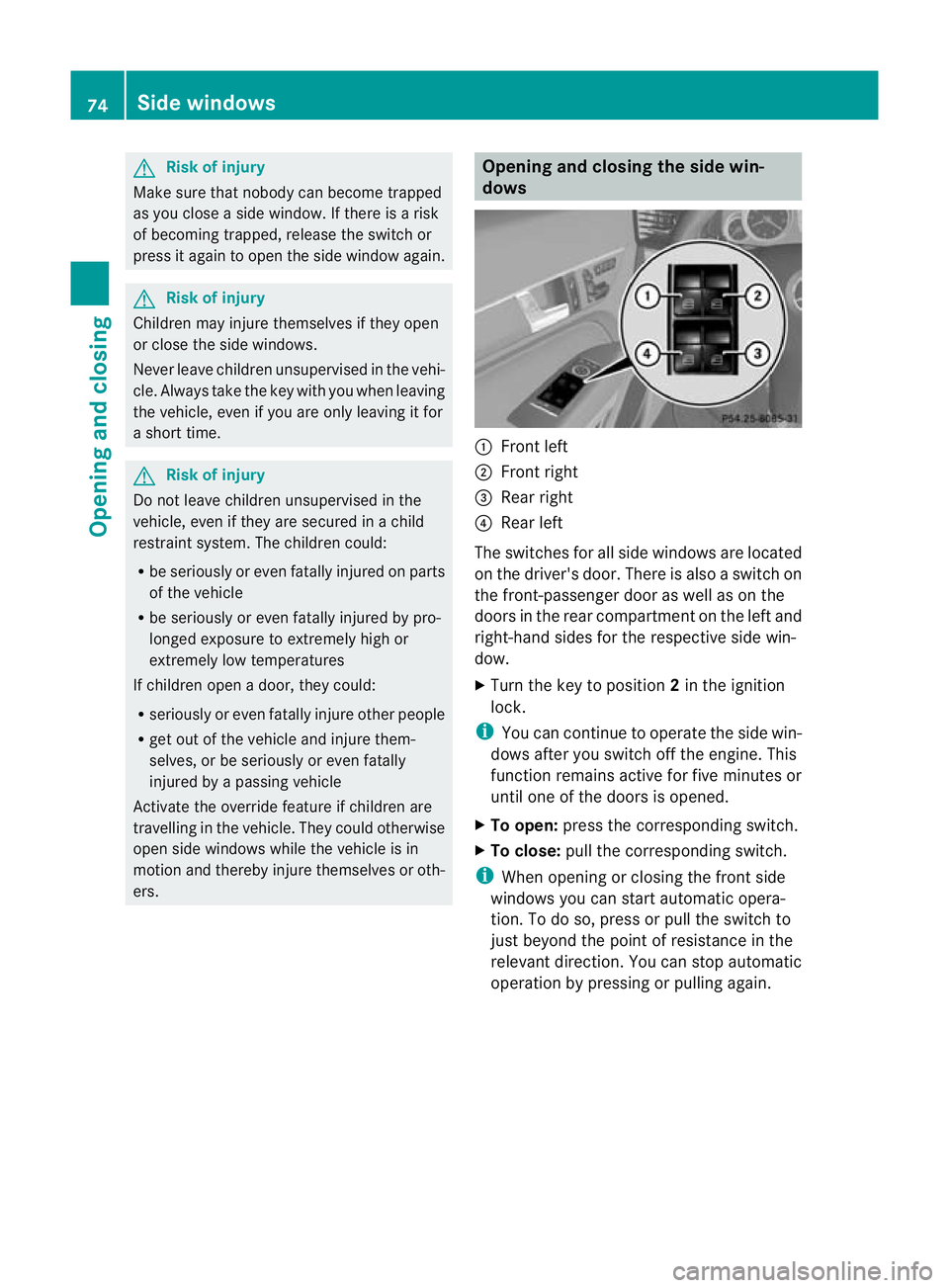
gand closing th eside win-
dows :
Front left
; Front right
= Rear right
? Rear left
The switches for all side windows are located
on the driver' sdoor. There is also aswitch on
the front-passenger door as well as on the
doors in the rear compartmen tonthe lef tand
right-hand sides for the respective sid ewin-
dow.
X Turn the key to position 2in the ignition
lock.
i You can continue to operate the side win-
dows after you switch off the engine. This
func tion remains active for fiv eminutes or
until one of the doors is opened.
X To open: press the corresponding switch.
X To close: pull the corresponding switch.
i When opening or closing the front side
windows you can start automatic opera-
tion. To do so, press or pull the switch to
just beyond the point of resistance in the
relevan tdirection .You can stop automatic
operation by pressin gorpulling again. 74
Side windo
wsOpening and closing
BA 20 7ECE ÄJ 2010 /1a;1;2,e n-GB
mkalafa Version: 3.0.2.11 2010-01-26T13:03:22+01:00-Seite 74
Page 86 of 333
N
To lock
X Insert the hex-socket wrench int othe roof
lock.
X Tur nthe hex- socket wrench anti-clockwi se
N as fa rasp ossible.
X Hav ethe soft -top mechanism repaired
immediately at aqualified specialist work-
shop, e.g. aMercedes-Benz Service
Centre.
i Press the soft-top compartmen tcover
again if the boot lid can notb eo pened.
! Do not under any circumstances open the
boot lid with the emergenc ykey. You could
otherwise damage the boot lid and the soft-
top compartmen tcover. Re-locking th
esoft top
The soft top is not locked if:
R the Topino peration message appears
in th emultifunction display.
R you hear awarning ton efor up to ten sec-
onds when pullin gaway or while driving.
You can lock the soft top again if it is not
locked fully.
X Stop the vehicle immediately, paying atten-
tion to road and traf ficc onditions.
X Tur nthe key to position 2in the ignition
lock.
X Press the soft -top switch. Boot sepa
rator
General notes The boot separator can be used to cover lug-
gage and loads in the boot.
The soft top can only be opened when the
boot separator is closed.
!
To avoid damaging the soft top or load
when folding back the soft top, observe the
following:
R when the boot separator is open, do not
place any object sinorbehind the net on
the side that are so long they could
obstruct the boot separator or damage
the opened soft top.
R mak esure that the load does not push
the boot separator upwards.
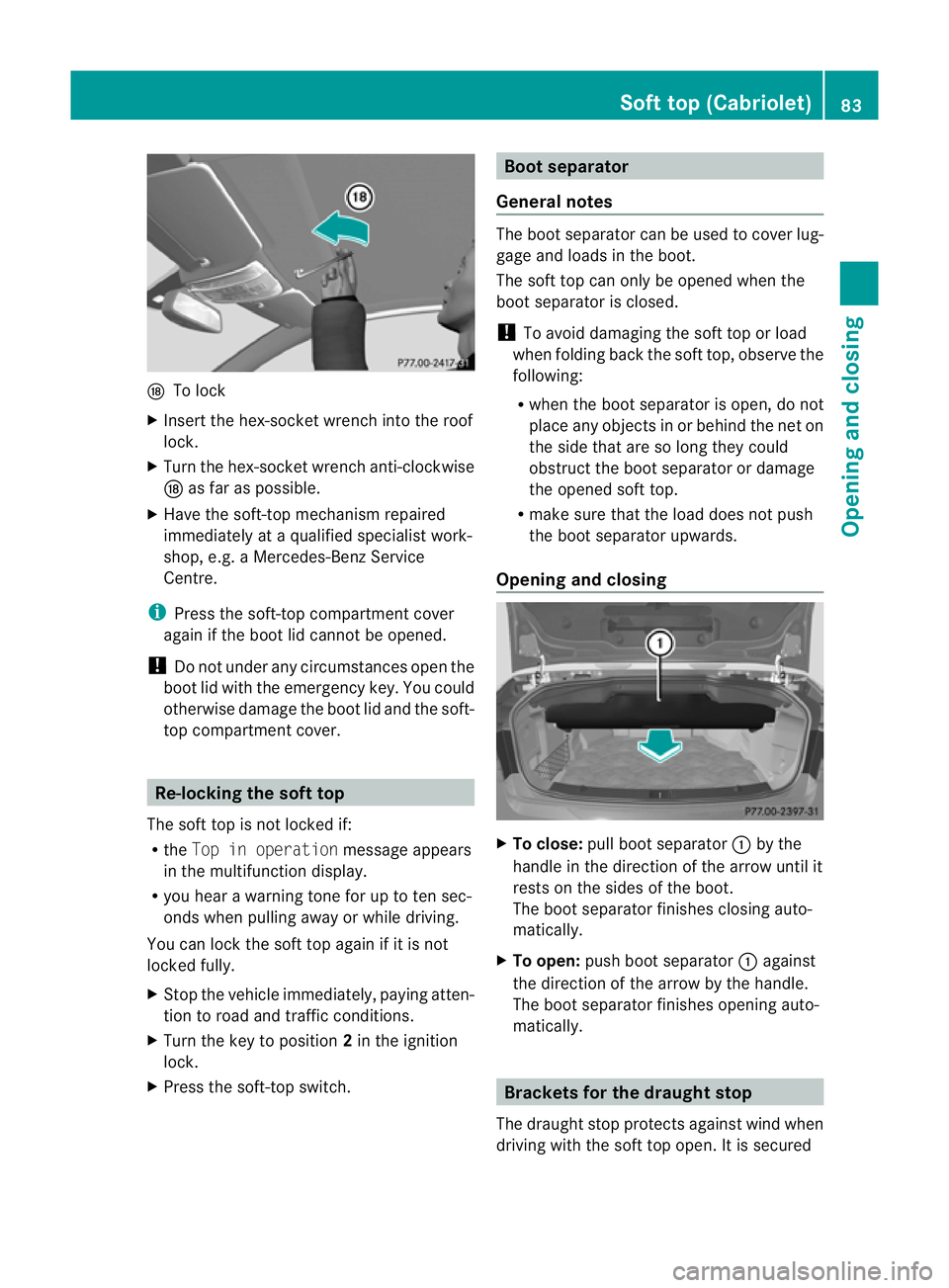
Openin gand closing X
To close: pull boot separator :by the
handle in the direction of the arrow until it
rest sont he sides of the boot.
The boot separator finishes closing auto-
matically.
X To open: push boot separator :against
the direction of the arrow by the handle.
The boot separator finishes opening auto-
matically. Brackets fo
rthe draught stop
Th ed raught stop protects against wind when
driving with th esoft top open. It is secured Soft top (Cabriolet)
83Opening and closing
BA 207ECE ÄJ 2010 /1a; 1; 2, en-GB
mkalafa Version: 3.0.2.11 2010-01-26T13:03:22+01:00 -Seite 83 Z
Page 96 of 333
Seats
Important safety notes
G
Ris
kofi njury
The seats can still be adjusted when there is
no key in the ignition lock. For this reason,
children should never be left unsupervised in
the vehicle. They could adjust the seats and
becom etrapped. G
Ris
kofa ccident
Only adjust the driver' sseat when the vehicle
is stationary .You will otherwise be distracted
from the road and traffic condition sand you
could los econtrol of the vehicle as aresult of
the seat moving. This could cause an acci-
dent. G
Risk of injury
Make sure that nobody can becom etrapped
when adjustin gthe seats.
Observ ethe note sonairbags.
Secur echildren as recommended; see the
"Childre ninthe vehicle" section. G
Risk of injury
Make sur ethat the bac kofyour head is sup-
ported at eye level by the cen tralarea of the
head restraint. If your head is not supported
correctly by th ehead restraint ,you coul dsuf-
fer asever eneck injury in the event of an
accident .Never driv eifthe head rest raints are
not engaged and set correctly.
! To avoid damage to the seats and the seat
heating, observe the following information:
R do not spill any liquids on the seats. If
liquid is spilled on the seats, dry them as
soon as possible.
R if the seat cover sare damp or wet, do not
switc hont he seat heating. The seat
heating should also not to be used to dry
the seats. R
clea nthe seat cover sasrecommended;
see the "In terior care" section.
R do not transport heav yloads on the
seats. Do not plac eshar pobjects on the
seat cushions ,e.g. knives, nails or tools.
Th es eats should only be occupied by
passengers, if possible.
R when the seat heatin gisinoperation ,do
not cover the seats with insulating mate-
rials, e.g. blanke ts,c oats, bags, seat cov-
ers, child seats or booster seats.
! When you mov ethe seats, make sur ethat
ther eare no objects in th efootwell or
behind the seats. Otherwise, you could
damage the seats and the objects.
i The head restraint sinthe fron tseats are
fit tedw ith the NECK -PRO system
(Y page 39). For this reason, it is not pos-
sibl etor emov ethe head restraint sfrom
th ef ront seats.
Please contact aMercedes-Ben zService
Cent refor more info rmation.
i Related topics:
R Through-loading feature in the rear
bench seat 19
(folding the rear bench seat
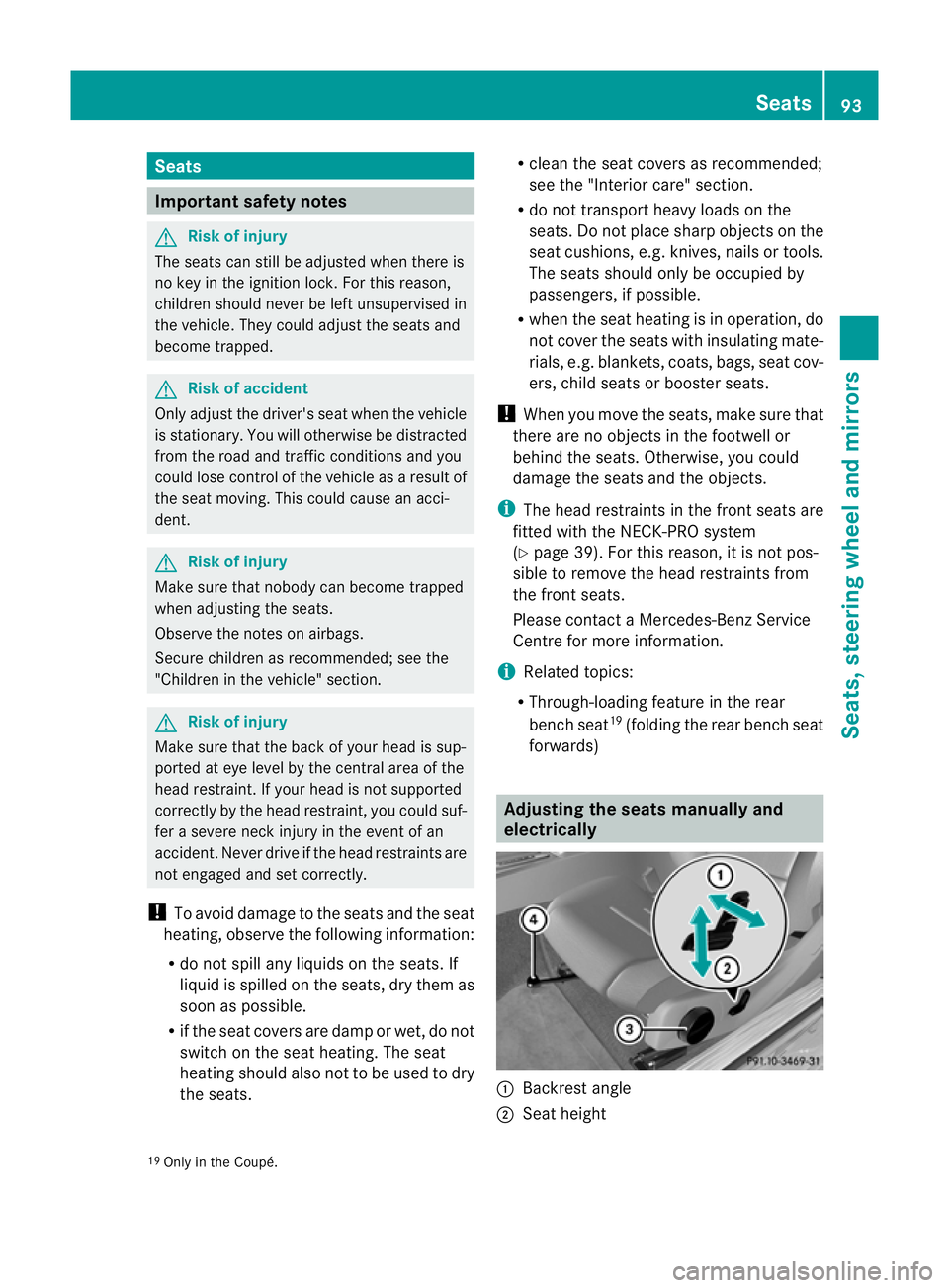
forwards) Adjusting the seats manually and
electrically
:
Backrest angle
; Seat height
19 Only in the Coupé. Seats
93Seats,steering wheel and mirrors
BA 207 ECE ÄJ 201 0/1a; 1; 2, en-GB
mkalafa Version: 3.0.2.11 2010-01-26T13:03:22+01:00-Seite 93 Z
Page 137 of 333

Vehicl
eequipment
i Thismanua ldesc ribe sallthe standard
and optional equipment of your vehicle
which wa savailable at th etime of pur-
chase. Countr y-specif ic differences are
possible. Bear in mind tha tyour vehicle
ma ynot featur eall function sdescribed
here. Running-in notes
Important safet
yinstructions G
Risk of accident
New brake pads/lini ngso nly have optimal
braking performance after several hundred
kilome tres. Un tilt hen ,compensate for this by
applying greater force to the brake pedal. This
also applies when brake pads/linings or
brake discs have been changed. Th
ef irst 1500 km
The mor eyou look after the engin ewhen it is
new, the happier you will be with its perform-
anc eint he future.
R Therefore, drive at varying speeds and
engin espeeds for the first 1500 km.
R Avoi doverstrainin gthe vehicle during this
period, e.g. drivin gatfull throttle.
R Change gear in good time, at the latest
when the rev counter needle is 2
/ 3 of the
way to the red area in the rev counter dis-
play.
R Do not manually shift to alower gear to
brake the vehicle.
Vehicles with automatic transmission:
R If possible, do not depress the accelerator
pedal past the point of resistanc e(kick-
down).
R Only select shift ranges 3,2or 1whe ndriv-
ing slowly, e.g .inmountainou sterrain. Af
ter1 500 km, you may gradually bring the
vehicl euptof ull road and engine speeds.
i Also observe these running-in notes when
the vehicle's engine, front-axle transmis-
sion or differential have been replaced. Driving
Important safety notes
G
Risk of accident
Do not place any objects in the driver' sfoot-
well. If you use afloormat or carpet in the
driver's footwell, make sure that it is correctly
secured and that there is sufficient clearance
for the pedals.
Do not place several floormats on top of one
another.
Loose object sorthe floormats coul dother-
wise get caught between the pedals if you
accelerate or brake suddenly. You will then
not be able to brake, declutch or accelerate
as intended. Thi scould lead to accident sand
injury. G
Risk of accident
Do not chang edown for additional engine
brakin gonas lippery road surface. This could
cause the drive wheels to lose their grip and
the vehicle could skid. This could cause you
to lose control of your vehicle and cause an
accident.
! Warm up the engine quickly. Do not use
the engine's full performanc euntil it has
reache doperating temperature.
Only set the automatic transmission to the
respective driv eposition swhen the vehicle
is stationary.
Where possible, avoid spinnin gthe drive
wheels when pulling away on slippery
roads. Otherwise, you could damage the
drive train. 134
DrivingDriving and pa
rking
BA 20 7ECE ÄJ 2010 /1a; 1; 2, en-GB
mkalafa Version: 3.0.2.11 2010-01-26T13:03:22+01:00 -Seite 134
Page 140 of 333

!
Change gear in good time and avoid spin-
ning the wheels. Otherwise, you could dam-
age the vehicle.
i Follow the shift recommendations in the
multifunction displa yfor an economical
drivin gstyle.
i The vehicle locks centrally once you have
pulled away. The locking knobs in the doors
drop down.
You can ope nthe doors from the insid eat
any time.
You can also deactivate the automatic lock-
ing feature (Y page 208).
Automatic transmission i
It is only possibl etoshift the transmission
from position Pto the desired position if
you depress the brake pedal. Onl ythen is
the select or lever lock released.
X Depress th ebrake peda land keep it
depressed.
X Shift the transmissio ntoposition Dor R.
X Release the parkin gbrake (Y page 153).
X Releas ethe brake pedal.
X Carefully depress the accelerator pedal.
i The vehicle lock scentrally onc eyou have
pulled away .The lockin gknobs in the doors
drop down.
You can open the doors from the inside at
any time.
You can also deactivat ethe automatic lock-
ing featur e(Ypage 20 8).
i Upshif tstake place at higher engine
speeds after acold star t.This helps the
catalytic converter to reach its operating
temperature mor equickly.
Hill star tassist G
Risk of accident
Never leav ethe vehicle when it is held by hill
star tassist. Af tera pproximately one second, hill start assist will no longer brak
eyour vehi-
cle and it coul droll away.
Hill star tassist helps you when pulling away
forwards or in reverse on an uphil lgradient.
It hold sthe vehicle for ashort tim eafter you
have removed you rfoot from the brake pedal.
This gives you enough tim etomove your foot
from the brake pedal to the accelerator pedal
and depress it befor ethe vehicle begin sto
roll.
X Take your foo toff th ebrake pedal.
i Once yo uhave taken your foot off the
brake pedal, the vehicle is held for around
one second.
X Pull away.
Hill start assis twill not function if:
R you are pulling away on alevel road or a
downhill gradient.
R on vehicles with automatic transmission,
the transmission is in position N
R the vehicle is secured with the parking
brake.
R ESP ®
is malfunctioning. Switching off the engine
Important safety instructions G
Risk of accident
If the engin eisn ot run ning, there is no power
assistance for the steerin gand brakes. Steer-
ing and braking will then require significantly
greate reffort.
As aresult, yo umight lose contr olof the vehi-
cle, cause an acc identand injure yoursel fand
others.
Therefore, do not switch off the engine while
yo ua re driving. Dri
ving
137Driving and parking
BA 207 ECE ÄJ 2010/1a ;1;2,en-GB
mkalafa Version: 3.0.2.11 2010-01-26T13:03:22+01:00-Seite 137 Z
Page 145 of 333

For further information abou
tthe ECO start/
stop func tion (Y page 138). Engaging reverse gear
! Only engage reverse gear when the vehi-
cle is stationary, otherwise the transmis-
sion coul dbedamaged.
i The ECO start/stop function is not avail-
able when reverse gear is engaged.
More information about the ECO start/
stop function (Y page 138).
X Move the gear lever firmly to the left
beyond the point of resistance and then
forwards. Shift recommendation
The gearshift recommendations assis tyou in
adopting an economical drivin gstyle. The rec-
ommended gear is shown in the multifunction
display. X
Shift gear according to the gearshift rec-
ommendation :shown in the multifunc-
tion displa yofthe instrumen tcluster. Automatic transmission
Important safety notes
G
Risk of accident
The movemen tofthe pedals must not be
impaired in any way. Do not keep any objec ts in the driver's footwell. Make sure that floor-
mats or carpets are correctly secured and
that there is sufficient clearance for the ped-
als.
Do not place several floormats on top of one
another. G
Risk of accident
Do not change down for additional engine
braking on aslippery road surface. This could
cause the drive wheels to lose their grip and
the vehicle could skid. This could cause you
to lose control of your vehicle and cause an
accident. Selector lever
Overview of transmission positions Selector lever
P
Park position with selector lever lock
R Reverse
N Neutral
D Drive 142
Automatic transmissionDriving and parking
BA 207 ECE ÄJ 2010/1a; 1; 2, en-GB
mkalafa
Version: 3.0.2.11
2010-01-26T13:03:22+01:00
-Seite 142