heating NISSAN PATHFINDER 2019 Owner´s Manual
[x] Cancel search | Manufacturer: NISSAN, Model Year: 2019, Model line: PATHFINDER, Model: NISSAN PATHFINDER 2019Pages: 476, PDF Size: 5.61 MB
Page 449 of 476
Temperature conditions can also affect
towing. For example, towing a heavy trailer
in high outside temperatures on graded
roads can affect engine performance and
cause overheating. The engine protection
mode, which helps reduce the chance of
engine damage, could activate and auto-
matically decrease engine power. Vehicle
speed may decrease under high load. Plan
your trip carefully to account for trailer and
vehicle load, weather and road conditions.
WARNING
Overheating can result in reduced en-
gine power and vehicle speed. The re-
duced speed may be lower than other
traffic, which could increase the chance
of a collision. Be especially careful when
driving. If the vehicle cannot maintain a
safe driving speed, pull to the side of the
road in a safe area. Allow the engine to
cool and return to normal operation. For
additional information, refer to “If your
vehicle overheats” in the “In case of
emergency ” section of this manual.
CAUTION
Vehicle damage resulting from im-
proper towing procedures is not cov-
ered by NISSAN warranties.
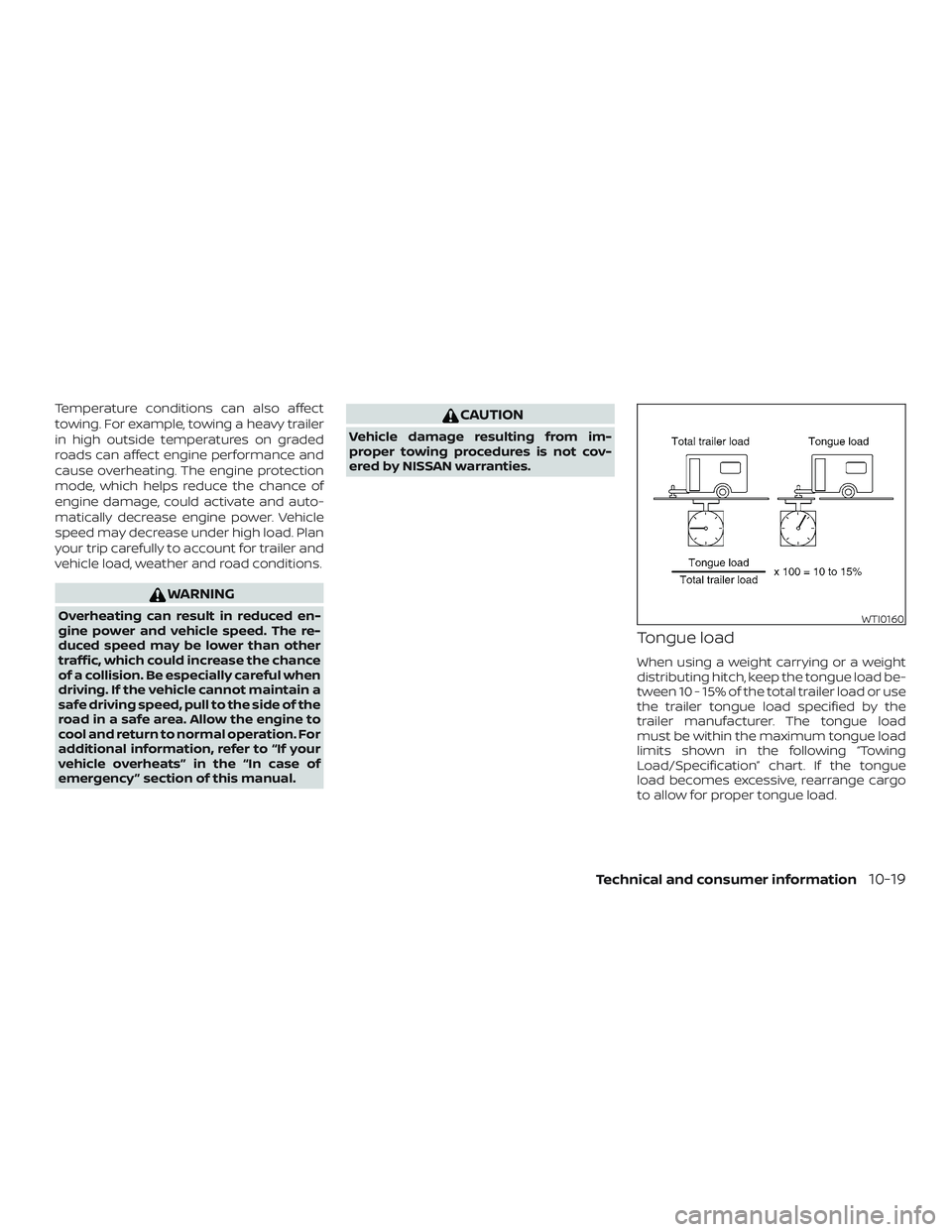
Tongue load
When using a weight carrying or a weight
distributing hitch, keep the tongue load be-
tween 10 - 15% of the total trailer load or use
the trailer tongue load specified by the
trailer manufacturer. The tongue load
must be within the maximum tongue load
limits shown in the following “Towing
Load/Specification” chart. If the tongue
load becomes excessive, rearrange cargo
to allow for proper tongue load.
WTI0160
Technical and consumer information10-19
Page 459 of 476
7. Have someone retrieve and store theblocks.
∙ While going downhill, the weight of the trailer pushing on the tow vehicle may
decrease overall stability. Therefore, to
maintain adequate control, reduce your
speed and shif t to a lower gear. Avoid
long or repeated use of the brakes
when descending a hill, as this reduces
their effectiveness and could cause
overheating. Shif ting to a lower gear in-
stead provides “engine braking” and re-
duces the need to brake as frequently.
∙ If the engine coolant temperature rises to a high temperature, refer to “If your
vehicle overheats” in the “In case of
emergency” section of this manual.
∙ Trailer towing requires more fuel than normal circumstances.
∙ Avoid towing a trailer for your vehicle’s first 500 miles (805 km).
∙ For the first 500 miles (805 km) that you do tow, do not drive over 50 mph
(80 km/h). ∙ Have your vehicle serviced more of ten
than at intervals specified in the recom-
mended Maintenance Schedule in the
“Maintenance and schedules” section of
this manual.
∙ When making a turn, your trailer wheels will be closer to the inside of the turn
than your vehicle wheels. To compen-
sate for this, make a larger than normal
turning radius during the turn.
∙ Crosswinds and rough roads will ad- versely affect vehicle/trailer handling,
possibly causing vehicle sway. When
being passed by larger vehicles, be pre-
pared for possible changes in cross-
winds that could affect vehicle han-
dling.
Do the following if the trailer begins to
sway: 1. Take your foot off the accelerator pedal to allow the vehicle to coast and steer
as straight ahead as the road condi-
tions allow. This combination will help
stabilize the vehicle.
– Do not correct trailer sway by steer- ing or applying the brakes. 2. When the trailer sway stops, gently ap-
ply the brakes and pull to the side of the
road in a safe area.
3. Try to rearrange the trailer load so it is balanced. For additional information,
refer to “Pre-towing tips” in this section.
∙ Be careful when passing other vehicles. Passing while towing a trailer requires
considerably more distance than nor-
mal passing. Remember, the length of
the trailer must also pass the other ve-
hicle before you can safely change
lanes.
∙ Use the Tow Mode or downshif t the transmission to a lower gear for engine
braking when driving down steep or
long hills. This will help slow the vehicle
without applying the brakes.
∙ Avoid holding the brake pedal down too long or too frequently. This could cause
the brakes to overheat, resulting in re-
duced braking efficiency.
∙ Increase your following distance to al- low for greater stopping distances
while towing a trailer. Anticipate stops
and brake gradually.
Technical and consumer information10-29