radiator Oldsmobile Cutlass Supreme 1994 Owner's Manuals
[x] Cancel search | Manufacturer: OLDSMOBILE, Model Year: 1994, Model line: Cutlass Supreme, Model: Oldsmobile Cutlass Supreme 1994Pages: 276, PDF Size: 14.73 MB
Page 162 of 276
160
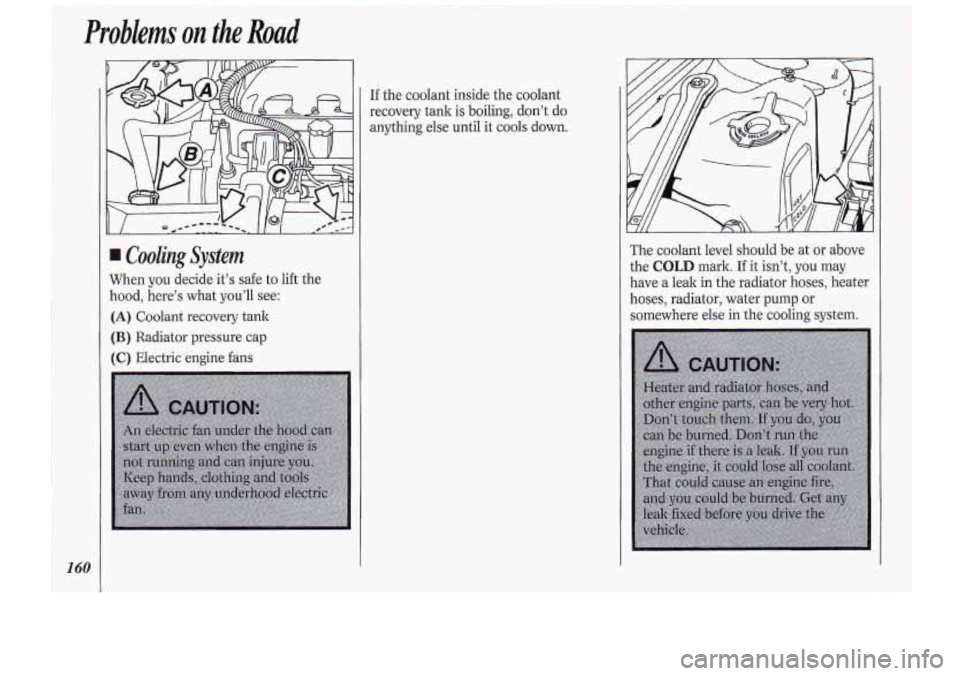
Cooling System
When you decide it’s safe to lift the
hood, here’s what you’ll see:
(A) Coolant recovery tank
(€3) Radiator pressure cap
(C) Electric engine fans If
the coolant inside the coolant
recovery tank
is boiling, don’t do
anything else until it cools down.
The coolant level should be at or above
the
COLD mark. If it isn’t, you may
have a leak in the radiator hoses, heater
hoses, radiator, water pump
or
somewhere else in the cooling system.
Page 163 of 276
NOTICE:
In cold weather, water can freeze
and crack the engine, radiator,
heater core and other-parts. Use the
recommended coolant.
Page 166 of 276
Problems on the Road
' 164
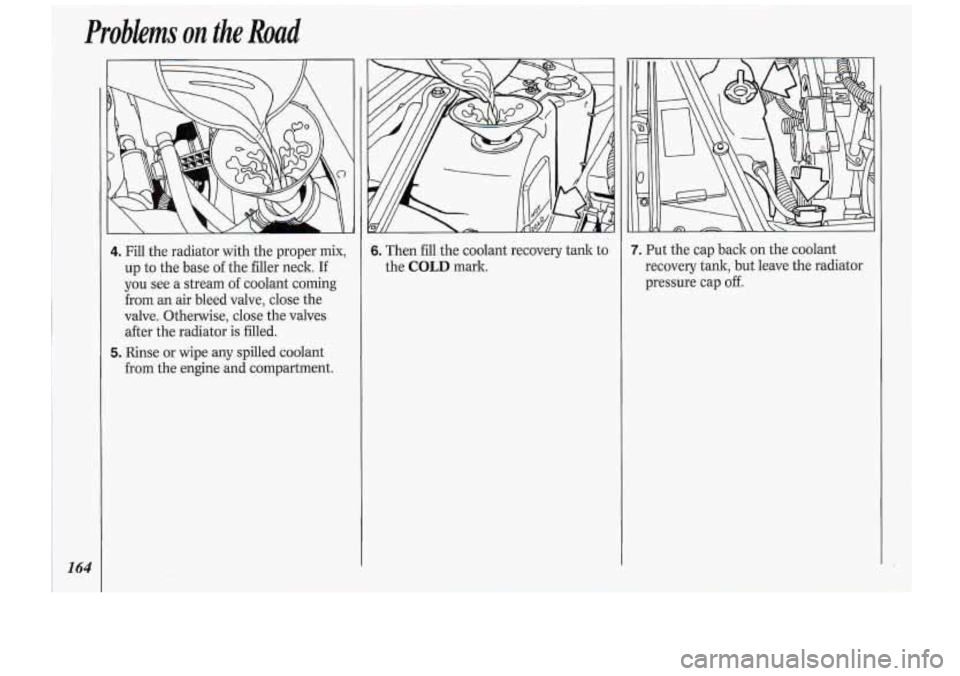
4. Fill the radiatot with the praper mix,
.up to the base of the filler neck. If
you see a stream af coolant coming
from. an air bleed valve, close the
valve. Otherwise.,
close. the valves
&er the radiator is filled.
5. Rinse or wip*e any spilled coolant
from the engine compartment,
6. Then fill the coolant recovery tank to
the
COLD mark.
7. Put the cap back on the coolant
recovery tank, but. leave the radiator
pressure cap
off.
Page 167 of 276
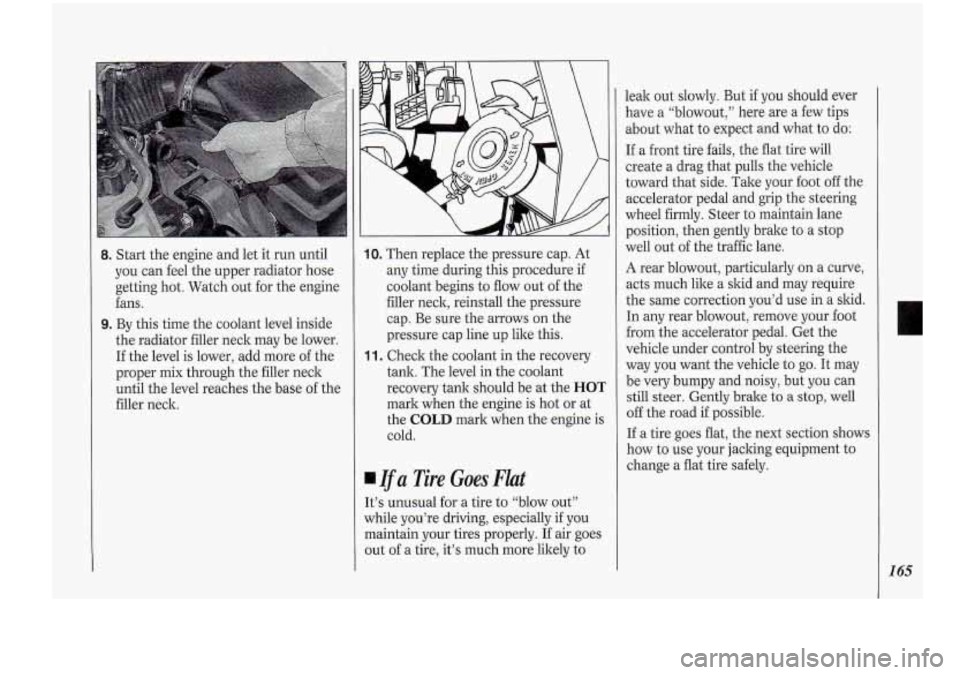
8. Start the engine and let it run until
you can feel the upper radiator hose
getting hot. Watch out for the engine
fans.
9. By this time the coolant level inside
the radiator filler neck may be lower.
If the level is lower, add more of the
proper mix through the filler neck
until the level reaches the base of the
filler neck.
10. Then replace the pressure cap. At
any time during this procedure if
coolant begins to flow out of the
filler neck, reinstall the pressure
cap. Be sure the arrows on the
pressure cap.line up like this.
11. Check the coolant in the recovery
tank. The level in the coolant
recovery tanlc should be at the
HOT
mark when the engine is hot or at
the
COLD mark when the engine is
cold.
Ifa Tire Goes Flat
It’s unusual for a tire to “blow out”
while you’re driving, especially
if you
maintain your tires properly. If air goes
out of a tire, it’s much more likely to
leak out slowly. But if you should ever
have
a “blowout,” here are a few tips
about what to expect and what to
do:
If a front tire fails, the flat tire will
create a drag that pulls the vehicle
toward that side. Take your foot off the
accelerator pedal and grip the steering
wheel firmly. Steer to maintain lane
position, then gently brake to a stop
well out of the traffic lane.
A rear blowout, particularly on a curve,
acts much like a slid and may require
the same correction you’d use
in a skid.
In any rear blowout, remove your foot
from the accelerator pedal. Get the
vehicle under control by steering the
way you want the vehicle to go. It may
be very bumpy and noisy, but you can
still steer. Gently brake to a stop, well
off the road if possible.
If a tire goes flat, the next section shows
how to use your jacking equipment to
change a flat tire safely.
165
Page 184 of 276
Service & Appearanctr Care
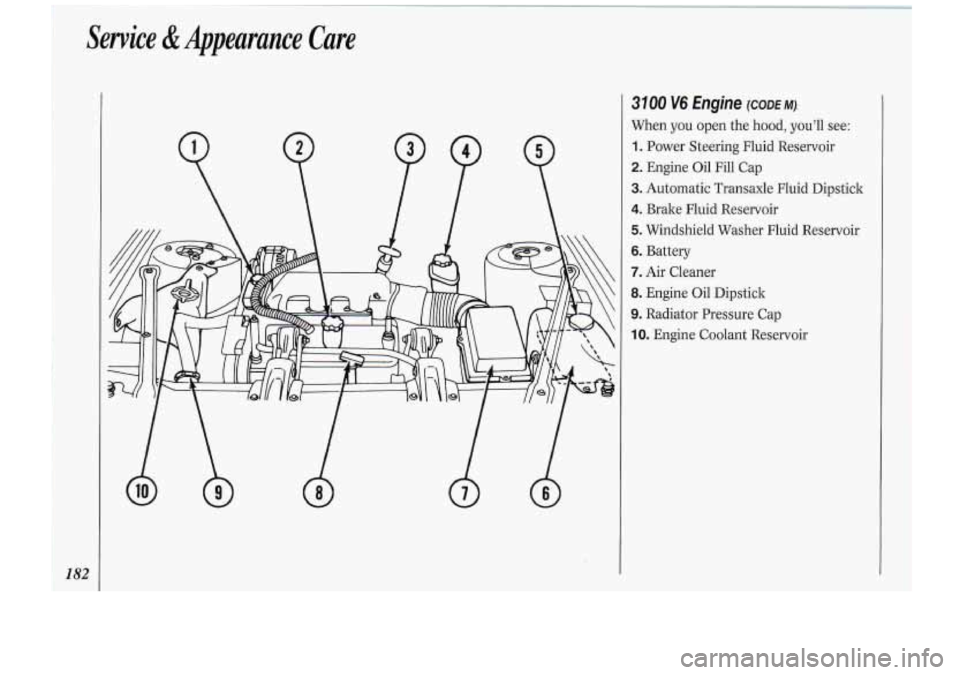
3700 V6 Engine (CODE M).
When you open the hood, you’ll see:
1. Power Steering Fluid Reservoir
2. Engine Oil Fill Cap
3. Automatic Transaxle Fluid Dipstick
4. Brake Fluid Reservoir
5. Windshield Washer Fluid Reservoir
6. Battery
7. Air Cleaner
8. Engine Oil Dipstick
9. Radiator Pressure Cap
IO. Engine Coolant Reservoir
Page 185 of 276
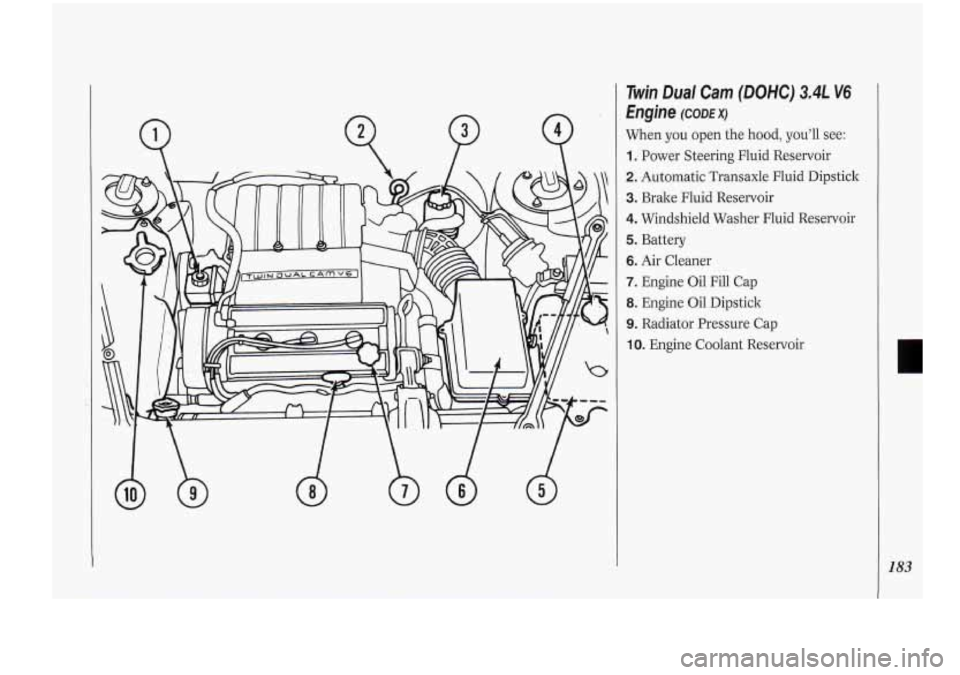
Twin Dual Cam (DOHC) 3.4L V6
Engine (CODE x)
When you open the hood, you’ll see:
1. Power Steering Fluid Reservoir
2. Automatic Transaxle Fluid Dipstick
3. Brake Fluid Reservoir
4. Windshield Washer Fluid Reservoir
5. Battery
6. Air Cleaner
7. Engine Oil Fill Cap
8. Engine Oil Dipstick
9. Radiator Pressure Cap
IO. Engine Coolant Reservoir
183
Page 192 of 276
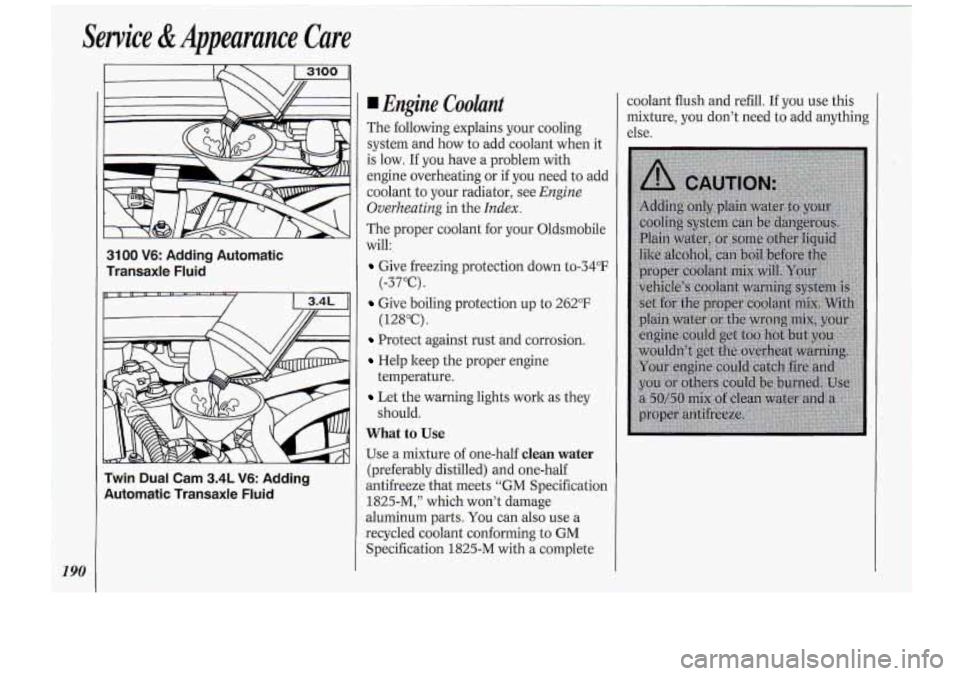
Twin Dual Cam 3.4L V6: Ad,ding
Automatic
Transaxle Fluid
I Engine .Coolant
The follciwing explains your cooling
system and how to add coolant when it
is low. If
you have a problem with
engine overheating or
if y0.u need to add
coolant to your radiator,
see Engine
Overheating in the Index.
The proper coolant for your Oldsmobile
will:
Give freezing protection down to-34”F
Give boiling protection up to 262°F
Protect againstrust and corrosion.
(-37°C).
(128°C).
Help keep the proper engine
Let the warning lights work as they
What to Use
temperature.
should.
Use
a mixture of one-half dean-water
(preferably distilled) and one-half
antifreeze that meets
“GM Specificatkm
1825-M,” which won’t damage
aluminum parts.
You can also use a
recycled coolant conforming
to GM
Specification 1825-M with
a complete coolant
flush and refill.
If you use this
mixture, you don’t need to add
anything
else.
Page 193 of 276
NOTICE:
If you use an improper coolant mix,
your engine could overheat and be
badly damaged. The repair cost
wouldn’t be covered by your
warranty.
Too much water in the
mix can freeze and crack the
engine, radiator, heater core and other parts.
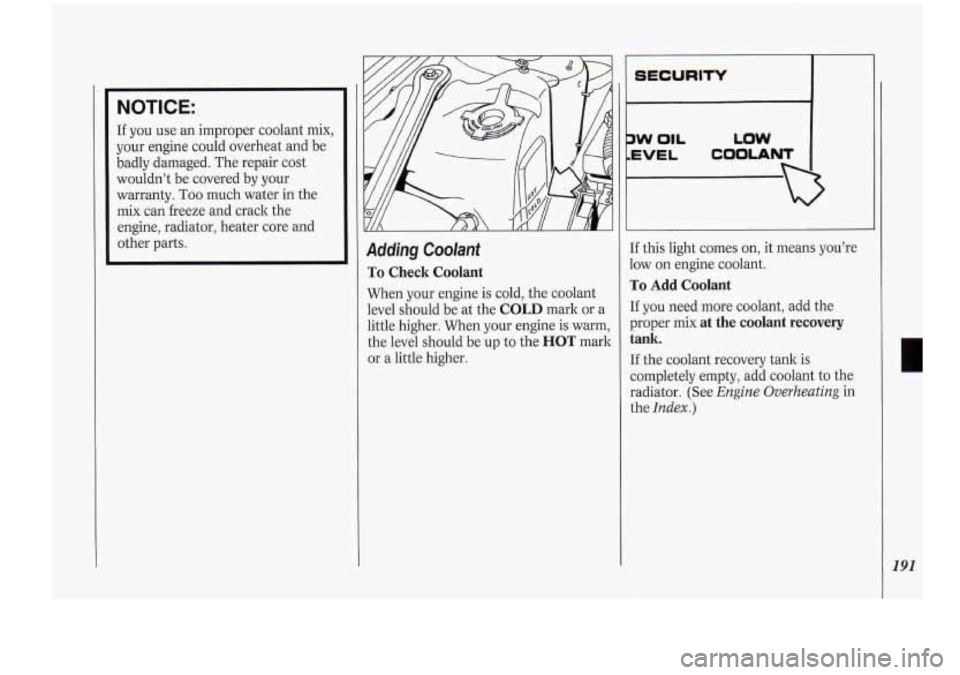
Adding Coolant
To Check Coolant
When your engine is cold, the coolant
level should be at the
COLD mark or a
little higher. When your engine is warm,
the level should be up to the
HOT mark
or a little higher.
1 SECURITY I
P
w OIL LOW
EVEL COOLANT I
If this light comes on, it means you’re
low on engine coolant.
To Add Coolant
If you need more coolant, add the
proper mix
at the coolant recovery
tank.
If the coolant recovery tank is
completely empty, add coolant to the
radiator. (See
Engine Overheating in
the
Index.)
191
Page 194 of 276
Service & Appearance Care
Radiator Pressure Cap
NOTICE:
Your radiator cap is a 15 psi
(105kPa) pressure-type cap and
must be tightly. installed
io prevent
coolant loss and possible engine
damage from overheating. Be sure
the arrows on the cap line up with
192
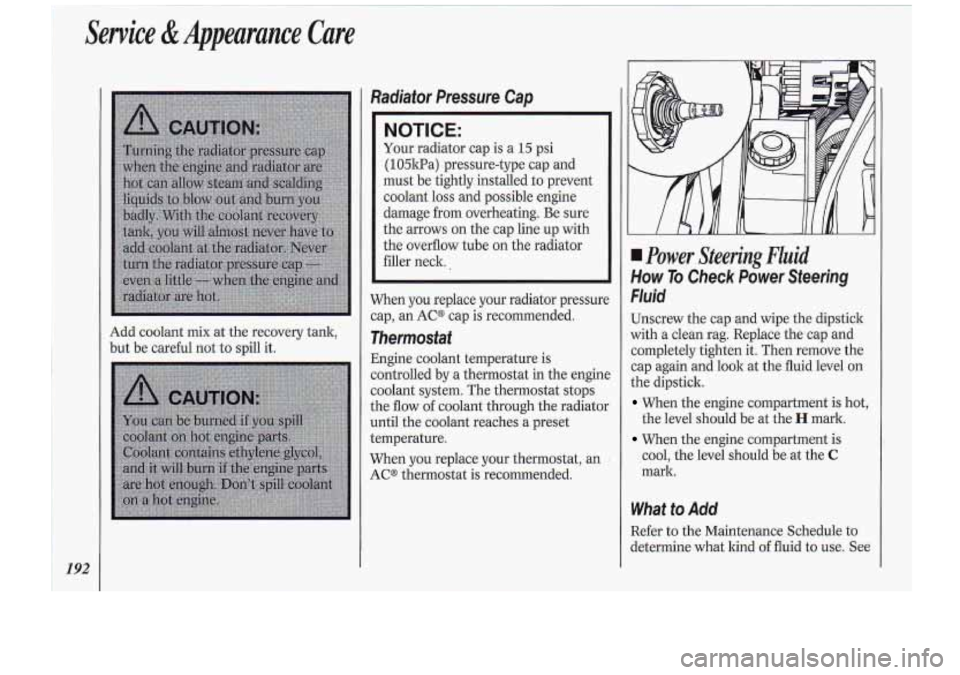
Add coolant mix at the recovery tank,
but be careful not to spill it.
L I
the overflow tube on the radiator
filler neck.
I Power Steering Fluid
How To Check Power Steering
When you replace your radiator premre
cap, an
AC@ cap is recommended.
Thermostat
Engine coolant temperature is
controlled by a thermostat in the engine
coolant system. The thermostat stops
the flow of coolant through the radiator
until the coolant reaches a preset
temperature.
When you replace your thermostat, an
AC@ thermostat is recommended.
Fluid
-
Unscrew the cap and wipe the dipstick
with a clean rag. Replace the cap and
completely tighten it. Then remove the
cap again and look at the fluid level on
the dipstick.
When the engine compartment is hot,
the level should be at the
H mark.
When the engine compartment is
cool, the level 'should be at the
C
mark.
What to Add
Refer to the Maintenance Schedule to
determine what kind of fluid to use. See
Page 195 of 276
Recommended Fluids and Lubricants
in the Index.
NOTICE:
When adding power steering fluid
or making a complete fluid change,
always use the proper fluid. Failure
to use the proper fluid can cause
leaks and damage hoses and seals.
Windshield Washer Fluid
To Add
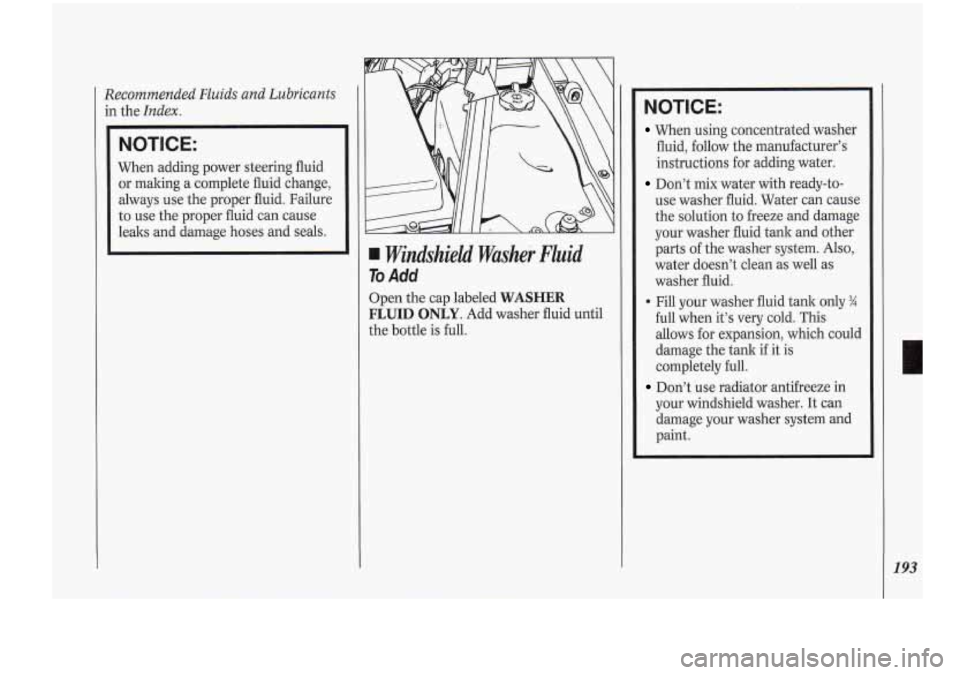
Open the cap labeled WASHER
FLUID ONLY. Add washer fluid until
the bottle is full.
NOTICE:
When using concentrated washer
fluid, follow the manufacturer’s
instructions for adding water.
Don’t mix water with ready-to-
use washer fluid. Water can cause
the solution
to freeze and damage
your washer fluid tank and other
parts of the washer system. Also,
water doesn’t clean as well as
washer fluid.
. Fill your washer fluid tank only %
full when it’s very cold. This
allows for expansion, which could
damage the tank if it is
completely full.
Don’t use radiator antifreeze in
your windshield washer. It can
damage your washer system and
paint.
193