tire size PONTIAC G3 2010 User Guide
[x] Cancel search | Manufacturer: PONTIAC, Model Year: 2010, Model line: G3, Model: PONTIAC G3 2010Pages: 368, PDF Size: 3.94 MB
Page 288 of 368
GM recommends replacing tires in sets of four. This is
because uniform tread depth on all tires will help keep
your vehicle performing most like it did when the tires
were new. Replacing less than a full set of tires can
affect the braking and handling performance of your
vehicle. SeeTire Inspection and Rotation on page 6‑61.
{WARNING:
Mixing tires could cause you to lose control
while driving. If you mix tires of different
sizes, brands, or types (radial and
bias-belted tires), the vehicle may not handle
properly, and you could have a crash. Using
tires of different sizes, brands, or types may
also cause damage to your vehicle. Be sure
to use the correct size, brand, and type of
tires on all wheels. It is all right to drive with
your compact spare temporarily, as it was
developed for use on your vehicle. See
Compact Spare Tire
on page 6‑78.
{WARNING:
If you use bias-ply tires on the vehicle, the
wheel rim flanges could develop cracks after
many miles of driving. A tire and/or wheel
could fail suddenly, causing a crash. Use
only radial-ply tires with the wheels on the
vehicle.
Vehicles that have a tire pressure monitoring system
could give an inaccurate low‐pressure warning if tires
not recommended for your vehicle are installed. Tires
that do not match the original equipment tires could give
a low‐pressure warning that is higher or lower than the
proper warning level you would get with original
equipment tires. See Tire Pressure Monitor System
on
page 6‑58.
Your vehicle's original equipment tires are listed on the
Tire and Loading Information Label. See Loading the
Vehicle
on page 5‑14, for more information about the
Tire and Loading Information label and its location on
your vehicle.
6-64
Page 289 of 368
Different Size Tires and Wheels
If you add wheels or tires that are a different size than
your original equipment wheels and tires, this may
affect the way your vehicle performs, including its
braking, ride and handling characteristics, stability, and
resistance to rollover . Additionally, if your vehicle has
electronic systems such as, antilock brakes, traction
control, and electronic stability control, the performance
of these systems can be affected.
{WARNING:
If you add different sized wheels, your vehicle
may not provide an acceptable level of
performance and safety if tires not recommended
for those wheels are selected. You may increase
the chance that you will crash and suffer serious
injury. Only use GM specific wheel and tire
systems developed for your vehicle, and have
them properly installed by a GM certified
technician.
See Buying New Tires
on page 6‑63andAccessories
and Modificationson page 6‑3for additional
information.
Uniform Tire Quality Grading
Quality grades can be found where applicable on
the tire sidewall between tread shoulder and
maximum selection width. For example:
Treadwear 200 Traction AA Temperature A
The following information relates to the system
developed by the Unites States National Highway
Traffic Safety Administration (NHTSA), which
grades tires by treadwear, traction, and
temperature performance. This applies only to
vehicles sold in the United States. The grades are
molded on the sidewalls of most passenger car
tires. The Uniform Tire Quality Grading (UTQG)
system does not apply to deep tread, winter-type
snow tires, space-saver, or temporary use spare
tires, tires with nominal rim diameters of
10 to 12 inches (25 to 30 cm), or to some
limited-production tires.
While the tires available on General Motors
passenger cars and light trucks may vary with
respect to these grades, they must also conform
to federal safety requirements.
6-65
Page 292 of 368
Used Replacement Wheels
{WARNING:
Putting a used wheel on the vehicle is dangerous.
You cannot know how it has been used or how far
it has been driven. It could fail suddenly and
cause a crash. If you have to replace a wheel, use
a new GM original equipment wheel.
Tire Chains
Notice:Use tire chains only where legal and only
when you must. Use only SAE Class“S” type chains
that are the proper size for your tires. Install themon
the front tires and tighten them as tightly as
possible with the ends securelyfastened. Drive
slowly and follow the chain manufacturer's
instructions. If youcan hear the chains contacting
your vehicle, stop and retighten them. If the
contactcontinues, slow down until it stops. Driving
too fast or spinning the wheels withchains on will
damage your vehicle.
6-68
Page 302 of 368
Storing a Flat or Spare Tire and
Tools
{WARNING:
Storing a jack, a tire, or other equipment in the
passenger compartment of the vehicle could
cause injury. In a sudden stop or collision, loose
equipment could strike someone. Store all these
in the proper place.
To store a flat or compact spare tire and tools: 1. Store the flat tire or the compact spare in the compact spare tire compartment.
2. Secure the retainer.
3. Store the tools securely in the foam tray and place the tray back in the cargo area.
4. Replace the trim cover.
The compact spare tire is for temporary use only.
Replace the compact spare tire with a full-size tire as
soon as you can. See Compact Spare Tire
on
page 6‑78.
Compact Spare Tire
{WARNING:
Driving with more than one compact spare tire at
a time could result in loss of braking and handling.
This could lead to a crash and you or others could
be injured. Use only one compact spare tire at
a time.
The compact spare tire was fully inflated when the
vehicle was new, it can lose air after a time. Check the
inflation pressure regularly. It should be 60 psi
(414 kPa).
After installing the compact spare on your vehicle, you
should stop as soon as possible and make sure your
spare tire is correctly inflated. The compact spare is
intended to perform well at speeds up to 50 mph
(80 km/h), so you can finish your trip and have your
full-size tire repaired or replaced where you want.
Replace your spare with a full-size tire as soon as
you can.
6-78
Page 366 of 368

Specifications and Capacities . . . . . . . . . . . . . . . . . . . . . . 6-93
Speedometer . . . . . . . . . . . . . . . . . . . . . . . . . . . . . . . . . . . . . . 4-22
Starting the Engine . . . . . . . . . . . . . . . . . . . . . . . . . . . . . . . . 3-19
Steering . . . . . . . . . . . . . . . . . . . . . . . . . . . . . . . . . . . . . . . . . . . . .5-5
Steering Wheel Controls, Audio . . . . . . . . . . . . . . . . . . . 4-51
Steering Wheel, Tilt Wheel . . . . . . . . . . . . . . . . . . . . . . . . . .4-3
Storage Areas . . . . . . . . . . . . . . . . . . . . . . . . . . . . . . . . . . . . . 3-36Cupholders . . . . . . . . . . . . . . . . . . . . . . . . . . . . . . . . . . . . . . . 3-36
Glove Box . . . . . . . . . . . . . . . . . . . . . . . . . . . . . . . . . . . . . . . . 3-36
Stuck in Sand, Mud, Ice, or Snow . . . . . . . . . . . . . . . . . 5-13
Sun Visors . . . . . . . . . . . . . . . . . . . . . . . . . . . . . . . . . . . . . . . . . 3-14
Sunroof . . . . . . . . . . . . . . . . . . . . . . . . . . . . . . . . . . . . . . . . . . . . 3-37
T
Tachometer . . . . . . . . . . . . . . . . . . . . . . . . . . . . . . . . . . . . . . . . 4-22
Taillamps Turn Signal, Sidemarker, Stoplamps, andBack-Up Lamps . . . . . . . . . . . . . . . . . . . . . . . . . . . . . . . . . 6-47
Text Telephone (TTY) Users . . . . . . . . . . . . . . . . . . . . . . . . .8-5
Theft-Deterrent Systems . . . . . . . . . . . . . . . . . . . . . . . . . . . 3-14 Content Theft-Deterrent . . . . . . . . . . . . . . . . . . . . . . . . . . 3-15
Immobilizer . . . . . . . . . . . . . . . . . . . . . . . . . . . . . . . . . . . . . . . 3-14
Tilt Wheel . . . . . . . . . . . . . . . . . . . . . . . . . . . . . . . . . . . . . . . . . . . .4-3
Time . . . . . . . . . . . . . . . . . . . . . . . . . . . . . . . . . . . . . . . . . . . . . . . 4-15 Tires . . . . . . . . . . . . . . . . . . . . . . . . . . . . . . . . . . . . . . . . . . . . . . . 6-50
Aluminum Wheels, Cleaning . . . . . . . . . . . . . . . . . . . . . . 6-84
Buying New Tires . . . . . . . . . . . . . . . . . . . . . . . . . . . . . . . . . 6-63
Chains . . . . . . . . . . . . . . . . . . . . . . . . . . . . . . . . . . . . . . . . . . . . 6-68
Changing a Flat Tire . . . . . . . . . . . . . . . . . . . . . . . . . . . . . . 6-70
Cleaning . . . . . . . . . . . . . . . . . . . . . . . . . . . . . . . . . . . . . . . . . . 6-84
Compact Spare . . . . . . . . . . . . . . . . . . . . . . . . . . . . . . . . . . . 6-78
Different Size . . . . . . . . . . . . . . . . . . . . . . . . . . . . . . . . . . . . . 6-65
If a Tire Goes Flat . . . . . . . . . . . . . . . . . . . . . . . . . . . . . . . . 6-69
Inflation - Tire Pressure . . . . . . . . . . . . . . . . . . . . . . . . . . . 6-57
Inspection and Rotation . . . . . . . . . . . . . . . . . . . . . . . . . . 6-61
Installing the Spare Tire . . . . . . . . . . . . . . . . . . . . . . . . . . 6-73
Pressure Light . . . . . . . . . . . . . . . . . . . . . . . . . . . . . . . . . . . . 4-28
Pressure Monitor Operation . . . . . . . . . . . . . . . . . . . . . . 6-59
Pressure Monitor System . . . . . . . . . . . . . . . . . . . . . . . . . 6-58
Removing the Flat Tire . . . . . . . . . . . . . . . . . . . . . . . . . . . 6-73
Removing the Spare Tire and Tools . . . . . . . . . . . . . . . 6-71
Sidewall Labeling . . . . . . . . . . . . . . . . . . . . . . . . . . . . . . . . . 6-51
Storing a Flat or Spare Tire and Tools . . . . . . . . . . . . 6-78
Terminology and Definitions . . . . . . . . . . . . . . . . . . . . . . 6-54
Uniform Tire Quality Grading . . . . . . . . . . . . . . . . . . . . . 6-65
Wheel Alignment and Tire Balance . . . . . . . . . . . . . . . 6-67
Wheel Replacement . . . . . . . . . . . . . . . . . . . . . . . . . . . . . . 6-67
When It Is Time for New Tires . . . . . . . . . . . . . . . . . . . . 6-63
i - 12
Page 368 of 368
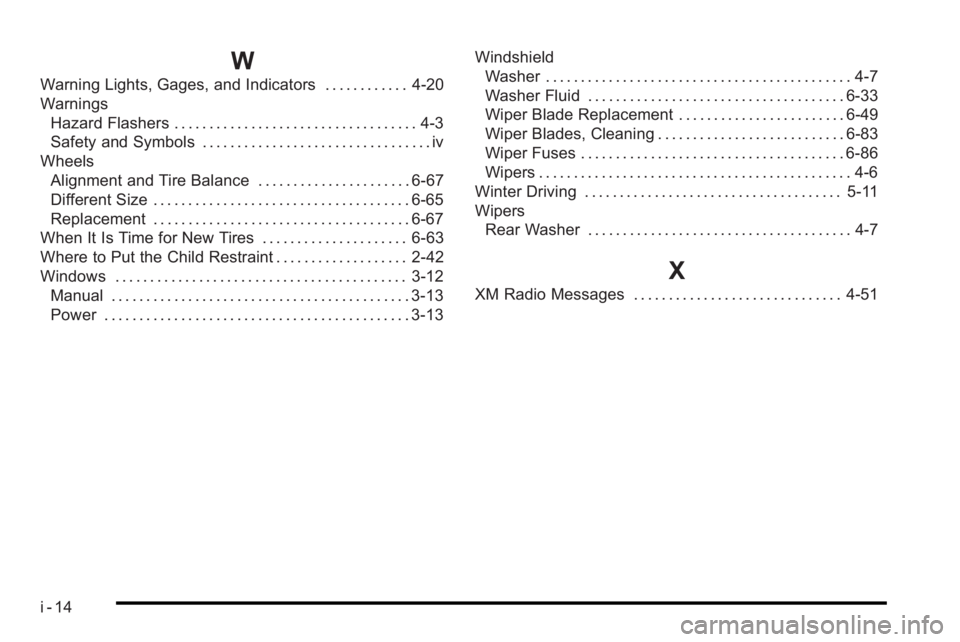
W
Warning Lights, Gages, and Indicators . . . . . . . . . . . . 4-20
WarningsHazard Flashers . . . . . . . . . . . . . . . . . . . . . . . . . . . . . . . . . . . 4-3
Safety and Symbols . . . . . . . . . . . . . . . . . . . . . . . . . . . . . . . . . iv
Wheels Alignment and Tire Balance . . . . . . . . . . . . . . . . . . . . . . 6-67
Different Size . . . . . . . . . . . . . . . . . . . . . . . . . . . . . . . . . . . . . 6-65
Replacement . . . . . . . . . . . . . . . . . . . . . . . . . . . . . . . . . . . . . 6-67
When It Is Time for New Tires . . . . . . . . . . . . . . . . . . . . . 6-63
Where to Put the Child Restraint . . . . . . . . . . . . . . . . . . . 2-42
Windows . . . . . . . . . . . . . . . . . . . . . . . . . . . . . . . . . . . . . . . . . . 3-12 Manual . . . . . . . . . . . . . . . . . . . . . . . . . . . . . . . . . . . . . . . . . . . 3-13
Power . . . . . . . . . . . . . . . . . . . . . . . . . . . . . . . . . . . . . . . . . . . . 3-13 Windshield
Washer . . . . . . . . . . . . . . . . . . . . . . . . . . . . . . . . . . . . . . . . . . . . 4-7
Washer Fluid . . . . . . . . . . . . . . . . . . . . . . . . . . . . . . . . . . . . . 6-33
Wiper Blade Replacement . . . . . . . . . . . . . . . . . . . . . . . . 6-49
Wiper Blades, Cleaning . . . . . . . . . . . . . . . . . . . . . . . . . . . 6-83
Wiper Fuses . . . . . . . . . . . . . . . . . . . . . . . . . . . . . . . . . . . . . . 6-86
Wipers . . . . . . . . . . . . . . . . . . . . . . . . . . . . . . . . . . . . . . . . . . . . . 4-6
Winter Driving . . . . . . . . . . . . . . . . . . . . . . . . . . . . . . . . . . . . . 5-11
Wipers Rear Washer . . . . . . . . . . . . . . . . . . . . . . . . . . . . . . . . . . . . . . 4-7
X
XM Radio Messages . . . . . . . . . . . . . . . . . . . . . . . . . . . . . . 4-51
i - 14