warning PONTIAC TORRENT 2009 Repair Manual
[x] Cancel search | Manufacturer: PONTIAC, Model Year: 2009, Model line: TORRENT, Model: PONTIAC TORRENT 2009Pages: 436, PDF Size: 2.43 MB
Page 349 of 436
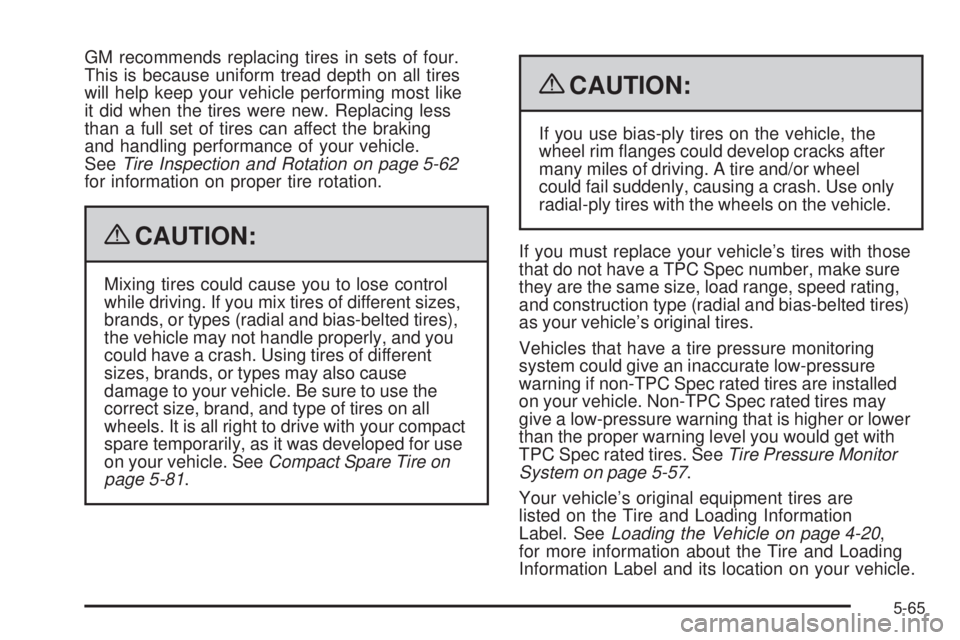
GM recommends replacing tires in sets of four.
This is because uniform tread depth on all tires
will help keep your vehicle performing most like
it did when the tires were new. Replacing less
than a full set of tires can affect the braking
and handling performance of your vehicle.
SeeTire Inspection and Rotation on page 5-62
for information on proper tire rotation.
{CAUTION:
Mixing tires could cause you to lose control
while driving. If you mix tires of different sizes,
brands, or types (radial and bias-belted tires),
the vehicle may not handle properly, and you
could have a crash. Using tires of different
sizes, brands, or types may also cause
damage to your vehicle. Be sure to use the
correct size, brand, and type of tires on all
wheels. It is all right to drive with your compact
spare temporarily, as it was developed for use
on your vehicle. SeeCompact Spare Tire on
page 5-81.
{CAUTION:
If you use bias-ply tires on the vehicle, the
wheel rim anges could develop cracks after
many miles of driving. A tire and/or wheel
could fail suddenly, causing a crash. Use only
radial-ply tires with the wheels on the vehicle.
If you must replace your vehicle’s tires with those
that do not have a TPC Spec number, make sure
they are the same size, load range, speed rating,
and construction type (radial and bias-belted tires)
as your vehicle’s original tires.
Vehicles that have a tire pressure monitoring
system could give an inaccurate low-pressure
warning if non-TPC Spec rated tires are installed
on your vehicle. Non-TPC Spec rated tires may
give a low-pressure warning that is higher or lower
than the proper warning level you would get with
TPC Spec rated tires. SeeTire Pressure Monitor
System on page 5-57.
Your vehicle’s original equipment tires are
listed on the Tire and Loading Information
Label. SeeLoading the Vehicle on page 4-20,
for more information about the Tire and Loading
Information Label and its location on your vehicle.
5-65
Page 354 of 436
If a Tire Goes Flat
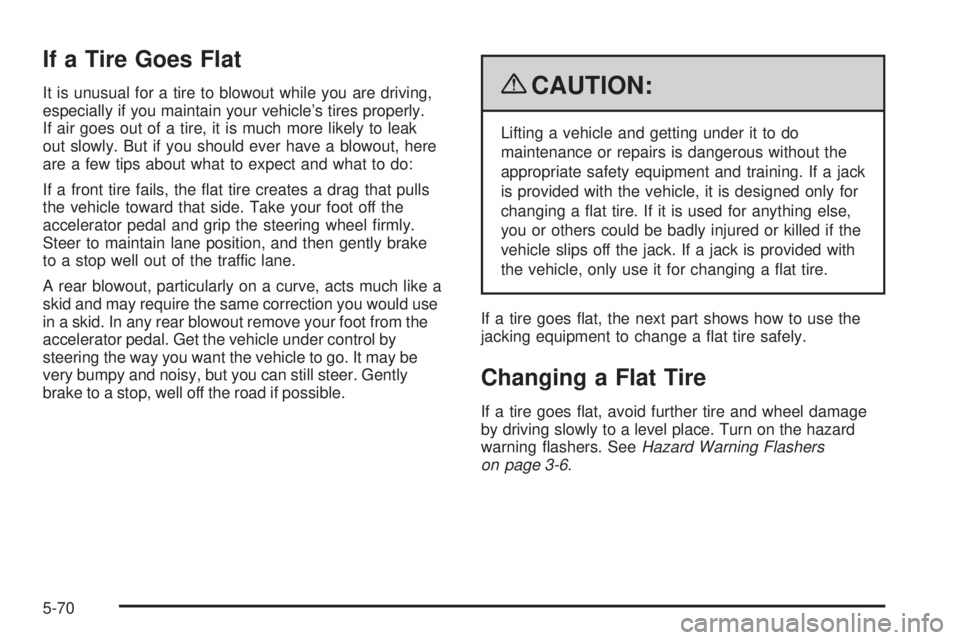
It is unusual for a tire to blowout while you are driving,
especially if you maintain your vehicle’s tires properly.
If air goes out of a tire, it is much more likely to leak
out slowly. But if you should ever have a blowout, here
are a few tips about what to expect and what to do:
If a front tire fails, the at tire creates a drag that pulls
the vehicle toward that side. Take your foot off the
accelerator pedal and grip the steering wheel rmly.
Steer to maintain lane position, and then gently brake
to a stop well out of the traffic lane.
A rear blowout, particularly on a curve, acts much like a
skid and may require the same correction you would use
in a skid. In any rear blowout remove your foot from the
accelerator pedal. Get the vehicle under control by
steering the way you want the vehicle to go. It may be
very bumpy and noisy, but you can still steer. Gently
brake to a stop, well off the road if possible.{CAUTION:
Lifting a vehicle and getting under it to do
maintenance or repairs is dangerous without the
appropriate safety equipment and training. If a jack
is provided with the vehicle, it is designed only for
changing a at tire. If it is used for anything else,
you or others could be badly injured or killed if the
vehicle slips off the jack. If a jack is provided with
the vehicle, only use it for changing a at tire.
If a tire goes at, the next part shows how to use the
jacking equipment to change a at tire safely.
Changing a Flat Tire
If a tire goes at, avoid further tire and wheel damage
by driving slowly to a level place. Turn on the hazard
warning ashers. SeeHazard Warning Flashers
on page 3-6.
5-70
Page 423 of 436
A
Accessories and Modications............................ 5-3
Accessory Power............................................2-21
Accessory Power Outlets.................................3-18
Adding Equipment to Your
Airbag-Equipped Vehicle...............................1-68
Additional Required Services,
Scheduled Maintenance................................. 6-7
Additives, Fuel................................................. 5-6
Add-On Electrical Equipment............................5-91
Adjustments
Headlamp Range.......................................... 1-7
Air Cleaner/Filter, Engine.................................5-20
Air Conditioning..............................................3-19
Air Filter, Passenger Compartment....................3-23
Airbag
Readiness Light..........................................3-28
Airbag System................................................1-55
Adding Equipment to Your
Airbag-Equipped Vehicle............................1-68
How Does an Airbag Restrain?......................1-61
Passenger Sensing System...........................1-63
Servicing Your Airbag-Equipped Vehicle..........1-68
What Makes an Airbag Inate?......................1-61
What Will You See After an Airbag Inates?.....1-62
When Should an Airbag Inate?....................1-60
Where Are the Airbags?...............................1-58Airbags
Passenger Status Indicator...........................3-29
All-Wheel Drive...............................................5-41
All-Wheel Drive Disabled Light..........................3-39
All-Wheel-Drive (AWD) System........................... 4-8
All-Wheel-Drive Service Light............................3-39
Antilock Brake System (ABS)............................. 4-5
Warning Light.............................................3-31
Appearance Care
Aluminum or Chrome-Plated Wheels..............5-88
Care of Safety Belts....................................5-85
Chemical Paint Spotting...............................5-89
Cleaning Exterior Lamps/Lenses....................5-86
Fabric/Carpet..............................................5-83
Finish Care
.................................................5-87
Finish Damage............................................5-89
Instrument Panel, Vinyl, and Other
Plastic Surfaces.......................................5-85
Interior Cleaning..........................................5-82
Leather......................................................5-84
Sheet Metal Damage...................................5-89
Tires..........................................................5-88
Underbody Maintenance...............................5-89
Washing Your Vehicle...................................5-86
Weatherstrips..............................................5-85
Windshield and Wiper Blades........................5-87
Ashtray.........................................................3-18
Assistance Program, Roadside........................... 7-7
1
Page 424 of 436
Audio System.................................................3-64
Audio Steering Wheel Controls....................3-118
Navigation/Radio System,
see Navigation Manual..............................3-98
Setting the Clock.........................................3-65
Audio System(s).............................................3-67
Audio Systems
Radio Reception........................................3-119
Theft-Deterrent Feature...............................3-118
Automatic Headlamp System............................3-14
Automatic Transmission
Fluid..........................................................5-22
Operation...........................................2-24, 2-27
B
Battery..........................................................5-35
Electric Power Management..........................3-16
Run-Down Protection...................................3-17
Belt Routing, Engine.......................................6-16
Bluetooth
®.....................................................3-98
Brake
Emergencies................................................ 4-5
Brake Fluid....................................................5-32
Brakes..........................................................5-32
Antilock....................................................... 4-5
Parking......................................................2-31
System Warning Light..................................3-30Braking........................................................... 4-4
Braking in Emergencies..................................... 4-5
Break-In, New Vehicle.....................................2-19
Bulb Replacement...........................................5-46
Fog Lamp ..................................................3-14
Halogen Bulbs............................................5-43
Headlamp Aiming........................................5-43
Headlamps.................................................5-43
Headlamps, Front Turn Signal, Sidemarker,
and Parking Lamps..................................5-44
License Plate Lamps....................................5-46
Taillamps, Turn Signal, Stoplamps and
Back-up Lamps........................................5-45
Buying New Tires...........................................5-64
C
Calibration.....................................................3-47
California
Perchlorate Materials Requirements................. 5-4
California Fuel.................................................. 5-6
California Proposition 65 Warning....................... 5-4
Canadian Owners................................................ ii
Capacities and Specications............................5-97
Carbon Monoxide
Engine Exhaust...........................................2-35
Liftgate......................................................2-12
Winter Driving.............................................4-17
2
Page 425 of 436
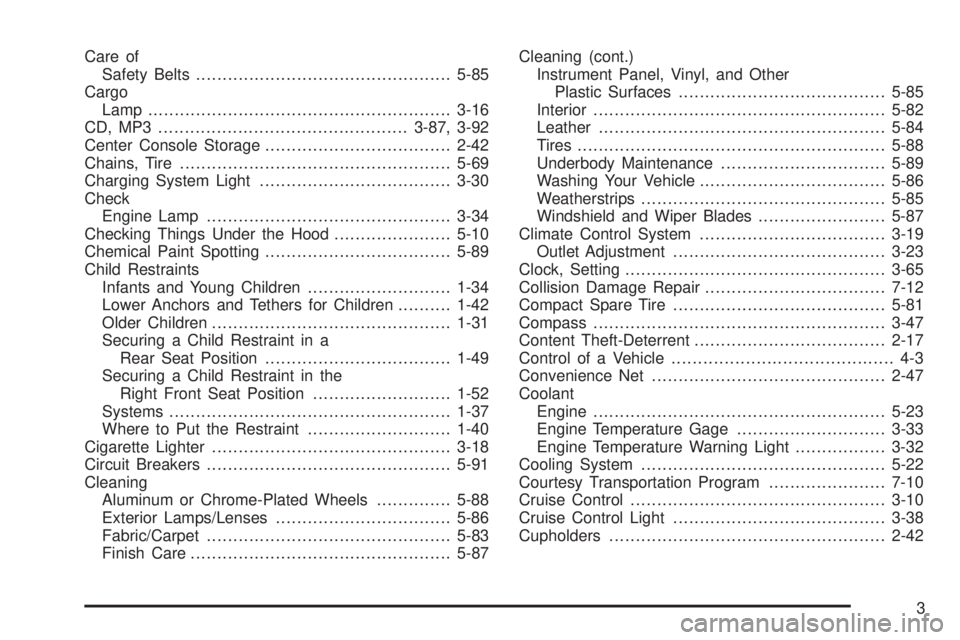
Care of
Safety Belts................................................5-85
Cargo
Lamp .........................................................3-16
CD, MP3 ...............................................3-87, 3-92
Center Console Storage...................................2-42
Chains, Tire...................................................5-69
Charging System Light....................................3-30
Check
Engine Lamp..............................................3-34
Checking Things Under the Hood......................5-10
Chemical Paint Spotting...................................5-89
Child Restraints
Infants and Young Children...........................1-34
Lower Anchors and Tethers for Children..........1-42
Older Children.............................................1-31
Securing a Child Restraint in a
Rear Seat Position...................................1-49
Securing a Child Restraint in the
Right Front Seat Position..........................1-52
Systems.....................................................1-37
Where to Put the Restraint...........................1-40
Cigarette Lighter.............................................3-18
Circuit Breakers..............................................5-91
Cleaning
Aluminum or Chrome-Plated Wheels..............5-88
Exterior Lamps/Lenses.................................5-86
Fabric/Carpet..............................................5-83
Finish Care.................................................5-87Cleaning (cont.)
Instrument Panel, Vinyl, and Other
Plastic Surfaces.......................................5-85
Interior.......................................................5-82
Leather......................................................5-84
Tires..........................................................5-88
Underbody Maintenance...............................5-89
Washing Your Vehicle...................................5-86
Weatherstrips..............................................5-85
Windshield and Wiper Blades........................5-87
Climate Control System...................................3-19
Outlet Adjustment
........................................3-23
Clock, Setting.................................................3-65
Collision Damage Repair..................................7-12
Compact Spare Tire........................................5-81
Compass.......................................................3-47
Content Theft-Deterrent....................................2-17
Control of a Vehicle.......................................... 4-3
Convenience Net............................................2-47
Coolant
Engine.......................................................5-23
Engine Temperature Gage............................3-33
Engine Temperature Warning Light.................3-32
Cooling System..............................................5-22
Courtesy Transportation Program......................7-10
Cruise Control................................................3-10
Cruise Control Light........................................3-38
Cupholders....................................................2-42
3
Page 426 of 436
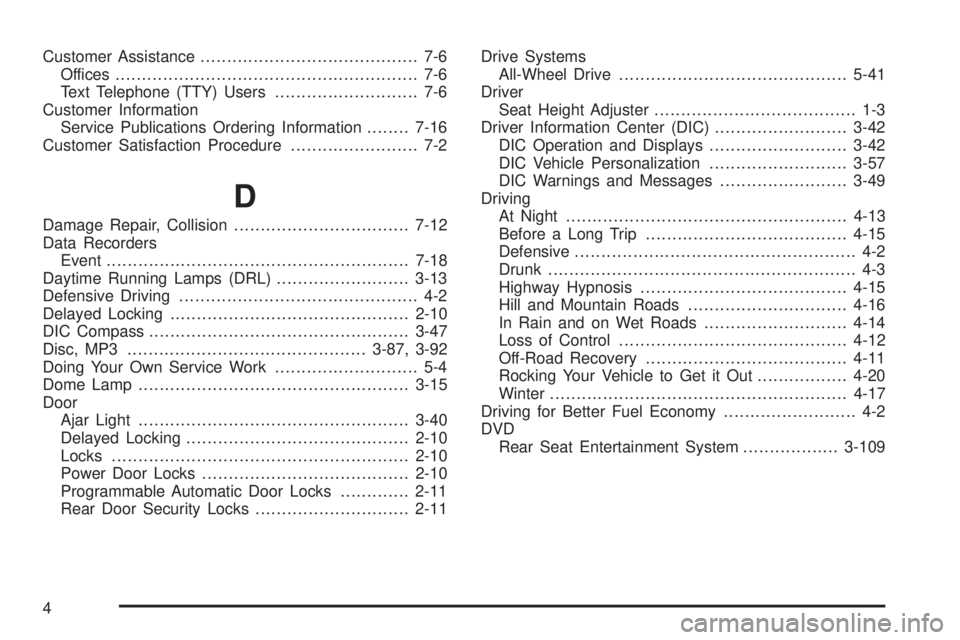
Customer Assistance......................................... 7-6
Offices......................................................... 7-6
Text Telephone (TTY) Users........................... 7-6
Customer Information
Service Publications Ordering Information........7-16
Customer Satisfaction Procedure........................ 7-2
D
Damage Repair, Collision.................................7-12
Data Recorders
Event.........................................................7-18
Daytime Running Lamps (DRL).........................3-13
Defensive Driving............................................. 4-2
Delayed Locking.............................................2-10
DIC Compass.................................................3-47
Disc, MP3.............................................3-87, 3-92
Doing Your Own Service Work........................... 5-4
Dome Lamp ...................................................3-15
Door
Ajar Light...................................................3-40
Delayed Locking..........................................2-10
Locks........................................................2-10
Power Door Locks.......................................2-10
Programmable Automatic Door Locks.............2-11
Rear Door Security Locks.............................2-11Drive Systems
All-Wheel Drive...........................................5-41
Driver
Seat Height Adjuster...................................... 1-3
Driver Information Center (DIC).........................3-42
DIC Operation and Displays..........................3-42
DIC Vehicle Personalization..........................3-57
DIC Warnings and Messages........................3-49
Driving
At Night.....................................................4-13
Before a Long Trip......................................4-15
Defensive..................................................... 4-2
Drunk.......................................................... 4-3
Highway Hypnosis.......................................4-15
Hill and Mountain Roads..............................4-16
In Rain and on Wet Roads...........................4-14
Loss of Control...........................................4-12
Off-Road Recovery......................................4-11
Rocking Your Vehicle to Get it Out.................4-20
Winter........................................................4-17
Driving for Better Fuel Economy......................... 4-2
DVD
Rear Seat Entertainment System..................3-109
4
Page 427 of 436
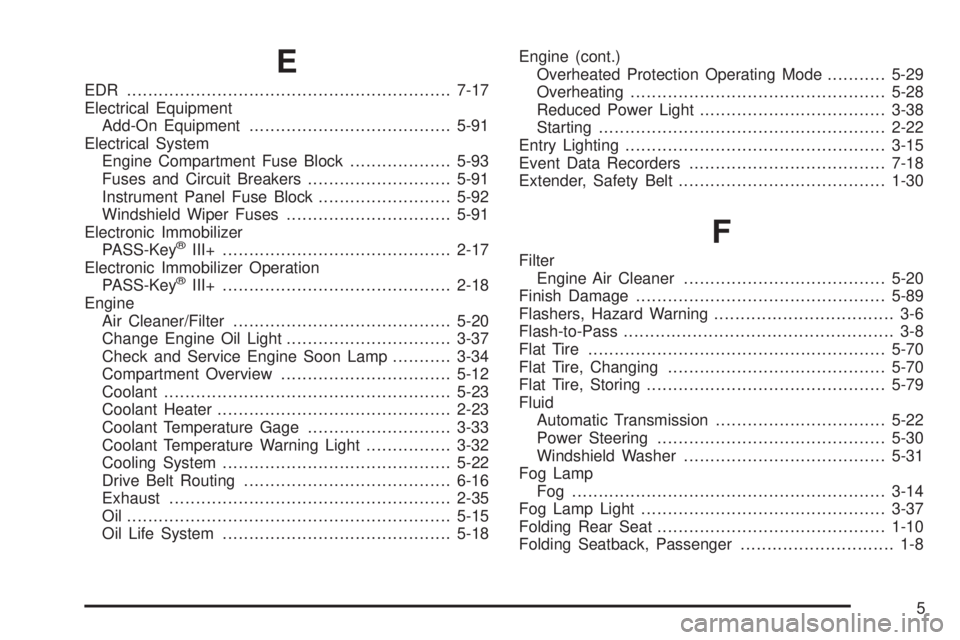
E
EDR .............................................................7-17
Electrical Equipment
Add-On Equipment......................................5-91
Electrical System
Engine Compartment Fuse Block...................5-93
Fuses and Circuit Breakers...........................5-91
Instrument Panel Fuse Block.........................5-92
Windshield Wiper Fuses...............................5-91
Electronic Immobilizer
PASS-Key
®III+...........................................2-17
Electronic Immobilizer Operation
PASS-Key
®III+...........................................2-18
Engine
Air Cleaner/Filter.........................................5-20
Change Engine Oil Light...............................3-37
Check and Service Engine Soon Lamp...........3-34
Compartment Overview................................5-12
Coolant......................................................5-23
Coolant Heater............................................2-23
Coolant Temperature Gage...........................3-33
Coolant Temperature Warning Light................3-32
Cooling System...........................................5-22
Drive Belt Routing.......................................6-16
Exhaust.....................................................2-35
Oil .............................................................5-15
Oil Life System...........................................5-18Engine (cont.)
Overheated Protection Operating Mode...........5-29
Overheating................................................5-28
Reduced Power Light...................................3-38
Starting......................................................2-22
Entry Lighting.................................................3-15
Event Data Recorders.....................................7-18
Extender, Safety Belt.......................................1-30
F
Filter
Engine Air Cleaner......................................5-20
Finish Damage...............................................5-89
Flashers, Hazard Warning.................................. 3-6
Flash-to-Pass................................................... 3-8
Flat Tire........................................................5-70
Flat Tire, Changing.........................................5-70
Flat Tire, Storing.............................................5-79
Fluid
Automatic Transmission................................5-22
Power Steering...........................................5-30
Windshield Washer......................................5-31
Fog Lamp
Fog ...........................................................3-14
Fog Lamp Light..............................................3-37
Folding Rear Seat...........................................1-10
Folding Seatback, Passenger............................. 1-8
5
Page 428 of 436
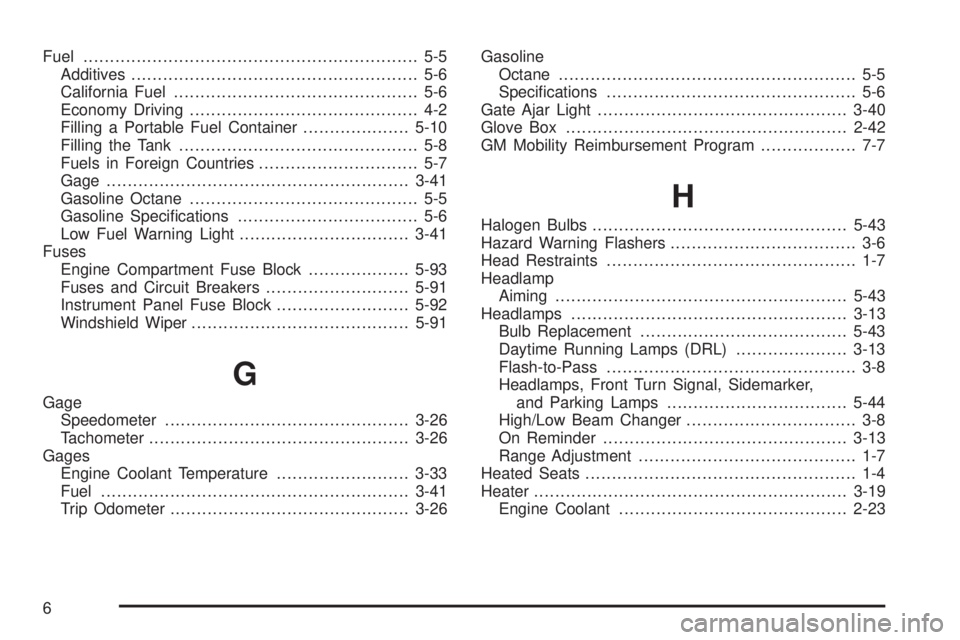
Fuel............................................................... 5-5
Additives...................................................... 5-6
California Fuel.............................................. 5-6
Economy Driving........................................... 4-2
Filling a Portable Fuel Container....................5-10
Filling the Tank............................................. 5-8
Fuels in Foreign Countries.............................. 5-7
Gage .........................................................3-41
Gasoline Octane........................................... 5-5
Gasoline Specications.................................. 5-6
Low Fuel Warning Light................................3-41
Fuses
Engine Compartment Fuse Block...................5-93
Fuses and Circuit Breakers...........................5-91
Instrument Panel Fuse Block.........................5-92
Windshield Wiper.........................................5-91
G
Gage
Speedometer..............................................3-26
Tachometer.................................................3-26
Gages
Engine Coolant Temperature.........................3-33
Fuel..........................................................3-41
Trip Odometer.............................................3-26Gasoline
Octane........................................................ 5-5
Specications............................................... 5-6
Gate Ajar Light...............................................3-40
Glove Box.....................................................2-42
GM Mobility Reimbursement Program.................. 7-7
H
Halogen Bulbs................................................5-43
Hazard Warning Flashers................................... 3-6
Head Restraints............................................... 1-7
Headlamp
Aiming .......................................................5-43
Headlamps....................................................3-13
Bulb Replacement.......................................5-43
Daytime Running Lamps (DRL).....................3-13
Flash-to-Pass............................................... 3-8
Headlamps, Front Turn Signal, Sidemarker,
and Parking Lamps..................................5-44
High/Low Beam Changer................................ 3-8
On Reminder..............................................3-13
Range Adjustment......................................... 1-7
Heated Seats................................................... 1-4
Heater...........................................................3-19
Engine Coolant...........................................2-23
6
Page 430 of 436
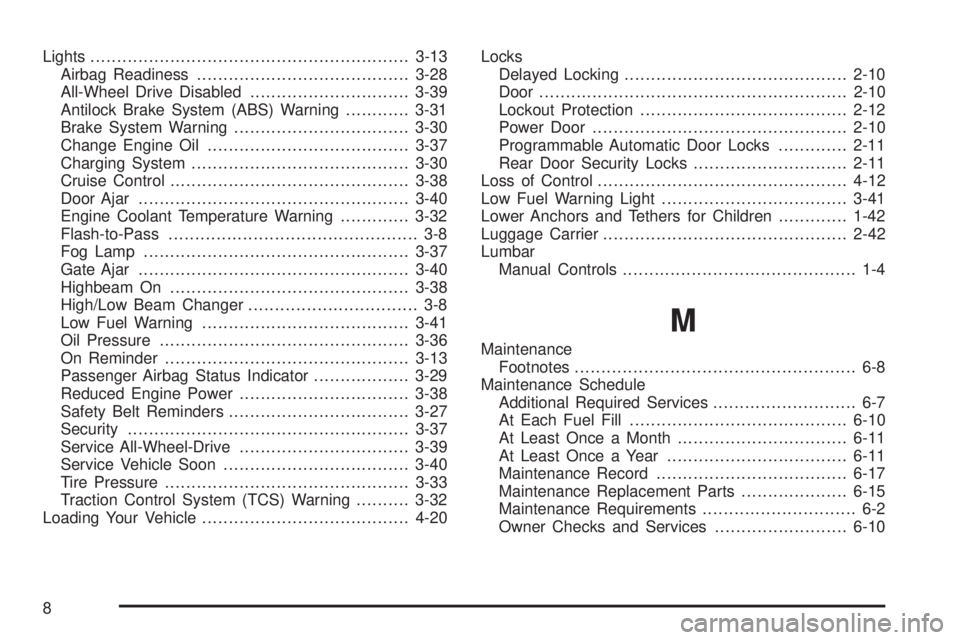
Lights............................................................3-13
Airbag Readiness........................................3-28
All-Wheel Drive Disabled..............................3-39
Antilock Brake System (ABS) Warning............3-31
Brake System Warning.................................3-30
Change Engine Oil......................................3-37
Charging System.........................................3-30
Cruise Control.............................................3-38
Door Ajar...................................................3-40
Engine Coolant Temperature Warning.............3-32
Flash-to-Pass............................................... 3-8
Fog Lamp ..................................................3-37
Gate Ajar...................................................3-40
Highbeam On.............................................3-38
High/Low Beam Changer................................ 3-8
Low Fuel Warning.......................................3-41
Oil Pressure...............................................3-36
On Reminder..............................................3-13
Passenger Airbag Status Indicator..................3-29
Reduced Engine Power................................3-38
Safety Belt Reminders..................................3-27
Security.....................................................3-37
Service All-Wheel-Drive................................3-39
Service Vehicle Soon...................................3-40
Tire Pressure..............................................3-33
Traction Control System (TCS) Warning..........3-32
Loading Your Vehicle.......................................4-20Locks
Delayed Locking..........................................2-10
Door ..........................................................2-10
Lockout Protection.......................................2-12
Power Door................................................2-10
Programmable Automatic Door Locks.............2-11
Rear Door Security Locks.............................2-11
Loss of Control...............................................4-12
Low Fuel Warning Light...................................
3-41
Lower Anchors and Tethers for Children.............1-42
Luggage Carrier..............................................2-42
Lumbar
Manual Controls............................................ 1-4
M
Maintenance
Footnotes..................................................... 6-8
Maintenance Schedule
Additional Required Services........................... 6-7
At Each Fuel Fill.........................................6-10
At Least Once a Month................................6-11
At Least Once a Year..................................6-11
Maintenance Record....................................6-17
Maintenance Replacement Parts....................6-15
Maintenance Requirements............................. 6-2
Owner Checks and Services.........................6-10
8
Page 431 of 436
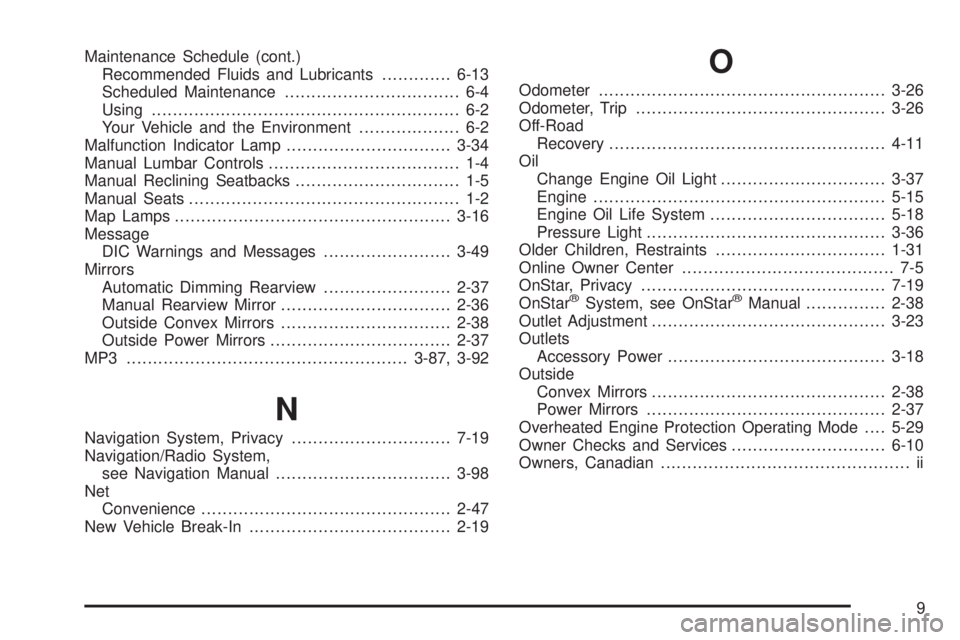
Maintenance Schedule (cont.)
Recommended Fluids and Lubricants.............6-13
Scheduled Maintenance................................. 6-4
Using.......................................................... 6-2
Your Vehicle and the Environment................... 6-2
Malfunction Indicator Lamp...............................3-34
Manual Lumbar Controls.................................... 1-4
Manual Reclining Seatbacks............................... 1-5
Manual Seats................................................... 1-2
Map Lamps ....................................................3-16
Message
DIC Warnings and Messages........................3-49
Mirrors
Automatic Dimming Rearview........................2-37
Manual Rearview Mirror................................2-36
Outside Convex Mirrors................................2-38
Outside Power Mirrors..................................2-37
MP3 .....................................................3-87, 3-92
N
Navigation System, Privacy..............................7-19
Navigation/Radio System,
see Navigation Manual.................................3-98
Net
Convenience...............................................2-47
New Vehicle Break-In......................................2-19
O
Odometer......................................................3-26
Odometer, Trip...............................................3-26
Off-Road
Recovery....................................................4-11
Oil
Change Engine Oil Light...............................3-37
Engine.......................................................5-15
Engine Oil Life System.................................5-18
Pressure Light.............................................3-36
Older Children, Restraints................................1-31
Online Owner Center........................................ 7-5
OnStar, Privacy..............................................7-19
OnStar
®System, see OnStar®Manual...............2-38
Outlet Adjustment............................................3-23
Outlets
Accessory Power.........................................3-18
Outside
Convex Mirrors............................................2-38
Power Mirrors.............................................2-37
Overheated Engine Protection Operating Mode....5-29
Owner Checks and Services.............................6-10
Owners, Canadian............................................... ii
9