wiring Ram 4500 Chassis Cab 2018 User Guide
[x] Cancel search | Manufacturer: RAM, Model Year: 2018, Model line: 4500 Chassis Cab, Model: Ram 4500 Chassis Cab 2018Pages: 529, PDF Size: 5.89 MB
Page 331 of 529
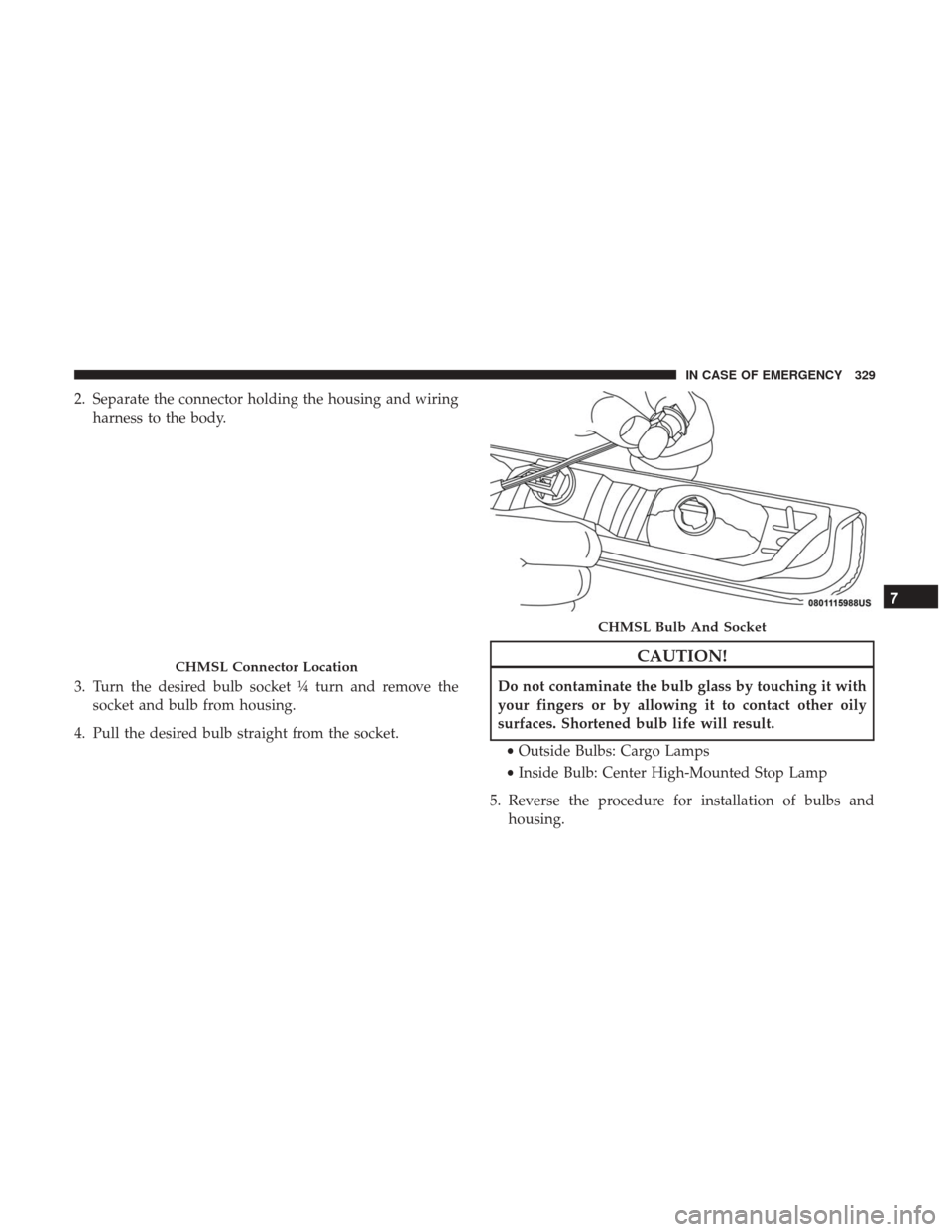
2. Separate the connector holding the housing and wiringharness to the body.
3. Turn the desired bulb socket ¼ turn and remove the socket and bulb from housing.
4. Pull the desired bulb straight from the socket.
CAUTION!
Do not contaminate the bulb glass by touching it with
your fingers or by allowing it to contact other oily
surfaces. Shortened bulb life will result. • Outside Bulbs: Cargo Lamps
• Inside Bulb: Center High-Mounted Stop Lamp
5. Reverse the procedure for installation of bulbs and housing.
CHMSL Connector Location
CHMSL Bulb And Socket
7
IN CASE OF EMERGENCY 329
Page 526 of 529
Load Capacity...................... .400, 401
Pressure Monitor System (TPMS) .............176
Pressure Warning Light ....................155
Quality Grading ........................ .418
Radial ............................... .406
Replacement ........................... .409
Rotation .............................. .416
Safety ............................ .394, 404
Sizes ................................ .396
Snow Tires .............................411
Spare Tire ...........................411,413
Spinning .............................. .407
Trailer Towing .......................... .301
Tread Wear Indicators .....................408
Wheel Nut Torque ....................343, 427
Tire Safety Information ...................... .394
Tongue Weight/Trailer Weight .................299
To Open Hood ........................... .101
Torque Converter Clutch .....................256
Towing ............................. .292, 352
Disabled Vehicle ........................ .352
Guide ................................ .299
Recreational ............................311
Weight ............................... .299
Towing Vehicle Behind A Motorhome ............311Traction
................................ .316
Traction Control .......................... .168
Trailer Sway Control (TSC) ....................173
Trailer Towing ............................ .292
Cooling System Tips ..................... .308
Hitches ............................... .298
Minimum Requirements ....................300
Mirrors ................................67
Tips ................................. .307
Trailer And Tongue Weight ..................299
Wiring ............................... .306
T
railer Towing Guide ....................... .299
Trailer Weight ............................ .299
Transfer Case ............................ .393
Electronically Shifted ..................... .260
Fluid ................................ .437
Transmission Automatic ......................... .248, 389
Fluid ................................ .437
Maintenance ........................... .389
Shifting .............................. .246
Transporting Pets ......................... .233
Tread Wear Indicators ...................... .408
Turn Signals ....................... .75, 158, 326
524 INDEX
Page 528 of 529

INSTALLATION OF RADIO TRANSMITTING
EQUIPMENTSpecial design considerations are incorporated into this
vehicle’s electronic system to provide immunity to radio
frequency signals. Mobile two-way radios and telephone
equipment must be installed properly by trained person-
nel. The following must be observed during installation.
The positive power connection should be made directly
to the battery and fused as close to the battery as possible.
The negative power connection should be made to body
sheet metal adjacent to the negative battery connection.
This connection should not be fused.
Antennas for two-way radios should be mounted on the
roof or the rear area of the vehicle. Care should be used
in mounting antennas with magnet bases. Magnets may
affect the accuracy or operation of the compass on
vehicles so equipped.The antenna cable should be as short as practical and
routed away from the vehicle wiring when possible. Use
only fully shielded coaxial cable.
Carefully match the antenna and cable to the radio to
ensure a low Standing Wave Ratio (SWR).
Mobile radio equipment with output power greater than
normal may require special precautions.
All installations should be checked for possible interfer-
ence between the communications equipment and the
vehicle’s electronic systems.