battery RENAULT KOLEOS 2012 1.G User Guide
[x] Cancel search | Manufacturer: RENAULT, Model Year: 2012, Model line: KOLEOS, Model: RENAULT KOLEOS 2012 1.GPages: 233, PDF Size: 7.81 MB
Page 82 of 233
2.4
ENG_UD27279_4
D marrage du moteur (X45 - H45 - obsol te - Renault)
ENG_NU_977-2_H45_Ph2_Renault_2
STARTING THE ENGINE (2/2)
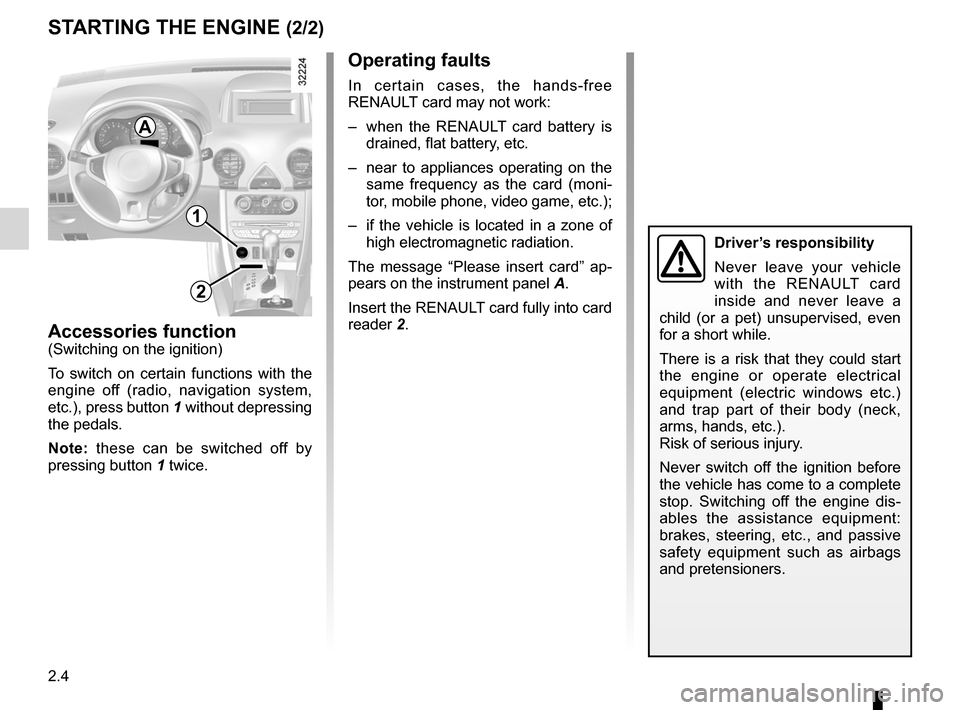
Accessories function(Switching on the ignition)
To switch on certain functions with the
engine off (radio, navigation system,
etc.), press button 1 without depressing
the pedals.
Note: these can be switched off by
pressing button 1 twice.
1
2
Operating faults
In certain cases, the hands-free
RENAULT card may not work:
– when the RENAULT card battery is
drained, flat battery, etc.
– near to appliances operating on the
same frequency as the card (moni -
tor, mobile phone, video game, etc.);
– if the vehicle is located in a zone of
high electromagnetic radiation.
The message “ Please insert card ” ap-
pears on the instrument panel A.
Insert the RENAULT card fully into card
reader 2.
A
Driver’s responsibility
Never leave your vehicle
with the RENAULT card
inside and never leave a
child (or a pet) unsupervised, even
for a short while.
There is a risk that they could start
the engine or operate electrical
equipment (electric windows etc.)
and trap part of their body (neck,
arms, hands, etc.).
Risk of serious injury.
Never switch off the ignition before
the vehicle has come to a complete
stop. Switching off the engine dis -
ables the assistance equipment:
brakes, steering, etc., and passive
safety equipment such as airbags
and pretensioners.
Page 85 of 233
driving ................................................... (up to the end of the DU)
special features of diesel versions ........(up to the end of the DU)
2.7
ENG_UD18050_2
Particularit s versions diesel (X45 - H45 - X73 - X85 - B85 - C85 - S85 - K85 - Renault)
ENG_NU_977-2_H45_Ph2_Renault_2
Special features of diesel versions
SPECIAL FEATURES OF DIESEL vERSIONS
Diesel engine speed
Diesel engines are fitted with injection
equipment which prevents the engine
speed being exceeded irrespective of
the gear selected.
Running out of fuel
You may start the engine normally after
refilling the fuel tank even if you have
completely run out of fuel , provided
that the battery is fully charged.
However, if the engine fails to start after
a few seconds and several attempts,
contact an approved Dealer. Precautions to be taken in winter
To avoid faults in icy weather:
–
ensure that the battery is always fully
charged;
– always keep the diesel tank rela -
tively full to avoid water vapour con-
densing in it and accumulating at the
bottom of the tank.
Do not park the vehicle or
run the engine in locations
where combustible sub -
stances or materials such
as grass or leaves can come into
contact with the hot exhaust system.
Page 86 of 233
catalytic converter................................. (up to the end of the DU)
fuel priming bulb ................................... (up to the end of the DU)
special features of diesel versions ........(up to the end of the DU)
driving ................................................... (up to the end of the DU)
filter particle filter .................................... (up to the end of the DU)
2.8
ENG_UD27293_7
Particularit s des versions diesel avec filtre particules (X45 - H45 - Renault)
ENG_NU_977-2_H45_Ph2_Renault_2
Special features of diesel versions fitted with a particle filter
SPECIAL FEATURES OF DIESEL vERSIONS FITTED wITH A PARTICLE FILTER
Do not park the vehicle or
run the engine in locations
where combustible sub -
stances or materials such
as grass or leaves can come into
contact with the hot exhaust system.
Diesel engine speed
Diesel engines are fitted with injection
equipment which prevents the engine
speed being exceeded irrespective of
the gear selected.
If the message “ Check exhaust emis -
sion ” is displayed on the instrument
panel accompanied by the
Ä and
© warning lights. Consult an au -
thorised dealer straight away.
When driving, depending on the fuel
grade used, it is possible that white
smoke may be emitted.
This is due to the exhaust particle filter
being cleaned automatically, and does
not affect the way the vehicle runs.
Precautions to be taken in
winter
To avoid faults in icy weather:
– ensure that the battery is always fully
charged,
– always keep the diesel tank rela -
tively full to prevent water vapour
condensing in it and accumulating at
the bottom of the tank.
Depending on the vehicle, the
Ü
warning light lights up on the instrument
panel to show that there is a risk of the
particle filter becoming clogged.
To clean the particle filter, for 60 miles
(100 km) after the warning light comes
on drive at an average speed of at least
42 mph (70 kph), where traffic condi -
tions and the speed limit will allow, until
the warning light goes out.
You may need to restart the operation if
the vehicle has to stop before the warn-
ing light goes out.
As an example, in this case, the clean -
ing operation lasts for up to 20 minutes.
Page 95 of 233
environment .......................................... (up to the end of the DU)
2.17
ENG_UD20974_4
Environnement (X35 - X44 - X45 - H45 - X65 - S65 - X77 - X81 - X85 - X91 - D91 - X76 - X83 - X61 - B65 - C65 - X77 ph2 - X95 - E95 - J95 - R95 - L38 - E33 - X33 - X38
ENG_NU_977-2_H45_Ph2_Renault_2
Environment
ENvIRONMENT
Emissions
Your vehicle has been designed to
emit fewer greenhouse gases (CO2)
while in use, and therefore to consume
less fuel (eg. 140 g/km, equivalent to
5.3 l/100 km for a diesel vehicle).
Our vehicles are also equipped with a
particle filter system including a cata -
lytic converter, an oxygen sensor and
an active carbon filter (the latter pre -
vents vapour from the fuel tank being
released into the open air).
For certain diesel vehicles, this system
also has a particle filter to reduce the
volume of soot particles emitted.
Please make your own
contribution towards
protecting the environment
too
– Worn parts replaced in the course of
routine vehicle maintenance (vehi -
cle battery, oil filter, air filter, batter -
ies, etc.) and oil containers (empty or
filled with used oil) must be disposed
of through specialist organisations. –
At the end of the vehicle’s service
life, it should be sent to approved
centres to ensure that it is recycled.
– In all cases, comply with local legis -
lation.
Recycling
Your vehicle is 85% recyclable and
95% recoverable.
To achieve these objectives, many of
the vehicle components have been de-
signed to enable them to be recycled.
The materials and structures have
been carefully designed to allow these
components to be easily removed and
reprocessed by specialist companies.
In order to preserve raw material re -
sources, this vehicle incorporates nu -
merous parts made from recycled plas-
tics or renewable materials (vegetable
or animal-derived materials such as
cotton or wool).
Your vehicle has been designed with
respect for the
environment in mind for
its entire service life: during production,
use and at the end of its life.
This commitment is illustrated by the
Renault eco² group signature.
Manufacture
Your vehicle has been manufactured at
an industrial site which uses a progress
policy to reduce environmental impacts
on rivers and natural areas (reduc -
tion of water and energy consumption,
visual and noise pollution, atmospheric
emissions and waste water, sorting and
reusing waste).
Page 159 of 233
4.1
ENG_UD27166_2
Contents 4 (X45 - H45 - Renault)
ENG_NU_977-2_H45_Ph2_Renault_4
Section 4: Maintenance
Bonnet . . . . . . . . . . . . . . . . . . . . . . . . . . . . . . . . . . . . . . . . . . . . . . . . . . . . . . . . . . . . . . . . . . . . . . . . 4.2
Engine oil level: general information . . . . . . . . . . . . . . . . . . . . . . . . . . . . . . . . . . . . . . . . . . . . . . . . . 4.3
Engine oil level: topping up, filling . . . . . . . . . . . . . . . . . . . . . . . . . . . . . . . . . . . . . . . . . . . . . . . . . . . 4.5
Engine oil change . . . . . . . . . . . . . . . . . . . . . . . . . . . . . . . . . . . . . . . . . . . . . . . . . . . . . . . . . . . . . . . 4.6
Levels: . . . . . . . . . . . . . . . . . . . . . . . . . . . . . . . . . . . . . . . . . . . . . . . . . . . . . . . . . . . . . . . . . . . . . . . . 4.7
coolant . . . . . . . . . . . . . . . . . . . . . . . . . . . . . . . . . . . . . . . . . . . . . . . . . . . . . . . . . . . . . . . . . . 4.7
brake fluid . . . . . . . . . . . . . . . . . . . . . . . . . . . . . . . . . . . . . . . . . . . . . . . . . . . . . . . . . . . . . . . . 4.8
windscreen/headlight washer reservoir . . . . . . . . . . . . . . . . . . . . . . . . . . . . . . . . . . . . . . . . . 4.9
Filters . . . . . . . . . . . . . . . . . . . . . . . . . . . . . . . . . . . . . . . . . . . . . . . . . . . . . . . . . . . . . . . . . . . . . . . . . 4.9
Tyre pressures . . . . . . . . . . . . . . . . . . . . . . . . . . . . . . . . . . . . . . . . . . . . . . . . . . . . . . . . . . . . . . . . . . 4.10
Battery . . . . . . . . . . . . . . . . . . . . . . . . . . . . . . . . . . . . . . . . . . . . . . . . . . . . . . . . . . . . . . . . . . . . . . . . 4.11
Bodywork maintenance . . . . . . . . . . . . . . . . . . . . . . . . . . . . . . . . . . . . . . . . . . . . . . . . . . . . . . . . . . . 4.12
Interior trim maintenance . . . . . . . . . . . . . . . . . . . . . . . . . . . . . . . . . . . . . . . . . . . . . . . . . . . . . . . . . . 4.14
Page 169 of 233
battery................................................... (up to the end of the DU)
4.11
ENG_UD21000_4
Batterie (X45 - H45 - Renault)
ENG_NU_977-2_H45_Ph2_Renault_4
Battery
BA tteR y
The battery does not require any main-
tenance.
Handle the battery with care
as it contains sulphuric acid,
which must not come into
contact with eyes or skin. If
it does, wash the affected area with
plenty of cold water. If necessary,
consult a doctor.
Ensure that naked flames, red hot
objects and sparks do not come into
contact with the battery as there is a
risk of explosion.
Replacing the battery
As this operation is complex, we advise
you to contact an approved Dealer.
The engine may be hot
during operations in close
proximity. In addition, the
engine cooling fan may
start at any moment.
Risk of injury.
As the battery is specific
to the vehicle (presence of
a ventilation pipe to expel
corrosive and explosive
gases), make sure that it is replaced
with a battery that enables this pipe
to be connected. Consult an ap -
proved Dealer.
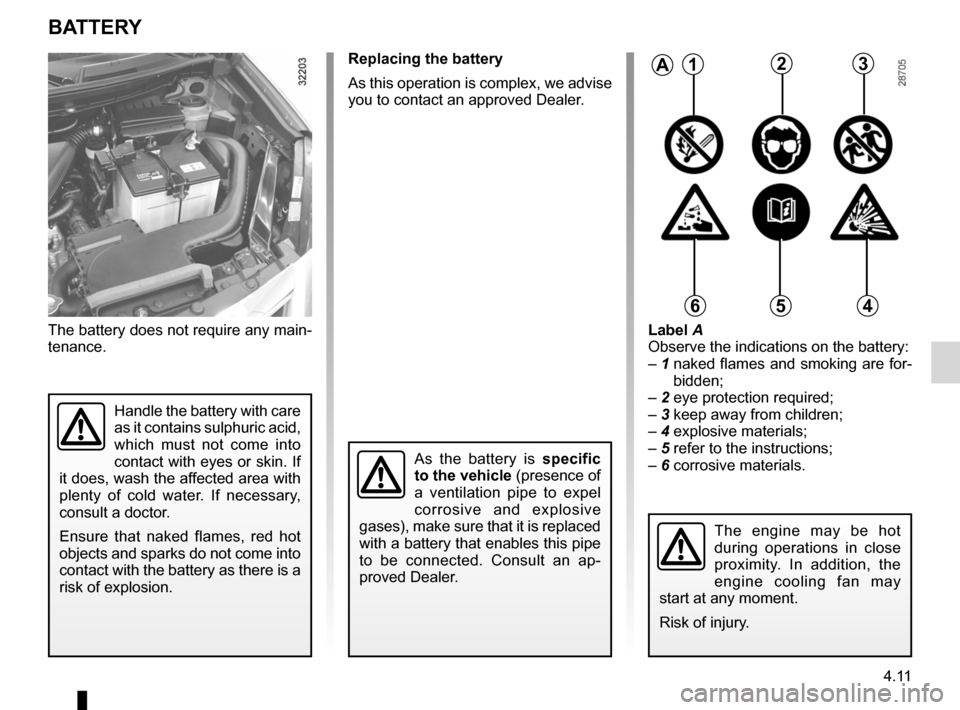
Label A
Observe the indications on the battery:
– 1 naked flames and smoking are for-
bidden;
– 2 eye protection required;
– 3 keep away from children;
– 4 explosive materials;
– 5 refer to the instructions;
– 6 corrosive materials.
A123
456
Page 175 of 233
5.1
ENG_UD27167_2
Contents 5 (X45 - H45 - Renault)
ENG_NU_977-2_H45_Ph2_Renault_5
Section 5: Practical advice
Puncture . . . . . . . . . . . . . . . . . . . . . . . . . . . . . . . . . . . . . . . . . . . . . . . . . . . . . . . . . . . . . . . . . . . . . . 5.2
Emergency spare wheel . . . . . . . . . . . . . . . . . . . . . . . . . . . . . . . . . . . . . . . . . . . . . . . . . . . . . . . . . . 5.2
Tool kit . . . . . . . . . . . . . . . . . . . . . . . . . . . . . . . . . . . . . . . . . . . . . . . . . . . . . . . . . . . . . . . . . . . . . . . . 5.3
Changing a wheel . . . . . . . . . . . . . . . . . . . . . . . . . . . . . . . . . . . . . . . . . . . . . . . . . . . . . . . . . . . . . . . 5.4
Tyres (tyre and wheel safety, use in winter) . . . . . . . . . . . . . . . . . . . . . . . . . . . . . . . . . . . . . . . . . . . 5.6
Headlights (changing bulbs) . . . . . . . . . . . . . . . . . . . . . . . . . . . . . . . . . . . . . . . . . . . . . . . . . . . . . . . 5.9
Rear lights and side lights (changing bulbs) . . . . . . . . . . . . . . . . . . . . . . . . . . . . . . . . . . . . . . . . . . . 5.12
Interior lights (changing bulbs) . . . . . . . . . . . . . . . . . . . . . . . . . . . . . . . . . . . . . . . . . . . . . . . . . . . . . 5.15
Fuses . . . . . . . . . . . . . . . . . . . . . . . . . . . . . . . . . . . . . . . . . . . . . . . . . . . . . . . . . . . . . . . . . . . . . . . . . 5.18
battery: troubleshooting . . . . . . . . . . . . . . . . . . . . . . . . . . . . . . . . . . . . . . . . . . . . . . . . . . . . . . . . . . . 5.20
RENAULT card: battery . . . . . . . . . . . . . . . . . . . . . . . . . . . . . . . . . . . . . . . . . . . . . . . . . . . . . . . . . . . 5.22
Accessories . . . . . . . . . . . . . . . . . . . . . . . . . . . . . . . . . . . . . . . . . . . . . . . . . . . . . . . . . . . . . . . . . . . . 5.23
Wipers (replacing blades) . . . . . . . . . . . . . . . . . . . . . . . . . . . . . . . . . . . . . . . . . . . . . . . . . . . . . . . . . 5.24
Towing . . . . . . . . . . . . . . . . . . . . . . . . . . . . . . . . . . . . . . . . . . . . . . . . . . . . . . . . . . . . . . . . . . . . . . . . 5.25
Operating faults . . . . . . . . . . . . . . . . . . . . . . . . . . . . . . . . . . . . . . . . . . . . . . . . . . . . . . . . . . . . . . . . . 5.29
Page 194 of 233
batterytroubleshooting ............................... (up to the end of the DU)
5.20
ENG_UD23536_4
Batterie : dépannage (X45 - H45 - Renault)
ENG_NU_977-2_H45_Ph2_Renault_5
Jaune NoirNoir texte
battery: troubleshooting
Battery: troubleshooting (1/2)
Handle the battery with care
as it contains sulphuric acid,
which must not come into
contact with eyes or skin. If
it does, wash the affected area with
plenty of cold water. If necessary,
consult a doctor.
Ensure that naked flames, red hot
objects and sparks do not come into
contact with the battery as there is a
risk of explosion.
The engine may be hot when car -
rying out operations in close prox -
imity. In addition, the engine cooling
fan can come on at any moment.
Risk of injury.
t o avoid all risk of sparks
– Ensure that any electrical consumers
(courtesy lights, etc.) are switched
off before disconnecting or recon -
necting the battery.
– When charging, stop the charger
before connecting or disconnecting
the battery.
– Do not place metal objects on the
battery to avoid creating a short cir-
cuit between the terminals.
– Always wait at least one minute after
the engine has been switched off
before disconnecting a battery.
– Make sure that you reconnect the
battery terminals after refitting.
Page 195 of 233
JauneNoirNoir texte
5.21
ENG_UD23536_4
Batterie : dépannage (X45 - H45 - Renault)
ENG_NU_977-2_H45_Ph2_Renault_5
12
B
3
4
a
starting the vehicle using the
battery from another vehicle
If you have to use the battery from an-
other vehicle to start, obtain suitable
jump leads (with a large cross section)
from an approved dealer or, if you al -
ready have jump leads, ensure that
they are in perfect condition.
the two batteries must have an iden-
tical nominal voltage of 12 volts. The
battery supplying the current should
have a capacity (amp-hours, Ah) which
is at least the same as that of the dis-
charged battery.
Ensure that there is no risk of contact
between the two vehicles (risk of short
circuiting when the positive terminals
are connected) and that the discharged
battery is properly connected. Switch
off your vehicle ignition.
Start the engine of the vehicle supply -
ing the current and run it at an interme-
diate engine speed.
Battery: troubleshooting (2/2)
connecting a battery charger
t he battery charger must be com -
patible with a battery with nominal
voltage of 12 volts.
Switch the engine off and then discon-
nect both battery leads starting with
the negative terminal.
Do not disconnect the battery when the
engine is running. Follow the instruc-
tions given by the manufacturer of
the battery charger you are using.
Special procedures may be
required to charge some
batteries. Contact your ap -
proved dealer.
Avoid all risk of sparks which may
cause an immediate explosion, and
charge the battery in a well-venti -
lated area. Risk of serious injury.
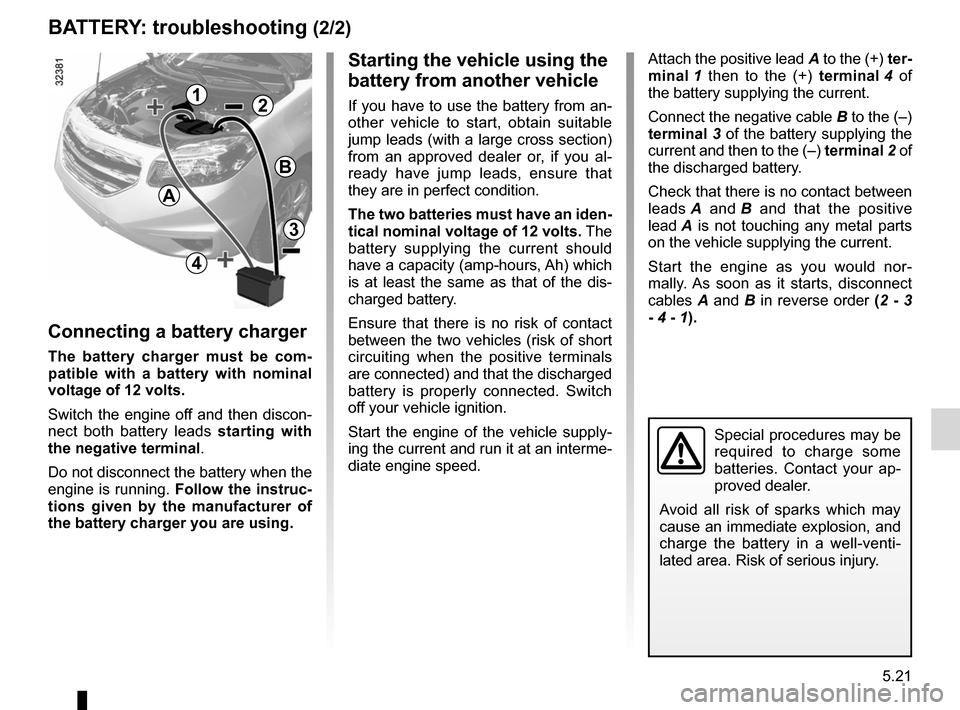
Attach the positive lead A to the (+) ter-
minal 1 then to the (+) terminal 4 of
the battery supplying the current.
Connect the negative cable B to the (–)
terminal 3 of the battery supplying the
current and then to the (–) terminal 2 of
the discharged battery.
Check that there is no contact between
leads A and B and that the positive
lead A is not touching any metal parts
on the vehicle supplying the current.
Start the engine as you would nor -
mally. As soon as it starts, disconnect
cables A and B in reverse order (2 - 3
- 4 - 1).
Page 196 of 233
RENAULT cardbattery ............................................. (up to the end of the DU)
RENAULT card battery .........................(up to the end of the DU)
5.22
ENG_UD27283_6
Carte RENAULT : pile (X45 - H45 - X91 - B91 - K91 - X95 - B95 - D95 - E95 - K95 - J95 - R95 - L38 - X38 - X32 - B32 - X98 - Renault)
ENG_NU_977-2_H45_Ph2_Renault_5
Operating faultsIf the battery is too weak to ensure cor-
rect operation, you may start (insert the
RENAULT card in the card reader) and
lock/unlock the vehicle (refer to the in-
formation on “Locking/unlocking the
doors” in Section 1).
RENAULT card: battery
renault carD: battery
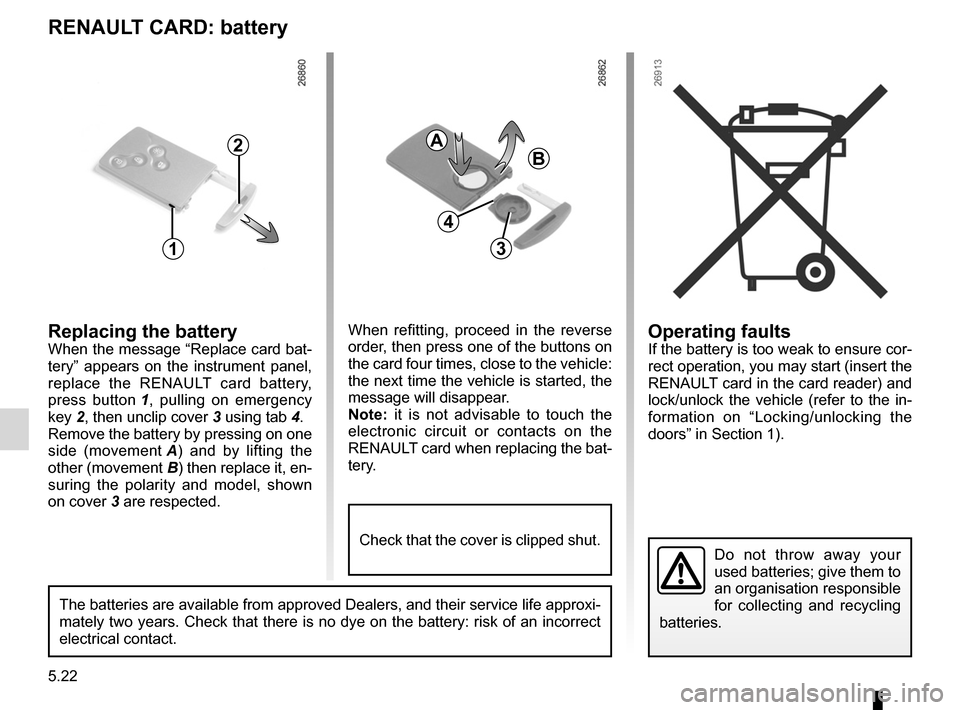
replacing the batteryWhen the message “Replace card bat-
tery” appears on the instrument panel,
replace the RENAULT card battery,
press button 1 , pulling on emergency
key 2, then unclip cover 3 using tab 4.
Remove the battery by pressing on one
side (movement A ) and by lifting the
other (movement B) then replace it, en-
suring the polarity and model, shown
on cover 3 are respected.
Do not throw away your
used batteries; give them to
an organisation responsible
for collecting and recycling
batteries.
1
2
When refitting, proceed in the reverse
order, then press one of the buttons on
the card four times, close to the vehicle:
the next time the vehicle is started, the
message will disappear.
n ote: it is not advisable to touch the
electronic circuit or contacts on the
RENAULT card when replacing the bat-
tery.
a
B
3
The batteries are available from approved Dealers, and their service life approxi -
mately two years. Check that there is no dye on the battery: risk of an incorrect
electrical contact.
4
Check that the cover is clipped shut.